
Foone Examines The Code of Carmen Sandiego

Foone! Everyone’s favorite examiner of old game code! She’s been looking at the Enhanced DOS Port of Where In The World is Carmen Sandiego! The surplus of exclamation points is how you know I’m not an “AI!” I use the scare quotes because it’s not “Artificial Intelligence” at all! Introduction and silly digression concluded! Opening paragraph complete!

Foone began her journey in search of the elusive mastermind back at the start of the year, and the thread is still going on. One of the early hacks she made is putting herself into the game as one of the criminals. I think this screen isn’t faked. She made and maintains the Death Generator website, so it wouldn’t even be particularly hard for her I think.
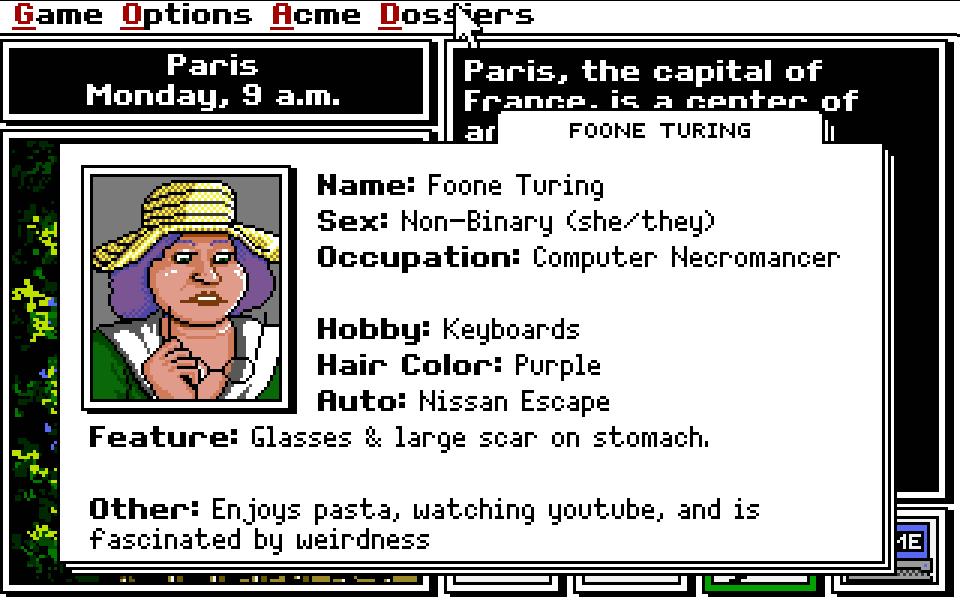
Some notes from the very long thread, which is still going:

  • Nouns used as verbs encountered: gibberish, chunk.
  • The game has support for changing the Acme Detective Agency image depending on different seasons of the year.
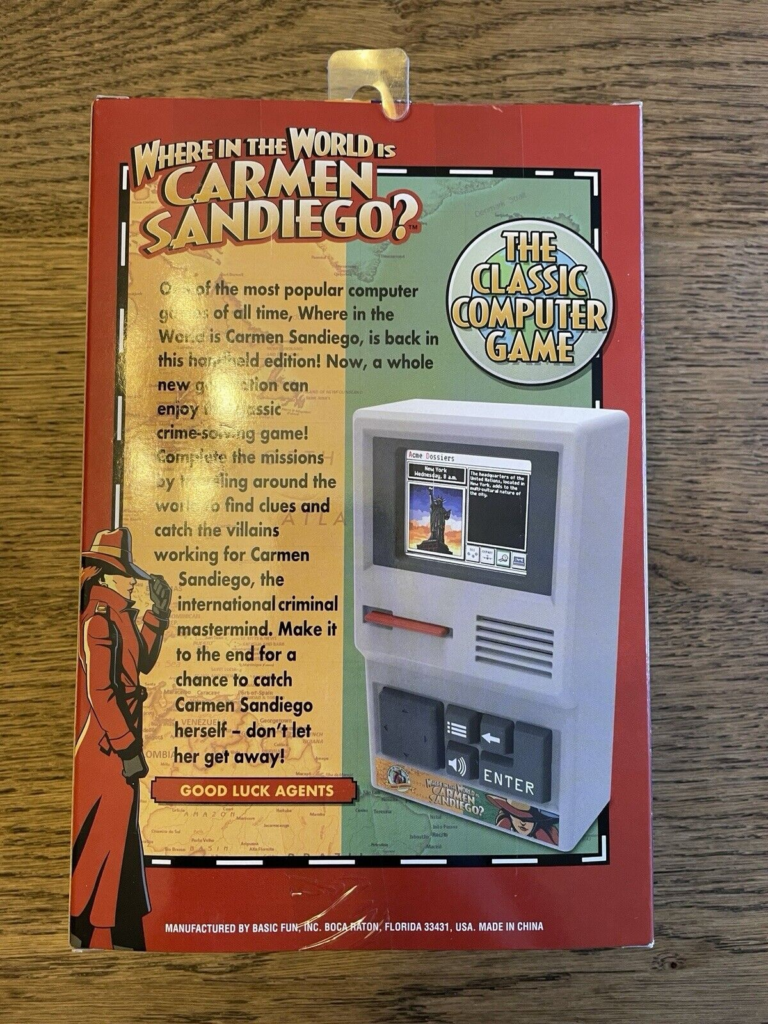
  • There is a handheld version of Where In The World Is Carmen Sandiego, which is actually a small DOS emulator, here’s the back of its box:
And here’s all of the people you can talk to in the DOS version:

I love this kind of cartoon art style, you (okay, I) don’t see it much anymore, now everything wants to look like anime.
  • The 1985 DOS version (so, not the one we’ve been following) has an invert-Y function for the joystick, in case you want to use a flight yoke controller.
  • A reference is made a post on Raymond Chen’s (awesome) Old New Thing blog, about a DOS game running under Windows 95 that crashed because it saw too much memory. It handled memory by allocating and allocating and expecting to be told “no” eventually. Windows 95 would keep giving it memory, going to virtual memory, from the swapfile. The program didn’t expect to keep being given more memory, and eventually it overflowed the array it used to keep track of it all. This seems to be the Old New Thing post.
  • On the world changing beneath the game: the frowned-upon word for Romani (beginning with ‘G’) is patched, the Brazilian currency name was wrong even when the game was released, lots of changed flags, the fall of the Soviet Union changed lots of things.

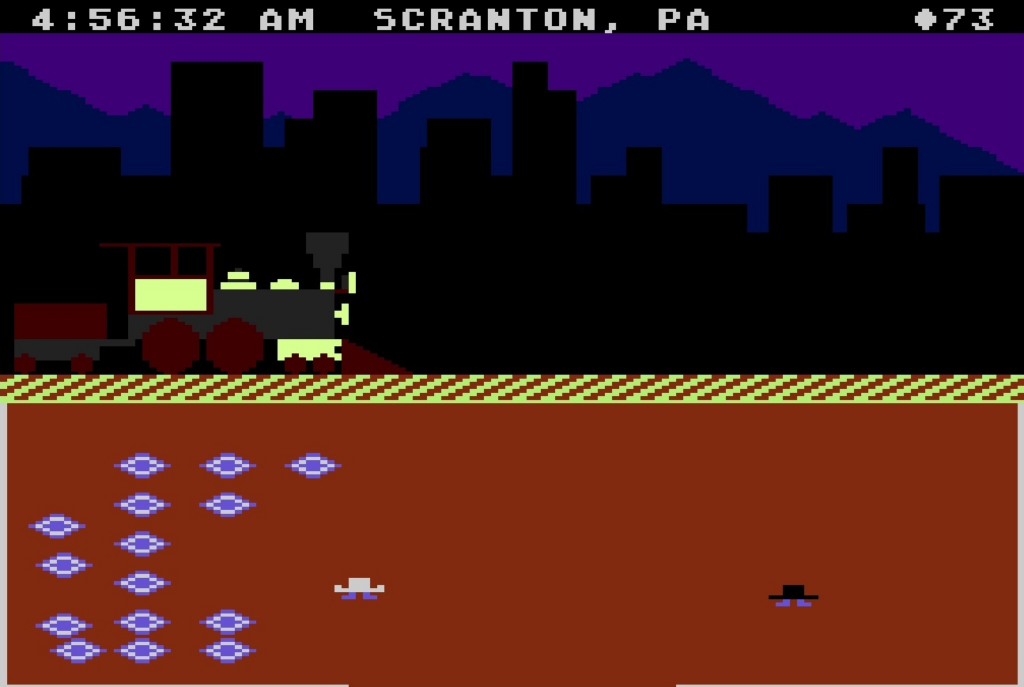
Hardcore Gaming 101 on Agent USA

There’s a whole genre of computer game that’s almost extinct these days, the inventive educational semi-simulation. Some examples include the beloved M.U.L.E. and Where in the World is Carmen Sandiego, and another one is Scholastic and Tom Snyder Productions’ Agent USA. Chris Gallagher on Hardcore Gaming 101 tells us all about it. (Note about HG101: it seems only http links work there at the moment. Visiting the site right now over https brings up an error.)

The educational aspect, as with the best of these games, is not the foremost aspect of gameplay, it teaches by having the taught information be useful to the gameplay rather than its entire point. You’re Agent USA, a white hat with legs trenchcoat, and you’re trying to save the United States from the “FuzzBomb,” a device that spreads a kind of zombieism by contact with people (black hats with legs).

Your only weapon, and defense, against the “FuzzBodies” are crystals. You can drop them on the ground and, while they’re there, they’ll slowly grow, making more crystals around them. Bystanders love to pick crystals up off the ground, so you have to keep pushing them away, but FuzzBodies that touch crystals turn back to normal.

Winning is accomplished by collecting 100 crystals and touching the FuzzBomb, but you have to avoid touching FuzzBodies as you approach it. If you get touched, you lose half of your crystals, and if you run out you get Fuzzed youself, and are forced to watch your character walk around randomly until it happens to touch a crystal, which could be nearly immediate or take quite a long time.

The educational aspects come from geography, knowing the names of towns to visit, and learning state capitals, which have a special significance to the game. Capitals are the only cities with info booths, which supply various pieces of info as well as the location of the FuzzBomb. There’s also an aspect of time management: trains depart on strict schedules, and you may end up having to wait a bit after getting your ticket.

I have vague memories of reading about Agent USA when it was new, and always wondered about how it worked. Another game from the same publisher and developer, and from around the same time, was In Search Of The Most Amazing Thing.