
It’s a pretty good run-down of the various weird timing issues of the Commodore 64. Machines at that time had to do all kinds of weird things to keep up the overriding priority of microcomputers of the time: building a consistent video signal that could be displayed on a television. Nearly all machines needed special hardware to do the job of keeping up the display, to give the CPU time to run user programs, or anything at all.
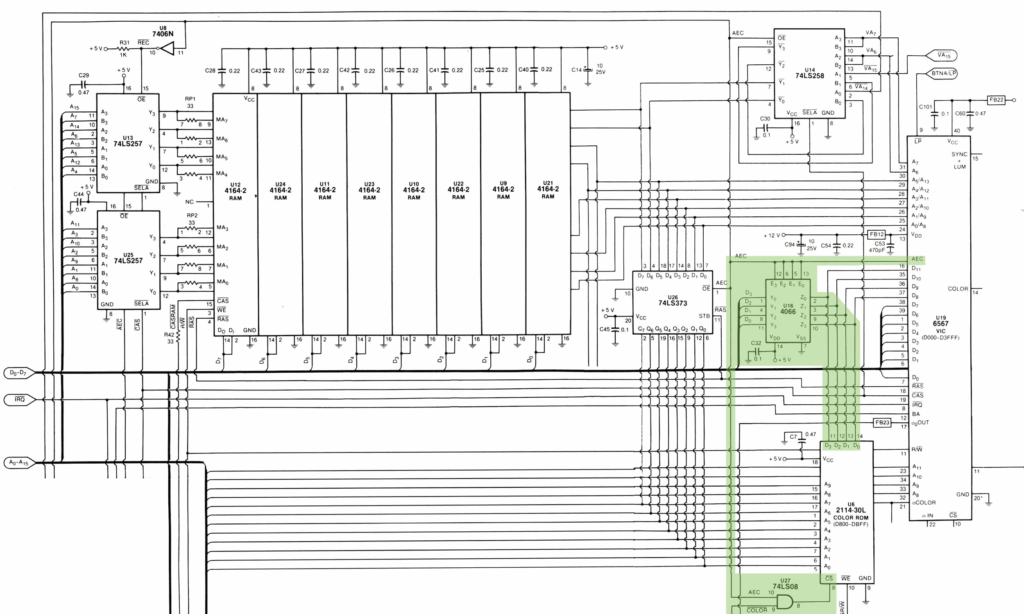
The C64’s VIC-II video chip is a product of many compromises. The C64 could contain so much memory affordably because it used dynamic RAM, which requires periodic refreshes, and one of the tasks of the VIC-II was to handle that. It also needed access to main memory in order to build the display image.
But both of these actions conflict with whatever the processor needs to do, so the computer is designed to actually put the 6510 to sleep when the VIC-II needs to access memory. This is why, when the screen is blanked, the machine runs a little faster and more consistently, and that’s why the screen is blanked when a connected Datasette is loading programs from cassette tape.
VIC-II and FLI timing (part 1 of 3, c64os.com)
