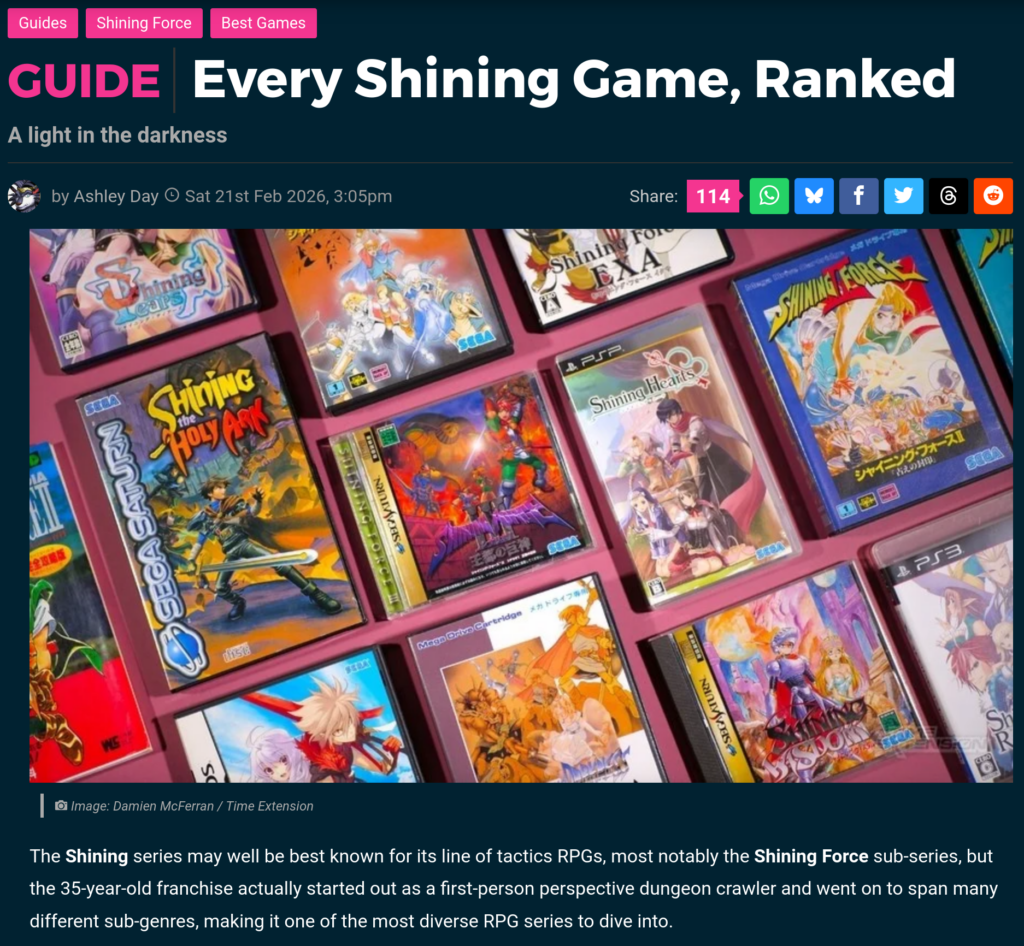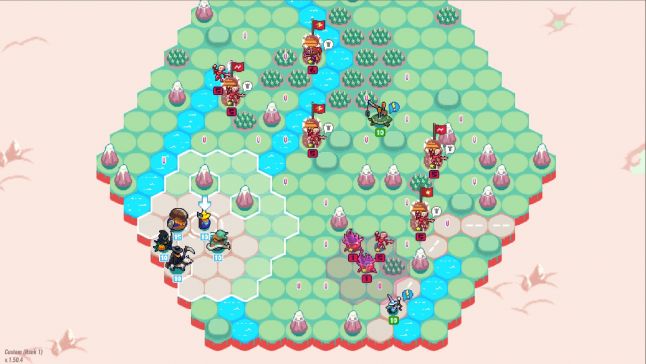
The Shining series, published by Sega but developed by lots of different people, is all over the map regarding gameplay styles. I’d say that more people have heard of the second game, the great Shining Force (it’s sort of like lighter Fire Emblem with town scenes and no permadeath) than the first one, Shining in the Darkness (a first-person dungeon step-oriented crawl with premade characters). All the games are set in a fantasy world (but not all necessarily the same fantasy world) and have a cartoony art style that helps keep things lively, but beyond the dungeon crawls and tactical battles there have been Diablo-style combat, action RPGs, Zelda-style exploration with bump combat, more general strategy and even a fighting game.
Ashley Day at Time Extension rated all 23 of them, and their opinions seem pretty decent to me. So you know, #1 was Shining Force III (the infamous one released on three sold-separate Saturn disks, of which only one made it to the US), #2 was Shining Force II, and #3 was the confusingly-titled “Shining the Holy Ark” also in Saturn. #5 is Shining Force I, and #4 is its GBA remake. Many of the lower-placed games on the list are various later installments, which is fair. The Shining games seem like they’ve fallen off lately, but it’s not like you can’t go back and play the originals… through some, um, means or other….