
Link Roundup 3/25/2025

Hello! John “rodneylives” Harris here. Let me quickly explain this before I get into it.

I have an overabundance of games links to present through Set Side B. My usual style of doing this is to pick one of them, then maybe write a bit of text introducing it, maybe a bit of a preview, a media embed of it’s a video somewhere (nearly always Youtube), and that’s a complete post. One a day, for approaching four years now. (SSB launched on April 5th, 2022.)

But working this way, I’ve developed quite a backlog! Not all of them are really worthy of a whole post, maybe, or I don’t have a full post’s worth of context to coax out of it.

So in an effort to clean up my link collections, I think I’m going to make regular posts, maybe one a week, that’s just several things that might be interesting. I post them, my link folder get slightly shorter, each individual person might be interested in one or two items in it each, then we move on to more of the usual kind of thing the rest of the week.

Got all that? Here we go:


1. Dave’s Garage interviewed Commodore 64 chip designer Albert Charpentier three years ago (it’s about an 1 hour):

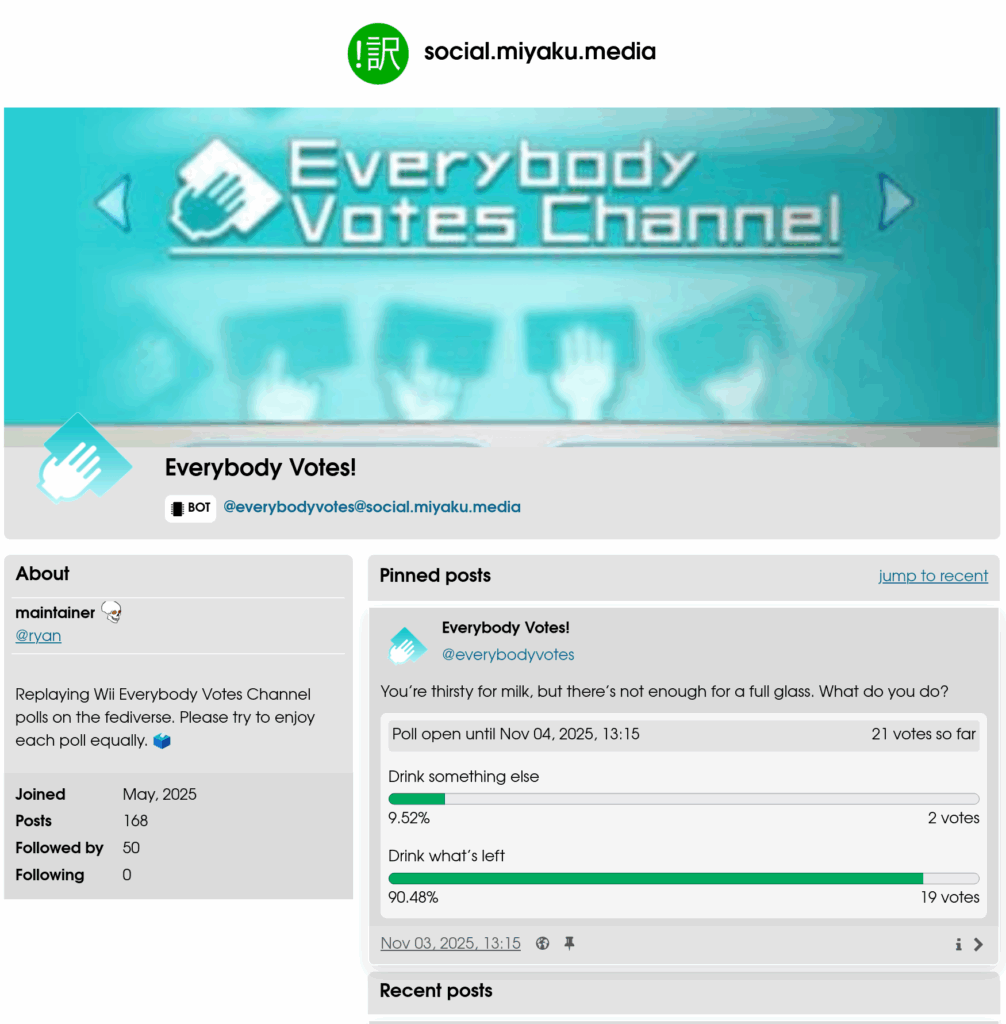
2. On Mastodon, there’s an account, @everybodyvotes@social,miyaku.media, that posts every poll published on the Wii’s “Everybody Votes” channel, back in the days when Nintendo would do fun, free things just for the sake of doing them. You can even vote on them again, using Mastodon’s polling feature.
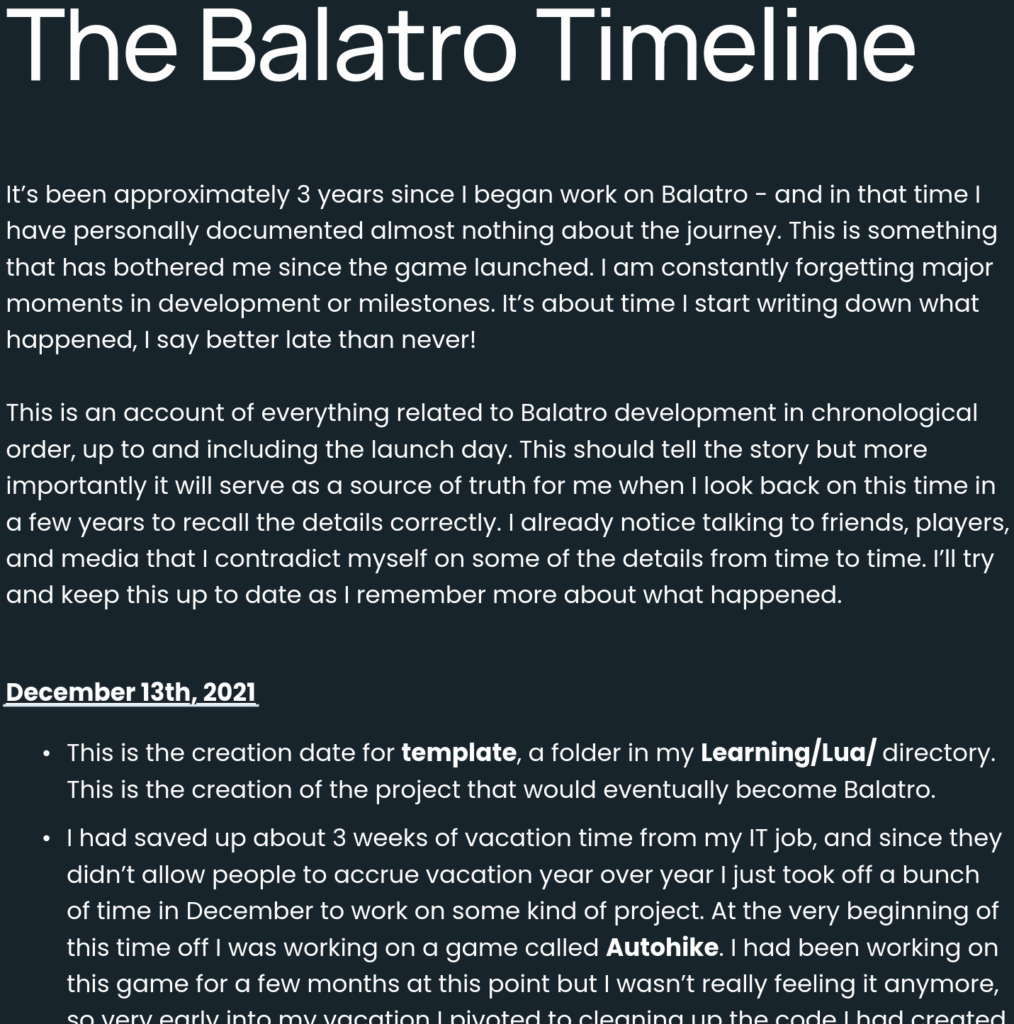
3. On Balatro creator LocalThunk’s blog, they’ve published a timeline of its history, from original concept to launch, whereupon LocalThunk earned more money than he had ever had before in their entire life.
4. Back on Youtube, speedrunner Kosmic expresses disbelief on the current state of Super Mario Bros. speedrunning (24 minutes), which is more active than you’d think it’d be for a game that’s so old, and has had so much attention poured onto it.

Video: The Sad End of Phil Katz

We mostly try to stick with games here, but just about everyone in the Windows ecosystem uses ZIP archive files. They’ve long become a de facto standard, with tools for working with them in Windows supplied by Microsoft as early as the Windows 95 Powertoys Plus! Pack. Nowadays, support for them is built right into Windows Explorer, and you can even open them like folders, which felt like some kind of magic when that feature debuted.

The ZIP format was once one of several competing compression and archiving formats, with others being LHA/LZH, ARC, ARJ, CAB, and of course on the Unix/Linux side of things Tar, Gzip and GZ. Other than the Unix types, those others are mostly dead now. There are some relative newcomers, RAR and 7Z, but most people just stick with ZIP without even caring to know of the format’s origins.

ZIP was the format produced by the shareware PKZip compression tools, named for its co-creator Phil Katz. Katz created it in response to a lawsuit from the company behind the (now obscure) SEA format. Rather than fight it, he and Gary Conway designed their own format and made tools to work with it. Then as now, the world loves an underdog, and many people flocked to the format. In 1989 they released the format to the public domain.

Phil Katz’s later life was ruined by alcoholism, which the above video from the Dave’s Garage YouTube channel is about. A sad end to someone who popularized a piece of technology that still sees use millions of times a day.

ZIP is so ubiquitous now that lots of people use it without even realizing. DOCX, ODF, EPUB, and JAR are all secret ZIP files under the hood.

Katz’s company PKWare remains to this day, although they’re now focused on data security, and as you can see from their website they now look exactly like the kind of faceless monolith that all tech companies eventually mutate into. They still steward the format, and in that tonedeaf way of corporations, now hold a forbidding number of patents, and claim, “The free license grant offered in prior APPNOTE publications has been discontinued.” Presumably people just use the last public domain version, since once something is in the public domain, it’s there forever, thank frog.

(EDIT: xot on Twitter mentions that Windows ZIP support first appeared in the Win95 Plus! Pack, correction made above.)

The Dark History of Zip Files (YouTube, Dave’s Garage)