Stuff on Raimais

Pretty hard to read. Is that supposed to be AAIMAIS?

Raimais is a sci-fi-focused maze game from Taito in 1988. Ryan Oliver, writing over at Hardcore Gaming 101, has written an excellent description of the game, including why you might be interested in it. Not only is it like a kind of Arkanoid-style revision of a pre-existing genre but with powerups, in this case maze games, it reminds me a lot of the early arcade and Atari 2600 game Dodge ‘Em. It’s got multiple routes and lots of secrets, including secret endings. It pulls some Druaga-style dirty tricks on the player: without a secret item, you’re doomed to get a bad ending. Even with it, you have to complete a sequence of Quick Time Events during the ending or your character gets zapped by a laser gun and just dies, no do-overs, no continues.

Furthermore, the hardest-to-reach ending was actually impossible to get! The game’s included on Taito Legends 2 from 2006, but there’s a more-recent Arcade Archives version (Switch, Playstation Store), that gives you the option of making the impossible ending possible.

This Arcade Archives trailer gives a good sense of the play without giving too much away (3 minutes):

Here’s a recap of links at the end of the HG101 article:

I’ve known about Raimais for some time, and in a reversal of the usual turn of events I had already read the gaming.moe and Sudden Desu pages before HG101 covered it. This is an excellent excuse to link to them though.

Hardcore Gaming 101 on Agent USA

There’s a whole genre of computer game that’s almost extinct these days, the inventive educational semi-simulation. Some examples include the beloved M.U.L.E. and Where in the World is Carmen Sandiego, and another one is Scholastic and Tom Snyder Productions’ Agent USA. Chris Gallagher on Hardcore Gaming 101 tells us all about it. (Note about HG101: it seems only http links work there at the moment. Visiting the site right now over https brings up an error.)

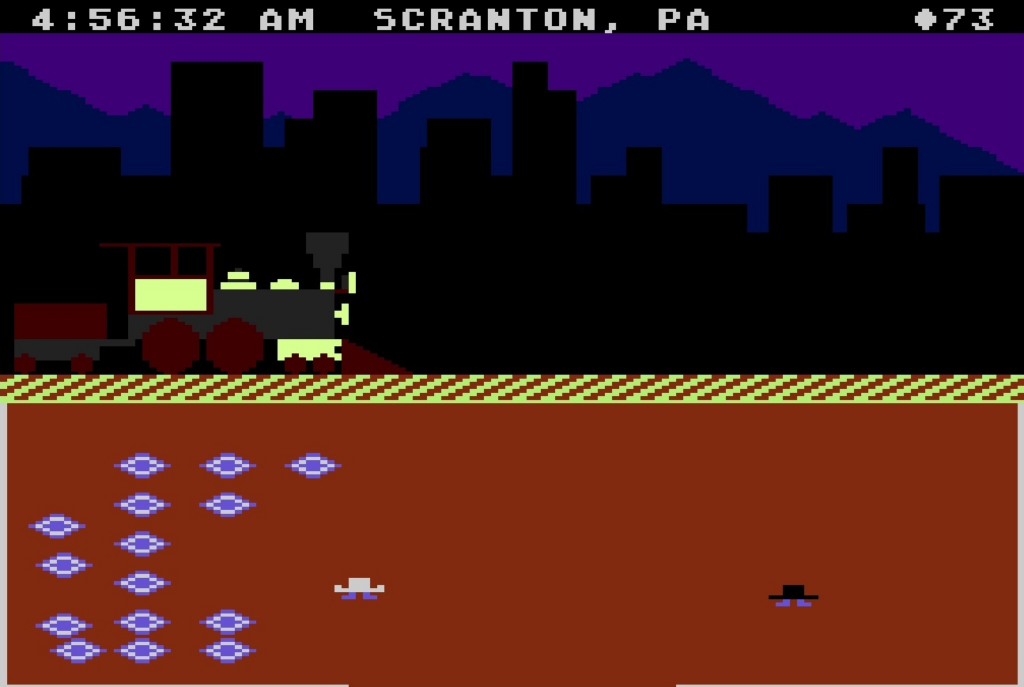
The educational aspect, as with the best of these games, is not the foremost aspect of gameplay, it teaches by having the taught information be useful to the gameplay rather than its entire point. You’re Agent USA, a white hat with legs trenchcoat, and you’re trying to save the United States from the “FuzzBomb,” a device that spreads a kind of zombieism by contact with people (black hats with legs).

Your only weapon, and defense, against the “FuzzBodies” are crystals. You can drop them on the ground and, while they’re there, they’ll slowly grow, making more crystals around them. Bystanders love to pick crystals up off the ground, so you have to keep pushing them away, but FuzzBodies that touch crystals turn back to normal.

Winning is accomplished by collecting 100 crystals and touching the FuzzBomb, but you have to avoid touching FuzzBodies as you approach it. If you get touched, you lose half of your crystals, and if you run out you get Fuzzed youself, and are forced to watch your character walk around randomly until it happens to touch a crystal, which could be nearly immediate or take quite a long time.

The educational aspects come from geography, knowing the names of towns to visit, and learning state capitals, which have a special significance to the game. Capitals are the only cities with info booths, which supply various pieces of info as well as the location of the FuzzBomb. There’s also an aspect of time management: trains depart on strict schedules, and you may end up having to wait a bit after getting your ticket.

I have vague memories of reading about Agent USA when it was new, and always wondered about how it worked. Another game from the same publisher and developer, and from around the same time, was In Search Of The Most Amazing Thing.

Who the Heck is Dragon Quest’s Mutsuheta?

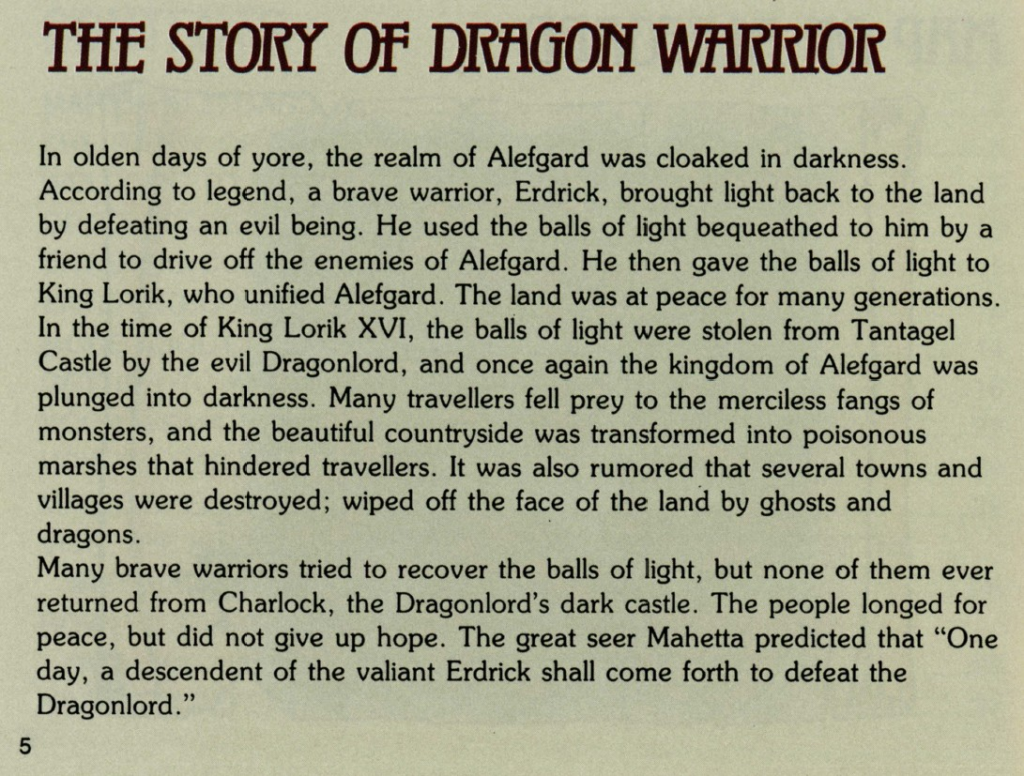
Kurt Kalata’s Hardcore Gaming 101 posted an article telling us about Mutsuheta, renamed Mahetta in the English localization for the NES. Mutsuheta is one of those figures who only appeared in the original game’s manual. Mutsuheta was the prophet who foretold that a descendant of the great Loto/Erdrick would arise and defeat the armies of the Dragonlord. Other than his mention in the manual, however, he doesn’t appear in any of the games of the Erdrick trilogy, and never appeared onscreen until the first Dragon Quest Builders, where he’s an NPC. He was renamed Myrlund in its English translation, but in Japanese he’s got the name of the character from the manual.

The story from Dragon Warrior, the original English port of Dragon Quest (image from HG101)

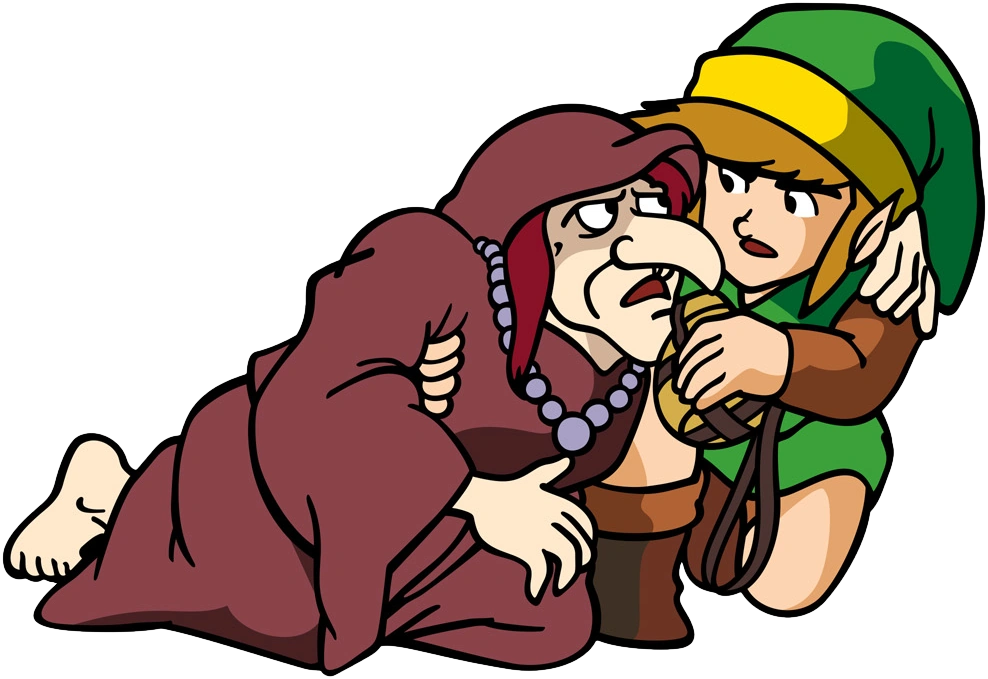
Reading this, I was reminded of https://zeldawiki.wiki/wiki/Impa, Zelda’s nursemaid/servant, who was a similar kind of manual-only backstory figure until Ocarina of Time, where Impa not only appeared as an important NPC, but was revealed to be of the secretive Sheikah tribe, and had ninja skills to boot. She looked a lot different from the aged figure in The Legend of Zelda’s manual.

Impa in the manual to The Legend of Zelda
Impa in Ocarina of Time. Quite a different interpretation.

Link Roundup 4/15/22

“Coming to you from the planet Koozebane”

Jeremy Parish’s NES Works looks at Robot Block (the original R.O.B. game in Japan), Geimos and 10-Yard Fight

Hardcore Gaming 101 covers No One Lives Forever: The originalThe sequelContact J.A.C.K.

Simon Carless’s Game Discoverability Newsletter takes a look at game ownership stats uncovered from a survey of 5,000 Switch owners

And for bargain hunters, GOG is having a sale on indie games, up until the 18th.