Sundry Sunday: The Amazing Circus, and Christmas in Mario Land

Sundry Sunday is our weekly feature of fun gaming culture finds and videos, from across the years and even decades.

Two new items. The short one first, a brief holiday video from pannenkoek, the Mario 64 expert. It isn’t about beating the game without pressing the A button, nor is it a deep dive into the game’s internals in such a way that you could use it in a computer science course. It’s just Christmas as it’s celebrated on Cold Cold Mountain, with festive decorations and multicolored penguins. It’s only a minute and a half:

You want something longer? The Amazing Digital Circus just released episode 7, and it’s much darker than past episodes. What’s that, you think it’s been plenty dark already? Well, now it’s even more so, despite the fact it’s titled Beach Episode and features the return of the Sun. (33 minutes)

Not long ago the creators mentioned that Amazing Digital Circus was never envisioned as a long-term series, that just keeps running on and on, and I think I remember them saying the plan was for about nine or ten episodes? Not many of those left. I wonder if afterwards Gooseworx will get back to continuing her personal series, like the adventures of Elaine or Darly Boxman, or maybe something else like Little Runmo?

Super Monkey Ball All Glitch Breakdown

This one is incredible. The Monkey Ball games are as hardcore as they come, and, for the most part, have reasonably accurate physics that’s consistent under normal circumstances. But normal circumstances do not apply at extremely high speeds, where weird edge cases in the engine become much more likely to affect the ball’s travel.

Nambo created a video that showcases every Super Monkey Ball glitch, for the first two games at least. The video title calls them techniques, but I think glitches more accurately describes what’s being explicated here.

The video is amazingly complete and is 42 minutes long. It takes some kind of ridiculous ultrageek to watch the whole thing. Yes, I did that, why do you ask? Are you going to do it too? If you don’t it’s no skin off of your nose, maybe just watch enough of it to get some idea of how deep the Super Monkey Hole goes?

Jamey Pittman’s Pac-Man Grouping Tutorial

Jamey Pittman is the creator of the foremost document on the workings of Pac-Man ever created, the Pac-Man Dossier. If you’ve never read it, but have any interest in playing classic Pac-Man, then you should go read it immediately. It will make so many things make sense to you.

Pac-Man has a reputation as a game of patterns, and seems designed in such a way as to enable patterns to work. The only randomness is in the behavior of the ghosts when they’re vulnerable, and even then, if the player has performed the same moves at the same times up to that point in the level, even their vulnerable behavior will be consistent. Its GCC-developed follow-up, Ms. Pac-Man, has the red and pink ghosts move randomly at the start of each board specifically to foil patterns.

But you don’t have to play Pac-Man as a pattern game. It is possible to play it “freestyle,” like a naive player would, reacting to the ghosts’ movements. You’re unlikely to make it to Pac-Man’s famous kill screen at board 256 that way, but you can still make it pretty far.

Key to doing that is keeping the ghosts as close to each other as you can. The ghosts are much more dangerous when they’re scattered around you, because they can block off all of your escape routes. Four ghosts piled up on the same spot not only can’t block off other corridors, but their AIs tend to continue to keep them together, at least when they’re far away from Pac-Man. Red and Orange behave identically when they’re at a distance, and Pink’s behavior appear to be more like Red’s the further away from Pac-Man it us. Blue has the most chance of diverging, but often moves the same way anyway.

Not only does keeping the ghosts clustered make survival easier, but it makes it much easier to eat all of them with a single Energizer. The ghosts only turn blue up to around the 4/6th Key board, but up to that point it’s basically impossible to get the maximum score from every Energizer if one hasn’t managed to herd the ghosts into a single, easy-to-gobble blob.

That’s where Jamey’s tutorial comes through. It presents a series of situations and techniques for getting the ghosts near each other and moving as one unit, whether it’s for avoiding them or getting the maximum points from an Energizer. It’s a bit much for casual play, but it can be very interesting to see how a true expert goes about doing it. Here, then, is the tutorial (27 minutes):

Jeremy Parish vs the Nintendo 64

EDIT: I said that Jeremy didn’t have an N64 initially, and I thought he said that, but later on he said he got it at launch. My mistake.

I still don’t know how Jeremy Parish can finish all of his video game history subseries before the year 2084, when the Robotrons revolt and destroy human-kind, but he’s making good time. He’s at last started on his examination of the Nintendo 64 era, with N64 Works #000. (22 minutes)

He admits that the N64 era was one where he originally didn’t have the Nintendo console for that generation, opting instead for the Playstation. I was in college at the time and had both, but got the N64 first, and got far more use out of it overall. Maybe I had weird tastes? Jeremy does admit that Super Mario 64 looked really impressive on all those demo kiosks.

Back then, Mario 64 looked like an impossible feat. Nowadays, through the efforts of people like pannenkoek, Kaze Emanuar and others, we know that Super Mario 64 was a creation combining long cycles of iteration, a bunch of outright hackery, and a whole lot of work. I hope someday that the full story of Mario 64’s creation can be told. Maybe Jeremy’s eventual examination of the game will help to pull back the curtain?

The Basement Brothers look at Popful Mail for the PC-88

Falcom’s Popful Mail is one of those games that takes after classic anime. It’s almost the perfect anime-styled light RPG, with appealing and fun characters on a quest that doesn’t take itself too seriously. It got a good number of ports, and they all have something a bit different about them. In the US we only got the Sega CD version, ported by the prolific-but-controversial Working Designs, but in Japan there was a PC-88 original, and ports to the PC-98, PC Engine CD and Super Famicom. Hardcore Gaming wrote them up here.

I could go on about its very light RPG elements (there’s no experience system at all), its comedic story, its characters and music, and I will someday. But until then, please be content with what the Basement Brothers had to say about the original PC-88 version of Popful Mail, which is the version for the weakest machine, but still fun. (39 minutes)

Falcom had developed a reputation for making hardcore, unique and system-heavy RPGs like Dragon Slayer and Xanadu, so Popful Mail was a departure. It was designed to be an early multimedia game, with animations and even voice acting in some versions. This version, however, was distributed on floppy disk, and for a underpowered system, so it couldn’t rely on audio-visual splendor. It still did pretty well for itself, as the Brothers demonstrate.

It’s always saddened me that Popful Mail was a one-off. It’s a property that seems ripe for sequels and animation, but to my knowledge it never happened. Maybe Falcom will ease their stream of Ys sequels someday and look at updating more of the other games in their history, and maybe then they’ll return to Mail and her cartoony comrades. Here’s hoping.

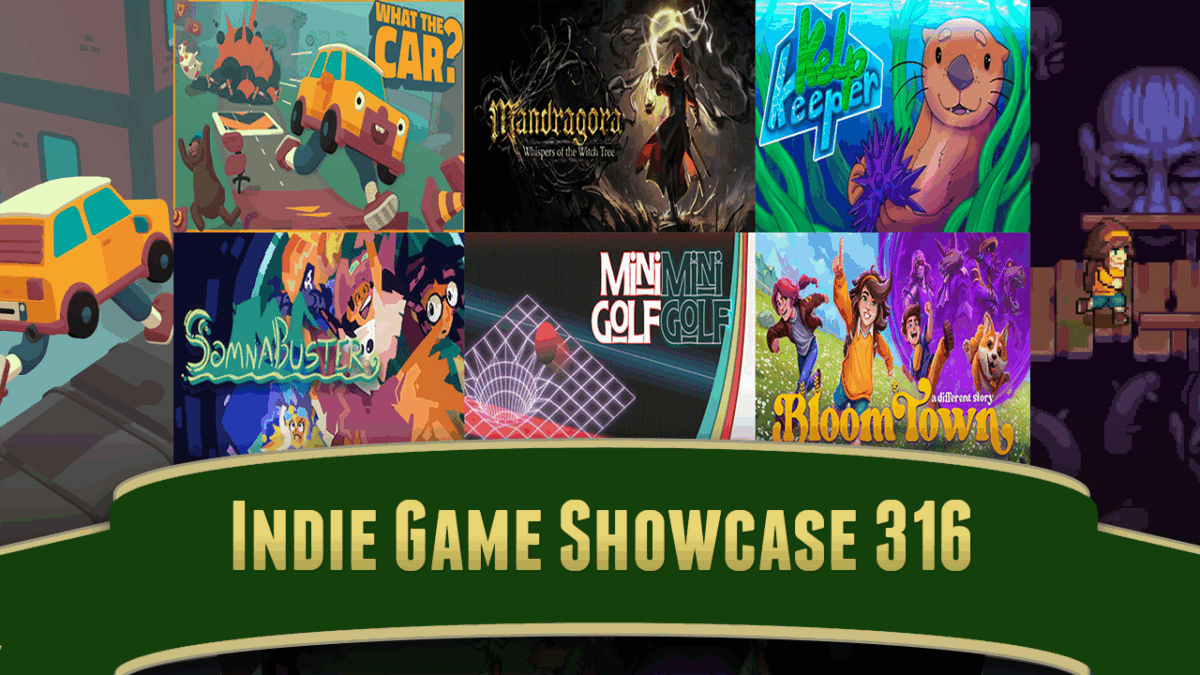
Indie Showcase for 12/9/25

The weekly indie game showcases highlight the many games we check out on the channel. Please reach out if you would like to submit a game for a future one. All games shown are either press keys, demos, or games from my own collection.

00:00 Intro
00:14 What the Car
1:31 Mandragoria
3:23 Kelp Keeper
4:49 SomnaBuster
6:09 Mini Mini Golf Golf
7:30 Bloomtown

Multilink Monday 12/8/25

The latest installment in my eternal quest to reduce the size of my notes file! Also because a lot of my day yesterday was spent in preparing for a TPUG World of Commodore demonstration of Loadstar Compleat, which I hope to show all of you soon, but meaning that I need something relatively low-effort for today.

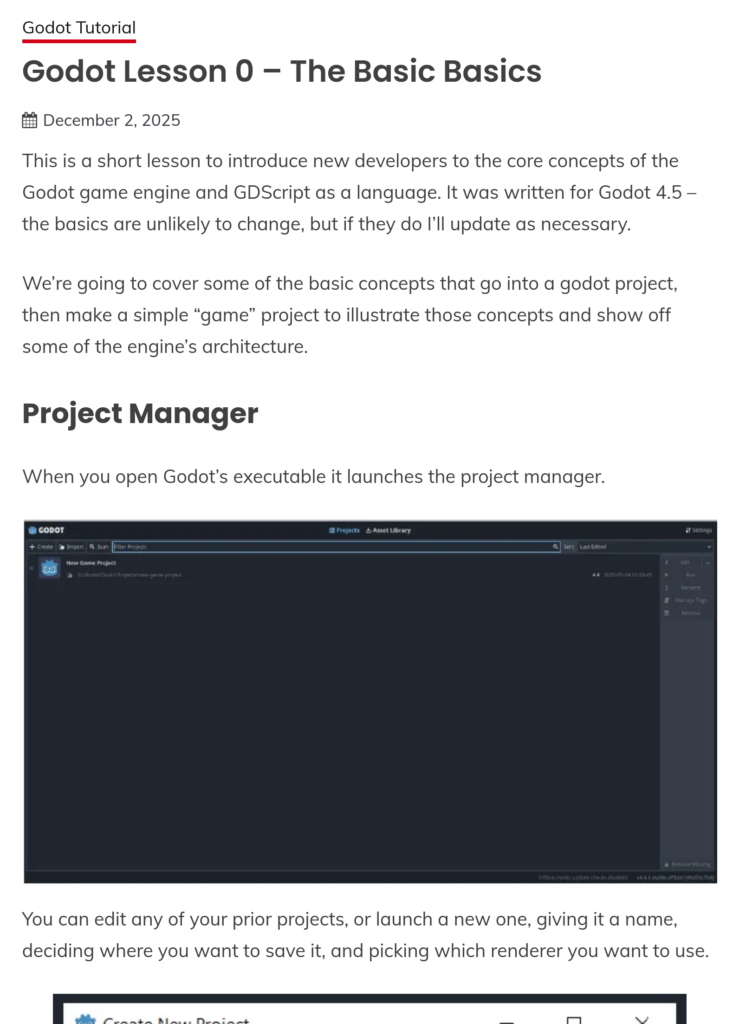
1. Godot Lesson 1: The Basic Basics, a non-video tutorial for getting yourself started with the best Unity alternative.

2. NESbag, a system for wrapping NES homebrew for immediate play by others without having to set up an emulator yourself, announces two-player support.

3. A “demake” of Zelda’s Adventure for CDi to make it a much more playable, Link’s Awakening-style game for Gameboy Color.

4. Along those lines, from Gumpy Function, maker of Grimace’s Birthday (previously), two Simpsons fangames for Gameboy, Lee Carvallo’s Putting Challenge 2, and the My Dinner with Andre game that Martin was seen playing on an arcade cabinet.

5. He uses AI-generated images to provide visual interest, which is usually a strike against a link for me, but I know he means well so I’ll give him a pass this time. Youtuber Lupe Darksnout presents a series on getting video to play on a Commodore 64. (playlist link, 48 videos averaging about 17 minutes each, about 10½ hours in all)

6. Abyssoft on Youtube, Multiple World Record Speedruns Brought Into Question. (18 minutes) There is a sponsored segment that’s about a minute long, here’s a link queued up to after it.