DragonCon 2026 Aftermath

Well another DragonCon is done for the year. I currently sit in the Westin, a high class hotel I ordinarily could never afford, here after the con has concluded only by the grace of a roomshare, a bunch of people who chip in for a room together, an arrangement I think is ordinarily against the rules, but hotels put up with because it ultimately gets them more business for a thing like DragonCon.

DragonCon bills itself as “the largest multi-genre and pop culture convention in the world.” That may seem artfully put, and it may be, but DC casts a very wide net of subjects. A few examples, it hosts an “Apocalypse Rising” track of world-ending fiction, a Military Sci-Fi track in addition to tracks for general sci-fi, Star Trek and Star Wars, a Digital Media track, a British culture and media track, Anime and general animation tracks, a puppetry track that’s a lot of fun, and much more.

DragonCon crosses with this blog’s umbrella via the Video Gaming track and associated events, including two arcades, a console gaming space, and (though it takes a bit of exploration to find) a couple of installations of Artemis Cosmos, formerly known at the Artemis Starship Bridge Simulator.

The Electronic Frontier Foundation is not directly involved, but has a relationship with Electronic Frontier Georgia, and they maintain a small but informative presence there. Yet while there is are fair number of game-related activites there DragonCon is not generally thought of as one of the big video gaming conventions, in a field containing the PAXes, or even Southern Fried Gaming Expo, which takes place in the same city a month earlier, and has hundreds of video arcade and pinball machines.

This was the 40th anniversary of the convention, which had 80,000 attendees in 2017, and fills five hotels and multiple floors of two other buildings besides. This year they hosted Richard Garriott, a.k.a. Lord British, who was involved in multiple panels. Garriott was in fact a guest at the first DragonCon back in 1987, and has returned occaisionally since. I met him at one of his panels, and he said he’d answer my questions via email. I haven’t written them yet, and when he sees the kinds of things I ask he may have second thoughts about it. We’ll see.

Stephen Seitz once again ran his multiple Gamecube gaming panels at night, where people could pop in to play video games like Smash Bros. Melee and the original Kirby Air Ride, set up to play using the Gamecube’s little-used LAN mode. Air Ride is starting to look a little long in the tooth now, finally, that a greatly expanded sequel is out for the Switch 2, but the original is still very playable.

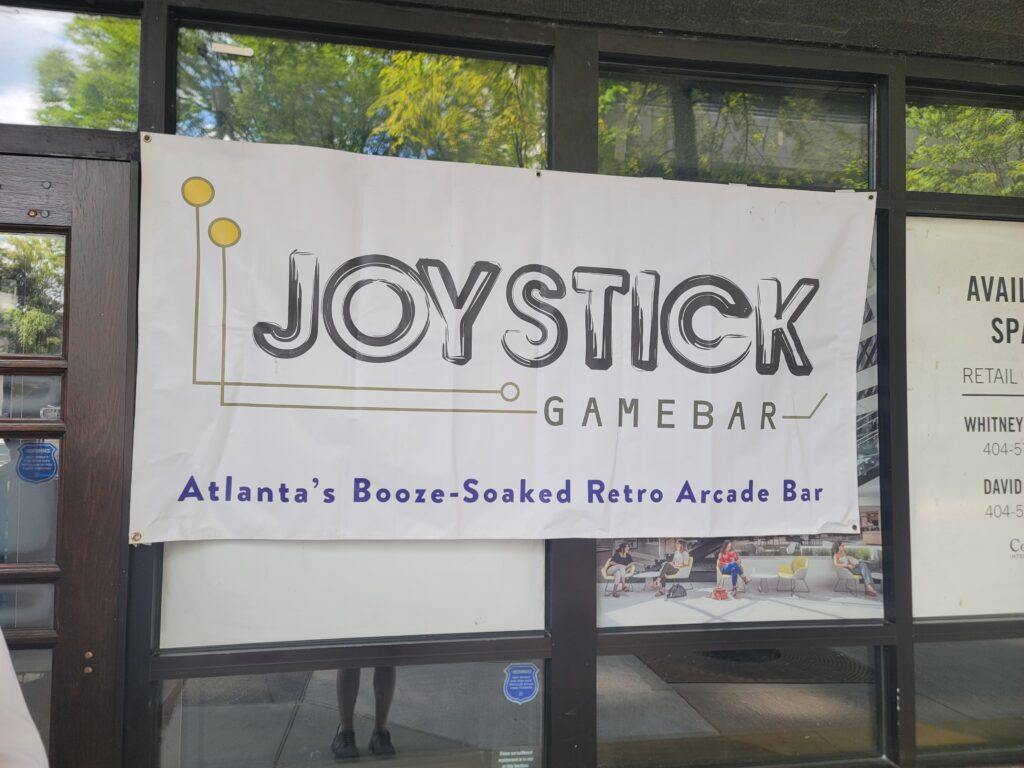
The two arcades at DragonCon this year, as in recent years, were the retro-themed Joystick Gamebar, serving alcoholic drinks and classic arcade games and pinballs, and Save Points mostly Japanese lineup. Of the two I enjoyed Joystick’s more this time. Arcade games at cons often end up a little cursed; for example, the Twilight Zone machine never felt like its flippers lined up well with ramp shots, and the upper flipper was a bit weak making it hard to hit the important Piano shot.

The best-playing pin at Joystick this year was White Water, a classic Williams machine with high risk/high reward play. At one point I had the Grand Champion score on the machine at 524 million, although I got edged out later on. I got to show off Ed Boon’s secret “EJB” menu in Mortal Kombat II a few times to interested players. A few other great games there this time were Joust, Gauntletn Atari Tetris, NBA JAM, Donkey Kong, Frogger and multiple Pac games.

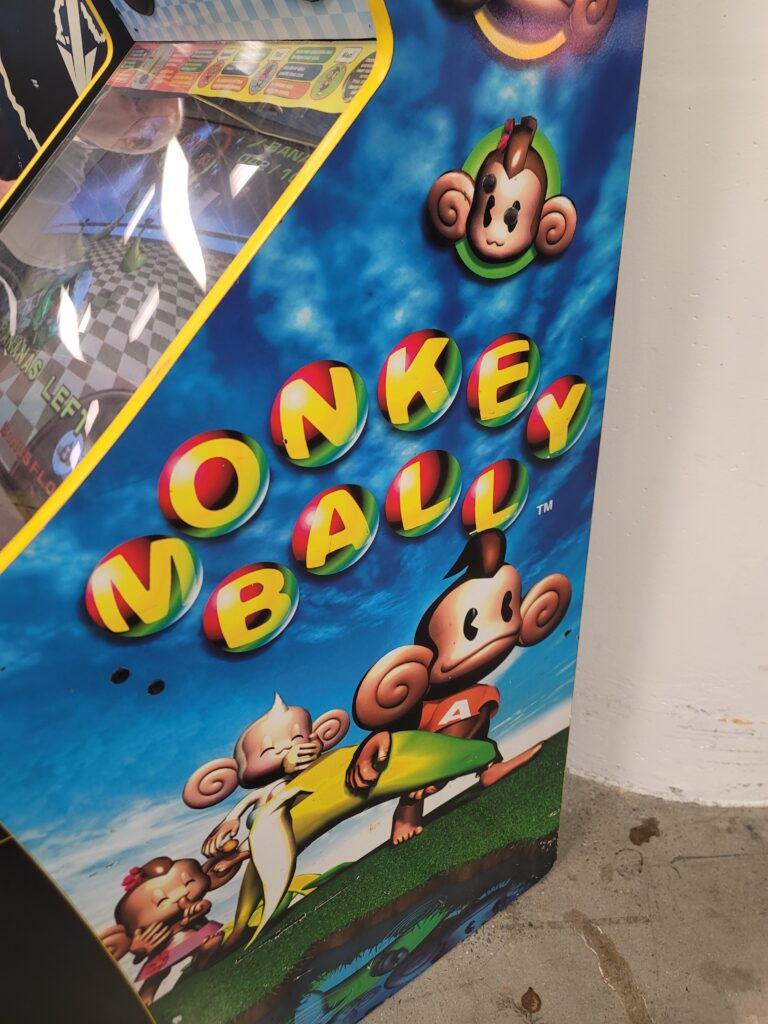
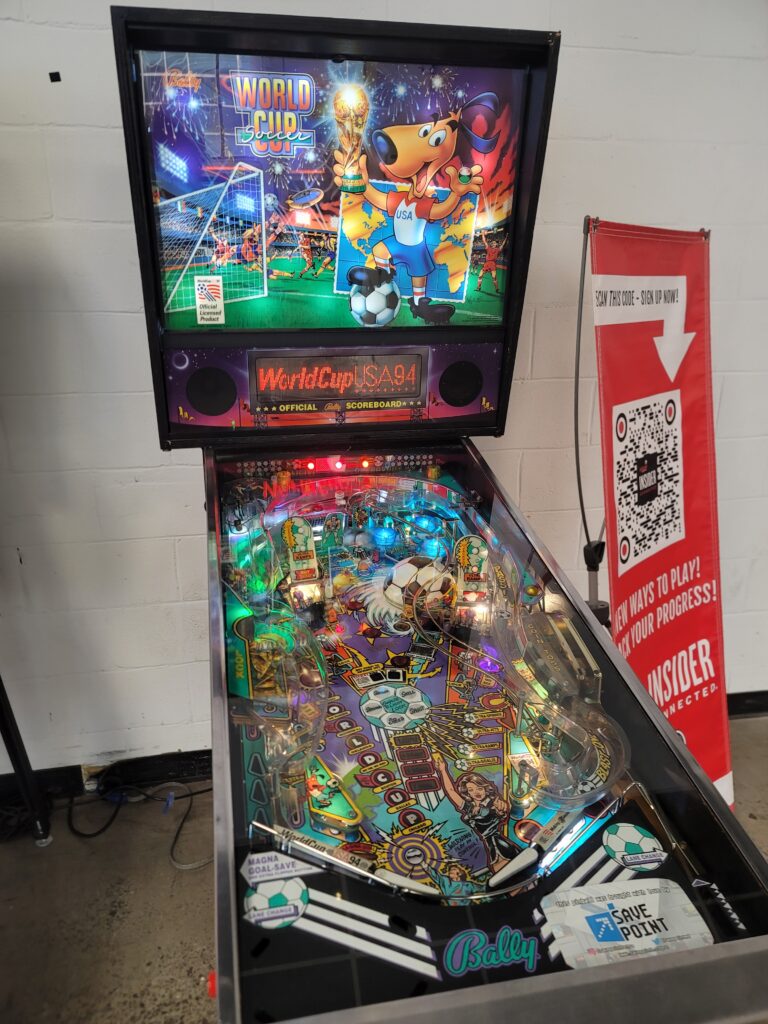
Save Point’s arcade tends to skew heavily towards Japanese rhythm and fighting games, some of them recent, which aren’t my favorite types so I don’t have a great deal to say about them. In previous years they brought out the Japan-only arcade version of Rhythm Heaven, Sega’s weird Cosmic Smash, a Point Blank sequel and, most interesting of all, Rainbow Bombergirl. The most interesting games there this time out were Sega’s Monkey Ball (the predecessor of the console Super Monkey Ball series), a Japanese Tetris game, the original Space Invaders, a sped-up Ms. Pac-Man and, in the arcade area, Bally’s classic World Cup ’93.

Next year my plan is to volunteer in the board gaming and RPG tracks. I hope that I get in for, while I know a number of money saving tricks, DragonCon gets more expensive for me to attend every year. Here are some photos from this year’s convention, with commentary.
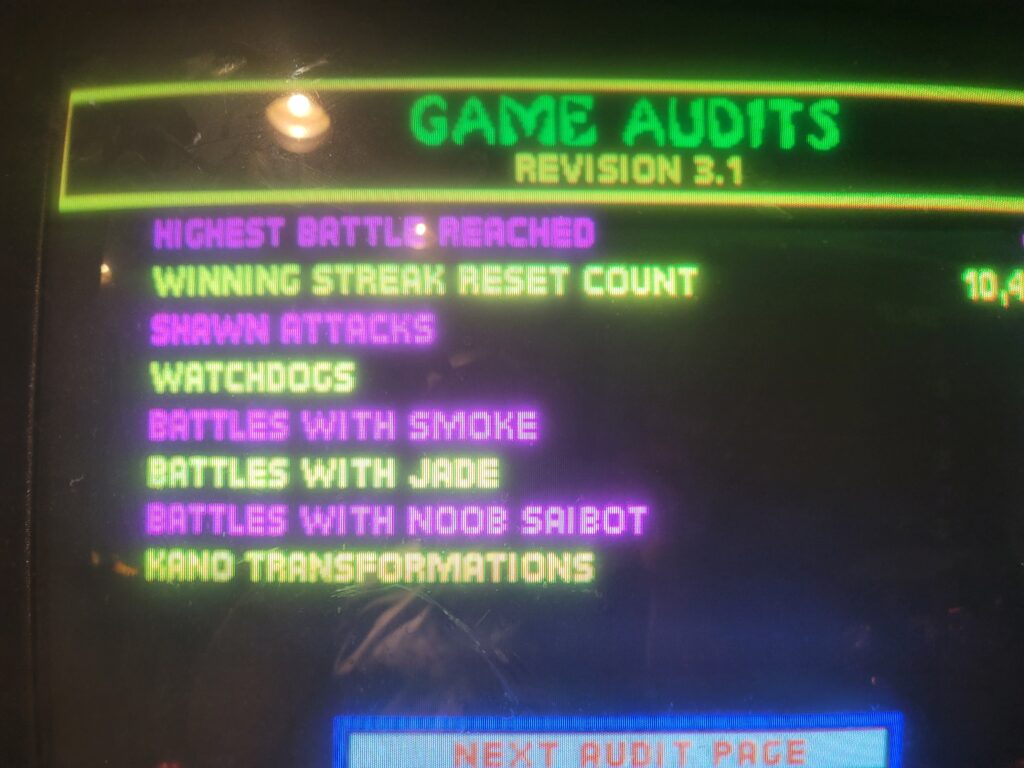
From Mortal Kombat II’s EJB Menu
World Cup Soccer ’94
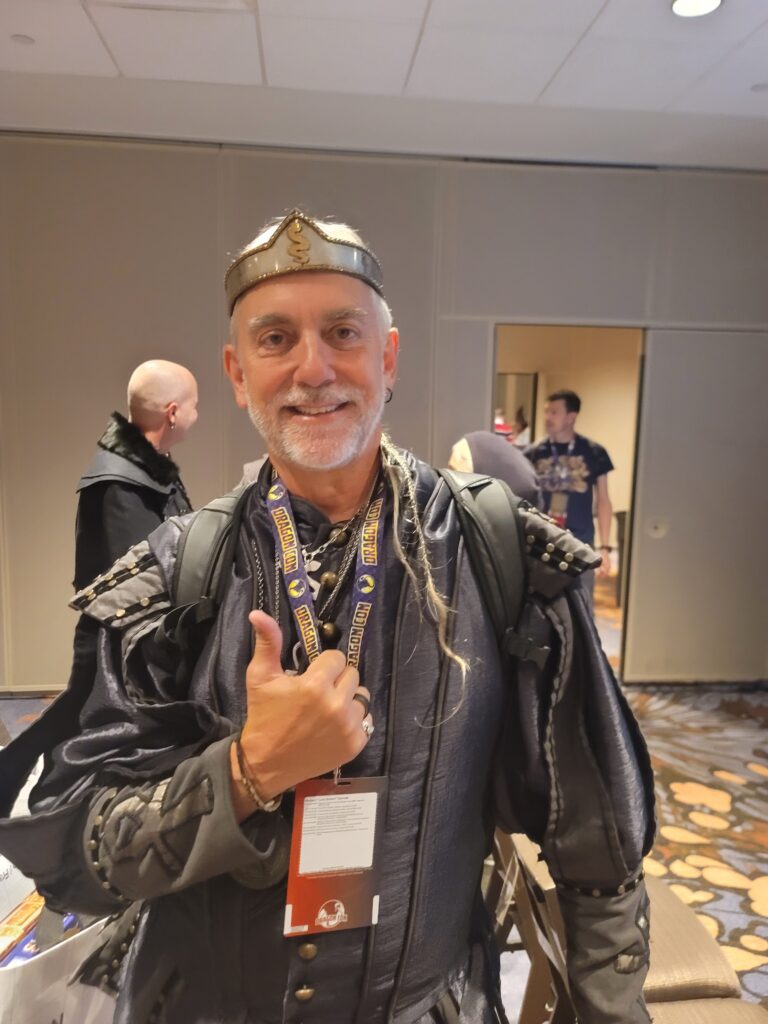
The ever-charming Richard “Lord British” Garriott, after his talk about his plans for reviving Ultima once he, due to a quirk of copyright law, wrests control of it away from Electronic Arts.
Monkey Ball! They also had The Typing of the Dead, but it wasn’t nearly as well-localized as the English Dreamcast version, and all the text was Romanized Japanese words.
The banner for the Joystick Gamebar, posted on the outside of its temporary location in a defunct Benihana.
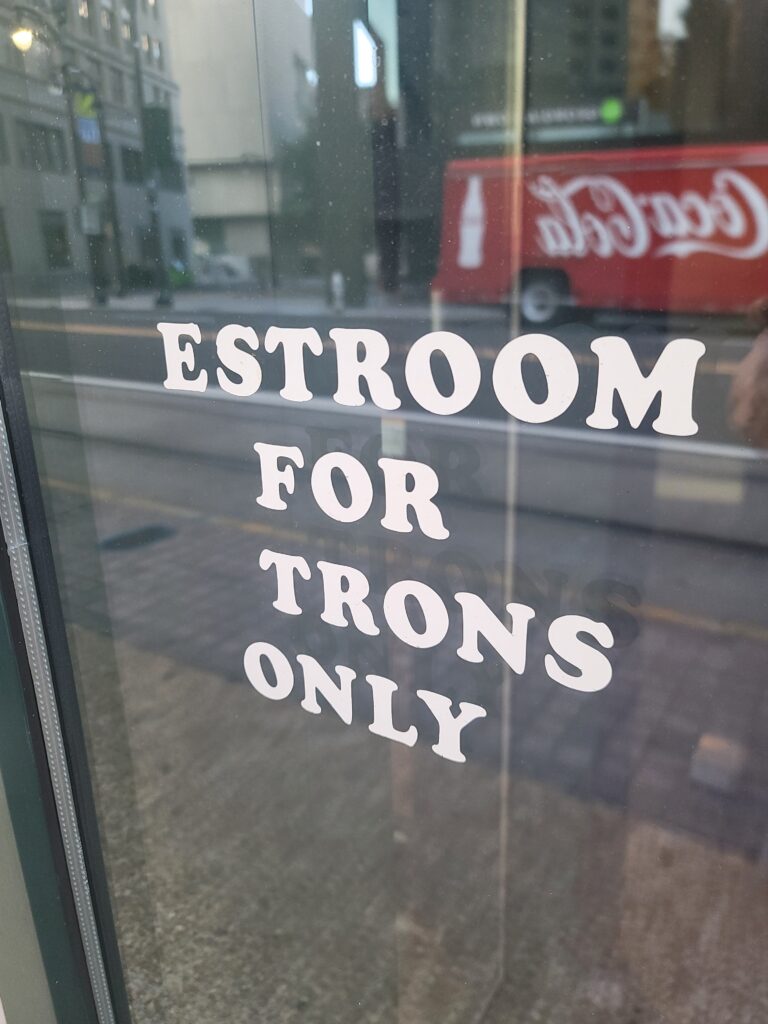
BE ADVISE! ESTROOM FOR TRONS ONLY!

Richard Garriott Getting Ultima’s Copyrights Back

It’s been going around the gaming bigsites (PC Gamer, Time Extension, Kotaku, Eurogamer and others) that due to a quirk of US copyright law Richard Garriott, who begin the Ultima series in June 1981, may finally be getting back the rights to his now-ancient series from the corporate behemoth, Electronic Arts, that has long owned them.

The details of the story are that this only involves the copyrights, not the trademarks. But trademarks are different from copyrights, they must be continuously defended and expire if not utilized. Every so often Electronic Arts attempts to do something new with the Ultima name, but none of them usually turn out that successful. The sole remaining example of classic Ultima is the venerable MMORPG Ultima Online, older than World of Warcraft, even older than Everquest. It’s possible that EA could use its unbelievable continued existence as a pretext to keep hold of the Ultima trademark, but UO is incredibly ancient itself nowadays and doesn’t have the large userbase it once did.

I have no love for the monstrosity Electronic Arts has become, the memory of their enlightened early years under Trip Hawkins fading after decades of stagnating sports lines chained to big leagues licenses, and piles of brown and gray military shooters. They sit on countless classic computing properties, doing nothing with them while people who fondly remember them age and die off. Yet I choose to believe this isn’t out of spite, more that they can’t be assed to do anything with properties that aren’t gigantic sellers.

Ultima is one of the few cases where a piece of their gigantic lucite block of IP shows a crack that could be broken away. Richard Garriott has maintained his wealth from the time of Ultima’s success, and may have the resources to fund a revival. Whether it would be successful… I can’t say. Garriott has tried making multiple games since leaving behind Ultima with varying degrees of quality. His Tabula Rasa from NCSoft, from nearly 20 years ago, didn’t do well; I’m not apt to hold that against Garriott though, considering how badly they treated City of Heroes.

Every so often Richard Garriott comes up with some new concept, but truthfully it’s been a while since he’s made waves. I personally sat at a talk he gave at DragonCon a few years ago where confidently held forth on the direction that he saw gaming going, but then failed to go. I’ve tried Shroud of the Avatar: Forsaken Virtues recently, he was involved with it but has long since left it. I bounced off. I’d like to give him the benefit of the doubt, but Garriott’s most recent project involved NFTs, which seems like a huge danger sign.

My personal opinion is that Richard Garriott should immediately approach Digital Eclipse, developers of the terrific remake of Wizardry: Proving Grounds of the Mad Overlord, and together start making something along those lines. Richard, if you’re somehow reading this, please consider it! They do great work. Maybe something involving Ultima III, IV or VII? Any of those would be amazing and could open up this long-neglected series for a new generation of players.

Anyone else out there have personal experience with how amazing this game was?

I’ve heard that Garriott is going to be at DragonCon again this year. I plan on reporting on it on-site. Despite what you might think from what I wrote two paragraphs above I’m still rooting for him. Ultima is the most shamefully neglected classic RPG franchise out there right now, and I’m excited to think that it might make a comeback, no matter how unlikely that might seem right now. I didn’t think Wizardry could make a comeback either! Let’s all clutch our ankhs tightly and hope.

Romhack Thursday: Ultima Exodus Remastered

On Romhack Thursdays, we bring you interesting finds from the world of game modifications.

They have fallen into obscurity in the intervening decades, but it used to be that the Ultima games were some of the biggest RPGs around, and many still have fond memories of them. The story of the rise and fall of Origin Systems, once one of the biggest game publishers, and how now they’re just another of the hundred ignored lines on EA’s balance sheet, is not our business here today, but instead that of one fan’s effort to improve one of the less faithful adaptations: the NES version of Ultima Exodus.

Ultima and Ultima II (and their predecessor Akalabeth) were popular, but Ultima III was the first megahit version of the game, that could be considered to stand up today. Ultima I was pretty small, and Ultima II had a lot of crazy elements like space travel. Ultima III has a much more cohesive game world, a more detailed quest, and generally feels a lot more like what we would consider an RPG game now. Later games would build off of it and become even more popular, especially Ultima IV with its detailed morality system, and Ultima VII with its vast game world, depth of NPC interaction, and many system and UI improvements.

This thief looks a lot cooler here than they did in the NES original!

Back to Ultima III. One of its best-selling versions was the Famicom version in Japan, which had a bit of a media blitz around its release. Both the Ultima and Wizardry games had something of a second life on Japanese computer systems and consoles, where they would go on to sell millions of copies more. While EA’s ownership and neglect have meant that Ultima is mostly gone and forgotten*, in Japan new Wizardry games continue to be made, hewing to that series’ original dungeon crawl aesthetic.

* This is, honestly, partly to series creator Richard Garriott’s ownership of several important characters, meaning both parties have to agree to the other’s vision for any further official Ultima game to be made. And Garriott seems to be chasing fads lately; his most recent idea for a game utilizes that bane of all game design concepts, NFTs.

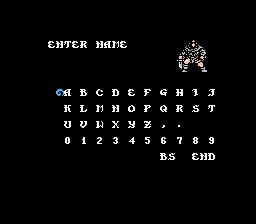
The font especially is much improved, over the very bland type used before.

So now you have a little idea of what Ultima is. The Famicom/NES version was a hit in Japan, but it differs from the computer version in many ways. This was pretty much the norm for the many Japanese-made Famicom adaptations of Western games. An article could be usefully written on all the ways Famicom ports of RPGs differ from their originals. Maybe later.

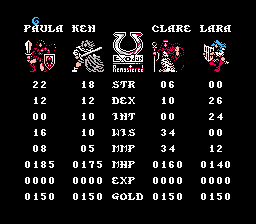
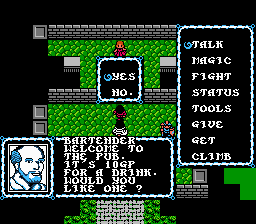
The character portraits are especially nice!

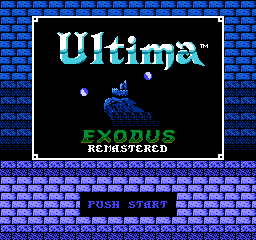
The point of this romhack is to change the NES version of Ultima III: Exodus so it more matches up with the computer versions. It uses its own patching system, so Romhacking.net’s web-based patching system won’t be of use.

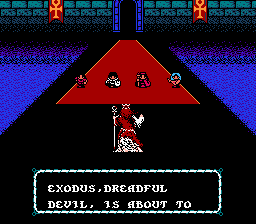
So many little things have changed in this version that it’s hard to talk about! At the very least, the graphics have received a complete overhaul. The cartoony figures of the original, which were pretty silly even back then, look a lot more appropriate for a series with the stature and legacy of classic Ultima games.

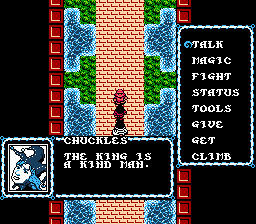
Hey Chuckles!

NES Ultima Exodus is also notorious for a number of significant bugs, including the absence of an important clue, it being impossible to cancel a character’s turn without wasting it, poorly differentiated character classes, and the lack of some of the monsters of the computer version. These have been fixed in this version. Some other niceties have been added, including character portraits for the people you talk to, which is really going above and beyond for a game like this!

Seriously now: why haven’t the Ultima games been remade yet? Everything else has been remade, why not Ultima? Money is being left on the table!

It’s pretty much become the definitive console release of this landmark of computer RPG gaming! You should check it out if you have an interest in these things.