Gamefinds: Games Don’t Have To Be Good To Be Good

We love it when we find weird and unique indie games to tell you all about! Our alien friends to the left herald these occasions.

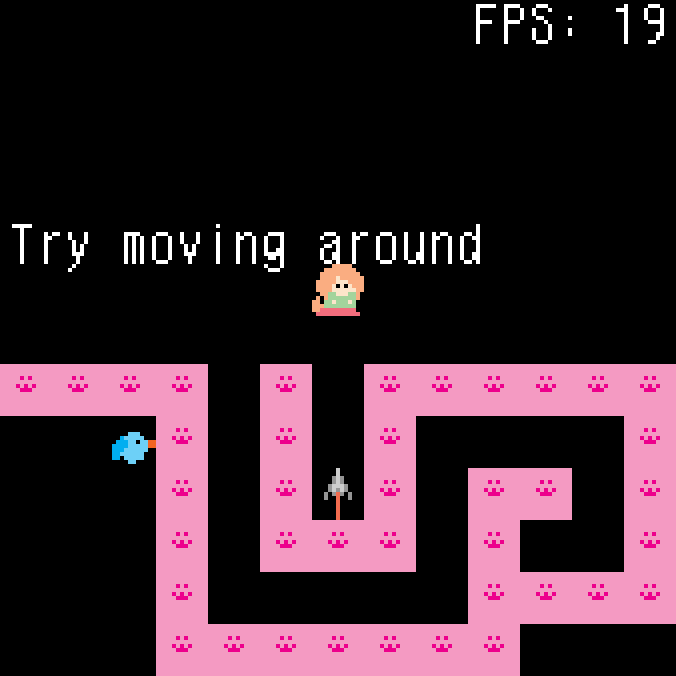
sylvie’s Games Don’t Have To Be Good To Be Good is an interesting little browser game where the point is figuring out how to play, then what to do. It’s really short! You can probably finish it in five minutes.

The description calls it a manifesto, and I can see that, and also agree with it. (And it’s an entry in Manifestø Jam 2026 too.) My belief about game worth is that there can be a hundred things wrong with a game, and everyone can agree that they’re wrong, but if there’s one really really good thing about it, just one powerful elemental spark of awesome, if it’s strong enough, it can make all the “wrong” things meaningless.

It’s points to one of the great problems with game journalism as it’s currently practiced. The traditional lists of flaws, the reporting of how “smooth” it is, of how realistic the polygons are and the other excuses a reviewer gives not to play something, none of those things matter. Not if the game has something really good going for it, and to obsess over trivialities will blind you to many worthwhile things.

It’s why it took forever to get the gaming press to notice roguelikes! The genre of classic roguelikes feels like it was designed to be a koan, a seemingly-impossible question that prompts thought, meditation and eventually enlightenment. Classic roguelikes (or as I’m coming to call them, true roguelikes) look entirely unlike everything magazines and websites told players they were supposed like. They rejected everything that being good meant. So why are they fun? Please contemplate that with me now. Ooommmm….

Coming back to Games Don’t Have To etc., it does push the boundaries of enjoyability a bit, but overcoming its purposeful vagueness turns out to be a puzzle to solve. And you can do it! Please give it a try. It might not be an all-time classic, but it’s an enjoyable use of five minutes. See if you agree.

Games Don’t Have To Be Good To Be Good, by sylvie (itch.io, web, $0)

A Walkthrough of Barbuta (UFO 50 #1)

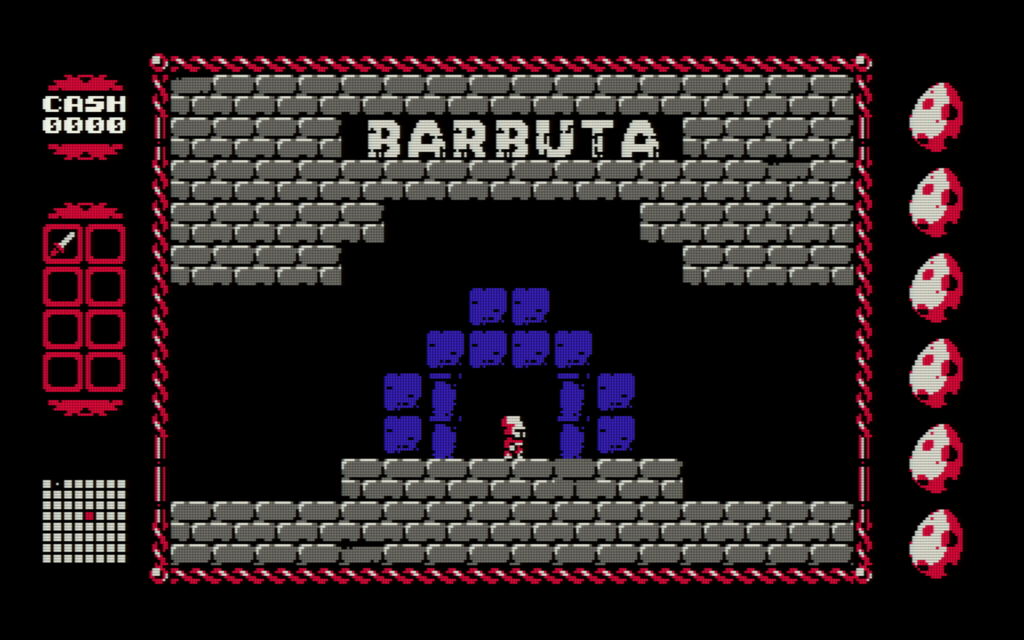
We’re on UFO 50 kick here, there’s so many nice games in there, and of such a wide variety. And that starts right off with the first game in the set, Barbuta, a simple but mysterious platformer.

I suggest walking one tile to the right, then immediately restarting the game. You’ll see why.

Barbuta is made in an old school style, and it’s rough, although short. You get seven lives, instead of the one a really old game might give you, but there are no continues. The very first screen contains a death trap. It’s the kind that you won’t fall for more than once, but it teaches an important lesson: pay attention to the terrain. Anything that looks unusual, different from its surroundings, could be important, or deadly.

Rather than tell you of my findings, which might not be too useful since, while I’ve gotten some ways in, I haven’t finished it yet, I present a Youtube walkthrough from sylvie (32 minues). If you just need a nudge you could just watch a few minutes, until you find something that gets you unstuck. That’s my recommendation, anyway.

1 Credit Clear of Tower of Druaga, With Explanations

This one I find rather fascinating. There may be no arcade game ever made as purposely frustrating to play as Namco’s Japanese-only game The Tower of Druaga.

Hero Gilgamesh (often shortened to “Gil”) must pass through 60 maze levels, collecting a key from each then passing through the door to the next, while defeating enemies that get in his way, in order to rescue his love Ki from the villainous Druaga.

BUT almost all the levels have a secret trick to perform. If this trick is accomplished, then a chest will appear that, if collected, will grant Gil a special ability. Some of these abilities are helpful. Some, in fact, are necessary, and if they aren’t collected then on some future level Gil will be unable to advance! The tricks are explained nowhere in the game: it just expects you to know them, if not discovered personally then learned through word of mouth. (This was like a decade before most people had access to the internet.)

What is more, nothing in the game explains what the treasures are or what they do, or what you’ll find on each level if you do know the trick. And a few of the treasures are actually harmful! It means that, to win, you have to rely on a host of hidden information, obtained by both your own observation and from what you’ve heard from others. Which requires a ton of quarters to get, which suited manufacturer Namco just fine. Unfortunately (or, maybe, fortunately?), the game crash prevented Namco from trying its luck with this game in Western territories.

As a result, The Tower of Druaga is a game that’s probably experienced watching someone else play, rather than playing yourself. That’s what this video is, Youtube user sylvie playing through the whole game, not just advancing through, but explaining how it’s done along the way. It’s an hour and three minutes long: