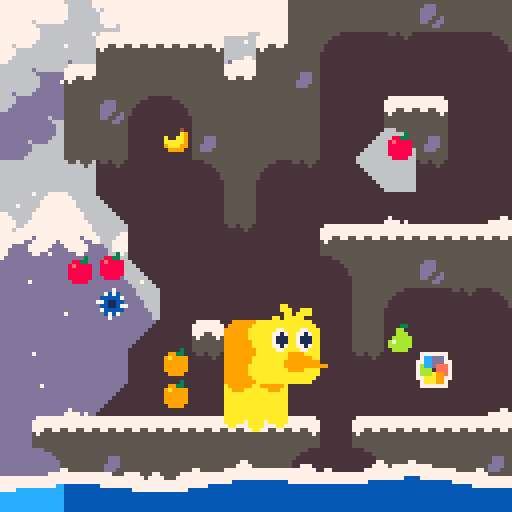
We love it when we find weird and unique indie games to tell you all about! Our alien friends to the left herald these occasions.
Another one, so soon! I feel like I should post these as I find out about them, or else they’ll fade in memory, and in importance. I want to get them out to you immediately, while the bytes are hot.
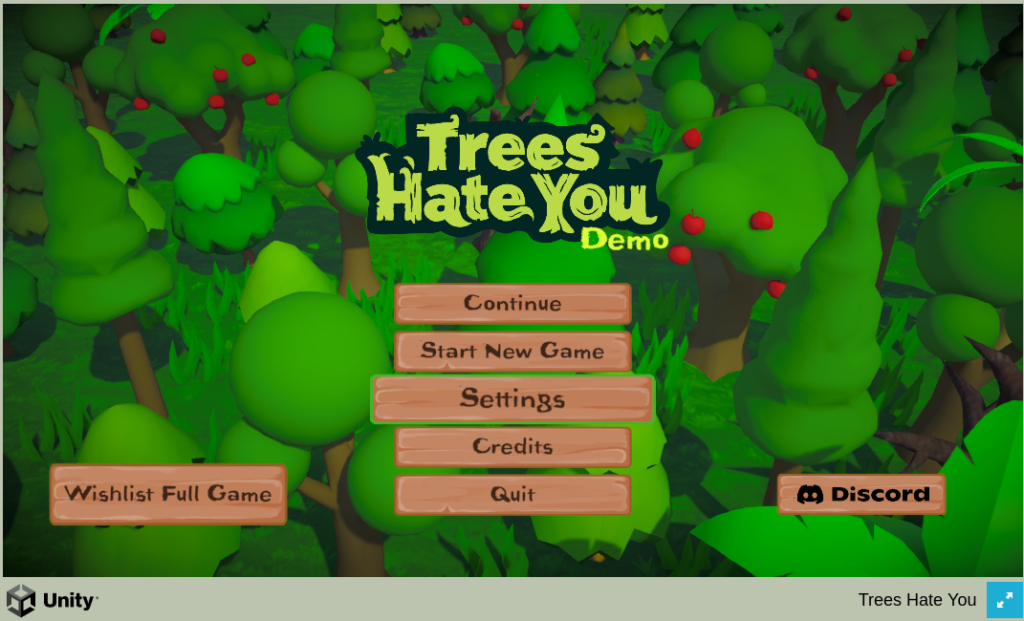
Yet also, with this one, I sort of want you to discover what it’s about, the promise of that title, Trees Hate You, for yourself. That’s not how these descriptions work though. If I just say “play it, trust me,” some of you will, but most won’t, which will be something of a shame for this very silly game.
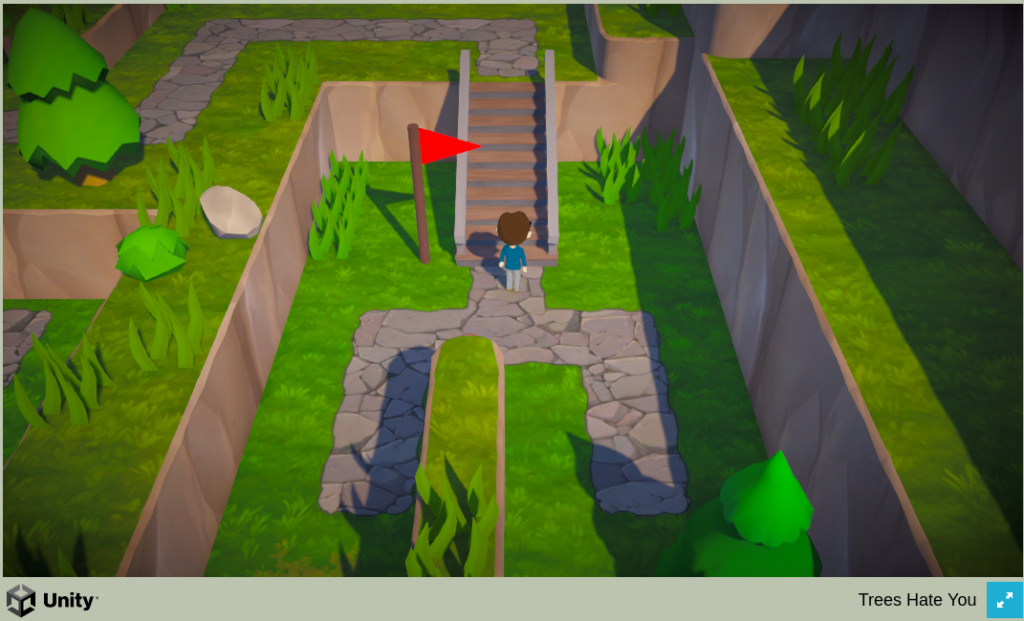
Basically, you’re trying to find your way home after a picnic, but for some reason (littering maybe?), the trees on the way back have decided to stop you. The ways in which they display their vegetative ire are the humor of the game. The ways you must discover to evade it are the game of the humor.
This is just a free demo, a preview of what developer tykenn hopes will be a longer game. I’m not sure how long they can sustain the joke honestly, but at least the demo is entertaining, if you can handle a bit of frustration. I look forward to seeing if they can sustain the premise.
No spoilers, but… be prepared to be stuck at this checkpoint for a long time.
We love it when we find weird and unique indie games to tell you all about! Our alien friends to the left herald these occasions.
One of the best puzzle games out there is Noumenon Games’ colorful, fun, and challenging Snakebird, its easier sequel Snakebird Primer, and their combined version on Switch Snakebird Complete.
But even Snakebird Complete costs $15. What if you just want to dip your toe in and find out why the snakebirds are the snakeword(s)?
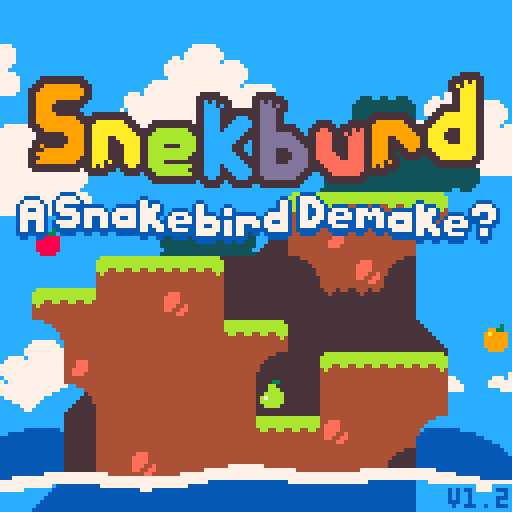
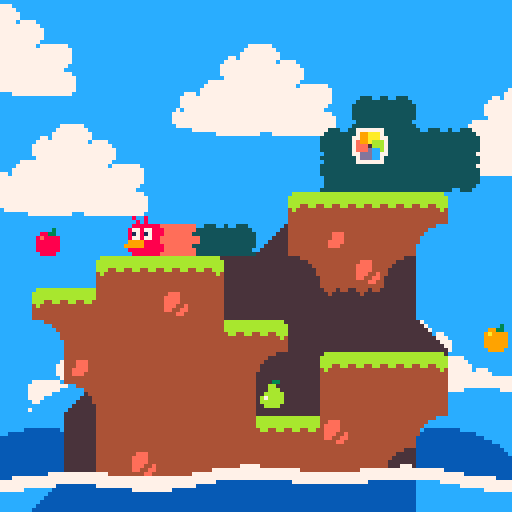
Created by a Pico-8 dev called Werxzy, they’ve made a “demake” of Snakebird that is essentially just the original but with different levels and pixel graphics, which can even be tried out on the web. And if you’re already a certified serpent-falconeer, it even has some new tricks for you to learn.
The first level. Even this one is challenging!
You control up to four colorful adorable snakebirds, who you can switch between freely. Their mission is to consume all of the fruit on each level, and then escape to the next island. They all move, one turn at a time, like the snake in Snake, but in a side-view, gravity-burdened world with unexpected implications.
It’s a good idea to spend some time at the start getting used to how the SBs operate. Despite being nominal birds they cannot fly. It’s easy to get a longer one trapped against a wall, but you’re allowed infinite undo levels, and you’ll need all of them.
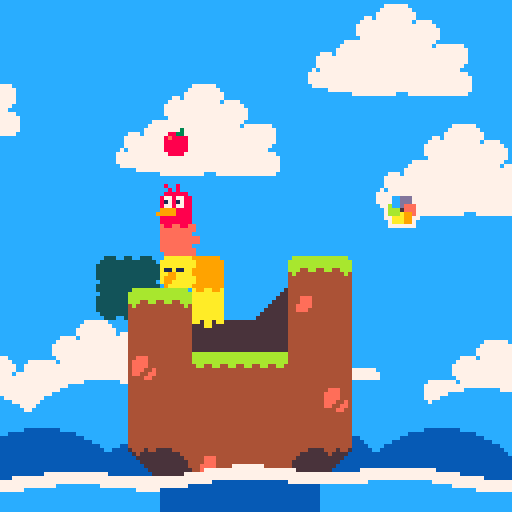
An early level with multiple birds. Your first instinct may be to share the fruit, but sometimes the greed of one bird is necessary if they all are to escape.
A snakebird that eats a piece of fruit grows one space longer. In multibird levels it doesn’t matter to completion which feathery slitherer eachs which fruit, but sometimes the design of a level means a specific bird will ultimately need to be a certain length.
Some levels have no fruit, and reaching the exit is all you have to do. “All” you have to do.
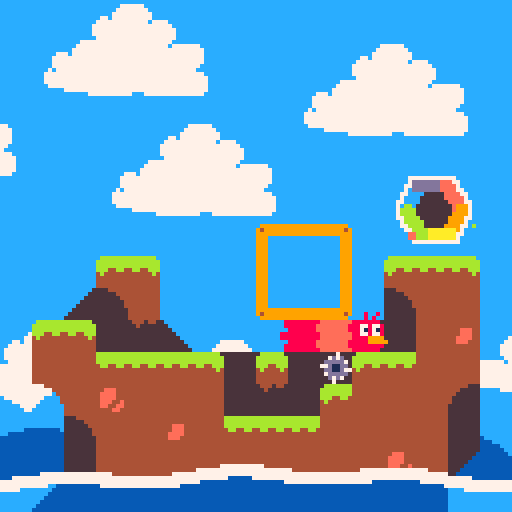
To complete a level, not only must all the fruit be eaten, but all birds must make it to the goal portal. This will often be the hardest part of the puzzle. The ease with which one birdbrain can get stranded unless their snavian colleagues help them to the exit will confound you, but they should be applauded for not leaving anyone behind. (They can’t applaud themselves—no hands.)
Hey kids, it’s your favorite, Big [Snake] Bird, just arrived from Snesame Sneet!
There’s even a level editor for making puzzles to challenge your friends, or maybe even yourself if you’re really forgetful. Progress is saved between sessions on the same browser. And it’s a good thing, for the game lives up to the original’s reputation for difficulty.
So please, give these fluffy beakworms a place in your heart. I’m told that as parasites they’re completely benign!
Snekburd (from Werxzy on itch.io, $0, based on Noumenon Games’ Snakebird series)
We love it when we find weird and unique indie games to tell you all about! Our alien friends to the left herald these occasions.
There are tens, if not hundreds, of thousands of quirky little games and things on itch.io. Lots of them are worthless, some are mere cash-ins, and a few are really nice, but good luck finding them with the towering piles of meh blocking view of the horizon, or indeed anything else.
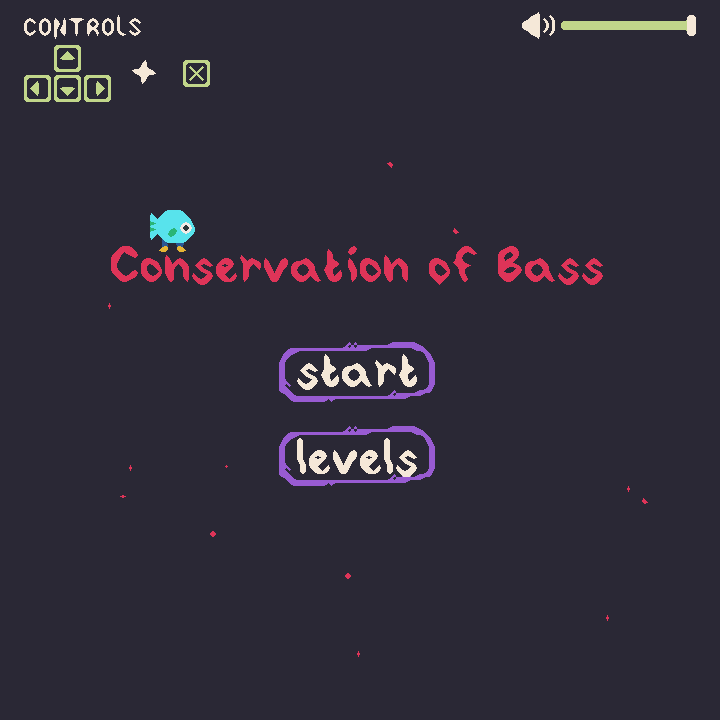
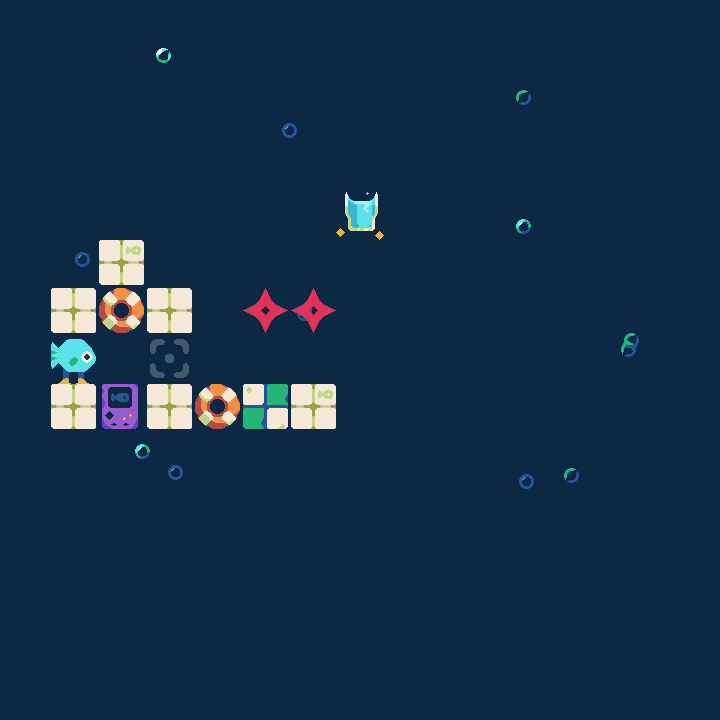
So it’s nice when you find something through the browse feature that’s a joy to play, and such a game is Emlise’s Conservation of Bass. At first glance it looks like it’s going to be another game of the type that bitsy makes it easy to construct. Nothing against bitsy or its games, but most of them are pretty simple, leaning more into the fun of exploring a little world than offering challenging gameplay.
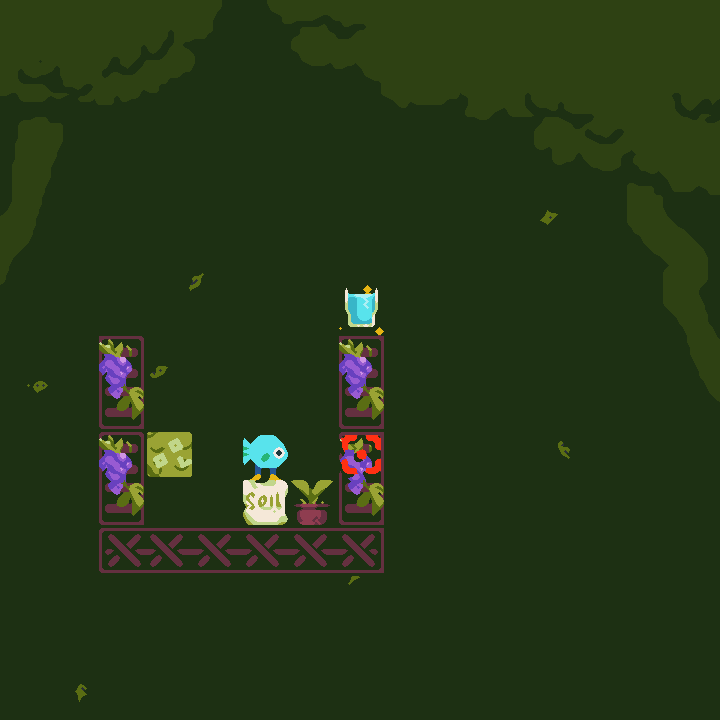
Here’s an early example level, that relies on the fact you can swap both horizontally and vertically.
But as it turns out Conservation of Bass only looks like it’ll be an exercise in pure exploration. It’s actually a completely linear platform-puzzler, and it requires a surprising amount of skill to get far into it. Your walking fish protagonist can only jump one space high, and can’t move very quickly, so sharp jukes in the air won’t save you. As is the custom for these kinds of puzzle games now there’s no penalty for failure, it immediately resets the puzzle for another try.
The fish’s special trick is, it can swap spaces with blocks exactly two spaces away from it with the X button, if they’re the same size as it. It can do this in all for cardinal directions, by pressing that arrow key. These are the same keys that move the fish, and allow it to jump, and it can even do this in mid-air. That’s where the control skill comes in, even if you have a solid plan for how to solve the puzzle, putting it into effect may take you a few tries, as the timing window for swapping a falling fish with a block over safe ground is pretty demanding.
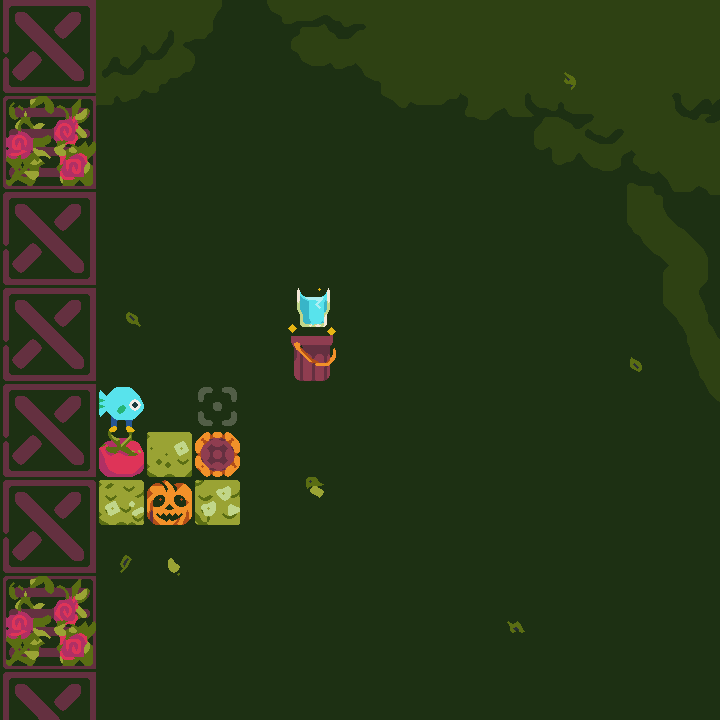
This one is very tricky! The fish can only jump one space high, and it can only swap with blocks two spaces away. To get a block into a place where you can use it to get up to the glass of water goal, it has to come from the bottom layer of the starting platform, but that’s directly over the void. How to solve it….
Helping out is a special property of that X button that’s unveiled to you a short way in: holding it down freezes time, and lets you then use the arrow keys to decide which direction you want to swap in at a bit without needing split-second accuracy, so long as you pressed X with that same accuracy to begin with.
This is another of those games where you’re introduced to its elements slowly, which is great because the puzzles get hard fast. I got to the early levels of Chapter 3 before my pending deadline forced me to set it aside and write it up. See if you can get beyond that.
Why is it misunderstood? Because it received several ports to other platforms around the time it was popular, they all lacked the special something of the original game, and in more recent times the game has been unfairly derided on the strength of those ports.
What is it that makes Dark Castle great on original Macs? It’s a combination of super-sharp art, responsive and unique controls (it’s a platformer but you attack enemies by throwing rocks at them with the Macin-mouse) and character. The game has gotten more worthy remakes in the current era, but still faces difficulties. One of the best modern versions sadly became unplayable on later-day macOSes when Apple decided to no longer support 32-bit software, a decision that I can’t possibly attribute to Steve Jobs, but somehow it still feels like it has to be his fault, somehow.
Now, as the video tells us, there’s a new remake programmed in Unity, released on the Mac App Store but also Steam, and is finally playable in a decent port for non-Apple platforms. It even got a whole episode of Retronauts about it, which I can’t link because, ha ha, it’s paywalled. I’m sure this video will give you enough information to decide if it’s worth your time, and even if it isn’t, it’ll fill you in one one of those many secret little corners of video game history that Set Side B exists to point out to you.
Please reach out if you would like to submit a game for a future Showcase. All games shown are either press keys, demos, or games from Josh Bycer’s own collection.
Owner of Game Wisdom with more than a decade of experience writing and talking about game design and the industry. I’m also the author of the “Game Design Deep Dive” series and “20 Essential Games to Study”
We love it when we find weird and unique indie games to tell you all about! Our alien friends to the left herald these occasions.
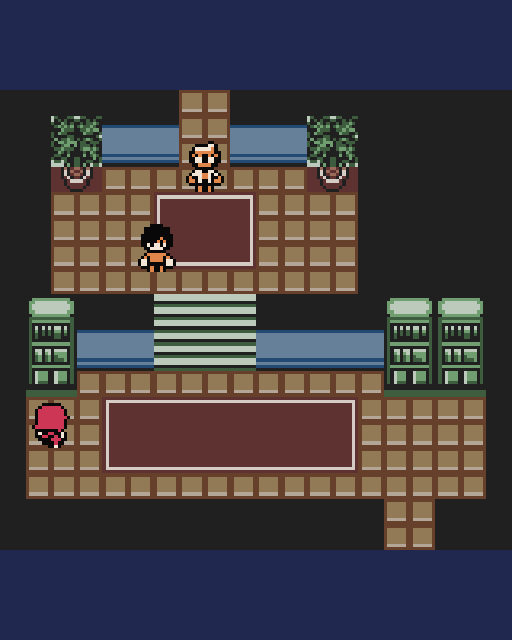
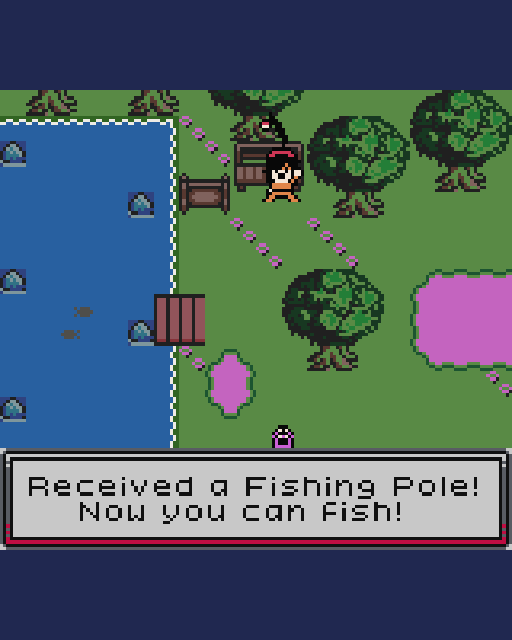
Expedition Sasquatch is a homebrew Gameboy Color rom that can be played on itch.io in your browser for free, or you can pay five bucks to download the rom image to support the makers and play it wherever you like.
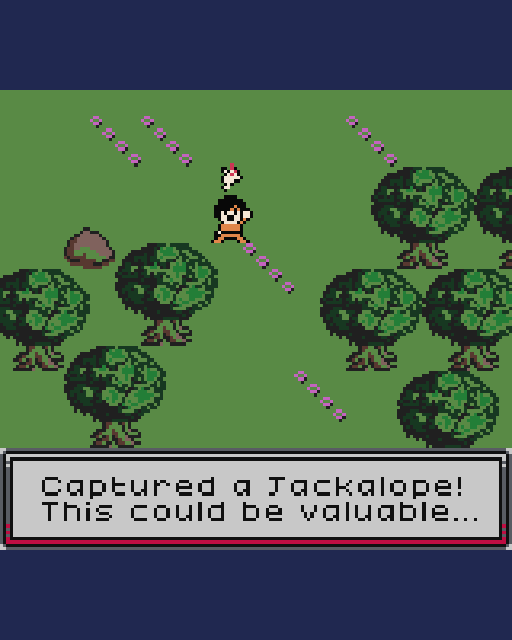
It’s a short game that’s like Pokemon but without the battling. You go out and catch creatures in various ways, then take them back to the museum to sell them for cash to get better equipment. Your ultimate aim is to find and kill the sasquatch that’s been sighted nearby. It’s left unclear if this is possible, but it’s fun playing the early game at least.
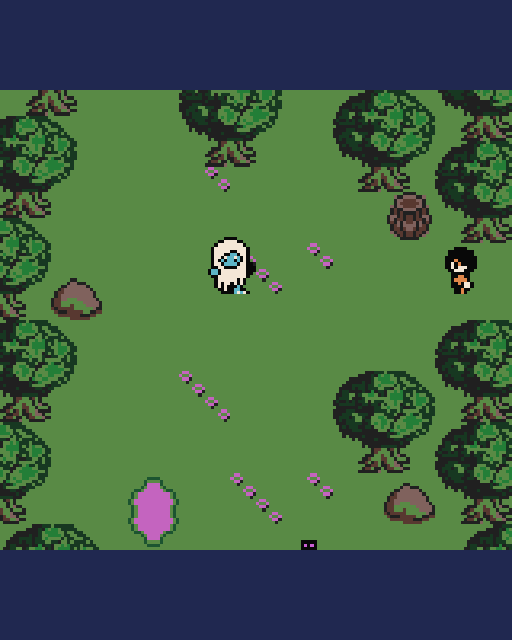
Expedition Sasquatch is made by Andrew Roach (Mastodon) of New Ellijay Television and Elvies, and is based off of a podcast and local access TV show. It’s a nifty little use of your time. Here’s a few screens:
Visiting the Museum
Preparing to fish
Selling Jackalopesis appears to be a good source of early cash.
Owner of Game Wisdom with more than a decade of experience writing and talking about game design and the industry. I’m also the author of the “Game Design Deep Dive” series and “20 Essential Games to Study”
Owner of Game Wisdom with more than a decade of experience writing and talking about game design and the industry. I’m also the author of the “Game Design Deep Dive” series and “20 Essential Games to Study”
We love it when we find weird and unique indie games to tell you all about! Our alien friends to the left herald these occasions.
Less a game than a puzzle, and not so much runnable software than a website, enclose.horse is a very nice thing to spend a few minutes of your day, each day, on.
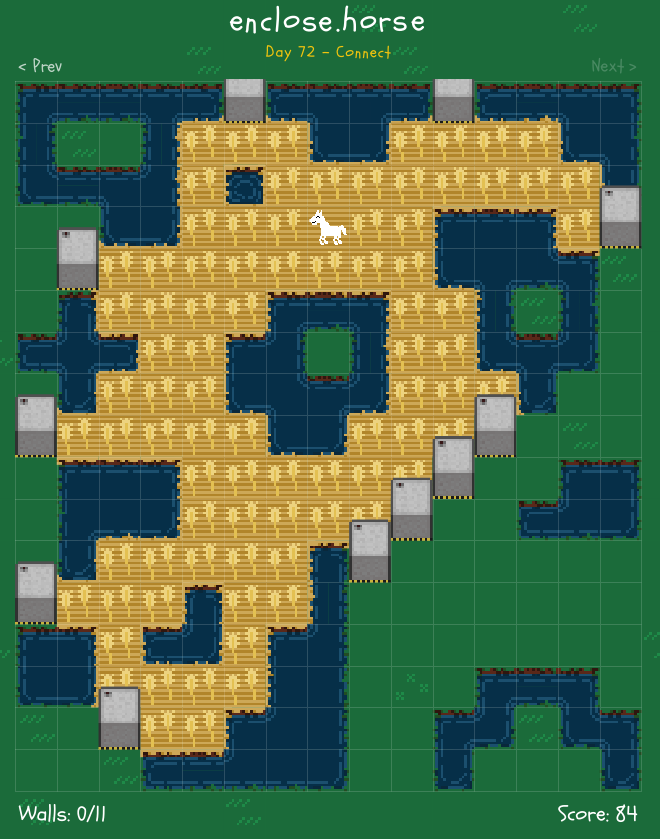
Every puzzle is a map of a field, with an arrangement of lakes and a horse somewhere in it. You have a number of square blocks to try to completely surround the horse. The horse does not like to be surrounded (click on them to get their opinion), so the more space you can enclose the horse within the higher your score.
When the horse is surrounded, a field of wheat springs up to show you how much space you’ve left the horse. Each space of wheat is one point. Some puzzles have cherries on the map, and also enclosing those is worth five bonus points. There’s also Golden Apples, they’re worth ten points. There’s bees too, trapping the horse with those is five points off your score. And there are pairs of portals, which count as an additional avenue of escape for Horsie that you must also account for.
This is not the perfect solution to today’s enclose.horse puzzle. Can you see how it could be improved?
The puzzles vary in difficulty. It’s usually easy to score at least something, but your true aim is for an optimal, perfect score. When you submit your score (you only get one try!) you’re told what the perfect score is and shown a solution that earns it. You can also browse past puzzles and see how well you do at those, create your own with a simple editor, and play other users’ puzzles.
The site continues to be worked on. Up until a couple of days ago there was a Check button, that you could use to find out what a puzzle’s perfect score was, so you could keep trying until you achieved it. However that introduced a bit of reluctance to submit anything that wasn’t perfection (it certainly made me a lot less likely to submit a score), so in the past couple of days it was removed, and that was probably for the best.
Give it a shot, while it’s harder than you’d think, it’s also not usually very hard. I think you’ll like it.
The indie game showcases highlight the many games we check out on game-wisdom. Please reach out (to Josh Bycer) if you would like to submit a game for a future one. All games shown are either press keys, demos, or games from my own collection.
Owner of Game Wisdom with more than a decade of experience writing and talking about game design and the industry. I’m also the author of the “Game Design Deep Dive” series and “20 Essential Games to Study”
We try not to shy away from hardcore geekery-peekery here, and I think this one qualifies for that nonsensical nomenclature.
We’ve brought up Stephen’s Sausage Roll (SSR) here in the past, it’s a uniquely challenging turn-based puzzle game. You move a little fork-wielding guy around to cook sausages in an infuriatingly precise way: each two-unit long sausage has two sides to each of its units, and each must be cooked exactly once per side. The controls are simple, but the puzzle start out tough and get tougher. New wrinkles get added in an organic way, and the game feels like it changes as you advance through it, even if you doesn’t actually gain any new verbs; the levels are just cleverly designed so that Stephen’s advanced tricks just aren’t possible before the game’s ready to unveil them.
In this 7½ minute video, a Youtube channel with the suitable name Stephen’s State Space examines two early levels of SSR with their move spaces graphed out, and shows that, while there is room for some slight variation, both of them require the player to progress through a specific sequence to finish the puzzle. If you don’t know anything about SSR, the shown-off solutions will seem to be brain-melting in their specificity. Let me assure you that these puzzles are only the beginning.
When people talk about why they play these kinds of hard puzzlers, they often express it in terms of how they make them feel when they solve it, the harder the puzzle, the greater the feeling of accomplishment. When I hear that, I think, duh, but more than that, why do people have a “feeling of accomplishment” when they play these games?
When you put it in terms of a feeling, I think you’re getting dangerously close to those people who put it all in terms of dopamine, which I hate. Game players aren’t dopamine addicts! If you could get it out of a syringe, would you do that?
You get a jolt of dopamine, experienced as a feeling of accomplishment, because you accomplished something! I have long thought that the best reason for playing difficult puzzles isn’t the feeling you get when you solve them, but their improving aspect. Working through tricky puzzles actually makes you a little smarter for doing them. The fact that they’re fun to do is the spoonful of sugar, to borrow Ms. Poppin’s phrase, to get you through.
So go forth and cook those sausages! If you can get all the way through SSR, I reckon that’s enough to get your INT score up to at least 15. I don’t know if I can say if it’ll affect your WIS, and it certainly won’t help your CHA, but let’s work on one D&D attribute score at a time, eh wot?
Owner of Game Wisdom with more than a decade of experience writing and talking about game design and the industry. I’m also the author of the “Game Design Deep Dive” series and “20 Essential Games to Study”