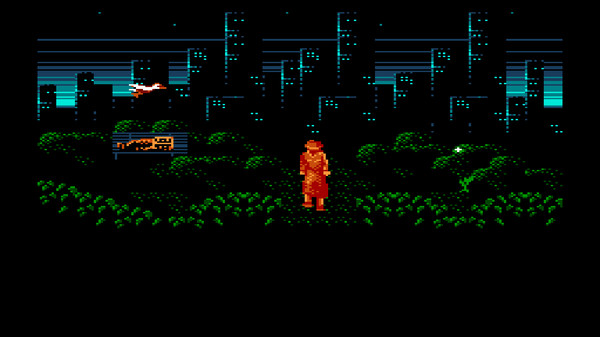
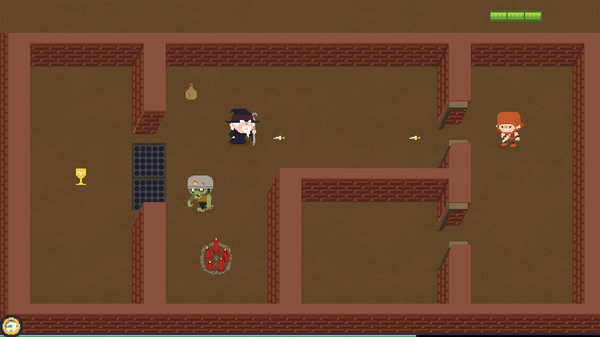
We link to U Can Beat Videogames once in a while here (in fact, here), and this week has an especially interesting installment, Beam Software’s cult classic NES game Nightshade. It’s a weird point-and-click adventure game, hugely ambitious and largely successful. Sadly it was released fairly late in the life of the NES. Nowadays it looks amazingly prescient, putting the player in control of a Batman-like hero with no powers at the beginning of his career. It’s an engaging combination of gritty and comedic, offering a Batman-style dark graphical look to its city, but also full of in-jokes, and some of the weirder character art on the system.
It’s arguably better to play Nightshade now than when it was first released. It has no save or password function, but that’s not so much an issue with save states. It’s available on Steam and on the Nintendo Switch Online service.
It does have the standard point-and-click style of obtuse puzzle sometimes, but there’s an abundance of cool ideas. You don’t have “lives,” but instead, when Nightshade “dies,” he’s thrown into a James Bond-style deathtrap. The first four times this happens, there is a way out of the situation, and if you can figure it out in time you get to continue the game with full health. (The fifth time, the trap has no escape.) Each of the traps is unique and a situation that appears nowhere else in the game.
Ollie Reynolds at NintendoLife makes a case that Super Mario Sunshine is the best 3D Mario game. It is quite underrated! For those who haven’t kept up, that’s the Gamecube version, which was also included in the limited release Super Mario 3D All-Stars on Switch and nowhere else.
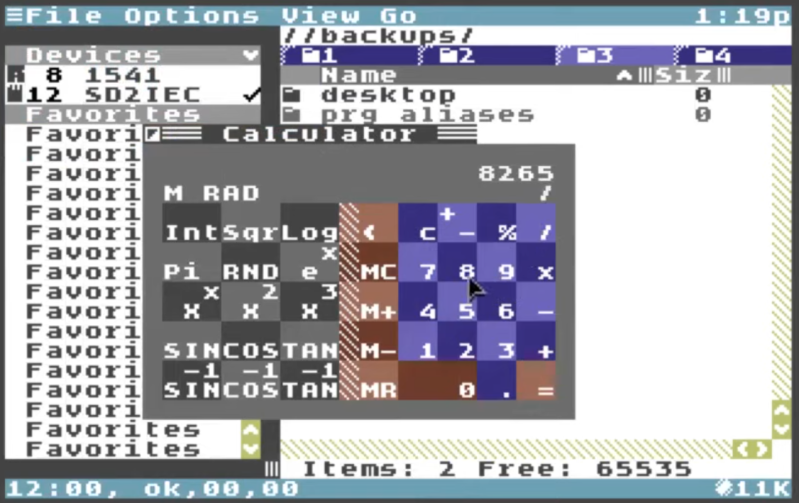
Screenshot from Hackaday
And it’s not strictly gaming-related, but Bryan Cockfield at Hackaday keeps us appraised of the progress of a modern-ish OS for Commodore 64 computers! It’s called C64OS. People who have followed the 64 since olden times know this isn’t the first, or even the second, time this has happened. This project uses a character-based display to show its buttons and windows. It’s worth noting that it isn’t out yet, and it’s intended to be a paid offering, not something which one can just download and tinker with, which may limit its reach. Still though, it’s an interesting idea, and one that can take advantage of some of the C64’s more advanced peripherals, like mice, ram expansions and WiFi modems.
“We scour the Earth web for indie, retro, and niche gaming news so you don’t have to, drebnar!” – your faithful reporter
Here’s all the most important gaming news for protoplasmic organisms! Fortunately our interest sphere intersects well with Earth gaming culture for some reason on which I will not speculate!
The Verge, Jay Peters: Steam now supports Nintendo classic controllers, the ones they released to support their Nintendo Switch Online service and are only sold to members of that service. This includes all of the controllers they released, including SNES and N64, which are probably the most interesting for general use.
IGN, Ryan Dinsdale: a fan is remaking The Simpsons: Hit and Run, and in the process is making hand-drawn versions of the cutscenes. That’s the one that was inspired by the 3D Grand Theft Auto series, not the one that was inspired by Crazy Taxi and is said to have been taken off the market due to a Sega patent on the gameplay (that one was Road Rage). It’s especially worth noting that according to this video, the game will never be made available for download, leading one to wonder… why are so many people posting about it, then? That’s a lot of animation work for one person’s enjoyment, I have to say.
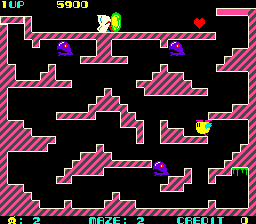
Destructoid, Chris Moyse: Bubble Bobble predecessor Chack’n Pop is coming to the Arcade Archives series. You can get some information on it from Jeremy Parish’s NES Works video on the NES port. BTW, I’d like to just shout out to Jeremy for being one of the most watchable, least strident and obnoxious, YouTube content producers out there. Anyway, Chak’n Pop. It’s a much less interesting game than B[u,o]bble, and only supports one player in any format, but you might find it interesting? But, is it $8 worth of interesting? (Eight whole dollars? Really?)
Image from Polygon article, ultimately from Bay 12 Games
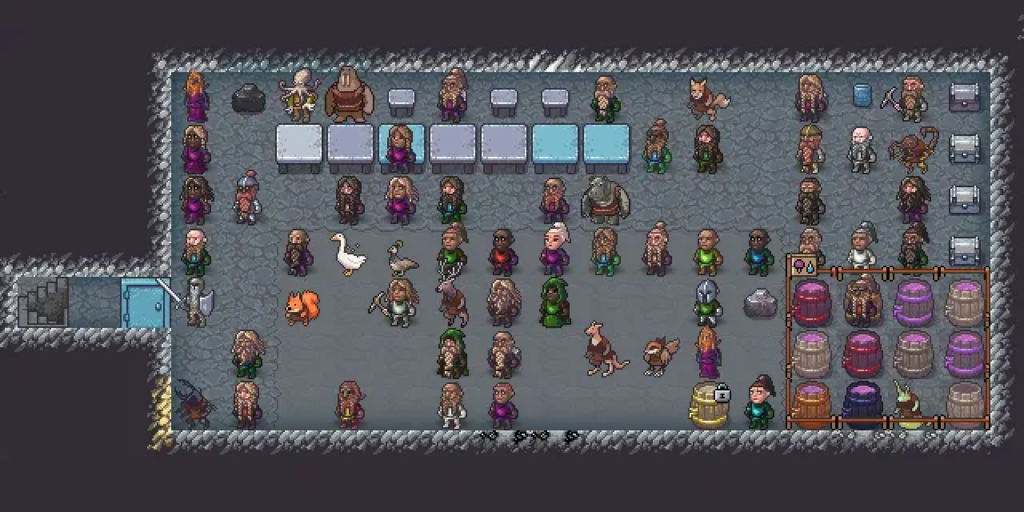
At Polygon, Charlie Hall expresses appreciation for the greatness of Dwarf Fortress‘ upcoming pixel art in its eagerly-anticipated Steam version, by artist Neoriceisgood. It seems like nearly everyone involved with gaming has a non-zero quantity of evil in their soul in some place, but Tarn and Zack Adams are as pure as you can find. I hope this works out for them. It’s so difficult to make it as an indie developer, especially one with such a niche following like DF. We wish them all the best.
And Liam Doolan at NintendoLife notes that video board game developer Asmodee Digital is, due to the closure of an important networking back end service (because of Amazon), ending online multiplayer for its Catan implementation. They’re also taking Pandemic off of the Switch eShop on July 31 (just three days from now!), although they seem to be hinting that it’ll be back in an improved and retooled version eventually. People who have already bought it will still be able to download it, but it won’t be sold to new users.
“We scour the Earth web for indie, retro, and niche gaming news so you don’t have to, drebnar!” – your faithful reporter
Rich Stanton at PC Gamer: Atari shocks the world with decent-looking game, Atari Mania! He compares it to the Japan-only Segagaga, but what the gameplay description really brings to my protoplasmic mind is NES Remix. We’re pretty harsh on the company that calls itself Atari on this site, but it’s really nice to see something genuinely interesting coming from them, that respects and pays homage to their paid-for name instead of just cashing in on it!
Atari Mania
Ana Diaz, in the virtual pages of Polygon, says that Netflix subscribers should download Poinpy, a short and fun game that’s free to subscribers. It’s a game about climbing and making smoothies for hungry monsters!
Martin Robinson at Eurogamer suggests that Street Fighter 6‘s Smash Bros-like control system might be its best new feature. I’ve mentioned here in the past a personal grudge I have against fighting games, having never grown to cotton to them back when I was a teenage blobby, but it’s nice to see the series working to make itself more accessible to new players, even if the article’s tone verges slightly on the over-enthusiastic, in my amoebic opinion.
And, honestly, a lot of the pieces that make the page here are light and fluffy, but here’s one a bit more important than usual. I love the headline applied to Ethan Gach’s bit for Kotaku, entitled Activision Blizzard Clears Itself of Any Wrongdoing. And the tagline reads, “The Call of Duty publisher says it’s the victim of an ‘unrelenting barrage of media criticism'” I WONDER WHY THAT IS, ACTIVISION BLIZZARD. HOW COULD THAT HAPPEN?
Remember The Witness? Remember how everyone loved The Witness?
What? You didn’t love The Witness? Are you it some kind of blasphemer?
Sure, it has all those smarmy tape recordings all over the place. Certainly, you never quite feel like you’re done with it. Absolutely, everyone has at least one puzzle they find maddeningly obtuse (mine was on the ship). But you gotta admit, the special category of puzzle was a work of genius. If you don’t know what I mean by the special category, um… forget I said anything!
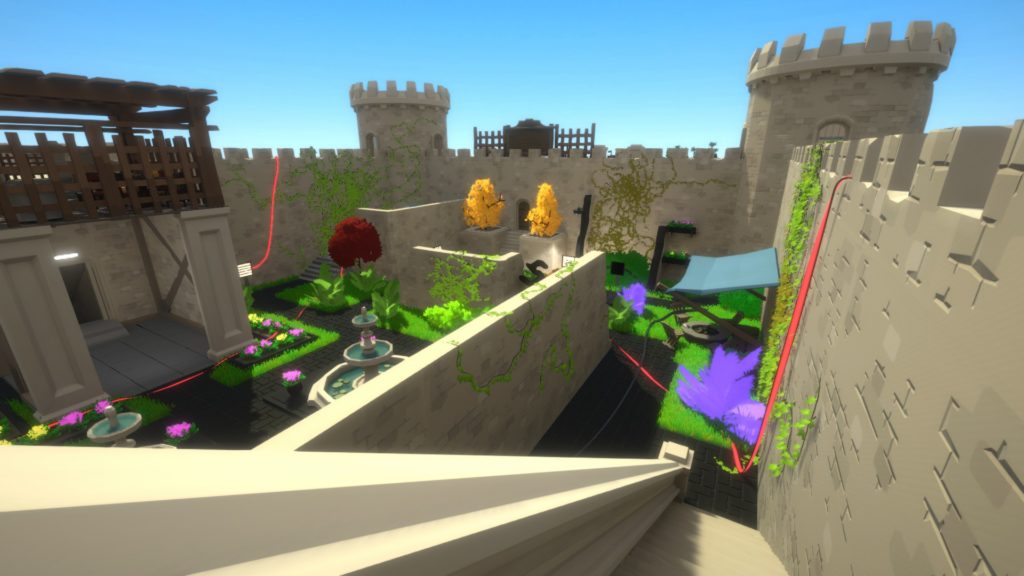
Well whether you loved The Witness or if you think it Jonathan Blows, you might want to have a look at The Looker, a pitch-perfect parody that’s actually a pretty decent puzzle game in its own right. It’s rated Overwhelmingly Positive, and as a reviewer says, “If you liked The Witness, you’ll like The Looker. If you hated The Witness, you’ll love The Looker.”
It’s free on Steam, and only takes a couple of hours to complete!
“We scour the Earth web for indie, retro, and niche gaming news so you don’t have to, drebnar!” – your faithful reporter
This is a big one! Kat Bailey reporting for IGN and doing some quality journalism, looking into Nintendo of America’s problem with leaning on contract employees. Nintendo has enjoyed something of a reputation as a good place to work, but it definitely seems like this has changed. The article is long but a must-read!
Steam is having a sale for a few days on roguelike and roguelite games, as well as “Souls-like” and “metroidvanias.” They published a page defining each of the terms, which I don’t entirely agree with, and by featuring all of them in a sale called Going Rogue they seem to be purposely conflating these terms, which annoys me a little, although there are plenty more concerning things going on in the world right now. (Especially metroidvania, which really has almost nothing to do with roguelikes.)
I give some better definitions down below, but in the meantime let’s have a look at some interesting items in their sale:
Rogue Legacy 2 (20% off at $19.99): The first Rogue Legacy was a surprisingly long time ago! It was an important exploratory action-adventure game with randomly generated areas. Player death was an intended part of the game: after a character dies, for the next game the player picks one of that character’s offspring, which has different, randomly-generated characteristics. They could also use money found on the last run to upgrade a town, to provide new characters services before they entered the dungeon. Rogue Legacy 2 looks like it continues the tradition.
Slay the Spire (60% off at $9.99): If you’re tired of buzzwords then you might be wary of a game that says it’s both a roguelike and a deck builder, but I think they’re two concepts that fit together pretty solidly-which recent years have proved well enough. This may have been the first of the type. It came out in January 2019 but is still rated Overwhelmingly Positive on Steam, and that’s worth something.
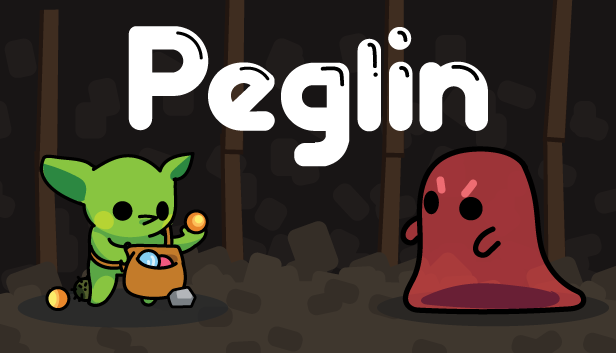
Peglin (10% off at $17.99): It’s one of the newest games in the sale, a combination of roguelite play and Peggle-like pachinko. In the future, all games will be defined by their likes, so we might as well get started now I suppose. The essence of roguelike games, I believe is in adapting to uncertainty, and a mode of pachinko certainly fits that bill.
Roguelikes got their name during the formation of the Usenet group rec.games.roguelike, for being like the classic terminal-based RPG Rogue. At that time it was obvious what the term meant: turn-based tactical combat roleplaying games with random dungeons and randomized items, usually with ASCII graphics by necessity since they were played in a terminal. In the time since then the importance of ASCII graphics has diminished a lot, but the other aspects are pretty good identifying characteristics. Since roguelikes of this form are still popular in some circles, it feels right to let them have it. Although I should note that one of the people who made Rogue has said that they consider a “roguelike” to be a game that can surprise its creator. (I could well be misremembering this, granted.) Since the Steam page mentions it, I figure I should at least link to the Berlin Interpretation’s definition of what it means to be a roguelike.
Roguelites may have gotten their name from me, back in the days @Play was on GameSetWatch. It’s been like 15 years, I don’t remember that well. I used the term to describe games like Spelunky and Binding of Isaac, which wrapped action gameplay around a roguelike core. Another good term for these is action roguelike. The page on Steam states that the ability to bring elements across games is a factor that could make something roguelite, but there are roguelike games with that aspect: NetHack‘s bones levels, for instance, and Shiren the Wanderer‘s between-play progressions.
Souls-like games take after Dark Souls, which has some superficial gameplay similarities with roguelikes (especially the difficulty and emphasis on playing smart) but really shouldn’t be lumped in with them carelessly.
Metroidvanias are exploratory platformers set in a large world. There’s usually some kind of item-based movement advancement that gates access to later areas. The term was probably coined by Jeremy Parish. They get their names from the 2D Metroid games and the exploratory versions of the 2D Castlevania games-which don’t include the original Castlevania, despite what Valve’s page says.
The ‘Mana Launcher’ App appeared on Steam. Slated to be release on December 1st, this open source MMO has entered a new phase of development.
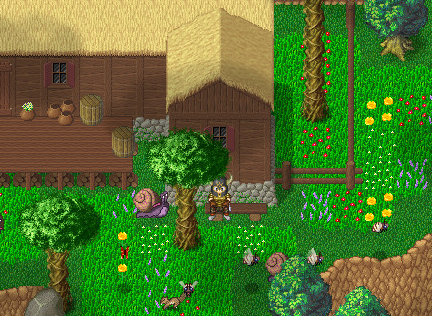
The Mana World (TMW) is a free 2d open-source MMORPG. With a team of volunteer developers, it has been a labor of love for a decade, and on April 5th they celebrated officially getting on Steam.
Explore the multiple unique universes. The Mana world team is focused on building detailed worlds, unique quests using classic retro graphics. Currently you will find four unique universes that are being developed into it’s own unique world.
It is my hope the community will blossom with its release to steam.
I am quickly reminded of Tibia online or Nexus: The Kingdom of Winds as I was learning the ropes. I was greeted with a few players willing to help me warm up to the universe and get started. TWM has a unique retro style questing system and a magic system not for the casual gamer. If you are looking for a new 2d home I would recommend exploring ‘The Mana World.’
It even works on ARM computers!
If you can’t wait until December 1st for the release of ‘Mana Launcher’ on Steam, you can download the client today at The Mana World and explore the magic of this retro-style MMO.