Sundry Sunday is our weekly feature of fun gaming culture finds and videos, from across the years and even decades.
I’ve posted TerminalMontage’s “Something About” series of satirical game animation videos before. The Fruitless Quests of Nabiu (8 item playlist) is another thing from them, but unlike those it doesn’t refer to any specific game. It just uses the tropes of various JRPGs in its animation and storytelling. This allows it to be much more accessible to non-game playing viewers, and I think it also makes it much better at storytelling. I quite like this new direction they’re going in, and recommend them! Please take a look.
The “main” episodes are much longer and tell a continuing story. Note that most of the dialogue in these animations are presented in JRPG-style text boxes. I don’t mind it myself, but I have heard a couple people express annoyance at the chattering noises they make as they speak. Please try to bear with them.
Episode 1 (21m) introduces Karoto the bard, and sets up what Nabiu, an intern “M.A.G.E.” working for Wizzro the Wizard, is doing, searching for a lost magical chair:
Episode 2 (20m, the most recent to date) continues the duo’s quest, where they encounter a very strange town, and are also joined by Brolly the Knight:
Displaced Gamers’ Behind the Code series is back, with an under-the-hood look at another NES Capcom game, following their examinations of Ghosts & Goblins and Strider, links are to our previous pointers to their peerless product.
G&G was implemented by popular early NES anonymous developer and target of player recrimination Micronics, but Commando can’t use them as an excuse, as it was developed in-house at Capcom. They were still learning the ropes of the NES at the time (Strider has no such excuse), and it shows. Displaced Gamers thinks that the game was shipped while the programmers were still working on optimizing it. As they do sometimes, DG implemented their own optimizations, improving the game substantially. You can see the product of their work in a 31-minute video they made about it, here. There is a substantial amount of 6502 assembly code involved, but if you skip around I think you might be able to get the gist of why the glitches happen, and how Displaced Gamers fixes them.
As was often the case with your jankier NES games, the scroll stutters and character chaos were caused by the game failing to make its VBLANK timing targets. Thing is, despite the glitches, NES Commando is arguably the best version of the game! Characters sometimes disappear from the screen and backgrounds turn into garbage, but there’s so many cool secrets and things to find in it that I can forgive Capcom for it.
Note that Displaced Gamers doesn’t release patches with their fixes, preferring to focus on making videos. Their code is presented on-screen though, so it’s possible for others to insert the changed programming on their own. I hope someone does this soon, as a fixed version of NES Commando would be nice to play.
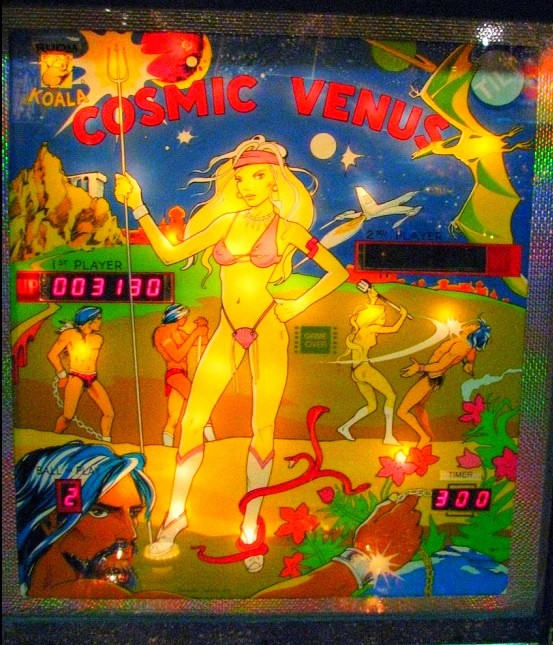
Last night at our weekly movie watch group we saw Tilt (1979), one of those fad exploitation movies that Hollywood used to make, about pinball hustling, and with a surprisingly sweet ending, which felt earned because the first half of the movie is pretty sleezy, with an aspiring musician getting the money to make a demo tape by exploiting the pinball talents of a young girl, played by Brooke Shields, who’s got a crush on him. Tilt, BTW, has a prop pinball machine called Cosmic Venus as the centerpiece of the last third of the film, which judging by its art is set on a planet mostly dedicated to stripping.
The backglass to Cosmic Venus (from pinside.com), with typical bikini-wearing pinball centerpiece woman . Stay classy, Koala.
Anyway, that got me thinking about something to show after it, something from the world of real pinball. And I happened upon a promo tape that Bally made to promote the then-upcoming release of The Addams Family, which would go on to become the best-selling pinball machine of all time, with over 20,000 thousand tables sold. Meaning, if you’re going to learn to play any pinball table, Addams Family is still the one you’re the most likely to find out in the wild (although newer machines like Godzilla or Batman ’66 are also good bets).
When that was made, they didn’t know that, after designer Pat Lawlor’s earlier hits Earthshaker, Whirlwind and Funhouse, that his next game would become the greatest of all time.
Addams Family is a little simple compared to the games that would follow it, and especially the games released now by companies like Stern and Jersey Jack, but I think that adds to its appeal. It’s the perfect middle ground between the games that came before it, which were mostly about trying to achieve multiball as many times as possible, and current tables that devalue multiball, and push players towards very long games and wizard modes to get good scores.
AF has a wizard mode, Tour The Mansion, which you get by earning all 12 mansion rooms, but it also has a very lucrative multiball, and it’s the player’s choice if they want to focus on one, the other, or a combination of both. The Youtube channel of tournament organization PAPA has an excellent tutorial and demonstration of high level strategy and gameplay. (21 minutes)
Via Kottke on Mastodon.* Alex Harri wrote an image-to-ASCII renderer that can translate generated 3D models in realtime, and on this page they explain how it works and some of the finer points of that conversion, specifically how not to make the rendered images seem blurry, instead giving edges clean outlines. It’s worth a look even if you’re not a programmer, and just want to see how the process is done. While it does descend into pretty heavy math later on, it starts out pretty approachable, and has interactive demonstrations throughout.
Render captured from the interactive toy on the linked site.
* Bluesky has a lot more users, but Mastodon is used by a good number of highly interested and knowledgeable people, especially people who care about the health of the web, although that’s also because I follow a lot of people like that on Mastodon. Overall I find it a good idea to read both.
These days writing a command-line OS for 8-bit or 16-bit era computers is almost an old trick, but GNO/ME (any relation to GNOME is purely accidental) has the difference of both having Unix-like features like signals, pipes and multitasking, while also having been written back in the day, in the 90s. Author Jawald Bazyar shows it off here (26 minutes):
The story also includes a story of the author’s teenage dialup exploration, and stumbling upon a Unix system without a password on its root account, and other such young computing adventures.
GNO/ME can be obtained, for running in an emulator or on bare metal, here, if that’s your idea of a good time.
For this perceptive podcast, the YouTube channel Indie Enjoyer reached out to want to chat about covering indie games, and what it’s like to be a Youtuber today who enjoys talking about smaller and underrated games.
Owner of Game Wisdom with more than a decade of experience writing and talking about game design and the industry. I’m also the author of the “Game Design Deep Dive” series and “20 Essential Games to Study”
We love it when we find weird and unique indie games to tell you all about! Our alien friends to the left herald these occasions.
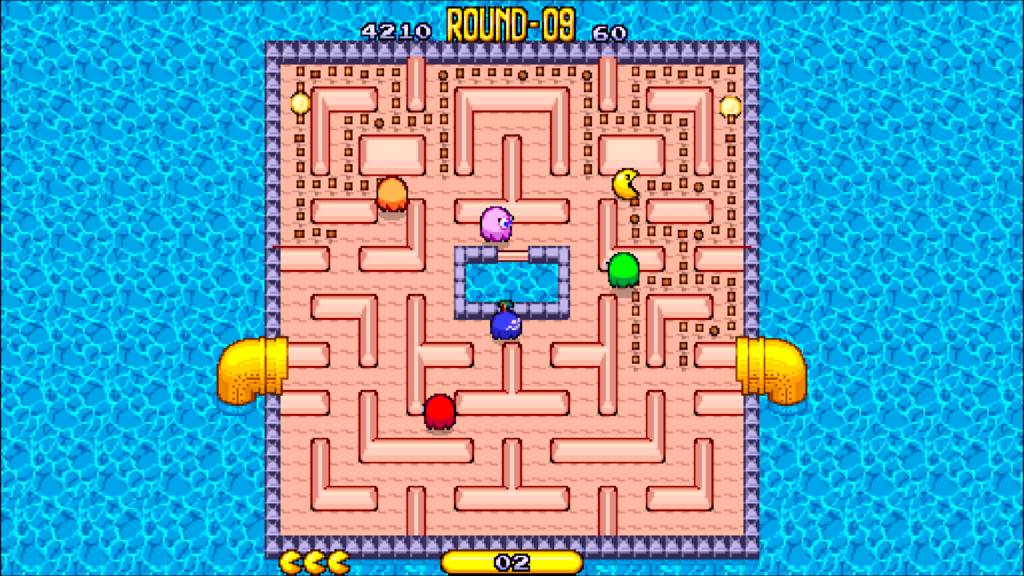
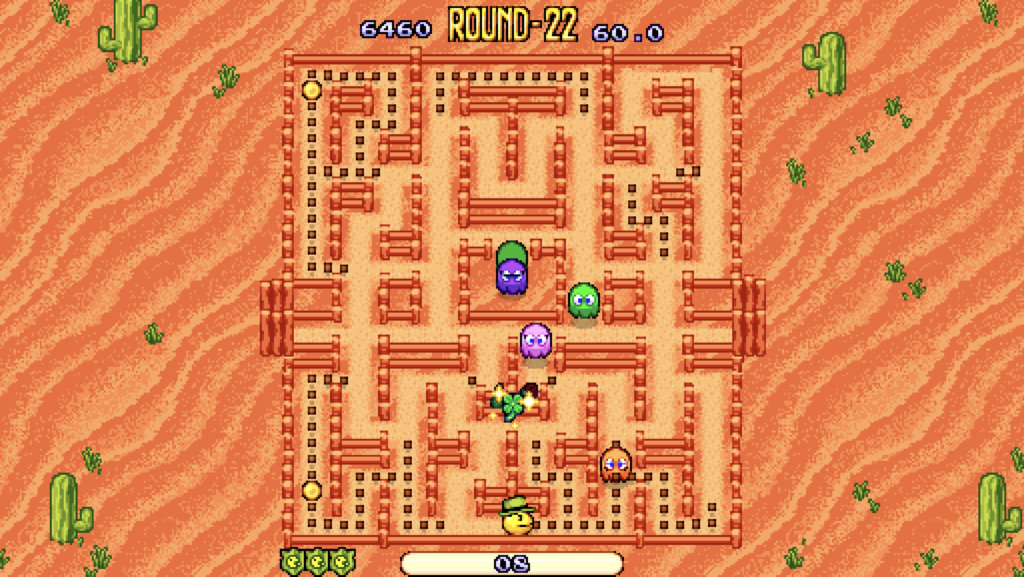
As I write this, I have paused a game of Pac-Man Forever, a freeware Pac-Man update/homage/clone by My Dude Studios available on itch.io, on Round 154. I have spent almost three straight hours of playing it. It’s pretty good, but I’ve been tired of it for the last hour of it. Yet, it keeps going. It keeps going.
It helps to keep the game fresh by adding gimmicks throughout the first 60-or-so levels, but it’s been recycling them for a while now. I’d like to emphasize that I don’t think the game is meant to be easy. I have been playing Pac-Man-style maze games since the original hit unwary US arcades back in 1981. I’ve also played my share of Ms. Pac-Man, Super Pac-Man, Pac-N-Pal, Pac-Mania, Pac-Man Arrangement, Pac-Man 99 (R.I.P.), and all three Pac-Man Championship Edition games, a couple of which I had at one point respectable slots on its scoreboards, or would have if they hadn’t been full of obviously hacked scores. I’ve even written my own Pac-alike, Octropolis, also freeware and on itch.io.
A note. My usual practice is to take my own screenshots, but my tool failed to save the game’s graphics buffer, and I am unwilling to play another marathon session to get some images. The screenshots here are from the game’s website.
Suffice to say I’m a bit of a Pac-obsessive. Not nearly as much as the great Jamey Pittman, author of the sacred bible of the game, the Pac-Man Dossier. And maybe not as much as PacMania67, of the comments section of the Pac-Man Forever download page. They mention getting slightly further than me at the moment, to Round 163, only stopping when hitting a mazegen bug. I don’t know if I want to play a few more rounds and get to that point. I feel Round 154 sufficiently establishes my bona fides here, I don’t have to be “the best,” whatever that means. That way lies speedruns, and ultimately insanity.
So long as you aren’t trying to finish Pac-Man Forever you’ll have fun, generally. The quirks and gimmicks are mostly good ones, with a couple of irritating exceptions. One gimmick shrouds the maze with tall grass, which sometimes makes it very difficult to spot the last dot on the board, yeah that can go into the garbage, I say. Another one I came to loathe is the jungle board, for whatever reason I can’t read the maze layout as easily in that theme as usual. Pac-Man works best when you can easily tell the shape of the maze and where the remaining dots are, and to play with that makes it into a different, worse, game. Fortunately those gimmicks are relatively rare.
Pac-Man Forever borrows liberally from the whole range of Pac-Games, and other Namco games of the era too, with themes based on Galaga, Dig-Dug, Mappy and even Pac-Man’s sibling Rally-X, which is one of the better themes. The Rally-X boards replace the screen-filling dots with more sporadically placed flags, meaning you don’t have to travel every inch of the board to finish it. Another game that’s borrowed from is one Namco would never touch nowadays, Jr. Pac-Man, which had extra wide mazes, extra Energizers, and big dots worth more points, but that are slow to eat. There’s a reason Jr. Pac-Man isn’t looked on as fondly as Ms. Pac-Man, but its additions work well here.
One aspect of the game I feel I should warn you about. There is a power-up gimmick; when you’ve eaten a number of ghosts in total, a fairy arrives and leaves a powerup on the board, that cycles between one of three choices. If you just gobble it down without paying attention, you will regret it! One of them, the champagne glass, will cause you to lose almost all of your extra lives, converting them all into speed increases. It is easy to get your speed up without having to use this, in fact you can get it up so fast that you may have to collect another powerup, a director’s slate, to slow the game down enough to keep it playable. Most players will eat it at least once just to see what it does, but may not notice all of their extra lives vanishing when they do it. Even if you know it exists, Pac-Man Forever can get so fast that you end up eating it on accident. Its inclusion it a bit head-scratching. Instead of it, maybe get the Sneaker (a speedup), the Fried Egg (increases score bonuses) or especially the Pear (increases Energizer duration).
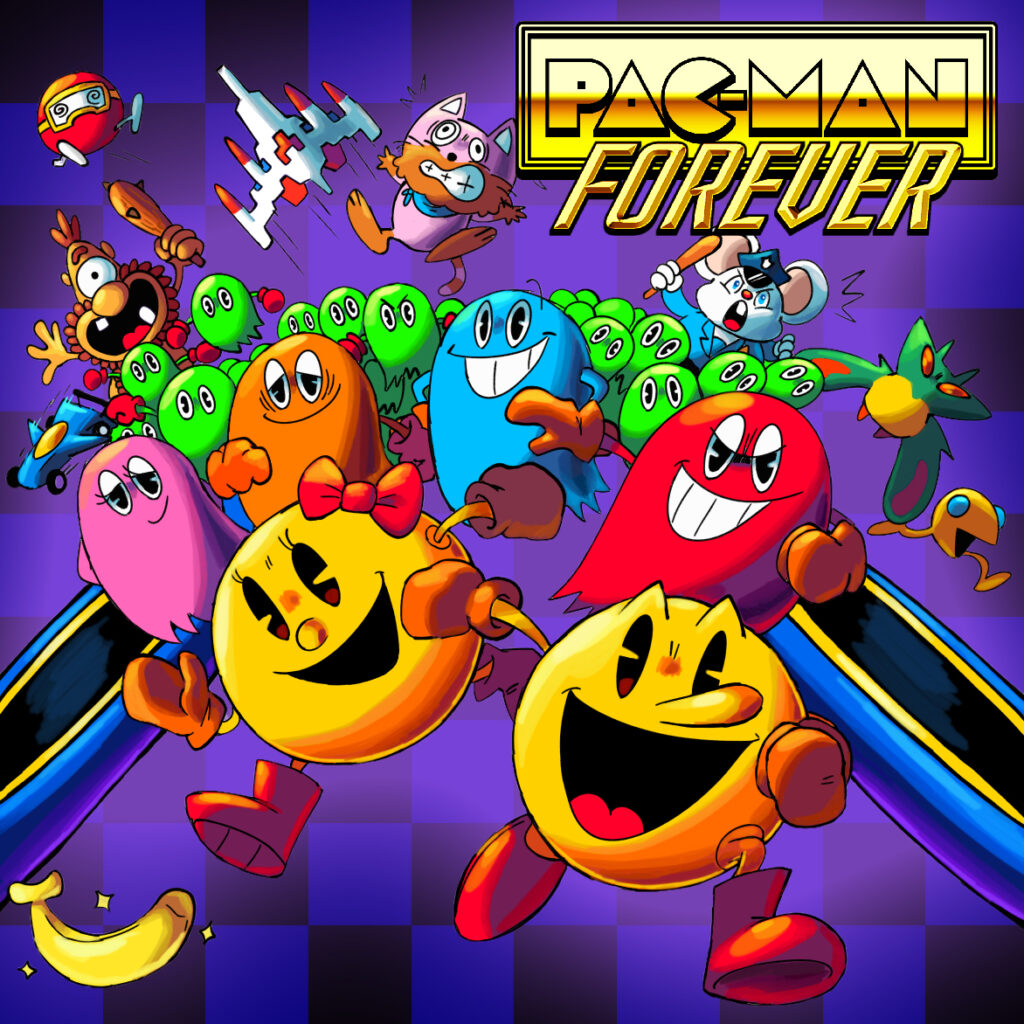
I know this sounds negative for a game that I ostensibly like. I would say more positive things about it, but three straight hours of it has dried out my brain and depleted my writing style, yet I still have to finish this post before I can go to sleep. If you like Pac-Man, you’ll probably like this, although there is a danger that you’ll play it to distraction as I have. My hope was to get to a level that unlocked the Trog enemies promised on the game’s promo artwork.
Trog, from the Bally arcade game, is the one-eyed caveman in the upper-left. It’s a really underrated game! I hope it’s included in there somewhere.
In my current state, that’s all I can squeeze out of my brain on this one. I’m off to have nightmares about eating dots and fleeing ghosts. Ta.