AsumSaus is probably best known for their Smash Bros. Melee videos, and it was they who made the terrific video (54 minutes) about aMSa, the Yoshi player who won major tournaments. And hey, we linked to that back in 2023.
They’ve been diversifying a bit since, and their most recent video is on alternative communication in games. (21 minutes) How so alternative? As in, ways to talk to players without talking to them, either via speech or direct text.
They give a few examples. The first is when Blizzard changed the /spit emote so that it couldn’t be used to specify someone to spit on, when players used that means to express disgust over people who bought a $70 paid mount. The second is the piecemeal phrase building system used to leave environment messages for people in Souls games, also known as template messages. And third, canned messages from Smash-style and modded Smash games.
I could link the things that everyone already knows about, that people in that wretched hive they call Reddit have already linked five times, that have blown up on social media, that there’s already a Youtuber or two making snide comments about. I mean, I’ve linked stuff like that before, pretty often really. They aren’t hard to find.
But I’d much rather link something interesting that’s basically unknown. Help spread the word about it! The only problem there is, how do you find that stuff in the first place? It’s a bit of a chicken-or-David-Egger. I think that’s what you’d call it, sure.
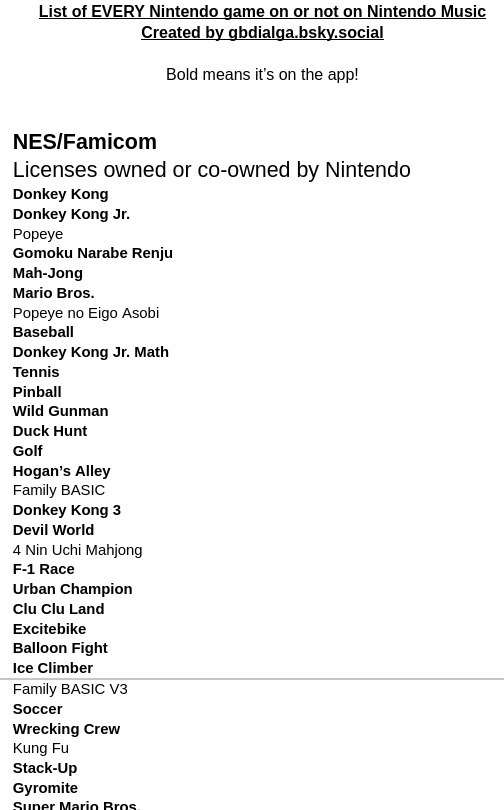
So when I saw someone I follow on Bluesky wrote out nearly every Nintendo video game property, including those that appeared on niche platforms like Virtual Boy and Satellaview, primarily so they could boldface the ones that have arrived on Nintendo Music, I had to run directly here to link to it.
The beginning of a long list
I don’t vouch for its total accuracy, but it still could be a useful resource. In fact I know there are some things that are missing, like their early arcade games Sheriff or Radar Scope, just for starters. But if the idea is to present things that realistically could present soundtracks included in Nintendo Music, it’s a pretty good list.
Dwarf Fortress has always been a game about failure. It’s right there in its motto, “Losing is fun!” It’s a game where you just muddle through, doing what you can, learning as you go, and your games slowly, on the average, get longer and longer the more you play. It’s not that there aren’t guides and tutorials already out there, but the kind of game it is, it halfway feels like they rob something of the player. While I can understand not wanting to start from zero, the sooner the player learns that failure is the end mode of fortresses, the more they’ll understand that the intended way to play is to be audacious.
But which kinds of failure are the most fun? After spending several minutes setting up your expedition getting eaten by wild animals immediately off the wagon is a harsh start to play, especially if it happens repeatedly. Fortress destruction via dragon is scary, but it’s also hilarious; everyone dying on the surface before even digging your first warren is less auspicious.
Dwarf Fortess recently celebrated its 20th birthday, and in celebration Kitfox Games, its Steam publisher, has released a new official beginners video, made by BlindiRL. (34 minutes) It is a good way to move your fortress endings more towards the entertaining end of the scale.
And I’d like to point out, at the end of the video, we’re told that ending a fortress doesn’t quite mean it has to be a failure. If you decide to “finish” a fortress, but then start a new fortress in the same world and of the same faction, then it’s possible for your old dwarfs to decide to emigrate to it. This is something I’ve never tried myself, but it’s a good reason to keep playing in the same world, as you continue to write the saga of your game.
I’ve already introduced The Bard’s Tale in prior posts, so in brief: The original Bard’s Tale trilogy were all Wizardry-style dungeon exploration RPGs in the classic style, called by some “blobbers.” Indeed they did a lot to define that style. A few things that Wizardry did weren’t adopted by later blobbers, especially its particular form of permadeath, its simulation of “Out” parties and retrieving lost characters from the dungeon, and its willingness to obliterate your entire group instantly and permanently if you teleported into solid stone.
The Bard’s Tale, on the other hand, looks exactly what the standard picture of a classic blobber looks like today. So long as you have the cash to revive a character there is no real penalty for dying, there is no absolutely solid stone to teleport into, and there’s no concept of “Out” parties, for if your party wipes their corpses get mysteriously teleported back to the Adventurer’s Guild, where if there’s enough gold in their cold pockets you, I guess in the capacity of being a caring guardian spirit, can tell the priests to bring them back to life.
But while not as eager to annihilate members of your group, neither is The Bard’s Tale an easy game. Compensating for the lack of permadeath, dungeons tend to be much more diabolical in design, with magical darkness, teleporters, spinners and antimagic zones in evidence. Dungeon levels are bigger than Wizardry’s, there are more of them, and most significantly to a new player, “Town,” here named Skara Brae, isn’t a simple menu of options but an entire level of its own to explore! And at the start of the game, you don’t know where anything except the Adventurer’s Guild is! You have to do significant mapping before you can buy equipment, recharge your spell points, or even raise your experience level.
In this 7th installment of the video series, the player finds and begins to explore the third of the game’s dungeons, finds some interesting items, suffers from disk corruption and loses some progress, earns it back, and fights a jabberwock.
Pinball is tricky enough on its own, but then you “lock” multiple balls in some location, the game’s sound system starts to go nuts, and uh-oh, now all those balls are on the table at once!
Multiball is chaotic, and glorious for it, and it is not always possible to play one well. But you can learn to improve your chances at it, with practice and a decent strategy. For the latter, Tim Sexton explains how to go about it in an 18 minute video.
If multiball were easier, or less chaotic, it wouldn’t be as much fun! And even once you learn some decent tactics to lessen its complexity, like by learning to trap all but one ball on a single flipper and making shots with the remaining ball on the other one, it can still be fun sometimes to just try to make shots. Sometimes that works for me! But learning to play pinball consistently well means not taking on any unnecessary risk, and that’s certainly risky.
Tim’s video not only covers basic multiball tips, but it also examines some specific games, both new and old, and at the end presents examples of multiball play in progress. If you’re interested in improving at pinball, it’s worth a look!
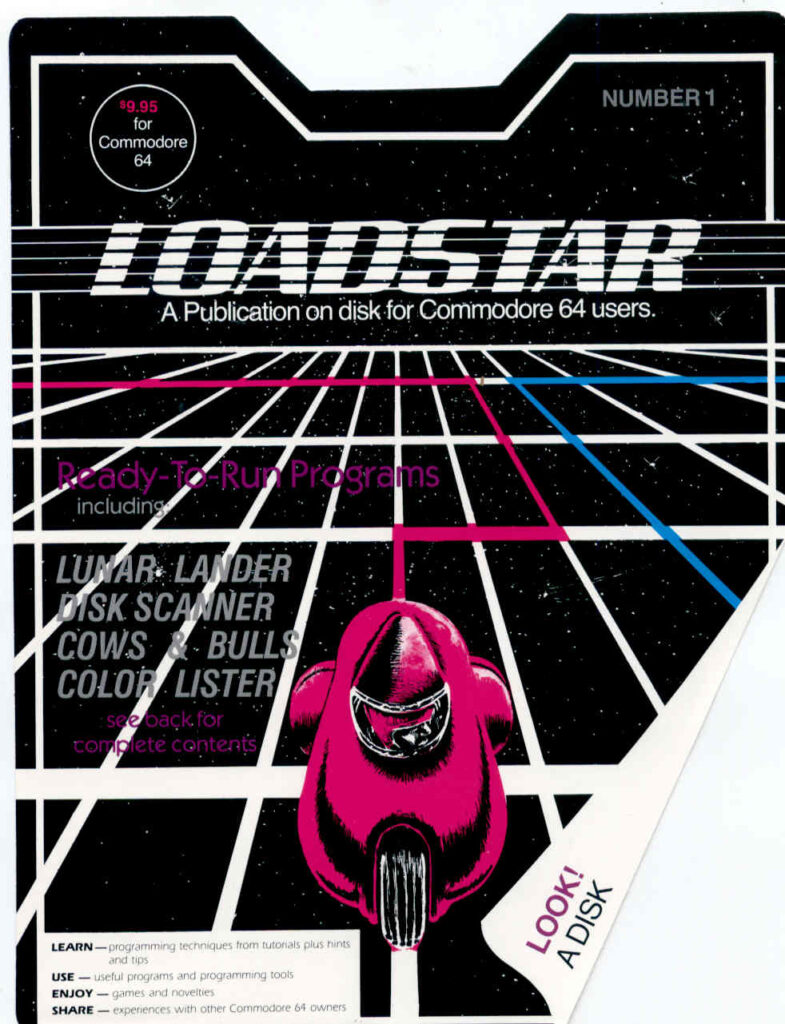
Way back in 1984, having had success with their first product Softdisk, the nascent Softdisk Publishing released the first issue of Loadstar, a “magazine-on-disk” for Commodore 64 microcomputers.
Softdisk is mostly known these days as being the former workplace of several people who would go on to found Id Software, creators of Commander Keen, Wolfenstein 3D, Doom and Quake. Softdisk published, as the Id guys’ last work for the company, Catacomb 3D using the Wolf3D engine, and a Commander Keen episode.
Softdisk released other products too, but Loadstar eventually proved to be something special. Early on they assumed that their PC and Mac products would be their legacy, but then Microsoft and then the internet came along and it suddenly became much harder to make a go of it with a monthly paid software collection. Softdisk became an ISP; they got bought out by a bigger ISP; nowadays they don’t exist really, except as a bag of rights owned in pieces by Piko Interactive and/or Catacomb Games, who bought their Id-related assets.
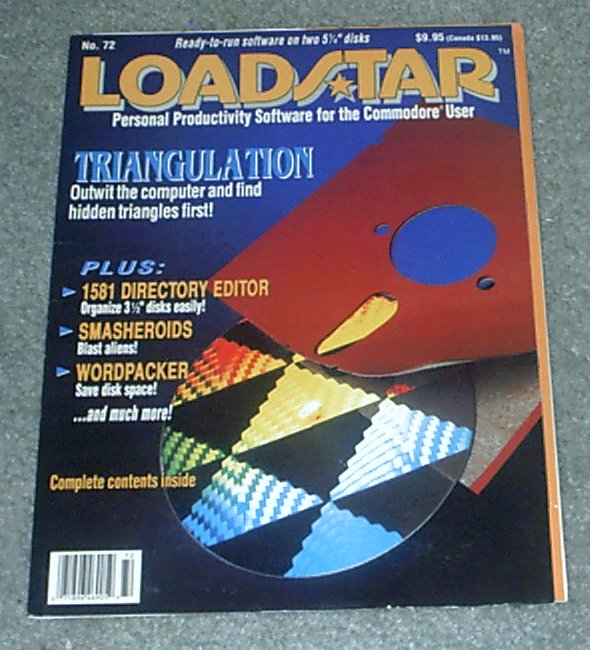
The cover of Loadstar #72, the last issue sold on newsstands.
But some time before then Loadstar and its relevant assets had left the company. Defying expectations and buoyed by the large userbase of the Commodore 64 (quick googling suggests they sold 70 million units), Loadstar was still doing fairly well for itself. It was no longer sustaining the whole company like it once had, but it was too large an audience to ignore. So Softdisk spun Loadstar off to J&F Publishing, under the captaincy of its longest-serving Managing Editor Fender Tucker, and they kept the lights on a while longer.
When Fender retired from Loadstar at the dawning of the year 2000, he passed managing editorship over to Dave Moorman, who kept it going for 49 more issues. It was starting to become hard to find new things to keep Loadstar going at this point. While Dave had some regulars sending in new things, a large back catalog to mine for material, and skill enough to write some software for Loadstar himself, its release rate slowly dropped from monthly to, in 2007, two issues in that year. Then a tornado his his house and destroyed the tools he used to make Loadstar. One more issue made it out in the following year, that had been in production and finished by Ricky Derocher in 2008. And that is where Loadstar’s story ended.
Next, what I’ve been doing
A year or so ago, with the permission of Fender who still owns Loadstar and J&F Publishing, I threw together something called Loadstar Compleat. A prior product also called that had been sold by Fender for some time, a CD-ROM with the 199 issues from before and during his run, along with the 42 issues of another magazine, Loadstar 128, and various other products and odds and ends.
I took the issues from there, replaced some bad copies with better ones provided by Ricky Derocher, added in the 51 later issues from Dave Moorman’s editorship, and added a kind of shell program to make browsing and searching through them all easier. I packaged this all together and threw it up on itch.io as Loadstar Compleat for $15. Since then I’ve now also given three talks on Loadstar and its history, in person at VCFMW 2025, virtually for TPUG, and three days ago also in person at VCFSE 2026. (There should be video of that soon, I’ll link to it here when it enters my notice.)
Now, possibly, the future
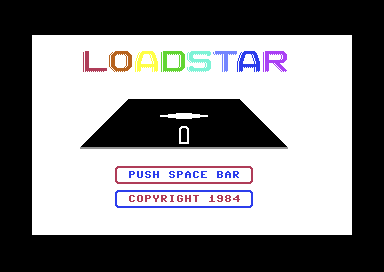
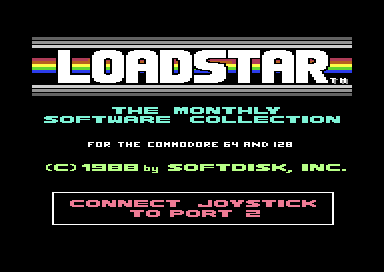
Loading screen for early Loadstar issues
Dave has always said he wanted Loadstar to last to its 256th issue, to make it an even binary number (28, or 100000000). Even though Loadstar only had about 100 subscribers left by that point he was still committed to doing it, and only the fury of nature prevented him from making it.
I mentioned this at VCFSE, musing that perhaps I could finish the task he had started, making a final six issues of the venerable disk magazine, and a couple of people there thought that it might be a good idea. And I think I have enough knowledge now of Loadstar’s underpinnings that I might be able to accomplish this. With all the tools available for producing software for retro platforms now (I have an upcoming article on those in the works), it is arguably easier to make C64 software than it’s ever been, and now that there’s the Ultimate64 and Maxi65, the size of the C64 platform is growing once again.
So, let’s start making plans for how this could happen. In addition to doing whatever needs to be done to understand Loadstar’s file formats to get its Presenter system to fulfill our purposes, I figure we need:
Contributors, and contributions. Commodore 64 software, hi-res artwork (at least one image for each issue for the loading image), SID music (at least one piece per issue for the Presenter background music), articles and anything else we’d need to keep up Loadstar’s standards according to the systems they used in their late period, which used a polished Presenter menu program written in machine code, a text reader to display documentation and articles, and miscellaneous other niceties.
Means to compensate them. We aren’t sure if this can support itself financially yet. For right now, we need to keep our options open. If we get a lot of interest it’s not out of the question that this could mean a bit of actual money, but for now free issues are what we’re considering.
A means to produce physical disks. These issues would be sold digitally (as .d64 and .d81 disk images for emulators), but it feels like to be a real disk magazine, there must be actual Commodore-formatted 5 1/4″ and/or 3 1/2″ disks to sell too. You can still get 5 1/4″ disks. Amazon sells them ten for $25.
Middle-period loading screen. (Later issues used custom loading screens for each issue.)
We’re currently discussing ways to accomplish these things. I’ve started a thread at loadstarce.com to discuss this project. We are fortunate that many of the Loadstar editors are still around, including Fender Tucker, his associate editor Jeff Jones, and Dave Moorman, as well as people who care about Loadstar’s memory like Ricky Derocher.
There are two things we need right now. The first is indication of interest. Would you be interested in buying something like this? How about spreading the word about our little venture?
The other thing we need is “content”: software, writing, art and music, in formats appropriate for the Commodore 64. C64 art must be hi-res VIC-II format. Music can’t just be any old SID tune but in the format its Presenter used (more information on that as I determine it). Software doesn’t have to be machine code, for Loadstar published many BASIC programs, and multiple BASIC extensions too, including one, Dot.BASIC Plus, that still has a website and working downloads!
Are you any of you interested in, and capable of, providing these things? I don’t know how much we can pay you yet. For my part I will make the rounds online and approach people who might be interested in helping revive Loadstar, if just for a little while.
And who knows, if this proves popular enough, maybe we could go past issue 256? Shooting for 512 seems like a ludicrous dream, certainly not something I could do in my remaining lifetime, but who knows for sure? Let’s dare to dream.
If you want to be involved in the continuation of the frankly improbable legacy of Loadstar, you can reach me:
Owner of Game Wisdom with more than a decade of experience writing and talking about game design and the industry. I’m also the author of the “Game Design Deep Dive” series and “20 Essential Games to Study”
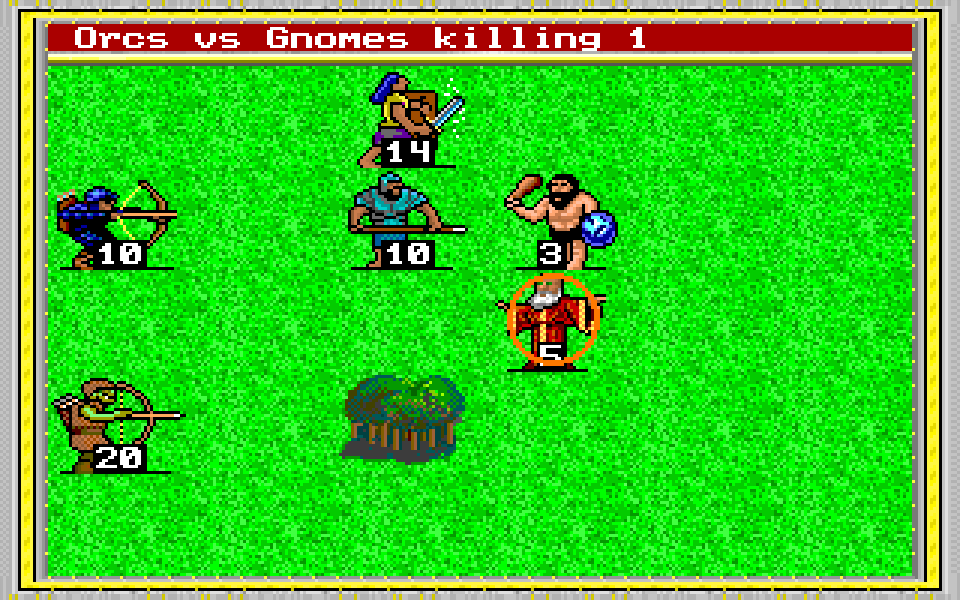
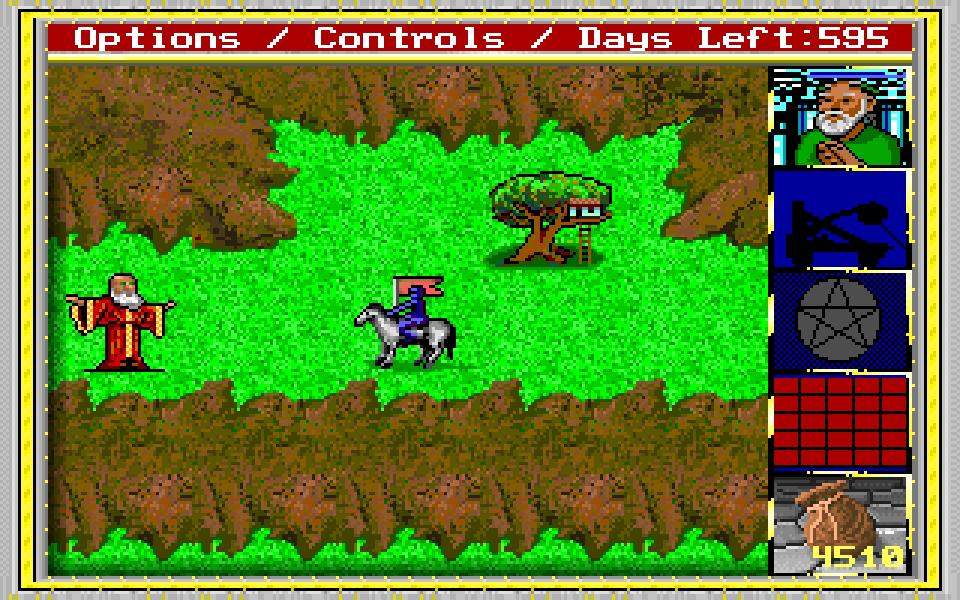
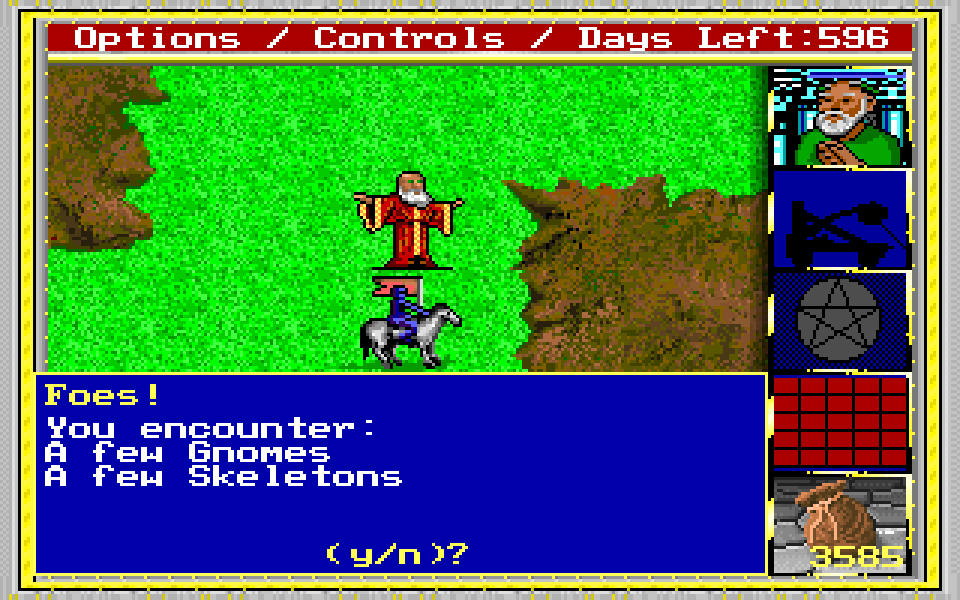
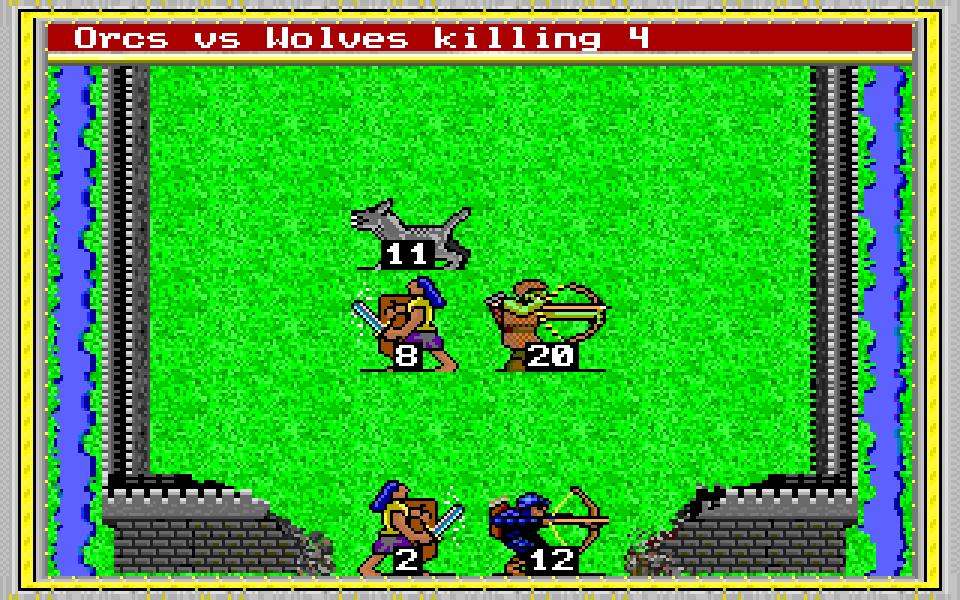
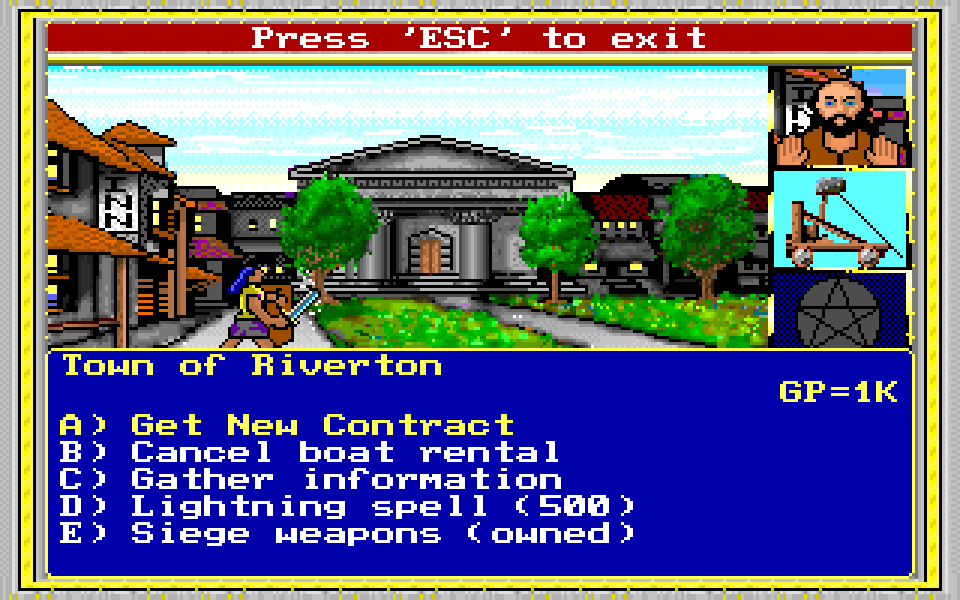
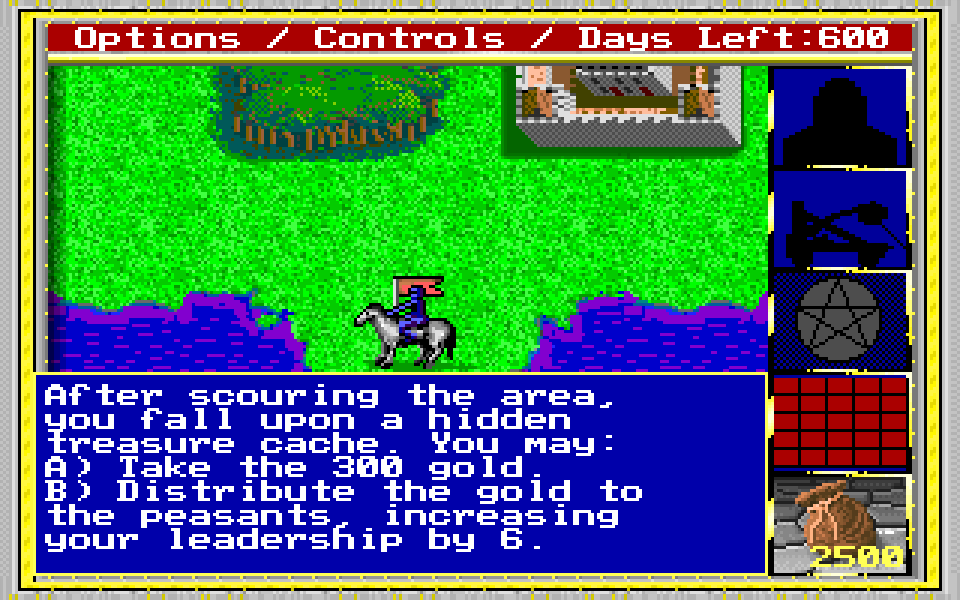
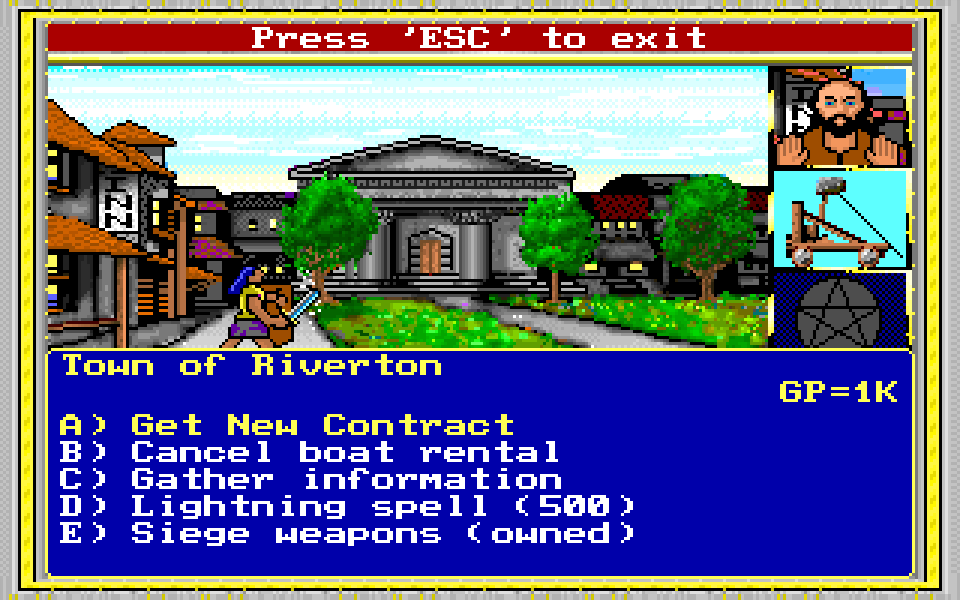
While it’s seen more than one revival since its original release by New World Computing (the Heroes of Might & Magic series, and the 2008 series titled King’s Bounty by Katauri Interactive), that first version is still a fine game to play even today. Players explore four continents raising armies, fighting hordes of monsters, building income and leadership, collecting artifacts and bringing a variety of colorful villains to justice.
The game simulates the passing of time, which affects a number of things. Every week (five game days) you get income from the king of the realm, but also must pay your troops and other miscellaneous expenses. There is a time limit (determined by the game’s difficulty level), preventing you from passing weeks for income. While you’ll probably fight hundreds of battles in a typical game, technically speaking you can win without fighting any: bringing villains to justice earns you pieces of a map, a depiction of one screen of the game’s vast scrolling area, and the win condition is to find that screen and search for a lost scepter on its center location. While the maps are the same every game, nearly all the locations of the wandering monsters, treasures, villains and other important elements are randomly placed each game, giving King’s Bounty tremendous replayability.
A true classic strategy wargame, King’s Bounty was widely ported, to DOS, the Mac, the Atari ST, even to the Commodore 64 (that must have been a difficult job), and there’s also a surprisingly good rendition for the Sega Genesis/Mega Drive that might be the best version, and was implemented in-house by New World Computing themselves (they did a similarly great version of Might & Magic II for that system).
Dan Heskett has recreated the engine of King’s Bounty and put the code on Github. You’ll need the files of the original DOS disks to use his code, but if you don’t care to go that route you can instead play it in your web browser. The keys are the same as the DOS version; use this PDF of the manual to learn how to play. The Github Readme has a wealth of information, not just on how to build the recreation but of the internals of King’s Bounty. It even includes two autoplayers, one that simulates a game as a human would play it, the other a game played with perfect knowledge of the game world.
Note: I have noticed a couple of bugs in this project. I am giving this project the benefit of the doubt that it was not generated by an AI system. If I discover otherwise, I will mention that fact here.
We love it when we find weird and unique indie games to tell you all about! Our alien friends to the left herald these occasions.
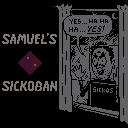
Another little fun indie puzzle game! And it’s based on Sokoban too, and it was also pointed out on Metafilter, this time by user Cogito in a comment. So let’s get our warehouse gloves on and get back to pushin’. It’s Samuel’s Sickoban!
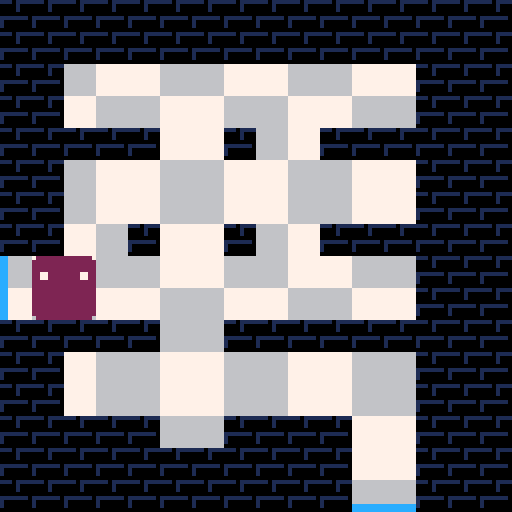
It’s implemented in Pico-8, and should run wherever it runs. As typical in this burgeoning puzzle genre, you have a pusher character (of boxes not drugs), whose job is to set objects in the right places. Here the objects you move are round spheres, a fact that becomes important later on….
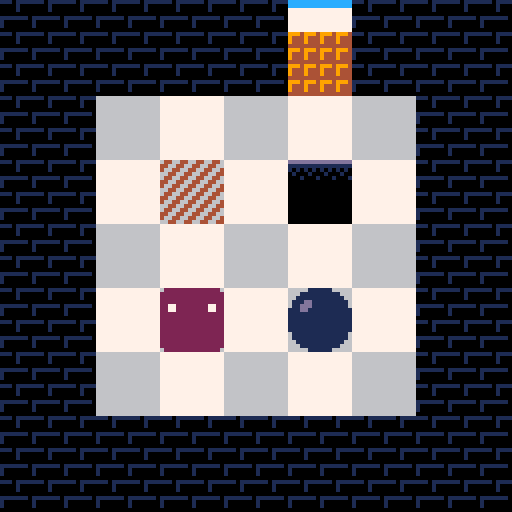
In the screenshot above, the striped spot is a button, of the video game type with a broken spring, that must be held down in order to keep being pressed. The black square is a pit. You shouldn’t step on that part. Holding down the button with the ball causes the wall to the north to vanish, allowing you to move into the next room.
Already Sickoban seeks to earn its name. This might seem like a simple room to pass, there isn’t even anything to push. But something is amiss… there are walls that don’t line up with the checkerboard. The exit is half off your movement grid vertically. You’ll have to find a way to get yourself off of it too, by pushing against a half-aligned wall.
Actually, you’ll have to do that more than once to compete this puzzle, and the large pit won’t help in that. Fortunately, you only fall into a pit if you’re completely over it. You’re allowed to hang on by just a sliver of your square, if your movement allows for it.
Figure that one out and you’ll probably feel pretty pleased with yourself. But Samuel’s Sickoban wants to make sure you’re learned your lesson, so this horror is next. And that’s only room three! What will follow after this? I won’t tell, but it’ll probably make you break out in tears. “Happy” solving!
We love it when we find weird and unique indie games to tell you all about! Our alien friends to the left herald these occasions.
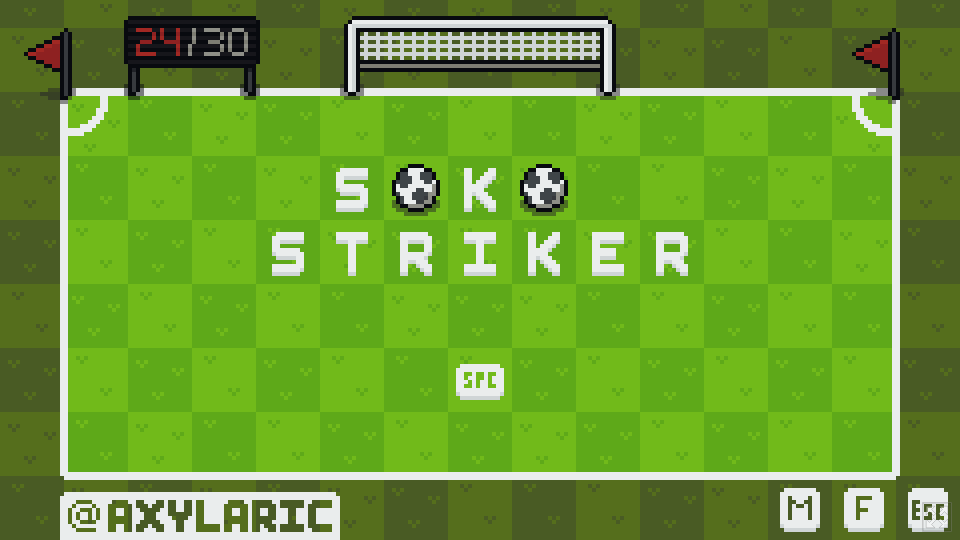
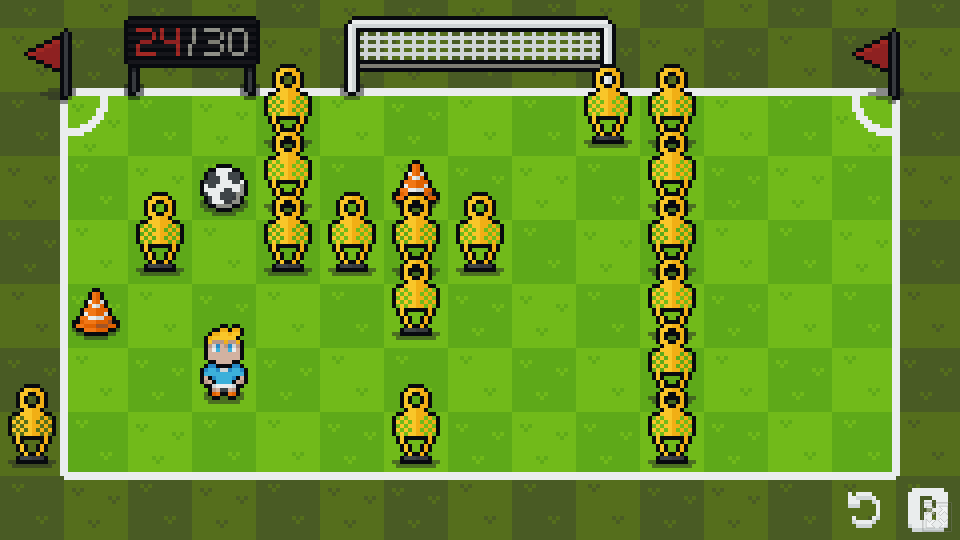
Pointed out in a post on Metafilter by long-time user pwnguin, Soko Striker is fun, and not excessively challenging, free Soccer-themed Sokoban game by Axylaric on itch.io.
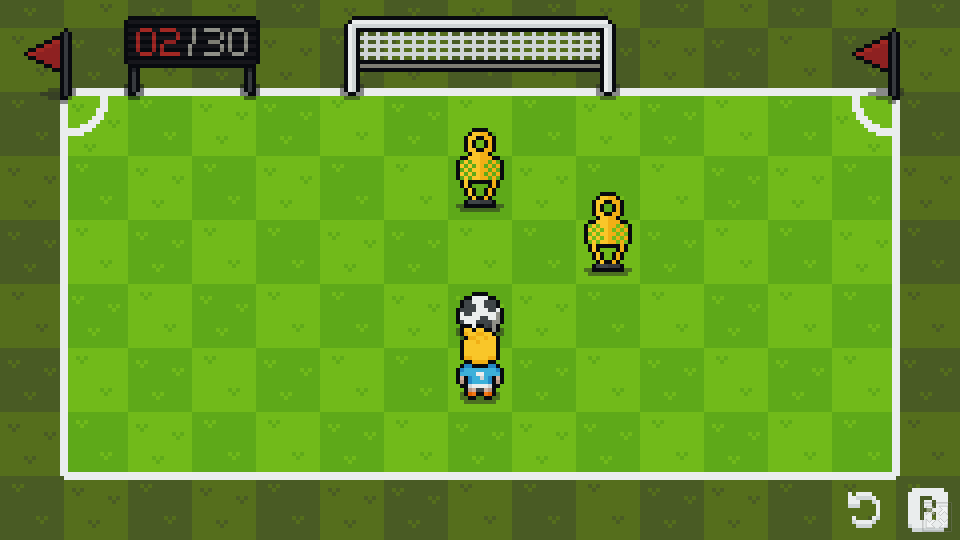
The idea is to get all the balls (up to three in a level) into the goal net. The ball slides when you kick it, continuing to move until something interacts with it. We could call these “ice block” style Sokoban pieces. One wrinkle in this is that the balls can’t cross the white lines at the edges of the board, or it’s a foul and you have to start over. There is no undo command, only a retry, so think carefully before making a move. You yourself can walk outside the line freely, and will often have to.
Those yellow barriers in the screenshot above are simple blockers, mere walls that the ball will collide with and come to a halt.
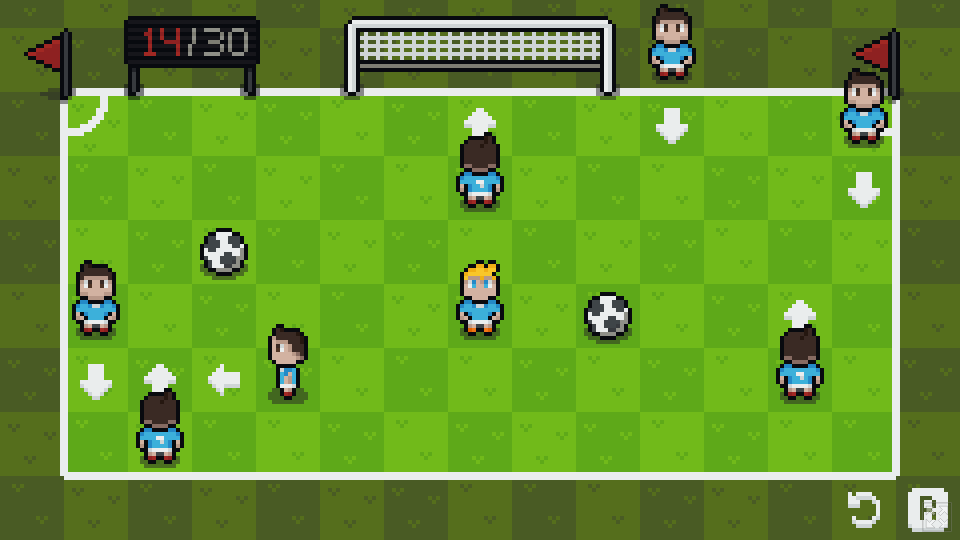
Later on you find these other players on the checkerboard pitch. If the ball rolls into an arrow, the player will automatically kick it in that arrow’s facing direction. You can adjust the direction a player faces by kicking them, a trick you’ll have to use a lot.
Near the end of the game’s 30 puzzles you’ll find these traffic cones. You can push them a single space at a time by kicking them, much like how one would move a Sokoban crate. Other players can kick crates too. A cone can block a ball and stop it a single time.
There’s a few other tricks you’ll have to learn too, but Soko Striker introduces them to you itself fairly gradually. Many of its puzzles are simple tutorials, and the difficulty doesn’t get very high until near the end. The last puzzle will take you at least a few minutes to figure out, but I think you can probably handle it. One note that might be helpful: the scoreboard that shows you the level number looks as if it might be solid and block soccer balls, but it doesn’t. You can even walk through it! That’ll be helpful to you eventually.
Kenji Eno (Wikipedia), the creator of horror games D and Enemy Zero, and other iconoclastic games like You, Me and the Cubes (Wikipedia). He passed away from a heart attack in 2013.
Shigeru Miyamoto (for form’s sake, Wikipedia) is of course the legendary game designer and producer at Nintendo, creator of Donkey Kong and Mario, and designer of Super Mario 64, among other titles. He’s still with us.
The interview happened shortly after the release of Mario 64, and is interesting because Eno is not unduly laudatory of it. He says it’s a good game, but feels it was missing something from its Space World presentation. Miyamoto agrees somewhat, that the free exploration of the prototype version was not as much in evidence, and thought it lost something by giving the player more direction, but that the demands of the marketplace, and the need for Nintendo to have a big hit to promote their new console, forced their hand. (Aside: the Space World version of SM64 has never turned up, not even in the infamous “Gigaleak” from 2020. shmuplations notes that The Preservation project (patch, github) is a fan attempt to recreate it.)
Screenshot from The Preservation Project (image from romhacking.com)
It’s an incredibly revealing interview, not the least reason being it discusses Nintendo’s hopes for the 64DD. I think you’ll find it very interesting, if you’re the kind of person I think you are.









.jpg)