Sundry Sunday is our weekly feature of fun gaming culture finds and videos, from across the years and even decades.
This video’s from Dorkly (3 minutes), which isn’t a source I often link from, but what I can say I’m a sucker for mockery of all this “AI” awfulness being foisted upon all us by every large tech company. Also its pretty well-written, and hey, Dr. Eggman has a terrific Bluesky account too (not related to Dorkly as far as I know, also I think I linked to it before but I’m looking for an excuse to mention it again).
Aaah such has been the rush that apparently I didn’t make a post yesterday! And today has been so tiring that, while a lot of fun things happened today, I feel like it’ll take more time to write them up than I do right now, half an hour after midnight on Saturday.
VCFSE in Atlanta, while it has many interesting exhibits and lots to see, doesn’t have quite as much as VCFMW did last year. It makes up for this for being connected to Southern Fried Gaming Expo (SFGE), a convention devoted to all kinds of games-playing, includinng tabletop RPGs, board games, console games, computer games, arcade video games, and especially pinball. There are so many pinball machines! There’s even very new machines, like Pokemon and Sonic the Hedgehog, and a lab where you can work on building your own, or so the displays seemed to imply, but I’m not sure such a thing can even be done over a mere weekend.
Extracting the photos from my phone is more mental effort than I bring to bear at the moment, but they will be coming. In the meantime, you may be interested to know that I have the #1 score on the Addams Family Gold machine at SFGE, and Grand Champion on it is in my sights: my fourth game on it ended up with me Touring the Mansion twice. It helps a lot that it’s set up to award extra balls from score, meaning high-scoring games tend to become even more high scoring. By contrast, the Twilight Zone machine they have is set on tournament settings, so it doesn’t award any extra balls at all.
Tomorrow begins is VCFSE, which stands for Vintage Computing Festival SouthEast, a three day celebration of retro computing. Not only will I be there, but I’ll have a table for Loadstar Compleat and also selling copies of Exploring Roguelike Games (I just brought two though; they’re heavy!) and ancient issues of Loadstar in their original packaging. And I’ll be presenting an encore of my VCF Midwest talk from September! Maybe the recording system won’t mess up with this one! If you’re around, please drop by.
I’ll probably be a bit overwhelmed over the weekend with VCF stuff, but I’ll try to bring you news from the show floor!
Owner of Game Wisdom with more than a decade of experience writing and talking about game design and the industry. I’m also the author of the “Game Design Deep Dive” series and “20 Essential Games to Study”
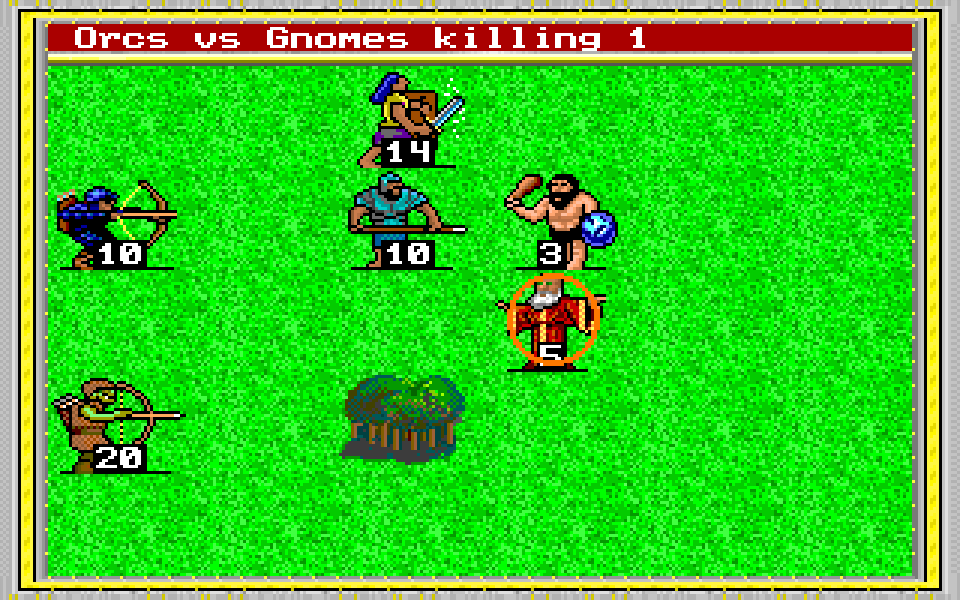
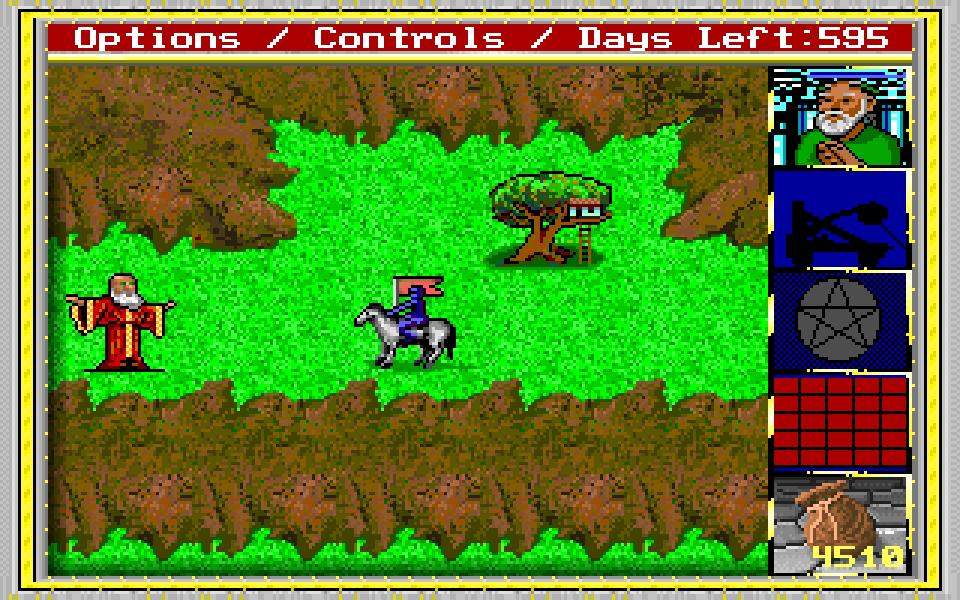
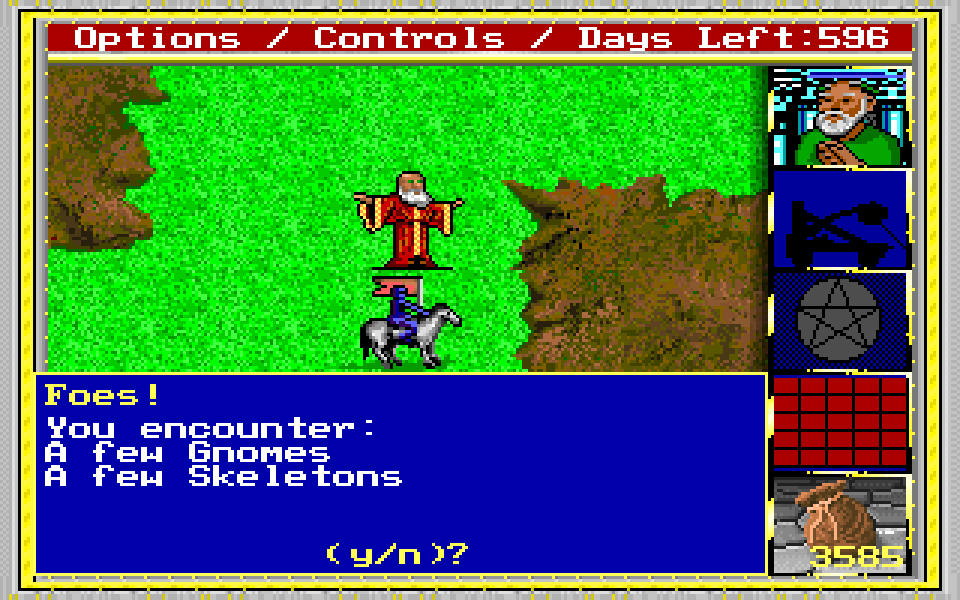
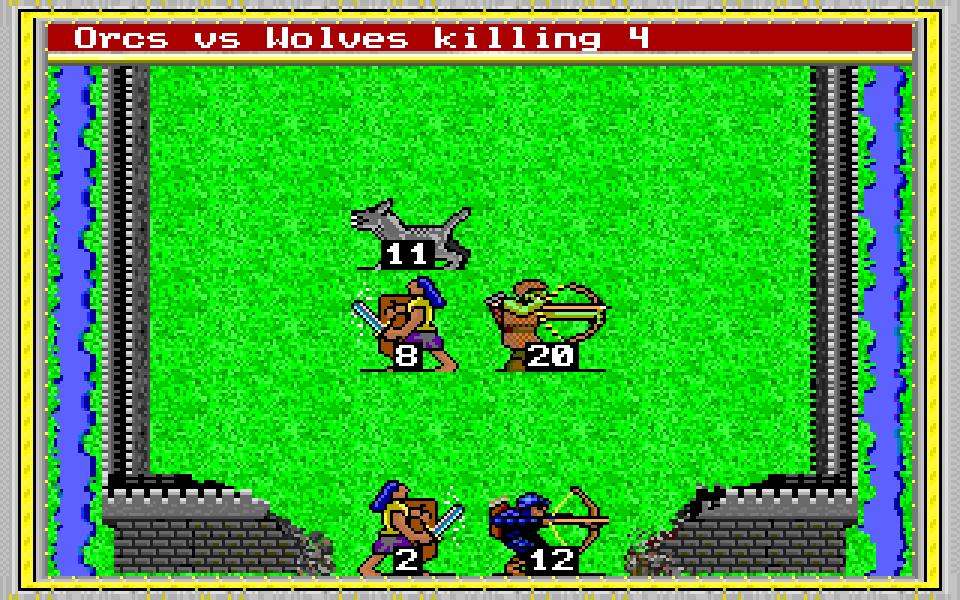
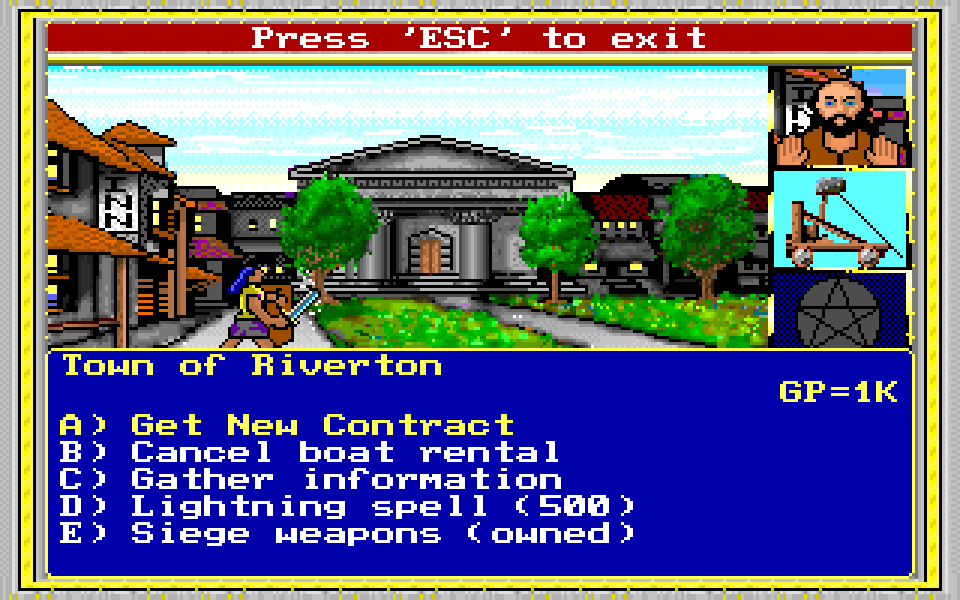
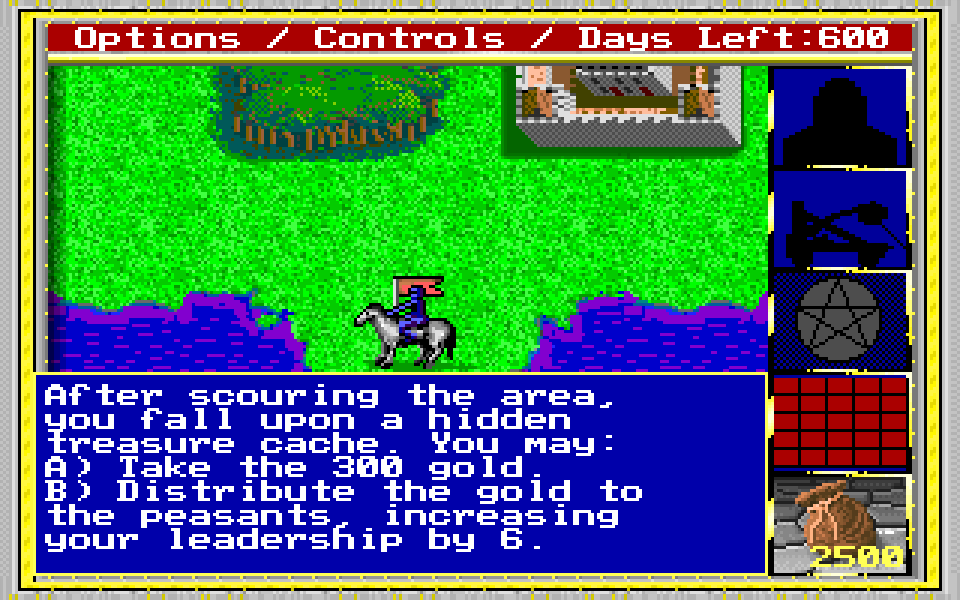
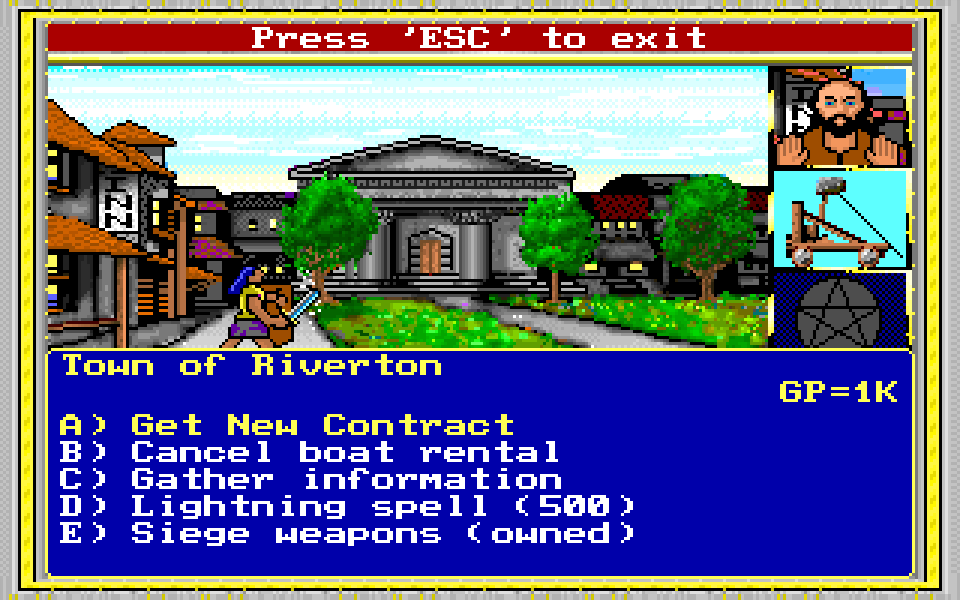
While it’s seen more than one revival since its original release by New World Computing (the Heroes of Might & Magic series, and the 2008 series titled King’s Bounty by Katauri Interactive), that first version is still a fine game to play even today. Players explore four continents raising armies, fighting hordes of monsters, building income and leadership, collecting artifacts and bringing a variety of colorful villains to justice.
The game simulates the passing of time, which affects a number of things. Every week (five game days) you get income from the king of the realm, but also must pay your troops and other miscellaneous expenses. There is a time limit (determined by the game’s difficulty level), preventing you from passing weeks for income. While you’ll probably fight hundreds of battles in a typical game, technically speaking you can win without fighting any: bringing villains to justice earns you pieces of a map, a depiction of one screen of the game’s vast scrolling area, and the win condition is to find that screen and search for a lost scepter on its center location. While the maps are the same every game, nearly all the locations of the wandering monsters, treasures, villains and other important elements are randomly placed each game, giving King’s Bounty tremendous replayability.
A true classic strategy wargame, King’s Bounty was widely ported, to DOS, the Mac, the Atari ST, even to the Commodore 64 (that must have been a difficult job), and there’s also a surprisingly good rendition for the Sega Genesis/Mega Drive that might be the best version, and was implemented in-house by New World Computing themselves (they did a similarly great version of Might & Magic II for that system).
Dan Heskett has recreated the engine of King’s Bounty and put the code on Github. You’ll need the files of the original DOS disks to use his code, but if you don’t care to go that route you can instead play it in your web browser. The keys are the same as the DOS version; use this PDF of the manual to learn how to play. The Github Readme has a wealth of information, not just on how to build the recreation but of the internals of King’s Bounty. It even includes two autoplayers, one that simulates a game as a human would play it, the other a game played with perfect knowledge of the game world.
Note: I have noticed a couple of bugs in this project. I am giving this project the benefit of the doubt that it was not generated by an AI system. If I discover otherwise, I will mention that fact here.
The world is full of traps for the unwary. There’s a whole genre of movie, mockbusters, that exists purely to try to catch people who are only vaguely familiar with some media property, and they make enough money that by cutting their costs extremely thin they can be profitable. Mobile app stores are full of games that try to trick people in a similar way, making themselves look as closely to some popular game as they can get without becoming legally actionable.
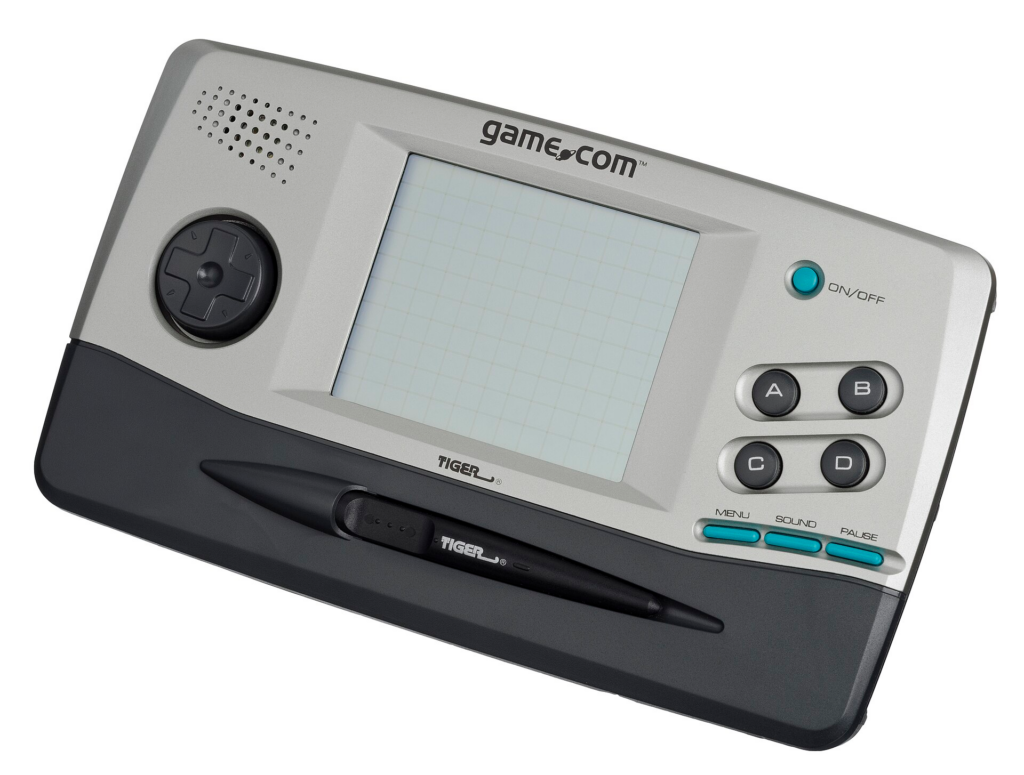
Let us all spare a thought for the poor kids who opened up a bright package on Christmas Day to find this. (Image from Wikipedia)
A similar kind of trap was the Game.com, Tiger Electronics’ bid to compete with the Game Boy. It made a kind of sense, sure. Nintendo got into portable gaming with the Game & Watch series, from there spreading into a more flexible system with replaceable cartridges. Tiger made Game & Watch-style LCD games too, so why couldn’t they do the same thing?
Thing is, Tiger was doing this through most of the 1990s! They kept their costs and prices down and managed to make them profitable by just putting out the most barest games possible, Game & Watch-like LCD games in the era of the Sony Playstation. (Ernie Smith at the excellent blog Tedium wondered at their success too.)
Tiger released their Game Boy competitor, Game.com, in September 1997. It was absurdly cheap at $30, but at that time a Game Boy Pocket was only a little more expensive at $55. I think it’s safe to say the only people who were buying up Game.com devices were extremely low information buyers. But they found 300,000 such buyers. I expect a majority of them were grandparents.
It was named after a Saturn release of the Genesis Sonic the Hedgehog games, and claimed to have Sonics 2, 3 and “and Knuckles,” but not only were all the games strained through the Game.com’s small monochrome screen, they all were drastically cut down. Each has only one level! And it’s barely playable at that!
I’m loving the optimism of that six digit score counter. Screenshot from Mobygames.
Bad Game Hall of Fame did a general retrospective on the Game.com. I personally love terrible janky systems like this, but it’s not because I think they’re secretly good, it’s because, like the mockbuster output of The Asylum, I think they’re hilarious. But I’m not laughing at the kids who were expecting a Game Boy but ended up with this instead.
These days Tiger Electronics exists, as many other game companies from past decades like Milton-Bradley, Parker Brothers, Avalon Hill and Wizards of the Coast, as merely one organ out of the many that comprise the grotesque Frankenstein’s Monster of Hasbro, Inc. Hasbro paid $335 million dollars for them, possibly because they saw something in their then-new Furby product. Nowadays I don’t think Tiger’s name is being applied to any current products, and that’s probably for the best.