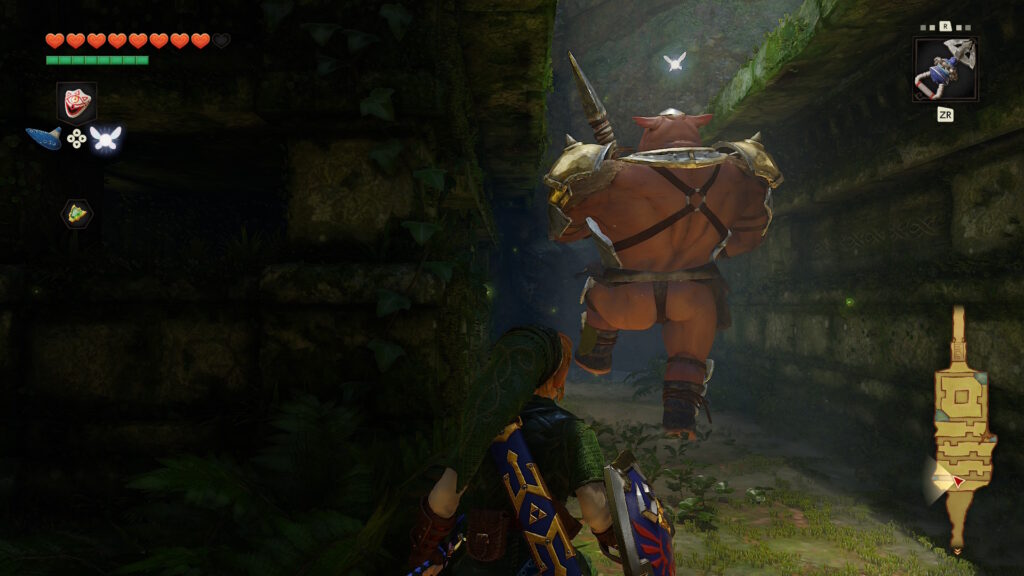
The Legend of Zelda: Ocarina of Time has been embiggened by its remaking. Some old secrets moved, a handful of new secrets added. Connection made with the Nntendo Switch app. Trivia quizzes of the game. A modest increase in explorable size.
Yet it hasn’t been made much larger. Compared to its predecessors Breath of the Wild and Tears of the Kingdom, it’s tiny. Both of those were games that prided themselves in sheer bigness, with size in bulk and terrain by the ton. Both games contained 900 Koroks to find, hidden around their many acres; Ocarina has only its modest 100 Gold Skulltulas, and although back in 1998 that seemed like a whole lot, and they served as the very inspiration for the Koroks, their number now seems to lack.
Yet Ocarina’s miniscule relative space is much more finely honed. Less seems included just to fill out space. It seems like its space is used more, indeed, than the Nintendo 64 original. Time has not been kind to that first game’s Hyrule Field; for all the fond memories of traipsing through its space, there really wasn’t a lot going on there. In N64 Ocarina’s Field there were only six kinds of enemies, and not even all at once.
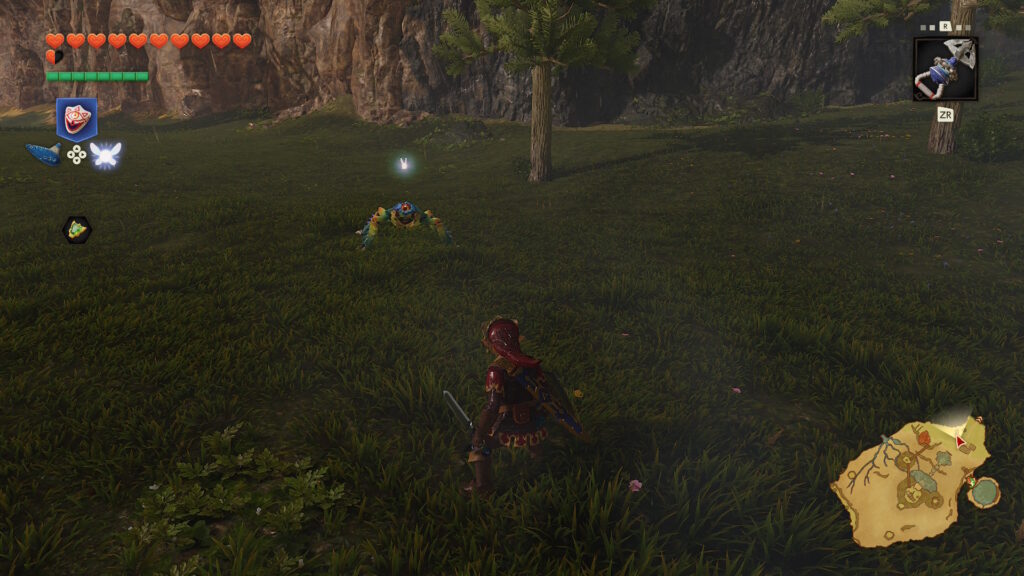
They were parceled between two different eras, and on top of that daylight and nighttime. To avoid spoilers for a game that’s been out for 27 years, in the younger time there’s only Peahats and their Larva, Stalchildren, and the very rarely seen Guays, and in the more adult period there’s only Poes of small and large sizes, and the big ones only show when you’re on horseback. Hyrule Field, in short, is a whole lot of space but with not much in it. In the new Ocarina this has been remedied a bit. In younger times there’s a little more opposition, but in the more mature age there’s actually some decent competition now.
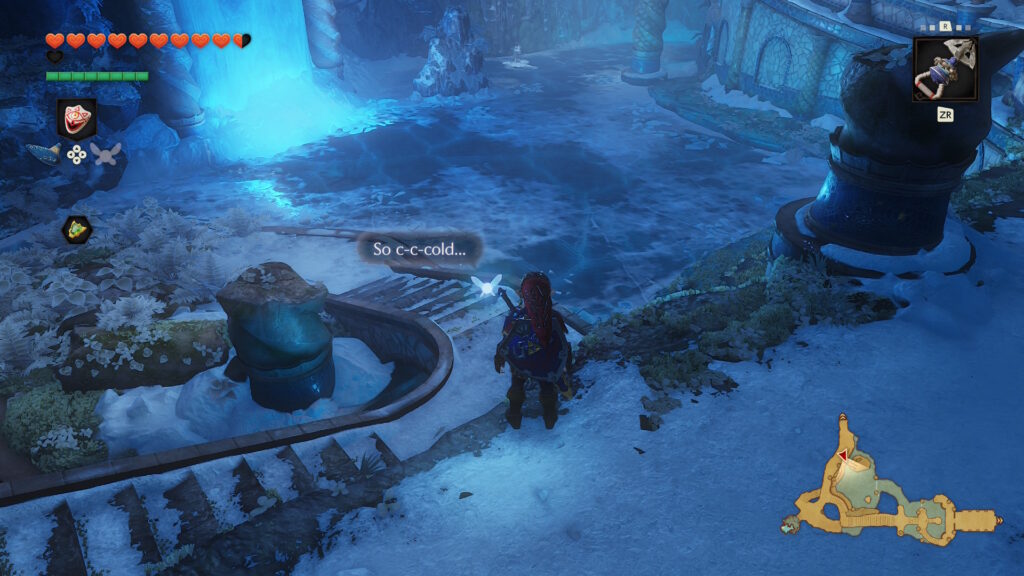
But the thing about Hyrule Field is, while it’s the center of the map and what most people might think is the core of the game, Ocarina of Time’s true heart are its nine dungeons, among the best in the series’ long history. Now in the remake they’ve been reworked a bit, especially its long complained-about Water Temple. Not hugely, there’s still many of the same rooms and puzzles. They’ve been changed just enough to keep the people who replay N64 Ocarina on their toes. Ocarina of Time was the first 3D Zelda and set the stage for every subsequent mainline game, and nearly all of them pale, in some way, compared to Ocarina’s: Majora’s Mask and Wind Waker have too few, Twilight Princess has too many, in Skyward Sword there’s hardly an overworld but instead the whole game feels like it’s dungeons to its detriment, and of course Breath and Tears are overwhelmed by their gigantic overworlds. Ocarina could stand to have a larger overworld, but eh, I’m overthinking it. It’s really easy to overthink Ocarina of Time, because it’s so much fun to play.
Some areas of the overworld have been somewhat changed as well. Some areas that were separate loads in the N64 have been merged together seamlessly now, so Lon Lon Ranch and Lake Hylia are just special regions of the field now. This has enabled an interesting thing about Lon Lon ranch particularly: it is possible to exit the Ranch through a route other than the front gate. If you do this, you can mess up a certain event later in the game, but it turns out the designers accounted for this, and there’s a new way to get back into the main portion of the ranch.
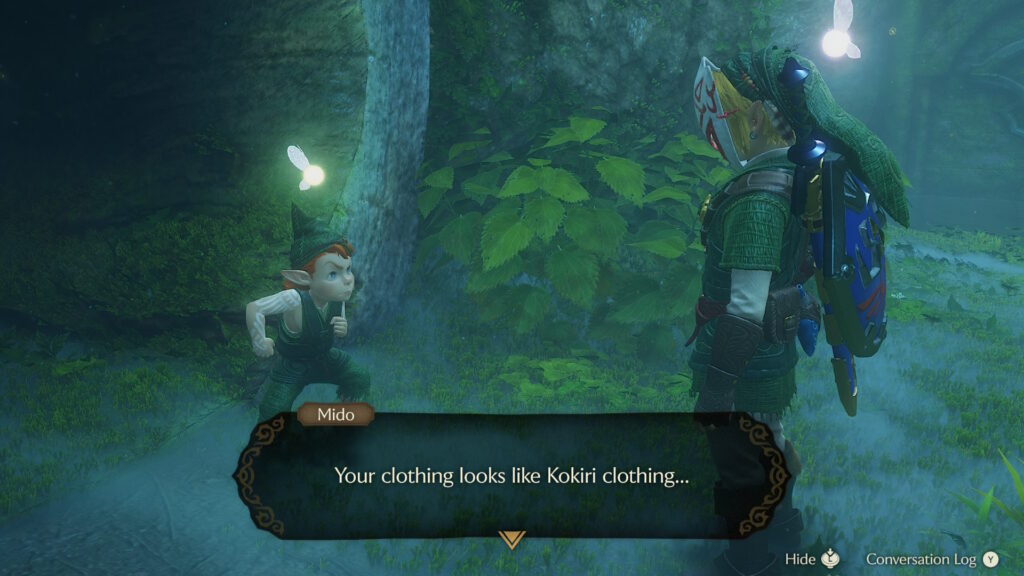
Kakariko Village has also changed. If you haven’t played N64 Ocarina for a while, you might stumble around, wondering if the buildings had always been in these places and your memory is failing. I’ll put your mind at ease, as I had to put mine: yes, the buildings are in different places, yes, there are some new ones, and yes the village has actually a couple of new buildings in it in the latter part of the game. Yet despite these changes, and some huge visual upgrades, the general shape of Ocarina of Time is the same, nearly all of the subquests and events are the same. In fact, I think probably they could have added some more events, but there are few people who played the original who would say it was much broken.
I don’t think the new game is completely an improvement of the original, but it makes some different choices, not good or bad ones, just different. The example that strikes me the most is how it treats money. N64 Ocarina rains cash down on you like a glittery hailstorm, and even the biggest wallet will soon reach its full capacity. When your rupee count is a green 500, you almost don’t want to open new chests or uncover new secrets, because so many of the rewards are rupees.
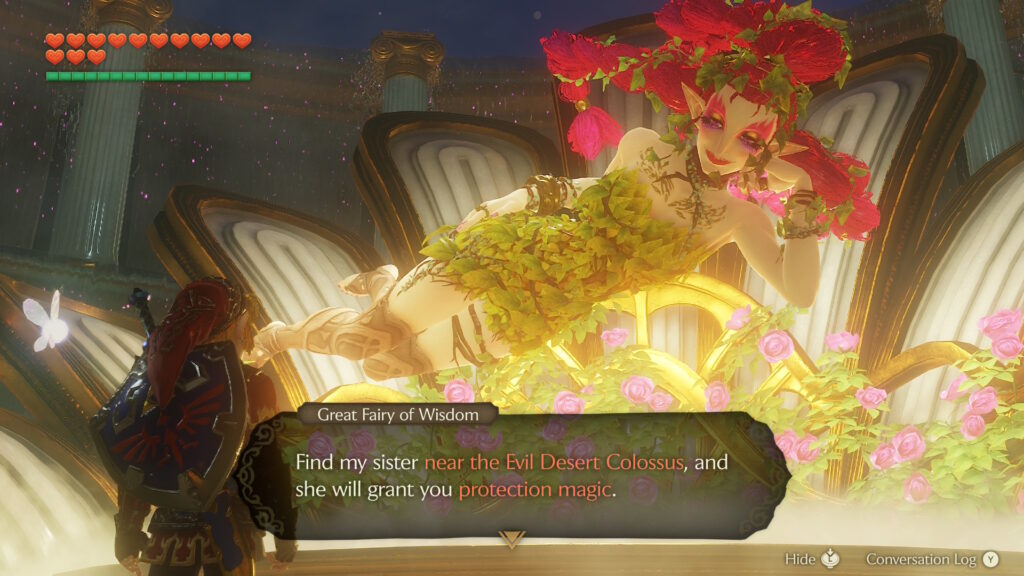
Finding a 200-value Gold Rupee when your accounts won’t see a particle of it is such a nauseating feeling. The designers of Switch 2 Ocarina must have found themselves vomiting from it so much that they’ve fixed the problem three times over. All of the wallets, including the starting one, have been doubled in size; there are more things to buy and a bit more expensive; and most sources of rupees have been greatly downgraded. Basic enemies only drop singles, or fives for bigger versions. The frogs on Zora River give 50 rupees each in the original game, 250 in total; in the Switch 2 version, they give a total of just 65. Those examples are typical of the cash reduction across the board. Chests that might give 100 or 200 now give 20 or (rarely) 50. And the Great Fairies no longer work for free. They’ve read the same book on personal finance that the greats from Breath and Tears have, and they now demand increasingly many rupees before they’ll even deign show their be-vined bodies.
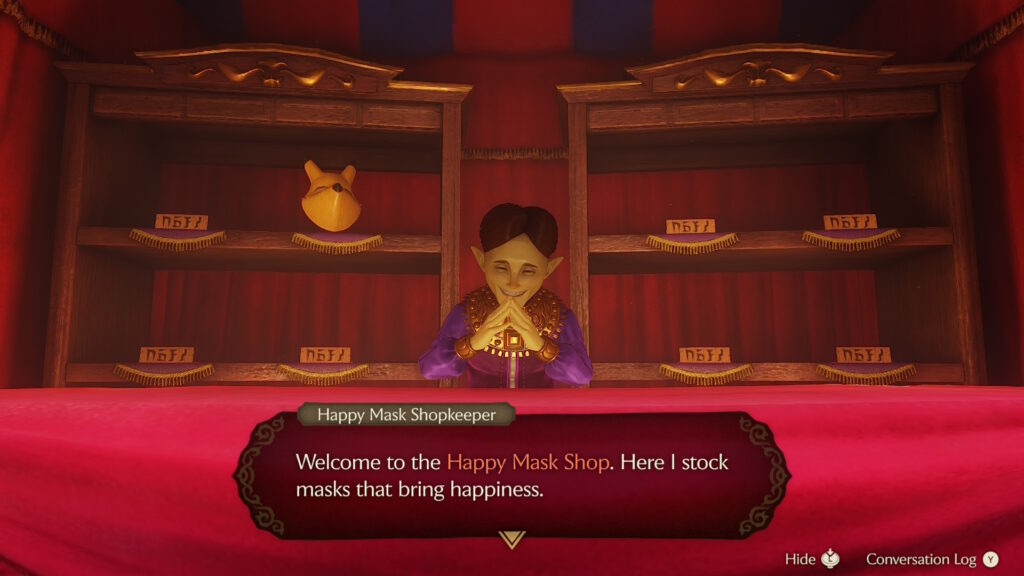
Because money has been derandomized and decreased, money counts for a lot more. There’s more incentive to fight enemies and collect their leavings. In the original you basically didn’t need to chase money at all, but it’s now a bigger part of the game. It’s possible to miss how the first game threw fistfulls of gemstones at Link, but I think the change is much better from a design standpoint.
Enemies, in addition to being more in number in Hyrule Field, often have a bit of an extra complexity to them. Enemies that had one attack before may now have two. A couple of enemies have fakeouts that seem intended to trip up people relying on their muscle memory from the N64 game. Many bosses now have extra phases and require new tactics. All of this makes the S2 OoT a slightly harder game, but it is far from insurmountable. I just want you to know, it’s not you, the game has changed a bit, and in ways specifically to mess to players of the original.
I have yet to finish the Switch 2 version, but I’ve been enjoying my time with it so far. I wish it was bigger, given that it’s a $60 game, but I still think it was worth it. I think you’ll enjoy it too.