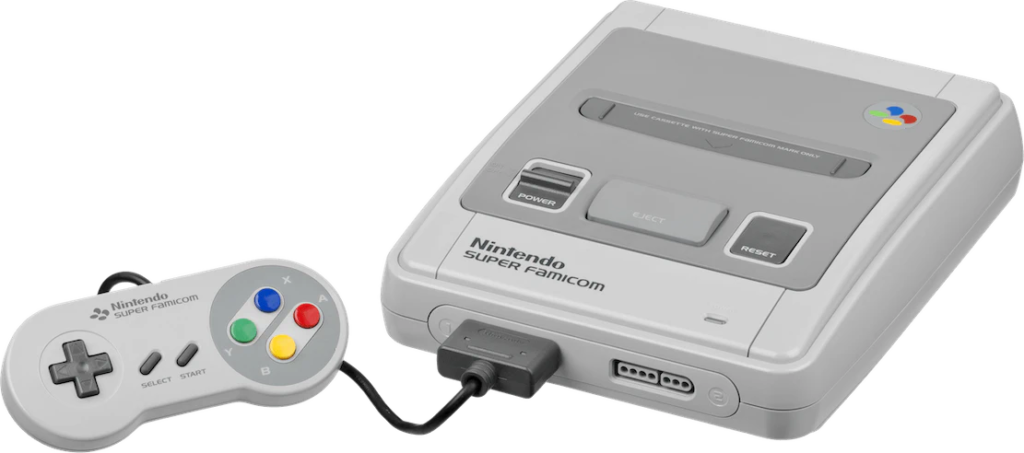
On the SuperGrafx

What is the SuperGrafx? Why don’t we remember it as well as its predecessor, the PC Engine/TurboGrafx 16, with which it was backwards compatible?

Sharopolis on Youtube digs into the system and its capabilities (17 minutes):

As you can tell by the video’s cover image: Amazing Power, No games. The SuperGrafx only had five games released for it throughout its lifetime, pretty harsh for a system that cost around $300 by today’s money. That cost, relative to that of the PC Engine CD, which was also expensive but could play CD games with vastly greater storage, was probably what doomed it. For those really seeking an arcade experience in Japan there was the Sharp x68000, famous at the time as the true enthusiast’s system with a good number of nearly exact arcade ports. It also cost around $6,000 in today’s money, and still $3,000 in then-money.

The system used the same chip as the PC Engine before it, a 6502 variant running at 7 mHz, meaning it was only a 8-bit system. But was that really so bad? The major 16-bit competition for it was the Motorola 68000, another venerable chip at the time that was used in the original Apple Mac, the Sega Mega Drive/Genesis, the Commodore Amiga and the Atari ST. Yet the 68000 also had some more overhead. Many instructions on the 6502 completed in from two to four cycles, whereas the minimum cycle count of a 68000 instruction was four, with some taking up to 20. This, of course, is offset by the 68000’s greater number of registers and ability to work with two bytes at once for many instructions.

Its graphics were essentially two of the PC Engine’s graphics chip, with some circuitry to interface their outputs together. This description brings uncomfortable reminders of people deriding the Wii’s graphics as “two Gamecubes taped together,” but it’s a much closer description of the SuperGrafx’s graphics. But in practice this meant twice the sprites, dual-plane backgrounds, and double the potential colors on-screen at once, while the MegaDrive/Genesis infamously was still stuck with 64.

The SuperGrafx’s failure in the market was one of those inflection points of the growth of video gaming. If it had succeeded then NEC might still be a player in gaming today, and maybe Hudson Soft would still be an independent entity, instead of just another property for Konami to mine for nostalgiabucks.

A Non-Invasive Gameboy HDMI Adaptor

This one’s crazy. The Gameboy does not have external video output. In order to get its display to appear on a screen other than its built in LCD dox matrix, you absolutely have to at least crack open the case. Don’t you?

Well, actually, yes, if you always want a perfect image. Sebastian Staacks (an awesome name) figured out a way to do it that mostly works. It’s a cartridge that goes into the Gameboy, that itself has a slot into which you plug the cartridge that you wish to play. Simple, right?

No, no, wait. There’s a problem. The Gameboy doesn’t expose its video through the cartridge port. There is no pin leading out providing a video signal that can be converted for display. There’s no way this could work!

Well, there is a way, kind of. The device contains a Raspberry Pi that runs its own Gameboy emulator, that it tries to keep synced with the version running on physical hardware. It does this by watching bus activity exposed to it through the cartridge port!

But while there’s a lot that it can do with this information, there’s also a lot it can’t see. It can’t, for example, see directly what buttons are being pressed. However, by watching how the cartridge reads the cart ROM, it can deduce what inputs were pressed.

The process is not perfect. While it can spy some memory accesses, a few things escape its inspection. While it can recreate the layout of the starting blocks in Tetris Game B, it can’t catch their randomized appearances. Also, while a Raspberry Pi is much faster than a Gameboy, it’s not fast enough to carry out its display in the same frame as the main unit, so it lags behind a couple of frames. Still though, it’s a very clever idea, and it’s amazing that it works as well as it does!

Sebastian made a Youtube video explaining and showing off his work, here. (It’s the same one embedded above.)

There Oughta Be A Game Boy Capture Cartridge

Guide to the SNES Architecture

Image from the site

Rodrigo Copetti has an interesting rundown of the architecture to the Super Nintendo Entertainment System! It’s an interesting system over all. In clock speed it’s really not that much faster than an NES, but it has vastly superior graphic and sound capabilities, plus so much more addressing space that the phenomenon of mappers that ruled nearly every NES game worth talking about (except maybe Super Mario Bros. and Tetris) was completely absent. The SNES did have frequently-used add-on chips, but they tended more to take the form of co-processors to take some of the load off of the machine’s relatively slow CPU.

Super Nintendo Architecture: A Practical Analysis by Rodrigo Copetti

The Difference Between Kiosk New 3DSes and Normal Ones

It’s a video from YouTube Channel The Retro Future with the title “Nintendo didn’t want us to know this…” which I hate. Why not just mention it’s about the difference between the Kiosk Units and retail ones? I’ve seen a hundred clickbait titles like this that have completely disappointed me.

This time though, it actually was interesting content, even if I can’t see why Nintendo would care if we knew it.

The kiosk units that were displayed in stores to demonstrate software differed from the ones you could buy in one important respect: they have a resistor in a different place on the motherboard. Without this resistor, the kiosk units will only turn on if they’re connected to power. They still have a battery, but it doesn’t appear to be used! If the resistor is removed and soldered into the location it’s at on a production unit, it seems, it’ll function normally.

Here is the video:

Video: tom7’s Harder Drives

tom7, aka suckerpinch on YouTube, is a freaking genius. I don’t believe in geniuses, but he is a strong counter-argument, I will admit.

His modus operandi is to take some absurd premise and carry it to its logical conclusion, usually using some form of technology along the way. He then makes a video about it. Sometimes the video is in connection with a paper he’s written for SIGBOVIK, which is an entire oil tanker full of worms that I really don’t want to get into here, suffice to say it’s hosted on the site of the Association for Computational Heresy.

The PDF of their 300-page record of proceedings calls itself, “The fifteenth annual intercalary robot dance party in celebration of workshop on symposium about 26th birthdays; in particular, that of harry q. bovik,” about which all I can say, honestly, is, woof. I encourage you to go to that side and read, or at least try to read, some of their papers. You will come to feel like a complete imbecile, but you’ll probably be entertained.

AnYwAy. This post isn’t about SIGBOVIK but about tom7. The post above is about his questionable quest to construct mass storage devices out of unlikely things, like masses of Nintendo Tetris emulators, or a mass of used COVID tests. In the past he’s done fascinatingly-insane videos on bad chess algorithms, generalizing the concepts of uppercase and lowercase, created a number of weird bikes, or (to stick with the blog’s theme) teaching a computer to play Super Mario Bros. in a fairly silly way, which at least will teach you what lexicographical ordering means.

Found via a Metafilter post from user zengargoyle.

Running DOOM on an IBM RS/6000 Under AIX

I’ve been rather taken by NCommander’s YouTube channel lately, in which he regularly tries to build and run old versions of Unix and software for it. He’s run an old boxed version of Debian 2.1, Internet Explorer 5 for Unix, the first Linux live CD (Yggdrasil), and–get this–even a version of System V made for the Commodore Amiga that was officially published by Commodore! It comes out of the box with NetHack 3.0! (Warning: that one’s a seven hour live stream.)

A highlight of the channel that falls under our jurisdiction is him trying to get DOOM running on an old IBM machine running old IBM Unix. Over an hour long, the video is a long sequence of sadness, involving misconfiguring hostnames, getting X running, discovering that IBM’s C compiler costs about $2,500, running into basic C functions IBM didn’t implement, building OSS for AIX (and buying a $10 license for that), and then the issues with building and running the game itself. So yes, add it to the long list of devices that run DOOM, but at what cost?

Well, to NCommander, $10 plus several days of time. To you, about an hour of entertaining (somewhat) learning about obscure computing esoterica!

NCommander at YouTube: What Does It Take To Runu DOOM On A $10,000 IBM RS/6000 From 2001?

PS1 Rendering Quirks

via @doc on Twitter. PikumaLondon tweeted out a thread (unrolled) explaining, in general, how the original PlayStation rendered graphics, and the source of its distinctive graphic artifacts, specifically texture warping, pixelated textures, and jittery polygons. The Nintendo 64 didn’t have these problems, but also couldn’t draw as many polygons each frame.

The thread also links to developer David Colson’s efforts to create a PS1-style 3D fantasy console. I’m sure this isn’t interesting to everyone, but worry not, this blog isn’t going to become entirely low-level hardware rendering geekery. At least, not yet.

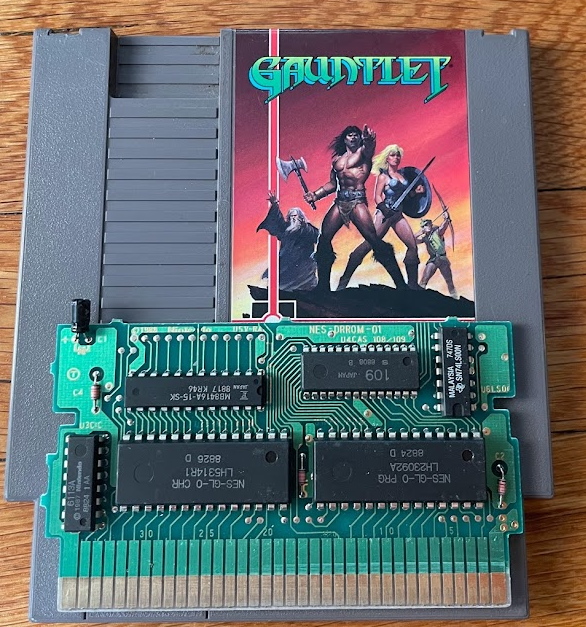
Nicole Express: Tengen’s NES Chips

The always-wonderful retro gaming and hardware info site Nicole Express has a great post about the chips that Tengen (a subsidiary of Atari) used in their cartridges! Tengen is a special case among NES developers, in that while a Nintendo licensee they got to use their own mapper, from Namco, but went and manufactured their own ASICs when they split off from Nintendo’s licensing program. The deets are all in the article!

Nicole Express’ archives are well worth a look, which among other items hosts their article on Zaxxon and Future Spy. They have interesting games to play on their itch.io page too! Have I used enough exclamation points yet?!