Here is a talk by the creator of the brilliant 8-bit platforming game Jumpman (who isn’t Mario). That’s all the lead-in I have time to provide right now. And if you get the chance to try Jumpman, do it. There’s a version on Steam! (Note, the C64 version is preferable to the DOS version.)
The Man Behind Jumpman: Retro Gaming Revealed (Youtube, 58 minutes)
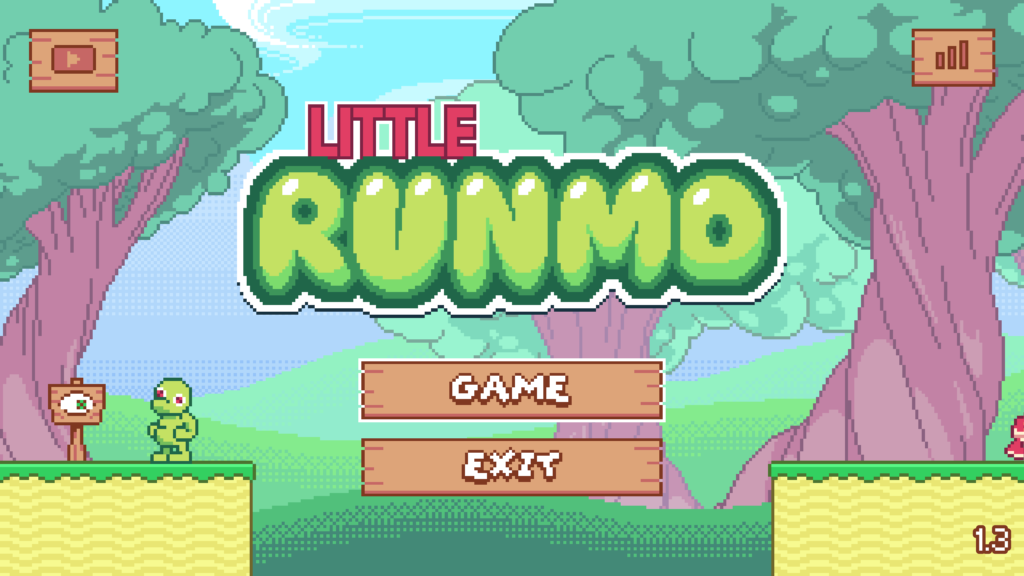
Last year for Sundry Sunday we linked to Gooseworx’s video game-inspired cartoon Little Runmo. In summary: a platforming character discovers that the peril-filled world he’s tasked with traversing is part of a system designed to support the life of a grotesque ruler. They turn it off, but other circumstances happen, and in the end things don’t go too well. Here’s the video, again (16 minutes).
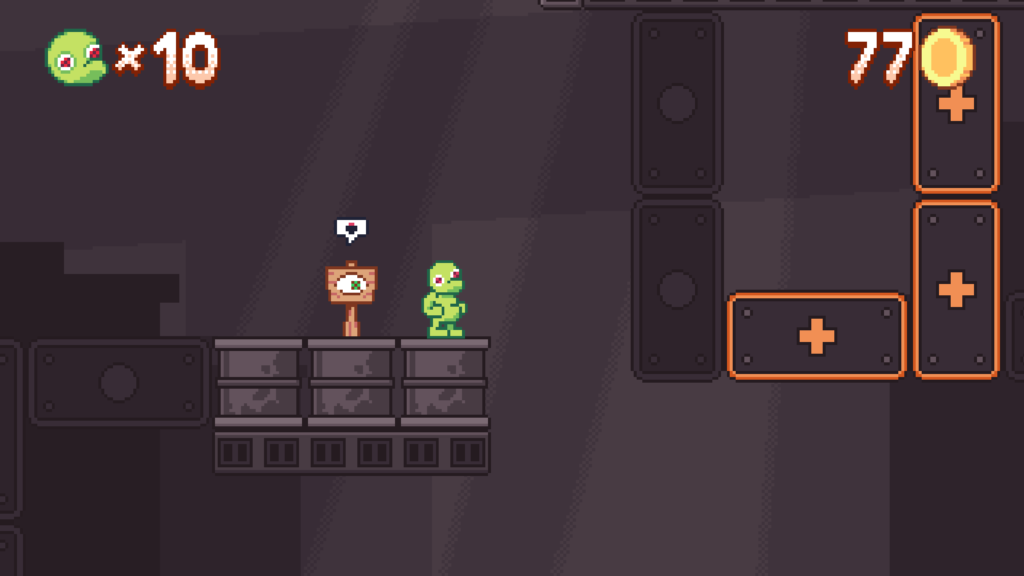
A little green person off on a dangerous journey.
Little Runmo was made four years ago and has amassed 30 million views. Much more recently, a month ago Gooseworx made a pilot for a show to be called The Amazing Digital Circus, which in that short time has gotten an incredible 147 million views. Presumably it’ll get a series, but who really can tell these days? We have one major media company that thinks it’s worthwhile to make complete expensive productions then purposely kill them before release for a tax writeoff, but these are not the pages to discuss that.
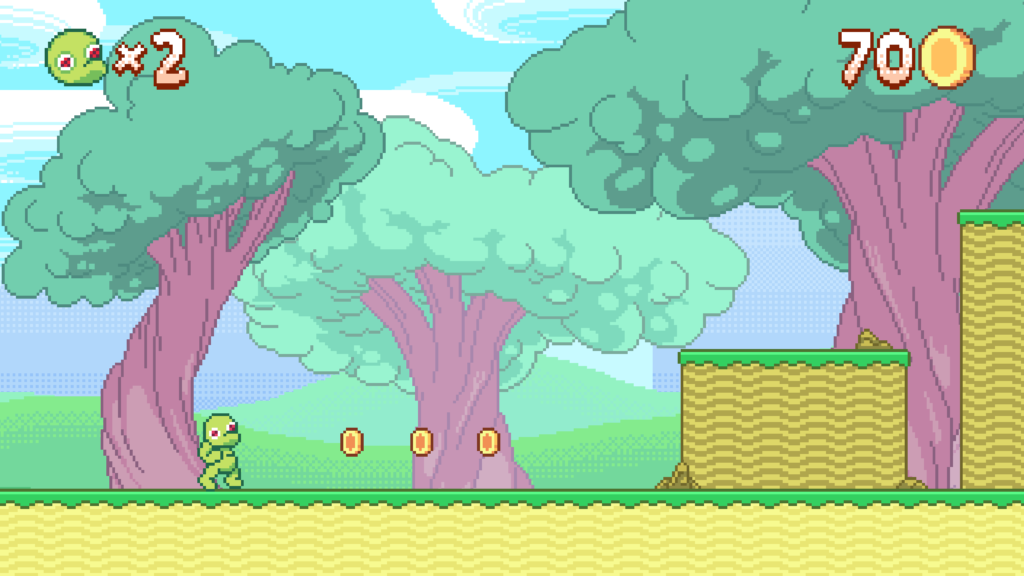
You might think it’d be a simple recreation, in game form, of the original, but it’s got its own things going on! Its platforming is pretty sharp. In addition to basic running and jumping, pressing an action button in the air gives Runmo a forward dive that gives a slight bit of extra height and some forward distance. On the ground while ducking, this move turns into a forward dash that can get through low ceiling passages.
Even with all the thematic deconstruction happening in Little Runmo, we never find out why Runmo has to traverse dangerous worlds. Presumably the evil king their deaths supports has set up some social pressure to convince his people to traverse spiky obstacle courses. Maybe the local rulers are in cahoots with him. BTW, it’s fun to say “cahoots.” Cahoots!
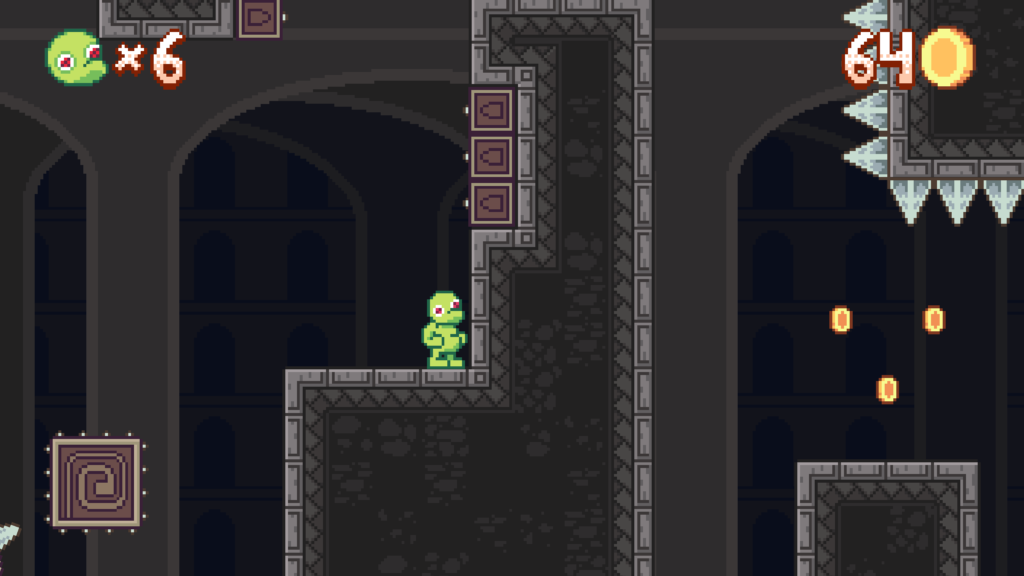
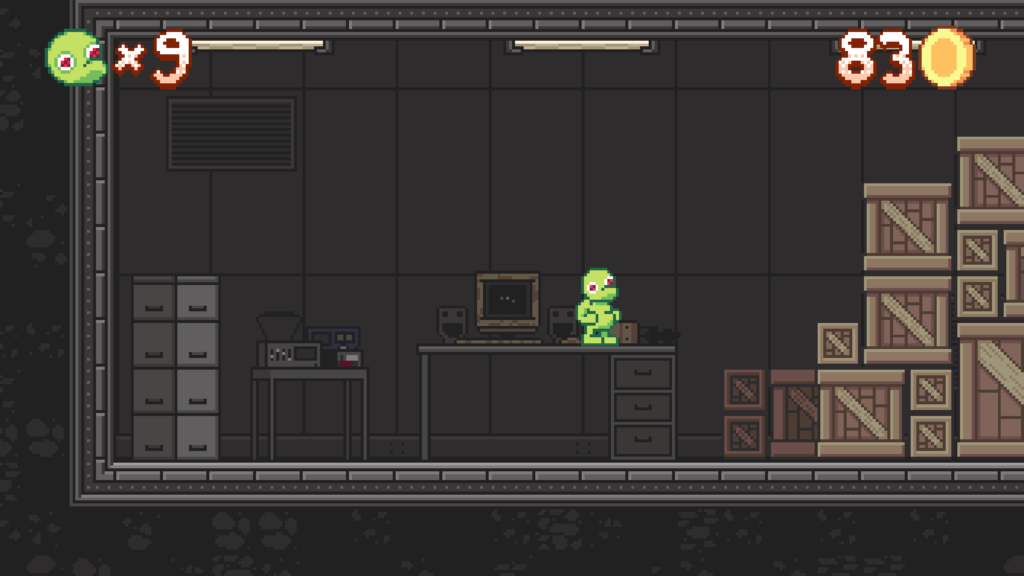
The game is divided into levels, but they aren’t clearly announced, and to a limited extent you can explore the areas as you wish, in a different order than as presented in the cartoon. The game world isn’t exactly as the cartoon presents it either, with the areas much larger, and containing a decent number of secrets to find! It’s usually worth it to poke around out of the way places if you can figure out how to get to them.
There’s a section with Mario-style timed alternating blocks, although here, if you’re inside a block when it appears, you just die.
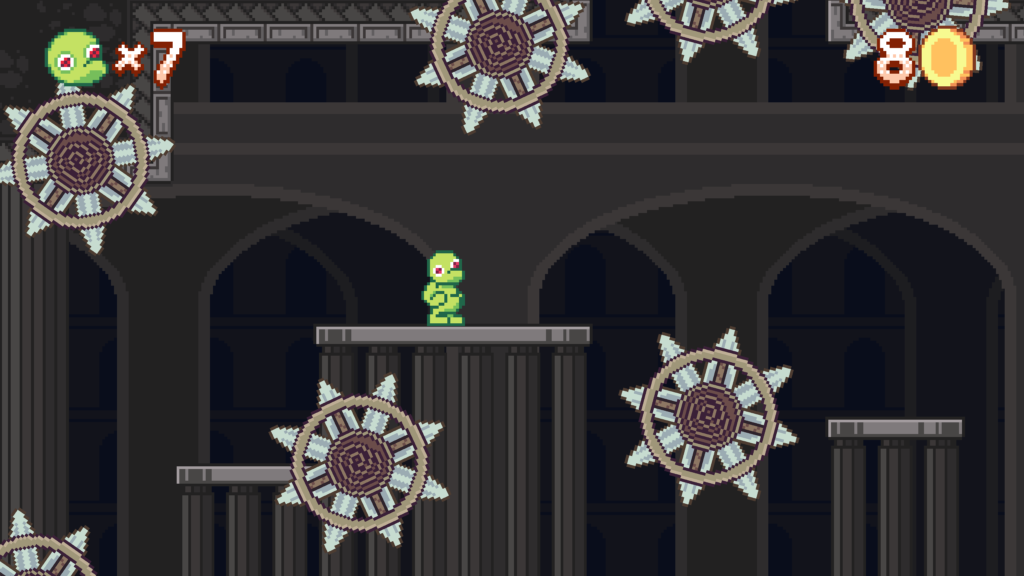
The game starts out fairly chill, but gets pretty difficult. It doesn’t seem like an unfair level of difficulty, although it may take you a few plays to build up the skills to conquer it. Here is some advice to playing it:
If you haven’t seen the cartoon, you should know that the above ground area is only a small part of the game. The wide pit, the first one with the alternative spike wall over it, is the entrance to the rest of the game. Pikit’s message hints that that’s the way to go (press up to listen to it).
Unlike as seen in the original cartoon, you have to use the midair dive move to get past the pit, it’s too wide to cross with wall jumps alone.
Get used to hugging walls on the way down, to slow your descent. This can be used to scout out pits for secrets, to see if the scrolling continues.
If you press towards most walls but keep jumping, you can climb them easily. Get used to doing this all the time.
If a ceiling has a one block overhang, you can get around it with a jump off the wall and a dive back towards it.
Watch the cartoon, and think about ways to explore regions that the animated Runmo doesn’t go to.
There is at least one place where there are extra lives hidden off the top of the screen.
While running out of lives doesn’t erase your metaprogress, it just sends you back to level 1, the game does not save its state when you exit it. If you quit out and reload, you’ll be at the very beginning.
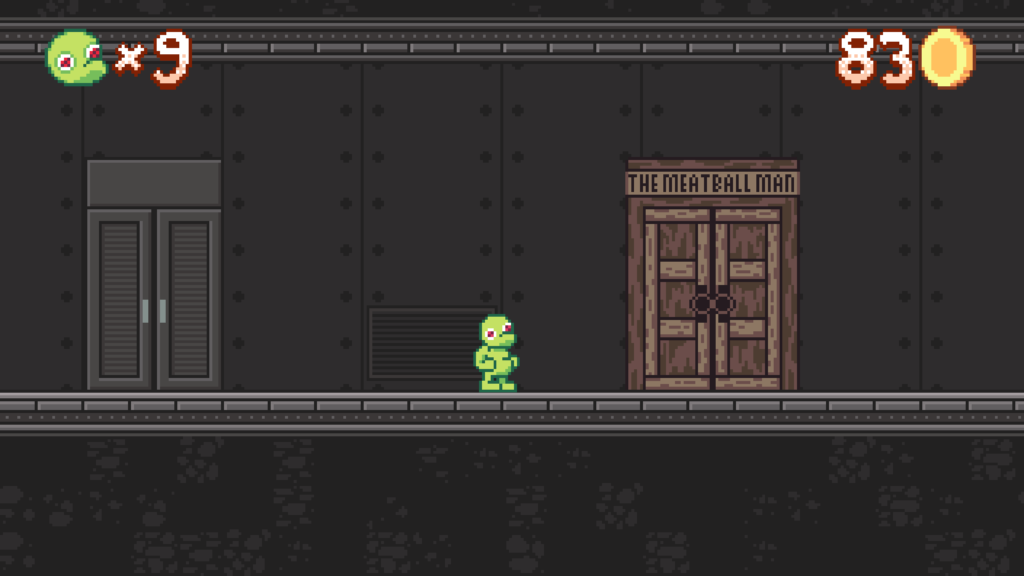
The Meatball Man is one of the funniest parts of the cartoon. It is possible to complete his room, but it’s optional in any case.
If you don’t care to see the game yourself, this 100% completion speedrun shows off the locations, although of course it doesn’t waste time talking to Pikit or exploring unnecessary places. There don’t seem to be any unnarrated longplays around yet, so, best to sharpen those skills if you want to experience it all.
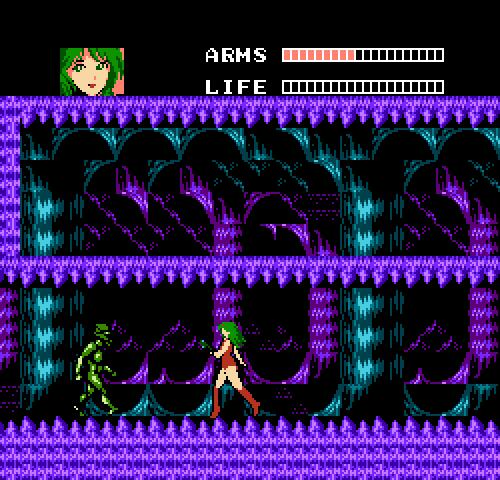
Wurm: Journey to the Center of the Earth is a Famicom/NES title with a lot of ambition, perhaps too much. Over on his self-named blog Kid Fenris posted a long article on it back in March. It makes it seem a lot more interesting than it otherwise would! We at Set Side B love experiments, successful or failed, and Wurm certainly was one, with shooter, side-scrolling platformer, first-person boss fights and even some visual novel elements. And protagonist lady named “Moby” is searching for her boyfriend named “Ziggy.”
Green-haired Moby wears the kind of outfit you could only find in something inspired by 80s anime.
The post mentions that designer Shouichi Yoshikawa, a.k.a. “Angela,” has an interview up at GDRI. It also mentions that Angela used to have a site devoted to their game, which while gone now has a backup on the Wayback Machine! Sadly the promised English version of the site never materialized.
Also–Kid Fenris mentions he once wrote about Wurm on GameSetWatch. My old stomping grounds!
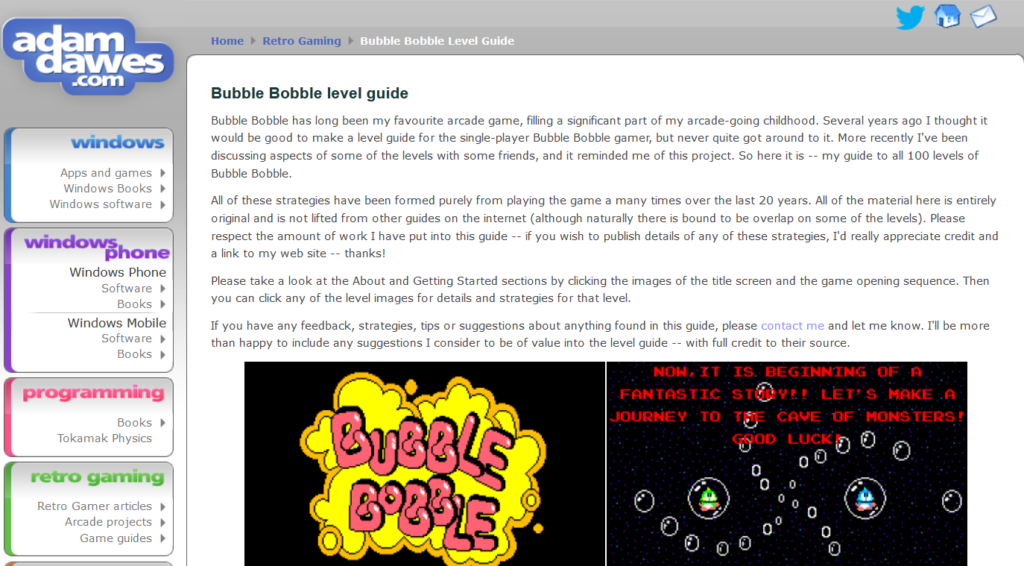
For 16 years now, Adam Dawes has had a guide to Bubble Bobble on his website that provides precise, detailed strategies for defeating each of the game’s 100 levels, most with a demonstration video (one level’s video I found doesn’t work). Each level has a difficulty ranking, and such is skill that the hardest of them I found, level 91, is only rated as “medium-hard.”
Adam’s guide provides the details of finishing each specific level, but it doesn’t explain all of the weird secrets that lie buried deep in the game’s code. For that, check out the previously-linked Bubble Bobble Info Pages!
Another Youtube video? Yeah I know. This one explains how gravity works in Super Mario Galaxy. It’s 29 minutes long. The basic gist is, there are eight kinds of invisible gravity field objects, based off of simple shapes, in the game, which are used in concert to create the various orientations that Mario switches to as he moves around: Parallel, Sphere, Cube, Disk, Torus, Cylinder, Wedge, Wire (basically an arbitrary path in space), and Cone, which is only used in two places.
An interesting fact from near the end of the video: gravity affects Mario’s shadow! Shadows point towards where Mario will fall, not according to how light strikes him, to give players a sense of where he is spatially in 3D space.