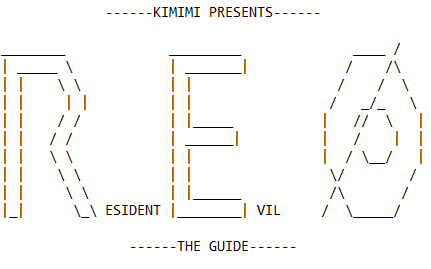
The above abbreviation stands for “the Game Eating She Monster,” but that’s a lot to put in a post title! Kimimi has a great blog, with a great post from 2021, about the construction and requirements of a game FAQ, of the type that were (and sometimes still are) posted on GameFAQs, unless/until recent buyer Fandom.com kills it. It covers the basics you need to know if you wish to help keep this ancient and revered art alive, including this:
First things first: ASCII art. Everyone knows no amount of text, helpful or otherwise, is a proper guide unless the top of the page is decorated with ASCII art. This is an unbreakable universal law, on a par with gravity and cats being whatever furry shape suits them best at the time.
Kimimi
Title art looking good! Made by Kimimi herself, as should be obvious.
On Romhack Thursdays, we bring you interesting finds from the world of game modifications.
Castlevania II is an infamous entry in the series. While it’s the first Castlevania game to use the “Metroidvania” structure that would be more solidly associated with it after Symphony of the Night, there were a lot of… controversial elements? Townsfolk often lied to the player (in all versions of the game), and sometimes their hints were badly translated. A few places required the player to do arbitrary things without much prompting to proceed. And there were the timed scene transitions, between day and night, which some people have (rather unfairly I think) fixated upon as a major flaw.
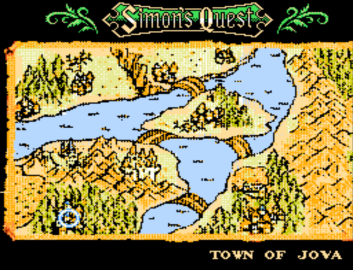
There’s more. The Japanese version of the game came with a map of the countryside that was left out of the U.S. release, meaning, some locations in the game were not even given names that a player could discover in the game, which in a couple of places required them to guess which location was meant by a clue.
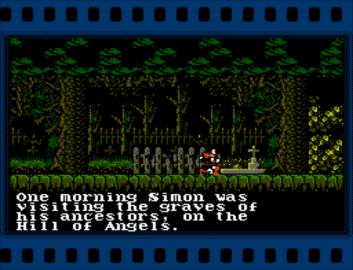
Part of the new prologue
To the rescue of a player trying to appreciate this game now comes Bisqwit, a.k.a. Joel Yliluoma, and his Castlevania II Retranslation project. It doesn’t remove the townspeople telling incorrect things (which was intended by the developers-why should a random villager happen to know for certain anything to do with destroying Dracula?), but it does make their hints more comprehensible, remove the reliance on guidebooks and FAQs that have interfered with the efforts of many to enjoy the game, and it greatly speeds the transitions between day and night. It even offers an animated prologue (wait from the title screen) and an in-game map, based on the one in the Japanese manual, to lend context to the player’s explorations.
The map. Pretty nice!
There are plenty of other new features too, such as an end-game report that gives your win time and SRAM-based (battery-backed) save games. Some of the new features require better hardware than the original game had, which may limit what devices can run it, so Bisqwit thoughtfully provides a website that allows the player to customize the modification to their liking. Go there, choose the options you want (which includes language – if the site isn’t in English click the button to the left) then click the Download button to get a version with features set to your requirements and/or liking.
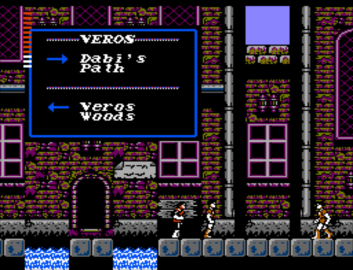
Towns get more helpful signposts!
Lots of romhacks seem superfluous relative to the original game, but Bisqwit’s translation patches substantively improve upon the original game in many ways. It really is the best way to experience Castlevania II. If you’ve played it before you should give it a try; if you haven’t, I strongly suggest playing this version, instead of having to suffering through the original’s quirks. At the very least you it’ll mean won’t end up having to resort hunting up a thirty-five-year-old FAQ before the end.
And if you like the patch, why not have a look at Bisqwit’s Youtube channel, which has a lot of interesting technical content on it, much of it unrelated to video games?
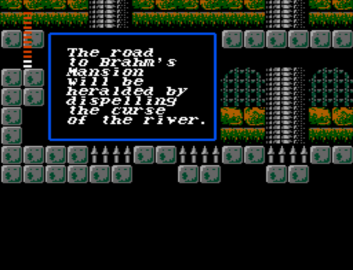
The hidden clubeooks get more useful advice, and you can even enable a hint viewer that records the books you’ve found during the game!
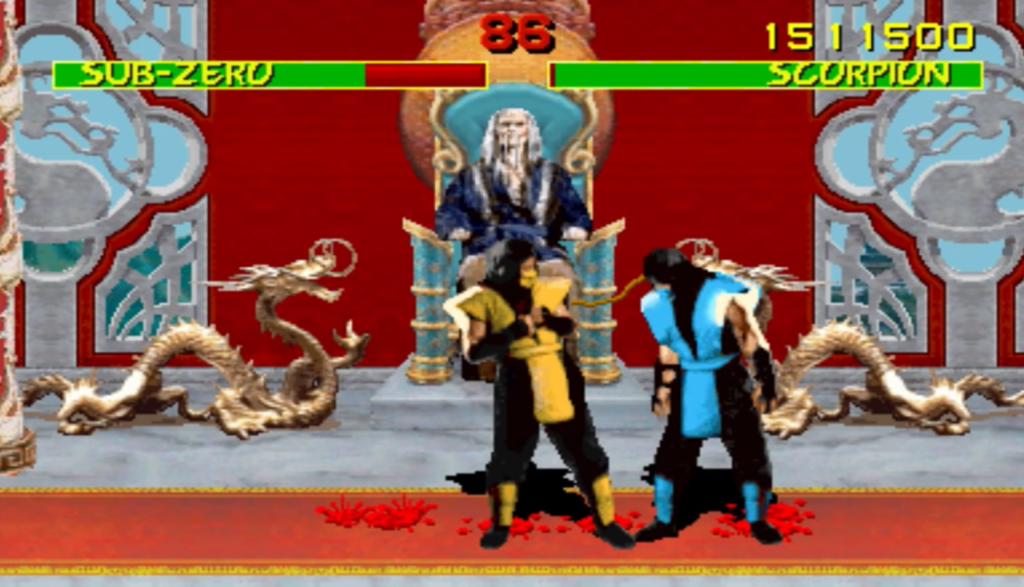
Image from the article at Ars Technica. The classic ninja of Mortal Kombat were played by Dan Pesina.
Blogfriend David Craddock has an article up at Ars Technica about the drama that went down back in the days when Mortal Kombat was a big hit of the arcade scene, and people schemed to make careers off of it. Even though it took in a lot of quarters pretty quickly and spawned several arcade sequels, it wasn’t the institution it was today. When it hit it big, the actors whose digital likenesses appeared in the game sued for royalties not received due to the sale of home versions of Mortal Kombat on the SNES and Genesis.
It’s an excellent article. David really did his research on this one! The end result is, most of the actors settled, but one, Dan Pesina, still claims to this day to have “co-created” the game, which seems ludicrous. It seems to me weird to keep at that in this era, with Midway long gone and the rights having moved to Warner Bros., but then, I have no stake in the matter? Ah well.
The Bally Professional Arcade, a.k.a. the Bally Computer System, then the Astrovision, eventually settling on the Astrocade, was in its hardware a cut-down version of their early arcade hardware. While not a big seller, mostly an also-run alongside the Atari VCS, Intellivision, ColecoVision, or even the Odyssey2, it could, like several of those systems, run a version of BASIC with an add-on cartridge. (The VCS had its Basic Programming cartrige, the Intellivision had the Entertainment Computer System, and the ColecoVision had ADAM.)
The Astrocade (to settle upon one name for it) had some interesting advantages. It uses the same graphics chip as Gorf, Wizard of Wor, and Robby Roto, but due to having less memory to work with doesn’t support as good a resolution as the arcade units. If the chip is used in multi-color graphics mode, it would use all but 16 bytes of memory! The Atari VCS, by contrast, only had 128 bytes of RAM, but didn’t have a bitmapped display taking up so much of it. These were the kinds of tradeoffs console designers had to make at the time. While it didn’t have hardware sprites, it did have “blitter” circuitry for rapidly moving data around in memory.
8-Bit Show and Tell’s video also describes the culture around the machine, which saw production for a surprisingly long time, and had several independent programmers selling their own games for its BASIC cartridge. They even supported a newsletter, the Arcadian, that shared coding tips.
Everything about this system was odd, from the pistol-grip controllers, to the built-in software on ROM, to the calculator-style keypad set into the unit itself, to the almost-but-not-quite Atari-style joystick ports. But I don’t want to steal 8BSaT’s thunder, watch the video if you’re interested in learning more!
For making it through another week of internet life in 2022, let’s reward ourselves with the notably changed soundtrack to the arcade version of a NES classic, Balloon Fight.
Balloon Fight is remembered for its catchy music, which you get to experience in length when you play its Balloon Trip endurance mode. The music is also heard during the bonus round. Well, the arcade version, called Vs. Balloon Fight in keeping with Nintendo’s branding efforts at the time, has a rather fancier version of that track! Whoever is playing those virtual drums is a real show-off.
Extra! There’s a lot of cool little touches that make the arcade versions stand out. Vs. Excitebike has a fun and simple little bonus stage that requires you to jump over trucks evidently owned by the Mr. Yuck Moving Company.
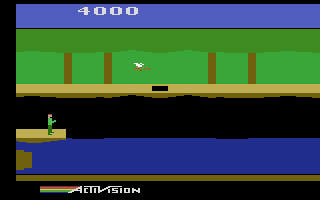
Back in 2013, David Crane chimed in on a thread about Pitfall II. The Atari VCS (a.k.a. 2600) was not known for the quality of its music. For sound effects, especially noise effects like blasts and booms, it was fine, but its TIA chip didn’t have the frequency resolution to produce every musical note precisely, meaning some of it notes would sound a bit off.
Pitfall II’s music, some of the best on the system in the classic era
There was technically a way to produce almost arbitrary waveforms, though like many techniques on the system it was processor-intensive. It involved changing the volume on one of its sound channels in real time to simulate the waveform of the sound you wanted to make. That was fine so long as you didn’t need the processor to do anything else, and sadly, on the VCS, just displaying graphics relied heavily on the processor.
Pitfall II, VCS/2600 version. Image from Mobygames.
David Crane managed to get decent polyphonic music out of the VCS by using Pitfall II’s DPC chip, which Crane created himself, as a co-processor that figured out the right values to set the volume to produce the mixed waveform for the music at a specific time, which the machine’s overworked 6507 CPU could then read and send to the right volume register in the TIA every scanline. The process is explained (to the understanding of a sufficiently technical frame of mind) here. I think I understand it myself!
The fact that David Crane is still around, and so willing to discuss the many tricks he came up with to make his games, is a great blessing, as is the existence of the AtariAge forums themselves, which are a trove of classic gaming information.
Nowadays this technique has been refined and utilized in homebrew cartridge productions. A particular standout is the music from Champ Games’ version of Mappy, which is frankly amazing. Check it out:
Portopia is the biggest missing piece, to many US enthusiasts, of the history of Japanese gaming. It led to the creation of Dragon Quest, but it had a huge influence all on its own, which can be felt in a wide variety of other Famicom titles, including some that did make it to the US. Why do The Goonies II and Dr. Chaos have those weird room-based adventure sections? It’s because of Portopia, trying to mix its kind of menu-based first-person gameplay with the pre-existing side-scrolling platforming game style popularized by Super Mario Bros. It seemed random to Western players at the time, but Japanese players would have known exactly what those games were trying to do.
We’ve mentioned Jeremy Parish and his various Works projects before, and they’re always interesting and informative, a great antidote to the strident style of many popular Youtubers, and this one is especially important to anyone seeking to understand how the Japanese game industry grew and evolved in the Famicom era.
On Romhack Thursdays, we bring you interesting finds from the world of game modifications.
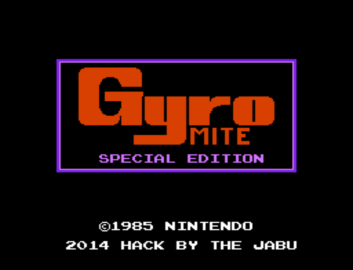
People who got the expensive Deluxe Set in the early days of the NES received two so-so games instead of Super Mario Bros, both designed around the peripherals included in the set. Their compensation for not being able to bop around the Mushroom Kingdom, and paying a premium besides, was Duck Hunt, which was okay, and Gyromite, which was absurd.
As a bonus, the title screen has been changed from “Robot Gyro” too.
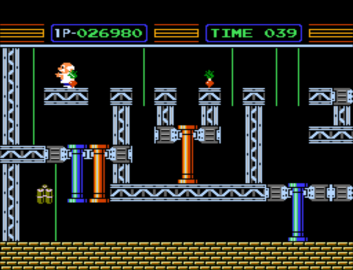
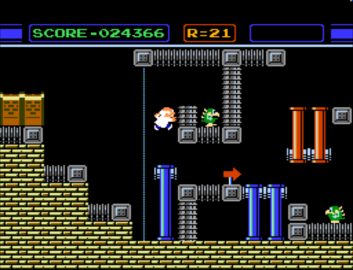
Gyromite, or “Robot Gyro” according to its title screen (it didn’t get localized from Japan at all!) puts you in the shoes of Professor Hector, who has to collect all the bombs in his lab. Sadly, he’s left all these monsters wandering around. Fortunately, there are these red and blue pillars that block the monsters, but they also block Hector.
The pillars can be moved, but not directly by Hector. Instead, you use the A and B buttons on the controller. But, not the first player controller: the second player controller is used. And the player isn’t supposed to manipulate them themself. They were supposed to put the controller into a contraption involving levers, spinning weights, and the “R.O.B.,” or Robotic Operating Buddy, another peripheral included in the Deluxe Set.
The intended process was:
The player uses their own controller to give commands.
The screen flashes in response to those commands.
Photoresistors in R.O.B.’s eyes read these flashes.
Depending on the flash, R.O.B. moves opens or closes its claws, lifts them up or down, or rotates.
Through these means, the player is supposed to manipulate R.O.B. to pick up the spinning, top-like gyro weights and place it in a motorized holder, which begins rapidly spinning it.
The player sends more signals, to cause R.O.B. to transfer it, still spinning, onto a platform.
The platform serves as a lever, so the weight presses down on the platform, which causes it to press the button on Player 2’s controller.
The signals control R.O.B.’s motions, not the controller’s. They result in it lifting or lowering his claws, or opening or closing them, or rotating. What if a weight runs out of spin and falls over? Well, it’s up to the player then to manually pick the weight up and put it back into its holder, during the game, as R.O.B. has not the facility to do that itself.
Above, Youtube user zoclates demonstrates this process in an advanced level of Gyromite. Here is a direct link, it’s about six minutes long. Surely, kids who got the Deluxe Set enjoyed this far more than they would playing Super Mario Bros.
These days R.O.B. has retired to serve as one of the weirder characters in the Smash Bros. series. But there’s actually a kind of fun game there in Gyromite, beneath the involute process intended to control it. You can play it without R.O.B. at all, just by directly pressing the buttons on the second controller yourself, but this is both a bit unwieldy, and makes the game too easy.
The Gyromite No-Robot patch localizes these functions on one controller. Since the unmodified game’s timer for each level is extremely long to allow for the time it takes for R.O.B.’s mechanics to function and for the tops to spin up, it also shortens the time limit to preserve some element of challenge. It turns a game that requires expensive and rare hardware to play it as intended, or at least remapping the Player 2 controller in an emulator, and making it much more enjoyable.
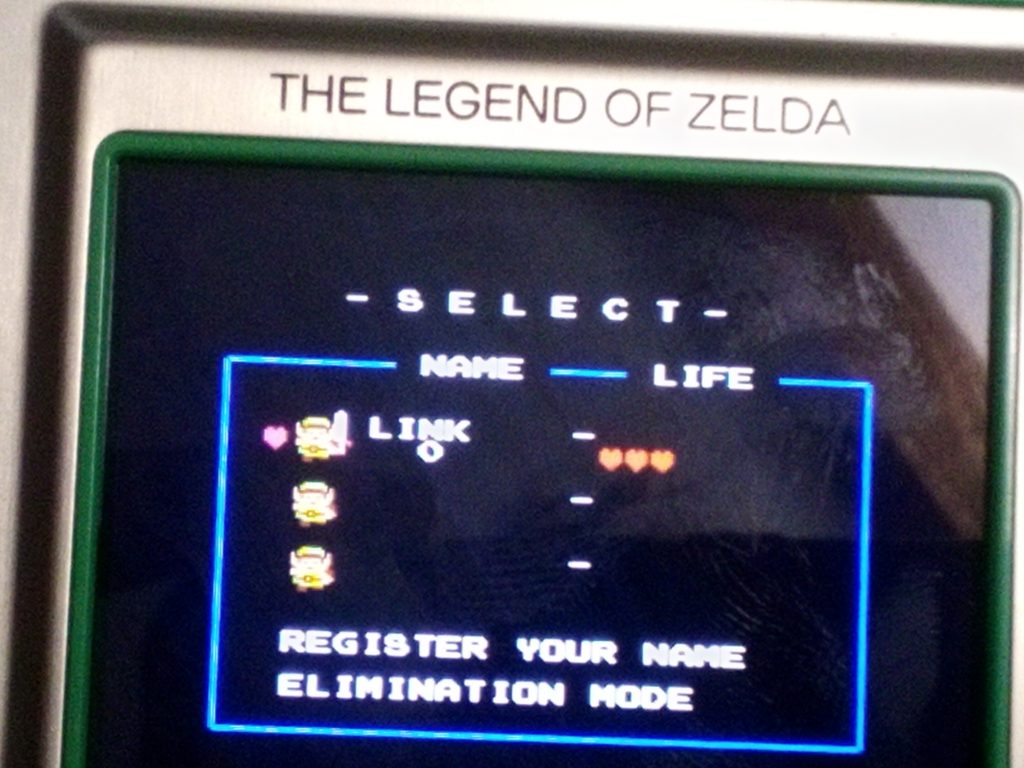
Forever late to the party, I splurged a bit and got the Zelda Game & Watch Nintendo made last year, and you can still find on sale in some places. It doesn’t seem to have been as popular as the Super Mario Bros. version, despite being a somewhat better value for the money. It’s hackable, but it requires opening it up and doing some soldering, and has so little storage that to really make use of it you have to replace its Flash memory chip too.
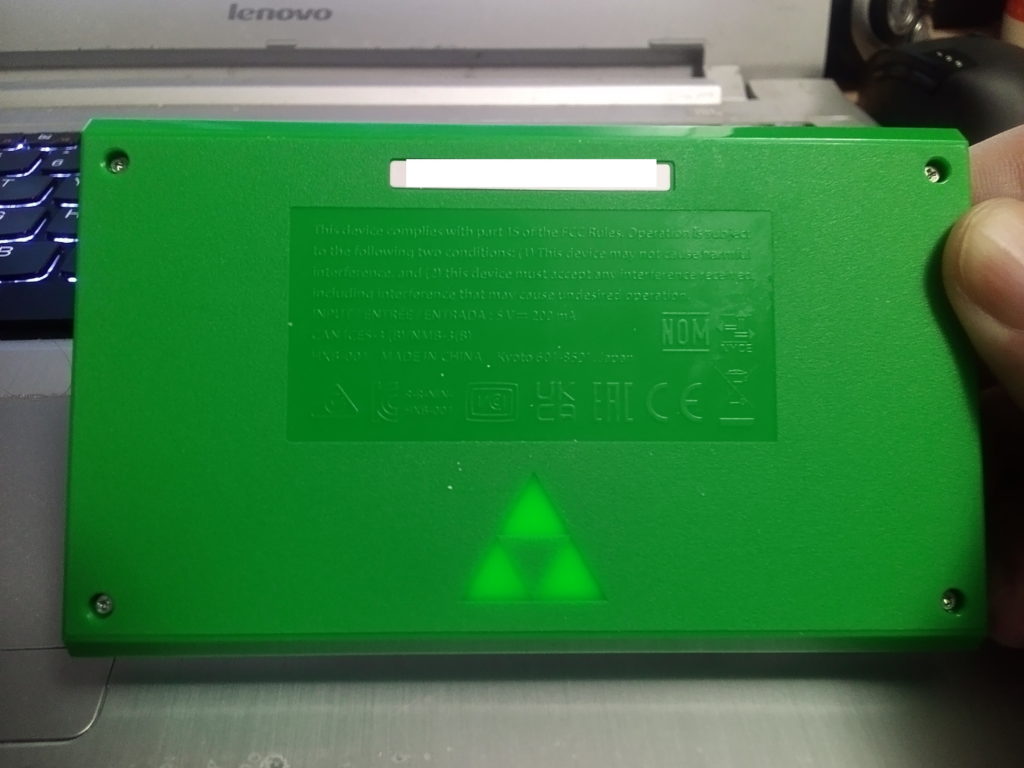
But even if you don’t hack it, it’s a nice thing just to have? It’s got a great screen for one thing. And as reports were on release, there is a light-up LED Triforce that shows up through the back case when it’s on that’s just a nice touch. The games are largely as they were on their original release, although with flashing effects toned down to avoid triggering seizures in photo-sensitive sufferers of epilepsy.
This is such an unnecessary addition, but I love it. Nintendo is really calling out to Zelda fans here.
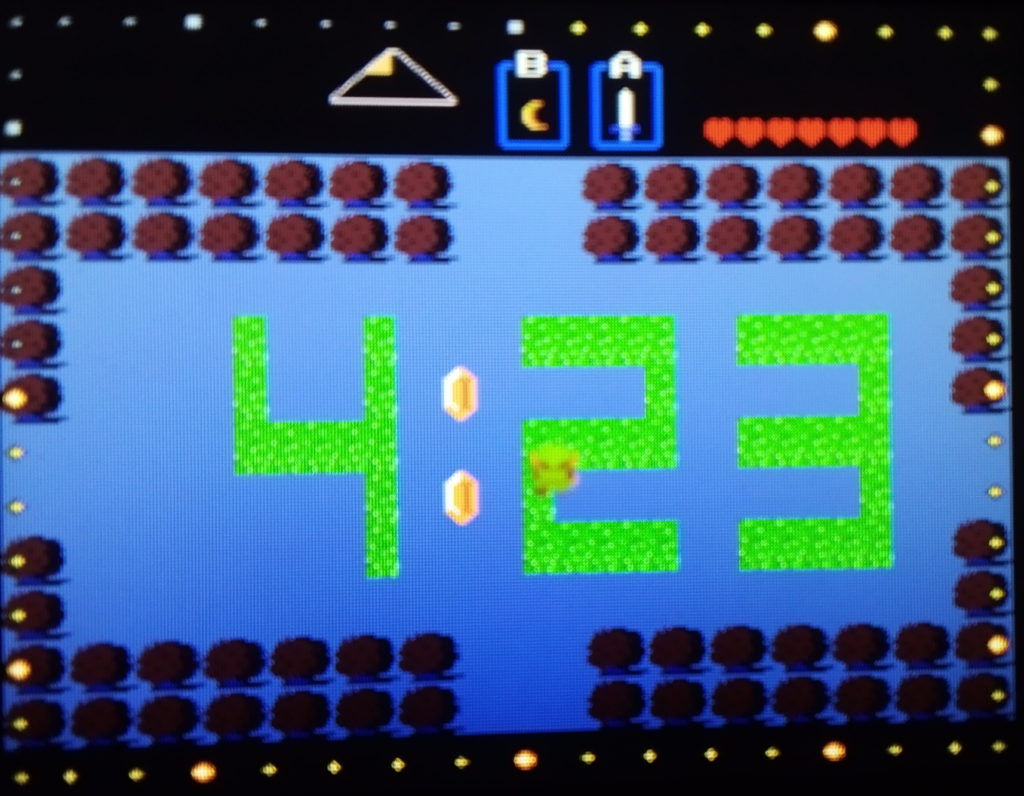
Of new features though, the standout is the clock mode, which I’ve not seen a lot of people talking about! It self-plays a kind of weird version of The Legend of Zelda via AI. Monsters are generated, the AI destroys them, then more monsters are generated. They drop items, but rupees don’t seem to matter. Every two minutes, Link moves to a new screen. Every 30 minutes or so he changes location between the overworld or a dungeon. He finds items, he beats bosses, he gets heart containers, he slowly collects Triforce pieces, and at noon and midnight he defeats Gannon and starts all over again. There are even secret staircases to find, although the AI seems to know where they are.
The rupees serving as the colon in the time can be collected!
At any time during this show, you can press A and B at the same time to take control of Link yourself. He controls exactly like he does in the NES version, with enough nuance (like, the edges of the screen are a safe zone like in the console version) that I wonder if this isn’t a hugely hacked-up version of the game’s rom that’s providing the show. The sound is just ticking by default, but if you hold the A button down for five seconds it enables the sound from the game too.
If you choose to control Link, you can’t access the subscreen, but you can switch items using the Select button. If you run out of hearts Link respawns almost immediately. Also you can’t move to a new screen yourself, instead the game advances to a new area after two minutes regardless of how well either you or the AI player does. If you leave the controls alone for a couple of seconds the AI will take back over for you.
I don’t know if the world map that Link travels through is mappable. I’d be very interested to know if it’s a hack, and if it is, if someone could break it out of the software. If it isn’t, maybe the game world could be recreated in a hack of the original Zelda rom?
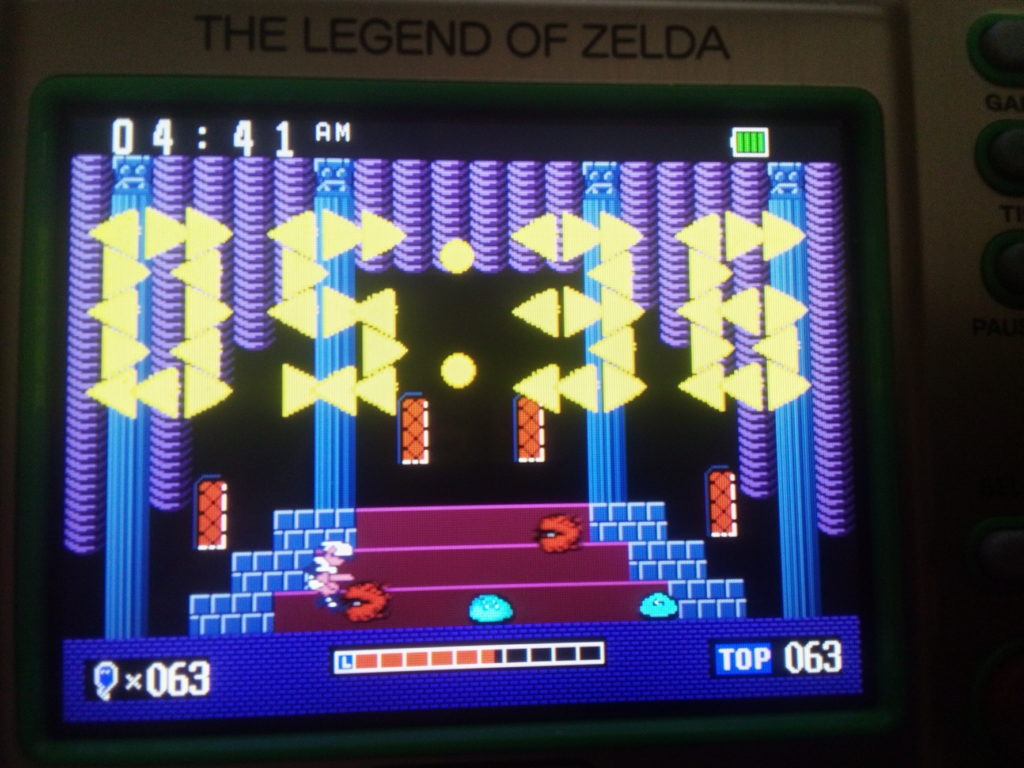
The Zelda II timer game is rather fun in small doses
There is also a special version of Zelda II. When you activate the Timer function, the version of Link from that game will automatically fight enemies, and you can take over from its AI too. This version is more explicitly game-like: it tracks high scores earned (by either human or AI) in each of its ten time limits and on each of three enemy sets, plus one more, a special mode where it records the time a human player can defeat a number of enemies. (Hold A for five seconds from the timer set screen to activate it.) And there’s a version of the old Game & Watch title Vermin included, with Link instead of its generic character that was later christened Mr. Game & Watch.
A note about the combat implementation of Zelda II in the timer game. Ironknuckles show up here, but the trick familiar to people who have played a lot of the NES game, of jumping before an Ironknuckle and stabbing as you’re coming down, as of slashing through the top of the enemy’s head, which always gets past the shield, does not work in it. Instead, to get past an Ironknuckle’s defenses, you must rely on the fact (in this game) that they can’t movie their shield while they’re attacking with their own sword.
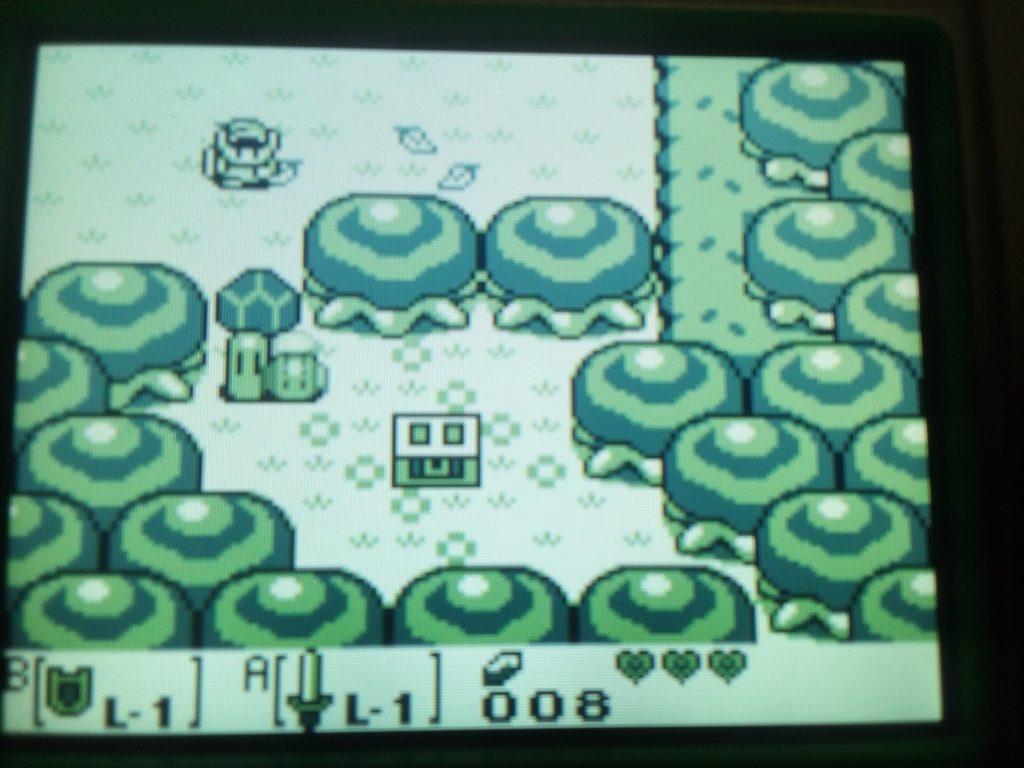
Oh, it’s got three emulated Zelda games too, although I’ve played them so much before that the new stuff is much more interesting to me
So, it’s time to make an embarrassing admission. This is at least the seventh time I have legally owned the original Legend of Zelda. I had its NES cartridge, the Virtual Console rereleases for Wii, Wii-U and 3DS, the GBA rerelease, and the one on the Gamecube bonus disk for pre-ordering Wind Waker. I’ve probably forgotten at least one other version along the way-I had Gamecube Animal Crossing, which has the rom of The Legend of Zelda on its disk too, although it was never made available without hacking, and I subscribe to Nintendo Switch Online, meaning I can also play it there if I were to be of that mind. Now, I own a yet another device that can play The Legend of Zelda. Most of that time I could have played it for free via emulation, yet I keep buying it.
Yes, on the day I got it, I did a deathless run of Legend of Zelda on it. It was mandatory.
My response to people who are somehow in favor of Nintendo’s draconian legal response to pirates is, why do I keep doing that, continually giving them money for a game I’ve bought many times, when if I had the mind I could probably have gotten a hundred copies off the internet? Am I just stupid, or is there some other motive at work here? I am open to either possibility.
Super Mario Bros. has 10 “1UP” blocks throughout its eight worlds. One of them is in World 1-2, and another is in world 8-2. These are visible (although they appear to be ordinary bricks when hit), and always produce a 1UP Mushroom when hit.
But also, there are a total of eight other 1UP Mushroom blocks in the game. These are hidden, invisible and intangible unless struck from beneath. That causes them to appear and produce a 1UP Mushroom… sometimes.
The 1UP blocks are always in the first level of each world (1-1, 2-1, 3-1, and so on.). They also always appear if you start on that level (say, using the level selection feature unlocked after finishing 8-4) or if the player has just warped to that level. But in other situations, the block usuallydoesn’t appear.
Image from Stephen Lindholm’s website. Text is from Nintendo’s “How to Win at Super Mario Bros.”
What causes them to appear? Even Nintendo’s guide authors at the time didn’t know. Depending on the source, it either had to do with whether Mario was big when he hit it, or whether he found all the coins in the previous world.
There is a flag in the game that is set when a game is begun, when the player warps, or if the player has collected a certain number of coins in the third level of the previous world. 1-3, 2-3, 3-3, etc. That is the deciding factor.
How many coins is needed? In World 1-3, it’s all but two. In all the other X-3 levels, you must collect every coin! The game has a short table in its code for the minimum number of coins necessary to earn the mushroom on each level.
If you do this, the flag is set. When you get to the following world’s first level, when the 1UP Mushroom block would be generated by the game’s world building code (which operates off the screen to the right of the player’s location), if the flag is set, the invisible block is placed and the flag is unset.
If the player dies before collecting it, or never hits it, either way the mushroom is lost.
It makes pocket calculators look like the cotton gin
It’s coming….
It’s fifteen years old now, but I still love the old “funnymovieinternet” video CUBE, which is a promo video from an era of video games that never really existed. In our little circle of friends, PREPARE YOURSELF FOR CUBE is still a signifier and in-joke all to itself. The site it came from is long defunct, but fortunately it hasn’t been hit by a spurious Youtube takedown notice yet, which as time approaches infinity, appears to be the ultimate fate of all videos on that frog-forsaken website.
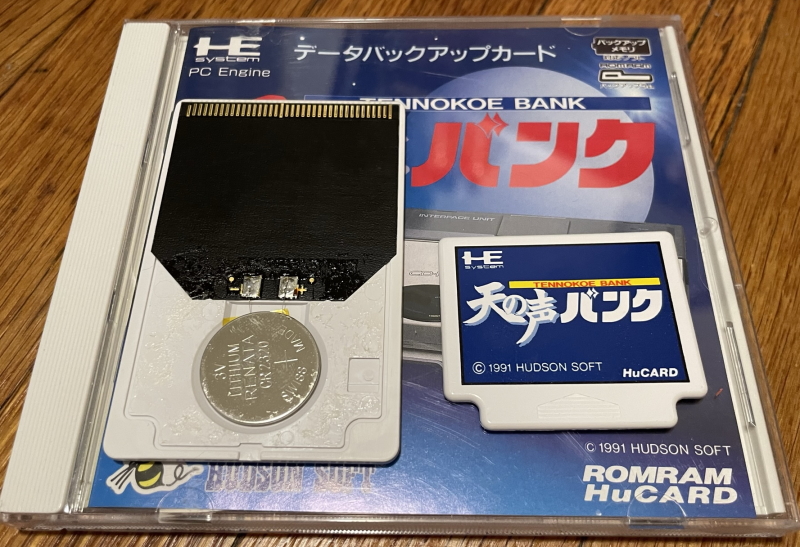
We love Nicole Express! She regularly covers the most interesting, and often obscure to U.S. audiences, gaming topics. This time out, she relates the many ways that the PC Engine saved game data. Just about every possible way the system could do saving, it did, from simple passwords to on-cart battery-backed RAM to expansion port peripherals with batteries or capacitors, even to a device that plugged into the controller port. Great information as always from Nicole Branagan!