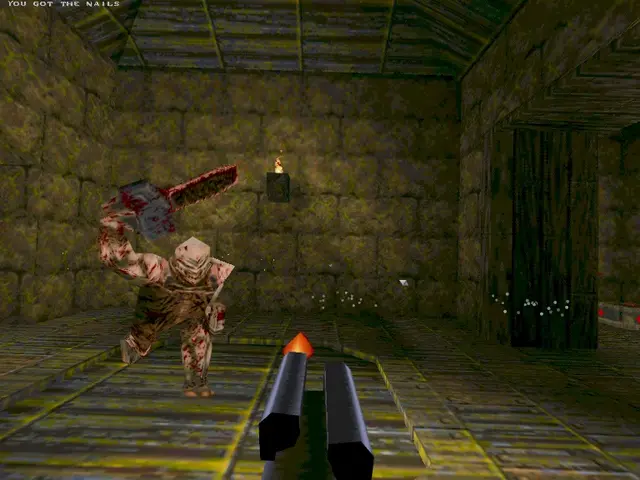
Quick post today, just a pointer to a video John Romero posted on his Youtube channel a couple of months ago (17 minutes), where he gathered (well, edited together Zoom video of) the other founders of id Software (back before it was just another cubicle within Bethesda’s, and then Microsoft’s box), explain the creation of their first 3D game, Catacomb 3D.
Interesting thing to notice? The word “Softdisk,” publisher of Gamer’s Edge and former workplace of the id Software founders, doesn’t appear anywhere in this video. There’s at least one screenshot that has part of its name, but it’s covered up with a different graphic.
(I’ve been trying to track down as many old issues of Softdisk’s publications as I can; it seems the only public place where they survive at all is in collections of Loadstar, including my own. Even the Internet Archive only has a smattering. They deserve to be preserved, dammit, both these guys’ previous work and that of everyone else who made software for that company.)
In a place like Metafilter, it’s not always obvious what will work and what won’t. Presentation matters for a whole lot, and there is also a random aspect to it. While no one said anything negative about it, I remember it being one of the least favorited-posts I’d ever made on the site. (Favorites are one measure I use to see if people liked a post or not. Sometimes comments just don’t tell the whole story.)
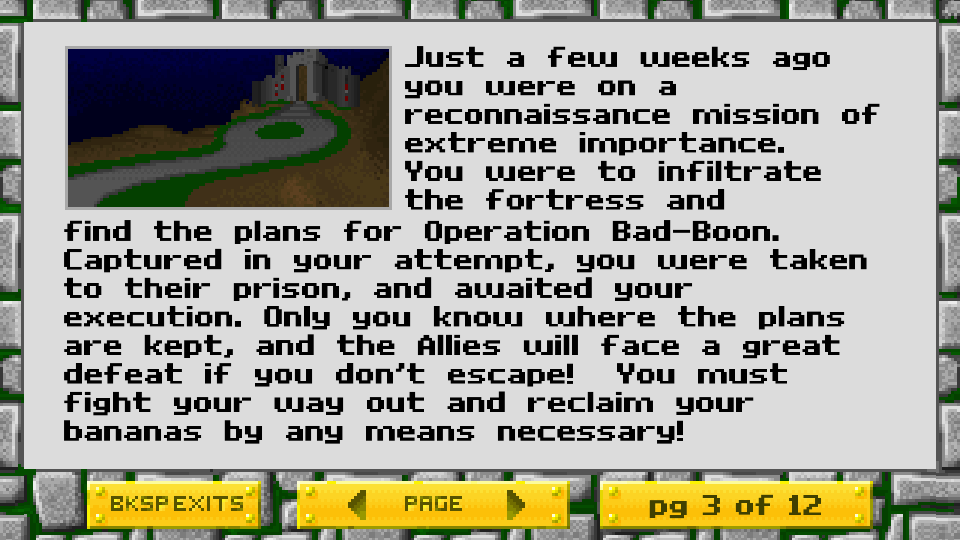
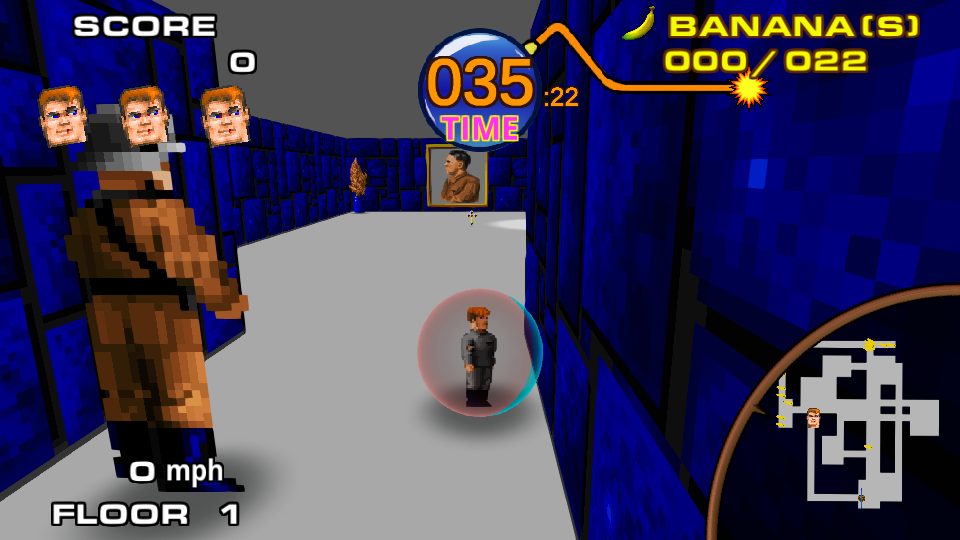
A point of similarity between Sgt. B.J. Blazkowicz and Donkey Kong: a fondness for bananas.
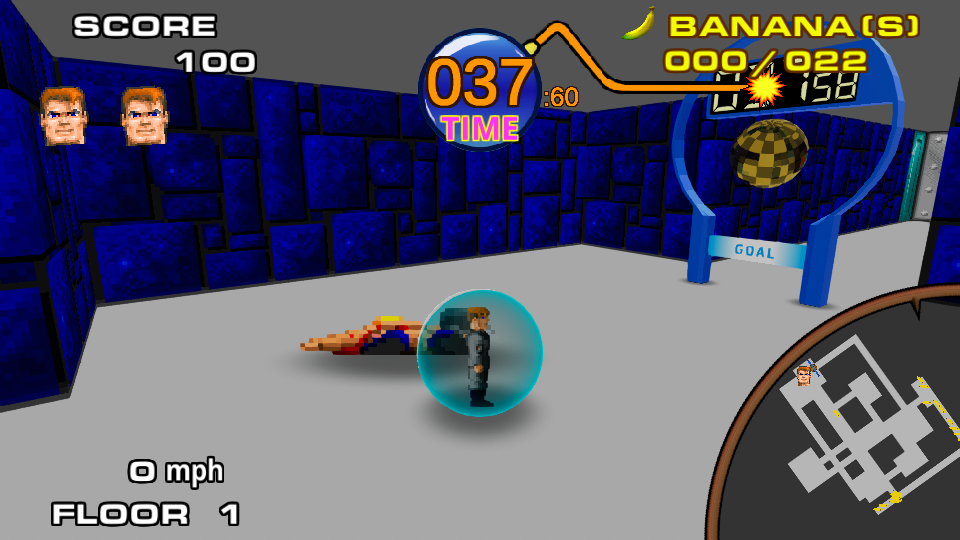
It’s a shame because the game is a perfect mixture. Not as punishing as either original game, its levels are procedural generated so a lot of rolling on your feet is required. You get a time bonus for defeating a guard. While you don’t have a weapon, you do just enough damage at full tilt to take one out in a single hit, and it feels great to do it.
Why is B.J. so much smaller than the guards now? I realize it’s a concession to melding the styles, but he’s so tiny!
There’s only eight levels (at least in the first “episode”) so it doesn’t take long to get through either. In the first version they kept Wolfenstein 3D’s graphics unchanged, meaning unfortunate reminders of Bad Person and his Stupid Symbol. Those have been removed since, which makes it less accurate to Wolf3D but also less saddening to play.
I was reminded of EFCMB by Vinesauce having recently streamed it. (13½ minutes) I don’t often return to a Gamefinds game, but given that I had made an attempt at telling people about it before I feel a slight bit of ownership here, and my previous attempts at spreading the word slightly predated Set Side B, so please go enjoy if you think you’d like it. It really is brilliant, and it runs in a web browser, even on my Raspberry Pi 5.
Sundry Sunday is our weekly feature of fun gaming culture finds and videos, from across the years and even decades.
Been focused so hard on the Loadstar Compleat project over the past couple of weeks that my brain can burn ANTS with just the power of SUNLIGHT. So have a quick one minute video of some people performing the music to the famous first level of DOOM, but with just the sound of their mouths.
Found by long-term MeFite Going To Maine, DOOM: The Gallery Experience is a DOOM mod that changes out all of its various elements for museum equivalents. Ammo becomes drinks from among Wine, Beer, Gin or “Watr”; Health has become Cash (which you can spend in the gift shop) and Armor becomes Cheese. (You still pick them up like powerups, though.) And there’s still secret passages to find. The map is generally the same as that as the first level from the shareware game, although the demons have been moved out and replaced with objets d’art, all of which can be examined for information on the work.
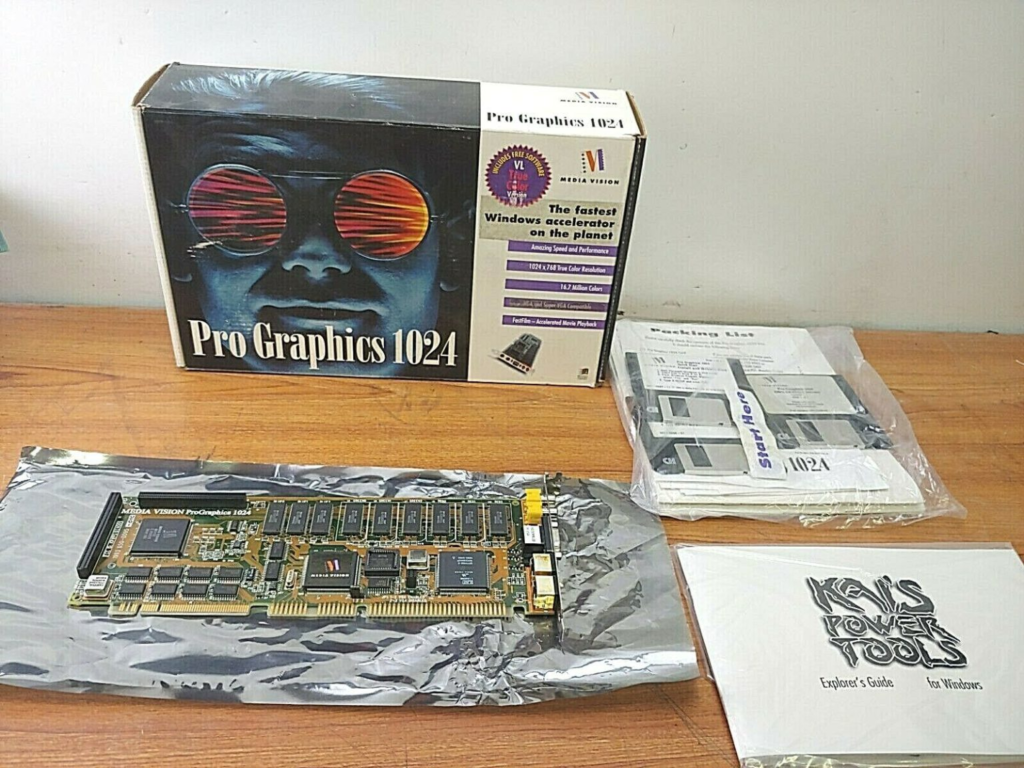
That excellent blog The Digital Antiquarian has three posts so far in a history of 3D graphics, starting from the likes of Doom and Quake and so far going as far as 3DFX.
“By the middle years of the decade, with the limitations of working with canned video clips becoming all too plain, interactive movies were beginning to look like a severe case of the emperor’s new clothes. The games industry therefore shifted its hopeful gaze to another approach, one that would prove a much more lasting transformation in the way games were made. This 3D Revolution did have one point of similarity with the mooted and then abandoned meeting of Silicon Valley and Hollywood: it too was driven by algorithms, implemented first in software and then in hardware.
It was different, however, in that the entire industry looked to one man to lead it into its algorithmic 3D future. That man’s name was John Carmack.”
“Born in Salt Lake City in 1924, (Dave) Evans was a physicist by training and an electrical engineer by inclination, who found his way to the highest rungs of computing research by way of the aviation industry. By the early 1960s, he was at the University of California, Berkeley, where he did important work in the field of time-sharing, taking the first step toward the democratization of computing by making it possible for multiple people to use one of the ultra-expensive big computers of the day at the same time, each of them accessing it through a separate dumb terminal. During this same period, Evans befriended one Ivan Sutherland, who deserves perhaps more than any other person the title of Father of Computer Graphics as we know them today.”
“Among these, of course, was the tardy 3Dfx. The first Voodoo cards appeared late, seemingly hopelessly so: well into the fall of 1996. Nor did they have the prestige and distribution muscle of a partner like Creative Labs behind them: the first two Voodoo boards rather came from smaller firms by the names of Diamond and Orchid. They sold for $300, putting them well up at the pricey end of the market — and, unlike all of the competition’s cards, these required you to have another, 2D-graphics card in your computer as well. For all of these reasons, they seemed easy enough to dismiss as overpriced white elephants at first blush. But that impression lasted only until you got a look at them in action. The Voodoo cards came complete with a list of features that none of the competition could come close to matching in the aggregate: bilinear filtering, trilinear MIP-mapping, alpha blending, fog effects, accelerated light sources. If you don’t know what those terms mean, rest assured that they made games look better and play faster than anything else on the market. This was amply demonstrated by those first Voodoo boards’ pack-in title, an otherwise rather undistinguished, typical-of-its-time shooter called Hellbender. In its new incarnation, it suddenly looked stunning.”
A raycaster engine is a simple 3D engine that just draws lines from the player’s position to the nearest terrain wall for each horizontal pixel on the screen. It was what was used in one of the foundational 3D action games, id Software’s Wolfenstein 3D.
For those with a coding bent (the word bent seems so suitable when it comes to people who enjoy programming), Youtube account 3D sage demonstrates how to implement a raycaster in a series of three videos. The first one is embedded below:
Here are links to the whole series: Part 1 (17 minutes), Part 2 (14 minutes), and Part 3 (22 minutes)
Later he did another series on implementing the kind of engine that’s in DOOM, but we’ll look at that at a later date.