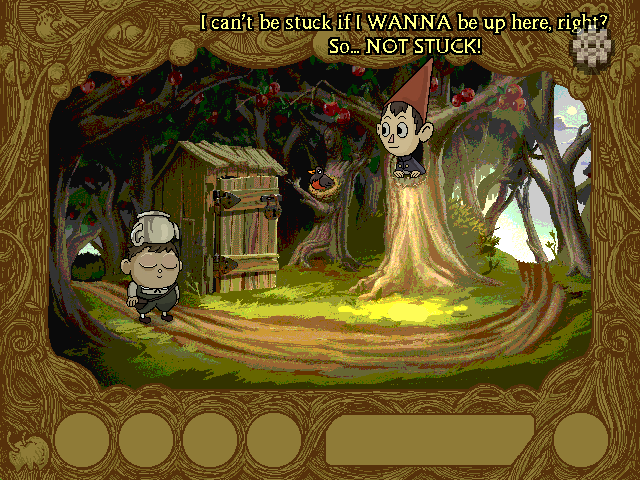
I betcha don’t remember that he does that, but there is one point where, if you think back, I’m sure you’ll remember it. It’s when you light all the torches in the bottom floor of Goron City, which makes the giant clay pot spin around, for some reason. And then, also for some reason, Link spins too. Why?
Skawo, one of the best Youtubers I’ve found for getting to the bottom of mysteries like this, did a sixteen-minute video explaining it.
Here is a brief text explanation. Some cutscenes are programmed so that Link turns to face the subject of the scene, a given actor in it, presumably to make it look more realistic. This is a little clumsily done though. The “location” of the actor, its location in 3D space, is usually near its feet (it being the most relevant location for collision checks), so actors have a second location, for cutscene-Link to stare at.
There’s even a special process for this, to make Link’s turning seem more natural: his head turns first, then the rest of his body. But, who knows why, during the clay pot cutscene, Link’s focus point is himself. The focus point is connected to his body, and the angle is a little off-center, he turns his head to look at it, his body rotates beneath it, causing the focus point to move, and so continue the rotation.
This, by itself, is pretty minor. But more than that, the focus point is also a bit above Link’s head, so he looks up at the same time. Eventually, the focus point rotates so far around that it’s technically behind Link, and that makes the horizontal rotation angle nearly 180 degrees, increasing the rate of spin considerably.
This isn’t the whole story, just a tl;dw. In fact, it’s just half of it, which then moves over to a different cutscene, one from the 3DS version of the game. For more, please refer to Skwaro’s video above.
There’s a good chance, even if you’ve been nursing as heavy a Balatro addiction as I have, that you not even know that there’s a cutthroat competitive Balatro tournament that’s been running for three seasons, or even competitive Balatro at all.
Balatro Multiplayer (homepage, GitHub), a.k.a. “Balaatro,” is a mod for base Balatro that adds a robust versus-play component to the base game. While the stake and deck may (or may not, it’s heavily configurable) be selectable between the participants, each player plays with the same random seed, and will find the same shops, the same tags, the same deals (presuming their decks have yet to be modded) and so on.
The mod has a few extra Jokers that add additional nuances to the game when played against a human opponent, but in Major League Balatro they try to keep the settings as close to standard Balatro as possible. The basic idea is that all but the first of the boss blinds are replaced by Balatro deathmatches against an opponent. Each plays their own round simultaneously, receiving updates on the score progress of the other player’s round. At its end, the player with the least chips in the Blind loses one of four lives. You also lose lives if you fail to make the normal escalating score challenges of the Small and Large Blinds each Ante.
Even if you lose, you still get the money and other rewards from playing the Blind as if you won. One potential strategy is to not make a strong effort on early Boss Blinds, saving consumable resources (especially Glass Cards) for later bosses, but Balatro being Balatro and focused as it is on super powerful exponentially-growing strategies, it’s easy once you start losing to keep losing.
The third season of Major League Balatro has just wrapped up in a battle between Dr. Spectred of Balatro University, possibly the strongest Balatro player in the world who’s pulled off tricks like earning the rarest achievement, Completionist++, from scratch without losing a game, and Bean, a very strong player themself.
If you’d like to follow Major League Balatro, either in the future or to watch prior seasons, you can do it on their Youtube channel. Or you could just watch the finals with commentary, although beware: it’s 5 hours and 50 minutes long! Maybe you might turn up the playback speed, or skip around, or to the end.
Everyone in the Balatro community is waiting for news of a major update to the game, teased by its creator Localthunk, that is promised to add lots of new Jokers, but in the meantime there’s certainly lots of other things going on there, from competitive play to lots of insane mods.
We love it when we find weird and unique indie games to tell you all about! Our alien friends to the left herald these occasions.
NANDgame is one of those puzzle games that’s really an educational game in disguise. By hooking up wires and relays, then logic gates, then larger pieces of basic computing hardware, you construct a basic processor from first principles, step by excruciating step.
This is actually a puzzle solution, which I don’t usually include as screenshots, but it’s small enough that it probably won’t be useful to you unless you stare and memorize it. So if you want to do it entirely on you own, don’t look hard at it!
Of course, the difference between a puzzle game and an educational game is only if the skill the puzzle requests you to learn has some objective use in our physical world. Tetris masters are robbed by the rest of the human race that their unique skill can’t be used to write software or design cars or something, for the kind of effort involved in getting good at all these things is exactly the same. This puzzle, at least, can get you on the road to designing low-level computing hardware, or at least started on that road.
Now that’s out of the way, I’m not completely happy with this introduction to computing architecture. It is true that you can start with NAND gates and, from them, derive all the other logic gates, and from there the rest of computing in its entirety, and this game has you do essentially that.
But NANDs are not the simplest gate to understand. Even their name comes from combining two other gates that you’re not introduced to first. And forcing the player to invent one out of relays, which you are actually required to do here, is a difficult first step. If you aren’t already well-versed in the kind of thinking this involves I’d suggest making use of the hints for each level, because the game gives you no other aid. It is a real trial by fire, and without prior exposure you’ll be staring at the relays for a while wondering not just what you’re supposed to do with them, but why.
But if you can power through them all, again using hints, it is really rewarding to know that, if you had the parts, you could construct a simple processor from first principles. It is difficult, but this is a good introduction. I’d treat it as kind of a test, and that the actual game is learning what you’re supposed to do to win by looking it up from other sources, including the help system. That’s to say, it’s all bosses, with the skills learned to defeat them coming from what amounts to GameFAQs.
Sundry Sunday is our weekly feature of fun gaming culture finds and videos, from across the years and even decades.
A comment says, Fludd was their favorite They Might Be Giants album, but that doesn’t quite work; Fludd’s from Super Mario Sunshine, the 3D Mario game after Super Mario 64.
Even so, Seanathan S has made quite the recreation. (3 minutes) No vocals, but if you know the song you can recognize the track that’s duplicating the syllables of the singing and sing along with the. Everything is intact, even down to Flansberg’s counterpoint chorus at the end.
I’ve said it more than once: what’s the use in having a blog if you don’t use it to tell people the things you like?
Here’s what I’ve been enjoying lately on my Switch 2. These are store links, but we get no affiliate or advertising dollars from them, they’re provided just out of convenience.
Cruise Elroy’s great retro-styled action platformer Annalynn (Switch, Steam, itch.io)
Tomodachi Life: Living the Dream (Switch), a social sim abounding in quirkiness
UFO 50, for many things but especially for the addictive Party House (homepage, Switch, Steam)
Caves of Qud, the terrific true roguelike, filled with equal parts, with atmosphere almost as great as its challenge, but also two accessible easy modes (homepage, Steam, GoG, itch.io)
Chibi-Robo, the sleeper hit for Gamecube where you help a tiny housekeeping robot save a fractured family and also discover the secret of the house’s living toys (Nintendo Gamecube Classics)
Kirby Air Riders, Masahiro Sakurai’s remake of the Gamecube cult classic, with even deeper gameplay, robust online multiplayer and so much fun that it oozes out of the system’s USB-C ports (Switch 2)
Dragon Quest I+II HD-2D Remake, not just a conversion but a redesign, not always for the better but still great (Square-Enix page, Switch)
Blippo+, Yacht and Panic’s sci-fi tale of interplanetary communication told through the medium of an exacting recreation of 90s satellite television (homepage, Switch, Steam, Playdate; currently on sale for Switch and on Steam)
Nintendo got its start making playing cards, and, incredibly, still makes playing cards to this day. I guess there’s always money in the banana stand.
A service Nintendo offered, and even more incredibly still offers, is to make customized playing cards for people, anyone, although the stated purpose is to promote products. The blog beforemario tells all about the service, and even links to Nintendo’s page where you too can order custom playing cards, and all you have to do is order them in a batch of at least 3,000 decks, oh and also navigate through the entirely-Japanese order site. Or you could just buy non-customized cards, some with Nintendo character art.
Lest the domain name not convince you that this is the same Nintendo, one of the example decks pictured uses Pikachu in its art (along with the appropriate copyright notices, as Nintendo doesn’t actually own the Pokémon characters).
beforemario has mentioned before that Nintendo still runs a large sideline in making traditional Japanese gaming equipment like Go and Shogi sets, or Chinese Mah Jong sets.
We’ve linked to TheZZAZZGlitch’s videos before, their obsession with the Pokémon and Pokémon Mystery Dungeon games is both admirable and somewhat worrying.
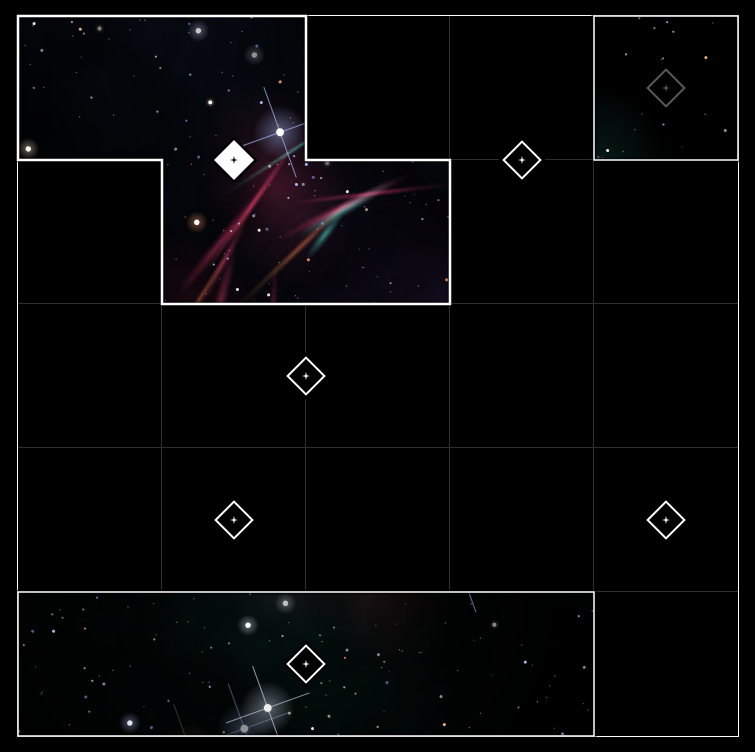
I’ve played quite a few Mystery Dungeon games, including nearly all of the many versions of Shiren the Wanderer (Rainbow Labyrinth is the only one I’m missing), and these dungeon level types keep coming up again and again. I’d be very surprised if essentially the same code, or close to it, wasn’t used in all of them. The beginning of the dungeon generation explainer is at 5:03.
One interesting thing is that the dungeons generated by the various routines often create maps that can be seen as variations upon the dungeons from the original roguelike, Rogue itself. Rogue used a distinctive 3×3 grid of rooms. Sometimes a “room” might be a winding corridor, a dead-end or a dark maze, but it doesn’t take much playing to see the patterns used, and the Mystery Dungeon games obviously use a similar system for most of its floors, using differently-sized grids. Sometimes extra dead-ends are generated, and there are a few extra styles, but in its overall plan it’s Rogue-standard. It’s what the video calls the “standard generator.”
This isn’t all that the video explains, for just one example it goes over the details of how the game’s random number generators work, and also how they can be abused (the dungeon RNG is seeded to 1 at boot, which can be used to ensure dungeons generate the same way). I think it’s essential viewing for any Mystery Dungeon enthusiast.
Quick post today, just a pointer to a video John Romero posted on his Youtube channel a couple of months ago (17 minutes), where he gathered (well, edited together Zoom video of) the other founders of id Software (back before it was just another cubicle within Bethesda’s, and then Microsoft’s box), explain the creation of their first 3D game, Catacomb 3D.
Interesting thing to notice? The word “Softdisk,” publisher of Gamer’s Edge and former workplace of the id Software founders, doesn’t appear anywhere in this video. There’s at least one screenshot that has part of its name, but it’s covered up with a different graphic.
(I’ve been trying to track down as many old issues of Softdisk’s publications as I can; it seems the only public place where they survive at all is in collections of Loadstar, including my own. Even the Internet Archive only has a smattering. They deserve to be preserved, dammit, both these guys’ previous work and that of everyone else who made software for that company.)
EDIT: As multiple people have reminded me of by now, there are other ways to get images off the system, though they’re annoying. Going through a smartphone app is annoying too. Everything involves getting out some bit of kit and plugging it in. It feels like a maze, so I think my issue that Nintendo is preposterously obstructionist over getting pictures off of their device stands.
Tomodachi Life is a big release from Nintendo, its first real use of their once-starring Mii characters since the quirky and underappreciated Miitopia, which basically puts your little pseudo-people through a D&D campaign, an idea so cool that I had it myself over a decade ago, though of course no one listened to me way back then, or really ever.
Let’s remember what Miis are. The name itself is a reference to the characters’ origin system, the Wii. You see, you just flip the W. The Wii was extremely popular, and opened up video gaming to hitherto unserved demographics, but because most “gamers” are entitled jerks they spread bad vibes about the system despite its popularity (remember “waggle?”), taking its sequel system entirely. Nowadays, Nintendo Switch Sports and Miis are probably its sole remaining legacy, regardless of how many other cool ideas it had. (A version of Opera made for it! News and Weather Channels! In Japan you could order pizza using it! I haven’t even gotten to Check Mii Out and Everybody Votes yet.)
This is the third game in the Tomodachi Life series. The first one was 14 years ago, the original Tomodachi Life for 3DS, got a cult following. It’s kind of Nintendo’s version of The Sims, if the Sims had (very) slightly more self-motivation, no mandatory biological need to fulfil, and an emphasis on weirdness. The second game, the sorely-missed Miitomo, was a free-to-play mobile game that also served as an instant messenger, but it hit sadly at a time when the old style of instant messenger apps were dying out, and lasted just over two years. It was dead in the water long before it closed.
What all the Tomodachi Life games really are is an elaboration of the old game of Mad Libs. “Hey _name_, I’m going to _place_! Should I pick up a _noun_ while I’m there?” Except it’s not just with words, but people too, your Mii characters fill in the role of actors in the many silly little vignettes built into the software. The game includes no characters on its own: you create everyone in the whole damn town, name them, pick how they look, and rate their personalities in five categories, then plop them onto the island and watch them bounce off each other.
Sometimes when they meet you’ll be asked to give the system a word or phrase for them to talk about, and that’s where the more explicit Mad Lib connection kicks in. Just like official Mad Libs*, Maybe nine times out of ten the jokes will fall flat, but that tenth time is comedy gold. Of course what everyone did, and still does, is make Miis of every celebrity and comic character they can fit into Nintendo’s limited yet oddly useful tools. In my game, I have a Mr. T character, downloaded from the Mii Channel on the Wii so very long ago, laboriously schlepped over to Wii-U (via system import) to Switch (via Amiibos) to Switch 2 (via another system import). Mr. T had a dream his first night in my game, on the isle of Yendor, in which he met three other Miis all with Mr. T’s face.
I’d love to show you the video of his dream, but I forgot to record it. Also, though, Tomodachi Life: Live the Dream has a fatal flaw. It’s a meme gold mine, sure, but Nintendo has disabled all media sharing from it. You can make all the great Miis you want, but no one else will ever see them! Its drawing tools are pretty darn impressive, but nothing you make with them can be shared on the internet! You can’t upload them to the Nintendo Switch smartphone app, or even transfer them to your cell phone using Nintendo’s stupid Wi-Fi system! I don’t know if you can get them right off an SD card, but ha ha, on the Switch 2 it doesn’t matter because it uses incompatible SD Express cards!
NINTENDO, ARE YOU LISTENING? WHY CAN YOU EVEN TAKE SCREENSHOTS OR VIDEO AT ALL IN TOMODACHI LIFE IF YOU CAN’T SHARE THEM? Nintendo is a company used to doing things its own way, which sometimes results in moments of brilliance, but at least as often means they do amazingly stupid things like this.
Because of this, you will have to live with potato-quality screen photos, taken with my very own smartpotato. I plant them below. Imagine how much better these would be if Nintendo actually officially supported the use their software was obviously made for. (Note: I’ve been told since writing this that you can still get images off using an SD card… although if you have a Switch 2 like I do you’re probably just as out of luck as it uses SD Express cards. I’ve yet to confirm cross compatibility with those, I don’t think I have the right kind of adapter.)
Hint: try alcohol next time. BTW, that’s the official Shigeru Miyamoto Mii on the right, as distributed through the 3DS’ online functionality. I also have a Masahiro Sakurai.Lego Larry is one of the more beloved Miis in my collection.This is exactly how this meeting would go down in real life.Another great thing about Miis is how far you can break them. “Edwin Tea” there is one of the several I scavanged from the Mii Channel and Check Mii Out, way back on the Wii.
Below is my absolute favorite of all the Mii interactions I’ve seen so far. Poor Patricia’s got it bad, and truthfully, I felt much the same way back in 2008. I kind of feel that way now, but sadly both his terms are up.
* BTW, did you know Mad Libs was co-created by Leonard Stern, who wrote many scripts for The Honeymooners, and wrote for and executive produced Get Smart?
For this episode of the perceptive podcast, I spoke with Jake Houston who is a solo developer working on his rhythmic RPG Game Over. We spoke about working on the game, RPG design and more.
Sundry Sunday is our weekly feature of fun gaming culture finds and videos, from across the years and even decades.
Nintendo’s latest attempt to do something with their Mii characters just hit the Switch (and along with it, the Switch 2). The game is Tomodachi Life, and while, like its real-time counterpart game Animal Crossing, it’ll take time before we really know everything it has in store, whether it’ll blow all of its content on the first couple of days of play or if it has new scenes, conversations and items that it’ll unlock over time.
Miis originated on the Nintendo Wii game system, an extraordinarily popular game that, now, seems almost forgotten. Besides the odd Wii Sports sequel and Miis, it seems like there’s not a lot of the Wii’s innovations that have persisted into later systems. Maybe games with motion controls? We know the Switch and Switch 2 are capable of them, but not a lot of games are as enthusiastic about them as the Wii.
We can set aside the question of whether that’s a good thing or not, but to interject my own opinion, Miis, one of the defining features of the Wii, really should be utilized more. Remember when the whole internet was abuzz about them? Social media would be full of everyone’s takes on recreating celebrities or comic characters with Nintendo’s limited yet oddly expressive tools. The Wii showed them off in a number of ways. The Mii Channel downloaded random Miis from other users Wii systems, and the Check Mii Out Channel provided a way to show your creations off to other users. Both of these sharing methods are defunct now, even if you have an operational Wii. They could well stand to make a come back, but who knows if Nintendo will ever think to do so.
Beyond that, there was a secret code that let you upload Miis into a Wii Remote. And now, on the Wii-U and Switch systems, you can upload single Mii into an Amiibo figure at a time, a trick I used to rescue our entire Mii collection from my Wii-U… but more on that story later.
Louie Zong, Youtube musician and comedy creator, posted a tribute to the Mii Channel a couple of weeks ago. (3 minutes) If you had a Wii, it’s certain to bring back memories. Maybe even fond ones.