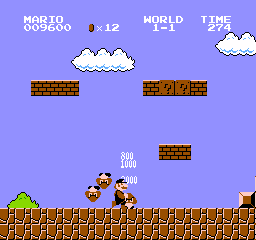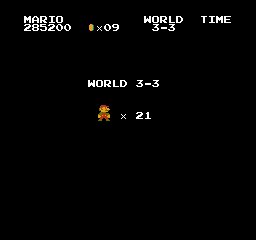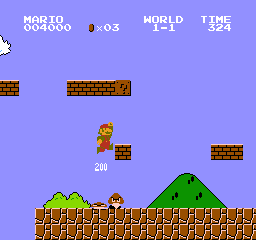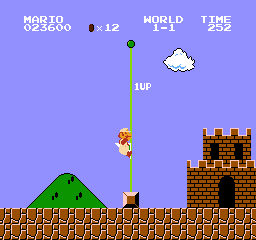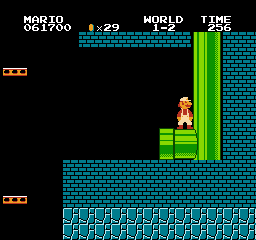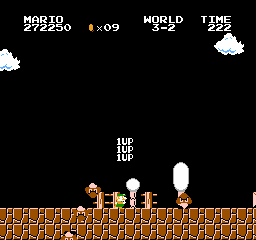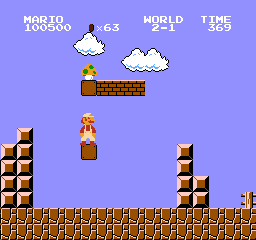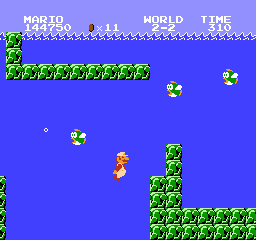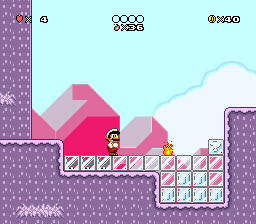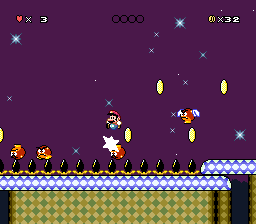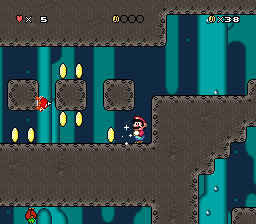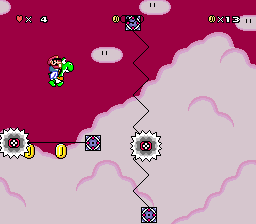
The Youtube channel Retro Game Mechanics has done a series of three videos on glitches in Super Mario Bros. One involves using the NES game Tennis, which has a certain property of its code that allows you to load all kinds of funky levels in SMB.
They’re all interesting, but the one that floats my particular boat is the third, which turns into a deep dive in the compressed manner that Super Mario Bros. stores its levels in ROM, and uses to draw them during play in real time.
On Romhack Thursdays, we bring you interesting finds from the world of game modifications.
What is the ultimate fate of the library of the NES? Right now a lot of people who played it in their childhood are still around. We won’t be around forever. Once we’re all gone, or even mostly, will anyone still care about them?
I don’t believe that game design goes obsolete, but novelty is a big driver of game enjoyment, and what was once popular can fuel a nostalgic appreciation. Once both of those things are gone, will NES games be able to win new generations of players to their side?
I think there is reason to be hopeful in this area. After all, lots of speedrunners are focused on these games, and many of them are fairly young, not even having been born yet when the NES was new and Nintendo Power was in print. Still, there are some games that are a bit player unfriendly, viewed through modern eyes, and one of them is Metroid.
The original Metroid is a difficult game to enjoy now. It’s got a gigantic game world for a NES game, but no mapping option at all. To win the player must explore, find a lot of items necessary to winning, probably find some more that make winning viable to a non-expert, and fight countless monsters that can very quickly end the player’s session. While the player can continue as many times as they wish, they always resume at the entrance to the area they were in with only 30 health, so to survive long enough to resume their explorations they usually must spend a lot of time grinding for energy balls, a process that can take quite a lot of time.
Added is a basic wall jump feature! The time’s really tricky, but since the game was designed without one, it works out okay.
Nintendo generally doesn’t remake their older games, except occasionally with graphic upgrades, such as with Super Mario All Stars. The gameplay, however, they leave alone. But they did remake Metroid, as Metroid Zero Mission, which added a lot of the later niceties that Super Metroid introduced, has a much more logical game progression, and even has an expanded end game. It seems to indicate that even Nintendo thinks Metroid is a bit hard to get into.
The map reveals the layout of the whole game, but except for a few cases, you still have to search out important items.
There is a whole genre of romhacks devoted to fixing the more unfriendly aspects of older games, and one of the most successful of these hacks, in my opinion, is snarfblam’s Metroid + Saving. It’s recently gotten an unofficial update by SimplyDanny, which is slightly friendlier, but both are substantially more playable games to people who aren’t inured to classic Nintendo difficulty.
The first thing it does is get rid of passwords. People playing with savestates may not care, but there is a lot to be said for approaching these games as they were intended by their original makers. And Metroid’s first release, on the Famicom Disk System, did have save files! So the save functionality (if you’re playing on an emulator or supporting flash cart) isn’t a revision, it’s more of a restoration. You lose the JUSTIN BAILEY password, but it’s not like the original game isn’t still out there.
The door transitions have been made much faster!
But Metroid + Saving has a lot more going for it than just that. It has a map! In the original it appears when you pause, but SimplyDanny’s version also puts a small map inset in the upper-right corner of the screen. It’s not the first classic Metroid hack to add a map (that might be Parasyte’s Metroid Automap patch), but its inclusion here is well taken. It’s hard to express how helpful a map function is to new Metroid players. It changes the nature of the game, keeping a lot of its challenge, but reducing the frustration, and also helpfully providing hints as to where secret passages may lie.
Missile doors take fewer missiles to open!
The new unofficial addition also restores all your energy when you begin a new session, makes random health and missile drops more common, and makes the game subtly easier in a few other ways. The Ice Beam has been strengthened considerably, a change I don’t agree with (it seems too powerful now), but it does greatly reduce the number of shots you must pump into late game enemies.
If you tried out Metroid before and found it its diamond-hard surface too difficult to break, you should give this version a try. It’s still challenging, oh yes, but a lot more accommodating to newbies. It is a version of Metroid for the ages.
Wonderful blog Thrilling Tales of Video Games did a retrospective last month that went through all the various versions of Princess Peach there’s been. Interestingly, while Peach’s look largely solidified in the promo art for Japanese Super Mario Bros. 2 (the insanely hard one, a.k.a. “The Lost Levels”), before that there were all kinds of takes on the character, ranging from Miyamoto’s own drawing (used in the box art of Super Mario Bros. in Japan) to a variety of versions all trying to adapt her single sprite image from the ending of SMB.
Peach in this illustration was drawn by Shigeru Miamoto himself. (Image from blog)And this is the first version of modern Peach. (Image from blog)
The post features a whole bushel of Peaches, many barely seen outside of Japan. Recommended highly!
We’ve been feeling a yen for the Old Web here lately, where someone with a particular area of interest and the time and effort to tell the world about it could create a site that could attract hundreds of readers, and become the hub of discussion around that topic.
The internet seems to have largely left the era of the personal obsessive website behind, in favor of videos and social media. I find this a huge tragedy, as the flat HTML page is still a very useful method of communication. Straight static HTML doesn’t rely on backing scripts or content management engines so there’s a lot less to break, and there’s a much smaller attack service for nefarious entities. (If one wanted to make a site like that there are even tools to help you out, like the Python package Jekyll.)
David Wonn’s glitch site is legendary in speedrunning circles, having been mentioned in various Youtube videos as the source of some prominent tricks. (One of them is this video on Mario Kart 64 tracks that have not yet been broken.)
The last update mentions having trouble with Yahoo’s hosting. The site has several dead links to Geocities sites, and I believe it was one of the sites lost in the Geocities Shutdown, part of Yahoo’s long, slow deterioration. The current version is a mirror hosted by kontek.net, which also maintains several other vintage gaming sites. Thank frog for them!
Why did it stop updating? Well it had a good run; it lasted eight years, and anyone’s allowed to move on from their old interests. I’ve said before of other sites and it applies to this one as well, it’s a miracle that it persists, and I hope that it lasts a thousand years.
We’re continuing with our weekly presentation of talks I found interesting from Roguelike Celebration 2022! They regularly have one or two talks that go some ways outside the roguelike remit, and this year one of them was an interesting talk by Cara Hurtle about using both Telnet and Hypercard, an old multimedia system created for classic Macintosh computers, to discuss queer and trans experience. The talk itself is SWF, although following content outside the video might lead somewhere NSFW.
It’s a short talk, only about 15 minutes, and covers some interesting topics!
Rodrigo Copetti has an interesting rundown of the architecture to the Super Nintendo Entertainment System! It’s an interesting system over all. In clock speed it’s really not that much faster than an NES, but it has vastly superior graphic and sound capabilities, plus so much more addressing space that the phenomenon of mappers that ruled nearly every NES game worth talking about (except maybe Super Mario Bros. and Tetris) was completely absent. The SNES did have frequently-used add-on chips, but they tended more to take the form of co-processors to take some of the load off of the machine’s relatively slow CPU.
On Romhack Thursdays, we bring you interesting finds from the world of game modifications.
They have fallen into obscurity in the intervening decades, but it used to be that the Ultima games were some of the biggest RPGs around, and many still have fond memories of them. The story of the rise and fall of Origin Systems, once one of the biggest game publishers, and how now they’re just another of the hundred ignored lines on EA’s balance sheet, is not our business here today, but instead that of one fan’s effort to improve one of the less faithful adaptations: the NES version of Ultima Exodus.
Ultima and Ultima II (and their predecessor Akalabeth) were popular, but Ultima III was the first megahit version of the game, that could be considered to stand up today. Ultima I was pretty small, and Ultima II had a lot of crazy elements like space travel. Ultima III has a much more cohesive game world, a more detailed quest, and generally feels a lot more like what we would consider an RPG game now. Later games would build off of it and become even more popular, especially Ultima IV with its detailed morality system, and Ultima VII with its vast game world, depth of NPC interaction, and many system and UI improvements.
This thief looks a lot cooler here than they did in the NES original!
Back to Ultima III. One of its best-selling versions was the Famicom version in Japan, which had a bit of a media blitz around its release. Both the Ultima and Wizardry games had something of a second life on Japanese computer systems and consoles, where they would go on to sell millions of copies more. While EA’s ownership and neglect have meant that Ultima is mostly gone and forgotten*, in Japan new Wizardry games continue to be made, hewing to that series’ original dungeon crawl aesthetic.
* This is, honestly, partly to series creator Richard Garriott’s ownership of several important characters, meaning both parties have to agree to the other’s vision for any further official Ultima game to be made. And Garriott seems to be chasing fads lately; his most recent idea for a game utilizes that bane of all game design concepts, NFTs.
The font especially is much improved, over the very bland type used before.
So now you have a little idea of what Ultima is. The Famicom/NES version was a hit in Japan, but it differs from the computer version in many ways. This was pretty much the norm for the many Japanese-made Famicom adaptations of Western games. An article could be usefully written on all the ways Famicom ports of RPGs differ from their originals. Maybe later.
The character portraits are especially nice!
The point of this romhack is to change the NES version of Ultima III: Exodus so it more matches up with the computer versions. It uses its own patching system, so Romhacking.net’s web-based patching system won’t be of use.
So many little things have changed in this version that it’s hard to talk about! At the very least, the graphics have received a complete overhaul. The cartoony figures of the original, which were pretty silly even back then, look a lot more appropriate for a series with the stature and legacy of classic Ultima games.
Hey Chuckles!
NES Ultima Exodus is also notorious for a number of significant bugs, including the absence of an important clue, it being impossible to cancel a character’s turn without wasting it, poorly differentiated character classes, and the lack of some of the monsters of the computer version. These have been fixed in this version. Some other niceties have been added, including character portraits for the people you talk to, which is really going above and beyond for a game like this!
Seriously now: why haven’t the Ultima games been remade yet? Everything else has been remade, why not Ultima? Money is being left on the table!
It’s pretty much become the definitive console release of this landmark of computer RPG gaming! You should check it out if you have an interest in these things.
I’m still playing New Horizons after over two years, and as I write this just had my third Halloween! I’ve got a lot of Jack’s Robes and Jack’s Heads in storage if anyone needs one. But that’s beside the point.
How many of you had the original Gamecube Animal Crossing? I did back in college, and it was quite popular with me and my roommates! One of them picked up her own memory card, to have her own town, where she build up a fortune in bells. She was kind of obsessed for awhile.
Gamecube Animal Crossing existed in the days of the early web, but at a time where people were a bit less determined when it came to investigating a game’s code for information on how its systems worked. As such the schoolyard rumor mill was still a large part of the game’s experience, and all kinds of outlandish lore would get traded around. Of course that still happens today (and misinformation is rampant in general), but if someone wants to know the real scoop, that information is out there for the diligent. (Hell, I wrote an ebook on the very topic of Animal Crossing New Horizons strategies and secrets.)
Brutus the cursed villager: does not exist in the game’s code.
Deathwing the cursed fish: does not exist in the game’s code.
Villagers meeting each other and changing moods: outcome depends on the personalities of the villagers.
Rare dialogue: often the result of talking to a villager when they’re in a mood.
Angering villagers: hit them with tools repeatedly, push them around a lot, or talk with one many times in a short period.
NES games “Forbidden Four”: Ice Climber, Mario Bros., Super Mario Bros., and The Legend of Zelda. Ice Climber and Mario Bros. were released via eReader and are difficult & expensive to access now. At first included Mike Tyson’s Punch-Out as well, but it was distributed by a code generator (that’s now sadly defunct).
Super Mario Bros. and The Legend of Zelda: were never released by any means, and are only accessible via Action Replay or other hacking means. (Although it is claimed that this code generator can generate them.)
The NES item: does function, but only plays rom files that are on the memory card, and Nintendo never distributed any! Roms can be put onto a card with file transfer methods and played with GCAC’s NES emulator.
Gyroid boxing: the rumor that gyroids can be made to fight in the boxing ring furniture items is false.
The Ringside Seating wallpaper: the crowd cheers if you ring the Judge’s Bell while it’s up!
Master Sword: cannot be pulled from its pedestal. The Super Star, however, will make you flash if interacted with.
Password system: can be used to obtain items that are not ordinarily obtainable, like villager event clothing and special stationery, through means like the code generator I linked above.
Comic Book, Glasses Case, Pokemon Pikachu: Ordinarily part of villager lost item quests. They can be generated themselves with password generators and placed in houses, but they have no models there, and so are invisible.
Tom Nook sleeping in his shop: unviewable in the US version, but in the Japanese version there is a secret means to open his shop late a night, by tapping your shovel on his shop’s window three times.
Working for Nook out of your uniform: it works! Just show up for work out of uniform. He’ll react, but let you do it anyway.
Mr. Resetti’s surveillance center: unavailable in US version. In Japanese version can be found by breaking a cracked rock and jumping down a hole. While there, Mr. Resetti and his brother Don’s feet are visible. They are not Digletts! Some sequels made the surveillance center able to be visited even in the US. (New Horizons, sadly, is not one of them.) Described at 10:32.
Resetti’s music: there is a code that replaces all the game’s music with Resetti’s theme until the game is reset.
Post Office: there are messages for sending letters to players with full mailboxes, and for writing a letter to a villager but waiting to send it until after they leave. The trick of writing a letter to a villager and keeping it in your inventory so they won’t leave does not work.
Police Station: Copper has animations for interacting with some visitors (Joan and Wendell are mentioned), and is known to fall asleep at 2 AM!
The Dump: Nothing special known.
Beta Map: Through a process described in the video, it’s possible to be sent to a testing map through normal gameplay. It’s shown off in the video. It’s impossible to escape from it though without resetting. It’s described at 15:58.
Secret K.K. Slider songs: K.K. Song, Two Days Ago, and I Love You, can only be obtained by asking for them by name. (Each successive sequel made the previous game’s unlisted songs “official,” but added their own unlisted songs.)
Three songs, Forest Life, My Place and To The Edge, can only be played randomly if K.K. Slider doesn’t recognize a request, and cannot be obtained at all in GCAC.
The Whale: I’ve seen this one personally! There is a gigantic fish shadow that can be seen randomly, and very rarely, on the boat ride to the Gameboy Advance island. It cannot be caught. Here’s more info.
On Romhack Thursdays, we bring you interesting finds from the world of game modifications.
Most of the things we post here are game hacks. That is, something that has been modified from a published game. Hacking games is not illegal, but the process that some people usually use to obtain the roms themselves may be somewhat questionable. Well not for the subject of this week’s article: it’s 100% homebrew, created from scratch and unencumbered by such considerations! It runs on NES hardware (or an NES emulator), but technically speaking what we have here is more of an indie game on classic console hardware more than a hack.
It’s also an unusual subject for a 2022 indie game. You’ll find all kinds of hacks to, say, put silly characters into Super Mario Bros., but a remake of an Intellivision game, and one with an Atari port that is very much its equal, and porting those games to the NES-that’s unusual enough to merit discussion, even if the game itself is very simple.
Astrosmash! (with the exclamation point) was a very popular game for the Intellivision. I heard it was originally intended to be an Asteroids-style game, with rocks that split into pieces when shot, but turned out to be interesting translated to a Space Invaders-style missile base game, where your ship is stuck to the bottom of the screen shooting at targets falling from above. Astroblast! was released by M-Network (Mattel’s label for publishing games for competing systems), and was a very similar game for the Atari VCS/2600, but actually improved on the original in two ways: it can be played with either the joystick or paddle controller. It’s the only game for the VCS like that! Both control schemes are fun, although experts can probably play much better with the paddle, due to both its faster and more precise movement. And, it’s extremely fast! The sheer pace of the VCS Astroblast is so much greater than the Intellivision Astrosmash that it kind of demonstrates why VCS games tend to be more engaging than Intellivision games: it wastes no time with an easy ramp up in difficulty, but starts faster than almost any other game, and only gets harder from there. It’s simply exhilarating!
The way it works is like this. Rocks, Pulsars and Spinners fall from the sky, and your ship tries to shoot them before they hit the ground. You get points for shooting things, but lose points for things that get past you. Rocks come in two sizes (smaller ones have higher point values), but only kill you if they hit you. Big rocks break apart into small rocks when stuck. Pulsars home in on you as they fall, which makes it more likely they’ll hit you, but also means they’re easier to shoot. The most dangerous items plummeting towards you though, by far, are the Spinners. You must shoot Spinners, you don’t just lose points if one lands but a life. Small Spinners are your greatest enemy, since they’re also hard to hit. There’s also UFOs that harass you, which pass by horizontally and drop bombs on you.
Here is a short game of Astroblast, to give you a sense of how it works. Notice how fast it is. Know that this is nowhere near as fast as it gets. It is my kind of game:
As you score gets higher, the background color changes, and the game gets faster. You get extra lives every 1,000 points, and you start with ten, far more generous than most arcade-style skill tests from that time, but you need all those lives because you’re constantly dying. Difficulty is determined by score, the more points you have the faster it gets. Because you lose points as well as gain them, and because the speed is balanced right at the edge of human reaction time, players tend to play until they reach a difficulty score boundary, where only nearly-inhuman focus, and lots of practice, can push you beyond it. Astroblast will push your playing skills to the very limits.
Astro Smash ‘N’ Blast is an homage to these two games. It takes the same form, your ship at the bottom shoots upwards at an endless wave of plummeting targets, Rocks, Pulsars and Spinners. (There are no UFOs in this version.) There’s fewer things falling, but the game is a bit more precise about hitting small targets. Pressing the Select button turns on autofire, which you’ll probably want to use, to avoid compressing your thumb tissue into a singularity with rapid frantic tapping.
Rocks don’t split in two in this version, but otherwise it plays a lot like VCS Astroblast. Small Spinners are particularly difficult targets to hit, and must be aimed at precisely.
This version takes on a bit of inspiration from Pac-Man CE, in that in addition to having limited lives, you have a time limit. You can earn extra time by hitting +30 second targets that pass by horizontally, and you can regain hits on your ship by hitting passing 1UPs. These are the only bonuses; unlike the originals, you don’t get extra ships from points at all. Although the game ends if you run out of time, chances are great that you’re going to lose all five of your lives before then.
As in Astrosmash/blast, as you ascend to tougher difficulties, the screen’s background color changes. You probably won’t see the later levels though without a lot of practice. Astro Smash ‘N’ Blast offers a level of challenge rarely seen in most games. I prefer games like this, with a strong element of chaos, to more typical modern examples of high challenge, like bullet hell shooters and rhythm games. I think the essence of the super fast video game is in randomness, not memorizing levels and playing them almost by rote but in reacting instantly to dynamic situations, and that’s why I like all the Astro-style games.
I am left wondering what inspired Double Z to look to old Intellivision and Atari games for inspiration. They were released when I was a small child; had Double Z even been born yet when the Astro games were on store shelves? For whatever reason they made it, I am glad they did. Games like this don’t come around often any more, and I intend to put in some solid practice on it.
Racketboy has a great article about getting started with Dance Dance Revolution at home. DDR is still kind of going in U.S. gameplaces from the 2016 release of “Dance Dance Revolution A,” but hasn’t received a home release in that country since the days of the Wii, in 2011. That leaves options to picking up a home machine, finding a version for an older console, or, of course, yarr. Thanks, Konami! Your attention to preventing access to your products is ridiculous and easily mocked!
The ultimate decision reached is to play DDR Max or Extreme 2 on a Playstation 2, and on a CRT if at all possible, but the article contains a number of options that may be more workable for you. Dance on!
I must admit though, the NES era Castlevania logo is so much better than this one.
I love finding something on the internet that still exists after decades, and one such site is Kurt Kalata’s The Castlevania Dungeon (“This site uses HTML and CSS”) which, surprisingly, updated again last year, nine years after its previous update. Although, it was mostly a catch-up post just to let the world know it probably wouldn’t be updating again.
Kurt has moved on to Hardcore Gaming 101 since then, which build an amazing repository of classic gaming information, tore it all down, and built it up again. Meanwhile the Dungeon continues carrying all kinds of useful information on 35 years’ worth of games.
It’s what the Web was meant to be: obsessive fandom over a single game series, presented in straight HTML markup.
I’ve said before that I am heartsick for the era of the internet where the web was rife with sites like the Castlevania Dungeon. Yet, like that one video store here in my town that somehow survives even now, it persists, and that lifts my spirits. I know it’s too much to expect it to last forever, but I hope it does.
The Forum gives a Bad Gateway error, it is true, and of the main sites on the Links page only five of the 16 still work -one of the broken ones is the site for Konami of Japan. The internal pages other than the forum seem to work though. They lists all the games, has pages for artwork and music, and tries to untangle the storyline. It has a collection of fan fiction. It even hosts a few shrines to individual games, with an entertainingly lo-fi shrine to Aria of Sorrow.
Aria of Sorrow Citadel creator xenx2 still lists MSN and AIM as contact points. Hopefully they still watch their HoTMaiL address! What you can’t see here is the animation on the dripping blood at the top.
This is what the web was about, in the early days, and, I think, it’s still among what it’s best at.