grub (properly lowercase) is a bootloader for some Linux machines. I can’t tell you if it’s easy to add it to a computer’s startup files, but if you know how to do such things, please enjoy.
Just a quickie today. I mean the post, not the linked video, which is 18 minutes long. Hunter R’s done lots of videos about various aspects of Animal Crossing, and this one’s no different. In the most recent game, New Horizons, most of your village (or “island” in that game) can be edited, but for the whole rest of the series you’re mostly stuck with the land as it’s generated, and with this video, we know how it’s generated, at least for the first game.
We love it when we find weird and unique indie games to tell you all about! Our alien friends to the left herald these occasions.
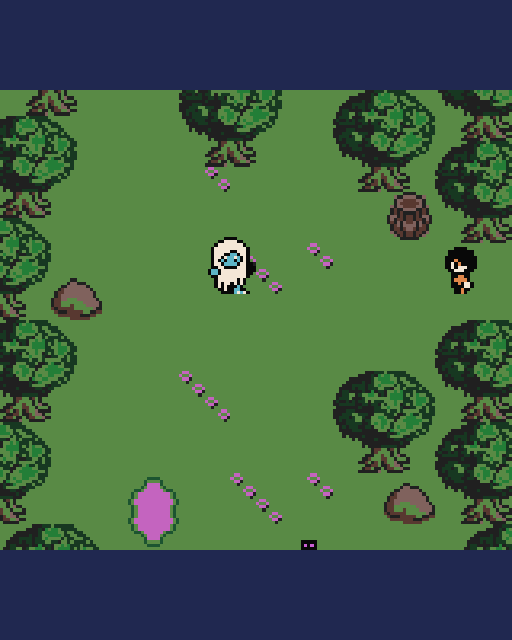
Expedition Sasquatch is a homebrew Gameboy Color rom that can be played on itch.io in your browser for free, or you can pay five bucks to download the rom image to support the makers and play it wherever you like.
It’s a short game that’s like Pokemon but without the battling. You go out and catch creatures in various ways, then take them back to the museum to sell them for cash to get better equipment. Your ultimate aim is to find and kill the sasquatch that’s been sighted nearby. It’s left unclear if this is possible, but it’s fun playing the early game at least.
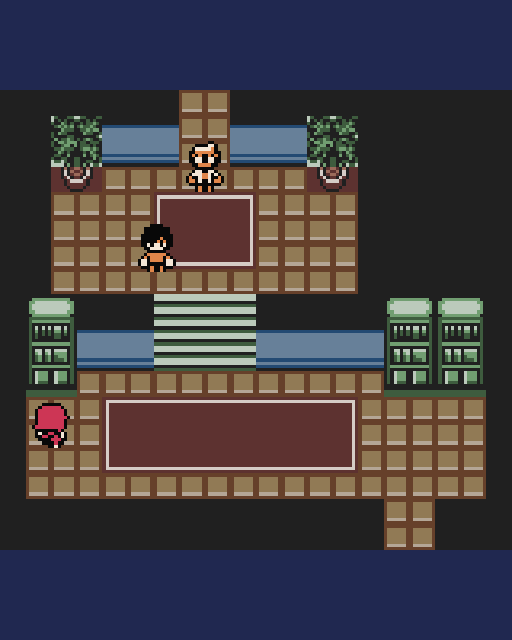
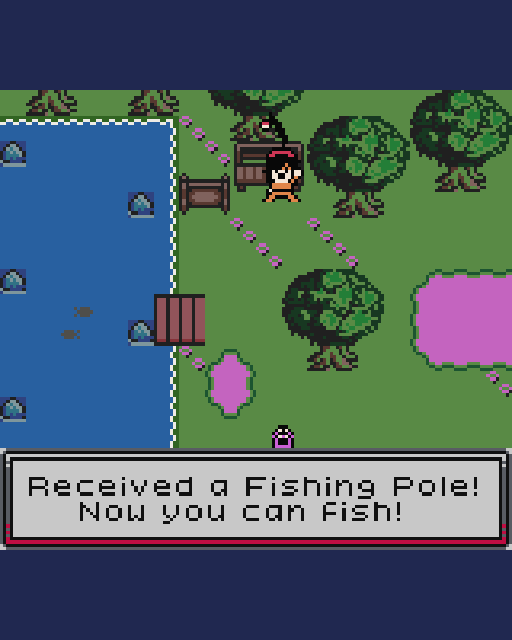
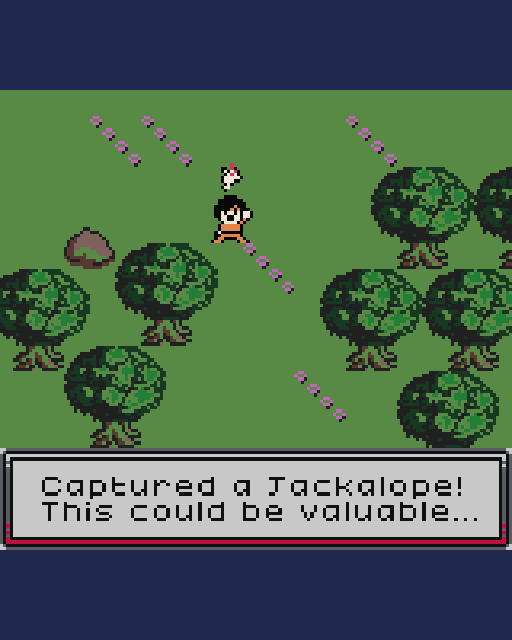
Expedition Sasquatch is made by Andrew Roach (Mastodon) of New Ellijay Television and Elvies, and is based off of a podcast and local access TV show. It’s a nifty little use of your time. Here’s a few screens:
Visiting the Museum
Preparing to fish
Selling Jackalopesis appears to be a good source of early cash.
Sundry Sunday is our weekly feature of fun gaming culture finds and videos, from across the years and even decades.
Creator Gooseworx really made something terrific with TADC, which seems nearly universally adored. It might be too popular, as she had to put up, as sometimes happens with people who make much admired things, with some amount of harassment online about it, with her saying she might retreat from internet circles once it’s done. I’m reminded of some of the flak Rebecca Sugar caught for making Steven Universe, they simply couldn’t do right with some people, or so it seemed.
This is the eighth episode (32 minutes) of the Youtube, now also Netflix, series. It’s produced by Glitch Productions, who also made Murder Drones and are making the upcoming Knights of Guinevere. The premise: a number of human beings have been shanghai’d into a circus-themed virtual world without their consent, existing there as wacky and whimsical-looking characters who greatly want to leave. Their existence there is made even more difficult by Caine, the circus’ AI overseer and ruler.
Caine’s purpose is to keep the humans sane in their imprisonment by giving them videogame-like adventures (which is why we’re talking about it here). Caine has up til now desperately tried to please his inmates with fun and entertaining activities, but is in way over his head, and inflict various types of trauma on them.
As their adventures have continued, Caine’s gotten more and more anxious by the fact that the humans don’t seem to be enjoying his efforts. When a human being becomes so distraught with their inability to leave the virtual world they abstract, becoming a big unthinking glitchy eyeball-monster that Caine disposes of by putting them in “the Cellar,” a big dark empty space. It’s known that this has happened several times before, and the series has dropped hints as to what the characters were like before.
As the first episode revealed, abstracted characters are dangerous to the objects in the world and to the other humans, but Caine has instantly fixed any character who’s been attacked.
The human characters don’t all get along either. The newest one, Pomni, had difficulty adjusting to the circus, to say the least. Easygoing Ragatha is sort of a punching bag for Jax, a snarky Bugs Bunny type who loves to antagonize the others, especially Gangle, an insecure ribbon-and-mask creature, and Zooble, whose body is made out of various interchangeable parts.
And then there’s Kinger, the one who’s been there the longest, and the least stable. Over time it’s been gradually revealed that Kinger isn’t really who he seem to be, that he has a special place in the VR world that he’s forgotten about. He was greatly affected by the abstraction of his wife Queenie, and is hugely forgetful, but seems to calm down and become more lucid in dark places, like inside a pillow fort that he spends his time in between adventures. At odd moments he’s been known to just create things, like a healing butterfly in the FPS-themed episode. And despite being around the longest, Kinger has never abstracted himself.
In episode 7, the characters were approached by a character named Abel, who claimed to be a human that Caine forgot about. Abel offered them a way to escape the circus, and while it didn’t pan out, it did reveal Caine’s inner sanctum, where he keeps the VR worlds that he makes and sends the human characters into.
Now, in the penultimate episode, Caine is driven to anger and madness by how the trapped humans don’t appreciate his efforts. Gooseworx has said that the show was inspired by Harlan Ellison’s story I Have No Mouth And I Must Scream, saying the premise is similar but one where the VR overseer isn’t a wrathful entity of anger but more of a wacky happy little guy, and the comparison becomes explicit in this episode. And it ends on a fateful note.
Goosework made a number of excellent Youtube animations before this one, like Little Runmo, and I hope they haven’t been too put off by online harassment and continue to create new things.
The games mentioned here (17 minutes) really are obscure, including two sequels to Green Beret, a.k.a. Rush’n Attack, one for the arcade. I’ve only heard of one of those before, and vaguely Heart of the Alien. I’m working on a lot of Caves of Qud stuff for the coming days and weeks, hopefully things like this can help tide you over until then.
Here’s the list of games covered:
Missing In Action (Green Beret sequel, arcade) Rush’n Attack: ExPatroit (another Green Beret sequel, this time in 3D, released much later on PS3) Fallout: Brotherhood of Steel (Diablo-like sequel, PS2, Xbox) Wolf of the Battlefield: Commando 3 (PS3, Xbox 360) Bionic Commando Rearmed 2 (PS3, Xbox 360) also mentioned were the Bionic Commando games for Gameboy and Gameboy Color Heart of the Alien (sequel to Out Of This World, SegaCD version) Fade to Black (3D Flashback: Quest for Identity sequel for Playstation and DOS)
Mode 0: Up to four independently movable backgrounds, but with some pretty serious color limitations. Mostly got used for title screens.
Mode 1: Up to three backgrounds, two with more colors. The SNES’s most-used mode.
Mode 2: Two backgrounds, with “offset per tile” on one of them that lets the system move columns of tiles vertically by arbitrary amounts. Used for certain special effects, like (along with raster-based scanline placement) the waving flag in Battlemaniacs, Super Turrican 2’s worms and rockets stages and Panel de Pon/Tetris Attack’s rising game boards. Horizontal offset per tile was also possible, but much less used due to the coarseness of the scroll.
Mode 3: Two backgrounds, one of them gets either 256 colors or, using direct color, being able to specify colors without palettes, with 8 bits of RGB value. Often used for high-color stills. Earthbound’s “THE WAR AGAINST GIYGAS!” screen uses it.
Mode 4: Has the high color first layer of Mode 3, and the offset-per-tile effect from Mode 2 for its second layer (which has fewer colors than in Mode 3). Rarely used. Puzzle Bobble uses it for gameplay, to independently shift the playfields from the rest of the gackground.
Mode 5: Two backgrounds, with 16 and 4 colors per tile respectively, but supports high resolution with 512 pixels per scanline. Can’t do transparency (but can kind of fake it with dithering). Notably, the high res menu screens in Secret of Mana use this.
Mode 6: Only one layer, hi-res like the second layer in Mode 5, but supporting offset-per-tile. Often considered completely unused, White_Pointer Gaming found out that Lufia 2: Rise of the Sinistrals does use it during the credits.
Mode 7: The famous mode that supports scaling, shearing and rotation of a single background layer, used for special effects and fancy 3D effects in games like F-Zero, Pilotwings and Super Mario Kart. Supports 256 paletted colors or direct 8-bit RGB color.
Notably though, Mode 7 can’t actually do 3D effects on its own; it has to use another feature called HDMA. It uses a raster effect to change the horizontal scale of the background on each scanline. As it turns out, the calculations to do this on each line are substantial, which is probably why so many games that use Mode 7 to a significant degree use one of the SNES’ coprocessor chips, like the DSP or SA-1, to help the processor out. The video then rounds out with a discussion of the Mosaic function used in such places as the map transitions in Super Mario World and Final Fantasy IV (II).
Elsewhere, Retro Game Mechanics Explained did a 16-part series covering the SNES’ hardware feature in considerable depth.
We’re a gaming site sure, but I think our broader focus is on using computers for entertainment purposes, and it’s not as if sites like Digg and its aggregation successor Reddit don’t gameify their workings to a significant extent, what with the reputation and the karma and the scoring and whatnot.
Digg has been restarted before, in fact several times! Some history is called for here.
A Timeline of Digg’s Several Graves
2004 Digg is launched, let’s call this Digg 1 2005 Reddit is launched; at first it’s much the underdog 2006 2007 2008 2009 2010 “Digg v4” happens, a badly handled redesign (I call it Digg 2), a mass exodus to Reddit begins 2011 2012 Digg’s traffic has fallen by 90%; Digg redesigns again (Digg 3), changing over to entirely editorially-curated content; Digg’s IP is sold in two chunks 2013 2014 2015 2016 2017 2018 Digg’s remaining assets are sold to a company called “BuySellAds,” which should give you some indication of where their priorities lay; later it’s sold to the even more hilariously evilly-named “Money Group”; Digg 4 2019 Lemmy, a Fediverse alternative to sites like Reddit and Digg, is launched 2020 2021 2022 2023 2024 2025 June: Digg relaunched in private beta, Digg 5 why not 2026 January: Digg goes public; March: then is taken offline yet again a couple of months later
Yes, Digg is a year older than Reddit, and yes, at first it was the obvious frontrunner. Nowadays Reddit could definitely stand to have some more challengers, but it looks like it’s not going to come from Digg, at least not in the near future.
I got in near the end of Digg’s private beta. I think I was one of its more prolific commenters, and I had considered starting a SetSideB community there. Ha ha, I’m glad I didn’t now! There were people on Digg making concerted efforts trying to push it rightward, trying to spread the meme that Reddit, the very site that once hosted TheDonald, was somehow far left-leaning. I’d tell you more about their odious arguments, but I blocked them as soon as I noticed them. Digg had good block button, at least.
There had been problems with AI bots trying to push content, yes, but Digg also used made a lot of use of AI itself. Moderation was handled partly by algorithm, and many pages would have Digg-generated AI summaries, marked “tl;dr.” I came to resent them.
A BusinessWeek cover, archived by Wikipedia, from Digg’s heyday
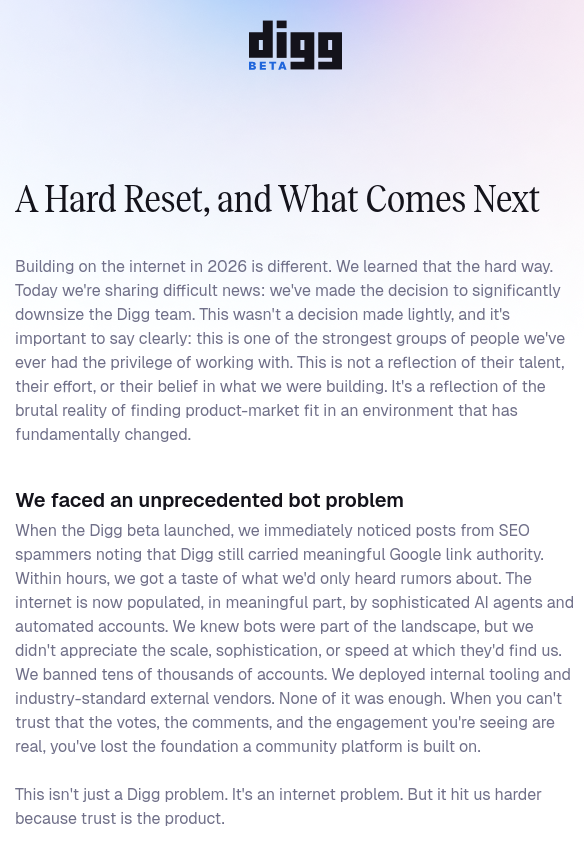
Original co-founder Kevin Rose, in many ways the face of Digg, is back on board. He seems to come back every time they’re having problems, but never seems to stay for long. Digg’s apology message, which is now their entire website, came suddenly. We users were given absolutely no advance warning, the site, and all of our posts and comments and votes, were just gone entirely. Here one moment, gone the next. Good job there Rose.
I don’t think it’s right to say, as the front page now does, that “[t]he internet is now populated, in meaningful part, by sophisticated AI agents and automated accounts.” That is true if you view it in terms of posters. But the web is mostly comprised of readers. One of Digg’s early ideas, lifted somewhat from Slashdot, was that users with good posts get more influence. That also became Digg’s downfall, as power users with high influence banded together to upvote each other’s posts, making themselves more and more powerful within that framework.
I wonder if AI agents could be used by nefarious actors to automate gaming such a system? I don’t know. At a certain point, the problems with a system start to look, not like fixable problems, but like inherent flaws. But anyway, my fondness is still for entirely human-curated sites, like my favorite hangout spot Metafilter. It certainly has problems, but it doesn’t have a runaway bot problem, or at least none that I’ve noticed so far.
Please support the human-made web. The whole online world depends on it. Thank you.
I feel like I’m a bit late on this one, but there’s still two weeks of March left. Some crazy wonderful people every year devote the month of March to classic Macintosh stuff, both hardware and software, and primarily things before the release of OS/X in 2001. The original MacOS traces its lineage all the way back to 1984’s original Macintoshes, and existed as Apple’s primary OS for 17 years. Now it’s been 24 years since the switchover, but a lot of people still like the system that served as Apple’s mainline OS for so long.
MARCHintosh has a website that organizes it, and even offers a style guide. It was created as a fruit-flavored adjunct of similar month-long pun-inspired retrocomputing celebrations DOScember (website currently down for a redesitn) and SepTANDY (doesn’t seem to have a home site at all). Should there be more? VICtober? JUNIX (thanx Ben Zuddist)? I vote yes, regardless of how terrible the pun is! Let’s fill the year with crackling, smoking old tech!
More MARCHintosh projects can be found through the #marchintosh tag on Bluesky and Mastodon.
MacOS Timeline
1976 Founding of Apple Computer (now Apple Inc.), release of Apple I 1977 Release of Apple II . . 6 years . 1984 System 1, release of the original Macintosh 1985 1986 Systems 2–4 (sometime between 1985 and here) 1987 System 5 1988 System 6 1989 1990 1991 System 7, a.k.a. MacOS 7.6 1992 1993 1994 Switchover to PowerPC hardware 1995 1996 1997 MacOS 8 1998 Initial release of iMac, the beginning of the revival of Apple’s fortunes 1998 MacOS 9 1999 2000 2001 Mac OS/X 10.0 Cheetah (“OS 10,” now called MacOS), initial release of iPod . . 24 years . 2026 Today
My style in titling these things is to just present the subject on whatever it is I’m linking to in the title, so you might expect that this is about someone else doing that and me reporting on it. But no! This time it’s something I did myself!
One Handed Solitaire is very simple, and an example of a “zero player game.” There are no decisions to make; winning or losing is completely down to the initial state of the deck. Here are the rules in text:
You start with a shuffled deck of cards. Draw four to form your hand. Your hand is considered to be in sequence, you must keep them in the order drawn. Now:
If the first and fourth cards are the same suit, discard the second and third cards from your hand out of play. This of course moves the fourth card to be the second card.
If the first and fourth cards are the same rank, discard the first four cards from your hand.
If neither of these things are true, draw another card from the deck to the front of your hand. This makes a new first card, and changes which the fourth card is.
When the deck runs out and you can no longer remove cards, the game is over. If you clear your hand and there’s still cards in the deck you’re not done, draw four more.
Your score (lower is better) is how many cards are in your hand when you run out of deck and can no longer discard cards. The average score is about 13.32 cards left. If you get a score of zero, that is you discard all of the cards from your hand and the deck is empty, you win.
ChurchHatesTucker ran a simulation of 200,000 runs and found the win rate of the game is close to 0.7%. I ran my own simulation, in a Python script, and found that out as well. I’ll put my code at the end of this post. No AI was used in its writing, and permission is not given to use it to train AIs. In fact, that’s true of all the text in this blog.
My first attempt found a win rate of 0.94%, but that turns out to be because I left out the aces from the deck! I tried a run with only 20 cards in the deck the 2-6 of each suit, and the win rate became about 7.5%.
If you want to try yourself, here’s the Python code I used. If you have Python installed, just paste it into a text file, give it the extension .py, and run it. It assumes you’re running it in a Linux or other Unix-like system; if you’re on Windows, you might have to change the “shebang” line at the front to point to where your Python is.
def gameend(deck, hand, verbose): score = len(hand) if verbose >= 1: print("Deck exhaused. Final score:",score) if score == 0: print("Win!") if verbose >= 2: print("Deck state:",deck) print("Hand state:",hand) return score
def play(verbose = 0): deck = ["2H","3H","4H","5H","6H","7H","8H","9H","TH","JH","QH","KH","AH", "2D","3D","4D","5D","6D","7D","8D","9D","TD","JD","QD","KD","AD", "2C","3C","4C","5C","6C","7C","8C","9C","TC","JC","QC","KC","AC", "2S","3S","4S","5S","6S","7S","8S","9S","TS","JS","QS","KS","AS"] hand = [] random.shuffle(deck) for a in range(4): hand.append(draw(deck)) if verbose >= 3: print("Game starting--") while True: if len(hand) < 4: drawcard = draw(deck) if drawcard == None: return gameend(deck, hand, verbose) if verbose >= 2: print("Drew a",drawcard) hand.insert(0, drawcard) continue cardtop = hand[0] cardfourth = hand[3] if verbose >= 3: print("********: Deck length:",len(deck), "Hand length:",len(hand)) if verbose >= 2: print("CARDS:", cardtop, cardfourth) # case 1: if the 1st and 4th cards match suit, discard the second and third cards if cardtop[1] == cardfourth[1]: d1 = hand.pop(1) d2 = hand.pop(1) if verbose >= 2: print("Discarded",d1,"and",d2) continue # case 2: if the 1st and 4th cards match rank, discard the top four if cardtop[0] == cardfourth[0]: d1 = hand.pop(0) d2 = hand.pop(0) d3 = hand.pop(0) d4 = hand.pop(0) if verbose >= 2: print("Discarded:",d1,d2,d3,d4) continue # case 3: if neither is true, draw a card drawcard = draw(deck) if drawcard == None: return gameend(deck, hand, verbose) else: if verbose >= 2: print("Drew a card") hand.insert(0, drawcard) # end of loop
if __name__ == "__main__": numgames = 10000000 wins = 0 scores = [] scoresum = 0 for count in range(numgames): score = play(verbose = 0) scores.append(score) scoresum += score if score == 0: wins += 1 #print("A win on game #",count+1) if count % 500000 == 0: print("Played",count,"games...") print("Finished playing",numgames,"games") print("Wins:",wins) print("Win rate:",wins/numgames) print("Total score:",scoresum) print("Average score:",scoresum/numgames) print("Run compete.")
Sundry Sunday is our weekly feature of fun gaming culture finds and videos, from across the years and even decades.
Maybe it’s weird this has never happened before. Both Earthbound and TMBG are both very weird and fun musically, after hearing this mashup of the two it’s surprising how well the two go together.
And I’m not sure which I should be more embarrassed about, that I know all these Earthbound songs so well, or that I know a good four-fifths of the They Might Be Giants tunes from these excellent mixtures from idiokiot (25 minutes).
The dislike for me here is the title, since Earthbound is so much more than “beating Giygas,” but I admit it’s a pretty good match of TMBG’s name.
The Video Game History Foundation has a breezy 3½ minute video about one of the less-remembered magazines of the NES-through-Playstation era, Game Player’s, with the apostrophe-S at the end. But it wasn’t just one magazine. Over ten years they put out magazines under thirteen different titles, and surprisingly, one still survives today as PC Gamer, a fact of its history that even their own website seems not to know.
They say that they have now managed to obtain the complete run of all the issues of the Game Player’s series, and all but one of them can now be browsed online, including Game Player’s Sports For Kids, which wasn’t about video games at all.
I remember Game Player’s as being the least of the game periodicals of the time, without the insider’s angle of Nintendo Power, the gonzo enthusiasm of Electronic Gaming Monthly or the slightly highbrow air of Video Games & Computer Entertainment. Yet it seems to have done quite well for itself.
The main fact I remember about Game Player’s was idly reading through the colophon one day (I was a weird kid) and seeing a familiar name: Richard Mansfield! I don’t remember what his capacity there was, but I do remember his days at Compute! and Compute’s Gazette, and that he wrote a couple of books on machine language for the Commodore 64. I always felt that Game Player’s must have felt like a step down for him. I hope he’s still around, out there somewhere, enjoying the current revival of interest in 8-bit computing.