An Example of Competitive Kirby Air Riders

I’ve enthused here before about Kirby Air Ride, and its improbable recent sequel Kirby Air Riders. Racing games, and more than racing games, from the mind that invented Super Smash Bros., and with more than a little similarity to the perennial fighting megahit, but at the same time completely different from it. In fact, there is no other big-publisher game in existence like the Kirby Air Ride games, especially its innovative City Trial mode.

If you’ve asked yourself how well would City Trial work as an e-sport-like competition, well we made a post here with examples of that last year. There is a pretty nice community of Kirby Air Ride fans that have created their own variant of the game, with play tweaked and unfavored events removed, that meets in a Discord. I refer interested players there.

The community on the Discord also plays Kirby Air Riders, which is a much expanded game with many customization options.

If you’d like to see how it works, here is a three game match (31 minutes) from a currently-running tournament. It makes, in my opinion, for interesting viewing, with some unexpected upsets.

I’ve already explained how City Trial works in detail before, but here is an overview that should help explain the above video. A number of players, up to 4 in Air Ride and 16 in Air Riders, roam around a sandbox city environment for a period of time, usually five minutes. The city contains a variety of different vehicles to switch to, stat upgrades to collect and time-limited powerups to use. They explore the same city, and can attack each other during this time, sniping at each other with a viciousness belied by the riders’ cutesy appearance; Grand Theft Auto isn’t nearly this chaotic or cutthroat.

Different events happen during the Trial, some of them helping everyone, some of them detrimental, and some of them a mixture of the two. There are also Legendary Machine parts that sometimes appear, and a player who manages to collect all three to one machine gets to ride it, and become extremely overpowered for the rest of the match.

When time runs out, the players’ stats are revealed to everyone, then they’re thrown into a random Stadium event. The players don’t usually know what the event will be, but sometimes the game drops them a hint. Sometimes, in Air Riders, they don’t all get the same event. Sometimes they get to vote on the event. There’s lots of Stadiums, and they each test the player’s stats, vehicle, and playing skill in different ways. You could end up with a Stadium extremely well suited to your machine and stats, or you could end up stuck with a fragile paper airplane in a demolition derby.

The randomness is part of the fun, but if you’re playing to maximize your wins you can’t usually risk putting all of your statistical eggs in a single hoped-for Stadium basket. Even completing a Legendary Machine is no guarantee of success. The ups and downs of Air Ride and Riders make for exciting viewing, but it’s largely without the posturing and negativity of many e-sports. I recommend watching a match or two, either the above-embedded video or one from the recent Skyah Summer Slam event, whether you’re interested in playing it or not.

Farming Simulator eSports

The life of a farmer is a difficult one. Most people don’t know how difficult it is to succeed in agriculture. It’s not enough to harvest fields of wheat and bale hay. The first bale of hay collected in the barn, as it turns out, sets a multiplier! And any grain collected in the silo, and any hay harvested in the upper floor of a barn (but only the upper floor), is not only affected by that multiplier, but reduces the multiplier of rivals. I presume all of this is due to farm subsidies.

These are the idiosyncratic rules of Farminng Simulator eSport, a popular (in some circles) gaming competition, it seems, in Germany. Teams are sponsored by agricultural equipment manufacturers, and there’s a pick/ban system in place for tractor selection. Pro gamers compete to get bales into their barns (preferably by that magic window into the upper floor!) before their opponent does, and can raise and lower a bridge on the rival farm, in an effort to mess them up, all while real farmers share pints of lager and look on in confusion.

People Make Games looked into this scene and explains it over half an hour, here:

Inside the Peculiar World of Farming Simulator eSports (Youtube, 32 minutes)

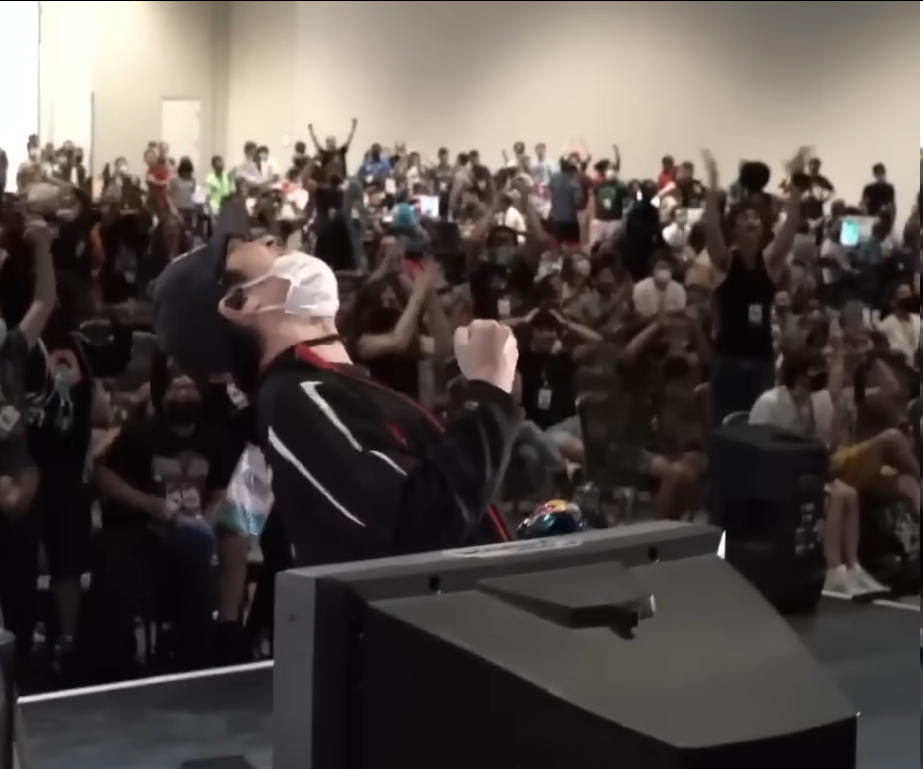
Nintendo vs. Smash Bros. Tournaments

Oh Nintendo. As people following this blog can easily see, we have more than a little fondness for the output resulting from the playing card and igo board maker’s lucrative side venture into video games. Everyone wants to make them like Nintendo, but no one else actually does, or seems to be able to, or can even pin down what that would mean.

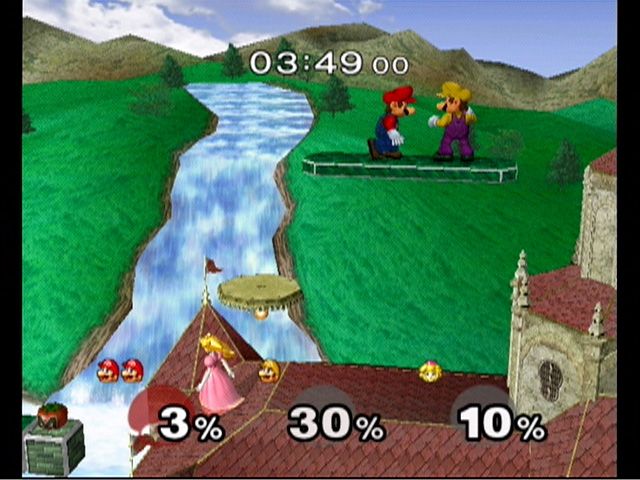
Super Smash Bros. Melee, the game potentially most harmed by Nintendo’s policies (image from MobyGames)

Maybe it’s because, despite being one of the biggest companies in the world, it still feels like a small company, in some ways? Or that they don’t seem as beholden to the bleeding knife of capitalism as other companies are? (This is illusory, of course.) Maybe it’s their adherence to Japanese corporate traditions, or the influence of Shigeru Miyamoto, or their toymaker’s vibe?

But there is a dark side to them as well: they can be incredibly controlling regarding their IPs. Years ago they reached out to a fan

They have what they would call a staunch anti-piracy stance, which you’d expect of most software companies sure, but what that ends up meaning, due to the fact that 99% of their software is made for closed systems like consoles and mobile (we haven’t forgotten about the Animal Crossing PC clock!), they have absolutely no modding support.

This has resulted in a zero-tolerance policy regarding infractions concerning the competitive Smash Bros. scene. Project M is a popular fan-made hack of Super Smash Bros. Melee that it feels like even mentioning will cause Nintendo to affix a red letter to your organization.

aMSa, the Yoshi-main Melee player who was the focus of AsumSaus’ excellent documentary (image from AsumSaus’ video)

Kotaku has reported that there is currently another round of fan backlash over Nintendo’s guidelines over the use of Smash Bros. games in community tournaments. There is good reason: the rules read like they were written by people ignorant of the extent of competitive Smash play.

Nintendo is also demanding tournament prices not rise above $5,000, and is disallowing sponsorships. While it’s true that Nintendo is justifiably a bit cautious about the edginess surrounding esports tournaments, which resulted in sexual misconduct allegations back in 2020, there is definitely a middle ground between preventing situations like that and hamstringing a burgeoning esport, and Nintendo should pursue it, or risk destroying this entire scene.

As I said, I am not a lawyer. Someone who is, is Moonie, who used his incredibly ZeFrank-sounding voice to made a Youtube video breaking down Nintendo’s new guidelines. He doesn’t seem as worried about them as others (the thumbnail to his video is a giant DON’T PANIC). Here is his 18-minute dive into the guidelines, but a major point is that they primarily affect unaffiliated community tournaments, which as a class are distinct from majors, which would have an explicit agreement with Nintendo that would make the limitations in these guidelines not apply. In order words, while some of the furor is justified (other companies like Capcom aren’t as limiting of community events), a lot of it is the result of failed Nintendo messaging. Nintendo does have a lot of trouble communicating things like this that won’t get everyone’s roar up.

But even with that proviso, it’s still not great? Nintendo is still claiming that fan modifications are entirely forbidden, even among community tournaments.

What do I think? Nintendo could fix all of this by changing their EULA by explicitly recognizing and allowing for fan work, but in a way that asserts the primacy of their IP. Again, IANAL, but if they put their own lawyers to work to try to forge a system whereby fans could continue to build off of their work, they might be able to do it in such a way that they don’t risk damaging their properties. Other companies have done it, notably Sega, who blessed fangame creators in a way that generated their megahit Sonic Mania. What is causing Nintendo’s overreaction here, in my onion*, is their institutional distaste for even acknowledging that people are hacking their systems and modifying their games in the first place.

* typo made on purpose

I must acknowledge, there would be a whole flowchart of knock-on effects if Nintendo were to acknowledge and accept fan modifications, and probably not all of them would be to Nintendo’s benefit. Particularly, just to modify their software requires breaking their system security, which doesn’t necessarily imply piracy but does mean opening up the system sandbox and maybe revealing system secrets like keys. Sega doesn’t make consoles any more, so it’s not an issue they have to worry about now.

But what is obvious is that they’ve frequently attacked a vibrant community, and making a lot of enemies out of players. There has to be a good solution to this.

Super Smash Bros. Fans Freak Out About New Nintendo Rules (Kotaku)

A Lawyer Analyzes Nintendo’s Tournament Guidelines (Moon Channel on Youtube, 18 minutes)

Link Roundup 4/27/22

“We scour the Earth web for indie, retro, and niche gaming news so you don’t have to, drebnar drebnar!” – your faithful reporter

Gavin Lane of Nintendo Life: Playnote gets a Flipnote Studio-style art app.

Jay Peters of The Verge, also on Playnote. Its makers wonder if its seasonal distribution model will be appreciated by purchasers of its becranked yellow joybox.

Ollie Reynolds of Nintendo Life: UbiSoft to shut down server support for a number of older titles.

Florence Ion (cool name!) of Gizmodo: Google Play is getting data safety settings.

Ollie Reynolds of Nintendo Life, again: Lego to release a huge new Super Mario set.

Thomas Whitehead of Nintendo Life (lot of items from them today): Game Freak to offer employees option of four-day workweek. Awesome!

Wes Finlon of PC Gamer: Moneyfarm Square-Enix unveils a new $11,600 statue of Terra from Final Fantasy VI riding Magitech armor that caused series creator Hironobu Sakaguchi to basically go WTF. Remember, back when he designed the first game in the series, Square was facing issues whether their little game development operation could survive.

“Master Blaster,” if that is their name, at Sora News 24, on Sega trying to bring eSports into Japanese high schools with a Puyo Puyo Boot Camp. “Listen up maggots, you’re going to spend the next hour setting up combos and fighting Draco Centauros until you get it right and I don’t want no backtalk or I’ll bust you down to facing Nohoho again!”

Rhys Wood of TechRadar: An Elden Ring demake for Game Boy is in the works.

Luke Plunkett of Kotaku: Super Mario movie delayed, Miyamoto promises it’ll be worth the wait. Aww, it’s just like that apocryphal quote often attributed to him. This reporter is overjoyed, the last one ended on that cliffhanger, Daisy was back from Dinohattan and needed Mario and Luigi’s help again, no doubt because of some scheme hatched by Koopa. I wonder how they’ll manage to bring Dennis Hopper back from the dead to reprise his role?

Alana Hauges, also from Nintendo Life: Sega plans to delist classic games from some platforms (but not Switch) in anticipation of the release of Sonic Origins.

And Ryan Dinsdale of IGN tells us Sony is creating a game preservation team, of which this reporter can only say, IT’S ABOUT FREAKING TIME.