Displaced Gamers on Final Fantasy I Combat & Bugs

Displaced Gamers has yet another fascinating “Behind the Code” dive into the workings of an NES game, this time the original Final Fantasy. (30 minutes)

We’ve linked videos in this series many times before, but it’s wuite a doozy this time. Final Fantasy is known to have a number of combat bugs. Critical Hit chances are determined by the index of the weapon in the weapon table, not the stat in that table; weapon special properties just don’t work, regardless of what the Nintendo Power Strategy Guide says; and more.

This isn’t just an explication of those bugs though, it goes through all of how basic (non-magic) combat works in the game, explaining the value of all the stats. That’s one of the things about RPGs: you’re told items are “+4 better,” but often those values don’t match up to what they’d mean in D&D, where a plus is usually either a one-point increase in damage, a 5% improvement on odds for something, or both. Final Fantasy’s attack roll turns out to be a 1-in-200 die, so, a mere +1 is negligible to attack odds.

They probably didn’t elaborate on what these numbers mean in the manual because, at the time, Square and Nintendo were keen to get players hooked on Final Fantasy and other JRPGs, and nothing would dissuade them from picking up the game than to be confronted with battle formulae in the manual. Looks too much like school work! But they could have at least mentioned something about relative chances?

If you really want to know what the numbers mean, the video is there waiting for you. You can just let your eyes glaze over during the math if you want. I won’t tell the teacher!

Gamefinds: Return to Castle Monkey Ball

We love it when we find weird and unique indie games to tell you all about! Our alien friends to the left herald these occasions.

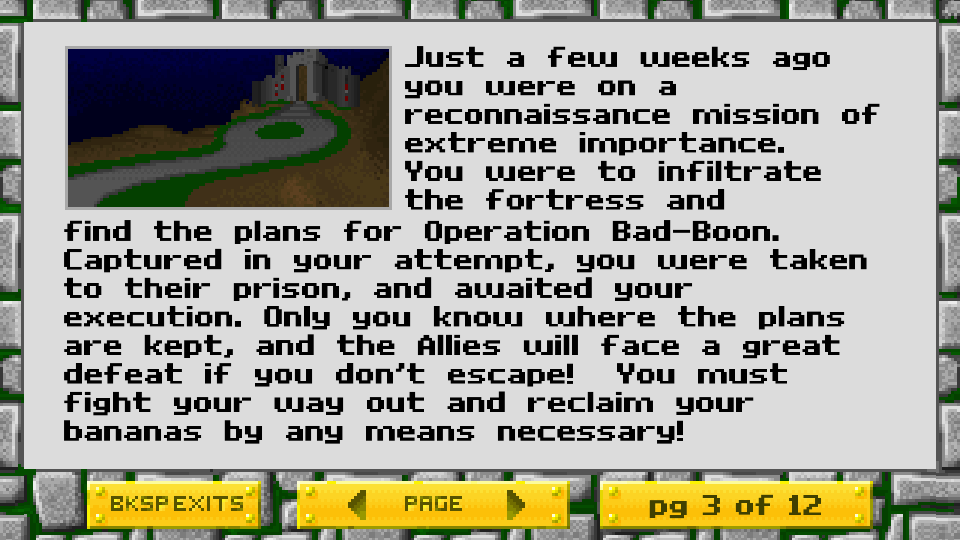
Some time back, I don’t remember how long, I made a Metafilter post about Nickireda’s weird and fun mixup game Return to Castle Monkey Ball, free on itch.io.

In a place like Metafilter, it’s not always obvious what will work and what won’t. Presentation matters for a whole lot, and there is also a random aspect to it. While no one said anything negative about it, I remember it being one of the least favorited-posts I’d ever made on the site. (Favorites are one measure I use to see if people liked a post or not. Sometimes comments just don’t tell the whole story.)

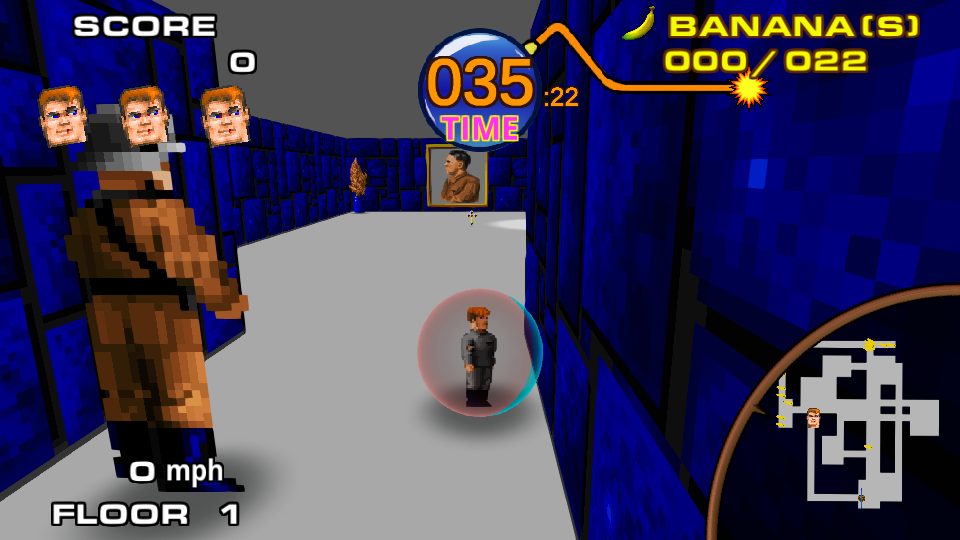
A point of similarity between Sgt. B.J. Blazkowicz and Donkey Kong: a fondness for bananas.

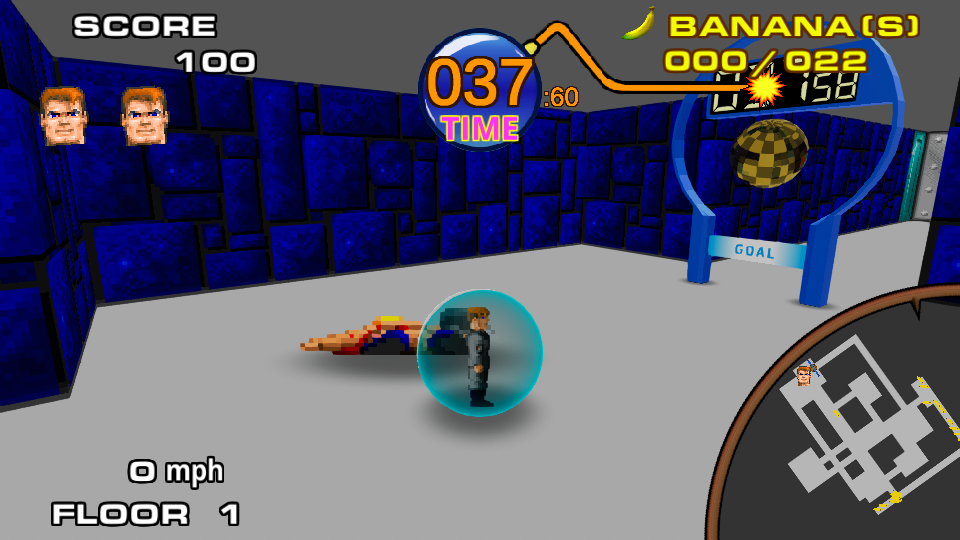
It’s a shame because the game is a perfect mixture. Not as punishing as either original game, its levels are procedural generated so a lot of rolling on your feet is required. You get a time bonus for defeating a guard. While you don’t have a weapon, you do just enough damage at full tilt to take one out in a single hit, and it feels great to do it.

Why is B.J. so much smaller than the guards now? I realize it’s a concession to melding the styles, but he’s so tiny!

There’s only eight levels (at least in the first “episode”) so it doesn’t take long to get through either. In the first version they kept Wolfenstein 3D’s graphics unchanged, meaning unfortunate reminders of Bad Person and his Stupid Symbol. Those have been removed since, which makes it less accurate to Wolf3D but also less saddening to play.

I was reminded of EFCMB by Vinesauce having recently streamed it. (13½ minutes) I don’t often return to a Gamefinds game, but given that I had made an attempt at telling people about it before I feel a slight bit of ownership here, and my previous attempts at spreading the word slightly predated Set Side B, so please go enjoy if you think you’d like it. It really is brilliant, and it runs in a web browser, even on my Raspberry Pi 5.

Escape From Castle Monkey Ball (by Nickireda on itch.io, $0)

Get Info on TV’s TV and TV Games Encyclopedia

Get Info made a substantial post on a couple of significant pieces of Japanese gaming ephemera, a four hour long program that aired overnight on March 14, 1987 that was basically 100 segments on a variety of games (and other things really), and a book that was released later that was an encyclopedia of gaming from around that time. A lot of it is as inexplicabe as Japanese media can be to non-Japanese speakers, but it’s very interesting as a gaming time capsule from the era. Clips are presented not just from Japanese properties but also games from around the world.

Nearly the whole program (with minor edits for copyright) is on Youtube (4 hours), with a table of contents with links in its description. Although, unless you have an insatiable hunger for random gaming clips, you’ll probably want to go through the TOC.

This post is mostly intended to point you to Get Info’s much more substantive piece, but here are links to a few of the more recognizable clips these days: Ballblazer, Space Invaders, Out Run, Flight Simulator, Super Mario Bros., Eliza, Zanac, Little Computer People, Fantasy Zone, Karateka, Pinball Construction Set, Marble Madness, Rescue on Fractalus, Wizardry and Galaxian. All 100 clips are also on Youtube separated out into individual videos (and with better image quality overall).

The book that followed contains Denshi Yuugi Taizen : TV Games,” presents 40 interviews with a who’s-who of game creation at the time, including Nolan Bushnell, Ed Logg, Steve Cartwright, Fukio “MTJ” Mitsuji, Trip Hawkins, Freefall Associates, Timothy Leary, Shigeru Miyamoto, Yuji Horii, Toru Iwatani, Sir-Tech, Shigesato Itoi and many more. A full scan of the book is on the Internet Archive.

Formatting a C64 Disk In 15 Seconds

Recently Commodore History investigated just how Commodore 1541 disk drives format disks, and why it took them over a minute. It was also an explanation of just what it means to format a floppy disk. We linked that last week.

Well, yesterday they posted a second video on matters involving formatting disks. (16½ minutes) This time they went over a routine written, for the same drives, that can format a disk in 15 seconds.

So, how can this new formatting method be more than four times faster? In a few ways. The drive’s normal format routine writes 1 bits throughout each entire track; the 15 second formatter doesn’t do anything like that. The stock routine attempts to size the between-sector zones differently depending on how far from the center the track is, and to make that work better it performs a measurement of how fast the drive motor runs. The quick format just uses a same-sized gap throughout the disk. It still reads okay because the drive uses the sync marks to find sectors, it doesn’t try to time the length of gaps when reading, it just looks for a sequence of 10 1 bits in a row. And Commodore’s format routine verifies each track as it’s recorded to the drive; the 15 second format simply moves on, assuming everything worked out.

The result is, the quick formatter does a worse job of setting up the disk, skipping some of the niceties of Commodore’s routine. I wonder if there are some cases where the quick format produces a non-working disk? The video notes that, because there could have been data on the disk before, it could result in cases where the drive gets confused when that leftover data resembles a sync mark or other essential drive structure. Commodore History mentioned at the end of the video that they tried to create such a disk, to see if it caused issues, but was unable to make it happen.

Gamefinds: Trees Hate You

We love it when we find weird and unique indie games to tell you all about! Our alien friends to the left herald these occasions.

Another one, so soon! I feel like I should post these as I find out about them, or else they’ll fade in memory, and in importance. I want to get them out to you immediately, while the bytes are hot.

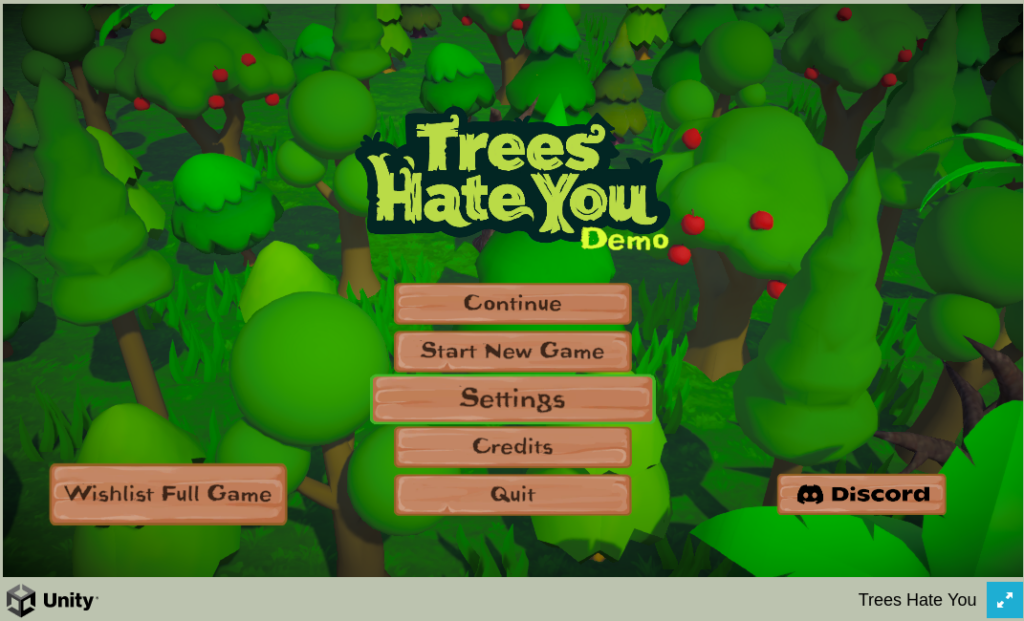
Yet also, with this one, I sort of want you to discover what it’s about, the promise of that title, Trees Hate You, for yourself. That’s not how these descriptions work though. If I just say “play it, trust me,” some of you will, but most won’t, which will be something of a shame for this very silly game.

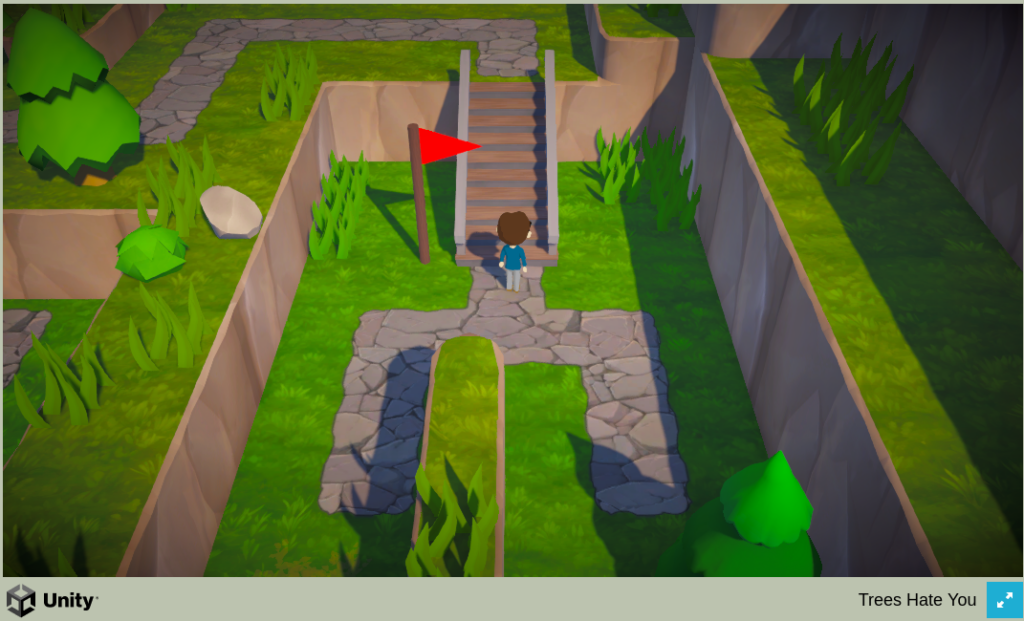
Basically, you’re trying to find your way home after a picnic, but for some reason (littering maybe?), the trees on the way back have decided to stop you. The ways in which they display their vegetative ire are the humor of the game. The ways you must discover to evade it are the game of the humor.

This is just a free demo, a preview of what developer tykenn hopes will be a longer game. I’m not sure how long they can sustain the joke honestly, but at least the demo is entertaining, if you can handle a bit of frustration. I look forward to seeing if they can sustain the premise.

No spoilers, but… be prepared to be stuck at this checkpoint for a long time.

Trees Hate You (itch.io demo by tykenn, $0)

Gamefinds: Snekburd

We love it when we find weird and unique indie games to tell you all about! Our alien friends to the left herald these occasions.

One of the best puzzle games out there is Noumenon Games’ colorful, fun, and challenging Snakebird, its easier sequel Snakebird Primer, and their combined version on Switch Snakebird Complete.

But even Snakebird Complete costs $15. What if you just want to dip your toe in and find out why the snakebirds are the snakeword(s)?

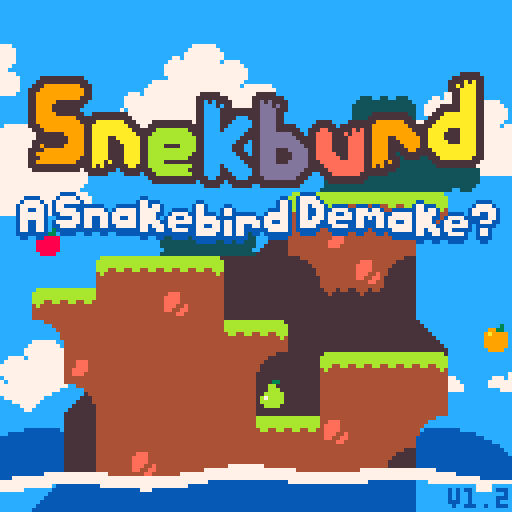
Try Snekburd, on itch.io.

Created by a Pico-8 dev called Werxzy, they’ve made a “demake” of Snakebird that is essentially just the original but with different levels and pixel graphics, which can even be tried out on the web. And if you’re already a certified serpent-falconeer, it even has some new tricks for you to learn.

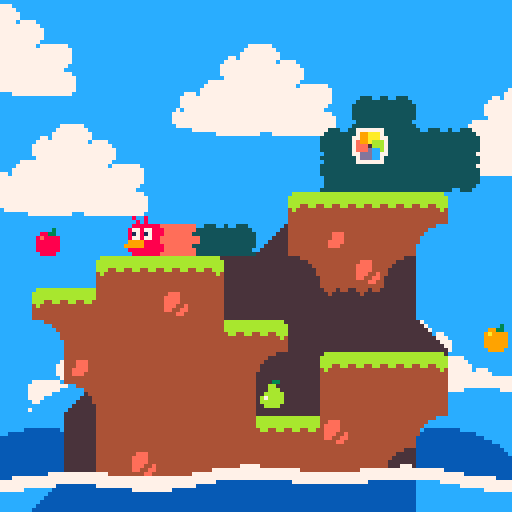
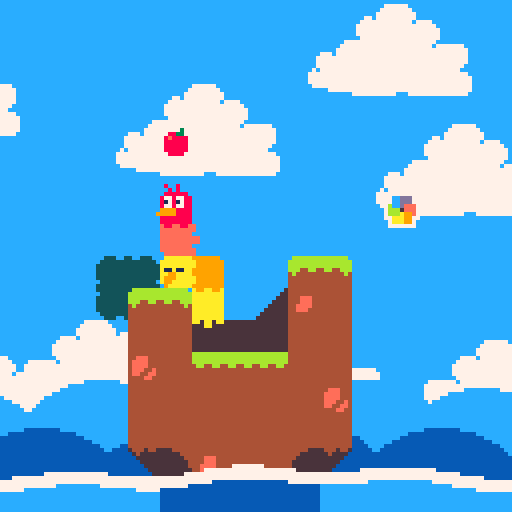
The first level. Even this one is challenging!

You control up to four colorful adorable snakebirds, who you can switch between freely. Their mission is to consume all of the fruit on each level, and then escape to the next island. They all move, one turn at a time, like the snake in Snake, but in a side-view, gravity-burdened world with unexpected implications.

It’s a good idea to spend some time at the start getting used to how the SBs operate. Despite being nominal birds they cannot fly. It’s easy to get a longer one trapped against a wall, but you’re allowed infinite undo levels, and you’ll need all of them.

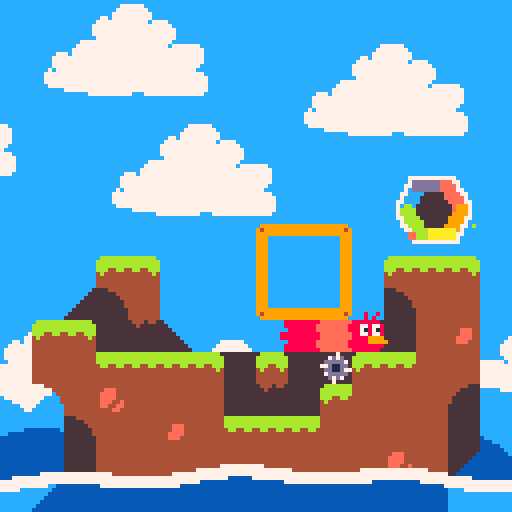
An early level with multiple birds. Your first instinct may be to share the fruit, but sometimes the greed of one bird is necessary if they all are to escape.

A snakebird that eats a piece of fruit grows one space longer. In multibird levels it doesn’t matter to completion which feathery slitherer eachs which fruit, but sometimes the design of a level means a specific bird will ultimately need to be a certain length.

Some levels have no fruit, and reaching the exit is all you have to do. “All” you have to do.

To complete a level, not only must all the fruit be eaten, but all birds must make it to the goal portal. This will often be the hardest part of the puzzle. The ease with which one birdbrain can get stranded unless their snavian colleagues help them to the exit will confound you, but they should be applauded for not leaving anyone behind. (They can’t applaud themselves—no hands.)

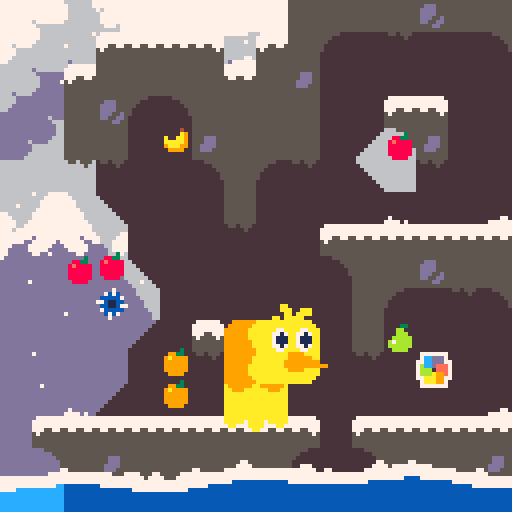
Hey kids, it’s your favorite, Big [Snake] Bird, just arrived from Snesame Sneet!

There’s even a level editor for making puzzles to challenge your friends, or maybe even yourself if you’re really forgetful. Progress is saved between sessions on the same browser. And it’s a good thing, for the game lives up to the original’s reputation for difficulty.

So please, give these fluffy beakworms a place in your heart. I’m told that as parasites they’re completely benign!

Snekburd (from Werxzy on itch.io, $0, based on Noumenon Games’ Snakebird series)