I recently made a Metafilter post with the title Exploring the BABA IS YOUNIVERSE. Having used that pun here already I can’t well put it up again, but the links in the article are good ones, so I figured I’d present them here too, with a few extras. All of these, plus more, are on Hempuli’s (Arvi Teikari’s) itch.io page. Everything here is free and for Windows, unless otherwise noted.
Baba Files Taxes is a very silly game, but Baba’s world is an appealingly silly one anyway, and there is a little gameplay there in trying to duplicate Baba’s signature as closely as possible.
It’s-a Me is a purer platformer, starring the confusingly-named Me from the Baba games. It seems pretty standard at first, until you discover what the run and jump buttons were assigned to. I hope you’re careful with your fingers….
Keke in the Caves of Peril is also a Baba-Youniverse game, that evidentlly takes more than a little inspiration from Boulder Dash.
Stumblehill
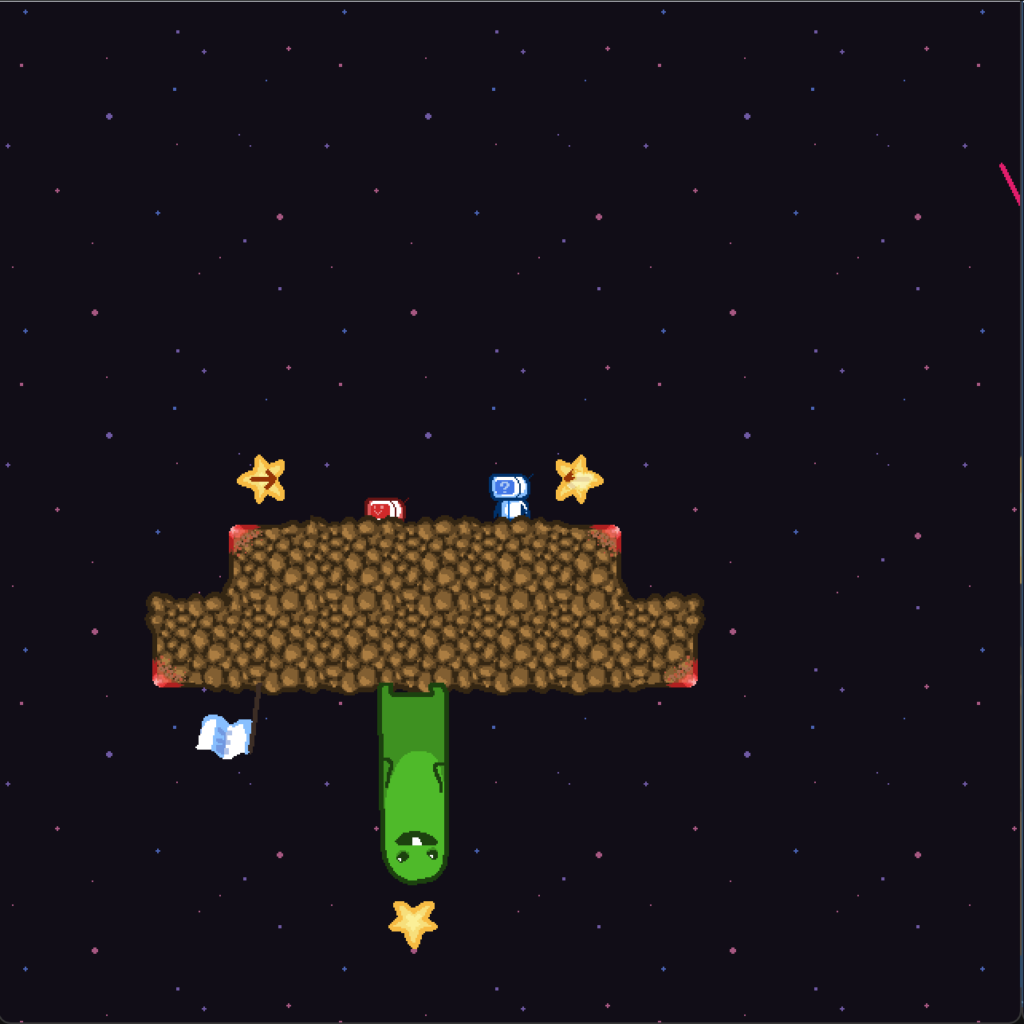
The “gravity-changing platformer” Once In Space 2022, which gets pretty tricky pretty quickly.
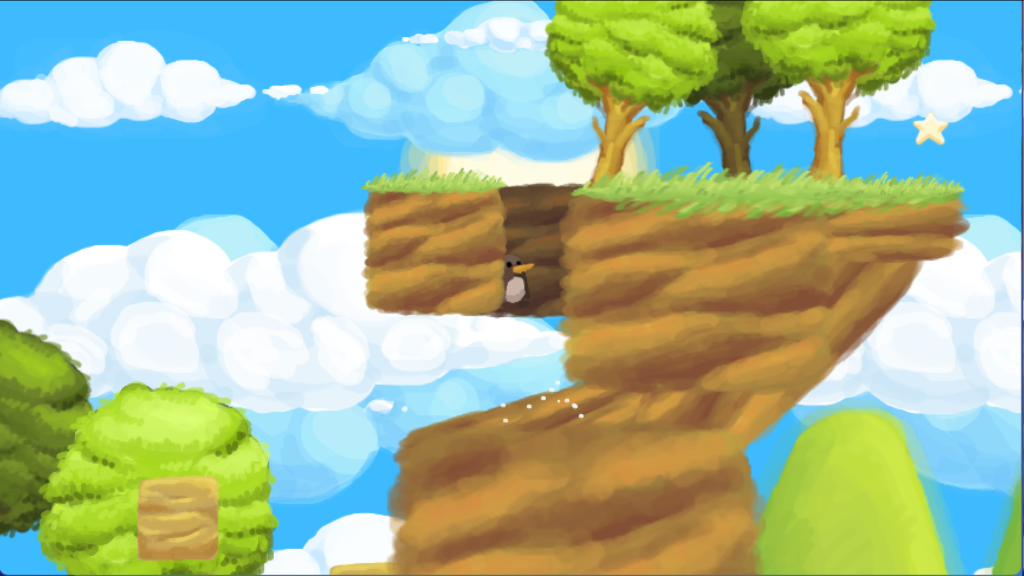
Stumblehill is a platformer, with striking graphics, where the controls are purposely a little harder to master than your basic example of the form.
Baba Friend
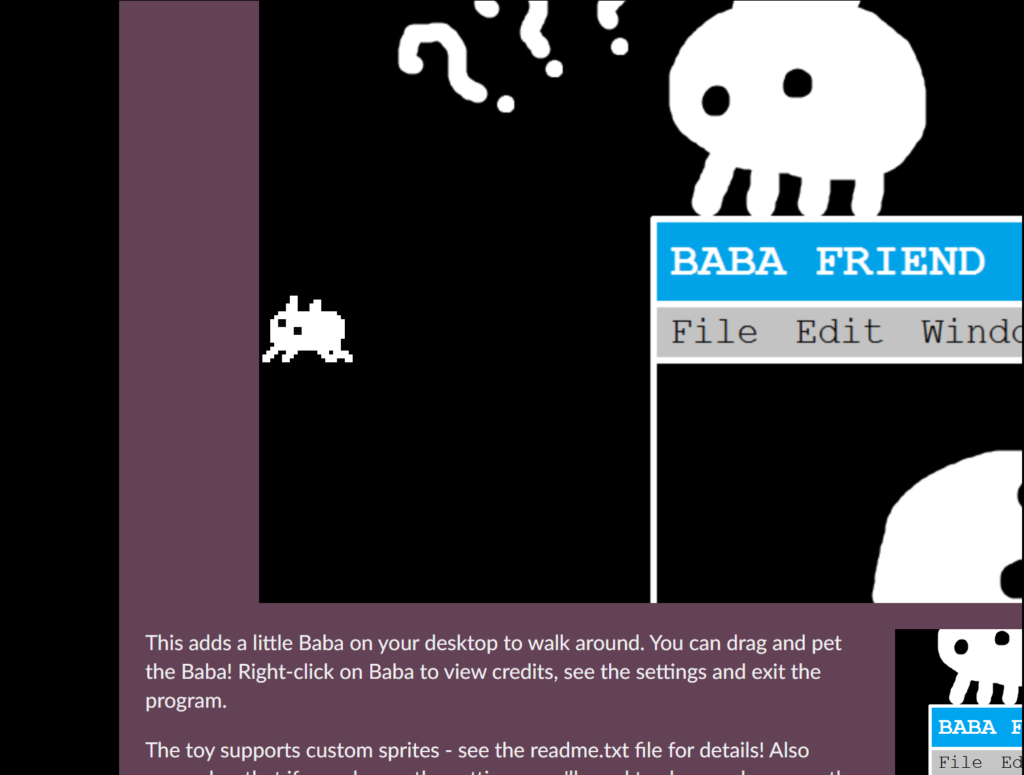
Baba Friend is a little desktop buddy/toy who wanders around your computer’s screen while you do other things. It’s much like the classic computer amusement Neko!
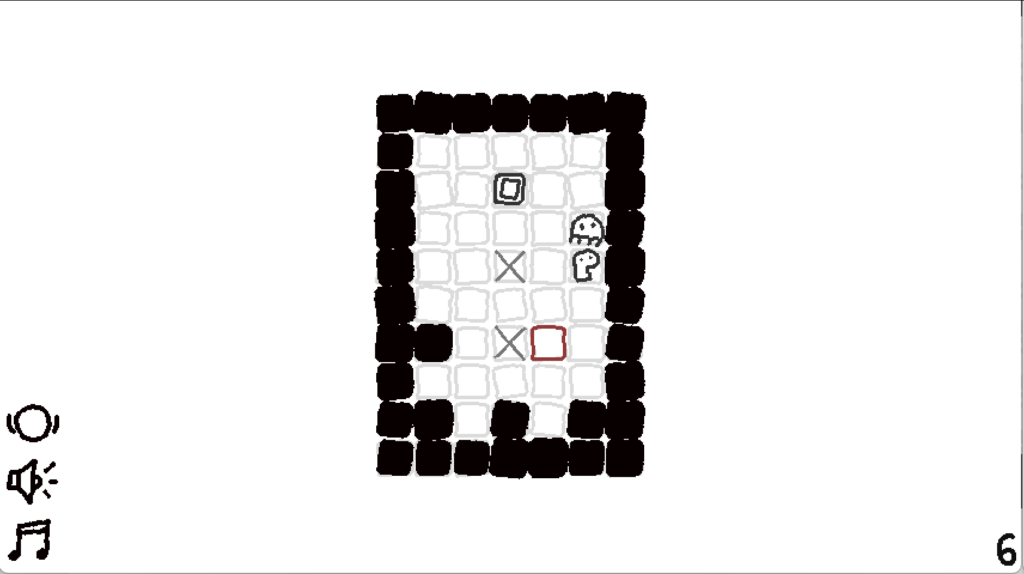
Rude Chess is another Sokoban variant: some of the pieces you have to move are chess pieces, which shift according to their movement rules when pushed. The rude part applies because, if a piece has a choice of squares to move to, it always tries to pick one that doesn’t lead towards a destination square!
Rude Chess
There’s more too, that I only fail to list here because of time-related reasons, including some physical games and a screensaver. Go on and explore their itch page, it’s brilliant!
Owner of Game Wisdom with more than a decade of experience writing and talking about game design and the industry. I’m also the author of the “Game Design Deep Dive” series and “20 Essential Games to Study”
We love it when we find weird and unique indie games to tell you all about! Our alien friends to the left herald these occasions.
It’s one of those games that was made to fulfill the promise of a pun in the title, but turns out to be fairly interesting in its own right.
That’s not to say it’s perfect. Randomness plays way too much of a role in your success, although that could also be said of No Man’s Sky, honestly.
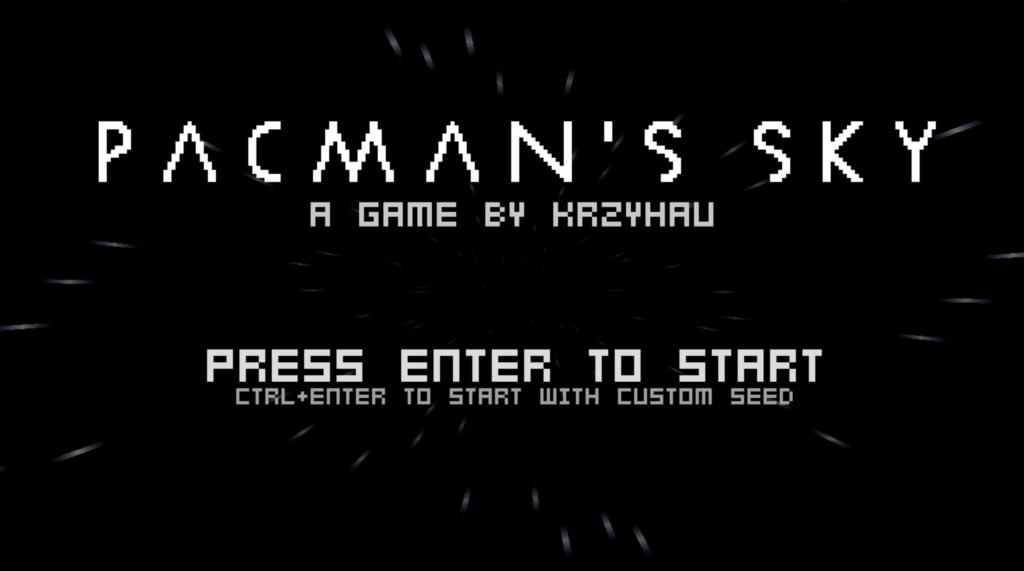
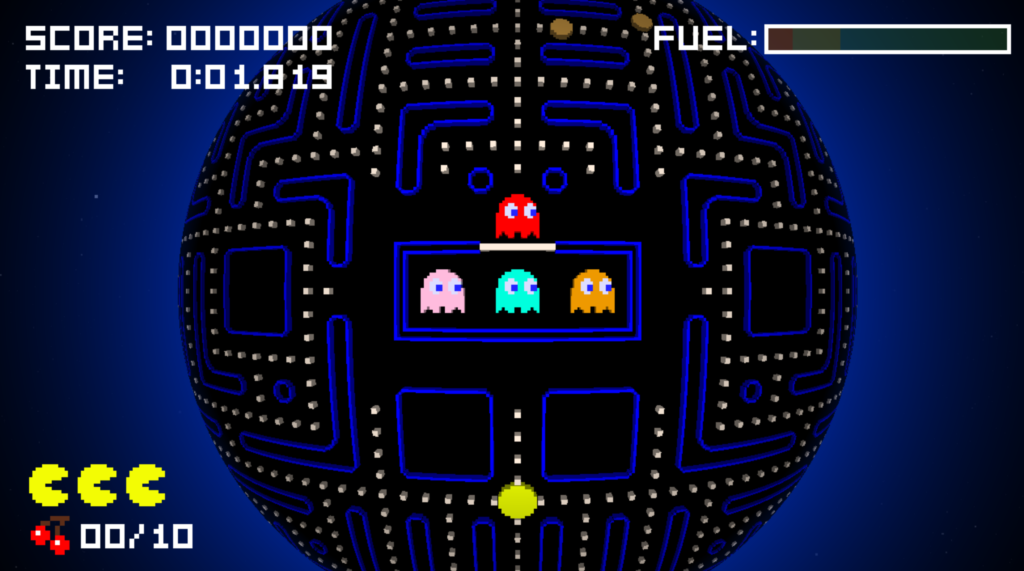
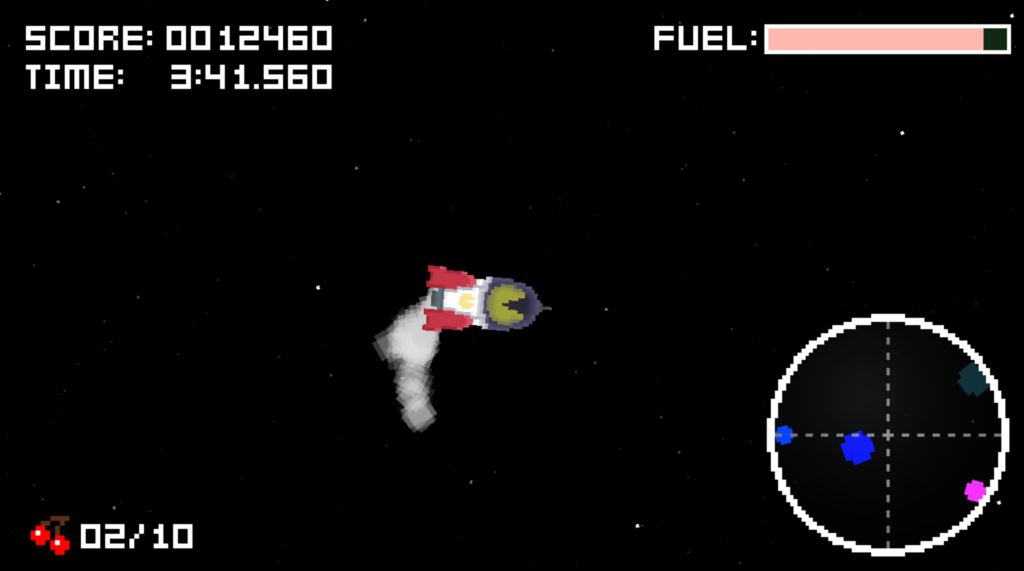
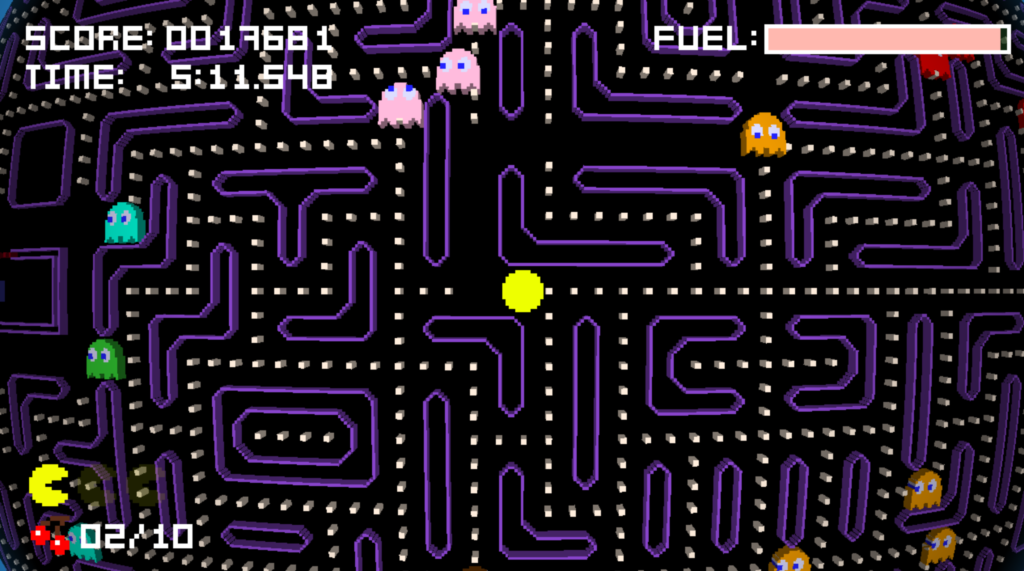
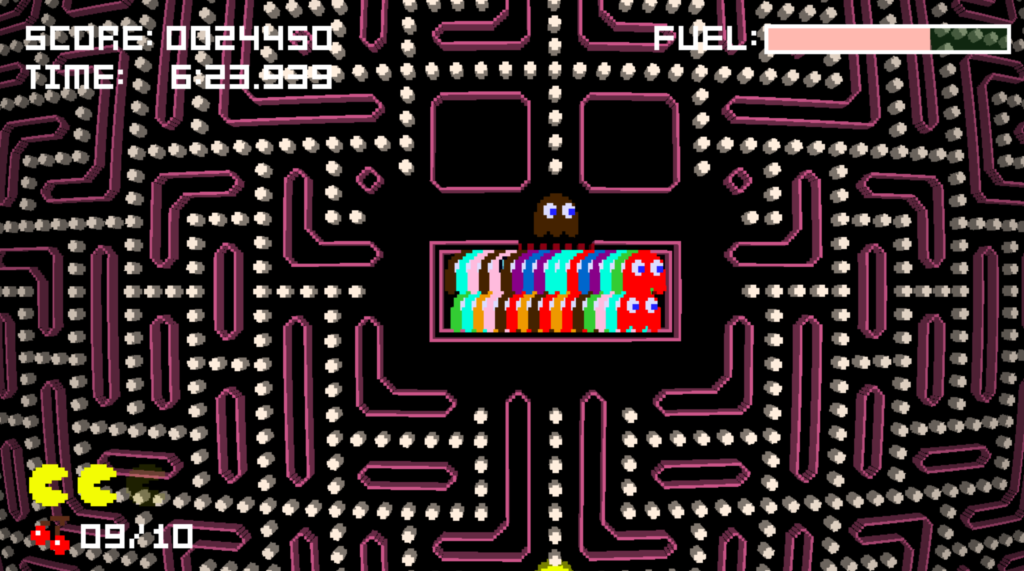
Pac-Man is stranded on a maze-like planet. The maze wraps around vertically and horizontally, but there are no helpful tunnels here to slow down the ghost pursuit, for the screen is always centered on Paccy. There is an escape rocket in the monster house, and the way inside opens up when you’ve eaten a sufficient number of dots. I wouldn’t bug out immediately though; as you eat dots, and also ghosts made vulnerable by the consumption of randomly-placed Energizers, you fill up a fuel meter in the upper-right corner of the screen. You want it to be as full as possible, especially in this first maze, where the game is still fairly easy.
For you see, when you enter the rocket, you blast off into a 2D universe of other planets, and you need fuel to travel between them. (A bit of advice: the rocket’s thrust is always to the right! Press up-arrow to go forward, and up and down to steer.) Use the map in the lower-right to pick the next planet to crash onto, and explore a new maze. You don’t want to run out of fuel! Although you have a total of four Pac-Lives, if you run out of fuel in space, you lose regardless!
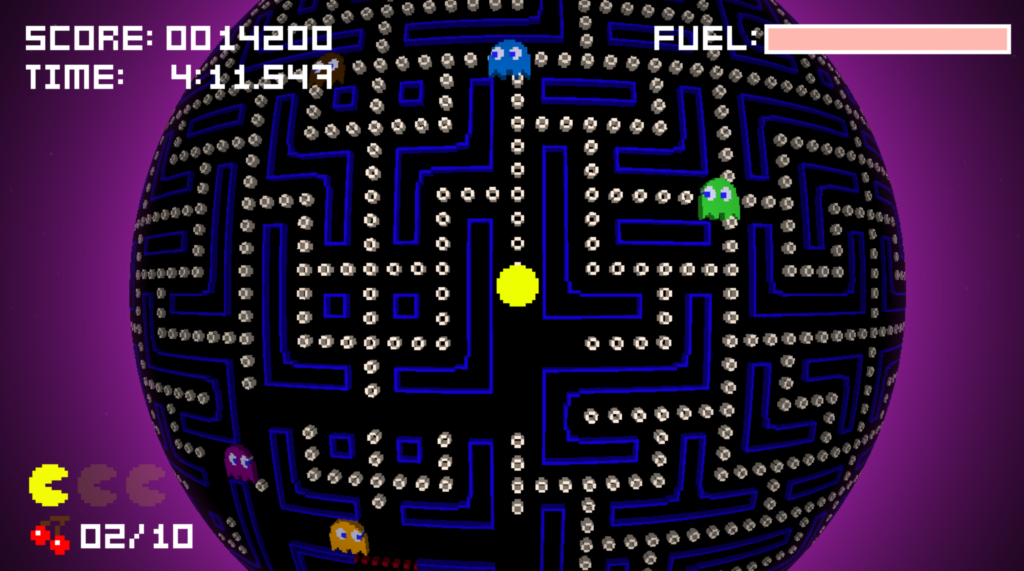
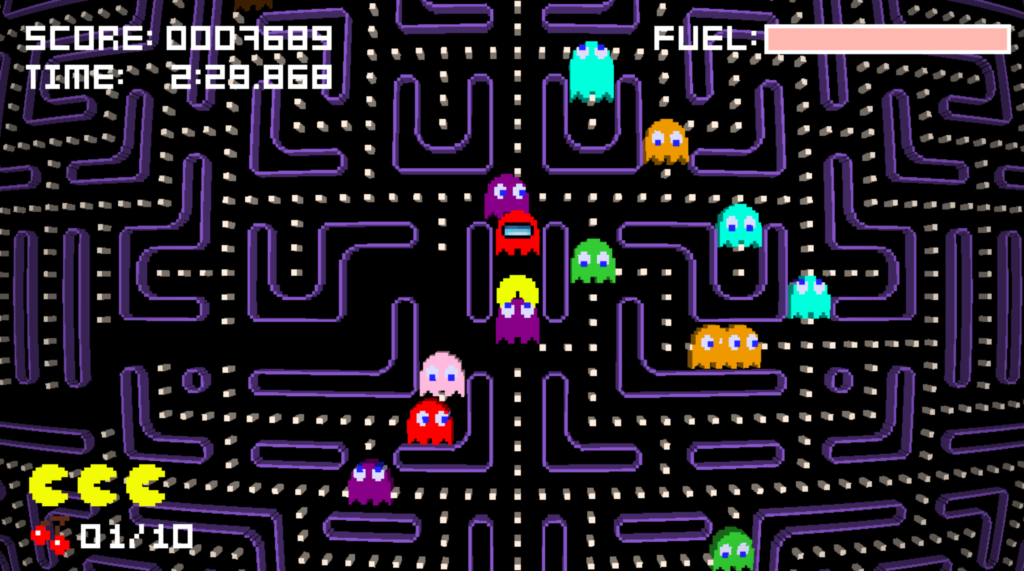
You’ll soon find that most planets are much larger than your starting world, and the game sends in a number of ghosts proportionate to its size! You could end up fleeing from nearly two-dozen ghosts! Fortunately, there are new colors of ghosts in the mix, and none of them are as avid a pursuer as the classic hues, although their meanderings will often block escape routes.
Your goal is to collect Cherries, which are sporadically scattered throughout the planets. You want to eat at least 10, then launch with a full fuel tank, and then press the Space Bar to warp out of the universe, and the game.
As I mentioned up top, randomness plays a huge role in your success. Cherries are placed completely randomly: you might find Cherries in the starting maze, you might find a planet with four Cherries on it and all you have to do is find them, but many planets will be Cherry-less. The best strategy is to scout each planet you visit for Cherries as quickly as possible, snarf up the ones you find while refilling your fuel tank with dots, then quickly evacuate and move on to the next planet.
Some tips:
If you return to a planet you’ve already been on, it’ll be in the state that you left it! This usually makes it harder to refill your tank since there’s fewer dots, so get what you can and launch again.
To help you avoid revisiting planets, I suggest targeting particular planet colors first.
Energizers are placed randomly, and like Cherries, some planets don’t have any.
Ghost vulnerability times are roughly on a par with those of the first maze of the original game, but with so much more terrain to travel through it’s usually highly difficult to make a clean sweep of all the ghosts, even if there’s only the normal four.
The class ghosts have largely the same personalities as in the arcade games: Red chases you directly, Pink looks in the direction you’re facing and tries to get in front of you, Blue seeks to be on the other side of you from one of the Red ghosts, and Orange sometimes loses interest in attacking you when you get close.
The new colors have ghosts that try to lurk behind you, ghosts that try to travel in straight lines regardless of what else is happening, ghosts that just bumble around, and even ghosts that just try to get away from everyone else, Pac or ghost.
Like arcade Pac-Man, the ghosts periodically enter “Scatter Mode,” and give up the chase for a few precious seconds. Unlike the arcade game, the ghosts don’t reverse direction when either entering or leaving Scatter Mode. Your only clue to the behavior change is them turning away, or turning back towards you. That makes them a little less predictable.
Beware! Once in a while you’ll find a ghost that, instead of the usual blue eyes, has an Among Us visor. These ghosts will be one of the other colors, and the same personality as that color, but when you eat an Energizer, not only do they not become vulnerable, they also speed up greatly! If it’s one of the more vicious colors (Red or Pink), this makes eating an Energizer extremely dangerous!
Ghosts become dangerous again the moment they reform from their eyes in the home. If you’re venturing in to get to the rocket, and a pair of eyes rushes in behind you, you can easily lose a Pac without having much control over it. This happened to me several times, it’s worth being wary of.
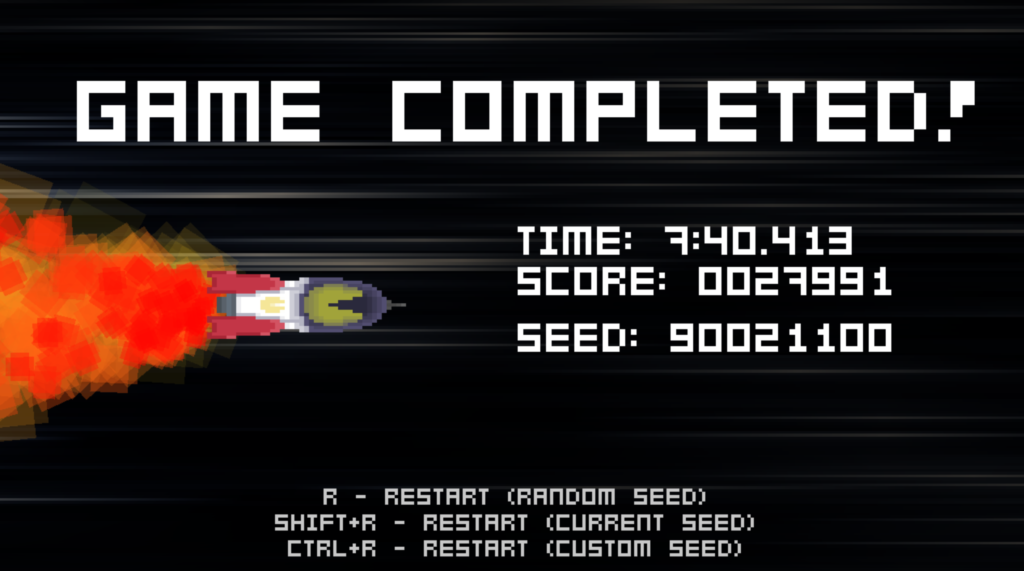
If you want to play in the universe of this victorious game, you can enter this seed at the title screen. It had one planet with four Cherries!
We love it when we find weird and unique indie games to tell you all about! Our alien friends to the left herald these occasions.
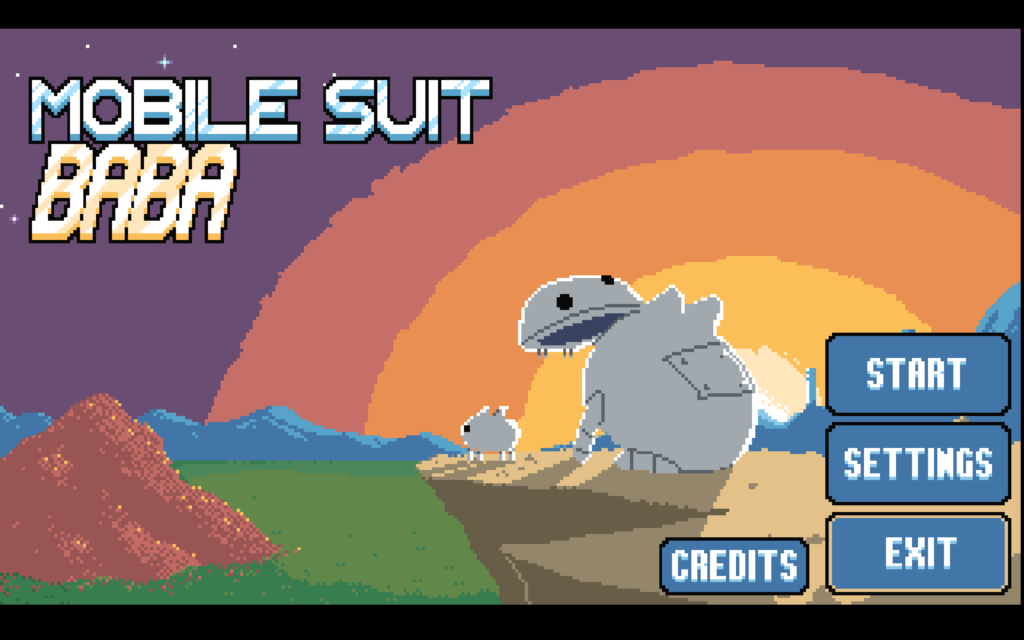
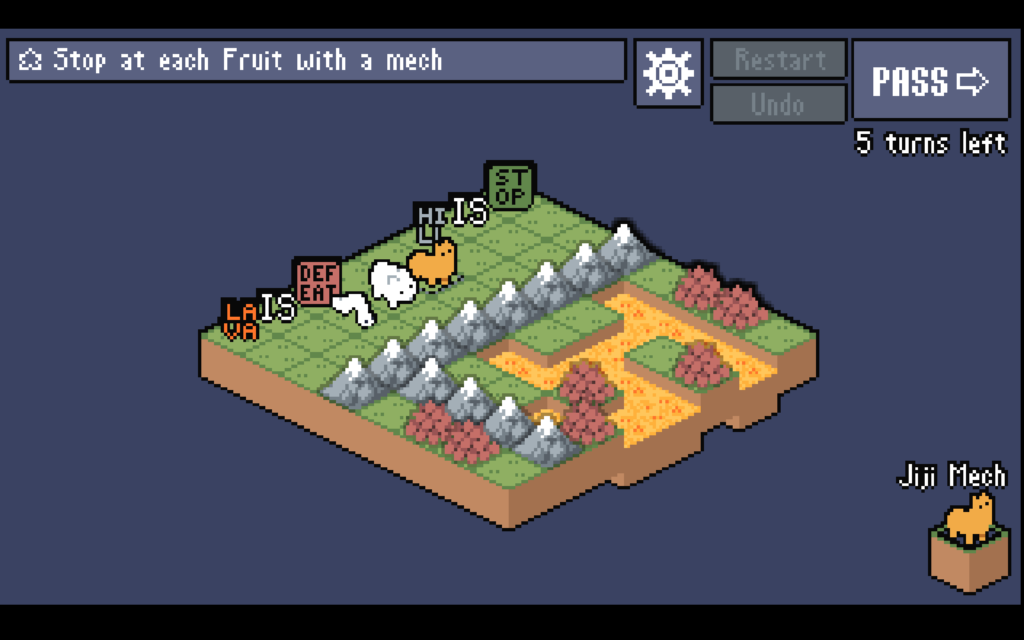
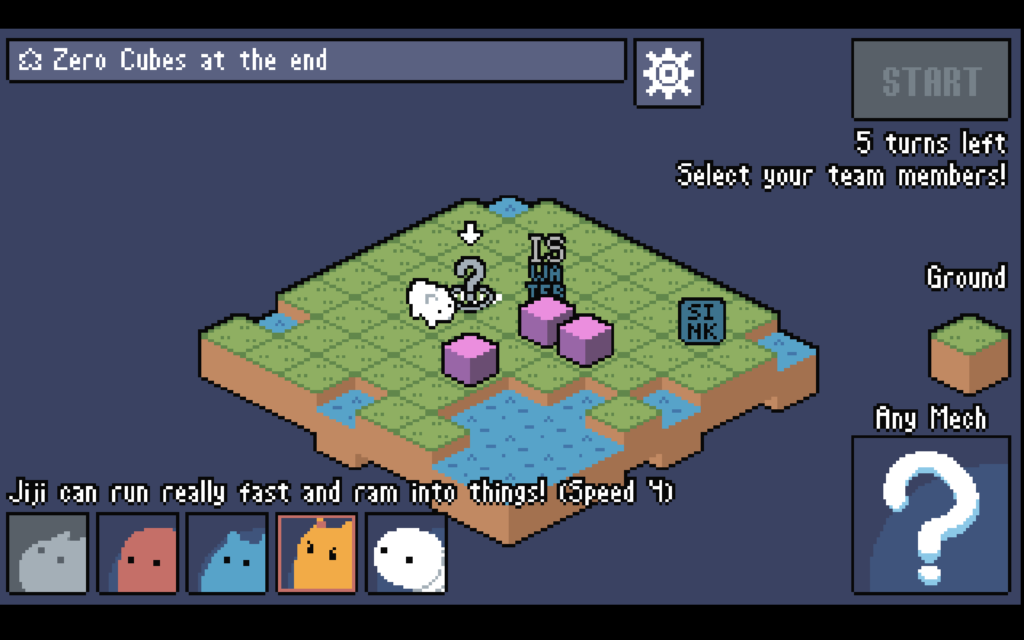
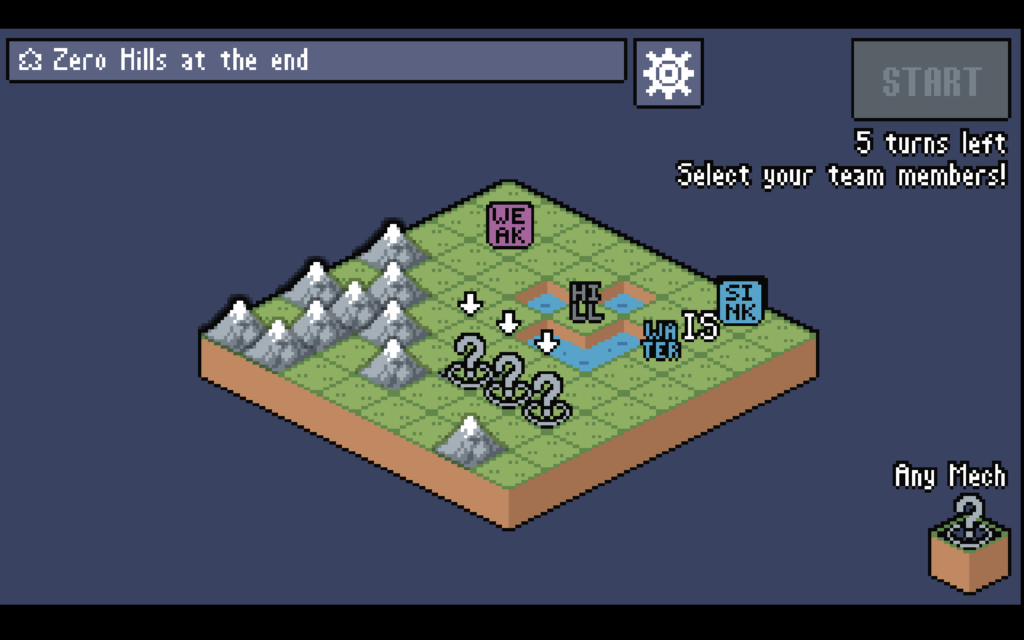
Hempuli, the creator of the indie hit Baba Is You, certainly has been busy! He made a number of solitaire games, some with Baba characters; then a number of board games. Now he’s returned to the Baba Is Youniverse, with another charming game that uses some of the ideas and rules of Baba Is You, with a helping of Into The Breach mixed in! The result is Mobile Suit Baba:
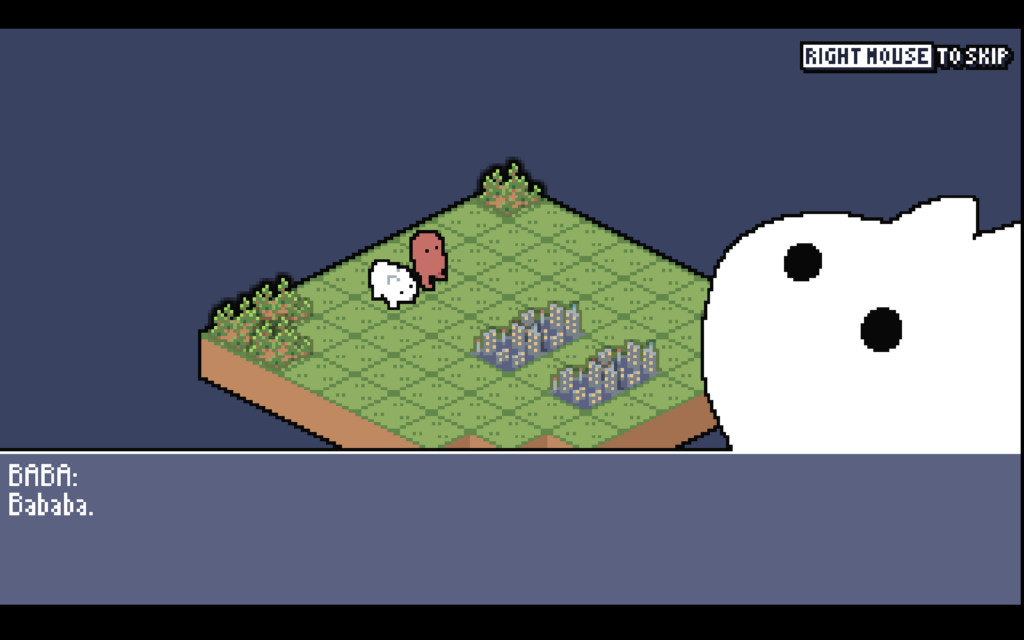
Ha ha! You said it Baba!
The scenario goes something like this. Baba and his friends now pilot a number of giant mech robots that look like them. An invasion of Skulls threatens their laid-back society of agrarian animal creatures with fruit theft. Baba and company leap into action to protect their food stockpiles. This is communicated with dialogue from the various characters, which is all adorable.
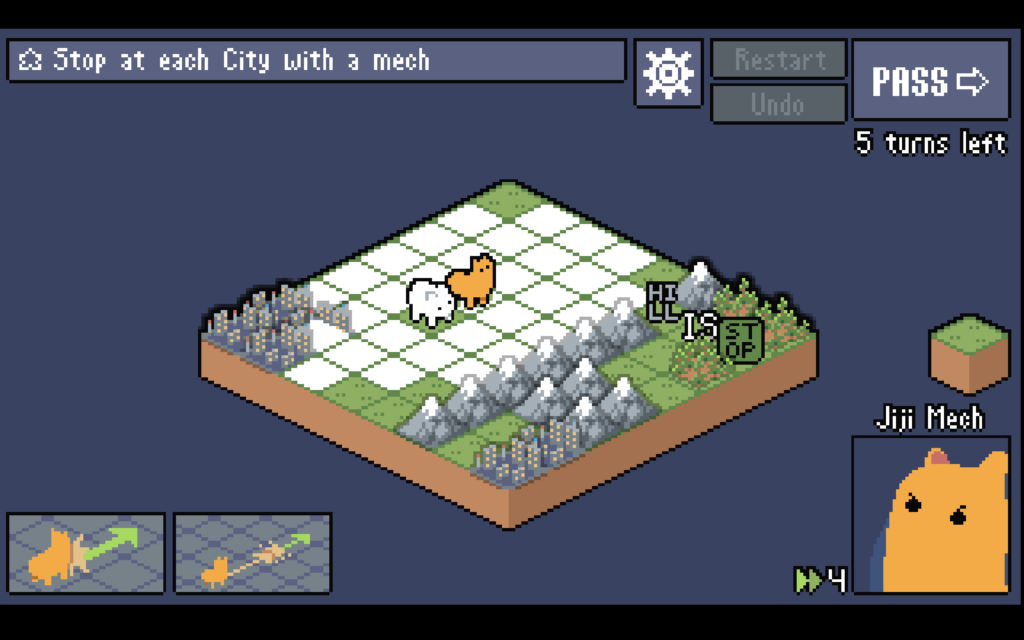
A simple puzzle, that relies on Baba’s ability to throw other characters over blocking terrain.
Each character has slightly different abilities and movement ranges. The mind-bending, rule-changing aspect of the original game is back: levels have noun and property objects in them, as well as the keyword IS. A noun IS property sequence arranged in order from top-to-bottom or left-to-right makes that sentence instantly true, for better or worse. It’s back, but it is a bit diminished in importance. A couple of levels don’t even have words this time, which in Baba Is You would result in a completely broken level.
As in the original, the difficulty rises fast, although this one is easier than it looks.
In the original, the most important property is YOU, because it assigns agency to one or more of the characters in a level; without [something] IS YOU, you can’t affect the game world. Here though, that dire need to make sure someone IS YOU at all times is gone. Now, all of your characters are considered to be controllable. But you still have to manipulate rules sometimes, to affect the properties of the terrain.
Once you have some other characters unlocked, you can sometimes choose who you want to bring into a level.
Also, you usually have more than one character to control, in a turn-based sequence. And your characters have different movement ranges and abilities. And you have a strict time limit (although it can be made less onerous in the settings). It all feels, like its inspiration, Into The Breach, but derandomized, and turned into a puzzle game. There’s no real combat; instead you manipulate your enemies so their objectives are not met.
A Youtube trailer gets the mood across nicely:
Choose your teammates carefully!
It’s all extremely charming and worth a look. While its sale price will be a paltry $4, for a few days Hempuli is giving it away for free on itch.io! Even at full price it’s worth it.
Owner of Game Wisdom with more than a decade of experience writing and talking about game design and the industry. I’m also the author of the “Game Design Deep Dive” series and “20 Essential Games to Study”
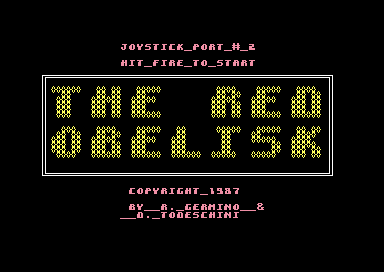
In 1987, programmers Robert Germino and David Todeshini wrote a weird and obscure Commodore 64 game called The Red Obelisk. It barely made a dent in the market, which is kind of a shame. It’s nearly entirely unique, which is a difficult thing to say of any game 36 years after its publication.
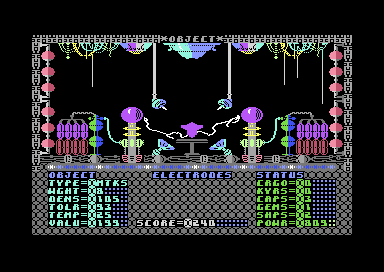
Part of why it’s not remembered much today might be how unique it is. It’s mostly a game about alchemy, but not as much in an Opus Magnum kind of way. You’re given an object, kind of like a gemstone, found in an asteroid belt. You shock it with electricity, zap it with lasers, and shoot sound waves at it. All of this is depicted in an illustrated laboratory, with surprisingly atmospheric graphics and sounds. Doing these things may increase its value. You can sell it at any point to earn energy proportionate to its value, which you need to run your ship and guard against hazards, and points. Your real goal though is to create a Red Obelisk
An earlier work of theirs was Sentinel, of which there’s even less information online.
I played a bit of The Red Obelisk and uploaded a recording to Youtube. I don’t do too well. Here is that video (7 minutes):
Both The Sentinel and The Red Obelisk, and another game I think they made called Phaserdome, were included on a disk called Master Blaster put out by Keypunch Software. Keypunch wasn’t a great organization; there are tales of them taking freeware games, scrubbing them of information by which their creators might be identified, and then selling that on a disk. It was before the widespread adoption of the Internet, the World Wide Web was still three years away, so it was easier to get away with that sort thing than it is now.
Later on The Red Obelisk got picked up for an issue of Loadstar, and the veracity of its editors I vouch for completely. I haven’t yet checked their products for the other games. Sentinel is also on Loadstar. The documentation I retyped below suggests they have another game on Loadstar as well. Both The Red Obelisk and Sentinel are on the Internet Archive, but you can get legal and paid-for copies for $15 of the first 199 issues (Loadstar was amazingly long-lived) via LOADSTAR COMPLEAT, still sold by its long-time Managing Editor, my friend Fender Tucker. The Red Obelisk is on LS64 issue 58.
The game is fully described in its instructions, below, so I’ll just give you some of my own impressions. It’s interesting! It has to have something to it for it to have persisted in my memory for so long. I think the game is implemented in BASIC with some machine code routines to handle the real-time portions. This is a perfectly valid way to implement a game; I did it often myself back then. It’s pretty much the only way to get the smoothly-moving asteroids and slick sound effects the game has.
What I remember the most is the Object Mode, where you zap various objects on your workbench in the hopes of creating a hugely valuable Red Obelisk. Everything you do costs energy, and running out destroys your ship, so efficiency is a must. In order to succeed you must take notes as to how each object behaves. Basic directions are given in the instructions: get the Tolerance below 100 with electricity, and the Temperature above 500 with lasers. Is that all there is to these tools? It has been too long for me to remember, but I do remember finding a string of Red Obelisks at one point, so there must be some process to it. Experiment to see what you can find.
The other thing I remember is the noise that your ship makes when you collect an object. All of the sounds in The Red Obelisk are effective, but that noise found a home in my brain when I played it decades ago, and it has never left. I think it probably never will.
What follows are the instructions to the game as included on Loadstar 58, as written by Fender himself, with section headings and minor formatting added by me.
THE RED OBELISK
by Robert Germino and David Todeschini
One of the safest bests of the 21st Century is that treasures will be found in space in the form of small meteors. They may be grey and drab-looking on the outside but inside will be jewels and precious gems, just waiting for the mining engineers to extract them. But it won’t be easy.
If you are a veteran of the universe of STURGRAT (on LOADSTAR #54) you will have an idea of the complexity of 21st Century space mining.
Setting
In THE RED OBELISK you are in control of a mining company. You must gather some object from space and by using the powers of your factory, you can ‘sell’ them for the maximum profit. Your goal, as is any capitalist’s, is to garner as many shekels as you can.
Let me describe your ship first. It is a Sturgrat space mining/laboratory and short-range fighting vessel. It operates in three modes, the Object Mode, the Mining Mode and the Attack Mode. You begin in the Object Mode (which is the inside of your laboratory) where you get a readout of all the capabilities of the Sturgrat.
Object Mode
The most important thing to keep your eyes on is the POWR rating in the lower right of the screen. If this gets too low, you will lose your ship, and, as is shown right above the POWR display, you only have two, not counting the one you begin with.
But your power is running down so you can’t tarry too long making decisions. And believe me, there are a lot of them to make.
You begin with an object on the conversion table. Its type is shown on the left. The idea is to process this object and then convert it into SCORE and POWR. You have to get the tolerance down and the temperature up.
These two values are shown on the left, TOLR and TEMP. You hold down the E key (for the electrodes) for a short period of time and notice that when you let up the TOLR has gone down. Get it down below 100. Press L (for the lasers) the same way to get the TEMP above 500. Since your POWR is going down all of the time, it pays to do these two things quickly and efficiently. They MUST be done for each object.
In the bottom left hand corner is the value of the object (VALU). As a true capitalist, you will want this figure as high as possible before you convert it into cash (SCORE).
You can increase the value of the object by bombarding it with Ultrasonics. Press U and then push the joystick forward and listen to the pitch of the sound. Press the firebutton and the VALU will increase by a certain amount. If you want to increase the VALU faster, push forward on the stick, the pitch will increase and so will the amount the VALU increases when you press the firebutton.
You can get too greedy with VALU. If you’ve increased it too high, the object will be destroyed and will disappear from the screen.
A good Sturgrat miner will write down the TYPE of object and try to discern the maximum VALU an object of that type can attain WITHOUT destroying itself at conversion. Write this figure down, too.
If you convert at too low a VALU, you will only get the VALU, but if you convert it at just below the ‘peak’ VALU of an object, it’ll be transformed into the incredibly valuable RED OBELISK, which, in more ways than one, is the name of the game. It’s up to you to determine each object’s ‘peak’ value.
You cannot do much more in the Ultrasonics mode. Press U to toggle out of it (if you are in it) and then you are ready for conversion. You do this by pressing RETURN. You’ll either (a) convert it for the present VALU, (b) create a RED OBELISK (which pays off handsomely) or (c) find yourself looking at a dreaded FALSE OBELISK. If you see one of these, you have to act quickly and destroy it by firing Caps at it (the F key) or by bombarding it with Ultrasonics. If a FALSE OBELISK is left to itself it will destroy your current ship and its cargo.
Mining Mode
Which brings up the question: Where do objects come from?
You have to space-mine them. Press the SPACE bar to go from the Object Mode to the Mining Mode. You’ll see your Sturgrat drifting through a meteor field. Use the joystick to maneuver around the meteors trying to capture the small, shining object that is floating slowly across the screen. The object must be captured DIRECTLY in the Sturgrat’s scoop. Even a small bit off-line will cause your ship damage.
You have a tractor beam which you can enable with the firebutton. It will draw the gleaming object up the screen where the action is less hectic.
As a matter of fact, the top of the screen is a safe place where you can scoop up hydrogen molecules with your tractor beam and slowly boost your POWR if you are running low.
You can gather up to nine objects at a time or you can gather just one and head back to convert it. To go back to the Object Mode, press RETURN.
Attack Mode
You begin your stint as space-miner with 3 ships and 3 Caps, but as your POWR gets higher (above 1500 megajoules) your Sturgrat becomes more attractive to marauding space-hijackers. When you least expect it you will be attacked.
The message says that you have lost the object on the conversion table and that the marauder wants to know if you surrender or not. If you surrender, you won’t lose your ship but you’ll have to continue with what you have. If you answer N to the surrender prompt you go to the Attack Mode.
This is the arcade portion of your mission. Move the joystick so that the cross-hairs are on the middle of the attacking ship and press the firebutton to fire. Keep an eye on your POWR level. If you are in danger of losing your ship you can weaken or destroy the marauder with a Giga-Gem by pressing the G key.
Giga-Gems can destroy any cargo that the attacker may have, so you should use them only as a last resort. When you have bludgeoned the attacker into submission he’ll ask if he can trade his cargo for his life. If you feel in a benevolent mood (or in a greedy one) you’ll probably do better accepting his offer and letting him limp off into space.
If you choose to destroy the enemy, you may be able to salvage some of his Caps. If you let him live you may get CRGO (objects), Krystals or Giga-Gems. Base your decision on what you need most.
The Krystals (KRYS) cam be converted in the Object Mode by pressing K. A Krystal is mainly a bonus score you get for defeating a marauder and being kind enough to let him slither off alive.
That’s about it. It will take a little practice with the controls of your Sturgrat but soon you will be grabbing objects and converting them like crazy hoping to find a level for each TYPE of object that will give you a RED OBELISK. As your POWR rating goes up you will have to fight off space-raiders more. Try to get the highest score so that you can head back to Earth a rich man.
As for the trip back to Earth, that’s another game, but one I’m sure Bobby and David will be creating soon. Sturgrat rules! Long may it run.
DISK FILES THIS PROGRAM USES: RED BOOT, RED BOOT 2, RED OBELISK, SPR1, T.RED BOOT
EDITOR’S NOTE: It’s that time of year again, when time is short and news is light. There are a lot of these Next Fest video showcases lined up, so there’ll probably be more than usual of these for the next couple of weeks.
Owner of Game Wisdom with more than a decade of experience writing and talking about game design and the industry. I’m also the author of the “Game Design Deep Dive” series and “20 Essential Games to Study”
Here we are, at the cusp of 2024, and 2D BOY, along with offshoot Tomorrow Corporation, have at last announced a sequel to the hit that could be considered to have kicked off the whole indie gaming thing: World of Goo.
Tower of Goo (unlimited version)
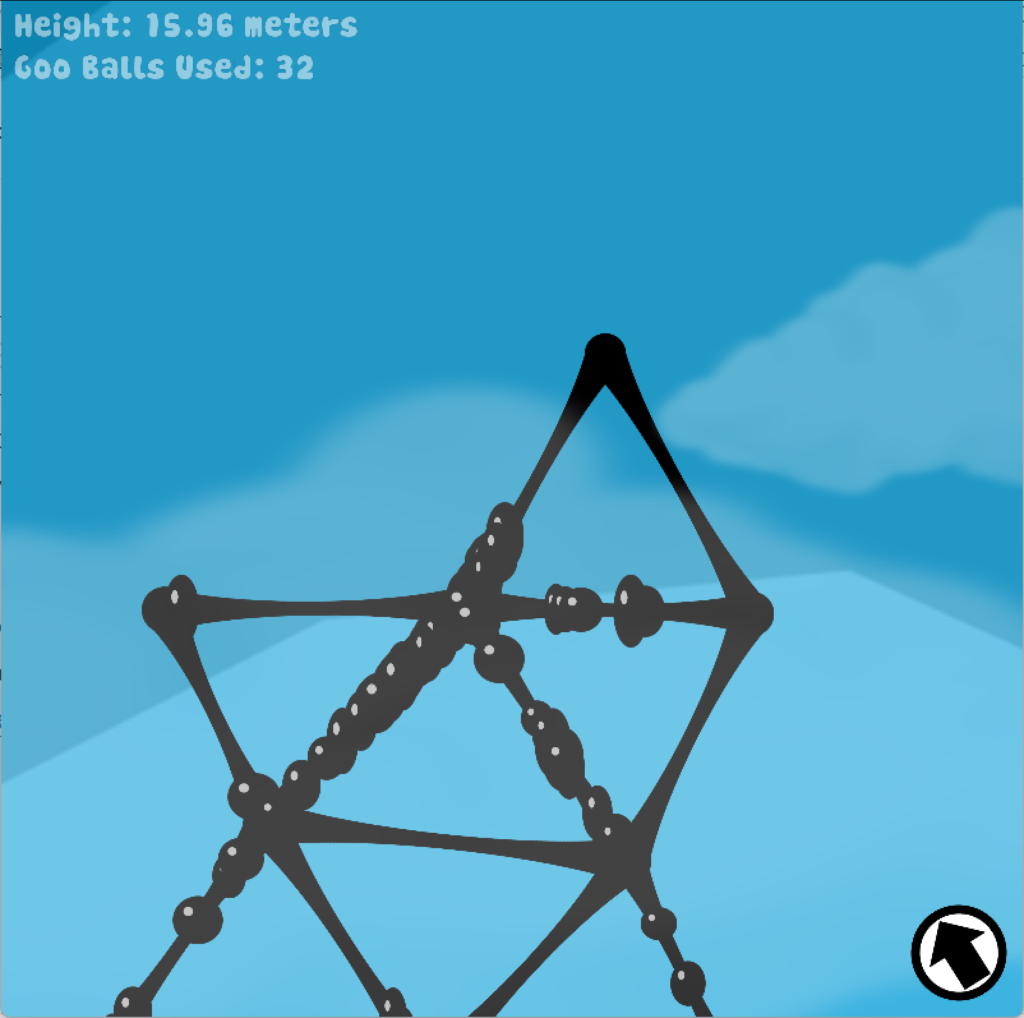
World of Goo got started as Kyle Gabler’s Tower of Goo, part of the Experimental Gameplay Project way back in 2005, which you can find out more about in this post-mortem here (PDF). Tower of Goo can still be downloaded here it seems.
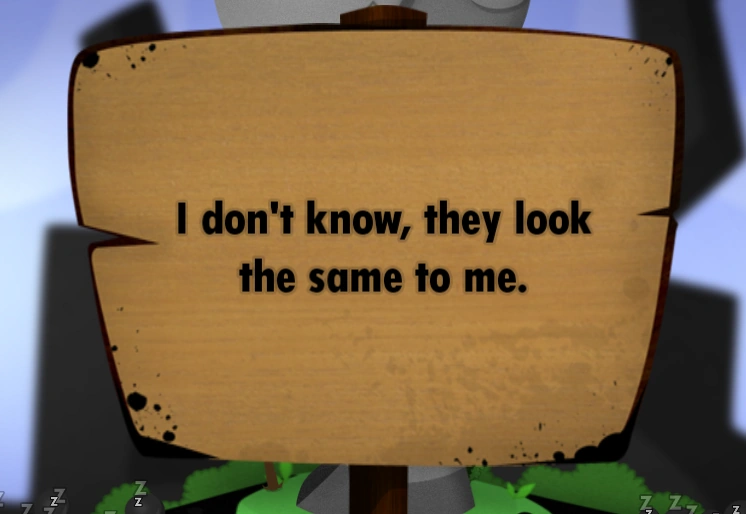
Kyle Gabler and Ron Carmel formed 2D Boy, who made the sequel World of Goo three years later. World of Goo was what got the ball rolling on indie gamedev, and was an important early hit on the Wii’s digital distribution platform Wiiware and iOS. Versions of World of Goo, now called World of Goo Remastered, can be bought for a variety of platforms today. World of Goo was surprisingly popular, and in its Remastered form looks great even now. It spawned the “Sign Painter” meme that went around for a few years.
One of the many messages from the first game’s unseen breakout character
Kyle Gabler and some other friends then formed Tomorrow Corporation, producing the ungameLittle Inferno, and the unique programming games Human Resource Machine and 7 Billion Humans, which I can tell you from experience are all worth playing. But 2D Boy never made another game, until now, or more accurately, until soon.
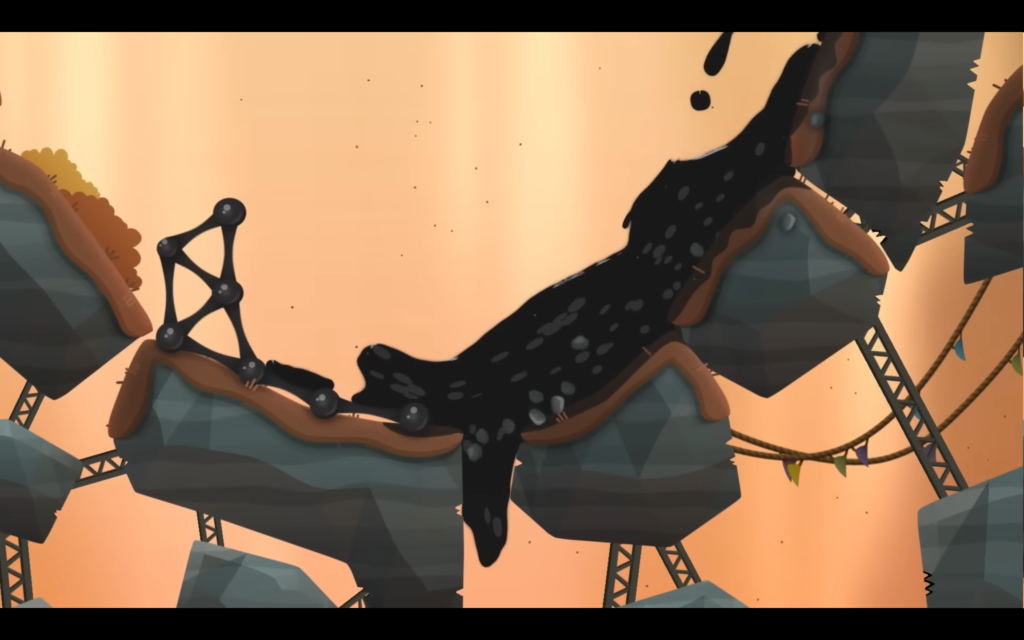
World of Goo includes a version of Tower of Goo, but also expands upon the theme, and tells a number of very weird stories along the way. If you’re not familiar with the series, using an easy drag-and-place interface, you take goo balls, little black spheres with eyes, and link them together to make physics structures, akin to the ones in the old SodaConstructor web applet, in order to meet various objectives.
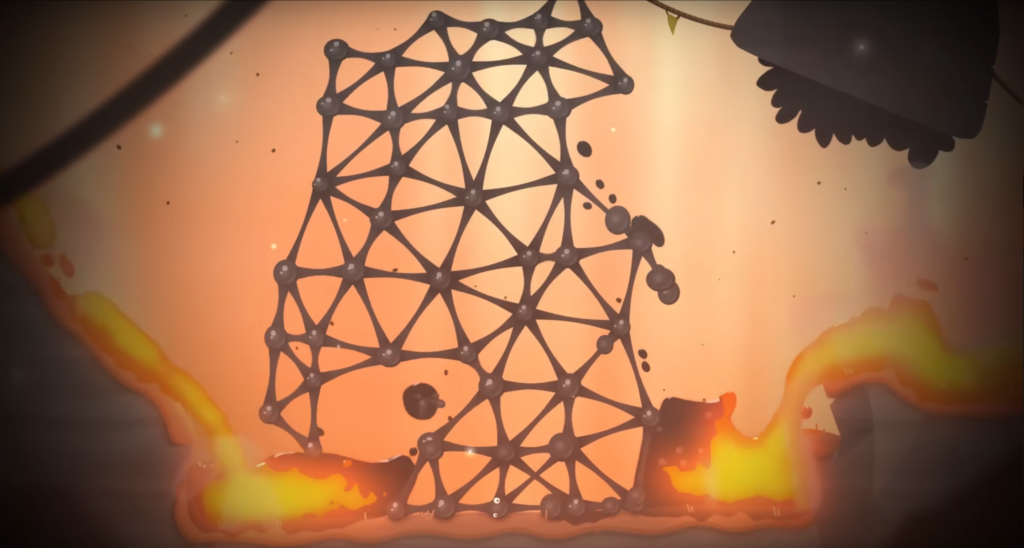
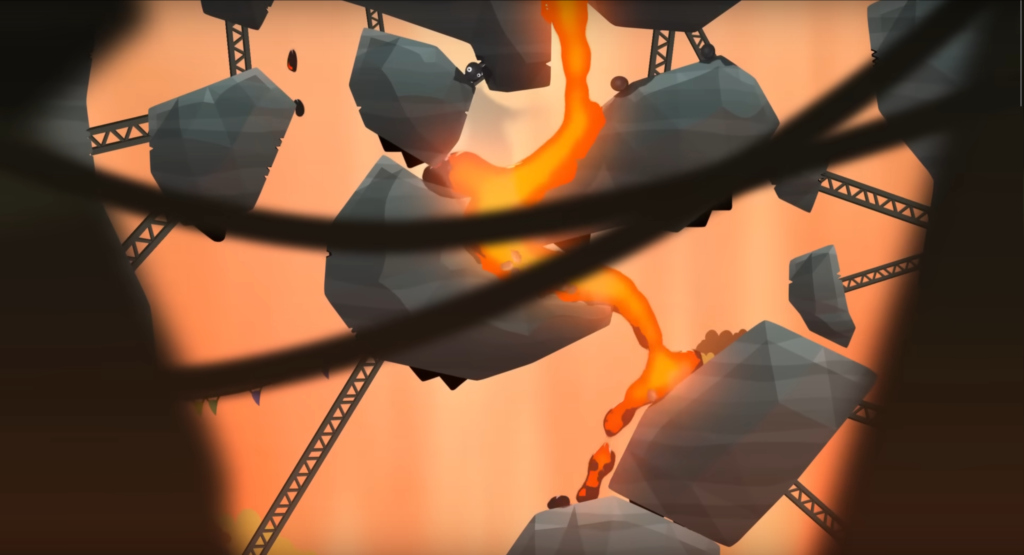
All we know so far about the new game is what’s shown in the new trailer, which is where the screenshots in this post come from. It looks really promising, with the physics model now updated to include fluid effects. Game physics have come along very far since the first games were made, it’ll be interesting to see where they take it today, as well as what the Sign Painter has been up to since he was last seen in Little Inferno.
We love it when we find weird and unique indie games to tell you all about! Our alien friends to the left herald these occasions.
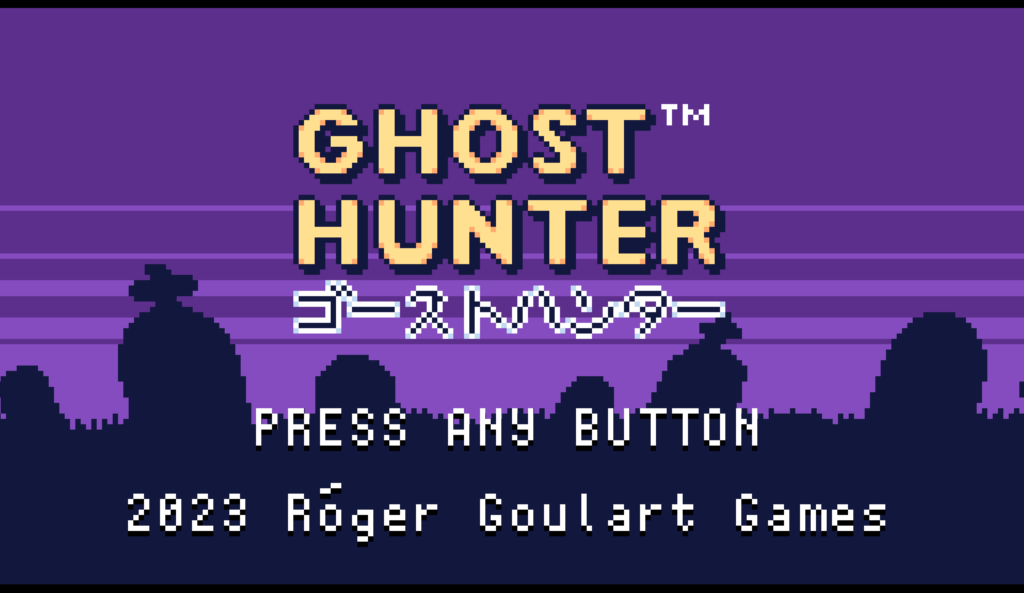
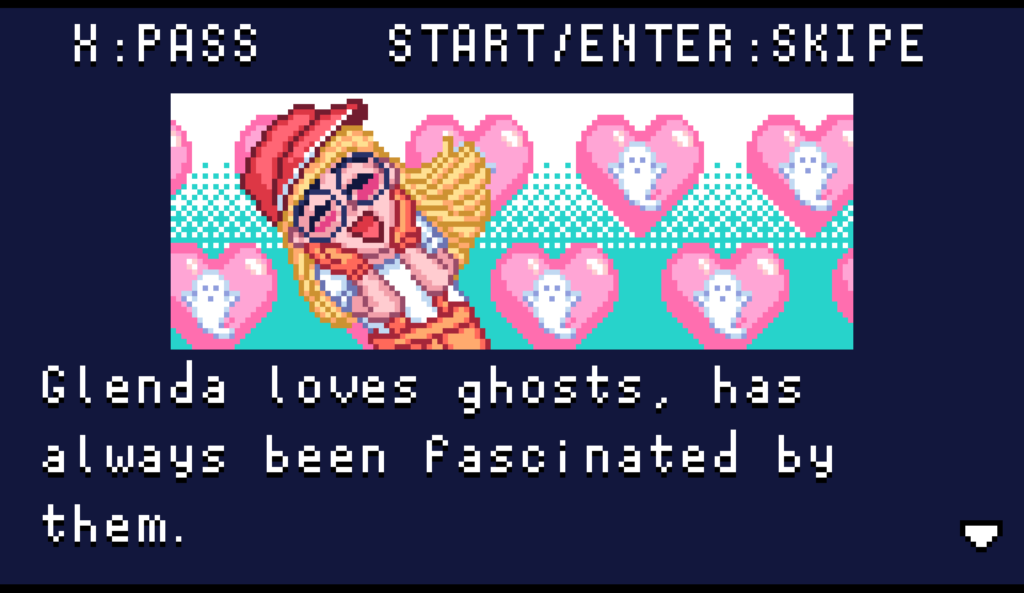
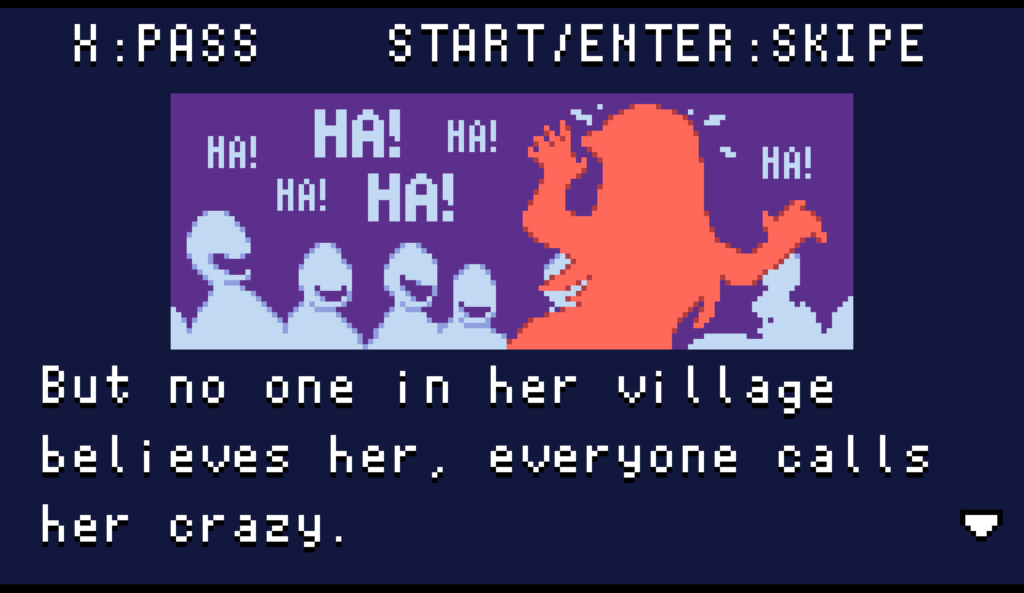
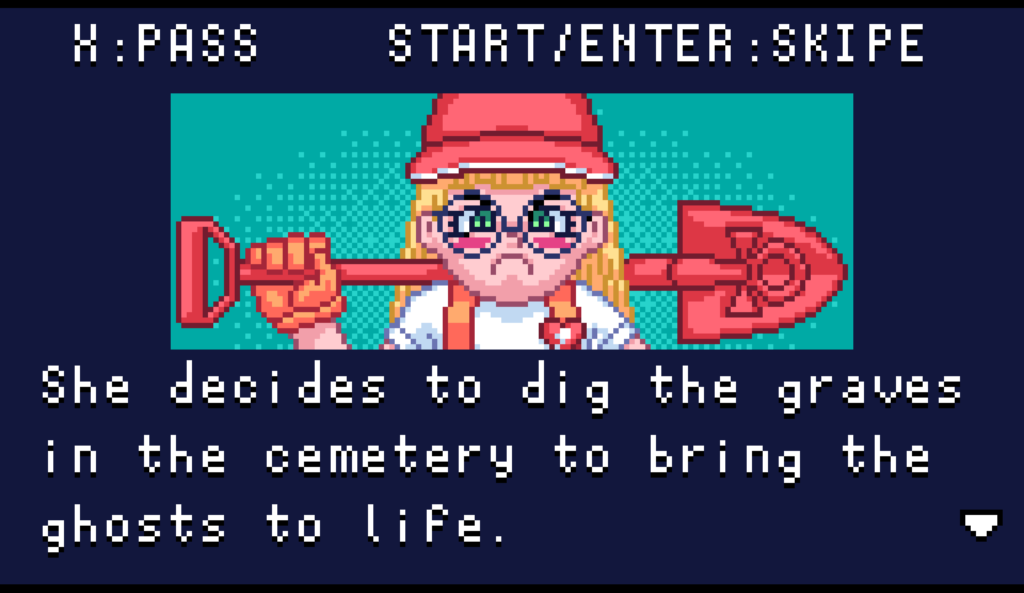
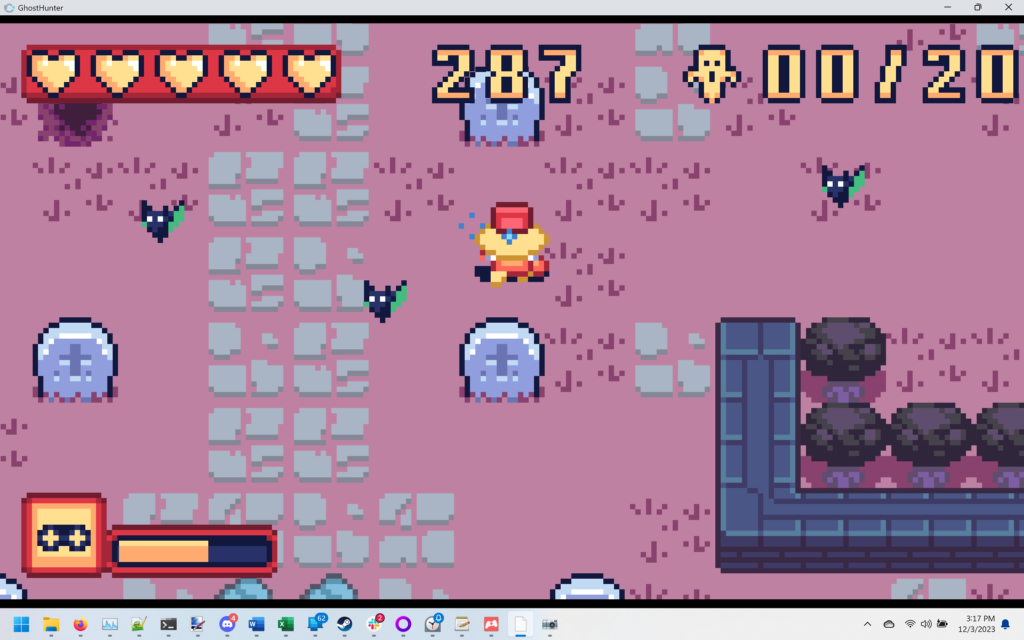
Another game jam entry, Róger Goulart’s Ghost Hunter is a short and silly game about a young lady who loves ghosts, maybe a bit more than she should.
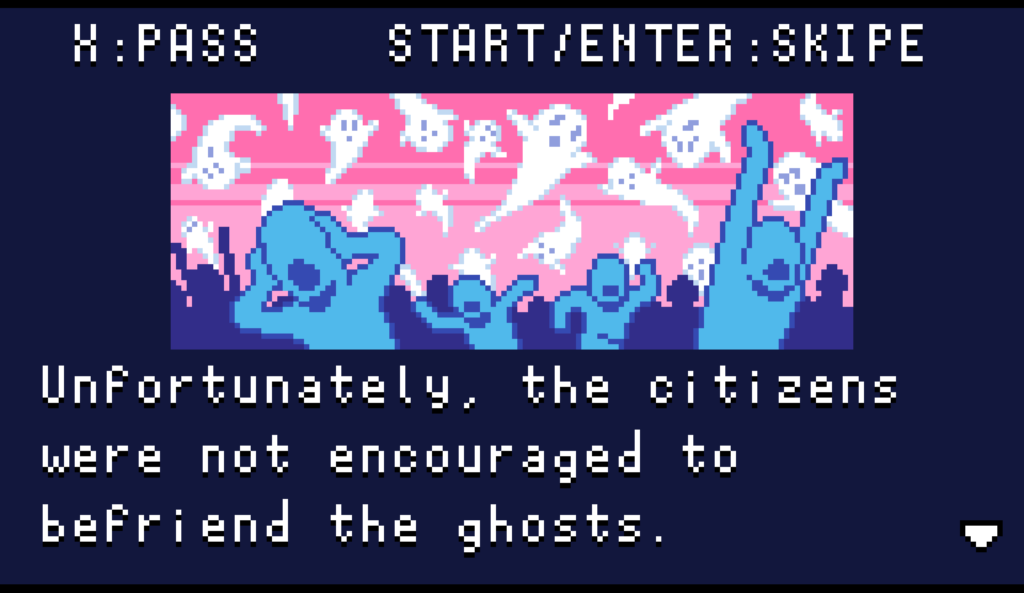
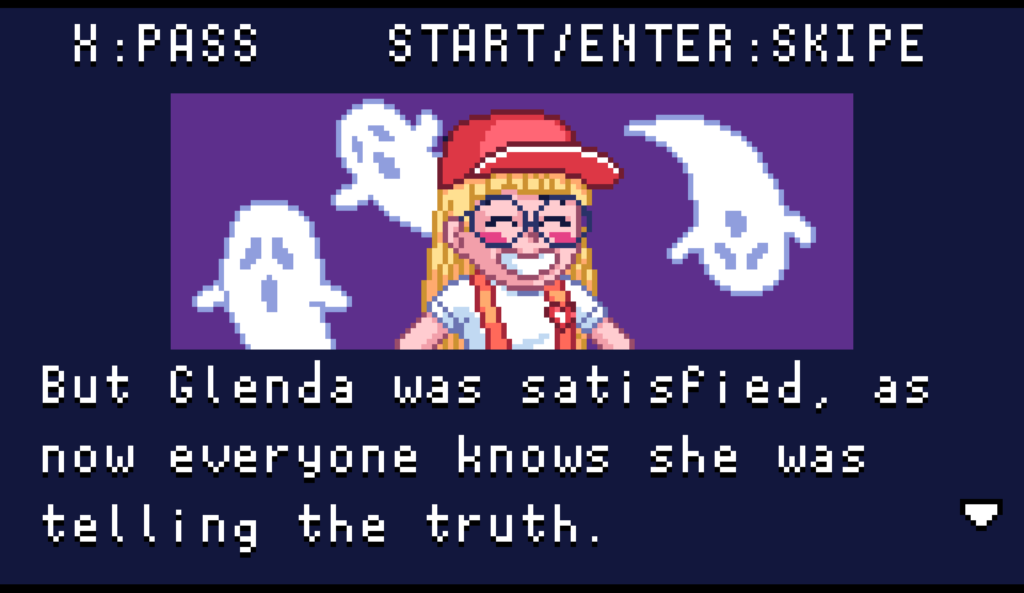
Here are some opening screens:
Take a moment to enjoy this screen.They may have a point.And a new unholy quest begins.
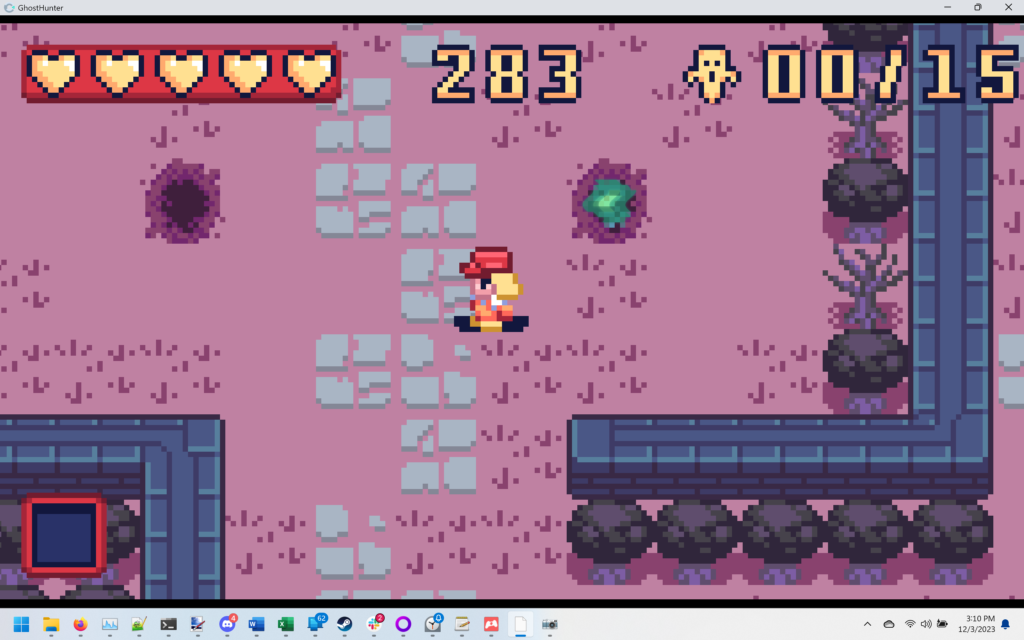
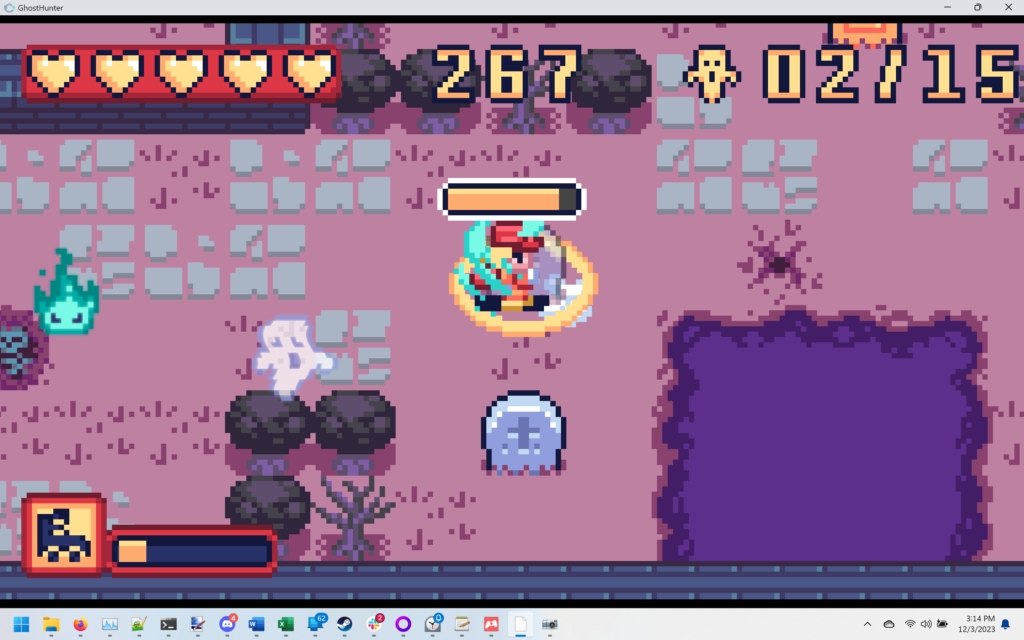
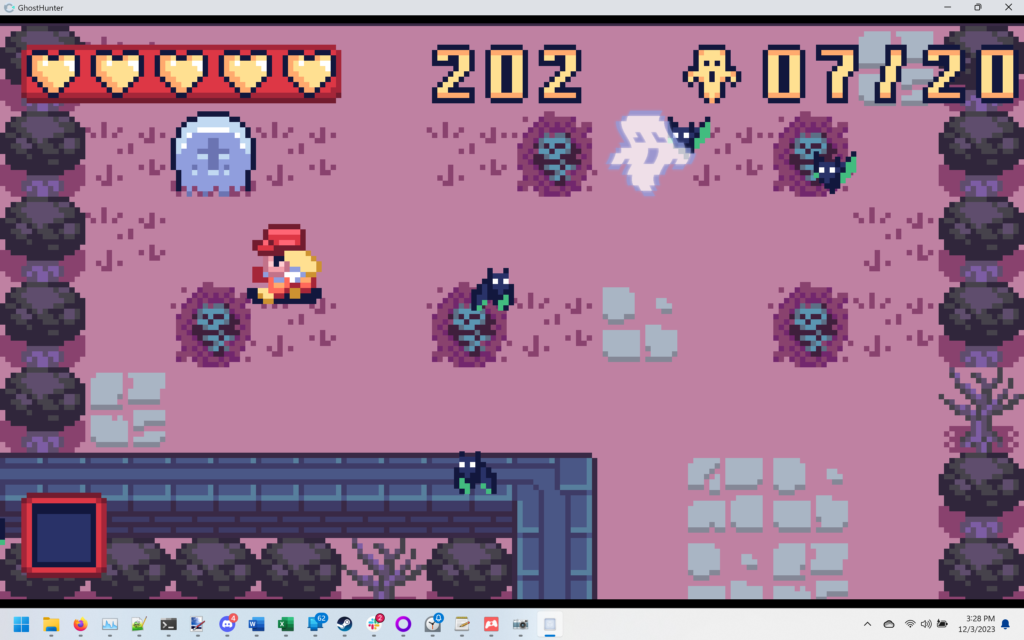
Most of it is a kind of guessing game. Each of three cemeteries has tombstones arranged around it. You go to each one and dig it up with your Shovel of Resurrection. If it’s a friendly ghost, then it emerges and you get one credit towards your quota. If it’s a cursed tomb however, an angry ghost comes out and chases you for a bit. If it catches you, you take a point of damage.
How do you tell the difference? Well, usually you can’t. But there are these orange tombstones placed around each level, and when you dig one of those up you get a random powerup for a short time. (Usually: once in a while you’ll find an angry ghost in one instead, but that’s rare.) One of the powerups shows you whether a tomb has a friendly or angry spirit in store. Other powerups slow angry ghosts, disguise you so they don’t chase you, refill your health or make you walk fast for a short time.
Level 2 has periodically appearing sludge ghosts that must be destroyed by digging up waterspouts to block them. Level 3 has annoying bat enemies that must be avoided, and a higher quota than the other levels.
My tips:
When you stop digging up a grave in the middle of the process, the digging you did before isn’t forgotten. You can sneak in a little extra digging when running from angry ghosts this way.
You tend to lose a whole letter grade at the end of a level from taking damage, so be safe.
The best powerup is the one that reveals the cursed graves. When you get one, I suggest just wandering around for a bit, looking for the mean ghosts, and remembering where they are so you can dig up friends in piece.
Spoilers for the ending are after the download link!
Owner of Game Wisdom with more than a decade of experience writing and talking about game design and the industry. I’m also the author of the “Game Design Deep Dive” series and “20 Essential Games to Study”
A long time ago, there was a radio series called The Hitchhiker’s Guide to the Galaxy. It was about a man named Arthur Dent, who with the aid of his friend Ford Prefect managed to escape from the Earth when it was demolished to make way for a hyperspace bypass, after which he went to have increasingly weird and ridiculous adventures.
At the center of the story was an electronic book named, like the radio series itself, The Hitchhiker’s Guide to the Galaxy, which was like an iPhone and Wikipedia combined into one device, only Douglas Adams somehow thought of them in 1978, which was the same year Space Invaders was being manufactured. It was written by a brilliantly funny man named Douglas Adams. Adams also wrote some scripts for Doctor Who, and some other books, including The Meaning of Liff, Last Chance to See and Dirk Gently’s Holistic Detective Agency.
Before he wrote those other books though, he wrote some more about the Hitchhiker’s Guide. He wrote a TV series based on the radio series. There was also a vinyl recording, which was simply called an album then because CDs hadn’t been invented yet. Each of these versions of The Hitchhiker’s Guide to the Galaxy has substantial differences from all the others. Then Douglas Adams met Steve Meretzky, and the two of them did a computer game version of The Hitchhiker’s Guide to the Galaxy, itself with major differences from the other versions.
They made the game for a company called Infocom. Infocom was one of the first great successes in computer gaming. They wrote what they called interactive fiction, but could more generally be called text adventures. They presented the world of the game as text on a screen, like you were reading a book, and you expressed what you wanted the protagonist character to do by typing commands. Sort of like those things some inaccurately call AIs, and are more properly called Large Language Models, or LLMs, except a person actually wrote everything that can happen, and there’s a point to them.
The Hitchhiker’s Guide to the Galaxy was the second best-selling game that Infocom ever did, after Zork. It sold over a million copies, a gigantic success at the time, and still pretty good today. So everyone was keen to do a second Hitchhiker’s Guide game. The game even says, at the end, that an incredible adventure was about to happen, but you’d have to buy the next game to find out what it was.
Time passed….
Infocom tried to get Douglas Adams to create a sequel. He did co-write Bureaucracy with the staff of Infocom, a lesser game with some brilliant ideas in it. Later he wrote Starship Titanic for a different company, which was fairly well-received. Douglas Adams was, as said, a brilliant person, but his was a whimsical and capricious intelligence, fixating on things that seized its fancy, but that made it difficult to focus on mundanities.
Infocom’s games sold steadily fewer copies as time passed. Eventually, they were bought by Activision, and functionally shut down. They made some Zork games themselves, but eventually Activision forgot that Zork or Infocom even existed.
Some more time passed….
Douglas Adams wrote some more Hitchhiker’s books. At the time there were already two, The Restaurant at the End of the Universe and Life, The Universe and Everything. He soon followed it up with So Long And Thanks For All the Fish, and then Mostly Harmless.
He never did write that sequel to the computer Hitchhiker’s game. Then, sadly, Douglas Adams, who in Last Chance to See wrote movingly about animals on the edge of extinction, went extinct himself, dying on May 11, 2001.
Time continued to pass. Disney, the least-suited company for such a thing, made a big movie version of The Hitchhiker’s Guide to the Galaxy. It wasn’t too bad, all told, but it wasn’t Disney-level popular, probably because it didn’t have space magicians or superheroes in it.
Lots of people, not the least of which his old friends at Infocom, were saddened that Adams never followed up with that second Guide game.
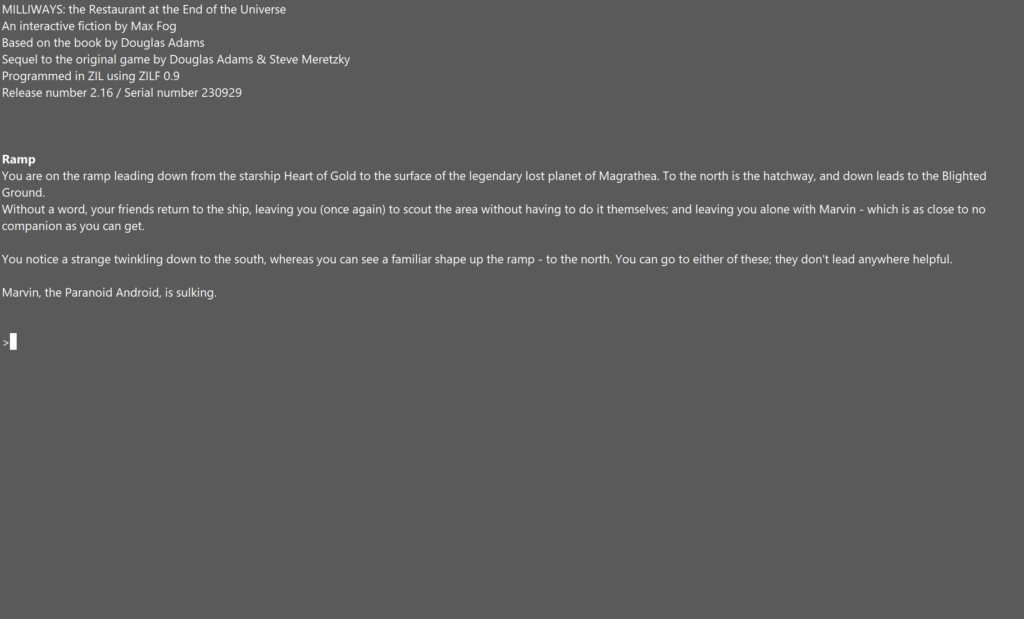
Then in 2023, a person with the nom de net of Max Fox wrote their own version of what a sequel to The Hitchhiker’s Guide to the Galaxy might have been. It’s called Milliways: The Restaurant at the End of the Universe.
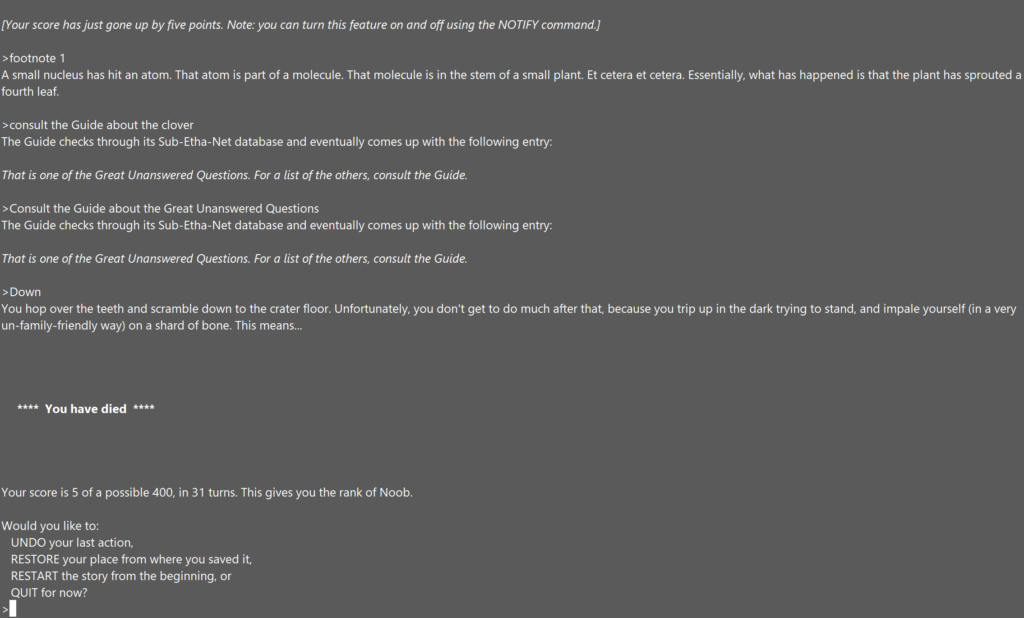
It adheres to older trends in adventure gaming: you die sometimes just from trying things out. Puzzle solutions can be a bit cryptic. But it also has a simulation of Infocom’s “Invisiclues” built in, where you can pick the area you’re in and problem you’re having from lists and get a series of more specific hints for getting past your problem area, which is still a pretty good way to provide play help without giving away the whole puzzle like a walkthrough might.
No, it isn’t the sequel that Douglas Adams would have written. But that thing will never be. It’s possible that someday a different sequel will be written that matches Douglas Adams’s voice a little better. But in the meantime, we have one idea of what it could have been like.
It doesn’t make it a happier galaxy to live in. But it does make it marginally less sad, and that’s the best we can hope for.
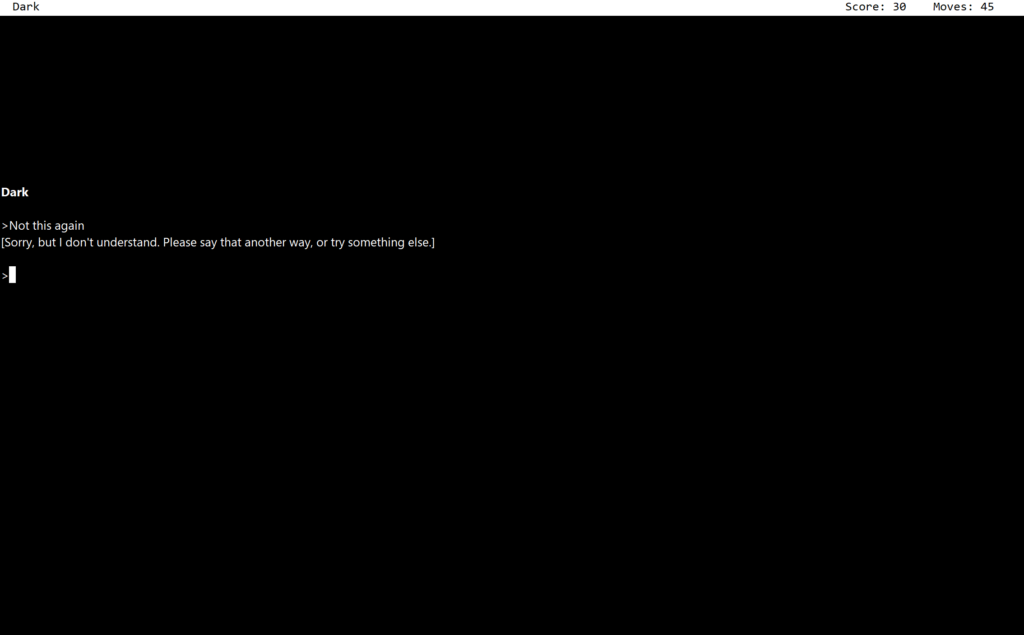
(Note: following images have spoilers for the very early phase of the game. If you want to play this game, you’ll need a program that can play Z-machine files. I suggest Windows Frotz.)
The beginning, after the endingAn unsettling landscapeFive points, and a sudden demise
Events often resist efforts to package them up and stamp a Convenient Narrative on them, but it’s really tempting to me to say the history of the internet in this era is that of many people rejecting the hegemony of large corporations and doing things for themselves.
Social media has seen the rejection of Twitter, for reasons I really don’t want to hash out again here, and while some ran directly to Threads or Bluesky, a good number realized it was eventually just going to happen all over again, and that helped to increase the update of open source, federated work-alike Mastodon.
Another piece of this narrative vase that we might be able to fit into place, with creative thinking and a whole lot of glue, is the downfall of Unity and how it helped the effort to create the free open source gamedev replacement Godot. And lo, after a fairly recent release of 4.0, yesterday they already released 4.2. The changelog is here. Here is GDQuest’s rundown of the changes (22 minutes), and here are Lukky’s five favorite new features (3m), which are:
FSR 2.0 support (upscaling higher resolution output from lower resolution rendering)
Color-coding of folders in the file hierarchy within Godot’s UI
The ability to “bake 2D navmeshes”
When resizing 3D objects, the UI no longer resizes symmetrically around the object’s origin by default, but instead only the side you’re changing is modified
And, within the code editor, you can now create special comments to define a code region, which can be independently collapsed to reduce clutter, and expanded when you need access to its contents. And the Ctrl-K Comment Out feature works better now.
To get back to talking about software philosophy…. There are unique problems with using fully open tools to create games. Console manufacturer devtools are still locked in a mode where the maker hands you proprietary libraries, which they are unwilling to make freely available because of their economic desire to preserve trade secrets and control their platform. Most developers get around this by going through a third party, who has independently created a system of working between the open development framework and the publisher’s libraries, and then licenses it to a studio so they can get their project working on consumer hardware.
Godot is subject to this limitation, with 4.2 being no exception. But there is a sense, with it, that it’s the brightest hope for free and open game development going right now. They don’t ask for any license fees, they don’t try to count how many installs you have and they don’t track user behavior. But because they don’t try to claw in income through direct means, fair or foul, they must survive off of contributions. If you find Godot useful to your work, please consider using their donation link and signing up for an entirely voluntary plan.