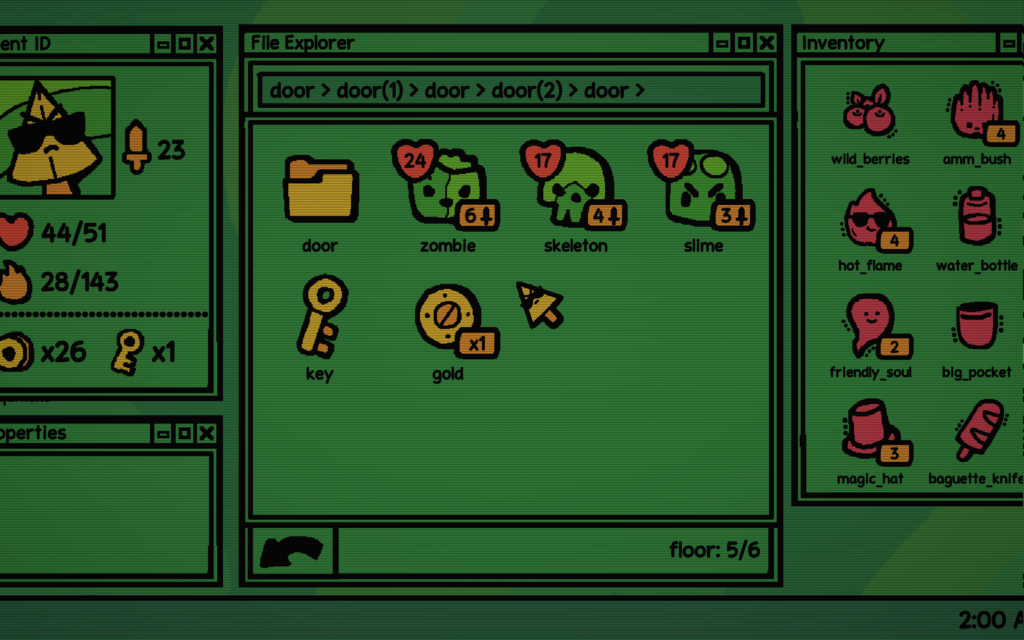
Folder Dungeon, on itch.io, is a short and not-too-difficult game where an adventuring cursor has to dig through the folder structure of a hard drive to find an important file. Each window is a room of the dungeon; entering a Door folder takes you to another room down. You can go back the way you came using the back arrow icon at the bottom of the window.
In addition to doors, rooms can contain items, which can be picked up by clicking on them. Gold is among the items, the value of the coin indicated by a number. Some items cost money; if they do, they’ll have a coin and a number on the item. Some items, notably Health Potions and Ice Cream, take affect immediately; they never enter your inventory, but work immediately on your stats whether you needed it or not.
And, some of the things in rooms are monsters. If you do something other than attack a monster by clicking on it, then every monster in the room has a percentage chance to attack you; if you attack a monster, then it always counter-attacks if it survived the attack, but other monsters in the room don’t get the chance to attack.
Somewhere in each folder structure is an Exit icon. When you find it, you can only enter it once all the monsters in its room have been defeated. You don’t have to defeat all the monsters in a room to leave it, but it does give the monsters in the room a chance to attack you.
The most interesting play mechanic is, every action you take generates “heat.” You can only take so much heat. If heat reaches your maximum capacity, you take one damage per action until you leave the level (which resets heat to 0) or you lower your heat by collecting an Ice Cream.
Note, as you can see in the above screenshot, there’s a display bug in the current version that cuts off the left and right sides of the screen. Or is it a bug? It didn’t actually prevent me from playing? Maybe it’s an aesthetic choice? Anyway, I managed to finish the game on my first attempt, but it was close.
It’s not a command to delete temp files as root on a Unix-styled system! It’s a fun and free little game over at itch.io!
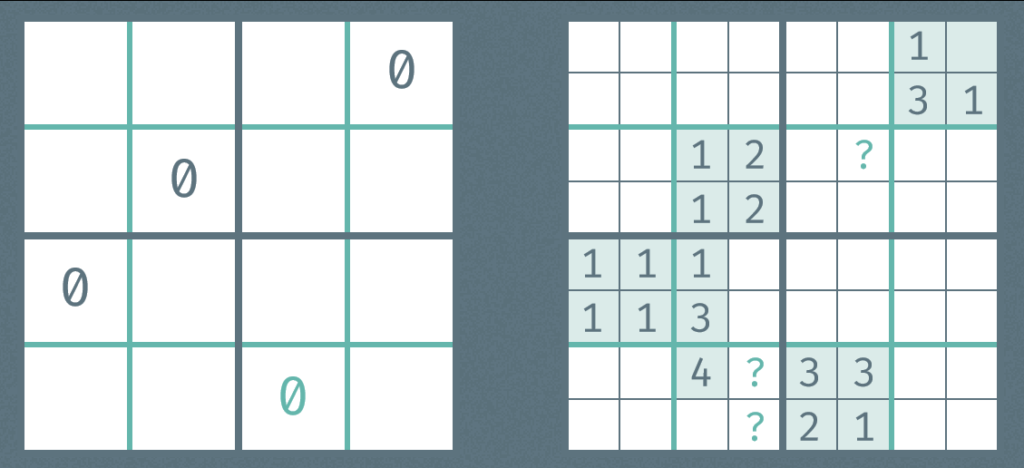
The board on the left is a Sudoku-like game; the board on the right is Minesweeper. The two boards match: the numbers on the Sudoku board are the number of mines in the matching area of the Minesweeper game. You use each to help you solve the other!
It’s not perfect, mind you. There’s currently no way to mark a square that definitely has a mine in it, just the question marks you see in the right-hand board above. There are still cases, familiar to players of standard Minesweeper, where you end up having to guess. And don’t click the “change size” button if you care about the current game: it doesn’t make the boards larger, it starts a new game with bigger Minesweeper and Sudoku boards!
Still though, I have to give creator Rianna Suen props for a cool idea! I found this through the “map obelisk” area during Roguelike Celebration, which is a pretty cool place to find things beloved of clever people!
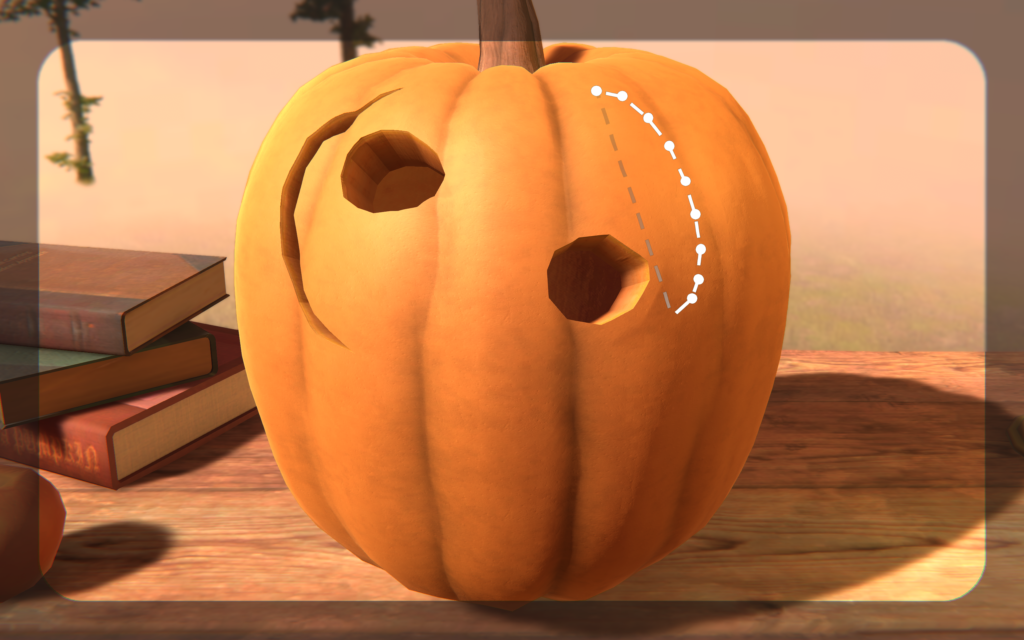
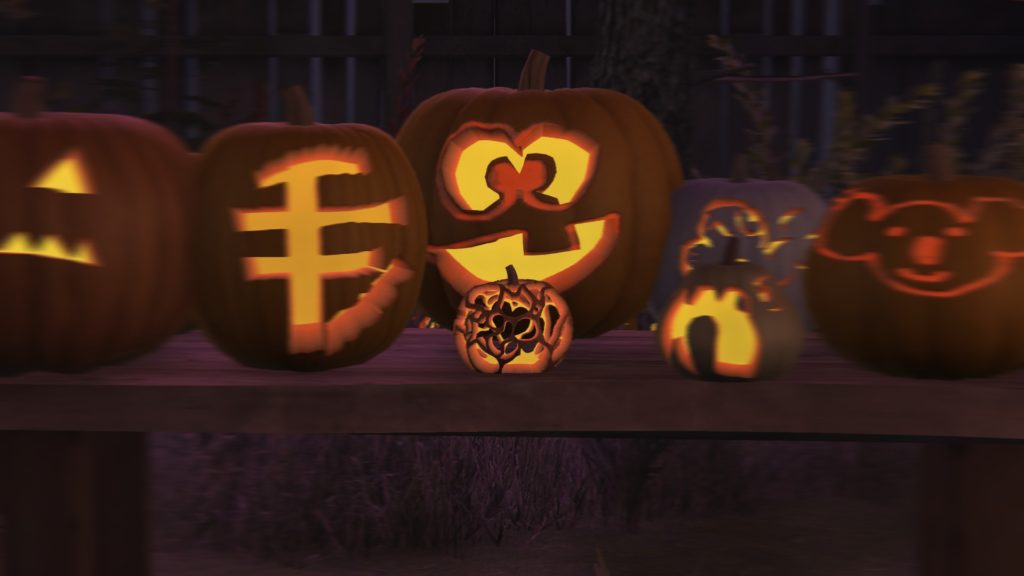
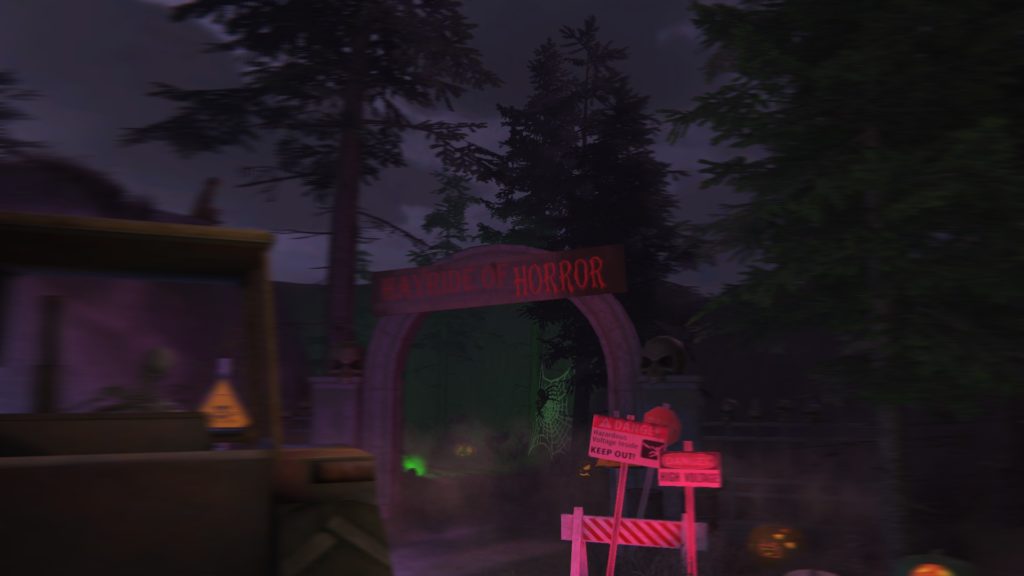
Every year, the creator of A Short Hike turns on the servers for a pumpkin-carving game. This year he plans to keep them up until about a week after Halloween, so enjoy it while/when/if you can!
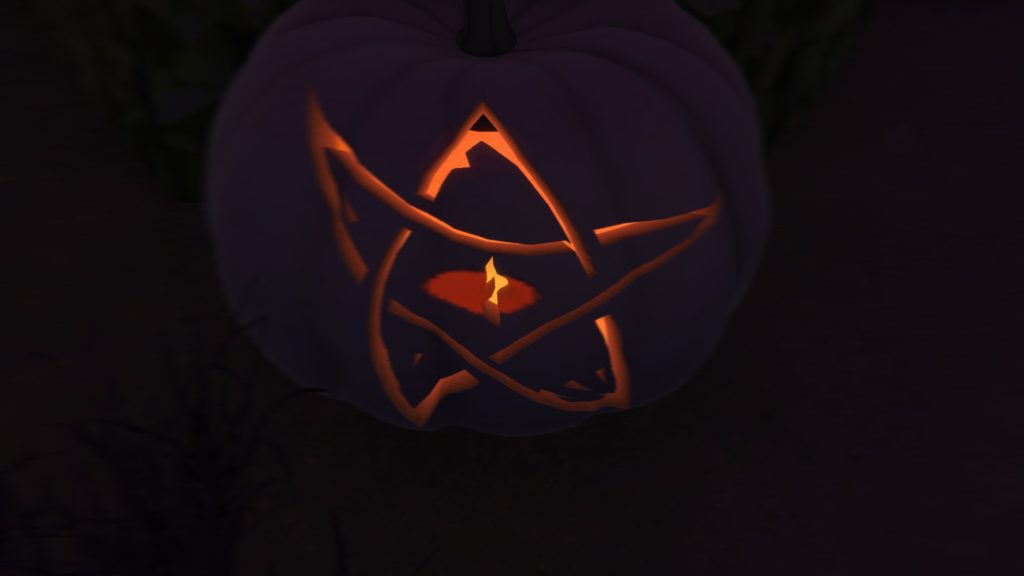
The carving interface is easy to use, although it does result in a glitch that has to be undone sometimes. Keep trying though!There’s over 2,000 pumpkins to be seen so far, with the ability to favorite ones you like and award the best ones badges!There’s more than just pumpkins to see, you can go on a hayride, explore a maze and find interesting spots too!Nice Elder Sign!
It’s a quick and fun free game on itch.io! It was made for a game jam in 48 hours, with an updated build released a while after. It’s only been out for three months but it’s already become pretty popular, with its fun graphics and gameplay and appropriately frenetic music. It’s a good thing to mess around with for Spooky Month.
You’re the skeleton lord in charge of a five-level dungeon, but a knight has invaded your domain and means to destroy you! Rally your lollygagging skeleton minions, to both lead them to the safety of the downstairs and destroy as many of the gem-laden pots on each level as you can, before the knight gets to them first and smashes them to raise its experience level! If you can’t play it (that Windows thing, argh), here’s a playthrough on Youtube . (9 1/2 minutes)
You start each floor with one skeleton near the upstairs. The knight will arrive in just a few seconds, so use the mouse pointer to get it the hell away and guide it to other skeletons, who are just bumbling around having skeleton thoughts, and alert them! The skeletons with the yellow eyes are active, and will try to reach your pointer.
You’ll quickly discover that skeletons aren’t very smart (no brain, you see), and will often get caught up on walls. If the knight is close behind, you might have to abandon some. The skellies also stumble sometimes, like undead Pikmin. If you can get them to the downstairs, all of the active skeletons that touch it will leave the level and join your horde at the bottom of the dungeon, all but one. The last active skeleton cannot leave the level until all the other skeletons have evacuated and all the loot is gone.
Two things increase the knight’s level: killing skeletons and getting the gems out of smashed jars. If you can get a skeleton to run into a jar first, it’ll break and the gems inside will probably disappear before the knight can get to them! But if the knight is nearby it might grab the gems before they vanish!
The HUD has a lot of information that can help you out. The red arrow on the left side points the way to the downstairs. The left side also tells you how many loot jars and skeletons (“enemies”) are left on the level; both numbers must reach zero, either because of your actions or the knight’s, to move to the next floor. The lower-right corner has a “Knight Cam” that shows you what the knight is up to. It doesn’t tell you its location in the dungeon, but it can still be helpful in figuring out what it’s doing.
Clicking the mouse button will cause all of the active skeletons to jump, dodging any attacks the knight might make until they land again. (Be careful not to click outside the window!) The knight can attack on the move, and smashing a skeleton to bits doesn’t even slow it down. You can’t attack the Knight until the end of the dungeon, so don’t try to gang up on it. The knight also snatches up gems just by being near them, for it has one of those auto-pickup features. It sucks.
Fortunately, the knight isn’t any smarter than the skeletons, and it tends to go after the target that’s closest to it. You can even see its AI: its target path is shown onscreen as a thin line. It changes color, from white to yellow to orange, as it gets closer to whatever it wants to destroy.
If you’re having a bad game and want to start over, you can press F2 to do so. There is no “Are you sure?” prompt and it happens instantly, so be careful with that key.
The knight isn’t done until every skeleton is gone and every loot jar is smashed. It always pathfinds to the closest thing to break, so you can keep it distracted by leaving a jar in an out-of-the-way place for it to waste time running to.
You can see the knight’s level at the bottom of the screen, with a red bar indicating how close it is to gaining an experience level. Every skeleton you escape with is 10 HP off the knight at the end. If you can get to the end with the knight at level 9 or less you have a good chance of winning.
Every time Homestar Runner releases something new, it’s cause for celebration. They’ve been doing this for 23 years, and that’s not counting the original Mario Paint thing with the characters they made, long ago, that kicked off their merry legacy. Even though the days of them updating weekly and Strong Bad popping off sarcastic answers to emails left, right and center are long gone, every few months another new thing comes out of the Brothers Chaps’ content grinder, and we love that kind of sausage.
Of course making free stuff doesn’t pay the bills, and Adobe Creative Cloud is hella expensive these days, so much of their more recent stüf takes the form of little paid projects, like the Trogdor board game. So it is with this, a quite nifty collection of three point-and-click adventures. One of them came from their website long ago, but it’s now remade in that Unity thingy. it’s joined by two completely new games, and the three of them have better animation and full voice acting now! All are full of the wit and fun that Homestar Runner-branded contentTM has long been known for.
I managed to finish it in a night, but it was a very entertaining night! This thing is packed full of more jokes and character even than the Telltale series they did back in the Wii days. It’s amazing how many obscure interactions have unique voice lines, so be sure to try everything, and using everything on everything else.
Dangeresque: The Roomisode Triungulate, on Steam and itch.io (Windows and Mac, $8)
Dani Bunten’s classic economic simulation M.U.L.E. is one of the all-time greats, still fairly obscure even among people who know and talk about video and computer games, but hugely influential. Wikipedia tells us that Shigeru Miyamoto considers it an influence on the Pikmin games (although other than in theme I really don’t see it).
There are three current ways to play M.U.L.E. One is Planet M.U.L.E., an official port sponsored by Ozark Softscape, which is several years old, and I was certain I had posted here about before. It’s a proper update with new graphics and a lot of character. A thing about M.U.L.E. is that the original versions were intricately designed in a lot of ways, not just in game rules but the little details. The way the phase ending noise speeds up, the exact difficulty of catching a Wampus, the speeds with which players walk through terrain, the many details of auctions, even the time it takes to outfit a mule and leave/enter town, it’s all finely calculated. You can tell that Dani cared deeply about the game, and it’s a polished as any game I’ve ever seen, and that’s the old 8-bit computer versions. Planet M.U.L.E. isn’t as polished, but it’s still very nice, and you can tell its makers thought hard about it. It offers both local and online play.
Sadly, Planet M.U.L.E. seems to be on life support. While games can still be played, and the automated best player posts still go up on its blog, it’s not gotten an update in years, and it’s even possible they’ve lost the source code.
One legacy of Planet M.U.L.E. is a wonderful Youtube video they made that explains the game and how to play. It’s a great introduction:
M.U.L.E. Returns was a mobile port. It has a website, that’s still around, but apparently none of those versions are available. It’s got a page for a Steam version, but it’s not available despite the original game being released in 2013. The site claims it may come back some day, but it cannot be purchased currently.
Then there’s the new roboanimal on the block, M.U.L.E. Online, which is on itch.io for a very reasonable $5. It has the blessing of Ozark Softscape, and is a near match for the Atari 800 version. You won’t get any improved graphics or sound here, but you will get a game that copies the original very closely, which is perfectly fine in my opinion. It offers local single and multiplayer, as well as internet-based online play. They also promote a board game version of M.U.L.E, which I’ve long wanted to try!
Or there’s emulation. Back in college I played M.U.L.E. with roommates via an Atari 800 emulator burnt to a Dreamcast disk, a great way to play if you have the system, controllers and means to construct the disk because the Dreamcast has four controller ports. (M.U.L.E. is by far at its best when you have four people playing.) The Commdore 64 and IBM PC versions were also made by Dani and the others at Ozark Softscape. The C64 port is close to the Atari 8-bit version. I don’t know about the DOS PC version. I can say that the NES version made by Mindscape is a terrible version, while sadly possibly the most-played because of the great popularity of the NES. If you tried that version and wondered what the fuss is about, you should seek out the Atari 8-bit version and play it before writing off the game entirely.
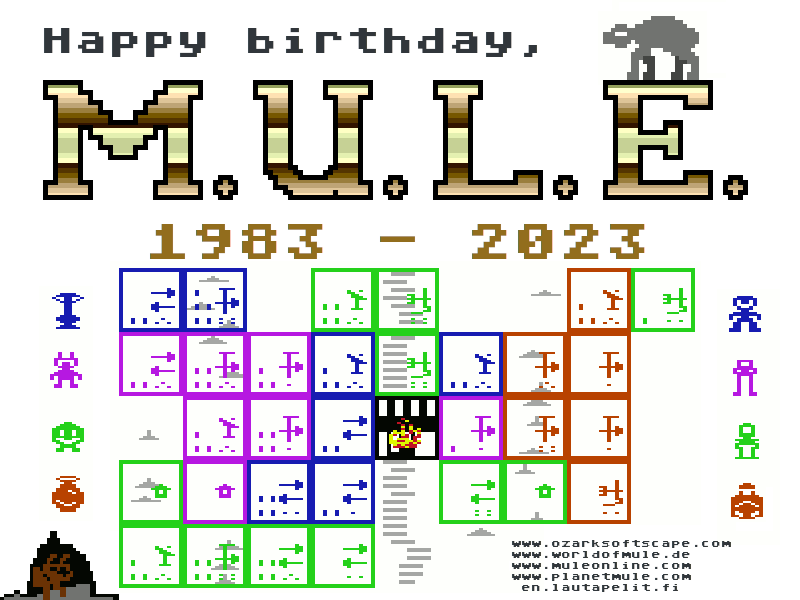
World Of Mule is a fansite dedicated to M.U.L.E. in all its forms. For its 40th anniversary, they’ve published a long retrospective on the game, its history and the new versions. (That’s where the above image comes from.) It’s a fitting tribute to one of the most influential computer games ever made.
Long ago, on primordial wiki-like site everything2.com, I personally wrote a long examination and play guide to M.U.L.E. While my writing style back then was pretty crazy, I think the information holds up. If you have an interest, you may want to take a look.
Ski-Free is a beloved part of casual gaming from the days before it was called that, before even internet use was widespread. Distributed as part of Microsoft Entertainment Pack 3, it predates even Windows 95, and even Windows 3.1! It goes all the way back to Windows 3.0. Checking up on the game in Wikipedia reveals that a version of it is included as an easter egg in current Microsoft Edge (go to edge://surf in that browser, if for some reason you use it).
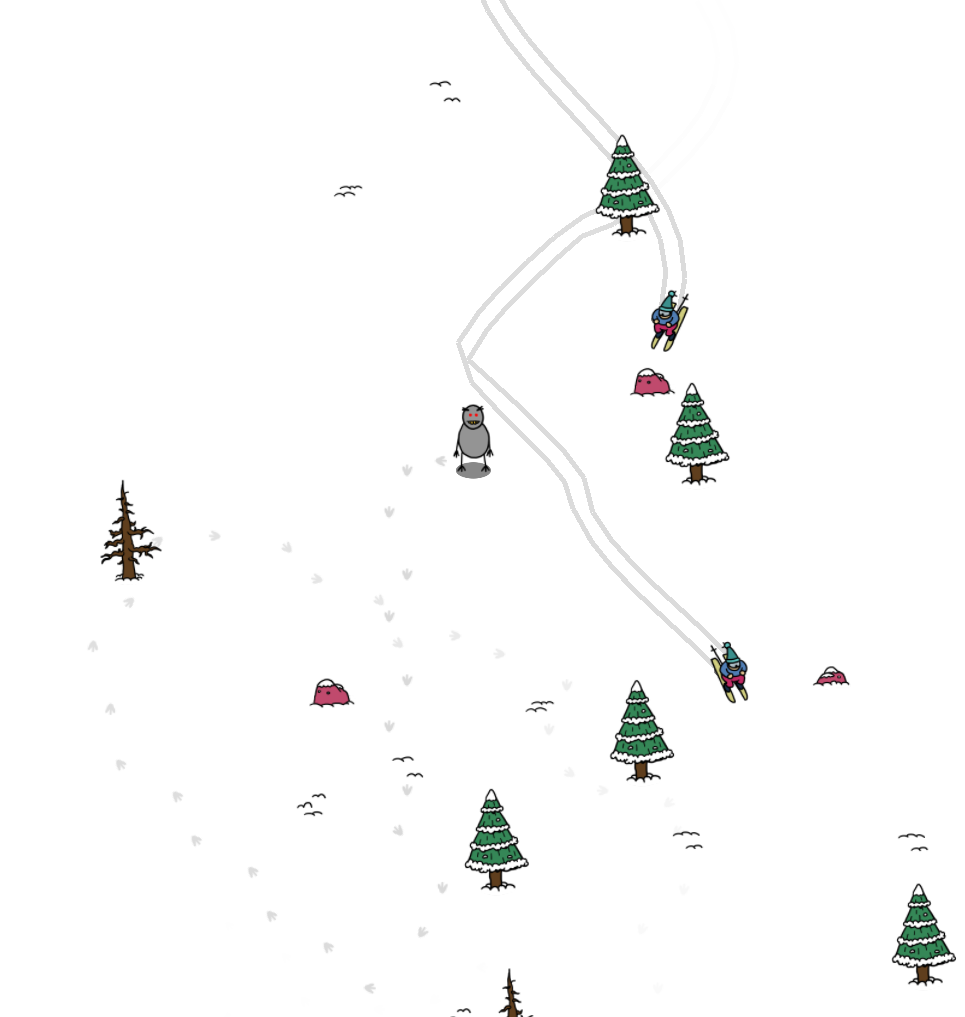
One of the most remembered things about Ski Free is, if you get to the end of the course and keep going, eventually a yeti will chase your skiier down and eat him. A submission to GMTK 2023 gamejam, Yeti Upsetti is Ski Free in reverse. You play as the yeti, and try to chase down skiiers. You can run in all directions, but even so it’s very difficult to catch any of those elusive sportspeople. They’re very good at avoiding your abominable grasp. The only strategy that has worked for me at all is trying to chase them into obstacles, which gives you two short seconds to grab them for a monsterly meal before they get back on their skiis and coast away. Except to be told many times that you’ve died of starvation, and that you’re a terrible yeti. Which, fair, I don’t live anywhere near a snow-covered mountainside in real life.
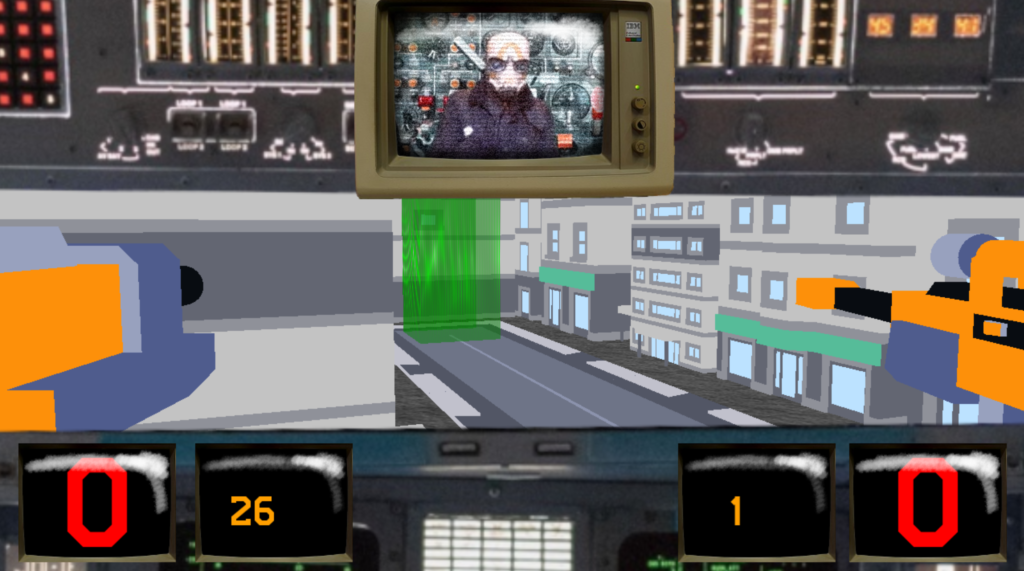
This is a silly, free browser-playable game, although one with a basic 3D engine. Use the mouse and cursor keys (or WASD, if that’s how you roll) to maneuver your giant walker mech through a city’s streets without causing too much property damage. The parking spots are represented as green pillars that extend far up into the sky. Finding just one isn’t enough; there’s a whole sequence you have to travel to, as each is unsuitable for different reasons, e.g., too far from the ammo dump, only for compacts, or parking is too expensive.
A lot of the fun is Gorzog’s voice-acted commentary on his parking adventure, so be sure to have the sound up!
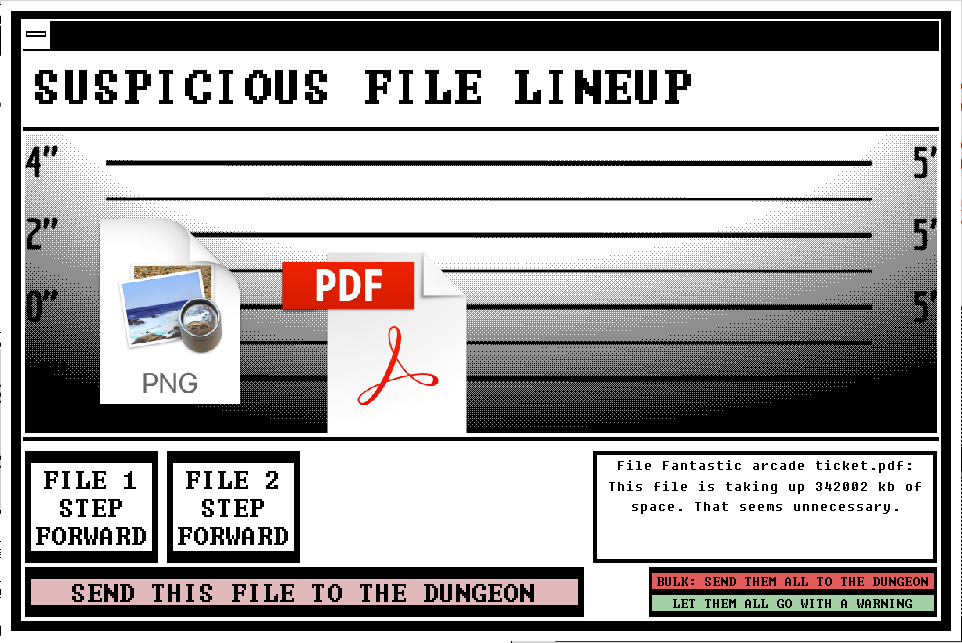
alienmelon is Nathalie Lawhead, a desktop toy creator who’s made a lot of cool things, like the Electric Zine Maker and Cyberpet Graveyard. Back in 2021 she made this great roundup of her own desktop toy work, as well as that of others. It was a whole field of computer software, not really games, that faded into obscurity right around the time that social media, that bane of all good internet things, started becoming big. Desktop toys were often distributed on personal websites, and Facebook and Twitter tend to muscle out those kinds of places.
The article lists all of these, but with that it’s just getting started, linking to a plethora of old toys. One that comes to mind personally is the classic Neko desktop pet, a pixel-art kitty cat that would chase your cursor then fall asleep.
It’s a great introduction to/recollection of an old and vanished age of software. And it also contains the phrase, “In retrospect I don’t think it was cool of me to scare my mom with a potato.”
On Romhack Thursdays, we bring you interesting finds from the world of game modifications.
Let’s get back to talking about other Zelda games than the 800-pound, battery-powered, flame-spouting, spike-studded elephant in the room.
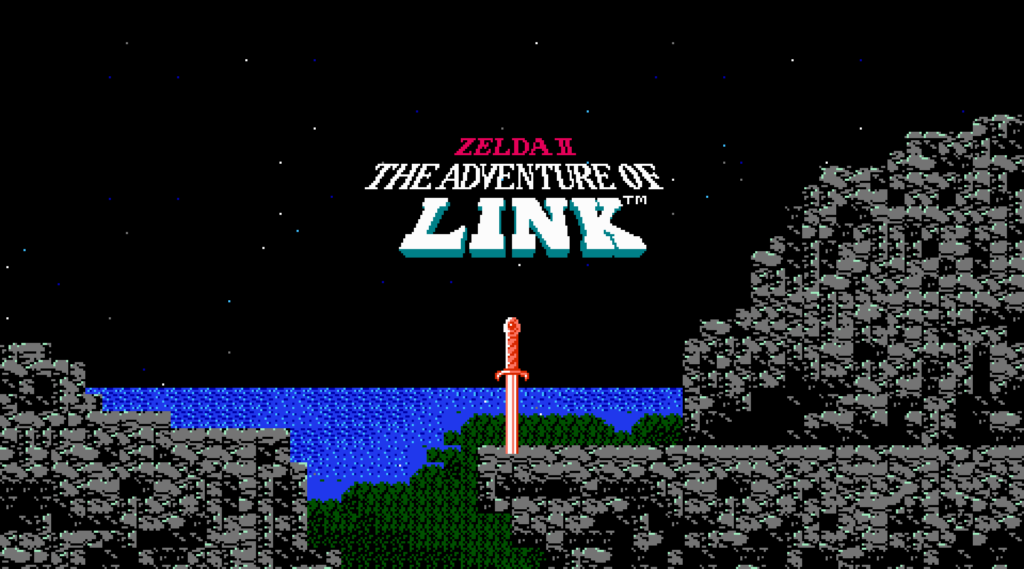
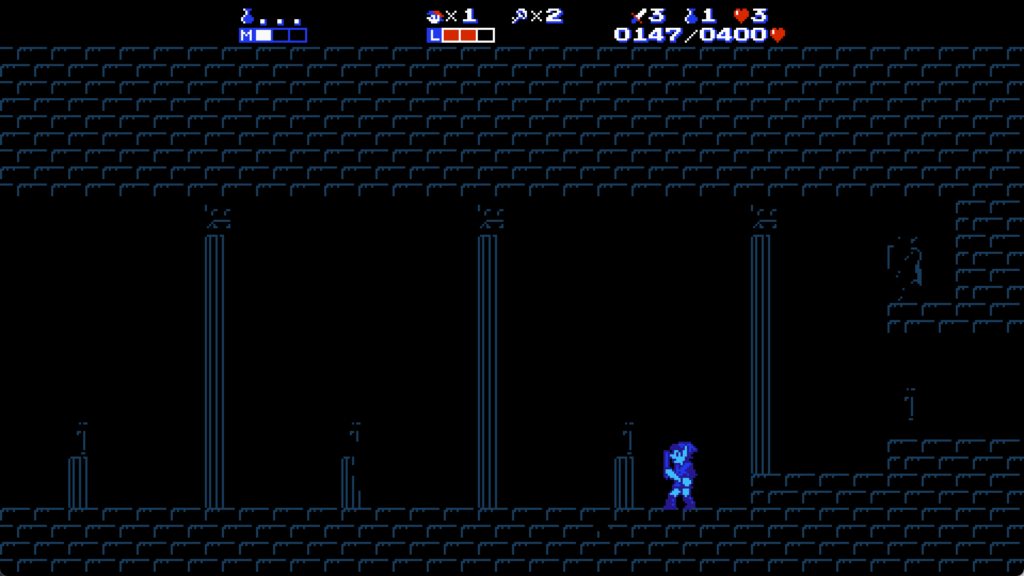
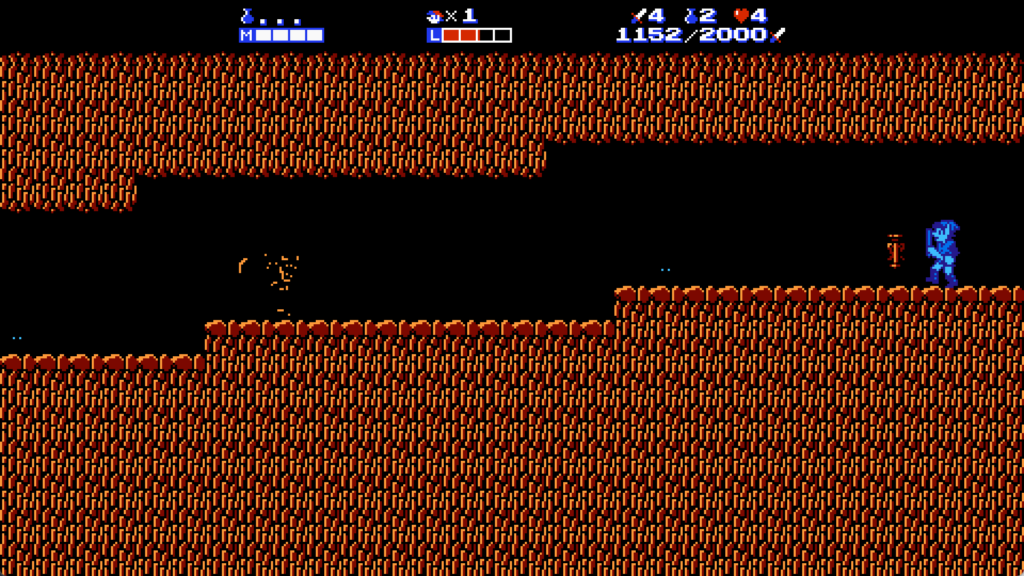
I make no apologies for it: I love Zelda II: The Adventure of Link! It’s second only to the original game for me, and I’ve probably played it, in its unaltered form, more than The Legend of Zelda by now. Because you can play enough of TLoZ that it becomes kind of boring, but a game of Zelda II is never a guaranteed win. There’s just enough randomness in it to mess you up once in awhile, even for speedrunners, and while you can do things to account for it, you can never completely negate it. Bots, those blue blobs that jump at you, exist to humble overconfident players. They look like weak enemies, and don’t do much damage once you have some Life levels, but there is always the chance that they’ll ding you. I love that. It has a very high skill ceiling.
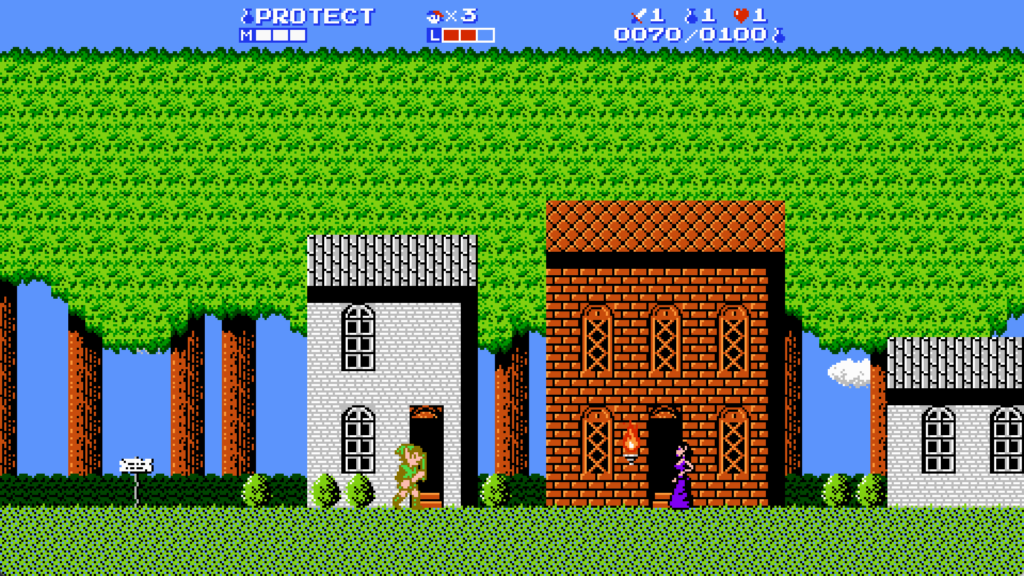
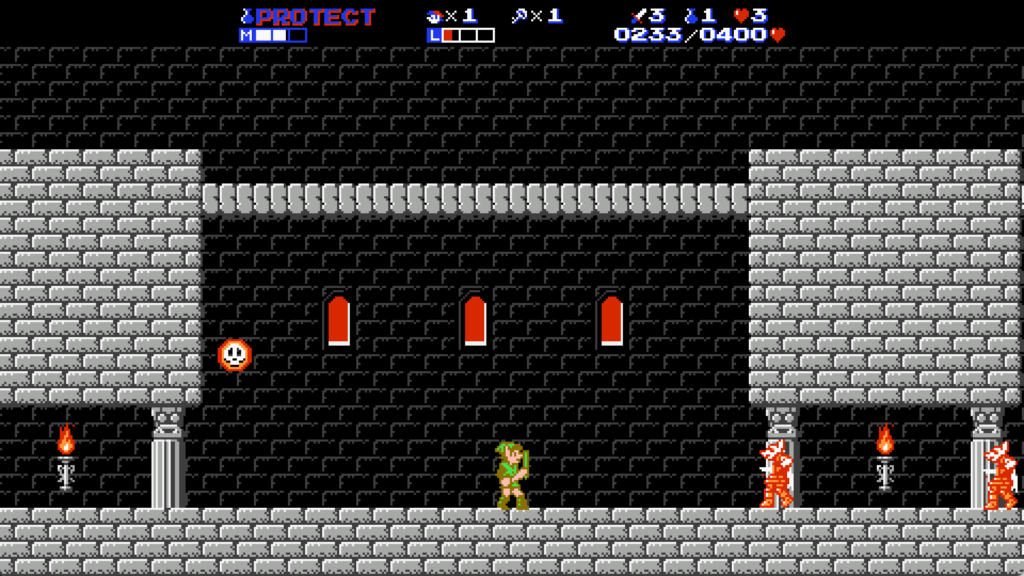
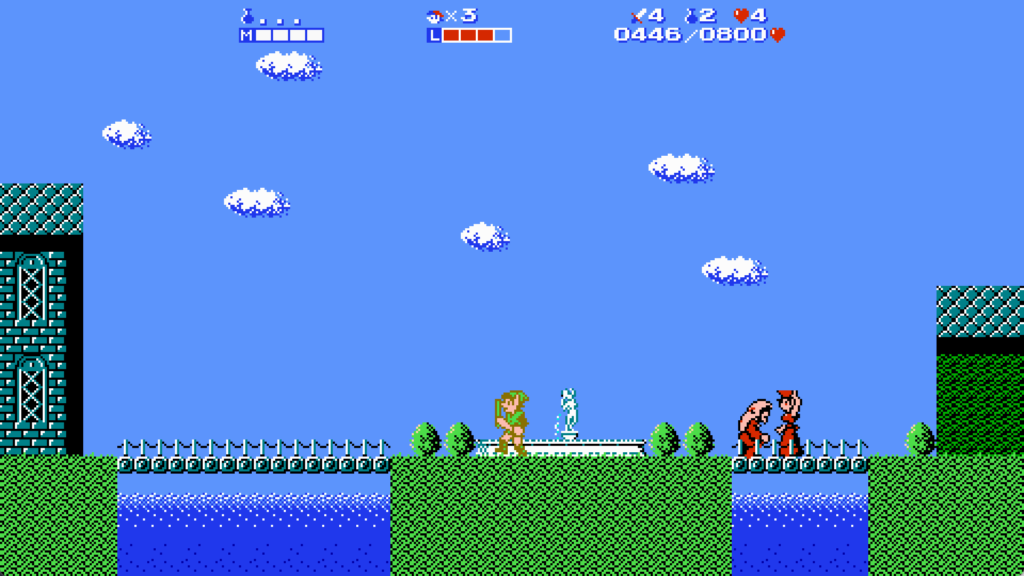
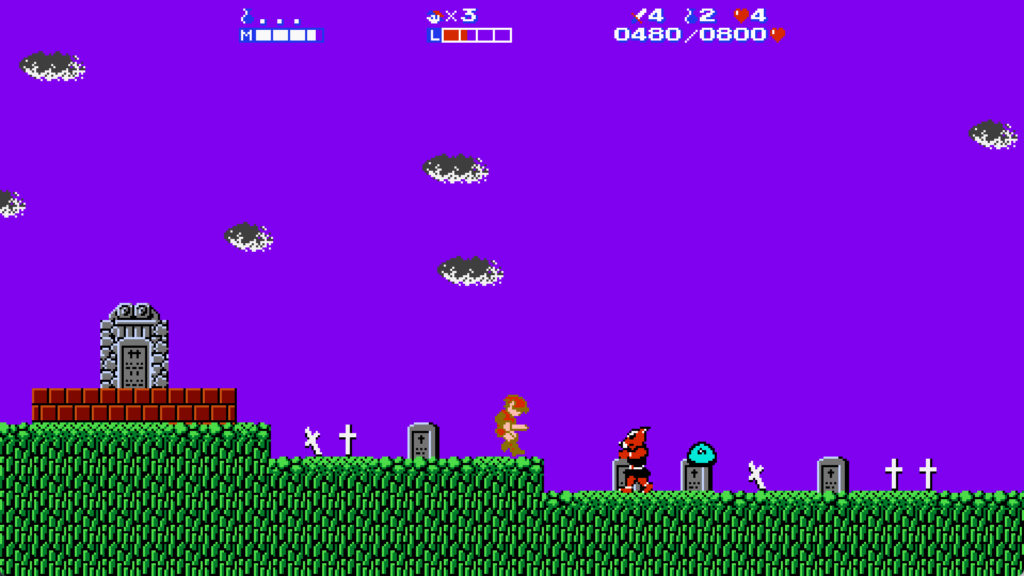
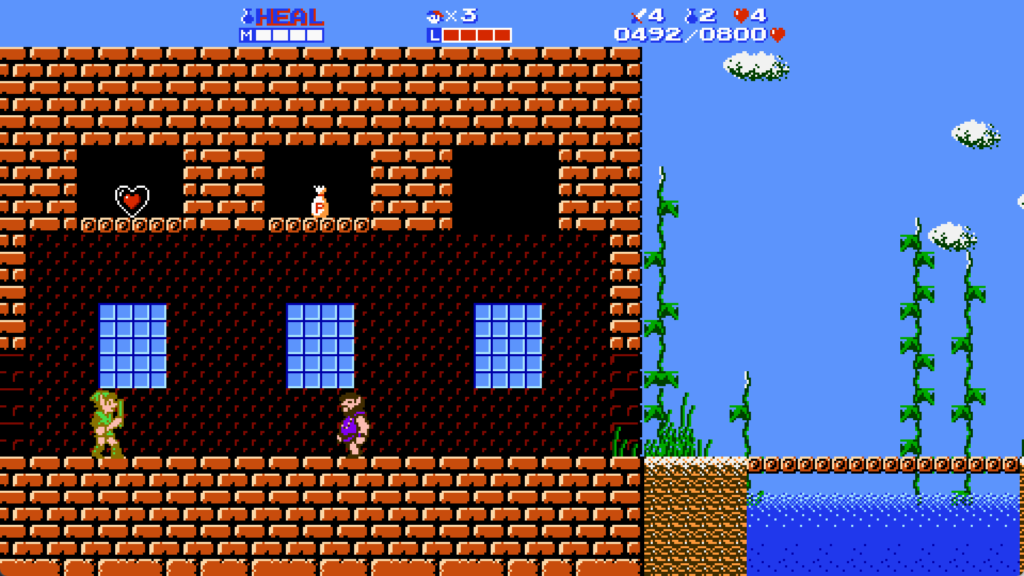
How does this NES game screenshot manage to be widescreen? Well….
Zelda II has long been regarded as the black sheep of the series, like how many Nintendo series have second installments that play with the formula. It’s the only Zelda with an experience system, it’s the only one with a separate combat screen, and it’s the only one with a system of extra lives.
It is also the only Nintendo-made Legend of Zelda game, released pre-Breath of the Wild, that has never been remade in any way! Zelda I had BS Zelda, the first Satellaview one; Link to the Past had both a Satellaview update and one for GBA; Link’s Awakening has been remade twice. Ocarina of Time has Master Quest and the 3D version, Majora’s Mask is also in 3D on the 3DS, and Wind Waker, Twilight Princess and Skyward Sword all have HD revisions. That leaves Zelda II.
To further heap laurels upon it, I say it’s the Zelda with the best combat! The newly-teenaged Link has a sense of weight and inertia to him that fits swordfighting well. It works so well that it seems like an obvious thing, but the fact that so few other games do swordfighting so well proves how difficult it is to get right. Breath of the Wild and its sequel have good combat, but silver-level enemies in it are just a bit too much of a damage sponge, and appear too often in the late phases of the game.
Now I’m bending the rules a bit by including this game because it’s not a romhack, it’s a fan remake. But it looks like a romhack. And the game follows Link’s movement from the NES game very closely. If he moves any differently than he did in that outing 36 years ago, I can’t point to how. Any skills you have from playing Zelda II will transfer over exactly, which is good, because they are hard won.
Unlike A2MR, the fan recreation of Metroid II: Return of Samus that Nintendo cruelly quashed, this game has only slightly upgraded graphics, it all looking like it could have been done with the original engine. It’s not, it’s made with Unity, and it pulls out just a couple of effects it’d have been hard, if not impossible, to have done on Famicom-level hardware.
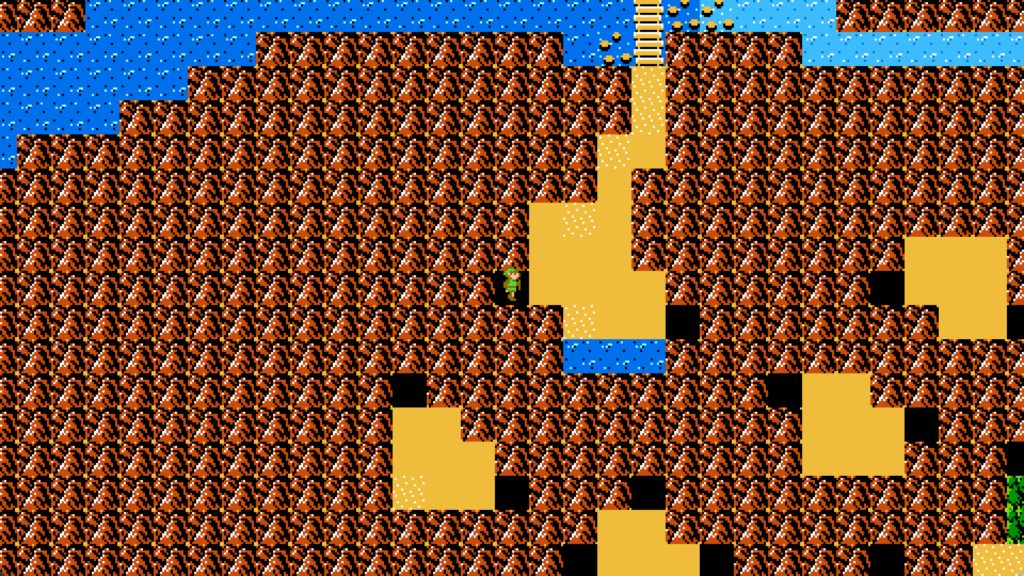
Beyond that, the game’s structure is not greatly changed. The basic map of North Hyrule is similar to the NES game. There are differences, sometimes big ones, but the game still has the same feel, enough so that people who have played a lot of it on the NES will immediately know much where to go and what to do. There’s just a new wrinkle in some places.
ZIIAOL is, I must emphasize, an even harder game than Zelda II. It’s really made for people who are familiar with the original. To pick just a few instances of its higher difficulty: you only start with three units of health and magic instead of four, you must find three Magic and Heart Containers to improve that stat, there are new subquests and places to find, and some areas are slightly randomized. (The game also has its own built-in randomizer, if you really want to mix up your game.)
Yet, of many of the enemies that had tricks to beating them, the tricks still work. I’m thinking especially of its infamous knight enemies, the Ironknuckles, which sent a generation of kids screaming away from the TV. Yet, once you know their trick, to jump and hit them high on the way down, in the helmet, they become fairly simple to beat. The same trick works here, which is a huge relief. (If only it worked in the combat Timer game on the recent Zelda Game & Watch!)
Anyway. It’s free on itch.io, and if you have any interest in the original, or NES games in general, it’s worth it to give it a shot. You’re going to die a lot, but that’s probably going to be true of the original too. But they’re fun deaths.
Why is it called by its initials, “ZIIAOL?” My guess is, it’s probably to help it stay off of Nintendo’s radar. I have used the name from their itch.io post in case it helps them in this goal.
Indie Retro News reported recently on this cool run-and-gun game made by Division 六 the style of Metal Slug. Here’s a promotional video. Note that some of the sound effects are taken directly from Metal Slug, but are intended as placeholders. The final version should have no outside assets.
We love games made for unlikely hardware, and PETSCII Bros. fits that bill like a duck’s dentures. Like we explained in the post about that PET demo from a while ago, the PET didn’t have changeable graphics characters and no bitmap mode at all, and so it wasn’t what we’d consider a games machine. But it did come with a set of interesting graphics characters that, among other things, had a set of 16 characters that let programmers use the screen as a super-low-res 80×50 pixel display.
PETSCII Bros is a PET action game that uses those characters (long called “PETSCII” as a cheeky reference to ASCII) for an actual game, that plays similarly to Nintendo’s classic Mario Bros. arcade game. Of course you’ll need a PET, or an emulator (such as the one that comes with VICE) to play it. Or if you’re just passing interested, you could watch this video to see how it works: