Sometimes I feel that we lean on the Retro portion of our remit a little too heavily. Josh Bycer (Website! Twitter! Youtube! Discord!) helps by providing much of the Indie.
That leaves Niche. The romhack scene, which we’ve started covering regularly on Thursdays, fills out that in that area a bit, but there’s still a lot of subcultures out there that could use a better look.
Icon for Stockfish
One of them is that around internet board games, and the biggest of those is, of course, the game of chess. The basis of chess is subtly different from that of video games, or even most other board games. Chess is deep enough that there’s a sense of mathematical purity to it. Petty human considerations seem to be disregarded in favor of finding the objectively best moves to make given a situation.
This is the road that has led us to the phenomenon of the chess engine, a computer program that plays chess. For a few years now computers have been known to beat the best human players, but far from ruining the game, the best human grandmasters now use computer programs to train. And far from requiring a supercomputer like Deep Blue, now ultra-high-level computer chess is in the reach of the ordinary user (who happens to be handy with a command prompt), in the form of the open-source engine Stockfish.
Stockfish is only a chess engine; it has no UI. Instead, graphic chess playing programs include it, interfacing with it through the Universal Chess Interface.
By the way! Did you know there’s a such an object as a Universal Chess Interface? Truly, as my pal the King of All Cosmos says, Earth has a lot of things.
Stockfish is thought to be the strongest chess-playing engine in the world, and you can use it yourself on your own computer! Maybe it is the future after all.
Live A Live is currently the toast of the Switch, with over 500,000 in sales since it was released. Not bad at all for a remake of a Super Famicom game from Square’s classic era that had never made it out of Japan until now.
AustinSV on Youtube presents a video that goes into some detail about what was changed between the versions. If you’ve played the original (I’ve played a fair bit of it through the popular fan translation from Aeon Genesis), you’ll know a few things were definitely tweaked. I remember the Prehistory, by far the funniest chapter, being rather more risque in its humor, although the fart jokes and poop flinging were left mostly intact. Some of the changes are really interesting; they translated the whole Middle Ages chapter in iambic pentameter!
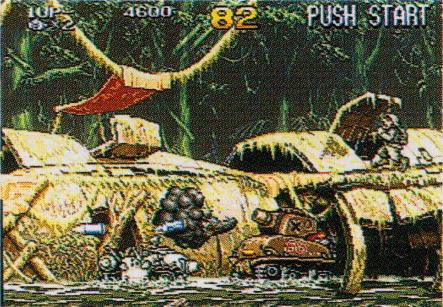
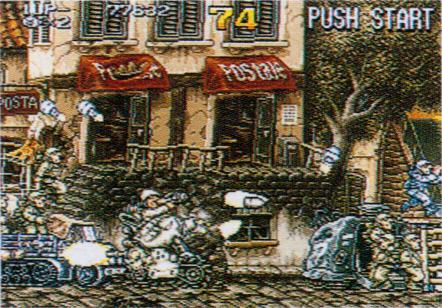
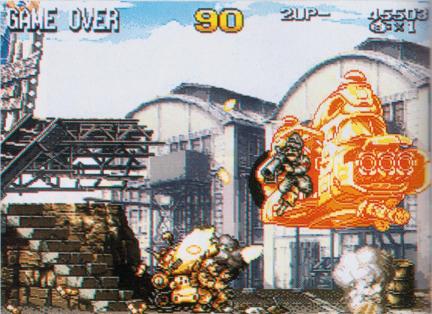
\An awesome fansite about this history of classic hardcore NeoGeo run-n-gun series Metal Slug, there’s lots of information and screenshots scavenged from Japanese gaming magazines about its development!
Early screenshot of a development version of Metal Slug, scavenged from Gamest. All images in this post from Metal Slug M.I.A., which has many more of them!
Early in development, you spent the entire game in the Metal Slug tank. You could rescue soldiers who would then help you in battle, such as the one in the white uniform in this image riding on the Slug.
Beta screenshot of the final boss fight with General Morden.
Nintendo released a new Nintendo Direct yesterday, and everyone in the gamesphere is posting about it as they always do. I suppose we should say something too. While it’s not directly related to our subject matter, Nintendo is as niche as a major game publisher gets, so I believe I can find room for it.
First, here’s the video if you care to watch it yourself (the relevent part is about 45 minutes long, I’ve cued it up to the content):
In summary:
Not to bury the lede like Nintendo usually does, the last trailer was about the sequel to The Legend of Zelda: Breath of the Wild, subtitled Tears of the Kingdom. I think they should just call every game Magical Thingumy, but no one ever listens to good sense. The given release date is May 20, 2023, so, not much longer to wait. Despite the closeness of its release, even less was presented about the game than the last time it showed up in a Nintendo Direct!
Fire Emblem Engage seems to offer crossovers between characters from prior games, including Marth himself, Mr. Fire Emblem, the hero of the first game. I mean all the big game companies seem to be falling over themselves to cross their games and even series together into a thick homogeneous paste, why should Nintendo be any different? Arguably they started the whole trend with Smash Bros. anyway. Fire Emblem has been to this well once before with the mobile app Fire Emblem Heroes. Release date: January 20.
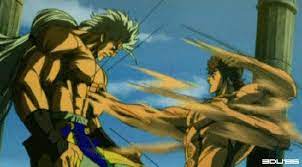
A crossover between Fitness Boxing and Fist of the North Star, the anime property no one’s been clamoring for. “Box with familiar characters.” Sure, like, um, that guy. Hatatatatatatata! I’d explain more, but you’re already dead.
OddBallers, a party game for up to six players. Tunic makes it to Switch, where it should probably have debuted. Remakes of Front Missions 1 and 2 (first time out of Japan for the second), with 3 coming in the future.
New release Splatoon 3 (what, it’s out already?) is getting its first Splatfest. Mario Strikers Battle League is getting new characters Pauline and Diddy Kong.
Octopath Traveler 2 is coming and it looks the same, and a new Final Fantasy Theatrhythm (with a ton of DLC of course).
The original Mario + Rabbids took a lot of people by surprised with its deep gameplay, and it even somehow made the Rabbids more fun than annoying. Other than a couple of minor gameplay features (exploring, Sparks), and maybe playable Bowser, the only really new information was its release date of October 20. I mean, there’s pre-order bonuses and a season pass, but it’d almost be more news if those weren’t going to be offered.
Let’s keep rolling with that farming theme. Harvest Moon: A Wonderful Life is getting remade as Story of Seasons: A Wonderful Life. Why change the brand? Are there rights issues around the original? Turns out, yes. Jessica Thomas lays it all out for us at thegamer.com.
More farming! New games called Fae Farm and Harvestella. I guess if you’ve completely exhausted all of Stardew Valley’s many many features and updates and are still not farmed out, there you go. You could also go out and get some seeds and plant your own garden, unless you live in the city, you poor soul. Still, this way has far less back-breaking labor, and you don’t have to smell manure.
Even more farming! Your feed trough runneth over! Rune Factory 3 is being remade, and another Rune Factory series is coming.
Playing these things since the Atari VCS days has inoculated me against a lot of hype, but the me that played Goldeneye back in college would have been thrilled by this.
A bevy of new N64 games is coming to the Nintendo Switch Online Expansion Pack, including, Pilotwings 64, Mario Parties 1-3, Pokemon Stadium 1 and 2, 1080 Snowboarding, Excitebike 64, and, amazingly, Goldeneye 007 with online multiplayer. I am practically certain that rights issues will have required that it be modified in some way, but that it has managed to come out at all is amazing considering the James Bond property’s owners, and that Nintendo and game creator Rare are nowhere near as close as they were back then. I’d like to know the story behind its rerelease. Honestly, the original came out twenty-five years ago. If this had made it out on Gamecube or even Wii it would have been a sensation, but FPSes have advanced so much since then. Well, nostalgia is a powerful drug. (Yeah, I said it.)
Along those lines. In addition to Octopath Traveler 2, the fandom dairy farm department of Square Enix is rereleasing Final Fantasy VII Crisis Core on Switch. I am apparently the only person in the gaming world without an abiding affection for Final Fantasy VII (the load times put me entirely the hell off the original game when it was new), so I can only watch from the sidelines. S-E also released (yesterday) the oddly-titled Various Daylife. I’m Somewhat Minuteinterested!
Speaking of fandom milking, prepare to low mournfully at the news that Mario Kart 8 is getting still more DLC tracks! And Capcom is releasing cloud versions of various Resident Evil games. Moooooo.
Wii Switch Sports is finally getting its Golf mode, released in a free update, before the end of the year, with 21 holes. I don’t know why they just didn’t wait to release it when it was finished, especially since Golf was the standout mode in Wii Sports, but I guess it’s common practice to delay a major feature or two on release now so a game can get a sales boost by announcing that feature later. There’s a spreadsheet deep in Nintendo’s marketing department that lays out the financial advantages of doing so. They keep it in a folder next to all their demonic contracts.
Shigeru Miyamoto appeared for a moment to hype the animated Mario movie releasing in the Spring, and the Nintendo World amusement park in Japan, and a new one opening soon in Hollywood, California. It’s kind of amazing to think that this is the very same Miyamoto who designed Donkey Kong in the early 80s, at a very different Nintendo. He devoted a lot of time to explaining the smartphone ARG Pikmin Bloom, even though it’s not particularly new. He mentioned that Pikmin 4 is coming out, but very very little about it.
Radiant Silvergun is being remade. Actually, has been remade, and should be out by the time you read this. It’s being released by “Live Wire Inc.” The word Treasure wasn’t mentioned at any time during the game’s brief appearance in the video.
Finishing up. Intrinisically co-op 3D platformer It Takes Two comes to Switch two, er, too. Fatal Frame: Mask of the Lunar Eclipse. Another Xenoblade Chronicles 3 DLC update. A new Spongebob Squarepants game, sure why not. Factorio is coming to Switch. Ib. (Ib? Yeah, Ib) Atelier Ryza 3: Alchemist of the End & the Secret Key (what the hell is an atelier anyway and why do so many JRPGs have them?), Just Dance 2023 (sadly not for the Wii), Bayonetta 3, Master Detective Archives: RAIN COODE, Sifu, Endless Dungeon, a remake of Tales of Symphonia, Life is Strange: Arcadia Bay Collection, Romancing Saga: Minstrel Song Remastered, Lego Bricktales, Disney Speedstorm, and Fall Guys: Season 2. Kirby Return to Dreamland Deluxe returns to the classic 2D-style Kirby gameplay.
This Direct’s hype score: 3/10. The only substantive announcements were Fire Emblem Engage and N64 Goldeneye 007! We knew Zelda was coming already, and all the other Nintendo things were either brief teasers or we already knew they were coming.
We’re getting into some weird elements of electronic gaming here, in the form of games that are not actually electronic, but spread amongst the World Wide Web. These are two similar games that became semi-popular-ish, relatively speaking, in the naughts.
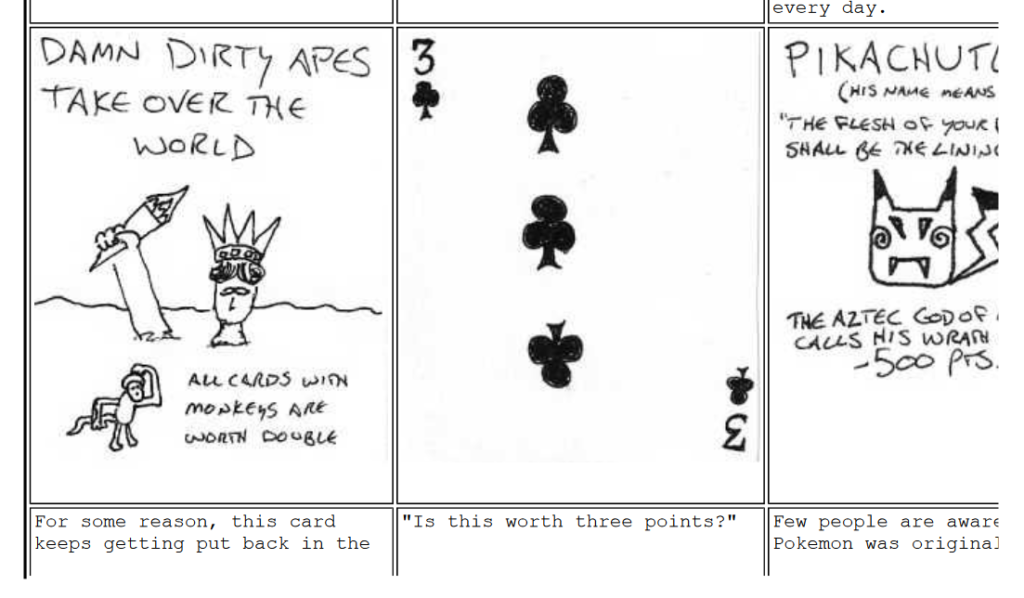
Sadly, Pikachulu’s (?) card is cut off in this archived version. Nice rendition of a playing card though.
To play either, you need a deck of blank index cards, practically-speaking at least two available friends (the more the better), writing implements for everyone, and some quantity of alcohol also helps. It technically can be played by only two people, but they’re both party games, and two people makes for a rather poor party.
1,000 Blank White Cards was one of the victims of the shutdown of Geocities (R.I.P. 1994-2009), that bastion of early web culture, or whatever substituted for it. These days Neocities is a useful replacement for it, and really deserves its own post, but that’s neither here nor at a spot roughly 30 feet from me that I’m going to call “there.”
An archive of the site in PDF form was saved by someone in academia and can be found here. Warning: contains edgy early-internet comedy. Content warning for mentions of tentacle rape, ass thorns, Hitler as a car mechanic, and a crude drawing of someone simultaneously experiencing diarrhea and vomiting. You had to have been there, but in retrospect, you’re better off for not being there. None of it is intended seriously at all. It’s exactly the kind of vibe Cards Against Humanity goes for, for whatever that’s worth, although crucially you don’t actually have to play it that way, and index cards tend to be cheaper.
The point of both 1,000 Blank White Cards and Dvorak is that you customize the game as you play, building a deck for your group that grows larger the more times you play one of them.
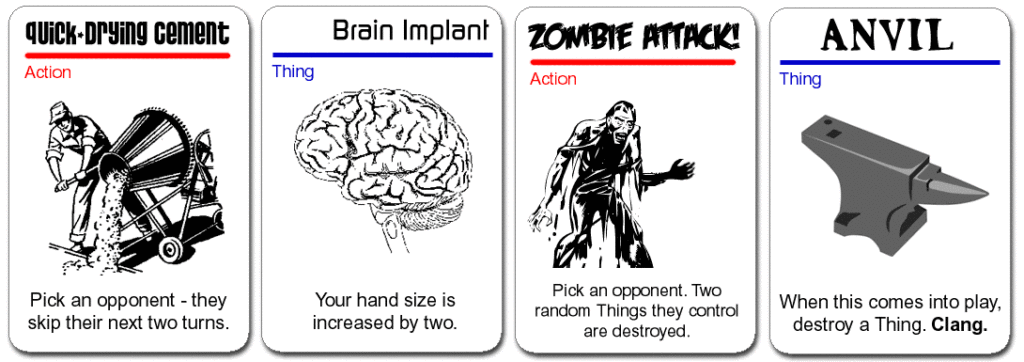
Dvorak example cards, from the website.
Both games involve people drawing upon their inner Magic: The Gathering designer, and both making up and illustrating cards. 1KBWC is the sillier of the two, but Dvorak seems only slightly more serious. Both games lend themselves to cross-referential cards, like the one in the first image that refers to other monkey cards. It’s possible to get really complex with cards (“All cards with an L in the name have all the numbers written on them effectively doubles for the rest of the game, if it’s a weekday.”) but that seems like it’s going against the spirit of the play. If a particular kind of card in the Permanent Deck turns out to be really powerful, it’s just begging for someone to take it down with a later card, so games like these tend to be self-correcting over time.
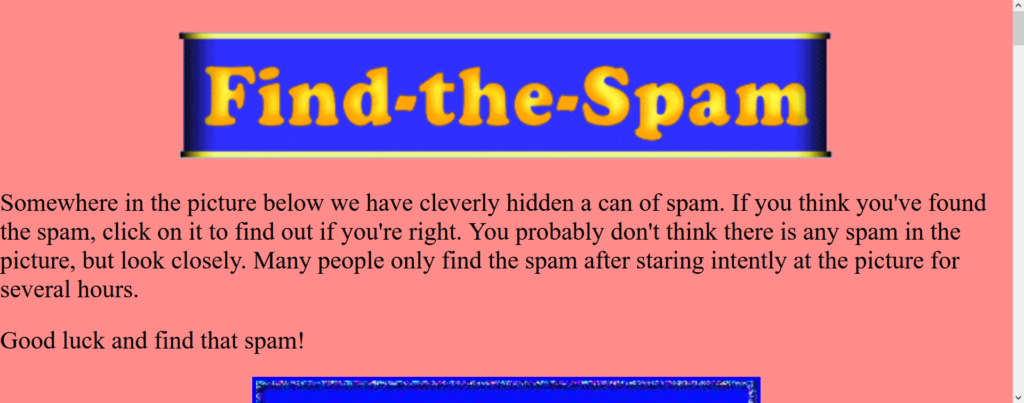
Find The Spam is an internet legend at this point, like zombo.com and Homestar Runner, although it’s much less well-known. It is a game, sort of. It is fun to play, for a couple of seconds at least. I won’t spoil any more, go see it now.
You could see it as a riff on hidden object games, although it predates them by two decades. While the Wayback Machine‘s earliest archive of the site is from 2001, it already had over 1.3 million views by that point. My own recollection is of seeing the site on a Windows 3.1 installation, meaning it may go as far back as 1994.
A recreation showing how the site would have been presented at the time.
The joke is slightly ruined on current machines. Viewed on older graphics cards (with resolutions of 800×600 or even less) the user would have to scroll down a little to see the image, and so would have time to read the intro text before it is revealed. Weirdly, on my Samsung tablet even more of the page is visible on first load, the screen seems positively anxious to spoil the joke for me.
By the way, can you tell I’ve been on an early web binge lately? You can expect more old-timey game sites in the near future….
Long, long ago, three full ages before Zuckerberg’s doomed Metaverse, there was Lucasarts, formerly Lucasfilm Games, and Maniac Mansion, and the SCUMM engine.
Lucasarts went on to have a long legacy of adventure games, and while it’s gone now and most of its progeny is owned by some mouse creature, it survives in a number of forms, like the upcoming Monkey Island re-revival.
Another legacy of Lucasarts and SCUMM is what is possibly the first graphical MUD, called Habitat.
Even though it’s blurry, it deserves the head spot on a blog post, just one more time.
What? You don’t know what a MUD is, or a MOO or a MUCK? A lot of knowledge is in danger of being lost, but we don’t have time to remind you of rudiments here.
Habitat was an early experiment in online communities, a server-based virtual world whose clients were Commodore 64s. In appearance it looks a whole lot like a multiplayer version of Maniac Mansion.
It never went public, but did eventually become a paid feature, in modified form. on the C64 online service QuantumLink under the name Club Caribe. Then, with the wane of the Commodore 64 as a viable platform, QuantumLink closed their servers and rebranded as America On-Line, a.k.a. AOL. And that is not only history at this point, but ancient history. Read more about it here.
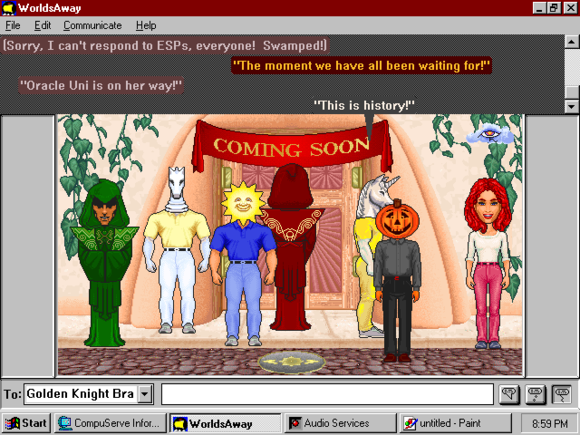
While there was still competition in the dial-up online service space, two creators of Habitat, Randy Farmer and Chip Morningstar, partnered with Fujitsu to have another go at a Habitat-style service, this time called WorldsAway. They partnered with AOL competitor CompuServe, and didn’t do badly for a while.
There’s all kinds of things to talk about here, and I have rather more knowledge than most because I was involved with this, I was volunteer staff at the flagship WorldsAway world, called Dreamscape. I was a participant in the CompuServe forum before the main service even opened, I spend an entire night on the phone as a teen, our old 486DX running Windows 3.11 downloading the client software.
WorldsAway was basically my life for a few years. It could be incredibly addicting, and spirits were high in the early days. There was a feeling of being at the forefront of something. The Internet was just starting to become really big. Who knew what it would become?
What happened to WorldsAway is a story, one that I’m probably not qualified to tell. I know there were problems with business management even from the start. The world staff was constantly said to be fighting with higher-ups, who wanted to cheapen or diminish the project. In size, certainly, the initial world Dreamscape never got anywhere as large as what we hoped for. Even compared to the size of its Commodore 64 predecessor Club Caribe, it was pretty small.
It’s said that they were a west coast operation, and many of their staffers were queer. One of the eventual spinoff worlds that WorldsAway would spawn was explicitly queer-friendly. Given the successes and continued struggles of queer-friendly media on the internet today, I feel like WA’s acceptance of alternate lifestyles should probably be better known.
I still have a couple of friends from those days. Others I’ve sadly lost touch with. A few friends from that time, notably Tiggles, Esme, and Rosaleah, have departed our physical world as well. Maybe some comfort could be had in the idea that maybe they’re users in some higher-order reality, who may have logged-off of our world, but are still out there in a more profound form. If they’re out there and somehow seeing this: please spare a thought for me. I’ll be back out there some day.
The Reno Project is a website devoted to preserving as much of those early projects, those ancient times, as possible. You could immerse yourself in the screenshots there, and dream of a past era that barely was. One of its competitors at the time, which is a bit better known today, is The Palace. One other service that still exists that competed with it is There, although good luck making an account (I tried). And Second Life of course continues to chug along. All of these things seem to me like more worthy projects than Zuckerberg’s latest progeny.
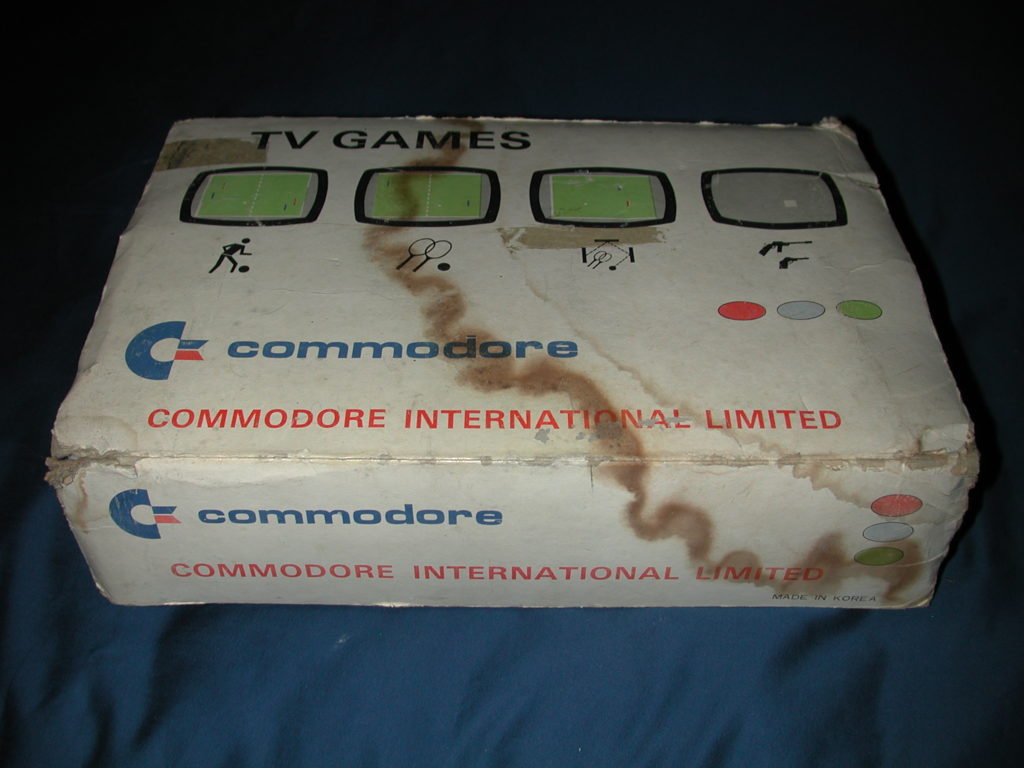
Now here’s a Commodore console I’d wager you haven’t heard of. (Images from Old Vintage Computing Research.)
In a bygone age, the video game industry largely consisted of “dedicated” machines, that could play the games they were made to play and nothing else. Customers would buy devices costing $100 or more in 1970s dollars that could only play Pong and maybe a handful of other games, and that was it. It was a weird time.
There was a whole cottage industry of special chips devised by fabricators back then, that a manufacturer could buy from them, build a plastic shell around with AV connections, a few switches, and controllers (often hard-wired to the machine), and just like that have a console read to sell. The company General Instruments in particular sold a lot of these chips. Many of the details of this era can be read on the website Pong Story.
In addition to GI, Texas Instruments, National Semiconductor, and even MOS Technologies, makers of the 6502, got in on the dedicated video game chip business. MOS’s angle was to make customized chips that had a bit of built-in ROM that could run small programs without having to have a separate chip to store game code.
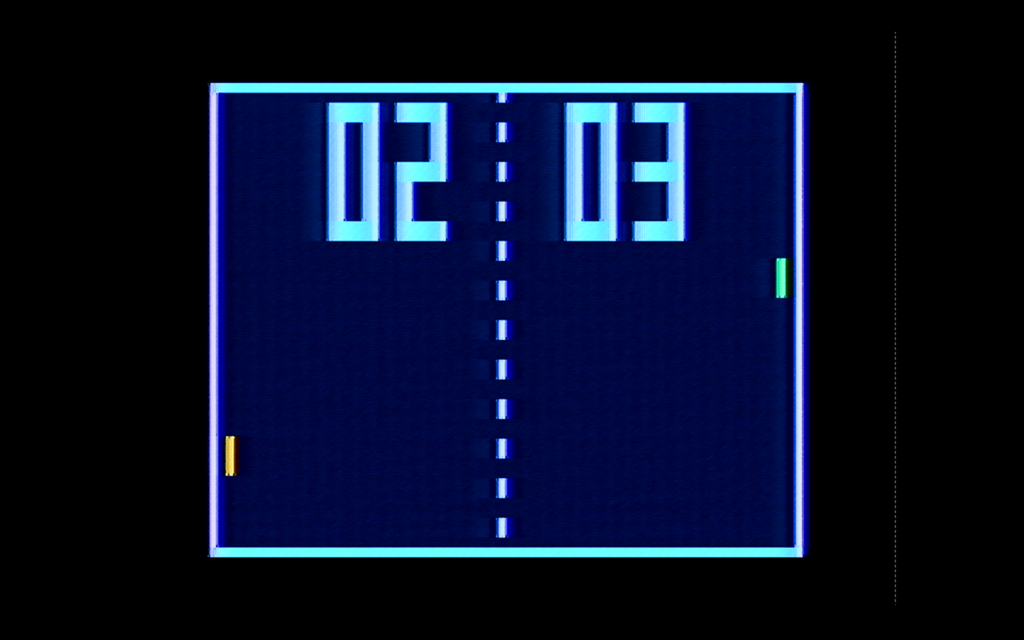
My, what big numbers you have.
This was a fairly brief in the history of video gaming, and only a few consoles were made using these chips, all of them very obscure today. The always great blog Old Vintage Computing Researchrecently hunted down some of these consoles and tried them out. It’s a big article, and it makes for fascinating reading, to those of a certain mind. Of those, I am one. I suspect that you might be one too!
The Museum Monster presents: a WEIRD MOMENT IN VIDEO GAMES.
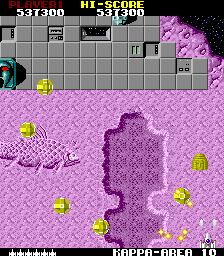
About halfway through the arcade version of Star Force, a prominent early shooter made by Tehkan (later renamed Tecmo, and now half of Tecmo-Koei) something weird happens.
Whatever could it mean??
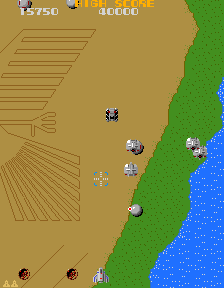
Shooters were in a kind of odd phase right then. The enormously influential Xevious was fresh in memory, and it presented, as a striking and memorable background element, the Nazca lines from Peru. It lent the game an air of mystery that impressed many Japanese players.
Perhaps inspired by that, Tehkan’s developers put something similarly bizarre in Star Force, but it’s a lot better hidden. First, you have to get about halfway through the game. Once there, on the ground of the weird space continents that float by serenely beneath your craft, you can spot a coelacanth, a whopping-great space fish.
You don’t see that every day Chauncy.
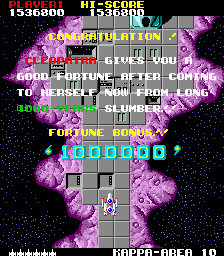
Then, if you aim your ship’s guns at the spot at the right side of the screen that it’s looking at, and fire your guns a whole bunch of times, you’ll make the golden head you can see in the above screenshot appear. Then, fire at it a whole bunch more. If you’re relying on autofire it won’t do, you must actually pound away at the fire button yourself to have any hope of unloading as much firepower as needed to destroy it. If you do, this happens:
CONGRATULATION!
Here is a recording I made of this being done in gameplay. Note, I had an invincibility cheat on, because not only is the game extremely hard at this point, but unloading enough shots into it requires you to stay in one place for a while. In a real gameplay situation your only hope is to encounter Cleo during the lull between enemy waves.
Huh. So, what is that about anyway? It like triples your score! There is no mention of Cleopatra anywhere else in the game, and no hint as to what she’s doing sleeping on a big purple island floating out in deep space. This doesn’t occur anywhere else. It just a thing that happens.
We just had a post on a long series of videos about Super Mario 64‘s the A Button Challenge, so why not do another? I’m sure this won’t abuse your willingness to put up with what scientists call “all my crap.”
Mario Party is a series that skill will only carry your so far into. After a certain point, only the favor of The Lady (not Peach or Daisy) can ensure your victory. But, how much of the game is up to the rolling of virtual dice? And to what lengths are people willing to go to find out? Well at it turns out, lengths of over 16 hours:
This series is not yet complete, in that creator ZoomZike has yet to produce one on Mario Party 7, or later games, but the one on Mario Party 6 is over five hours long all by itself! This is truly a level of obsession with which my own petty focii cannot hope to complete.
Oh this one goes way, way back. Since Saints Row is back in the news….
Back after the release of the first Saints Row game, long before the series went bonkers gonzo crazy-go-nuts and then got rebooted, it was really buggy. So buggy that longtime internet person Cabel Sasser (who helped make the Playdate and helped publish Untitled Goose Game) made a video about it with catchy music. Enjoy!
Along these lines, it’s a good time to revisit Mapstalgia, a defunct blog made by Josh Millard (cortex from Metafilter), that’s filled with player-made maps of this sort!