This is a double review of Super Mombo Quest and Dave the Diver, both played with retail keys.
0:00 Intro
00:15 Super Mombo Quest
4:30 Dave the Diver
The Flipside of Gaming

This is a double review of Super Mombo Quest and Dave the Diver, both played with retail keys.
0:00 Intro
00:15 Super Mombo Quest
4:30 Dave the Diver

‘@Play‘ is a frequently-appearing column which discusses the history, present, and future of the roguelike dungeon exploring genre.
It’s the shortest @Play column ever!
What is happening here? This is the newest Mystery Dungeon game, Shiren the Wander: The Mystery Dungeon of Serpentcoil Island. It’s actually a great deal of fun, a sharply-designed entry in the long-running classic roguelike series.
This isn’t “roguelike” like half the games on Steam. This is a true roguelike, even if it doesn’t have ASCII graphics: a turn-based RPG with substantial randomized elements, that demands that you live (or not) by your tactics, strategy and wits. I don’t begrudge others appropriation of the term, but it does mean I have to now use the qualifier classic when I want to discuss the old style. Really, it’s better to call games not in the original style roguelite.
The dungeon depicted is Heart of Serpentcoil Island, the traditional end megadungeon that most Mystery Dungeon games have. After finishing the “main” dungeon, and playing a lot of extra bonus dungeons that each show off a specific element of the game’s engine, there’s the megadungeon: a 99-level gauntlet of terror where you enter at level 1. None of the items you’ve collected throughout the rest of the game will help you here. You must start from scratch with just a riceball. You don’t even have a weapon or a shield to begin with: everything you have, you must find along the way.
The game doesn’t pull many punches in this dungeon, as you can see. At experience level 1, every space in a room (other than the entrances: that’s a secret tip for you!) could contain a game-ending trap. The only consolation is that they’re really quite rare! I was exceptionally unlucky in this run.
Additionally, the uses of many of the items, the scrolls, grasses, pots, bracelets and incense found in the dungeon, are unknown: their effects must be discovered, through means both blatant and subtle, for yourself. Some of them will be essential to your survival, let alone success; others, like the Ill-fated Seed, you really want to avoid using.
It’s a ludicrous test of knowledge and skill, and a fitting capstone to the game. If the experience shown in the video seems like it might put you off, at least it shows conclusively that the game isn’t taking it easy on you. If you win, and it can be won, it’s a great accomplishment. I’m still working on this one myself; I’ll let you know how it goes.

Sundry Sunday is our weekly feature of fun gaming culture finds and videos, from across the years and even decades.
This one comes from a fairly deep subculture that I can’t completely explain here, partly because I don’t understand it all myself. I feel like there is something in the origin of creator/website/video maker/memester/online shop itemLabel, some necessary context, that I don’t yet know. But they make fun videos, one of them intrudes upon our territory, and I need something for today’s post. Full steam ahead!
Here is what I can tell you. Peepy is a heavily memeable plush toy, that its makers insist, probably for safety and legal reasons, is a piece of art not a plush toy. It looks kind of like a fluffy peanut with googly eyes and a round beak. Like this:
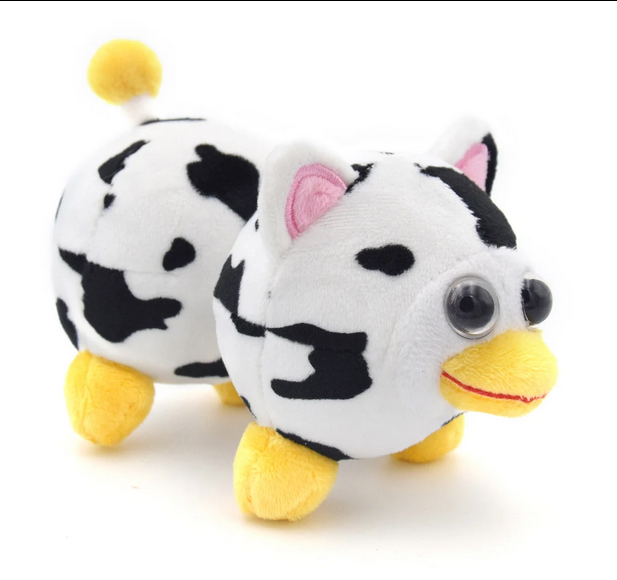
There are a variety of style of Peepys (Peepies?). Peepy is one of a number of character toys artworks sold by itemLabel that are kind of friends to each other? Or not? The videos seem to indicate that they are part of a shared universe, but don’t actually create much of a shared lore. Explanations I’ve seen say that they’re written to suggest a shared lore without there actually being one, in a sense that people familiar with the Cthulhu Mythos will immediately understand: any solid connections are left for the viewer to invent.
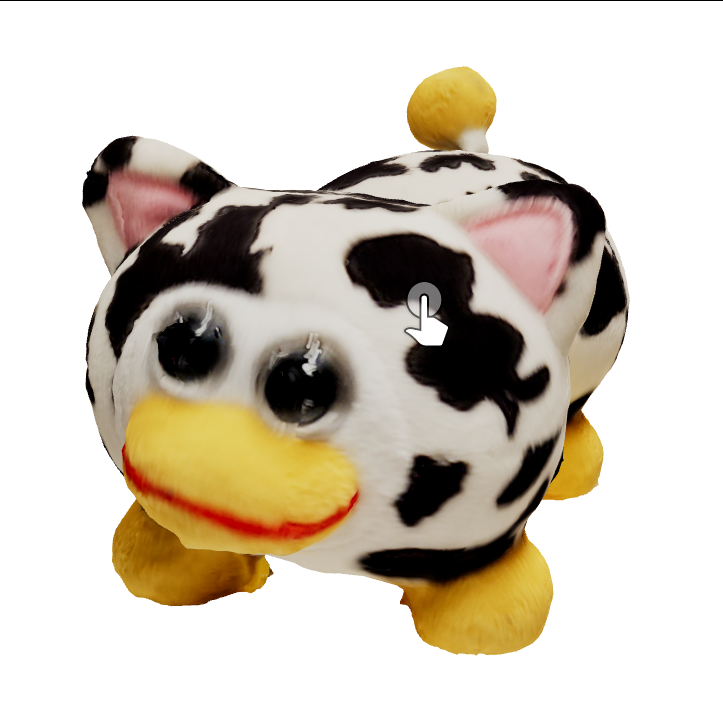
Peepy and acquaintances are the subject of posts on itemLabel’s Youtube account, TikTok account, Instagram account, and Twitter account (link purposely omitted). The only two solid things we know about Peepy’s place, within the greater Peepiverse, are that Peepy loves to eat peanuts (makes sense, they are what they eat) and to commit crimes (wait what?). Its description on the characters page of itemLabel’s website reads: “A peepy thrives in the shadows, using its wit to stun enemies. Its ability to steal may surprise you. It loves peanuts and will commit any heinous act to get them.” This description belongs to a creature that, I remind you, looks like this:
But let’s set all of this aside and concern ourselves with the burning question: how does one care for a Peepy? To our rescue comes Professor Item! Professor Item tells us about Peepy’s habits and feeding through a video where he lives in what seems to be a portable gaming system like a Nintendo DS. In fact, he looks a fair bit like a 3D version of the Professor from the cult classic game Contact by Grasshopper Interactive, and has a similar kind of personality.
Without further ado, here is Professor Item to explain how Peepies are to be provided for:
Don’t have enough Peepy in your life? It’s not game-related, but let’s relax the rules slightly this once. Here is their theme song, written and sung by Japanese musician Emamouse:
And here is the incredibly trippy animation Peepy’s Secret, which features several other of itemLabel’s characters. If you can understand the words you have better ears than me.
It’s a bit upsetting to see that MobyGames is going a bit more for-profit, and now offers a trail Pro membership account. Usually this kind of move means fewer features and a degraded experience for those not sending in their dimes. The trial rate is $5 a month, which seems both high ($60 a year?) and low (how much revenue will this bring in given the small number of people with a paying need for MobyGames information?).

MobyGames has long been a useful resource for game research and images, but was recently bought by Atari, which is not the same as the old Atari, although as time passes that distinction becomes slowly less relevant? The company calling itself Activision has slightly more continuity with the Activision that was founded by ex-Atari developers to sell VCS/2600 games, but very little of it remains I’m sure, and they passed through a phase where they had renamed themselves Mediagenic, which worked out badly. The CEO that pulled Activision out of their nosedive, as it turns out, is Bobby Kotlick. There’s a name that’s been in the news lately and on which I will not comment at this time!
So, it seems inescapable that Atari is behind this move by MobyGames, to try to get the site to pay for itself. I honestly don’t think there’s much of a market for these features unless they make the site downright painful to use for free users, and how many people are willing to pay for full MobyGames access? When people (myself included!) contributed to MobyGames all those years, did they know they were merely building up Value for later Purchase? Will this turn into yet another Gracenote situation? Does anyone now remember what Gracenote did?
Well, this is speculation on my part. Nothing necessarily means MobyGames will soon be ruined. But it is a pattern that’s happened many times before, so let us keep our eyes open. At the very least, it seems like a ripe opportunity for someone to create a new game cataloging site. Me? No no, it can’t be me, I’m sorry, my brain is too full of things, and I have this terrible pain in all the diodes down my left side….
The Nintendo 64 broke ground for Nintendo in many ways, but arguably the worst part of that was the controller.
I’m not one of the people who complains about not understanding the controller or how to hold it. That part’s pretty easy to understand: you hold it one way, with the central prong in your left hand and the right handle in your right, for games that use the control stick like Super Mario 64; you hold it with one handle in each hand for games that instead use the Control Pad. It makes sense that Nintendo still wanted to feature the Pad prominently since it was one of the defining characteristics of the NES and SNES era.
The Control Pad is durable and easy to use, even if it does result in bruised thumbs when pressed with force, as can happen in challenging games. What’s not so durable is the N64’s signature control device: the Analog Stick. A special design that didn’t see much update after the Nintendo 64, because of the “white dust of death,” a mysterious fine powder that emerges from the inner workings of the stick after heavy use. Along with the powder always came degraded control performance: the stick would lose some of its tight feel, wobbling when shaken, and would no longer recognize the full extend of its range. All official N64 control sticks would succumb to the dreaded dust with time.
During the console’s life the source of the powder wasn’t common knowledge. It turns out it’s the result of the control stick grinding against its housing and actually rubbing itself in a fine dust. The looseness came from the powder getting into the tight confines of the stick’s mechanism, and from the pivot chamber getting looser as it was ground away by the joystick.
Some games were notorious for decreasing a controller’s working life. The Mario Party series was infamous for demanding rapid spins of the control stick, that could produce the dreaded dust and wobble after surprisingly few games. But with use, it seemed that all the official joysticks would succumb to it eventually. Third-party sticks, such as the then-ubiquitious MadCatz sticks, didn’t suffer from the problem, but their control sticks weren’t as sensitive, and required a smidge more force to push. For demanding play, the official sticks are a must.
This has resulted in a big problem. Since all the Nintendo-made N64 sticks degrade eventually with use, and Nintendo isn’t making them any more, speedrunners playing on original hardware have few options for playing games the way they were intended by their designers. Some jealously hoard pristine sticks, which have become expensive, while others work to make replacements.
Retromeister on Youtube has made a 24-minute video explaining the problem, and the lengths to which runners have resorted to keep themselves playing. And this, following, is that very thing:
I posted links to this elsewhere to so-so-reception, but darn it the idea is amusing enough to me: take an old 3D game that got really poor reviews, hack it to make it better (not to mention playable on current Windows), and post the hack online.
The game involved is a Garfield game for PS2 and PC that I hadn’t even heard of before. The person who did this objectively silly thing is a Youtuber, and they uploaded a 20 minute video on the game and their modifications. You can even download their modification to play yourself.
No one was clamoring that they do this. They themselves admit the game isn’t really that great. But they love it, for irrational reasons, and that’s fine by me. It’s not really terrible, they surmise that the egregiously poor reviews (0/10!) were part of the Internet Pile-On Effect, where the reviewer finds something it’s okay to hate, and proceeds to do so as much as they can. In this case, the game’s greatest sin is being a licensed game, and those are always the absolute worst, aren’t they?
Anyway, here’s their video in an embed. Again, it’s 20 minutes long, so it might not fit into your schedule. That’s okay.
Each indie showcase highlights the many games we play here on the stream and I’m always looking for submissions for future episodes.
0:00 Intro
00:14 Kilta
3:21 Rail Route: the Story of Jozic
5:26 Maggie the Magnet
6:45 Panic Mode
8:59 Star Valor
10:50 Lost Twins 2
Slipped my mind, but as I mentioned last month, the 7DRL game jam for 2024 is underway! There’s still time to get in a whole week of work!
They made a promo video for it (2 minutes), which shows some popular games from the jam over the years, and reminds us that this is the 20th year the jam has been running, making it nearly an internet institution by this point! And the video also reveals the theme-which is “roguelike,” hah.
Sundry Sunday is our weekly feature of fun gaming culture finds and videos, from across the years and even decades.
Youtube animator Wooden Turtle has done Pikmin animations before, and we’ve linked some of them here: The Groovy Long Legs Experience, and Cooking With Louie #1 and #2. They’re fun riffs on Pikmin’s lore and backstory, and this week’s video is another of those.
In Pikmin, the game’s backstory was communicated mostly through Olimar’s Log, which was a situational message given at the end of each game day that reminded and expanded on its events. Pikmin 2 kept the idea but changed the messages to emails from Olimar’s employer, called Sacho. In the opening, it’s revealed that the freight company that he owned and Olimar works for undertook a gigantic debt due to the loss of a cargo of highly-expensive Pikpik carrots that he was responsible for. (To find out what happened to them, you have to finish Pikmin 2 to 100% completion.)
In Pikmin, you have a strict 30 day time limit to get enough parts of your ship to return home. Pikmin 2 has no time limit. You can take as many days as you want to collect treasures, and the number of days it requires is more like a score. To keep the pressure on the player, as the days reel off, you receive a series of increasingly frantic email messages from Sacho, who as it turns out unwisely covered the debt with an organization called “All-Consuming Black Hole Loan Sharks.” Their means to insure repayment are ruthless, but in fairness to them, you should know what you’re getting into from their name.
Sacho is forced to go on the lam to escape their wrath, and for a time lives beneath a bridge and befriends the animals there. But you don’t need me to tell you of those events: they’re animated in Wooden Turtle’s latest production! It’s eight minutes long:

We love it when we find weird and unique indie games to tell you all about! Our alien friends to the left herald these occasions.
From itch.io’s Youtube account, this barely qualifies as a game, but it’s funny. Surreal. Absurd. Bizarre. But mostly funny. It’s Nip For Speed, and it’s from knackelibang.
You’re riding in a car with an orange cat behind the wheel. Not a cartoony cat, a realistic cat, or at least its low-poly model is kind of realistic. It doesn’t act, or talk, much like a real cat though. There’s also a dog involved.
Content warning: the cat does meet its end, but in a much more cartoony way than the cat’s model. It probably shouldn’t have been behind the wheel anyway.
Nip For Speed (itch.io, Web and Windows, $0)
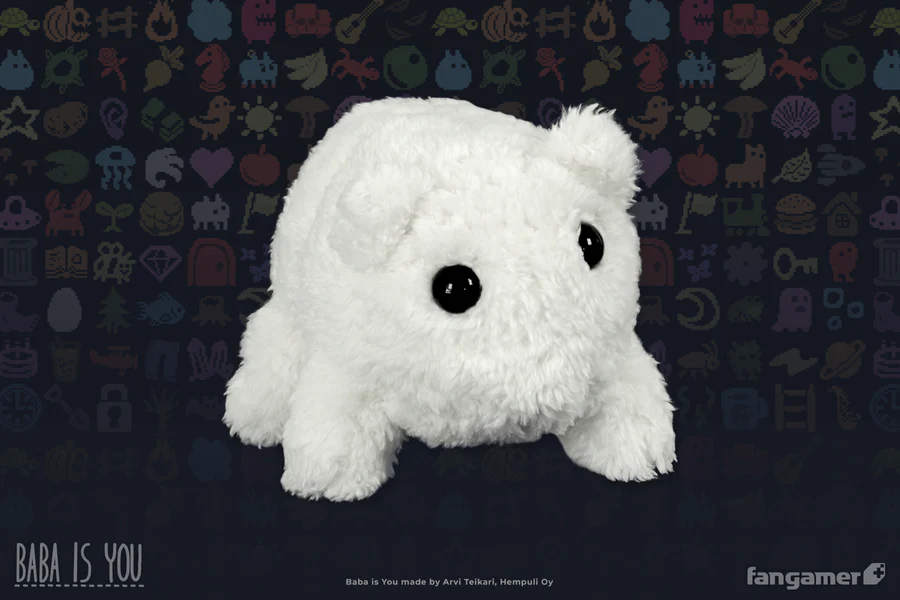
It’s out of stock at Fangamer, but they’ve ordered more, and you can be notified of when they get them in on its store page.