Sundry Sunday: Earthbound Flying Man Animation Collaboration

Sundry Sunday is our weekly feature of fun gaming culture finds and videos, from across the years and even decades.

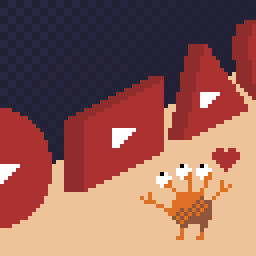
This one’s an intersection between two weird and highly idiosyncratic cultural phenomena. (6 minutes) Please attend.

Earthbound is, of course, the classic SNES JRPG, known in Japan as Mother 2, created by Shigesato Itoi. It has my vote for the greatest JRPG of all, for while it isn’t as popular as Dragon Quest or Final Fantasy, it has a knockout story, full of wit and detail. Mother is one of the very few video game series that, I think, transcends its medium, and becomes something great, not great in the since of being better than good, but in the sense of profundity, and yet at the same time it isn’t pretentious at all, it’s light and funny and whimsical but also deep and dark and terrifying. It’s easy to play and lots of fun too. I’ve heard it described, I think it was by Ben “Yahtzee” Croshaw, as Peanuts Fights the Cthulhu Mythos, and that begins to get to it.

Animation collaborations are, of course, a thing where a bunch of people get together to make an animation together, each taking one small part of the whole. Not only do they not attempt to maintain a consistent art style, that’s in fact the last thing they try to do. Each clip is wildly different from the others, and that’s the point, the clash of styles making the whole surreal and surprising.

Both of these come together, in this piece that animates a portion Earthbound where the player is accompanied by the Flying Men, and I guess I have to explain that too.

So in a place near the end of the game your protagonist Ness visits the realm of Magicant, a bizarre realm created from the depths of his own mind. It is full of dangerous monsters, culminating in an artifact called Ness’s Nightmare, a powerful enemy that can wipe Ness out if the dice don’t roll his way.

Ness is also alone for this segment, except for the aid of the Flying Men, who call themselves Ness’s courage, helpful bird people who tag along with Ness, providing both muscle and extra hit points. But while they are strong and useful, they are not invulnerable. There are five Flying Men, and they join Ness one at a time. If one of them runs out of HP it dies, and in the house where they live, one of them is replaced by a tombstone. If you go back and recruit another one, and he also dies, then another tombstone appears. The dialogue from the successive Flying Men becomes less happy and more desperate as their numbers decrease, until finally they’re all gone, and Ness is left to finish the area alone.

This is just one example of the many wonderful ideas in Earthbound, as a unique a video game as there ever has been.

The animation that’s this week’s subject is a collaboration between many people, set to the Flying Men’s theme song, which is never actually heard in its entirety within the game. The music heard comes from a soundtrack album.

I won’t pretend it’s very comprehensible to those who’ve never played the game. Sometimes Earthbound fanwork, unlike the game, gets obtuse and navel-gazey, and difficult to understand to those not drenched in the lore. This one’s a bit like that. But maybe it’ll spark something in you, anyway. The music’s nice at least!

That’s what I have for you today. See you tomorrow!

Sundry Sunday: Earthbound Meets Peanuts

Sundry Sunday is our weekly feature of fun gaming culture finds and videos, from across the years and even decades.

Given how similar their art styles are, it’s surprising that there aren’t more stylistic crossovers between Charles Schulz’s and Shigesato Itoi’s respective classics of popular media, but this is the first direct connection between them that I can name.

A weird dog is bothering the kids of Polestar Preschool (2 minutes), so Paula calls Ness over to do something about it. But this dog is a bit smarter than it lets on at first. Video uploaded by russmarrs2.

Sundry Sunday: Cursed Images and Game Music

Sundry Sunday is our weekly feature of fun gaming culture finds and videos, from across the years and even decades.

I think I’ve posted some of these before, but I don’t think I’ve done all of them, and I’m cleaning some links out of my list. So let’s take another look.

These are from a six-or-so year old meme that began with putting creepy (but not too creepy) music to battle music from perennial retro JRG favorite Earthbound. Earthbound had lots of weird and crazy enemies, so they fit fairly well. But they’re not all Earthbound collections, just so’s you knows.

I’ve got quite a few of these links. I could spread them across weeks, but I’ve got other posts to make, so I’ll just unload them all at once. Watch as many as you can stand.

First, the Earthbound collections. 3 minutes:

8 minutes:

Now, 9 minutes:

They’re getting longer in length. 12 minutes, if you’re getting tired of them I can’t say that I blame you:

This one’s 16 minutes:

And the mother (heh) of all collections, 51 minutes, using music from all three games:

The meme mutated a bit into science diagrams that look like shitposts, and with other game music. This one’s Miitopia (8 minutes):

And, with Splatoon music (11 minutes):

Last one! With Toby Fox music (13 minutes), you know, Undertale and Deltarune and stuff:

I’m glad to get those out of the list! Something different next time, whew.

Sundry Sunday: The Balatro Theme With Mother 3 Instruments

Sundry Sunday is our weekly feature of fun gaming culture finds and videos, from across the years and even decades.

Prepare to get the Balatro music stuck in your head all over again, but with the Mother 3 “soundfont,” a word that I’m not thrilled with. I don’t hate it, it’s just that there’s already good ways to refer to that concept, like “instrument set.” Ah. Oh well. Anyway. Here it is. (4 minutes – wait, the Balatro music is only four minutes long?)

Hidden Flags in Earthbound, and the Mole Playing Rough

It’s a bit old, but Chaz on Youtube has a great video explaining some weird facts about Earthbound, including mysterious crashes, when the game registers the effects of statuses like Sunstroke, and why there’s a small number of places in the game where you can find an early enemy, the Mole Playing Rough, in regions where you usually find much stronger enemies. It’s ten minutes long:

Here’s the gist:

Earthbound maintains a flag that the video calls the Overworld Status Supression Flag. If this flag is on then your characters can’t get a number of statuses like Sunstroke, or take environmental damage. If this flag is on, though, and your party loses to a scripted (not random) battle, then a bug is triggered that’s popularly called the Game Over Glitch: the battle loss cutscene music plays, but the screen turns black and nothing appears to work. In fact, the game has not crashed: entering the Town Map screen, or feeling around for and entering a door, will display graphics again, although glitched out. The Game Over Glitch is best known for happening if the player loses to one of the Shattered Man fights in the Museum after the game has been won: during the ending, the Overworld Status Supression Flag is set on permanently, so getting into any scripted fight and losing will result in the glitch happening.

As it turns out, random encounters disable the flag. So there is a hard-to-avoid Mole Playing Rough at the entrances to areas with environmental damage, to make sure the flag is turned off. But the mole is just hard to avoid, not impossible, so if you can avoid it, and all other random enemies of course, and then reach a place with a scripted fight, then lose to it, the glitch will still happen.

Hidden Dialogue in Earthbound

It might not seem like it, but in the 8- and 16-bit era, text in a game was rather expensive.

The expressive power of an English sentence is great, but in a way, that of an equal number of bytes of assembly is greater, due to it living and working in the machine, and not just in the head of the player. A page of text is about 700 words; at an average of five characters each, uncompressed that’s 3,500 bytes, or 3.5 kilobytes. By contrast,the whole OS of the Commodore 64, Kernel and BASIC ROMs combined, is 8K.

Most JRPGs are thought to have lots of text, but really they have less than you might think. Square used a few tricks to make a little text seem like more than it really was: like the use of larger fonts, and using graphics to put on little skits to illustrate scenes instead of just displaying them as plain old words. And of course there’s compression. A good compression scheme, while troublesome for fan translators, can still cut down the size of text by half.

But Earthbound is a unique game in many ways, and one of them is the amount of text it has. Creator Shigesato Itoi is a copywriter and essayist, and he wrote a ton of words for Mother 2, Earthbound’s Japanese version. Translator Marcus Lindblom gave it a localization that many regard as one of the greatest of all, that manages to get across much of the wit and charm of the original.

It was a huge task. The text dump on GameFAQs, compiled by someone going by the name “BlueberryButtface,” is 391 kilobytes; the size of the game’s ROM is a bit over 3 megabytes. A direct comparison isn’t really helpful because the dump on the page is uncompressed, but it’s still useful to get a sense of scale.

A lot of this text, as it turns out, is hidden. Not in the sense of being locked off from the player, unused in the game. The text is findable in the game, but much of it is obscure, available only at a specific part of the game, or easy to miss. And, this being Earthbound, much of the text is pretty funny!

On Youtube (again), Cybershell has put together a 28-minute video that uncovers much of this hard-to find text. I already knew about much of it, because I’m weird like that, but it’s nice to have someone present a guide to what’s there and how to find it. A lot of it is the text of the Hint Guy, who, as in the style of Nintendo’s games at the time, will give you a pointer to whatever you have to do next in the story if you pay him a fee. All the hotels in the game have newspaper text appropriate to the point of the story you’re in, even the one way back in Onett, the starting town. Items have interesting descriptions if you think to ask for them. And of course, after you win the game, you can go back in and talk to the NPCs on the way back home, and frog help me, Shigesato Itoi wrote, and Marcus Lindblom translated, congratulatory text for nearly everyone in the game. And there’s more, even than that.

Here’s the video. It’s a fun use of half an hour, if you have any interest in Earthbound.

Rare and Obscure Dialogue in Earthbound (Youtube, 28 minutes)

The Mr. Saturn Text Generator

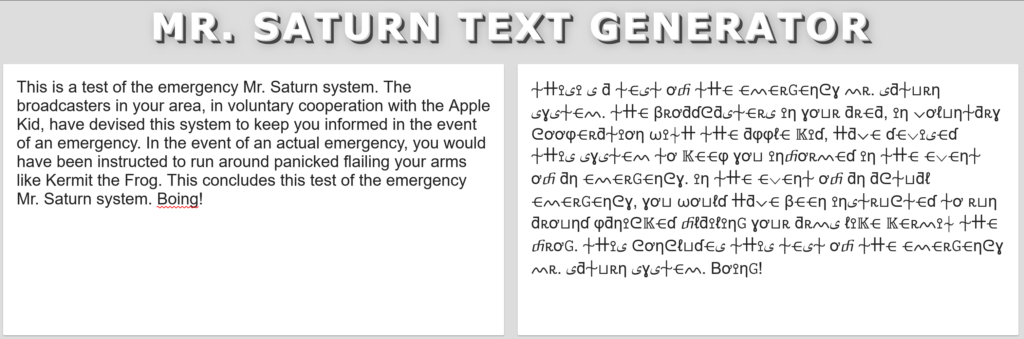
ꔠ⋲ɣ-ơ! 𝕂ηơ⍵ ɣơ⊔ ⍭ꔠ⋲ꭱ⋲ β⋲ ᨓꭱ. یƌ⍭⊔ꭱη ⍭⋲ⵋ⍭ 𝙶⋲η⋲ꭱƌ⍭ơꭱ ơη ⋲ƌꭱ⍭ꔠ ⟟η⍭⋲ꭱη⋲⍭ βơ⟟η𝙶? ⟟⍭ ηơ⍭ β⋲ φ⋲ꭱⴥ⋲ᘓ⍭ β⊔⍭ ⟟⍭ ơⴥ ی⊔ⴥⴥ⟟ᘓ⟟⋲η⍭ ⍵ƌᘓ𝕂⟟η⋲یی ⍭ơ ᨓƌ𝕂⋲ ⟟ᨓφꭱ⋲یی⟟ơη ơη ⴥꭱ⟟⋲ηɗ ƌηɗ ᨓơηی⍭⋲ꭱ ƌℓ⟟𝕂⋲! ɗƌ𝕂ơ⍭ƌ!

(Did you know there is a website that will convert whatever you enter into an approximation of the text from Mr. Saturn from Earthbound and Mother 3? It doesn’t look exactly like it does in the games, but it is certainly reminiscent of it. Dakota! Dakota?)

It turns out there is a TrueType Mr. Saturn font as well, as presented in this Reddit post. Note that this link should not be construed to mean that I in any way approve of Reddit, or of how much internet content that it’s concentrated under its fetid profit-seeking embrace. That’s where this is, so that’s where I linked. It is a vectorized version of a pixel font recreation of Saturn-speak, which is available here. Message over boing!

Sundry Sunday: Brendoon’s Live-Action Earthbound Videos

Sundry Sunday is our weekly feature of fun gaming culture finds and videos, from across the years and even decades.

They’re strange ones this week friends. This person on Youtube has made a handful of short videos depicting moments from the classic Super Nintendo JRPG Earthbound in real life.

The best ones are “For Sale” Sign (37 seconds) and Arms Dealer (49s).

Go out into a field and hold up a sign that reads “For Sale.” Someone will soon come running up and offer to buy practically anything you’re carrying. Advertising works!
That guy, standing in the middle of that desert. He’s got what you need, if what you need is extremely dangerous. Seems pretty sketchy.

Earthbound is full to bursting with weird situations like these. Brendoon could keep making videos for some time. Maybe concerning the Insignificant Item? Or having pizza delivered to you in the dungeon? Or beating up fire hydrants? Or running from dinosaurs? Or automatically putting ketchup on food items you eat? Or being spoken to by cups of coffee? Or the world being threatened by an 11-year-old boy? Or anything having to do with ᨓꭱ. یƌ⍭⊔ꭱη? The list is nearly endless!

Earthbound Battle Backgrounds Website

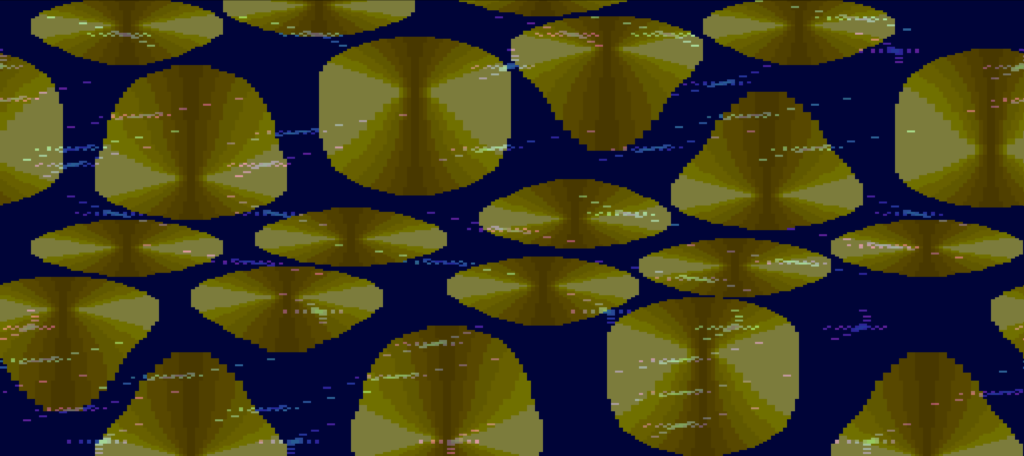
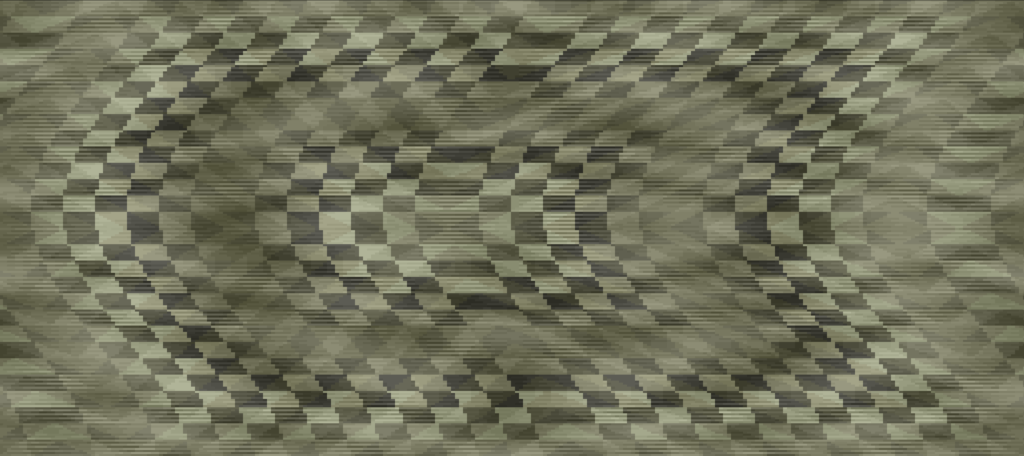
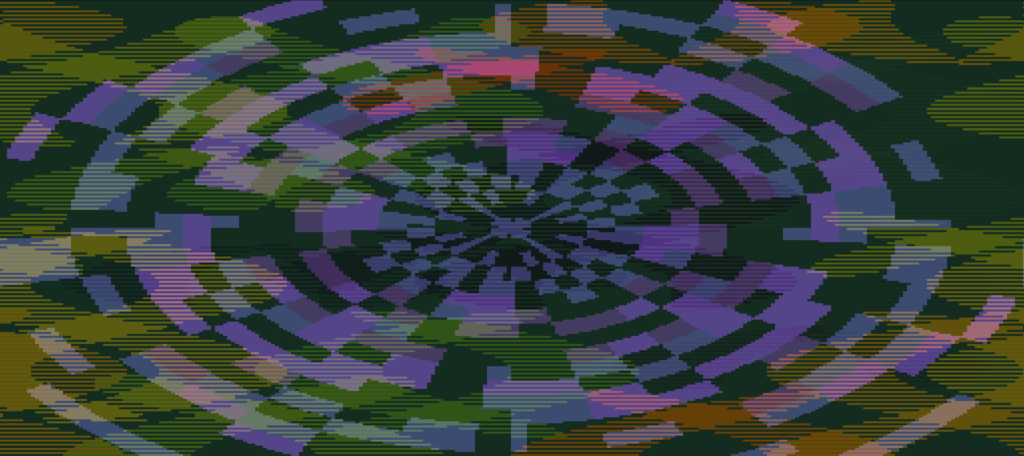
This interesting, and even slightly useful, website combines the various layers that the cult classic SNES JRPG Earthbound uses to construct its funky battle backgrounds. There are more combinations here than actually appear in the game. There is a GIF-making function, but it seems to be broken for the moment. You can still make them full-screen and save screenshots, that’s what I did, though unfortunately doing it that way means they aren’t animated.

Here are a few still examples.

Earthbound Battle Backgrounds (a bona-fide website!)

Sundry Sunday: Onett, Titanic Ant and Captain Strong from Duane and BrandO

Sundry Sunday is our weekly feature of fun gaming culture finds and videos, from across the years and even decades.

The Adventures of Duane and BrandO were a nerdcore rap group that focused on doing video game parody songs. It’s an oft-told tale, old as time. They had some drama and broke up a few years ago, but not before making some nice tracks.

Honestly, that isn’t my scene musically, but they did some tracks based on Earthbound, and that entirely is my scene. The whole thing’s on Bandcamp, but here’s a sequence of three bits early in the game: a fairly straight rendition of part of the music for the first town, a diss track (is that what they call them?) from the first “Your Sanctuary” boss, and then the highlight, I think, in which the Onett police force get their heads handed to them by a 12-year-old kid. “I’m out of here that looks like it smarts/Check out my Super-Ultra-Mambo-Tango-Foxtrot Martial Arts!” (SUMTF?)

Onett – Titanic Ant – Captain Strong: YoutubeBandcamp (2 1/2 minutes)

SpriteCell’s JRPG Magazine Review Archive

This is quite a collection to look through! While it was originally posted in 2021, it was updated with some new reviews just this past Sunday. They’re sorted alphabetically by game. They go at least as far back as NES Dragon Warrior, but some of them are really recent, especially with the addition of games reviewed by WalMart’s free pass-out magazine GameCenter. Their definition of JRPG kind of goes far afield, with some metroidvania-style Castlevanias, two Advance Wars games and a good number of half-related things.

Here are a small selection of included magazine scans….

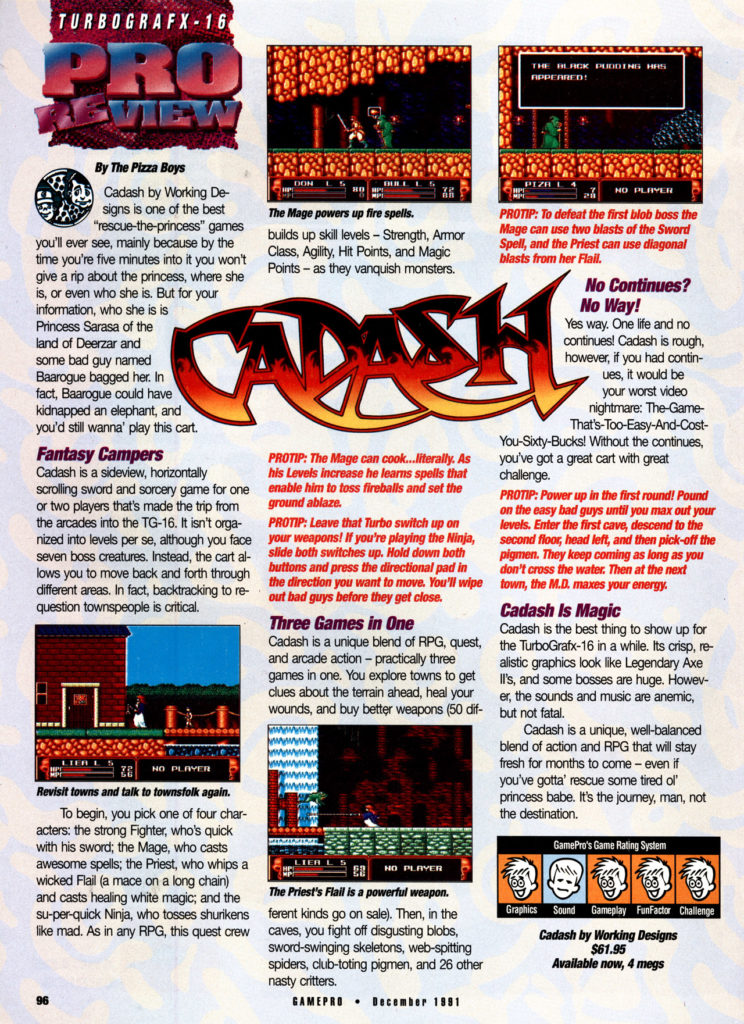
GamePro’s review of the TurboGrafx port of Cadash, which unlike the Genesis/MegaDrive’s version has all four characters from the arcade game. The review’s written by “The Pizza Boys,” and has slangy writing and goofy little cartoon faces over the review scores, because it’s in a magazine written for teenage boys from 1991. Notice, the whole review is seven paragraphs, with four section headings, and four “PROTIP” inserts that don’t offer useful advice:

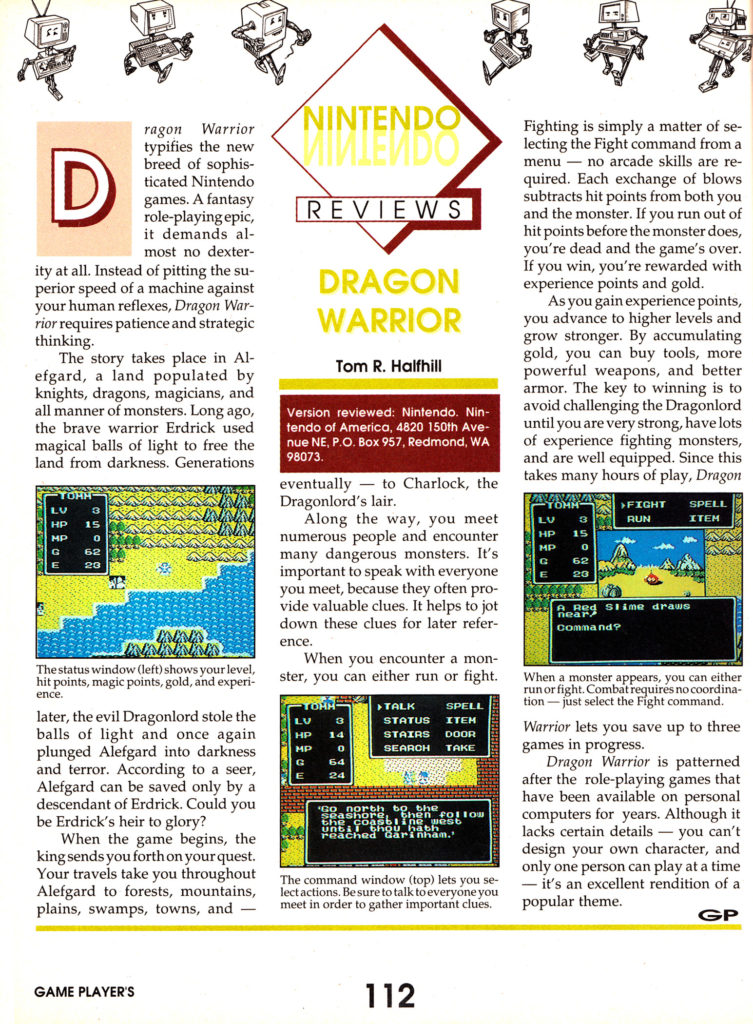
The review of Dragon Warrior from Game Player’s. I love it when magazines from this era publish the address of Nintendo of America. This review doesn’t really tell you much about the game though:

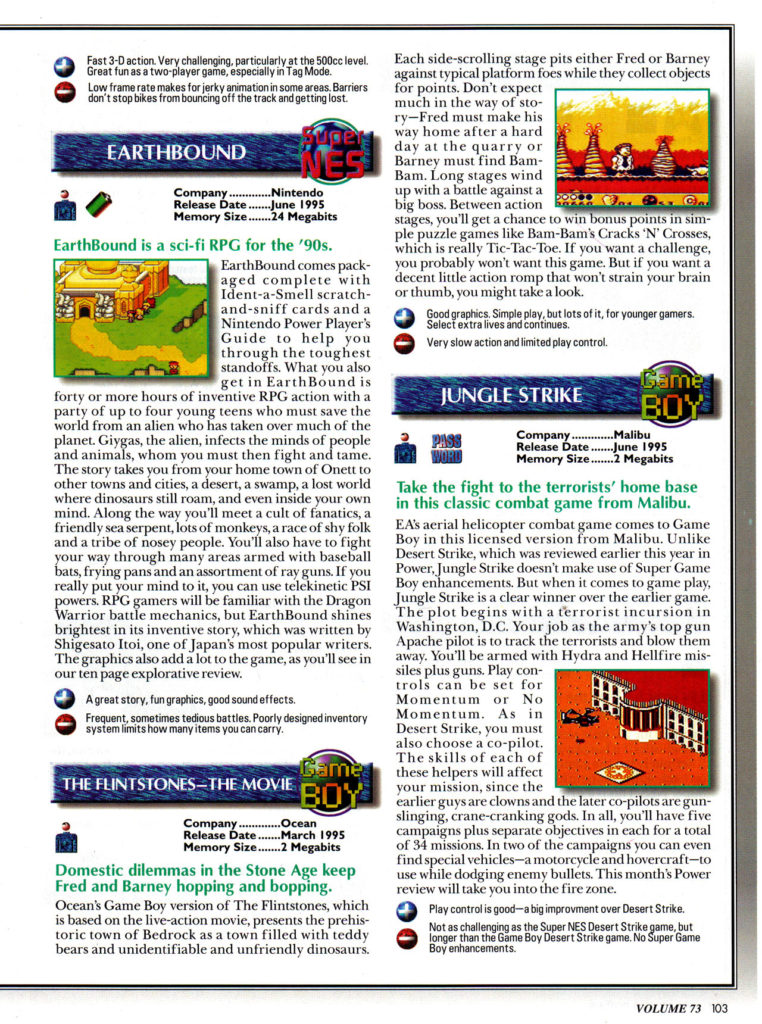
I had forgotten about this phase in Nintendo Power’s history. Check out their dissing the inventory of Earthbound, Nintendo’s own product! (I disagree, BTW, Earthbound is designed around its inventory limits, and they’re an essential part of the game!)

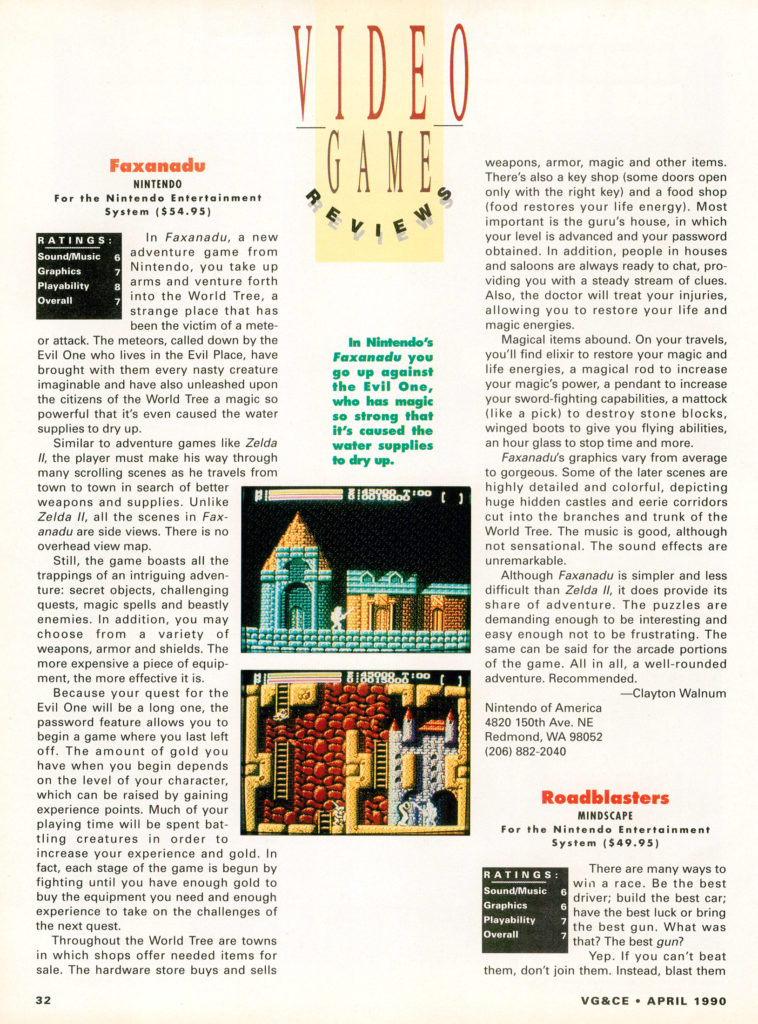
VideoGames & Computer Entertainment has always had a place in my heart, and Clayton Walnum is one of my favorite reviewers. In its heyday it had a no-nonsense approach to their reviews that appealed to me. It was the exact opposite of Electronic Gaming Monthly, a magazine that, honestly, I never much liked because of their loud editorial style and tendency to bloat their magazine up with advertisements:

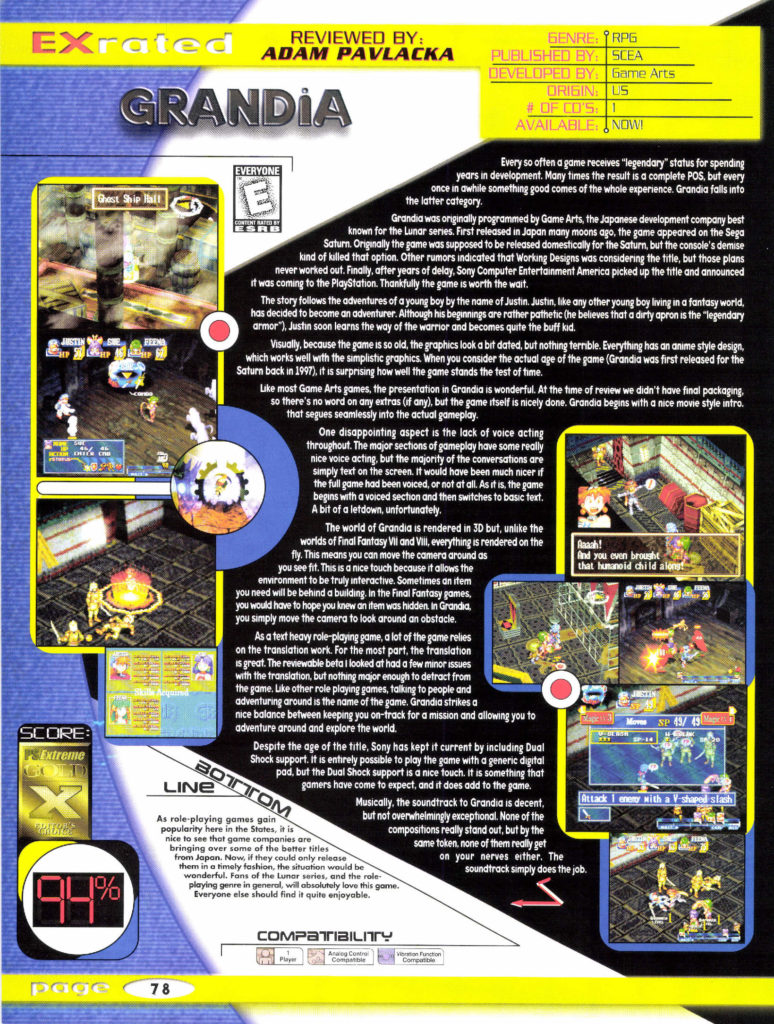
Who doesn’t love Grandia? This review reminds us that we almost didn’t get an English version of it!

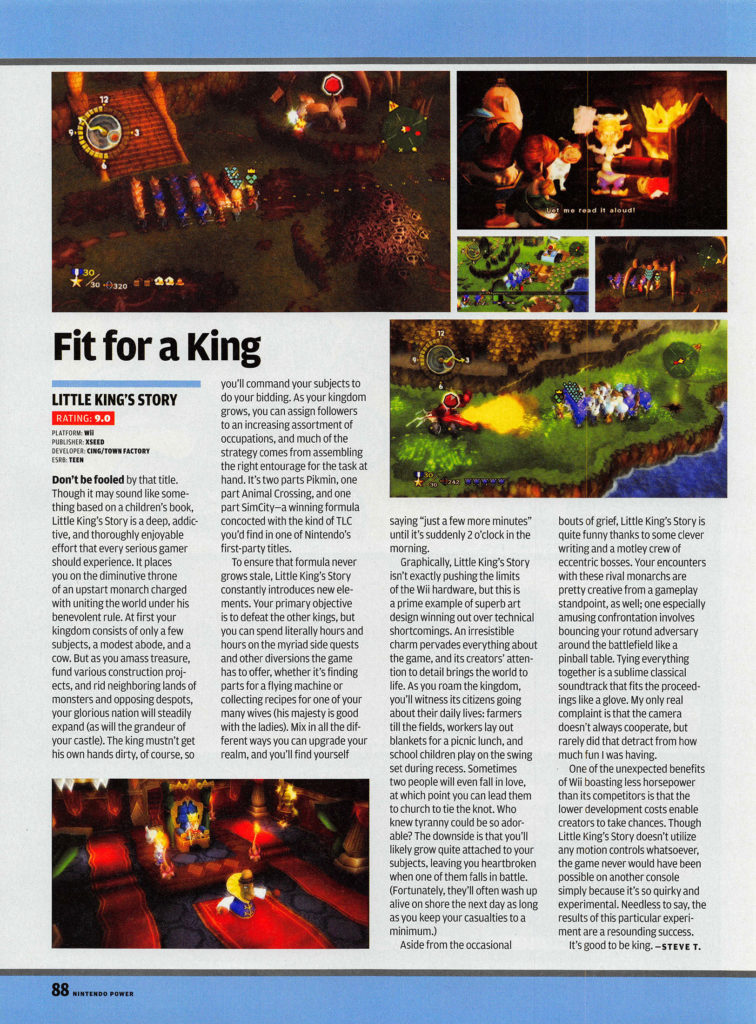
Little King Story is, no lie, one of the most overlooked Wii games of all time:

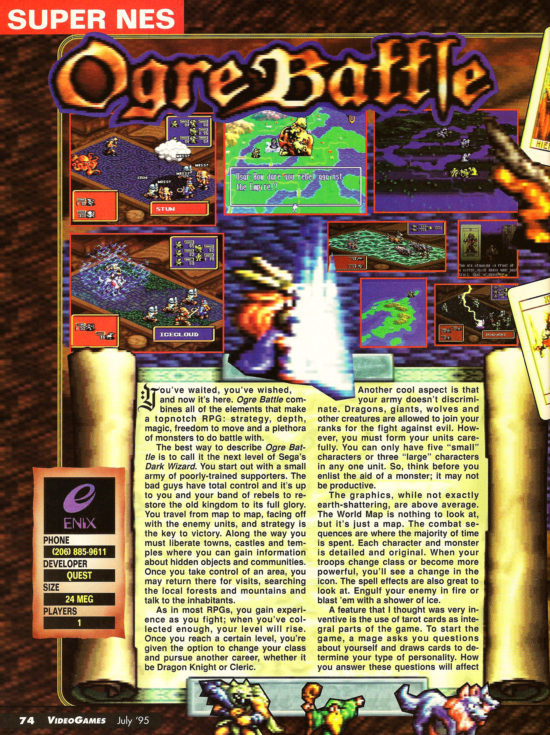
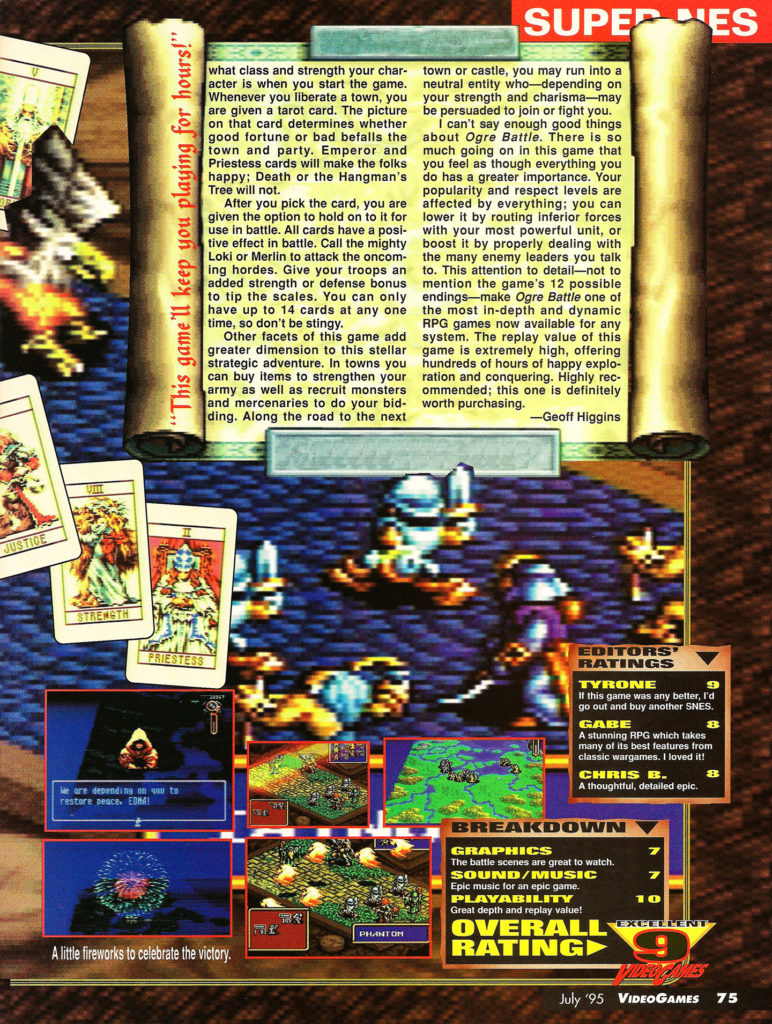
“VideoGames: The Ultimate Video Game Magazine” had a redundant title, but some fun layouts. Here’s their two page review of SNES Ogre Battle:

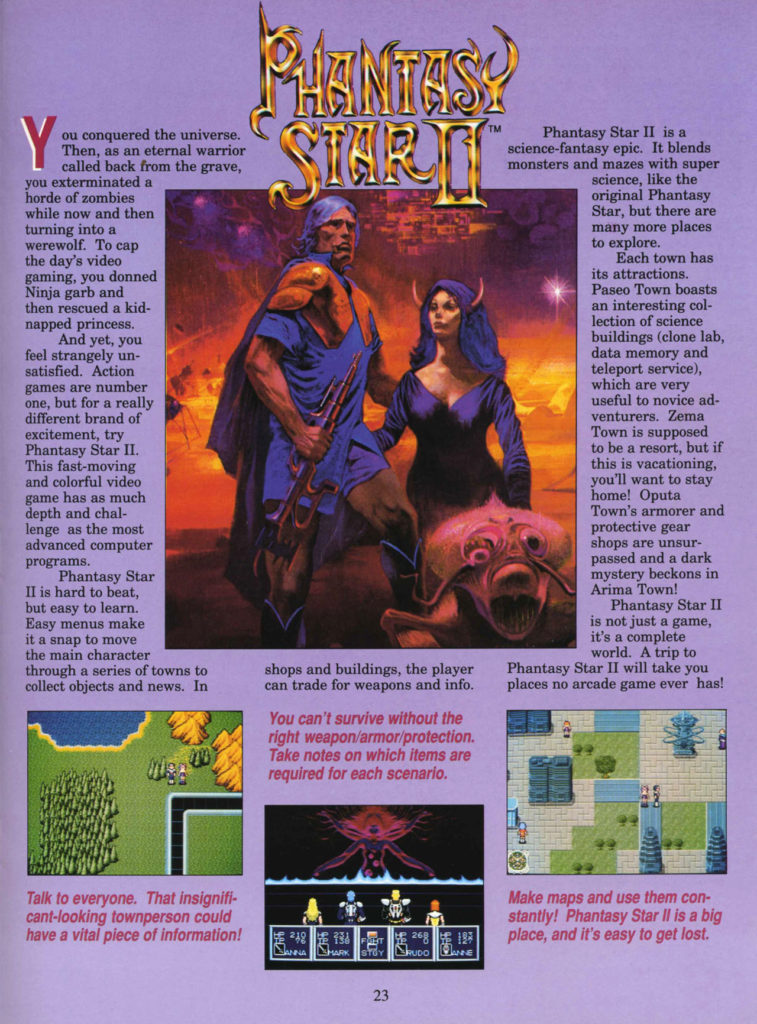
Sega Visions’ review of Phantasy Star II, a very grindy game without much story really, but with some really great twists:

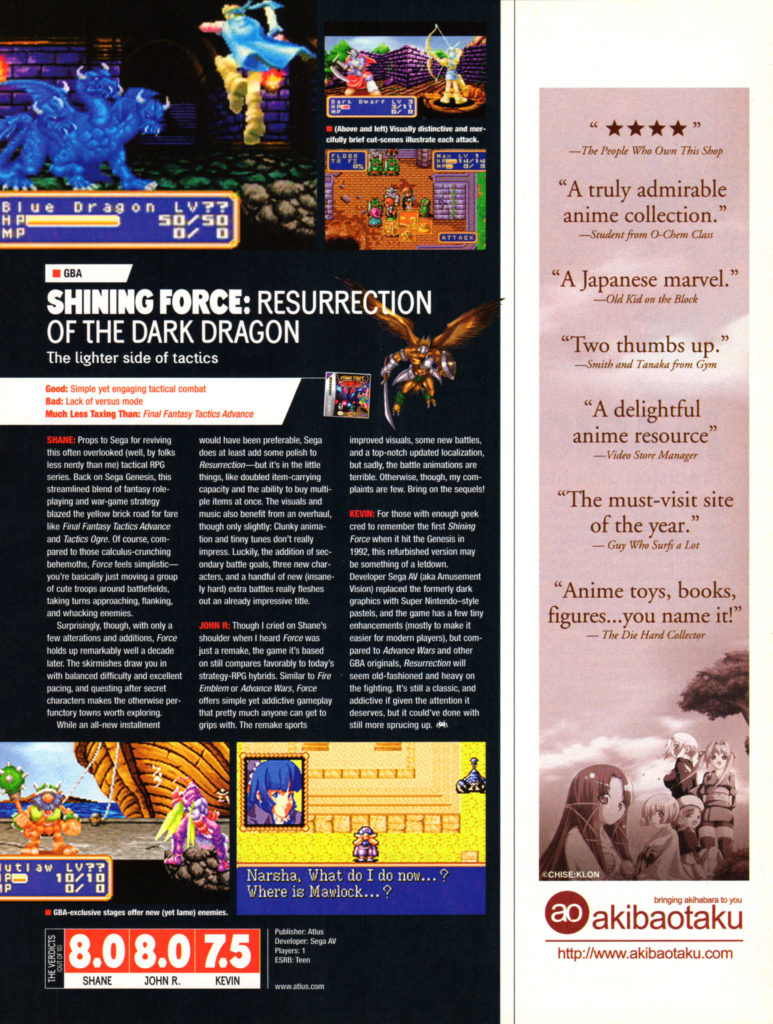
EGM’s review of the remake of Shining Force for GBA:

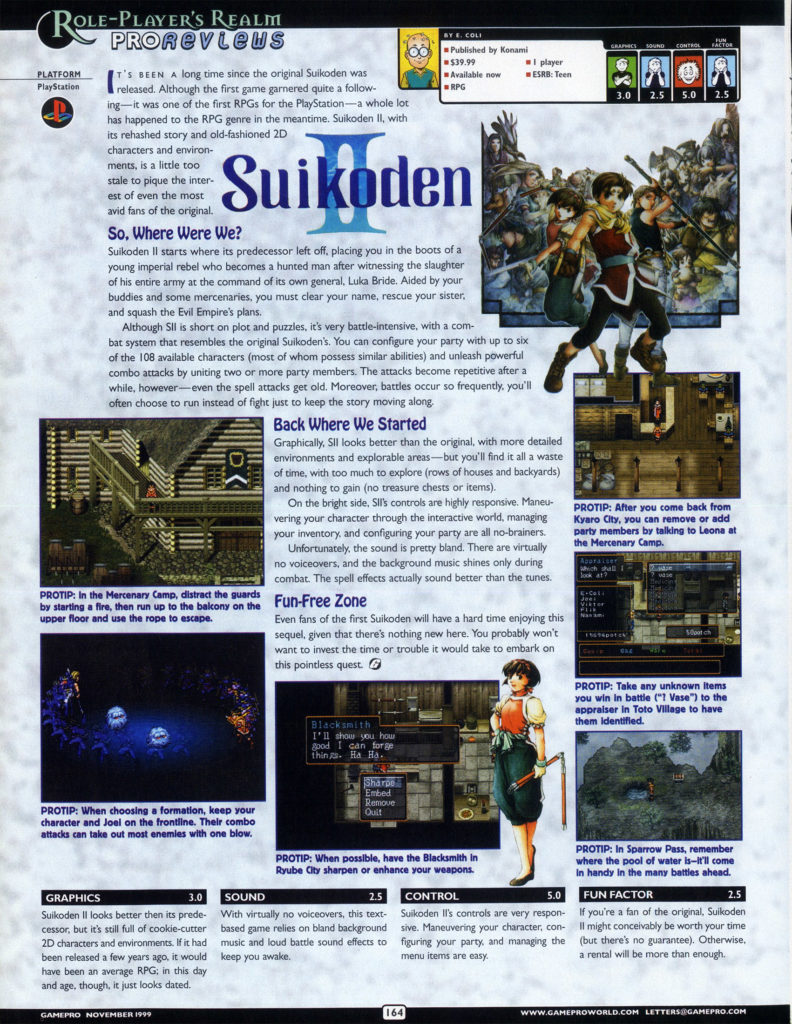
GamePro’s review of Suikoden II didn’t age real well:

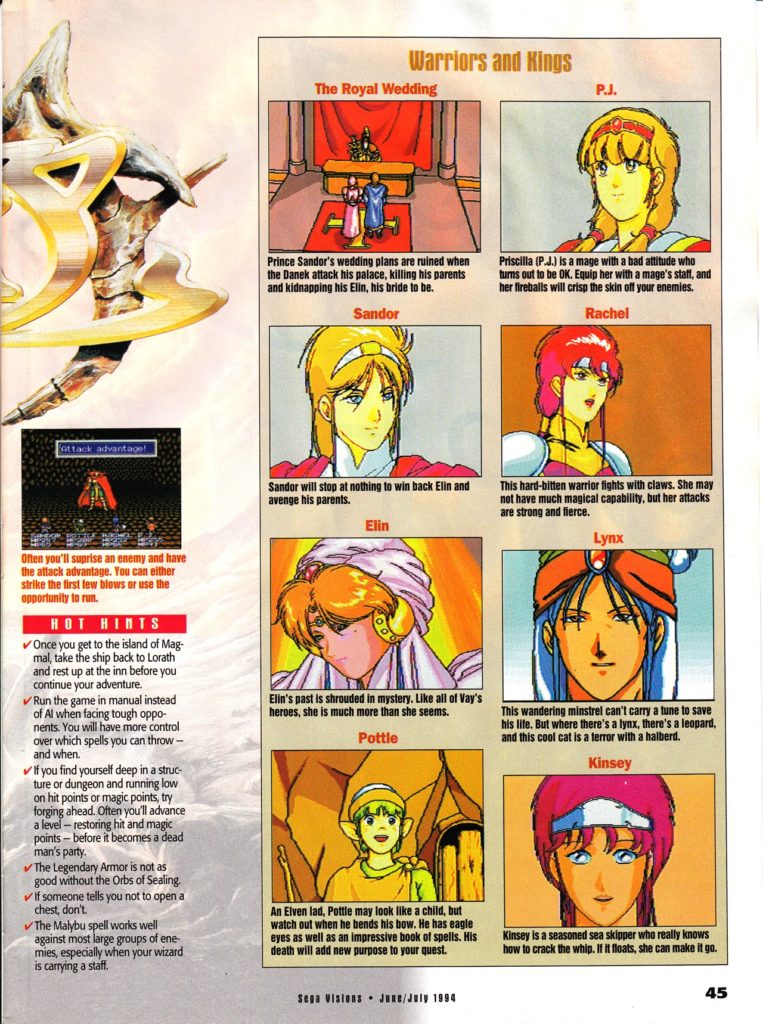
Vay, here mostly to show off the anime character portraits:

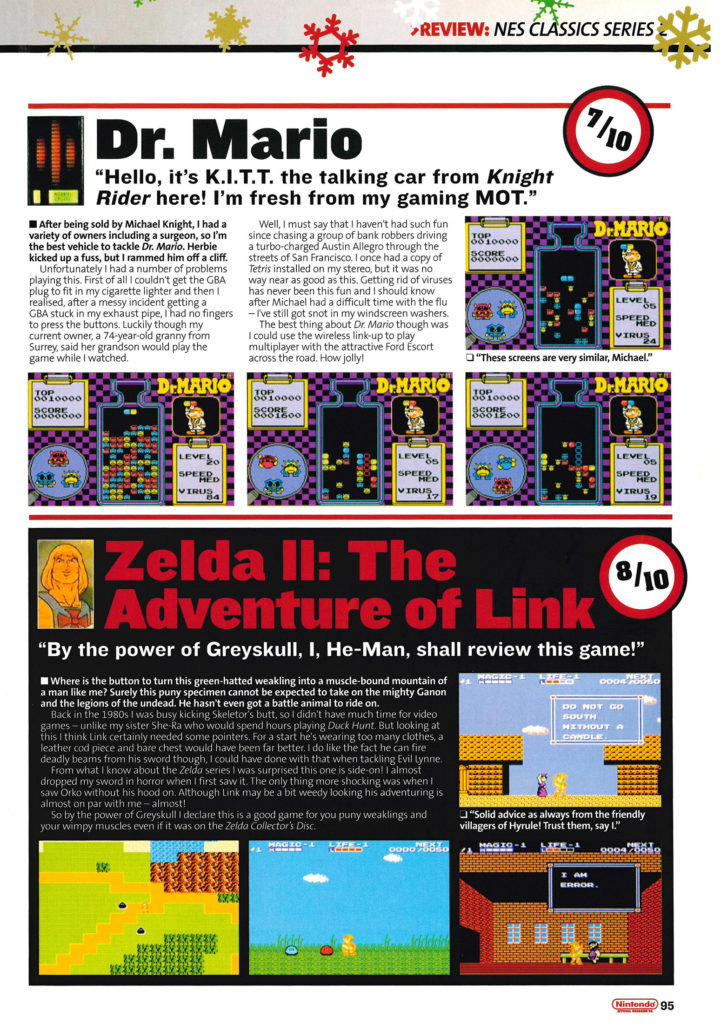
Zelda II in a late review from The Nintendo Official Magazine, with Dr. Mario riding along:

The JRPG Review Archive (spritecell.com)

News 7/4/2022: Gilbert’s Sonic Pac-Mom

“We scour the Earth web for indie, retro, and niche gaming news so you don’t have to, drebnar!” – your faithful reporter

Jay Peters at The Verge reports that, sadly, personal attacks from griefers have caused Ron Gilbert to stop posting updates on the development of his upcoming Monkey Island game. Booo! Don’t be a Gripe Monster, friends!

On NintendoLife, Damien McFerran mentions an piece in the next issue of pay fanzine Lock-On by Undertale and Deltarune creator Toby Fox, about the impact of the Japanese series Mother, known in the US as Earthbound.

Destructoid’s Chris Moyse mentions the remake of Pac-Man World mentioned at Nintendo’s indie-focused Direct has Pac-Mom instead of Ms. Pac-Man, pushing her further down the memory hole. The issue seems to be a rights issue around the character, who was not created by Namco but instead by classic indie arcade designer GCC, who has licensed her exclusively to AtGames.

It was a few days ago, but at Kotaku Jeremy Winslow posted about Simon Thomley, a.k.a. “Stealth,” of Sonic Mania developer Headcannon, about how he has complained that their work on Sonic Origins was done under time crunch, and they were not allowed to debug their work before release, and even that integration with the final product introduced new bugs they were not responsible for.