Balatro is still a thing, and a major update with lots of new jokers is due soon, but until then you might tide yourself over with an online multiplayer mod, available here for PC players.
Each player plays their own independent game of Balatro with the same seed, but when you reach a boss blind after the first one, you don’t play against one of Balatro’s many built-in bosses, but instead you try to beat the other player’s score at that same round. You’re told what their score is in the boss battle (if they’re playing it or have already finished it), but aren’t given other information like which jokers they have or their deck composition. Instead of the usual instant-lose scenario you get a limited number of lives. If you lose but still have a life left, you get some consolation money and get to keep playing. The last player remaining wins.
There are a few other changes, such as a handful of removed jokers, but also some new ones that take special advantage of the format. One unique aspect to multiplayer is, if you’re both in the Boss Blind and your opponent finishes their round and you already have a higher score, you immediately win the round at that point and don’t play your remaining hands. This can be bad (you might not get to use some money-earning jokers, scaling jokers don’t trigger and seals don’t get the chance to work) or good (you get all the money from the hands that round, and you might save glass cards from being broken).
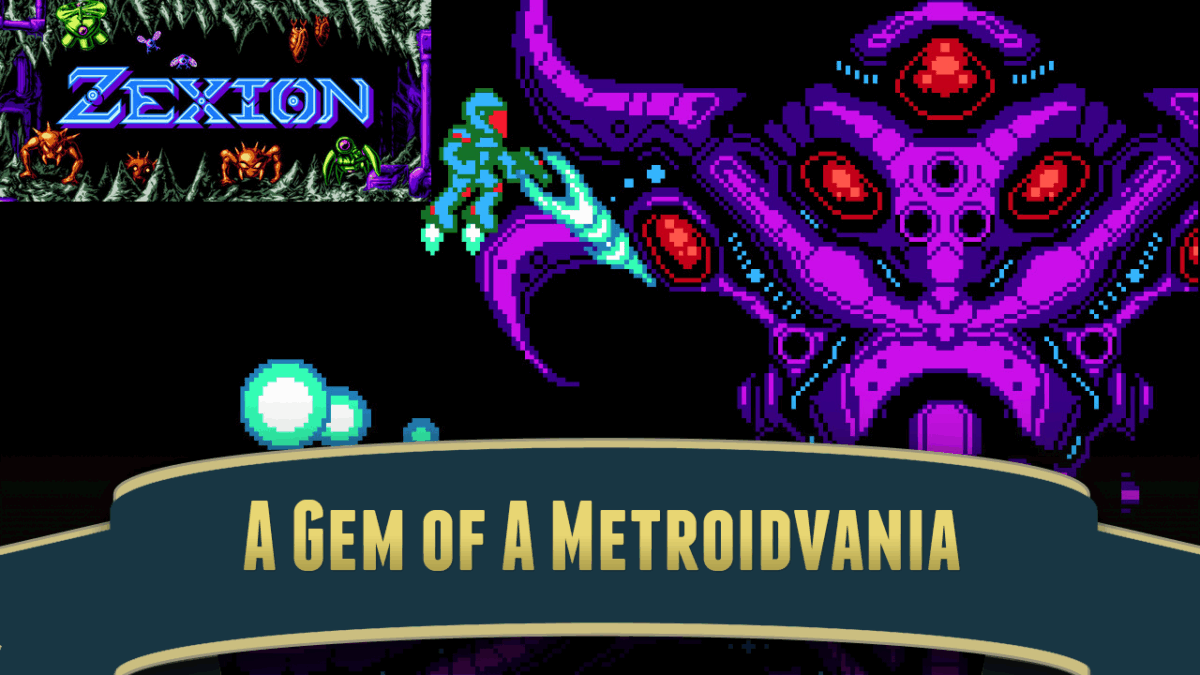
My (Josh Bycer’s) latest review is up for Zexion and how it is one of the best metroidvanias of 2025, provided you are in the mood for a challenging game.
Owner of Game Wisdom with more than a decade of experience writing and talking about game design and the industry. I’m also the author of the “Game Design Deep Dive” series and “20 Essential Games to Study”
Some days I write explanations of Kirby Air Ride City Trial netplay. Some days I write guides to new web media sites. And some days, I found a silly shooter on Youtube that I feel you have to know about. Guess which today is, boing!
I honestly never got into Touhou-style games, even though I know they’re popular and influential. Maybe I’d like them if I gave them a shot, but there’s so many other things to explore out there, I just haven’t found the time.
That Touhou style, and their tremendous Japaneseness is part of what The Girl From Gunma Kai has going for it. According to its instruction screens, it’s a spinoff from a light novel from 2014, and a sequel to a short tie-in game to that novel. It’s on Steam for $10, which may seem a bit much for a relatively short game that purposely chases the MSX aesthetic, with backgrounds that don’t move smoothly but lurch along character block grid, and with large characters that overwrite the background they appear in front of. But that’s just the kind of thing it is.
It’s certainly got tons of personality. While you control a flying anime girl who blasts animals, daruma and steam locomotives(?), a large distracting version of that girl resides in the border, dancing to the music. The “dancing” mostly means being horizontally mirrored to the beat, meaning the feathers in her hair swap sides every frame. In the upper-right corner appear descriptions (and English translations) of the various enemies the girl attacks, giving you helpful information on them, like that this one is made of two different-colored sprites, and that one happens to be delicious to eat.
It’s still an entertaining game to watch. Here’s a one-credit playthrough, although it doesn’t earn all the letters in NEPTUNE (a reference to the Neptunia games) so doesn’t get to go on to the secret end stages. It’s 31 minutes long, but if you don’t have an affection for this kind of fare you probably won’t watch it all. A few minutes will give you the idea. (I did watch the whole thing, mind you.)
At the end of the instructions, it says: The game includes a strong homage to the MSX which (creator) HUGA dearly loves, particularly aiming for the cheap rough-around-the-edges vibe of CASIO-made games. Back in the day, there were tons of these unpolished games, and we think there’s room for at least one today. We hope this game sparks a wave of cheap, carefree and delightfully crude games flooding the world—games you can play without overthinking it.
HUGA, you and me both. I love both your style and your affection for that era. May The Girl From Gunma Kai take over the world!
Owner of Game Wisdom with more than a decade of experience writing and talking about game design and the industry. I’m also the author of the “Game Design Deep Dive” series and “20 Essential Games to Study”
It’s a scary yet hopeful time for web media. As it must periodically, the hard fist of capitalism has let a number of very talented individuals slip out of its grip, and they’ve started their own little ramshackle internet presences to try to slice themselves out a sliver of the money pie.
Here I present six such groups. Some you’ve probably heard of, some you may not have. I am essentially on their side, but I also have to be on my own side, which is frankly impoverished. There is no way I can subscribe to all of them simultaneously. I figure, few of you can either. Maybe, by explaining their offerings and what they’re about, I can help you to come to a better decision. Maybe by doing so, I can help myself too.
Of course it doesn’t take much for a small group of hopefuls to stake out a tiny claim on the digital frontier, and I’m only covering the names I know of personally here. Hence the word “partial” in the title. If you know of some other small, worthy group that the world should know about, please leave a comment on this post! No spamming please. Speak personally and sincerely, and I may check them out and report back later. (No promises. My project list is long.)
Note 1: I try to report when these places have homepages, Youtube accounts, Patreon pages and Bluesky accounts. Many of them have Twitter accounts too. Will I tell you about them? NO.
Note 2: I performed a test with all these sites. I logged out, deleted site cookies, turned on a VPN, disabled my ad blocker and checked how obtrusive were a site’s paywall to a new user. The results are part of the notes below.
Note 3: I do complain about paywalls below. I have a very limited income, I can’t afford to subscribe to every place, and paywalls make sections of the web basically inaccessible to people like me. If I am to be honest about my perspective in my writing, I must complain about paywalls. I try to be as understanding as I can, and I do subscribe to some of these sites (currently Aftermath, Second Wind, and a trial for Defector). It used to be viewing ads could help out a person like me, but as ad partners have sought to extract more and more profit with autoplaying videos, maddening overlays, invasive user tracking, and sometimes outright introducing insecurities into page loads, blockers have become essential kit to the serious web user.
(There used to be a site, Project Wonderful, that was run by Dinosaur Comics creator Ryan North, and prided itself of serving useful, unobtrusive and safe ads. It was a personal project of his and eventually he had to shut it down. I think it’s still a niche that needs filling.)
DEFECTOR
When? – Founded September 2020 Who? – Webugees from Deadspin What? – Sports reporting and general culture. Cost for full basic access – $8/month, $79/year. $12/month or $119/year also gets you a daily newsletter with “exclusive content,” and access to extra episodes of the podcast Normal Gossip. There’s also a Richie Rich tier at $1,000/year. (Let’s band together and make calling silver spoon levels Richie Rich tiers. Well, I’m going to do it anyway.) Notes: The Defector is the oldest of the new indie media groups listed here, getting well ahead of the curve by getting fired from Deadspin in 2020.
I want to like Defector, a great deal. Wait I introduced this the wrong way: I do like them! They’re the ones on this list with the most buzz and good will behind them, from the virtue of their quality and their writing. Sadly, their main bailiwick is sports reporting, and I bounce hard off of that. They have other content too, and that content is one of the reasons they’re no longer with Deadspin. I still tend to subscribe to them if they have a free or low-cost trial going (which is the case at this moment). But it’s a plain fact that the major part of their output is sport-related.
Lots of people like sports, and a lot of sports people liked Deadspin before the exodus, so I think they won’t have trouble keeping the lights. Completely logged out and IP-masked, the paywall kicked in after the fourth article read, I assume in the month. That seems fair to me, although if I link a page from them on social media, it means some people won’t be able to read it.
Defector has a website, podcasts, a Bluesky account, and a great little addition, a weekly crossword puzzle, although I haven’t done any due to the fact that the worst clues in any crossword puzzle are those involving sport. Defector also has a Youtube channel, but it hasn’t had many posts in the past year. Maybe they’ve ceded that space to Secret Base (see below).
AFTERMATH
When? – Founded November 2023 Who? – Webugees from Kotaku What? – Culture and review, mostly of video games but other things too. Cost for full basic access (read all articles, all podcast episodes) – $7/month, $70/year. They have a $10/$100 tier for commenting privileges—a lot of these sites hide commenting or Discord access behind a higher-level tier. There’s a Richie Rich tier at $999. Notes: Aftermath has the star power of nearly everyone who used to be popular at Kotaku behind them, and seems to subsist on their name recognition. Those names are: Luke Plunkett, Nathan Grayson, Riley MacLeod, Gita Jackson and Chris Person. Aftermath has generally good gaming and related topic content, and harbors an affection for the oldweb, which endears them to me, despite the thing I’m about to mention. Ahem.
Aftermath appears to paywall all of their articles with no freebies, which is annoying, even to people who subscribe (like me!), because it makes sharing links from them hard. Aftermath has a website, podcasts, an RSS feed, and is on Bluesky.
SECOND WIND
When? – Founded November 2023 Who? – Webugees from The Escapist What? – Video game culture and review Cost for full basic access (all posts readable) – Through Patreon, $5/month or $54/year. This means all premium videos. Higher tiers are $25/month (gets you a digital artwork each month) and $50/month (hang out with the Second Wind folk in a monthly Discord meeting). Notes: A lot of these new wave pop media groups have a somewhat fuzzy focus, but Second Wind sticks pretty closely to video games. This is where Ben “Yahtzee” Croshaw went, leaving his long-time series Zero Punctuation to make a close copy of it called Fully Ramblomatic.
The story of the internet is that it’s really hard for an independent content creator to make a go of it without a leg up from someone, somehow. Yahtzee’s was nominally from The Escapist, but truly he hit it big back in the days of Big Blog, from several high-profile links including from Boing Boing. Second Wind has, in turn, gotten a lot of juice from Crowshaw’s star power, but they have other things to offer too.
A weird thing about Second Wind is that they don’t have a website of their own, but they are on Youtube and Twitch, they have a Patreon, and they’re on Discord. That seems to be it; if they have other avenues of output, their lack of a home site makes it difficult to find them. Hey! SW people! It’s not hard to make a basic website! Consider it! RSS would also be good! They are on Bluesky at least. They have “podcasts,” but only distributed as part of their Youtube channel, which is not what a podcast is.
404 MEDIA
When? – Founded August 2023 Who? – Webugees from Motherboard What? – Reporting and commentary on technology and the internet in general Cost for full basic access (all posts readable) – $10/month, $100/year. That’s high, comparatively. There’s also a Richie Rich tier at $1,000/year. Notes: 404 Media lists their people at Jason Koebler, Emanuel Maiberg, Samantha Cole, and Joseph Cox. As purveyors of general tech writing, they have a pretty broad remit. Judging by their headlines they have been fervent crusaders against the “AI” slop industry.
404 Media engages in paywalling and modal subscription ad overlays, but doesn’t paywall as much as Aftermath does. If you go to their site to see what they’re about without a subscription, depending on the article, you might be allowed to read the whole thing, or you might be cut off after two paragraphs, or it might just be denied entirely. I never got ads, even with my ad blocker off, despite a tiny link marked “advertisement” in some empty spots on pages. (I’d consider adding an ad blocker exception for 404 Media, but it doesn’t seem to matter either way.) 404 has a website, an RSS feed for paid subscribers (info here), and an ad-supported podcast with a paid version with more content.
SECRET BASE
When? – The SB Nation Youtube channel was renamed to Secret Base in August 2020, but content that would be part of this was made as far back as 2017 and earlier. Who? – A portion of the people at SBNation, particularly Jon Bois What? – Articles and videos, 90% related to sports Cost for full basic access – Through Patreon, $5/month, that gets you early access to their wonderful videos. A $10/month tier gets you some unnecessary niceties. If you can’t afford it, their videos appear on Youtube eventually, months later. Notes: Secret Base is legendary* for making sports videos of interest to non-sport enthusiasts, a trick they picked up from probably their most prominent creator, Jon Bois. Secret Base has a Patreon and a Bluesky account. They take the monetization tack of releasing their videos on Patreon months before Youtube. I figure that’s not a bad strategy in this difficult era. Secret Base’s Youtube videos are highlights, not just of Secret Base but of all of Youtube, including Dorktown, Pretty Good, Weird Rules, Chart Party and Fumble Dimension. Secret Base doesn’t have a top-level domain site, but they do have a sizable subsite at SBNation and that terrific Youtube channel.
* What do I count as legendary? What I hear a lot about them from other places, notably social media and Metafilter.
DUMB INDUSTRIES
When? – Signs suggest that it began to offer content apart from the Maximum Fun network in 2020 Who? – Teevee-ugees from Mystery Science Theater 3000 and some others What? – Comedy videos and livestreams Cost for full basic access: They offer five memberships to different products. Three of them are free for basic access, but all have at least one paid tier. For the free products, throwing them $2/month gets you access to archives. The paid-only memberships are $5/month (Mary Jo Clubhouse) and $15/month (Jackey Neiman Jones’ Art Lessons). Subscribing their Twitch stream to remove ads is $7.99/month Canadian, which as of this writing is $5.83 US. (With an Amazon Prime subscription you get one free Twitch subscription; even though it’s part of “Prime Gaming,” Dumb Industries only streams games once in a while.) Notes: I’ve followed Dumb Industries for awhile and I think it’s worth including them. They show a number of comedic segments: movie and shorts riffing from Frank Conniff and Trace Beaulieu, 70s video streaming and commentary from Mary Jo Pehl, art lessons from Jackey Neyman Jones, a new riffing show, Movies Are Dumb, with Chris Gersbeck, and a variety of things under “Odds & Ends,” which are offered with any membership. They have a website, sell videos for stream and download from Vimeo, and have both a Twitch and a Youtube channel. Note that a portion of their gig is selling videos, which are not available on demand unless purchased.
Some time ago on Game Developer I did an interview with the creator of the classic Mac, Apple II and C64 programming game Chipwits, who were working on a modernized version. Well their efforts have been released to the public now: Chipwits 1.0 is now out on Steam!
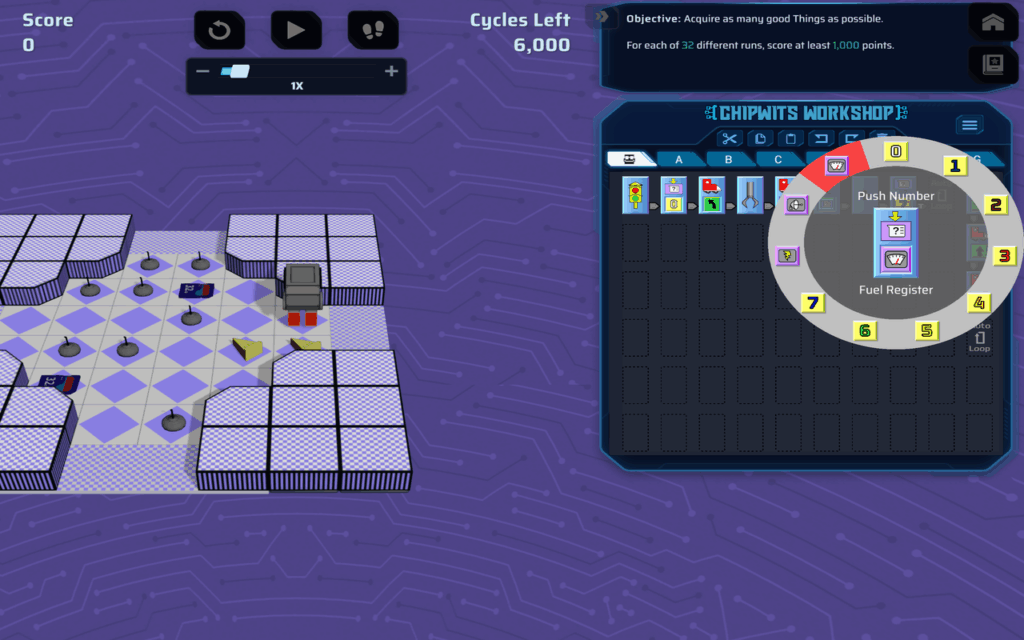
You devise programs using a graphic interface to get a robot character through a maze-like grid world to do various things. The original Chipwits was written for the original Mac, in Forth, with ports for different machines of the time. The new game has a nice tutorial as well as new scenarios, in addition to the scenarios that came with the original game.
The thing I like about Chipwits is, it isn’t always about solving specific puzzles. Many of the maps are open-ended. The robots have a limited amount of fuel, which translates into machine cycles to run your programs. Additional fuel can be replenished by objects found in their exploration, as well as objects worth score, but the objects are frequently randomly placed. These scenarios aren’t about tailoring a program to a specific placement objects, but devising a more generalized exploration routine that can adapt to a variety of placements. There are online leaderboards so you can see how your coding skill compares with that of other players.
Chipwits usually goes for $15, but for launch is currently 10% off on Steam. (Disclaimer: I interviewed the Chipwits people for Game Developer previously, and did a little beta testing, but I bought my own copy of the game for these screenshots. They deserve the money!)
Owner of Game Wisdom with more than a decade of experience writing and talking about game design and the industry. I’m also the author of the “Game Design Deep Dive” series and “20 Essential Games to Study”
We love it when we find weird and unique indie games to tell you all about! Our alien friends to the left herald these occasions.
Writing about Nintendo fangames is fraught. Not that something might happen to me, the insidious grasp of their legal team doesn’t stretch that far yet, but for the games being written about. Remember AM2R, a fan remake of Metroid II that many believe was superior to Nintendo’s own revision? Then some big sites mentioned it, Nintendo heard about it, and they sent the creator a nastygram demanding they take it down. Set aside the fact that the game can still be readily obtained from numerous other sources; it still dumped a big bucket of freezing cold water on the hard work of its maker, which is hardly a way to treat fans, especially since the company’s prosperity depends on their good will. Nintendo must be really certain those enthusiasts won’t reject them.
About our own blog, I don’t think anyone at Nintendo personally reads Set Side B. I’m sure their well-paid legal staff has plenty better things to do than read an obscure little daily retro/niche/indie blog, even if it’s one that posts articles on their products really often. But it does seem possible that someone at Nintendo might run a spider, an automated program that scans the internet for derivative works related to their products.
Not romhacks, mind you. For some reason Nintendo doesn’t take a lot of interest in romhacks of their work in most cases. But fanwork that uses their IP in one way or other has been known to attract the attention of the legal Warios. That is why AM2R got stomped upon by the Kuribo’s Shoe of Civil Law, and it’s why Zelda Online had to retitle to Graal Online (a project that continues to this day under that name).
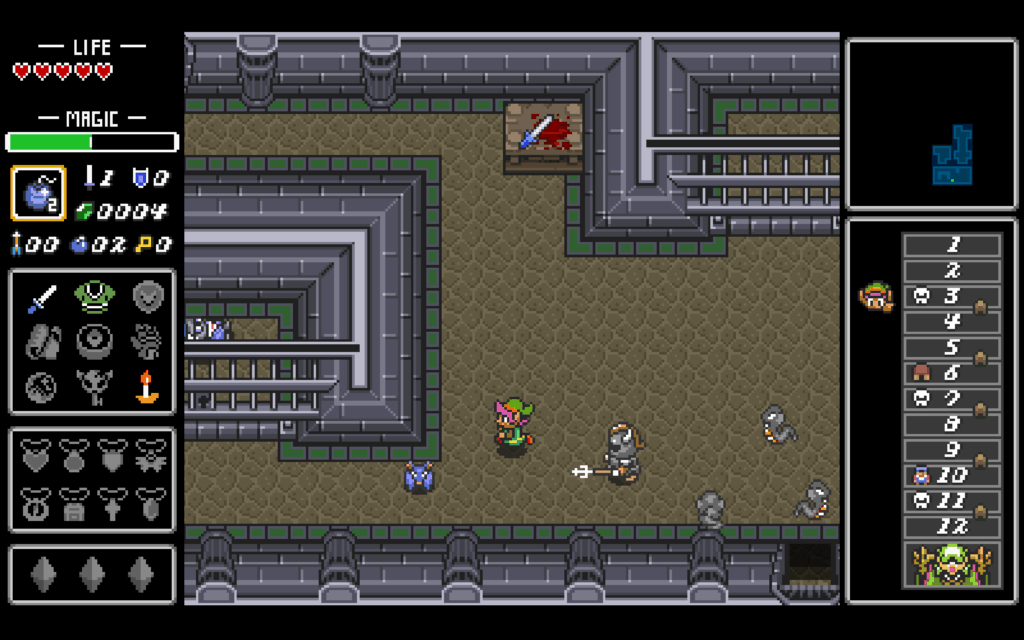
I tell you this so you’ll know why I don’t give the full name of the project I’m going to refer solely by the second half of its title: Dungeons of Infinity. Any person looking at the screenshots will be able to easily tell what game it’s referring to, and uses assets from, but web crawlers won’t, or at least I won’t make it any easier for them than the Youtube videos that contain footage of its play. If you figure you want to try it, which I hope you will, if you search for it you’ll probably find it. I’ll help you out by telling you it’s not the board game Dungeons of Infinity, which had a Kickstarter in 2024. Many of the top hits for that phrase will be about that, but not all of them. I trust you’ll be able to tell them apart.
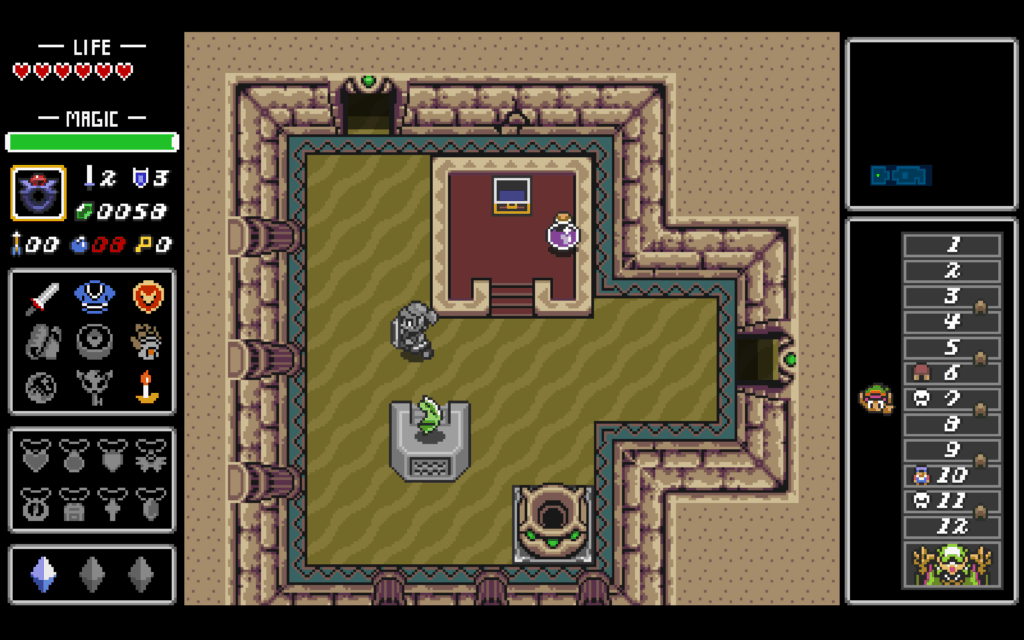
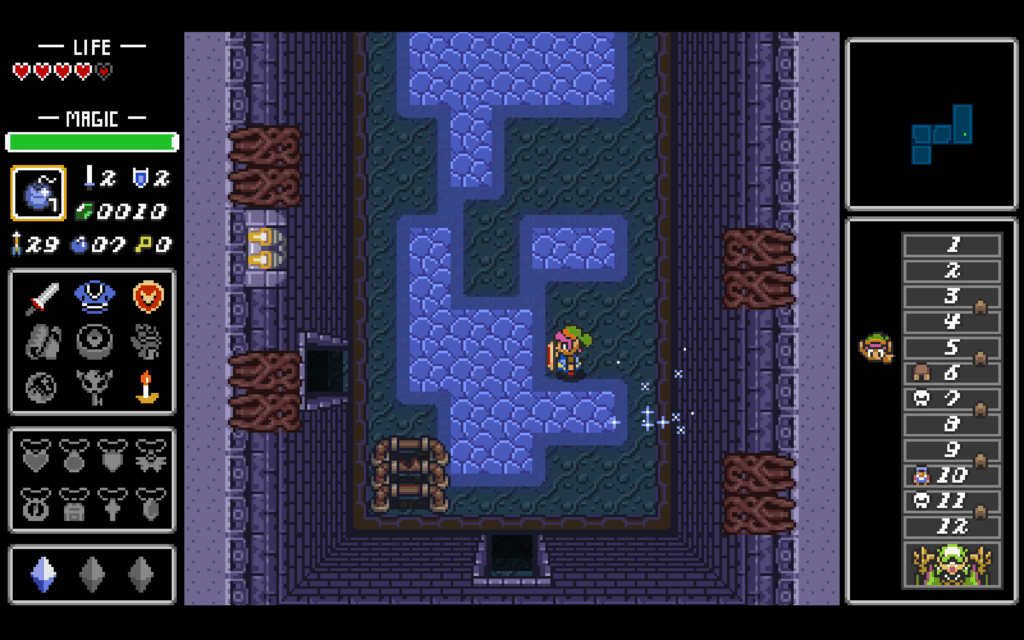
(mumble) is gray here because he’s been cursed! Curses rarely and randomly spring from chests that are opened, and impose some restriction upon play, like making shops sell things for higher prices, or making hearts hurt you instead of heal. Each curse has a randomized lifting requirement.
Most of the things I like about (mumble mumble): Dungeons of Infinity are not related to the game from which it borrows. If they could find some helpful people to make similar graphics in the same style, and changed the name, they might be able to escape danger entirely, but that might require time and effort the creator doesn’t have. Whatever be its trappings, it’s a pretty cool random dungeon exploration game in its own right. It has a pretty active Discord. Its creator mentions there that they’ve recently lost interest in working on the game so its current version, 1.2.1, will probably be its last. It’s still pretty cool as it stands.
So the idea is, like in the other games in the series of, um, The Saga of Fitzgerald’s Wife, is to pilot a green-suited elf kid through dangerous and tricky dungeons and caverns full of monsters and traps, collecting items and uncovering secrets. What’s different is that the game is much more linear than those other games (much like the Four Swords Adventures titles), and the rooms and their arrangements are randomly determined. So… also like the Four Swords Adventures games, although this one is purely for solo play.
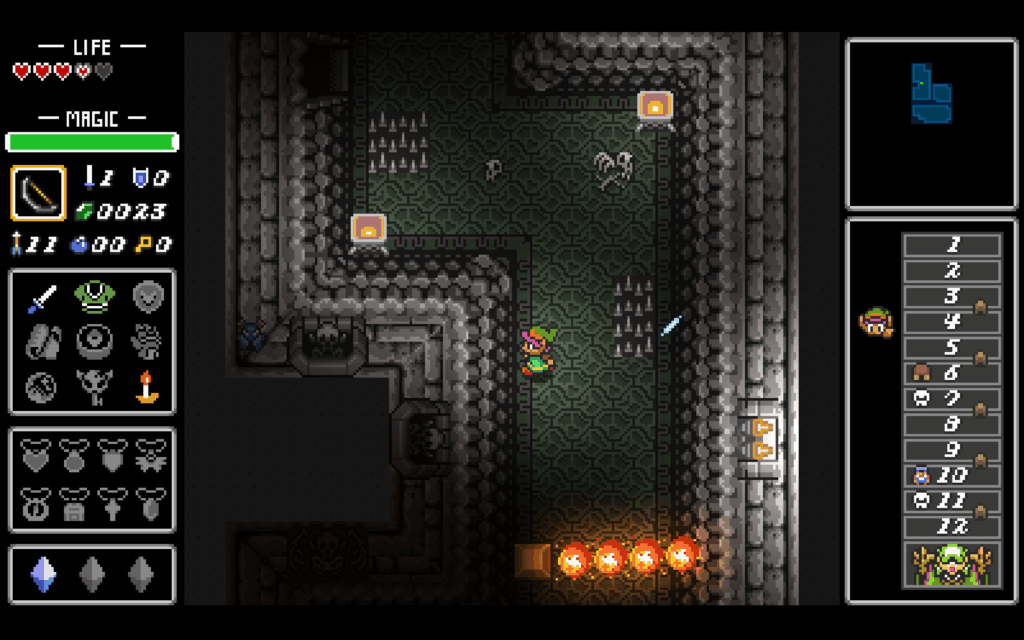
The Armos Knights, from The Saga of Fitzgerald’s Wife: A Connection to Previous Times, are much harder than in the original, without their former weaknesses. Arrows don’t seem to even harm them. (EDIT: DoI’s creator reached out and said they are vulnerable to arrows, it’s just the last phase of the fight, when there’s just one left,that it becomes immune.)
If you explore throughly enough you’ll always find a way forward, the game isn’t designed to give you unsolvable situations. But what can change, and quite a lot at that, is the items that you find. Weapons like the Bow, the Hookshot or the Boomerang have to be found, or sometimes bought, if you want to use them. None of these items are required to win, but without certain items, like Sword and Tunic upgrades, or extra Heart Containers, you’ll find the going much more difficult.
There are some pretty tricky secrets in this game. Try to remember all the different ways things could be hidden in the previous game.
In fact, probably the game’s biggest drawback is that it falls prey, a bit, to fangame difficuly malaise. Bosses that in the original game aren’t hugely difficult here are tenacious damage sponges. Everything in the game has been tuned to be that little bit more difficult: you have less health, sources of healing are less common, and enemies take more damage. Due to the nature of difficulty, all of these individual sources of peril multiply together and become much harder than the sum of its parts. And (mumble mumble): Dungeons of Infinity is a permadeath game: if you take too much damage and run out of hearts, the adventure ends, so to keep going you have to start over from the beginning, fighting all the early enemies once again, and building a whole new collection of random items. If you’re not up for a challenge, well, you probably shouldn’t bother downloading it.
Here’s some details that it might be useful to know:
To be frank, the many dark rooms in (mumble mumble) Dungeons of Infinity are probably my least favorite part of it. You don’t get the helpful cone of vision in dark areas here, and lit torches only light up a small area around them. There is an item that can give you a bit more visibility.
You have a very limited inventory space. You can only hold five items by default. The bow & its arrows count as separate items too, as do your bombs and any healing items you find. You can find, or (more likely) buy inventory expansions, and there are items that help keep other items from taking up inventory spaces, but you’ll frequently have to make difficult choices for what to keep.
On the other hand, items you drop, or don’t have room to collect, don’t disappear. They’ll remain on the ground in the room they were dropped or found in until you come back for them, or else take the downstairs (you don’t get to backtrack to previous floors). If you hold off on collecting hearts when you’re at full health, then when you do take damage, you can come back to pick them up later.
Aiding in this, enemies that you defeat never return. It’s possible to clear whole dungeon floors of monsters, making them much safer to explore.
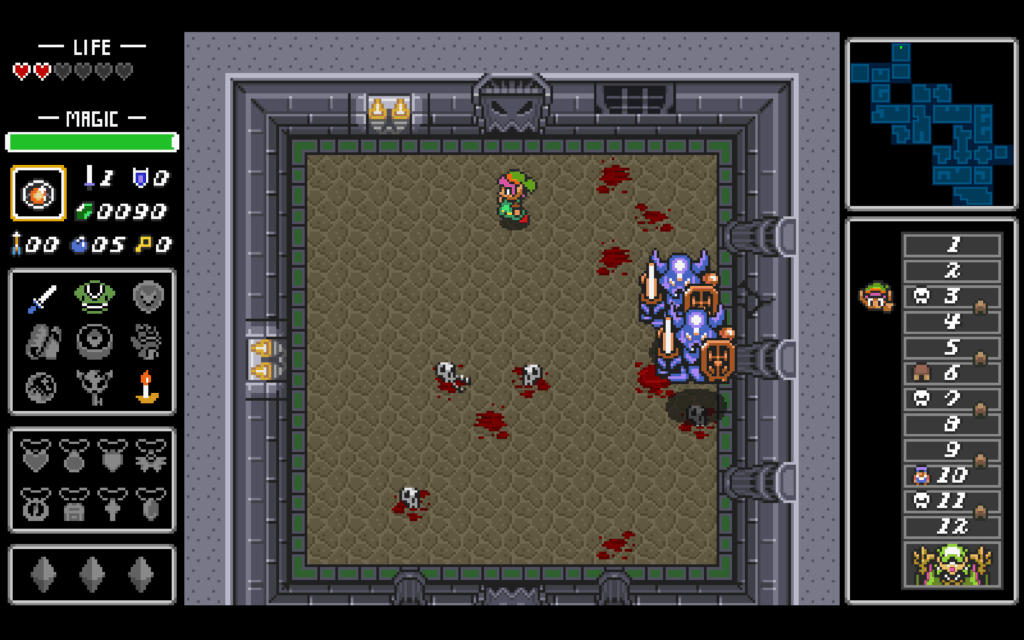
In the bottom-right corner of the HUD, there’s a vertical map of all the dungeon levels, which gives you the low-down on where the bosses are. It also marks the location of save points. In the true spirit of permadeath these points are only for taking breaks, not for continually restoring from, but seeing as how the game is fairly long it’s good to take advantage of them, and refresh the mental batteries for a bit before tackling the next leg of the quest.
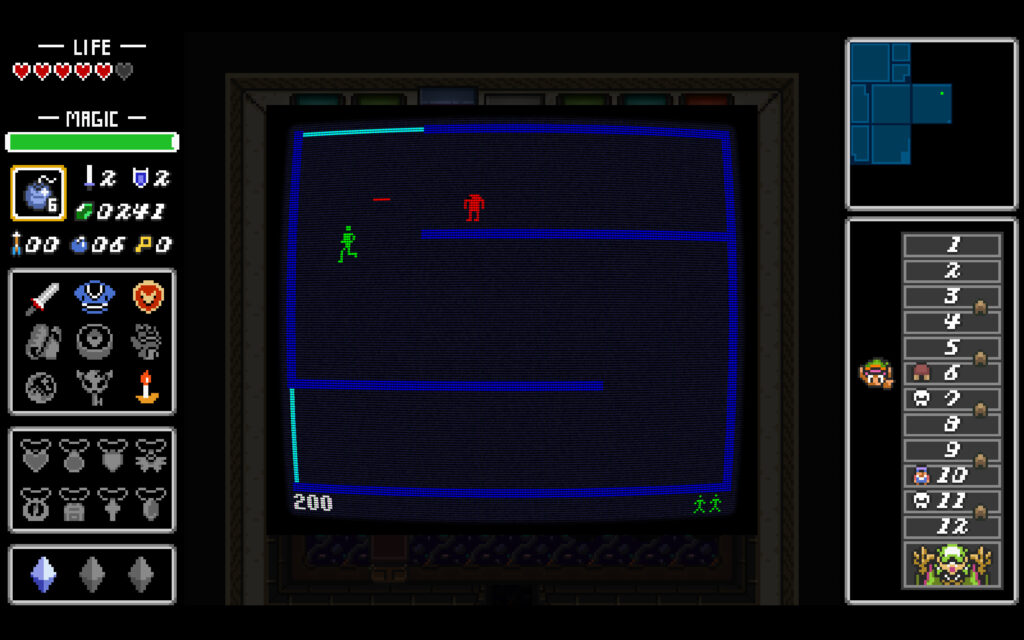
It’s a shame that it’s pretty far into the game, but in the rebel village area on the 6th floor there’s an arcade with a pretty decent remake of arcade classic Berzerk in it, as well as an endless runner version of Pitfall with a recreation of the music from Pitfall II: Lost Caverns! If you get a few rooms into the Berzerk remake, you’ll find another mini-game, within that mini-game. I don’t know how deep this recursive ouroboros of gaming goes, but it’s a very nice touch.
This is a screenshot of the Berzerk remake in the village arcade. I wish this and the Pitfall-inspired endless runner could be played stand-alone!
We love it when we find weird and unique indie games to tell you all about! Our alien friends to the left herald these occasions.
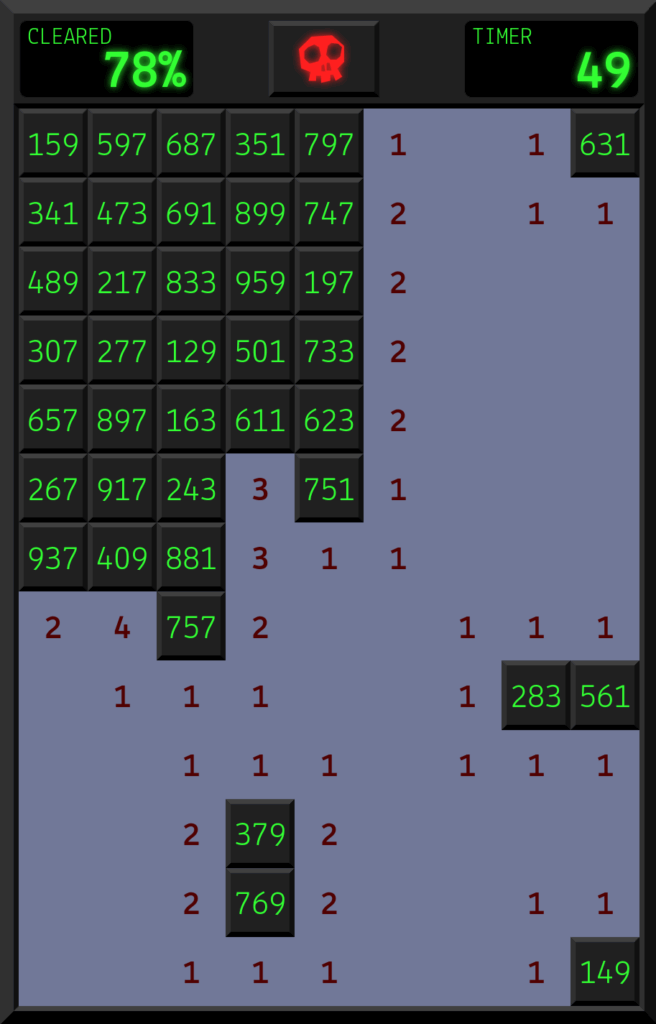
Primesweeper is a recreation of Minesweeper, but with two changes:
You can’t mark squares where you think there are mines. This isn’t as bad as you’d think it would be, partly because…
All the spaces have three digit numbers on them, and the mines are hidden by the spaces with prime numbers.
Don’t let the math terms scare you, it’s not as hard as you’d think it would be, at least if you know a trick to determining divisibility by 3: the sums of the digits of all numbers that add up to 3 are themselves divisible by 3.
Primesweeper is from vole.wtf, created and filled with things made by Metafilter member malevolent, who has made many a free wonderment and entertainthing to enjoy. If you enjoy Primesweeper (or even if you don’t), I’m sure you’ll find something else fun on their website.
Owner of Game Wisdom with more than a decade of experience writing and talking about game design and the industry. I’m also the author of the “Game Design Deep Dive” series and “20 Essential Games to Study”
We’ve posted before here of Diskmaster, a search engine that works on the contents of old CD-ROM file compilations. Diskmaster has gone away and come back at least once, maybe twice, but for the moment at least is up.
Discmaster Jam is a gamejam where participants are asked to make use of contents found on the CDs the Discmaster searches. The winners were judged by a number of Industry People, so you can expect a certain minimum level of quality from those. The list of submissions on itch.io’s page for the jam has a number of extra items on it, to peruse and examine.
Image from the site
One entry that stands out in my vision is “Where In The World Is That #@*% Owl!?” which was written for the somewhat-obscure ACT Apricot computer from the UK, which had monochrome, yet high-resolution, graphics
Image from the itch page for Where In The World Is That #@*% Owl!?
Of note: it turns out one of the disks that Discmaster searches is the original CD version of Loadstar Compleat! So that is another way you could satisfy a jonesing for C64 program action. If you see me report on a Loadstar program of interest, you could possibly find it there, in addition to the Loadstar Compleat compilation I’ve made for itch.io.
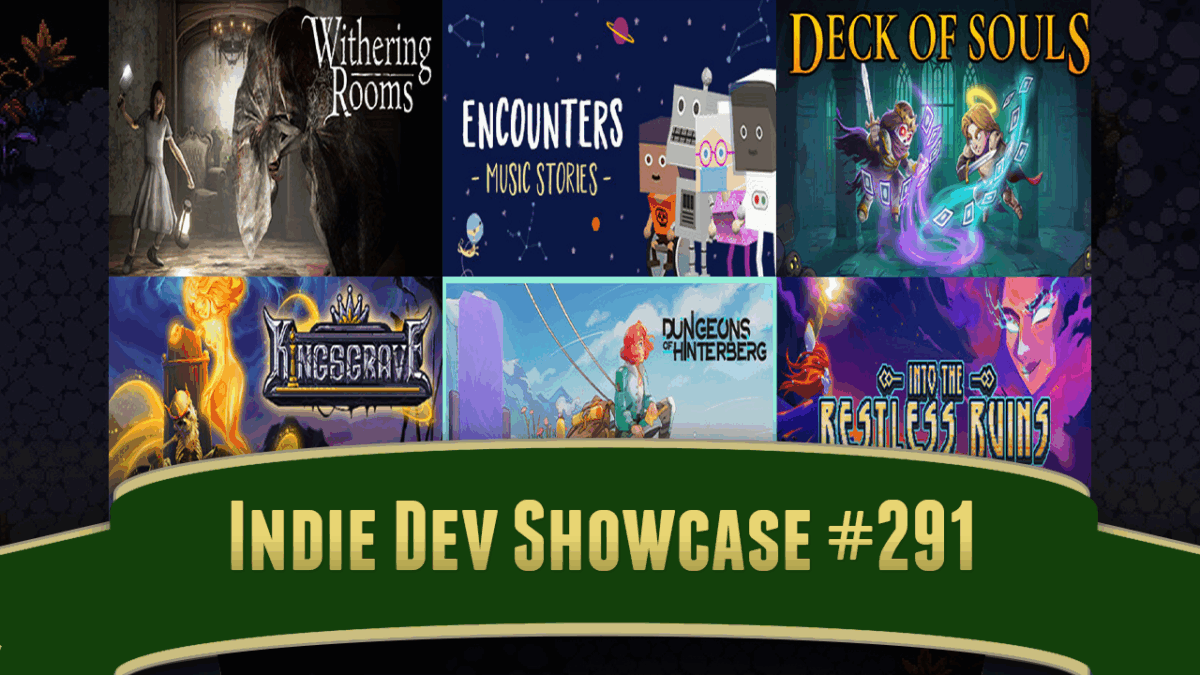
Each indie showcase looks at the variety of games we cover on the channel. Games shown are either press keys, demos, or from my (Josh Bycer’s) collection.
Owner of Game Wisdom with more than a decade of experience writing and talking about game design and the industry. I’m also the author of the “Game Design Deep Dive” series and “20 Essential Games to Study”