After a year in the works, ZoomZike’s epic in-depth series examining each game in the Mario Party series has reached the Nintendo DS version, and as always it’s very long (4½ hours this time!) and extremely detailed. The title makes it sound like it’s got a very narrow focus, but the Identifying Luck in Mario Party series is more like a comprehensive review of nearly every aspect of the Mario Party series. They’re among the best game breakdowns you can find on Youtube!
ZoomZike doesn’t just cover Mario Party games on his channel, and we linked to his video on Sonic Adventure 2’s Final Rush level, but the Mario Party series is probably his greatest achievement, and are like a complete strategy guide and a course on game design all in themselves.
Owner of Game Wisdom with more than a decade of experience writing and talking about game design and the industry. I’m also the author of the “Game Design Deep Dive” series and “20 Essential Games to Study”
Sundry Sunday is our weekly feature of fun gaming culture finds and videos, from across the years and even decades.
It was vitally important to tell all of you about Pugberto last week, I’m sure you’ll all agree. A couple of other items had to wait a week before I could present them to you.
The Amazing Digitial Circus has a fifth episode now. It got over 40 million views in a few days so there’s a good chance you’ve found it by now. Still though, here ’tis (25m):
The Amazing Digital Circus has merchandise, and some pretty amusing videos to sell it. There’s a new one of those too (4m):
Over on a much less trafficked portion of Youtube, the hapless heroes of the Wigglewood Tales have a couple of new videos too, The Bandit (2m):
“What should tomorrow’s post be? On the ancient C64 GEOS operating system? On weird finds in Mario Kart World? More on Kirby Air Ride? Wait, what was it that starts on the 6th again?”
Kirby Air Ride appears set to be finally remembered, with the announcement that a sequel is in the works for the Switch 2, with Masashiro Sakurai again at the helm.
Air Ride, possibly the most atypical game in a franchise with maybe 50% or more atypical games in it, is a sadly-neglected title that is, no lie, one of the truest underrated classics of the Gamecube, and it’s mostly because of the amazing City Trial mode, which I’ve mentioned here before.
In play terms, City Trial is what turns Air Ride from a severely diminished F-Zero clone to a game for the ages. Multiple colored Kirbys (Kirbies?) explore a sizable map, not huge but not tiny either. Scattered around it are a variety of randomly-generated vehicles and items. Of the items, the most important is probably the upgrades, or “patches,” which improve the stats of whatever vehicle a Kirby may pilot. They are Boost, Top Speed, Turn, Charge, Glide, Weight, Offense, Defense and HP. Each has a definite effect on your vehicle’s performance; the more you have, the stronger the vehicle gets.
People who haven’t played Kirby Air Ride, but have played Super Smash Bros. for 3DS, may recognize this idea as the basis of its exclusive Smash Run mode, but in Smash Run you each had your own map to explore; it only became a true multiplayer game at the very end. But in both Air Ride and Smash Run, after the players build their vehicle or character, they’re all thrown into a competitive event. It might be fighting, but it might also be something different. Their success at collecting stats helps determine how well they do in the event, but while there may be clues, there is no definite indication of what the event will be.
So collecting the stats is very important to success. But the game doesn’t explain what they do very well, and in fact some of their effects are quite complex and difficult to communicate briefly. The video above goes into detail, but here’s a few quick takeaways:
The “Boost” stat, as it turns out, is more like Acceleration.
The Glide stat works partly by reducing weight, so it and the Weight stat counteract each other a bit.
All of the stats work by multiplying the vehicle’s base stat, so a vehicle with a 1.3 base gets more effect if it collects that kind of powerup than if it were at the usual 1.0.
However, the default vehicle, the Compact Star you begin each City Trial game with, has a Defense stat of zero. Since any number times zero is zero, you get no benefit from Defense patches if you stick with the Compact Star vehicle.
Watch the video if you want to know more. And if you’ve never played Kirby Air Ride but have a Switch 2 keep a look out, because it seems very likely that Nintendo will give it a rerelease for Switch Online Expansion Pack eventually!
We’ve posted before here of Diskmaster, a search engine that works on the contents of old CD-ROM file compilations. Diskmaster has gone away and come back at least once, maybe twice, but for the moment at least is up.
Discmaster Jam is a gamejam where participants are asked to make use of contents found on the CDs the Discmaster searches. The winners were judged by a number of Industry People, so you can expect a certain minimum level of quality from those. The list of submissions on itch.io’s page for the jam has a number of extra items on it, to peruse and examine.
Image from the site
One entry that stands out in my vision is “Where In The World Is That #@*% Owl!?” which was written for the somewhat-obscure ACT Apricot computer from the UK, which had monochrome, yet high-resolution, graphics
Image from the itch page for Where In The World Is That #@*% Owl!?
Of note: it turns out one of the disks that Discmaster searches is the original CD version of Loadstar Compleat! So that is another way you could satisfy a jonesing for C64 program action. If you see me report on a Loadstar program of interest, you could possibly find it there, in addition to the Loadstar Compleat compilation I’ve made for itch.io.
Each indie showcase looks at the variety of games we cover on the channel. Games shown are either press keys, demos, or from my (Josh Bycer’s) collection.
Owner of Game Wisdom with more than a decade of experience writing and talking about game design and the industry. I’m also the author of the “Game Design Deep Dive” series and “20 Essential Games to Study”
LordBBH has a most excellent website, of the style that those/old of us remember fondly, made out of plain hand-coded HTML scrolling down the finite-length page, with images and writing. Like |tsr’s classic NES site, and Gaming Hell’s current one. (A lot of the pages from our list of great gaming sites are like that!) Some days I fantasize about remaking Set Side B in that style, but we’re daily, I’m not the only one who posts here, and I don’t think Josh Bycer would appreciate it if I suddenly decreed that he write posts in raw HTML. Maybe some other time, or for some other site….
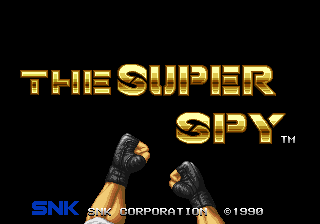
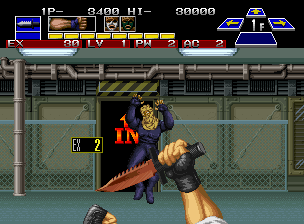
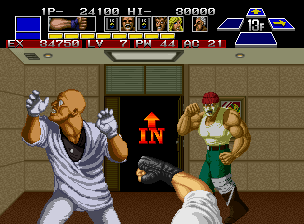
LordBBH is on Bluesky, but is taking a break from all social media right now, which proves his great wisdom and power. His site is still online, and hosts descriptions and information on several old arcade games, which as we all know are the best descriptions and information. One of them is on an SNK arcade game from the early days of the NeoGeo, The Super Spy.
Images from LordBBH’s site, used for the purpose of providing context and to convince you to go to the site itself and read it!
The Super Sky is of a small field of three arcade games, NeoGeo first-person brawlers. It wasn’t too popular when released, but its two followups, Crossed Swords and Crossed Swords II, did considerably better. You can think of them as like Nintendo’s Punch-Out!! series, but less pattern-basis, more scaling, and fighting more opponents at once.
It’s an ambitious game for an arcade format, it has non-linear explorable buildings and an experience system.
In The Super Spy, you’re the titular uber-agent. You know karate, and can also box, and you take your lethal hands and feet (and a knife and a pistol too) against enemy terrorists in a series of three settings. It’s behind-the-back first-person yes, but you can’t rotate your perspective; you’re always facing north. An array of icons at the upper-right corner of the screen show which directions you can move in, and it’s the only indication if you can go south, or “down.” There’s at least one secret passage in the game that’s hidden that way.
You have an array of moves that would make Little Mac proud, including multiple kinds of punchse, but also kicks and slashes and shots. Each building you explore is swarming with enemies, fist guys, ninjas, mini-bosses, bosses, and exactly one woman, who you know SNK’s team of graphics creators were very normal about.
Dammit SNK. This isn’t even the most ridiculous thing about her art, which is that, in the Japanese version, her panties are randomized each time you reach her.
It’s easy to make fun of The Super Spy, but LoadBBH asks us to take it seriously, and while it’s quite unfair in places he makes a strong case that it’s worth your time. He’s written one of my favorite kinds of web pages about it, and I recommend you taking a look of you like weird arcade games. Go, go! And hover the mouse over images on the site to read entertaining alt text about each one!
I’ll admit, I’ve sat on this one for months. After posting about U Can Beat Video Games, I started to worry that this blog might get a bit repetitive if I kept posting about video game walkthrough series, and they take a long time to construct because there’s so many links, but it’s been a while since then, and VG101 has been around for years now.
Video Games 101, a side channel of a Let’s Play channel, covers much the same ground as U Can Beat Video Games. Some of the specific games are different. VG101 is a bit more about entertainment than the specifics of beating games and the strategy involved. Professor Brigands has three “TA” characters that assist him: Scary Gary (covering bosses), Blaze (a surfer who goes over the available items in each game) and Fluff the cat puppet, the most fun of the group, who explains game trivia and history.
I’m just putting it off still further at this point. Here is the intro video to the channel, followed by the list of every walkthrough VG101 has posted to date.
Sundry Sunday is our weekly feature of fun gaming culture finds and videos, from across the years and even decades.
Not a Youtube link this time! Over on Bluesky (“blu-skee”) there exists the manifestly ludicrous account Pugberto Dancing Universe, in which a Photoshopped pug animated to various pieces of game music that, I’d say, greatly improves them.
Embeds don’t work as well from Bluesky as from Youtube, so I’m just going to have to link them and insist that they’re worth the clickthrough. Here’s the music from the first level of Super Bomberman:
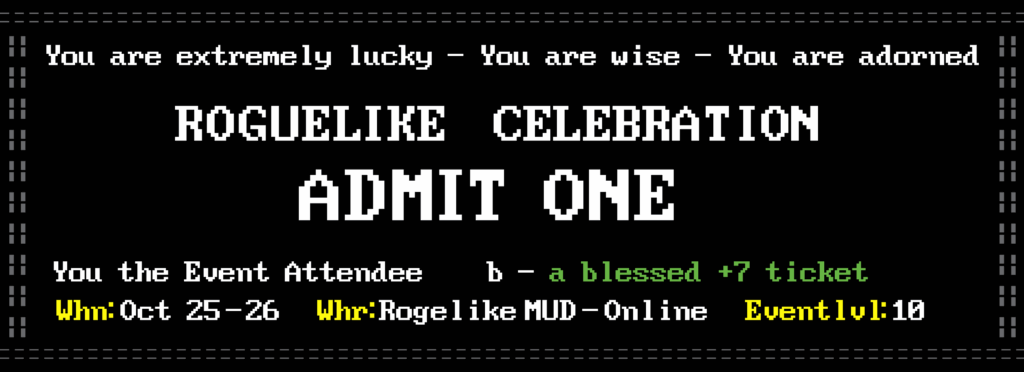
I’m helping out with Roguelike Celebration 2025, the now ten-year-running conference-like thing about all things roguelike, roguelite, and roguelike-adjacent. Yes, I’ve presented there three times so far, and figured it was time to give back!
While RC got its start as an in-person conference, when the pandemic hit they switched over to being entirely virtual, presented through video feed. All of their talks end up posted online, so anyone can see them for years after. But if you can attend during the conference you can participate in chat, ask questions of the speakers, and explore a very clever MUD-like chat interface!
I’ve tried to spread the word about Roguelike Celebration where I can, through social media and this very blog here. Every year they have several very interesting talks that, if you read Set Side B, I know you’d be interested in seeing. They’ve hosted Tarn Adams, co-creator of Dwarf Fortress, the creators of the original Rogue, and many other thoughtful speakers.
This year Roguelike Celebration takes place October 25-26. They sell tickets, but they also let people who are strapped for cash apply for a free ticket. (If you can pay for admission though, please do, as it takes money to run an event like this.)
And if you have a roguelike, or even vaguely-related project, please please please answer their Call For Proposals, to apply to present your work to their devoted audience of extremely thoughtful attendees! The CFP site is here, and their deadline has been extended to July 20th, so you have about three weeks to get in your proposal!
Give it a shot, it’s a great way to spread the word about roguelike work, or about a procedurally-generated game you’re interested in, or just something you think the world should know about.
By volume most game players, let’s be frank, are interested in the big AAA productions. But there are lots of people out there who are willing to give indies a chance, which roguelike games often are, and we have to stick together. Not only to talk with each other and build those connections, but to do it in public, non-corporate venues. Reddit largely is a sham these days, more interested in monetizing their userbase, and Discord isn’t web-searchable, and requires navigating a maze of requests that you upgrade to “Nitro.”
I do not lie: little volunteer-run organizations like Roguelike Celebration are a lot closer to the true spirit of the internet, and the World Wide Web, than those are. So please keep them in your thoughts, if you can buy a ticket, and if you have something to present, answer their CFP! You won’t regret any of those things.
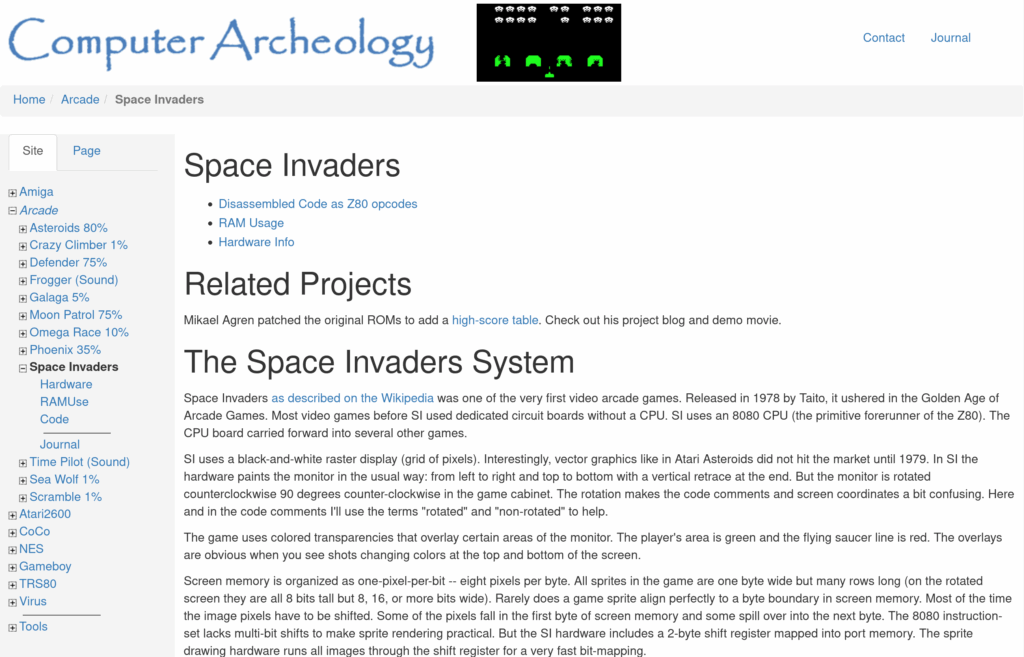
This one’s for the hardcore techies out there. Computer Archeology is a terrific site with information on the inner workings of several prominent games. One of their most complete and detailed is on the code and hardware of arcade Space Invaders, including a disassembly. While it is not, as the page says, “one of the first” arcade video games, not unless you count everything manufactured between 1972 and 1978 as unimportant, there’s a vast amount of good information there.
Some of the info revealed:
The game tracks five objects every frame. The player’s base, their shot, and three invader shots. The invaders don’t “count” as moving objects; the Mystery Ship temporarily replaces one of the shots, meaning, while it’s on-screen the aliens can only have two shots on-screen instead of three.
Only one of the shots is “aimed” to fall on or near the player. The others are just dropped wherever.
There is a bug where the player’s shot hitting the rightmost shield on the right edge of the screen can be misinterpreted as hitting the last invader on the very left edge.
The reason the invaders speed up as their numbers are diminished is because the game draws the new position of exactly one invader into the framebuffer per frame. Fewer invaders means each gets to move more often, until the last one gets to move every frame.