Besides reviewing indie games, I also review store pages and provide help with marketing indie games. I’m always looking for store pages to review if you would like me to check out yours, please get in touch. For this episode, this is the game The Last Defense
Owner of Game Wisdom with more than a decade of experience writing and talking about game design and the industry. I’m also the author of the “Game Design Deep Dive” series and “20 Essential Games to Study”
Today is the launch date of Unexplored 2! (Steam) The sequel to one of the more interesting roguelites of recent years, the original simulated a game world with a lot of depth, and played a lot like a real-time version of a classic roguelike with updated graphics.
We live in a golden age of game jams, thousands of people every month make little games in absurdly short amounts of times, and surprisingly often those games are even interesting! What that says about the nature of game creation is very interesting, but not the subject here. That would be Godot Wild Jam (itch.io), a monthly themed and judged jam where the thread of continuity is the use of Godot, the amazingly small yet feature-packed free and open source game development system.
Since it’s monthly, and I’m writing this three weeks ahead of time, I don’t really know who’ll win the one currently in the offing. The previous jam as of this writing was won by Stranded on Ice. You can look through all the entries on Godot Wild Jam 44’s itch page, or ALL the entries throughout the jam’s history by browsing through itch’s #godotwildjam tag.
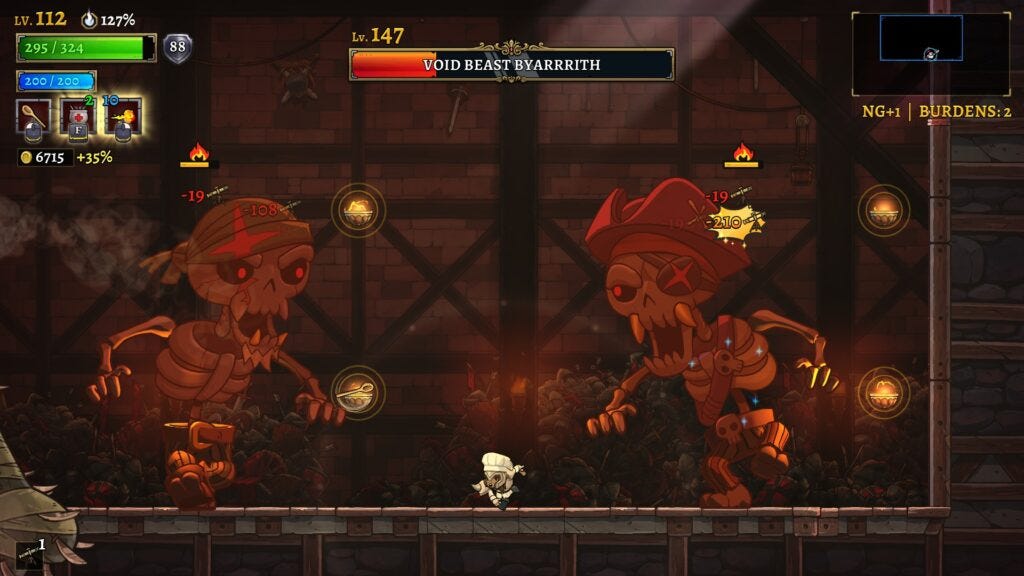
Rogue Legacy is the game that popularized what would become the sub-genre known as “roguelite” — the idea of having a focus on persistence as progression in a roguelike. Since its release, the roguelike and lite genres have blown up across the board. With all these new flavors, Rogue Legacy 2 has recently left early access and now asks the question: can the original roguelite show these newcomers some new tricks?
The Liter Side
The basic gameplay of the original returns with a new story. A Kingdom has fallen to a mysterious corruption, the guardians have been taken over by a strange force, and you once again sign away your life and your descendants to Charon to figure out what’s going on. The upgraded visuals are impressive, with improved lighting that makes everything pop.
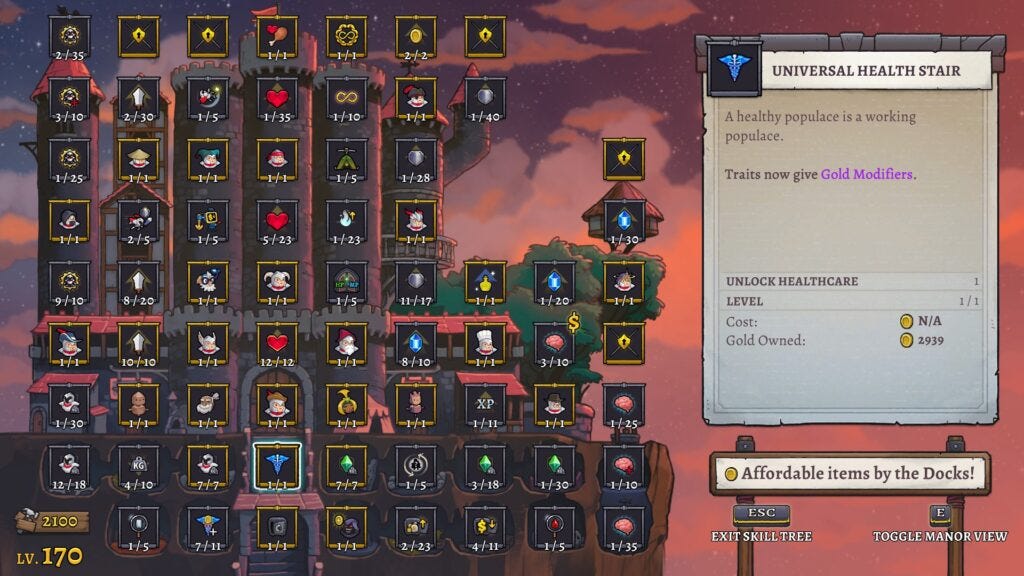
If you missed the first one, the progression of the game comes in the form of your estate/castle. Gold, earned by killing enemies and finding treasure chests can be used after a run to add additions to your castle. These additions become progressively more expensive, but they will unlock new classes, raise stats, add new quality of life features, and more.
In runs, you can find blueprints that can be used to acquire new equipment pieces with a set bonus for wearing them all. Unlike the first game, your major improvements this time come in the form of heirlooms that are placed in each biome. Once unlocked, they stay active for the rest of the game. Runes, that offer passive bonuses, are still locked to completing a variety of puzzles and mini challenges throughout the world. A new unlock is in the form of “scars” which are bonus challenges whose resources can be used to unlock additional features and boost your stats even higher. The roguelite nature of Rogue Legacy 2 is on full display, and I can just see people attempting level 1 challenges or “low level” runs.
the persistence is back in full force
A new resource “resolve” acts as a reserve used to equip relics that provide a variety of passive bonuses that can be found in a run. Once your resolve gets less than 100, further drains will reduce your max health. These relics can be worth it and with the right ones can easily break a run.
Class diversity has been given a facelift with more classes, more special powers, and of course, more whacky traits. The traits were a big part of the original’s charm, with characters having traits that affect their run but can also earn you more gold for taking them.
Everything about Rogue Legacy 2 brings back the charm of the original, but it also brings back the issues I had as well.
Floaty Fighting
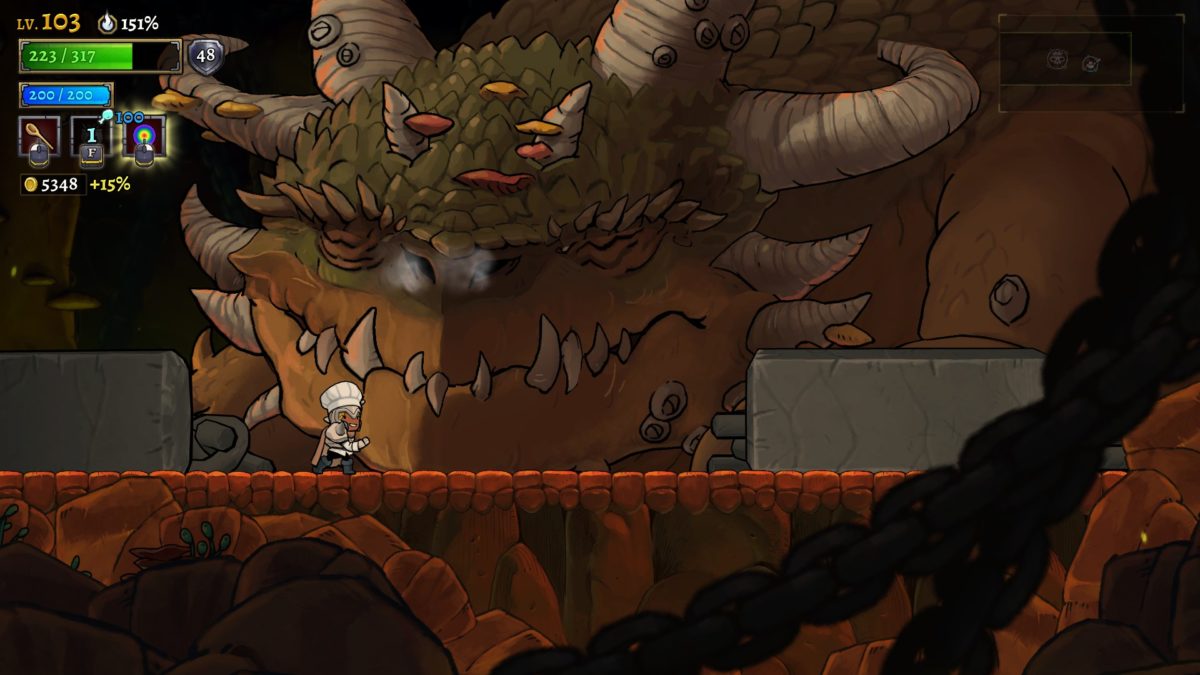
Of the variety of action roguelikes I’ve played, both Rogue Legacies feel the most inconsistent in terms of movement and combat for several reasons.
While it may not look like it, there are aspects of bullet hell in both games in how you must dodge attacks. Many enemies can launch all varieties of projectiles at you, some that track, some that can go through walls, etc. One of the biggest annoyances with the game is the lack of standardized alerts about oncoming attacks.
Some attacks the game will warn you that the enemy is about to do them, others they won’t. The same goes for incoming projectiles off-screen — some of them the game will let you know, other times you’ll get hit with no warning. It becomes very frustrating when you are trying to keep track of things and you can have three different projectiles and no way to tell how they behave. You have no invincibility frames while dashing (only one class gets an I-frame dodge), and it’s very common to have a situation where dodging one attack puts you right in front of another.
The enemy physics is one of the most frustrating aspects of the game, to the point that I’m glad that there is an assist option to disable damage when coming in contact. Many classes have attacks that don’t push the enemy back when you hit them. This can lead to issues of enemies that you’re trying to attack, and they just fly or dash straight into you and do damage. For classes that can crit off dash attacks, it is far too risky to use this move on the later areas as you’re increasing the chance of you taking more damage.
Since enemies don’t respond to attacks, you can dodge all their projectiles, get into melee range and start hitting, and they’ll launch an attack with no tell and hit you without any means of dodging. Many of my deaths came from situations where it felt like the game was just not giving me a way to succeed — rooms where projectiles come from all angles, with enemies of varying tells, that all hit like a truck if I run into them or their attacks. I found that range attacks can break the difficulty in a lot of the later areas simply by not having to try and duck and weave around projectiles while trying to hit enemies.
The Daily Grind
Rogue Legacy 2 is certainly a roguelite and is by far one of the most grind-heavy out there. Every form of progression will take time to gather the necessary resources to upgrade. As with the first game, the general positioning and difficulty of the biomes don’t change, which means that your best way of grinding resources is to always go to the hardest area you can in order to maximize the gold you find. Just like with the first game, and with roguelites in general, you’re going to have a lot of throwaway runs that are just there to grind resources before having your “serious runs.”
skill is still the primary factor in winning fights
The biggest hurdle to progress much like the first game is just how tanky the bosses are. Expect to spend a lot of minutes dodging the same patterns as you whittle down their health bars. A new feature that allows you to gain bonus damage requires you to hunt down clues in each biome. Damage is the most important stat, as killing enemies fast prevents them from firing back at you obviously. Because the cost of all upgrades gets progressively more expensive as you spend, it’s very easy to make things harder for you by getting upgrades that aren’t directly helping you but increasing the cost of everything else (the game has been patched with a recommended upgrade path). For people who do finish the game, there is an extensive array of post-game content and progressive difficulty if you really want to keep the rogue-lite-ness going.
A Family Reunion
Rogue Legacy 2 is the bigger, better-looking version of the first game. If you enjoyed the first game through and through, this is certainly more to love. If you were hoping for some refinements to the design and pain points, then this action family tree simulator still has some thorns to deal with. This is still the quintessential roguelite on the market and a must-play for fans of the original.
This was played with a press key provided by the publisher
Owner of Game Wisdom with more than a decade of experience writing and talking about game design and the industry. I’m also the author of the “Game Design Deep Dive” series and “20 Essential Games to Study”
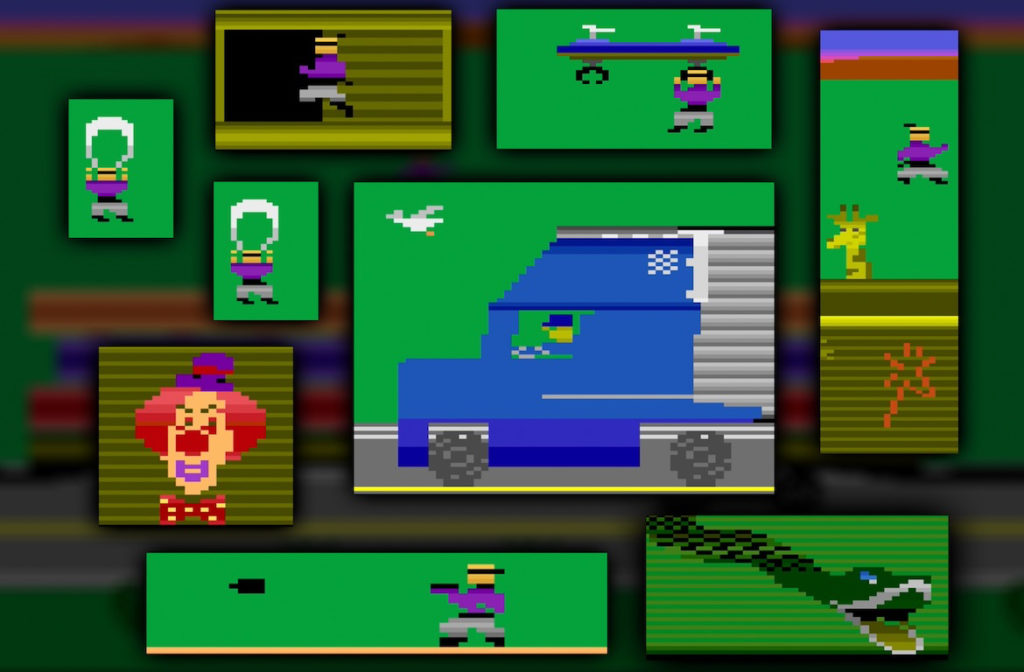
Audacity Games is Activision co-founder, not to mention the creator of Pitfall! and A Boy and His Blob, David Crane, along with former Activision designers Garry and Dan Kitchen. They’re getting back into the games business with a new Atari VCS/2600 title now available, after three years of development: Circus Convoy!
With hardware acceleration, lots of crazy tricks are possible, as demonstrated in the recent post here on homebrew VCS carts. David Crane himself helped pioneer this approach with his seminal Pitfall II: Lost Caverns, whose original VCS version used a special chip to help make possible its many tricks. Well, Circus Convoy is notable in that it doesn’t use such tricks! It doesn’t use “hardware acceleration,” although I presume it still uses tricks like bank switching and additional RAM.
Take a look at the features and play guide pages on their website, and if it looks interesting to you and you still have a working Atari, maybe buy a cart? The prices do seem a bit high for a new VCS game in 2022, with the cheapest offerings at $55-60. But I’m sure there are hardcore VCS enthusiasts out there who are interested.
The long-running Atari fansite AtariAge sells a number of carts that run on classic Atari VCS systems that make it do things you might not expect that system could do. Some of the most impressive of these are remakes of classic arcade games that go far beyond what was possible at the time. A number of these were developed by Champ Games. Here are links to a number of videos showing them off, although sone of the may not currently be in their store:
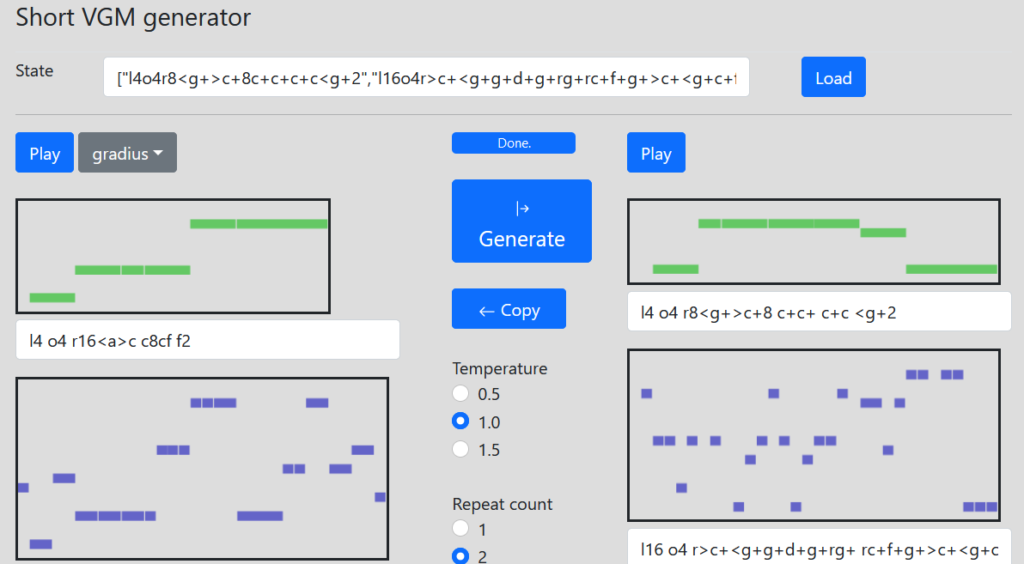
Kenta Cho is a brilliant game maker, and he’s come up with a couple of generators that can generatively make short stretches of music, suitable for classic-inspired arcade games.
Short VGM Generator is on itch.io, and works by taking a pre-existing piece of music and attempting to make another piece of a similar style.
The Good Old Game Sound Generator is on GitHub, but for playing around you might be more interested in its Demo page. It takes a bit more effort to make something with it, but it’s a much more flexible tool. I must leave you to your own devices to make something of value, or at least of interest, using it.
The process that let him to create these tools is up on a page he made on dev.to. If you’re interested in generative music you should take a look!
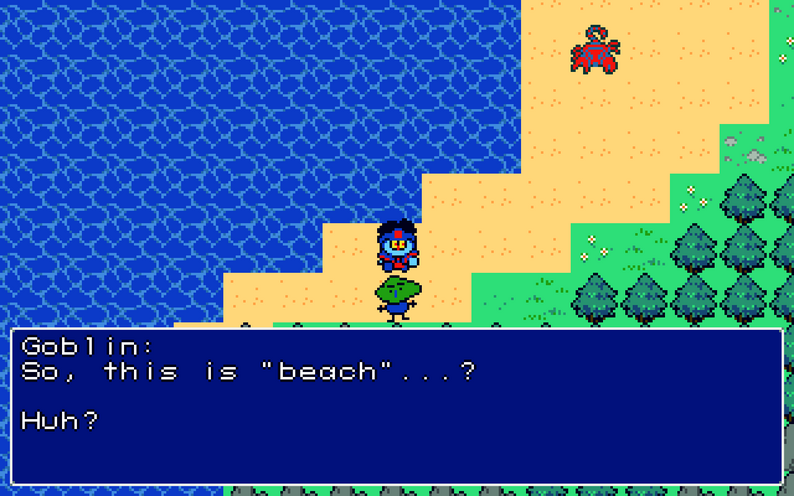
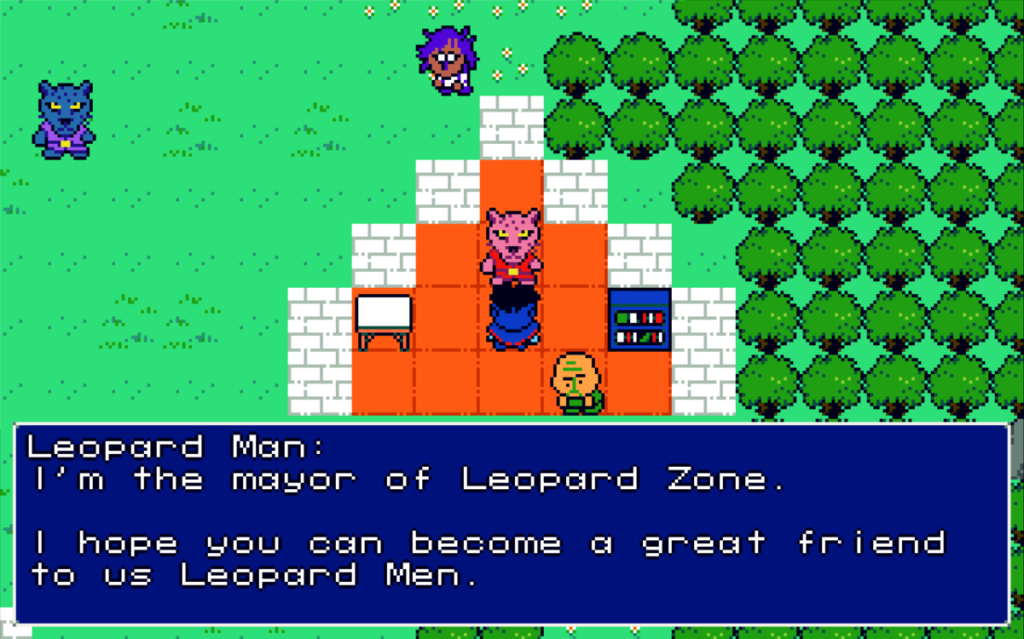
Franken has made the internet rounds the past few days, being praised by Derek Yu and Video Game Dunkey. I was pointed to it by our own Kent Drebnar, the one-celled gaming organism who does news posts for us. It’s a free and short and free JRPG styled thing up on itch.io. It’s inspired by Final Fantasy VI, For The Frog The Bell Tolls, Moon, and Grow RPG! It’s made with OHRRPGCE, itself a fun, quirky and free RPG creation program.
HIGHWAY TO THE LEOPARD ZONE
It’s not really so much as game as a humor delivery mechanism and strongly-guided system of battles. There’s only one choice for actions throughout all the fights, but it’s more of a silly and good-hearted story that you experience through a Dragon Quest play system. It reminds me a lot of another JRPG homage for 3DS and Switch, Fairune, although without its sometimes maddening secret-finding, and with lots of quirky characters, which feel like they were imported from Undertale.
It’s only about an hour long, and did I mention it’s free, so I figure it’s well worth your time and money!
Owner of Game Wisdom with more than a decade of experience writing and talking about game design and the industry. I’m also the author of the “Game Design Deep Dive” series and “20 Essential Games to Study”
In the spirit of reducing things even further, the games on tap, with each game’s segment cued up for easy perusal, are:
Ooblets, from Glumberland, aggressively cute farming/monster sim.
Batora: Lost Haven, from Team17 and Stormind Games, sci-fi narrative action-RPG.
ElecHead, from Nama Takahashi, pixel-art puzzle/platformer that he started working on as a student, and started life as a game jam project.
Soundfall, from Drastic Games and Noodlecake, co-op rhythm action combat game. (Released today!)
Wildfrost, from Chucklefish and Deadpan Games, a “tactical roguelike deckbuilder.” (We have our own opinions as to what roguelike means.)
Totally Accurate Battle Simulator, from Landfall Games, a humorous physics-based combat simulation sandbox that first made waves on Steam.
Gunbrella, from doinksoft and Devolver Digital, a Wild West-themed “noir-pink” pixel-art Metroidvania. Not available until next year, though.
We Are OFK, from Team OFK, a episodic “indiepop music biopic” game (a lot of scare quotes this post, I admit) based on a band.
Silt, from Fireshine and Spiral Circus Games, an aquatic puzzle/exploration game with a monochrome silhouette aesthetic.
Mini Motorways, from Dinosaur Polo Club! A sequel to Mini Metro, I did a Q&A with its developers over at Game Developer! (For some reason it’s attributed to “staff,” but I assure you I wrote the questions for it.) It’s a strategy simulation game about laying out roads. (Released today!)
Wayward Strand, from ghost pattern, a narrative adventure game set in 1970s Australia with a time management element.
Cult of the Lamb, from Devolver Digital and Massive Monster, a cute procedurally-generated town-building game with action elements and dungeon exploration.
Another Crab’s Treasure, from Aggro Crab, which actively calls itself a “Souls-like” in its trailer, an action combat game about a hermit crab out on a quest. Hermit crabs find shells and other objects to serve as their home in real life, and this game incorporates that fact into the gameplay. Not out until next year, though.
At the end, there were a few short clips of other upcoming games: One Shot: World Machine Edition, Gibbon: Beyond the Trees (releases today), Idol Manager, Card Shark, Cursed to Golf, A Guidebook of Babel, and OPUS: Echo of Starsong: Full Bloom Edition.
Last-minute addition, here are Kyle and Krista, formerly of the Nintendo Minute and now with their own thang going on, reacting to the games:
Boundary Break, a YouTube channel that looks into unused and off-limits areas left in game code, did a video on the expanded version of The Stanley Parable, and they managed to get a wonderful bit of in-character dialogue from the game’s narrator.
That’s the hook! The real reason to load it though is Boundary Break does nice work, finding out-of-bounds content in games. Also check out their recent video on Wii Sports, although note there’s an ad as part of the content. Folks gotta eat.
Steam is having a sale for a few days on roguelike and roguelite games, as well as “Souls-like” and “metroidvanias.” They published a page defining each of the terms, which I don’t entirely agree with, and by featuring all of them in a sale called Going Rogue they seem to be purposely conflating these terms, which annoys me a little, although there are plenty more concerning things going on in the world right now. (Especially metroidvania, which really has almost nothing to do with roguelikes.)
I give some better definitions down below, but in the meantime let’s have a look at some interesting items in their sale:
Rogue Legacy 2 (20% off at $19.99): The first Rogue Legacy was a surprisingly long time ago! It was an important exploratory action-adventure game with randomly generated areas. Player death was an intended part of the game: after a character dies, for the next game the player picks one of that character’s offspring, which has different, randomly-generated characteristics. They could also use money found on the last run to upgrade a town, to provide new characters services before they entered the dungeon. Rogue Legacy 2 looks like it continues the tradition.
Slay the Spire (60% off at $9.99): If you’re tired of buzzwords then you might be wary of a game that says it’s both a roguelike and a deck builder, but I think they’re two concepts that fit together pretty solidly-which recent years have proved well enough. This may have been the first of the type. It came out in January 2019 but is still rated Overwhelmingly Positive on Steam, and that’s worth something.
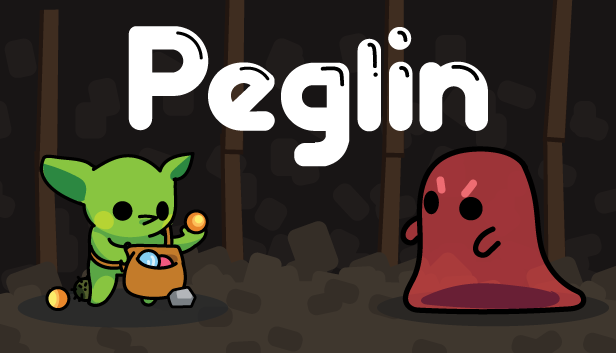
Peglin (10% off at $17.99): It’s one of the newest games in the sale, a combination of roguelite play and Peggle-like pachinko. In the future, all games will be defined by their likes, so we might as well get started now I suppose. The essence of roguelike games, I believe is in adapting to uncertainty, and a mode of pachinko certainly fits that bill.
Roguelikes got their name during the formation of the Usenet group rec.games.roguelike, for being like the classic terminal-based RPG Rogue. At that time it was obvious what the term meant: turn-based tactical combat roleplaying games with random dungeons and randomized items, usually with ASCII graphics by necessity since they were played in a terminal. In the time since then the importance of ASCII graphics has diminished a lot, but the other aspects are pretty good identifying characteristics. Since roguelikes of this form are still popular in some circles, it feels right to let them have it. Although I should note that one of the people who made Rogue has said that they consider a “roguelike” to be a game that can surprise its creator. (I could well be misremembering this, granted.) Since the Steam page mentions it, I figure I should at least link to the Berlin Interpretation’s definition of what it means to be a roguelike.
Roguelites may have gotten their name from me, back in the days @Play was on GameSetWatch. It’s been like 15 years, I don’t remember that well. I used the term to describe games like Spelunky and Binding of Isaac, which wrapped action gameplay around a roguelike core. Another good term for these is action roguelike. The page on Steam states that the ability to bring elements across games is a factor that could make something roguelite, but there are roguelike games with that aspect: NetHack‘s bones levels, for instance, and Shiren the Wanderer‘s between-play progressions.
Souls-like games take after Dark Souls, which has some superficial gameplay similarities with roguelikes (especially the difficulty and emphasis on playing smart) but really shouldn’t be lumped in with them carelessly.
Metroidvanias are exploratory platformers set in a large world. There’s usually some kind of item-based movement advancement that gates access to later areas. The term was probably coined by Jeremy Parish. They get their names from the 2D Metroid games and the exploratory versions of the 2D Castlevania games-which don’t include the original Castlevania, despite what Valve’s page says.