As foretold yesterday, today’s post is on the sequel to Candy Box, Candy Box 2.
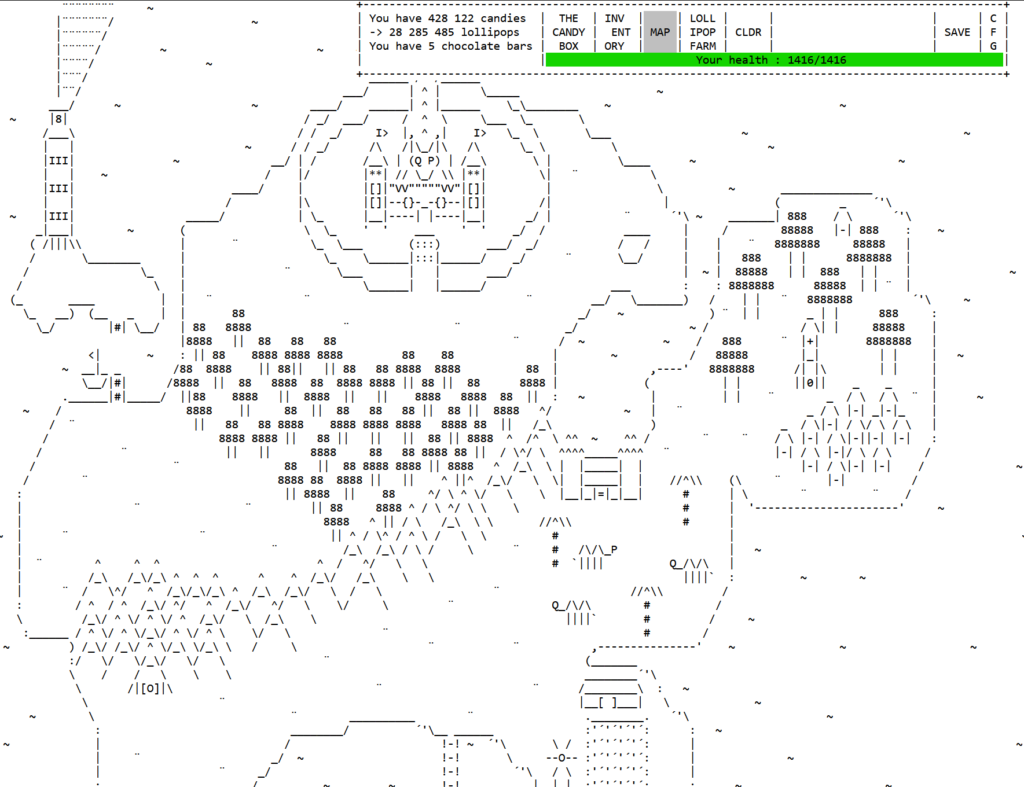
The Map, where you travel to various locations. There’s a few secret areas to find here….
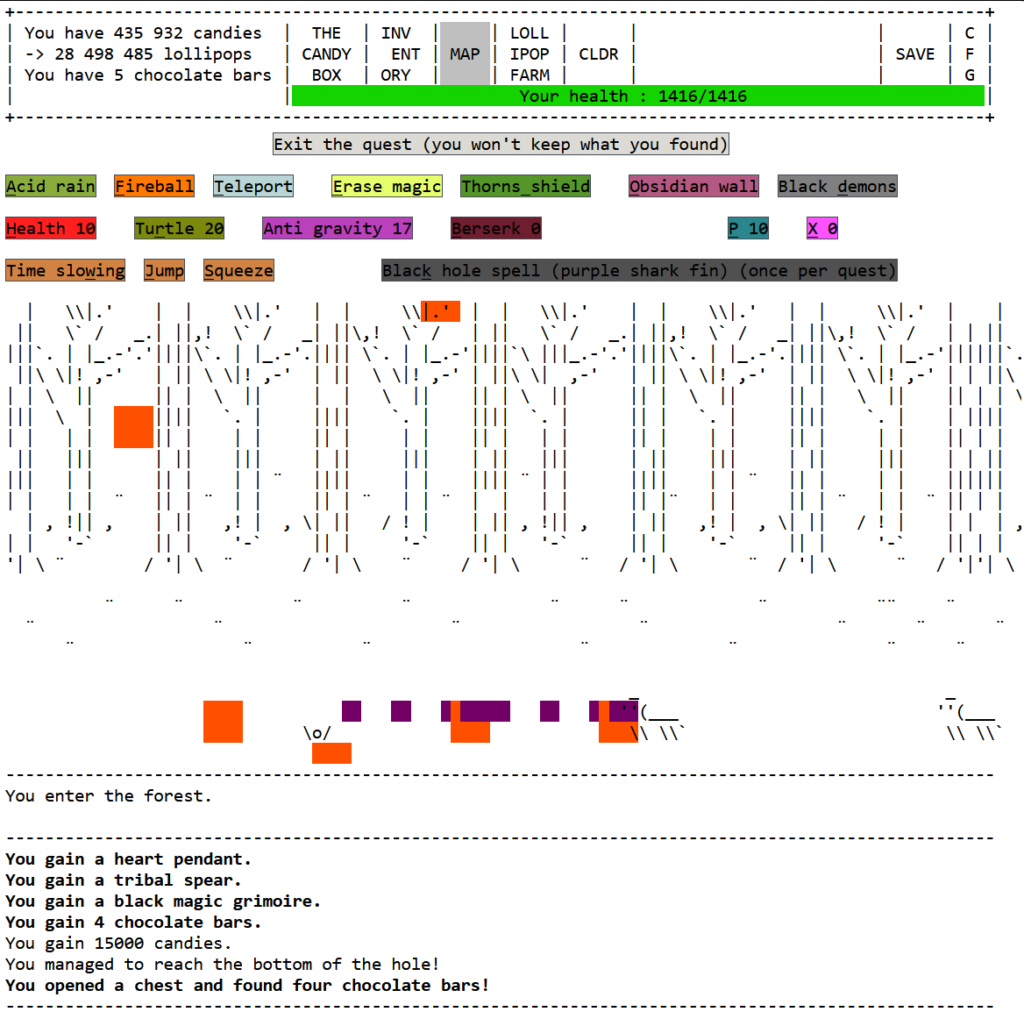
Those colored boxes are magic spells
It’s a much more developed game, with rather a lot of depth to it, but it’s still ultimately an incremental-style game in form, even if its not as direct about it as most of that benighted genre tend to be. There’s many more places to go and items to find than the first game, and a lot more secrets. If you don’t use the wiki, you’ll probably get stuck and have to search around for a few days until you find (or save up) the means to continue.
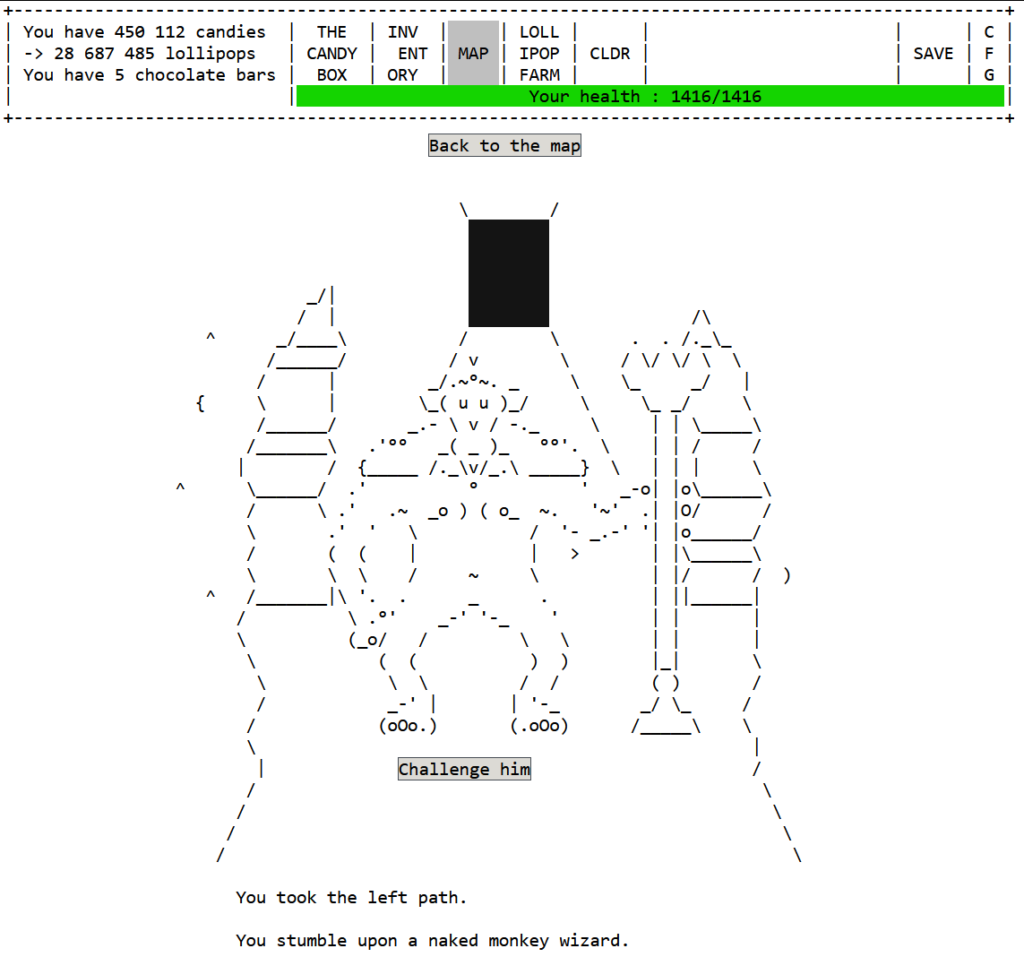
This monkey has an item you really want, if you can figure out a way to defeat him
While figuring out all the various ways to overcome the game’s puzzles is fun, I find the most interesting thing about Candy Box 2 to be its engine, which is surprisingly flexible for a game presented entirely with text characters, which is kind of like a deluxe Javascript version of the venerable Unix library curses. There’s windowing, a Z-order so objects can pass in front of others, and colors are used for magic effects, and some areas even have special effects, like scrolling around, zooming in on the action, or being able to swim up and down.
The highlight in this one is the puzzle the Cyclops at the lighthouse can eventually be persuaded to let you try, which as far as I can tell is of a completely novel type, and could be the subject of its own entire game. Good luck with that, by the way.
Like the first game, there was a preposterous Metafilter thread about Candy Box 2, and it’s even more full of spoilers, and equally as bizarre if taken out of context. Please enjoy responsibly.
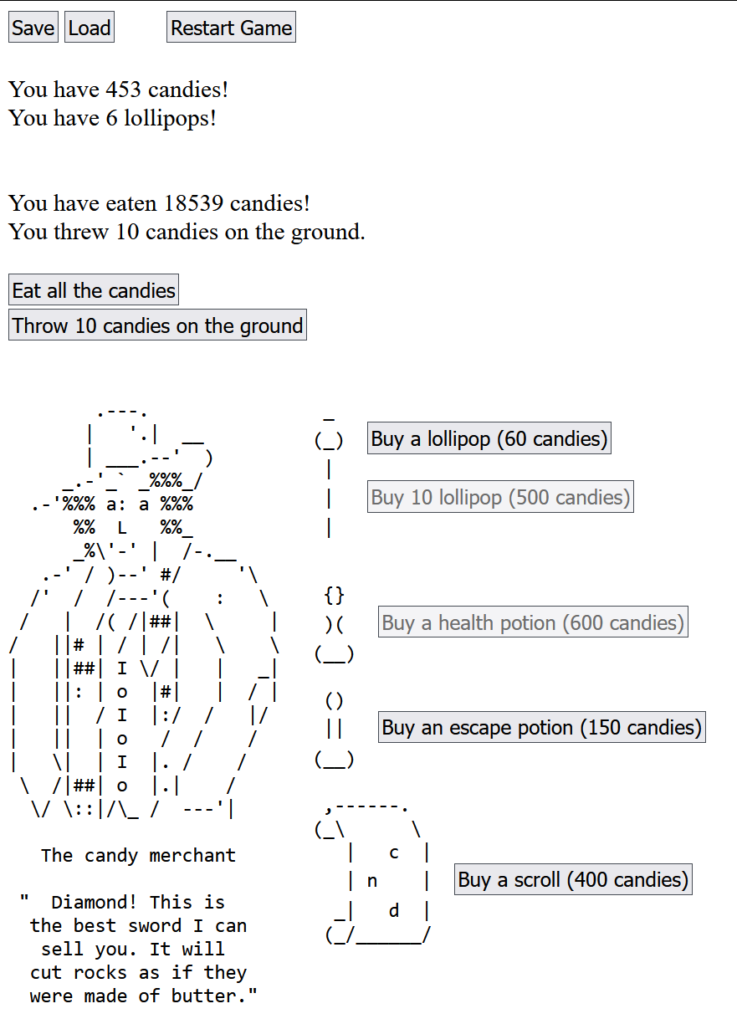
I always thought this shopkeeper guy resembled Tom Baker as Doctor Who. Maybe it was intentional.
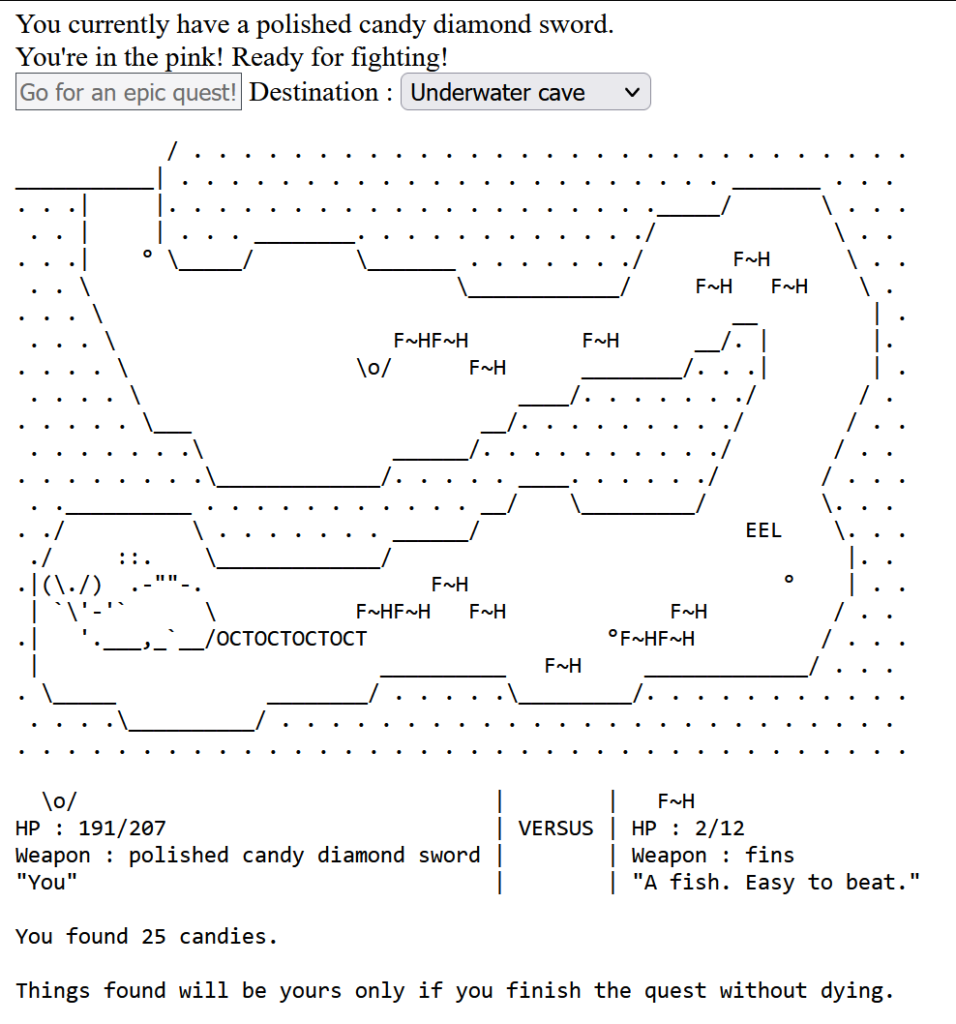
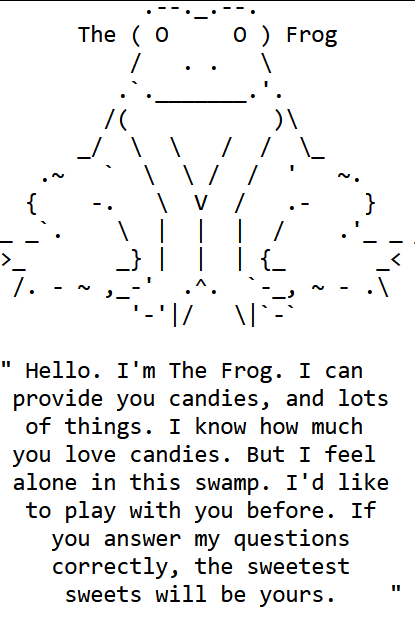
Candy Box is pretty ancient now, over ten years old. Here is the Metafilter post where we discussed it, which reads like the rantings of crazy people but is also full of spoilers. It was an early entry in the genre of incremental games, sometimes called “clickers,” like Cookie Clicker and Clicker Heroes, and may well have inspired some of them. It’s still online (at a new home), and its still just as playable as it always was, its extremely ASCII presentation now even more appealing now than it was back in 2013.
While it may have helped kicked off the genre, I feel it’s important to point out that there’s actually a lot more going on here than Number Go Up. You go on quests! You have equipment! You have an alternate currency to track, lollipops, with different production characteristics!
Candy Box is a game that’s best experienced going in cold, but since its gleeful hugeness is less of a hilarious shock now that countless other games have done it too, it might help a bit to give you some starting advice. Eating candy isn’t useless: it increases your maximum HP.
Every time you reach what you think is the pinnacle of ridiculousness, some new aspect is introduced. By the end you’ll be mixing up candy potions, using a a candy alchemy system much more detailed than most AAA game’s crafting systems, using only two ingredients.
There’s a sequel too, but let’s save that for tomorrow….
It’s not a command to delete temp files as root on a Unix-styled system! It’s a fun and free little game over at itch.io!
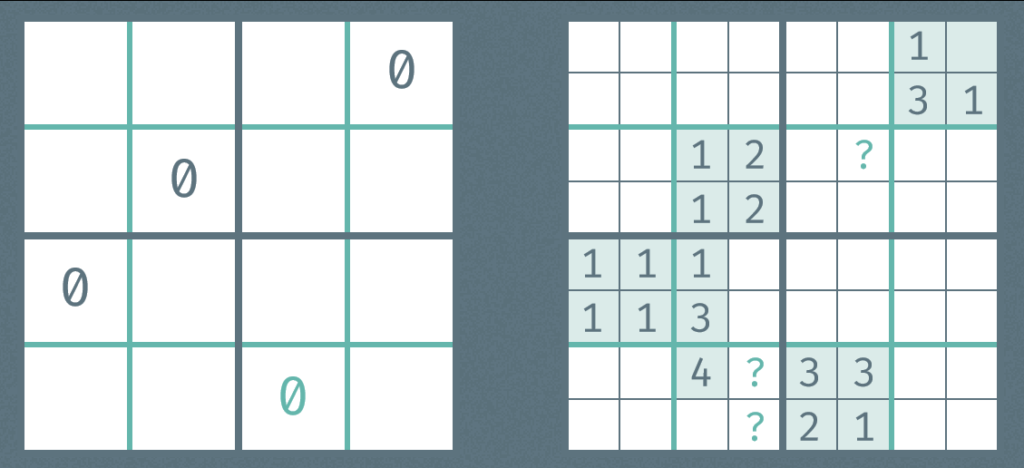
The board on the left is a Sudoku-like game; the board on the right is Minesweeper. The two boards match: the numbers on the Sudoku board are the number of mines in the matching area of the Minesweeper game. You use each to help you solve the other!
It’s not perfect, mind you. There’s currently no way to mark a square that definitely has a mine in it, just the question marks you see in the right-hand board above. There are still cases, familiar to players of standard Minesweeper, where you end up having to guess. And don’t click the “change size” button if you care about the current game: it doesn’t make the boards larger, it starts a new game with bigger Minesweeper and Sudoku boards!
Still though, I have to give creator Rianna Suen props for a cool idea! I found this through the “map obelisk” area during Roguelike Celebration, which is a pretty cool place to find things beloved of clever people!
Advance Wars By Web is a long-standing website allowing for Advance Wars games to take place between players online. It’s old enough that it came out before Advance Wars Dual Strike, the first DS Advance Wars game, and has survived long enough to see the release of Dual Strike, Advance Wars Days of Ruin, and now Advance Wars 1+2: Reboot Camp.
The first Advance Wars game had a legendary awkward launch date: September 10, 2001. I don’t know if world events following it had any influence on its popularity, but Advance Wars had the advantage of being a long-running series, going back to the Famicom, that had never been given a chance in Western territories. (One reason? Super Famicom Wars had a notorious character named Hister, with a moustache that made its inspiration unmistakable.)
The first two Advance Wars titles, taking their name, like previous versions, from its release platform the Gameboy Advance, were unexpectedly popular. The gaming groups I was in in college played an incredible amount of Advance Wars 2. We maxed out the game’s timer at 999 hours! I have no doubt that, if our group hadn’t broken up from people graduating and leaving, we’d still be playing it today.
Both of these games are preserved in proper fashion by Wayforward’s Switch remake of Advance Wars and its immediate sequel. Of the two games after it, Dual Strike leans a bit too hard on CO powers (already a creeping problem in AW2), and Days of Ruin implemented a lot of gameplay adjustments and fixed but, alas, lost the weird sense of fun from the semi-cartoony characters and setting of the first two games.
The Gameboy Advance Advance Wars games did not have internet-enabled multiplayer. The DS versions had better options, but they’re unavailable now, at least without some technical effort, due to the shutdown of the Nintendo Wi-Fi Connection.
Advance Wars By Web both allows a game much like AW2 to be played over the internet, and it does so with features that make it feel like a play-by-mail game, with the site handling the state involved with turn-based multiplayer. It does this at the of having any form of single-player: all of its battles are against other human players. So it’s not an excellent way to learn to play Advance Wars games interactively, as with the official games, which easy you into the game a bit at a time. But as for learning how to play this online version, there’s a number of useful videos available on their Tutorials Page. I especially like their video on overcoming first turn advantage, which they do by spotting the second player one Infantry unit. It’s not a perfect solution, but one that works out fairly well in play. And the video on designing balanced multiplayer maps, which offers a lot of practical advice that can be carried over into designing maps for the original games. And there’s a huge library of over 3,800 games to view, if you want to see how the community plays.
I don’t know if Reboot Camp is helping to sustain the avid fandom that the first Advance Wars games did, but I’ve enjoyed it a lot. If you enjoy it too, you can go from Reboot Camp right into playing against people online on AWBW. I can’t offer much more about it than that, for Advance Wars is a deceptively deep game and I have to make a post here, on the average, every day, but it’s been offering online play between humans for nearly twenty years now! That has to count for something.
Sundry Sunday is our weekly feature of fun gaming culture finds and videos, from across the years and even decades.
It’s been a while since we checked in with Eggpo, from “Two More Eggs,” that series the Brothers Chaps (creators of Homestar Runner) made for Disney XD or sommin like that. In case you forgot, Eggpo is the species of these eggplant people, whose job it is to attack the “good guy,” a.k.a. Dooble, who features in other TME videos.
Here, two Eggpos engage in the basic repetitive patterns entailed by their employment, without much success.
This is quite a collection to look through! While it was originally posted in 2021, it was updated with some new reviews just this past Sunday. They’re sorted alphabetically by game. They go at least as far back as NES Dragon Warrior, but some of them are really recent, especially with the addition of games reviewed by WalMart’s free pass-out magazine GameCenter. Their definition of JRPG kind of goes far afield, with some metroidvania-style Castlevanias, two Advance Wars games and a good number of half-related things.
Here are a small selection of included magazine scans….
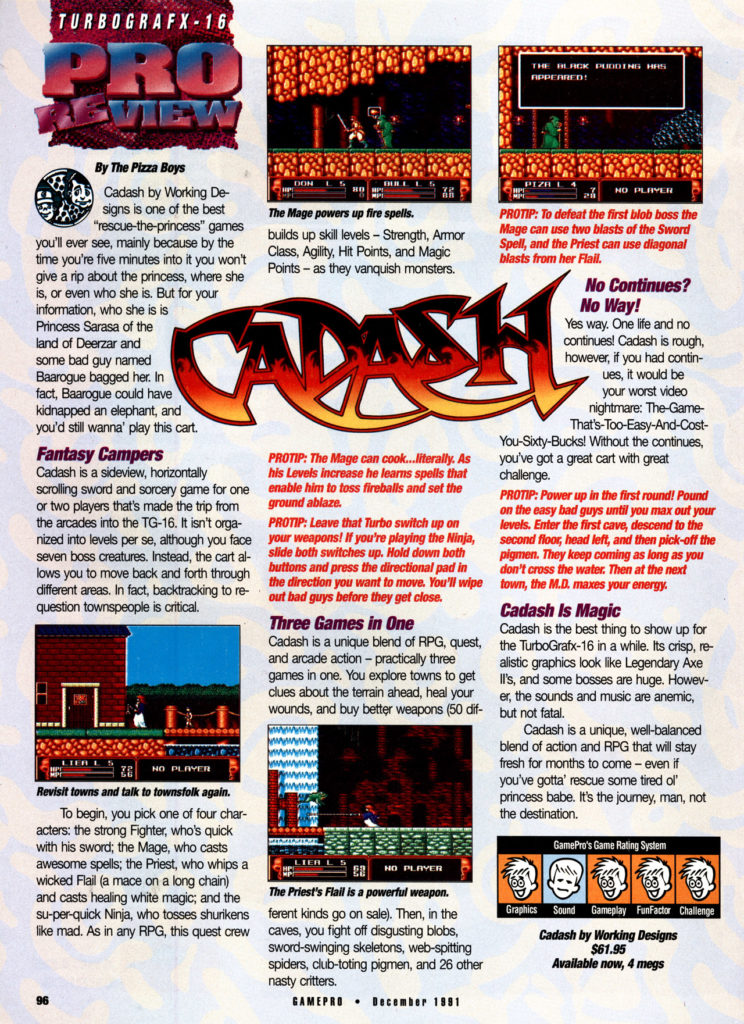
GamePro’s review of the TurboGrafx port of Cadash, which unlike the Genesis/MegaDrive’s version has all four characters from the arcade game. The review’s written by “The Pizza Boys,” and has slangy writing and goofy little cartoon faces over the review scores, because it’s in a magazine written for teenage boys from 1991. Notice, the whole review is seven paragraphs, with four section headings, and four “PROTIP” inserts that don’t offer useful advice:
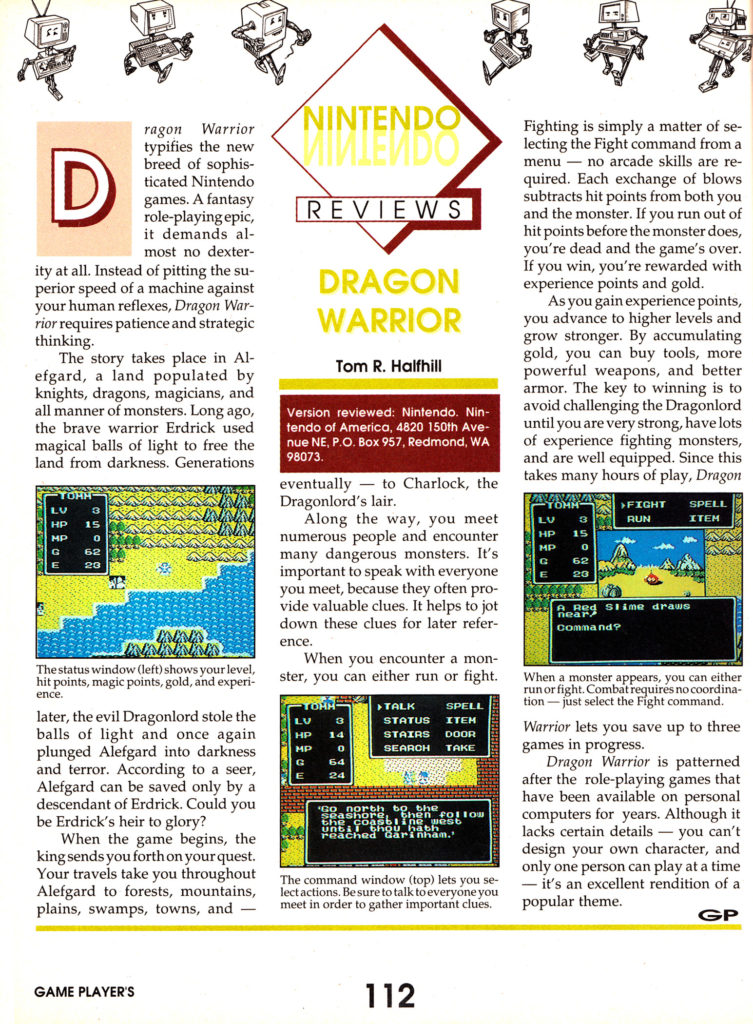
The review of Dragon Warrior from Game Player’s. I love it when magazines from this era publish the address of Nintendo of America. This review doesn’t really tell you much about the game though:
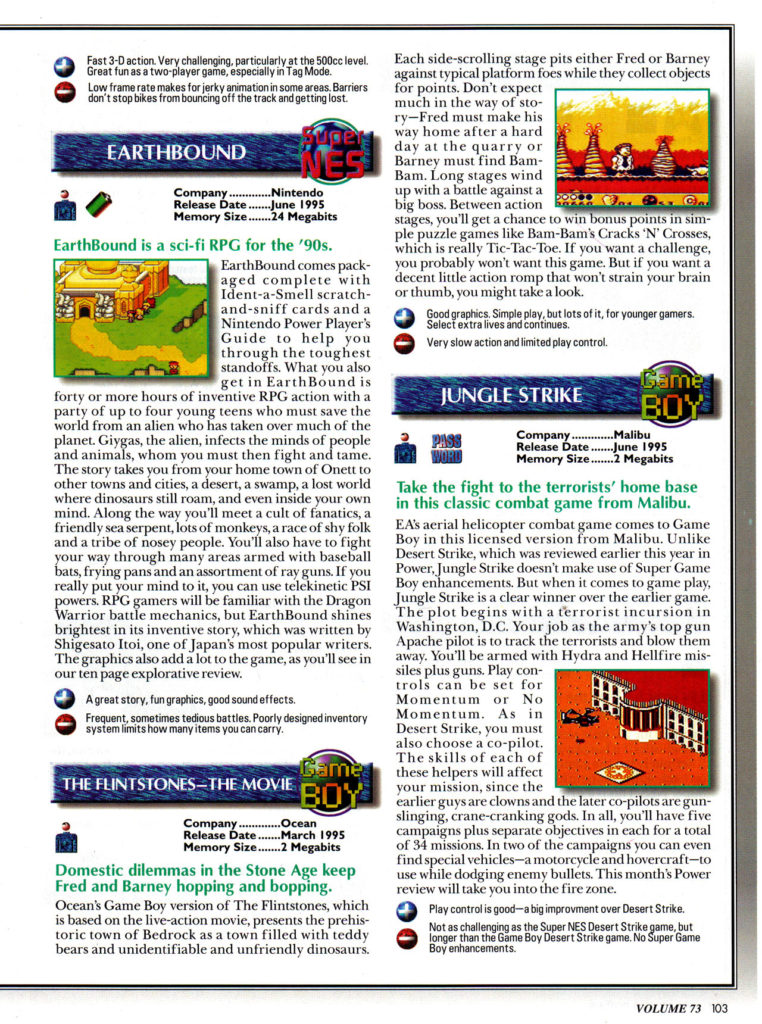
I had forgotten about this phase in Nintendo Power’s history. Check out their dissing the inventory of Earthbound, Nintendo’s own product! (I disagree, BTW, Earthbound is designed around its inventory limits, and they’re an essential part of the game!)
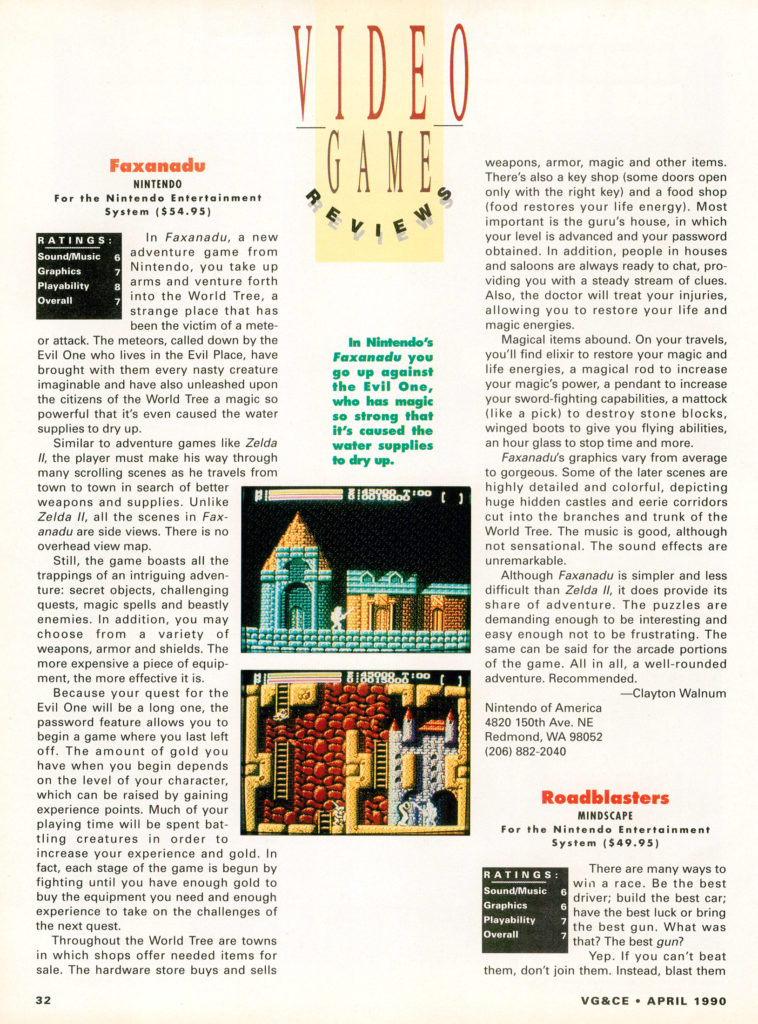
VideoGames & Computer Entertainment has always had a place in my heart, and Clayton Walnum is one of my favorite reviewers. In its heyday it had a no-nonsense approach to their reviews that appealed to me. It was the exact opposite of Electronic Gaming Monthly, a magazine that, honestly, I never much liked because of their loud editorial style and tendency to bloat their magazine up with advertisements:
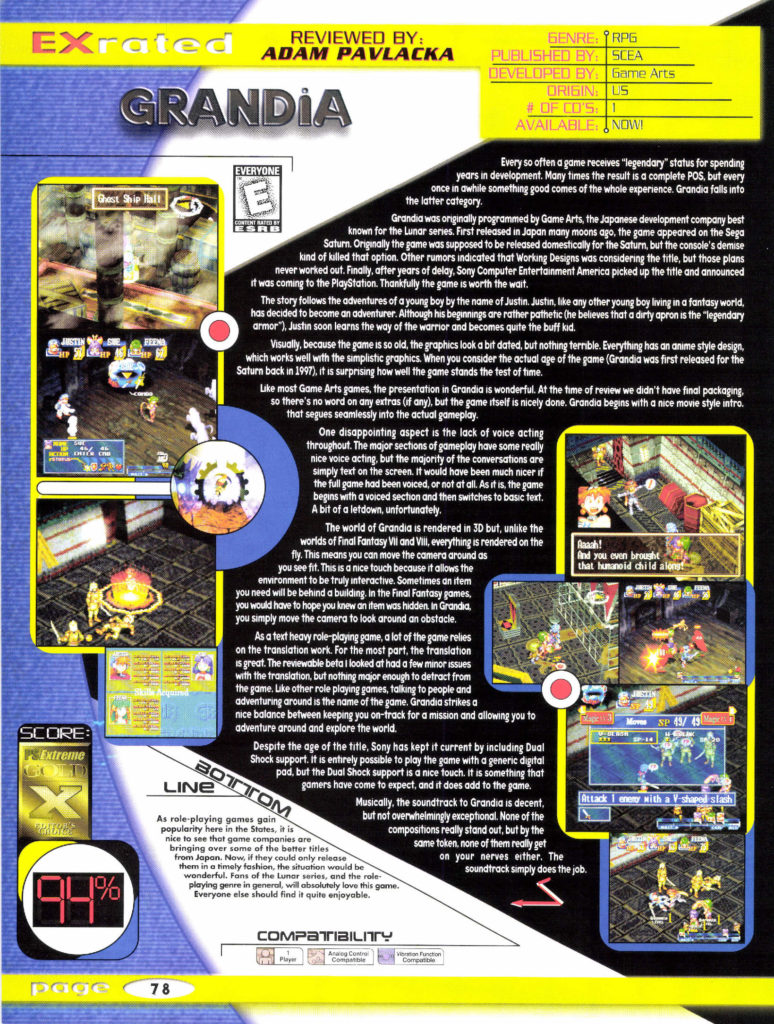
Who doesn’t love Grandia? This review reminds us that we almost didn’t get an English version of it!
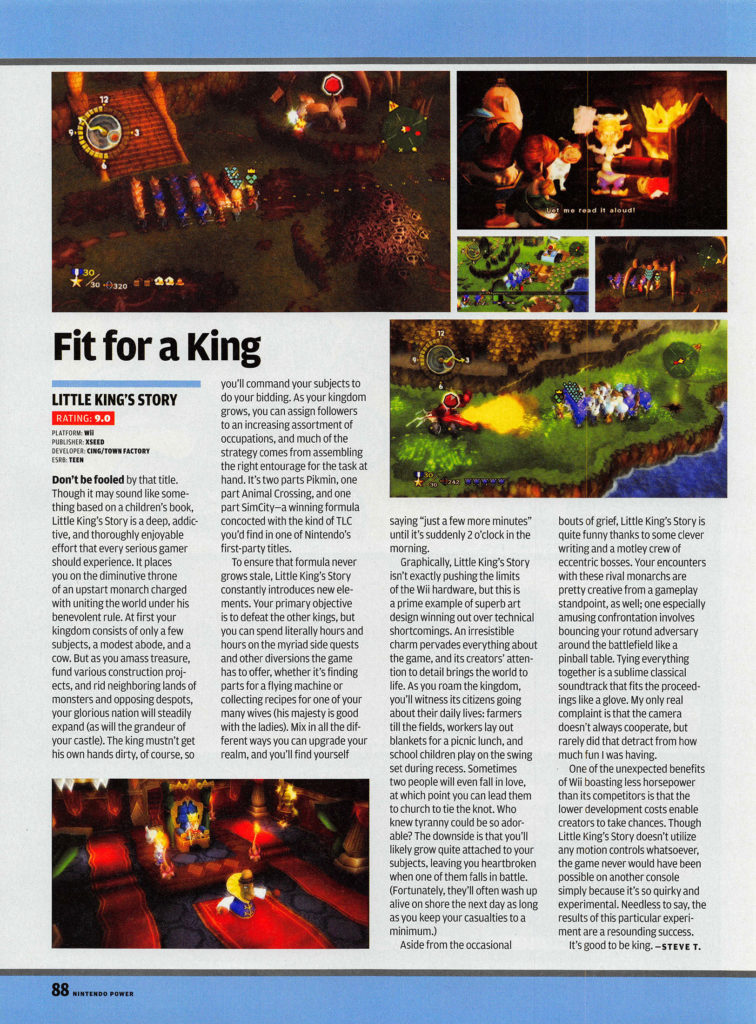
Little King Story is, no lie, one of the most overlooked Wii games of all time:
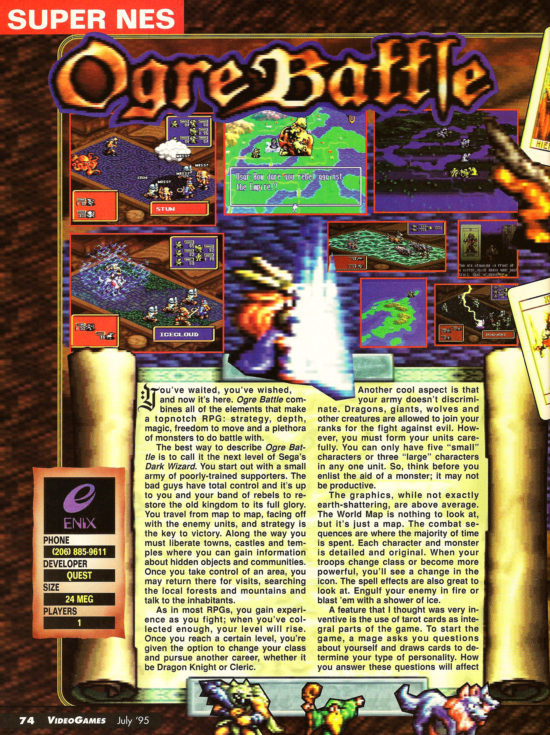
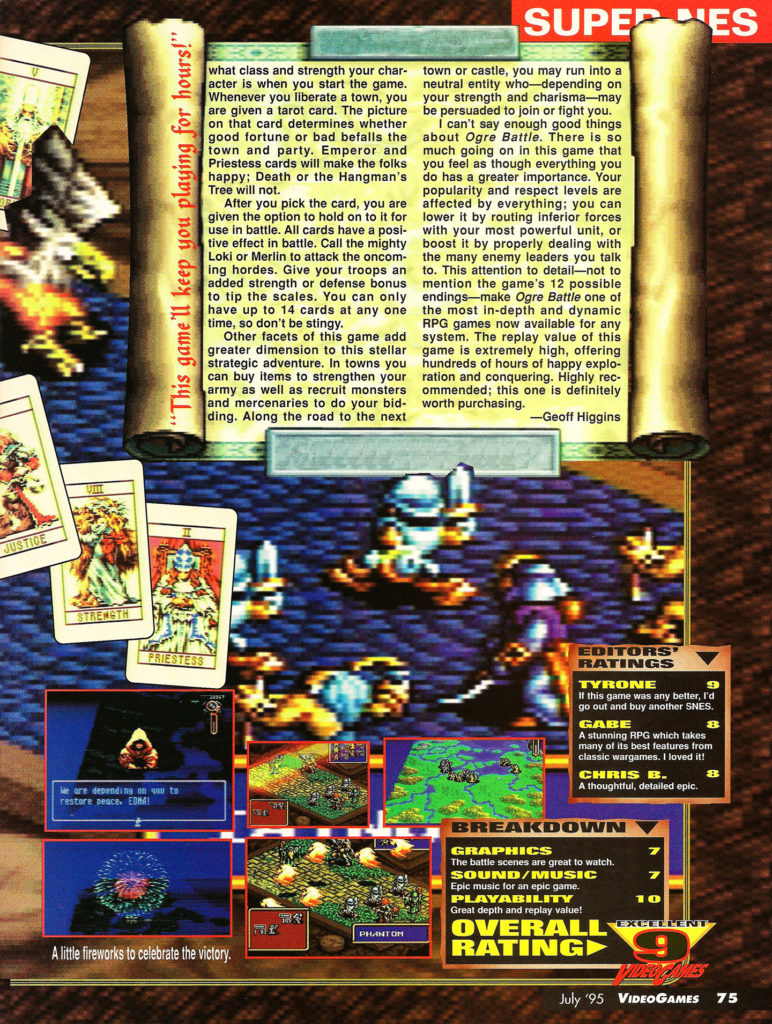
“VideoGames: The Ultimate Video Game Magazine” had a redundant title, but some fun layouts. Here’s their two page review of SNES Ogre Battle:
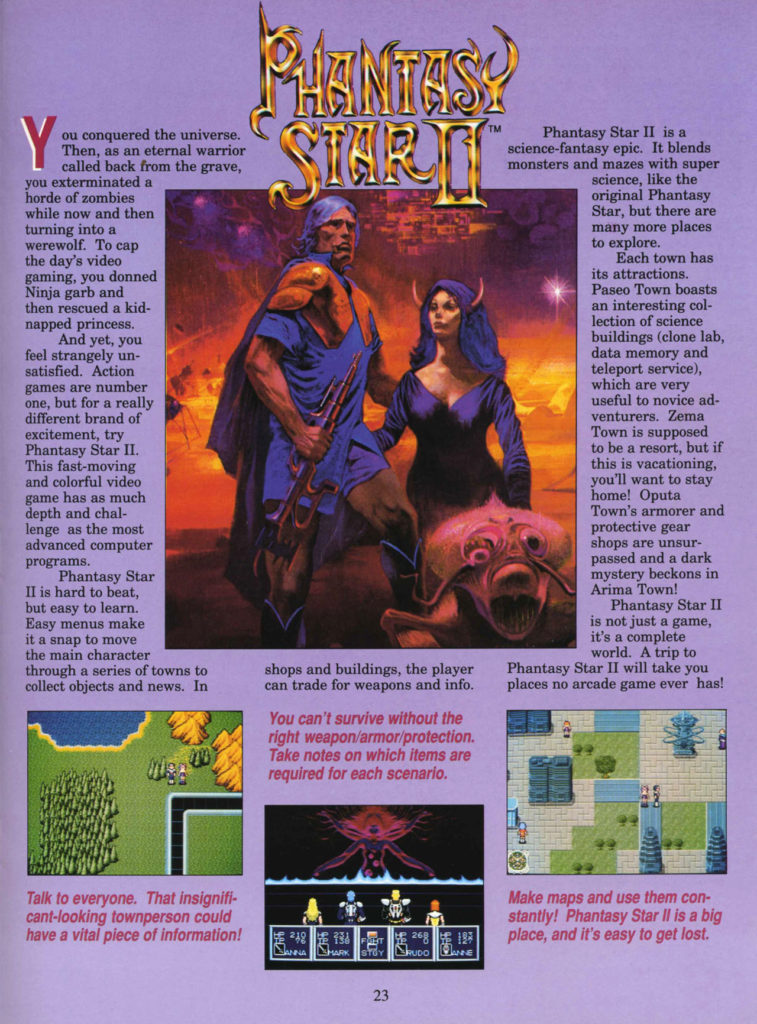
Sega Visions’ review of Phantasy Star II, a very grindy game without much story really, but with some really great twists:
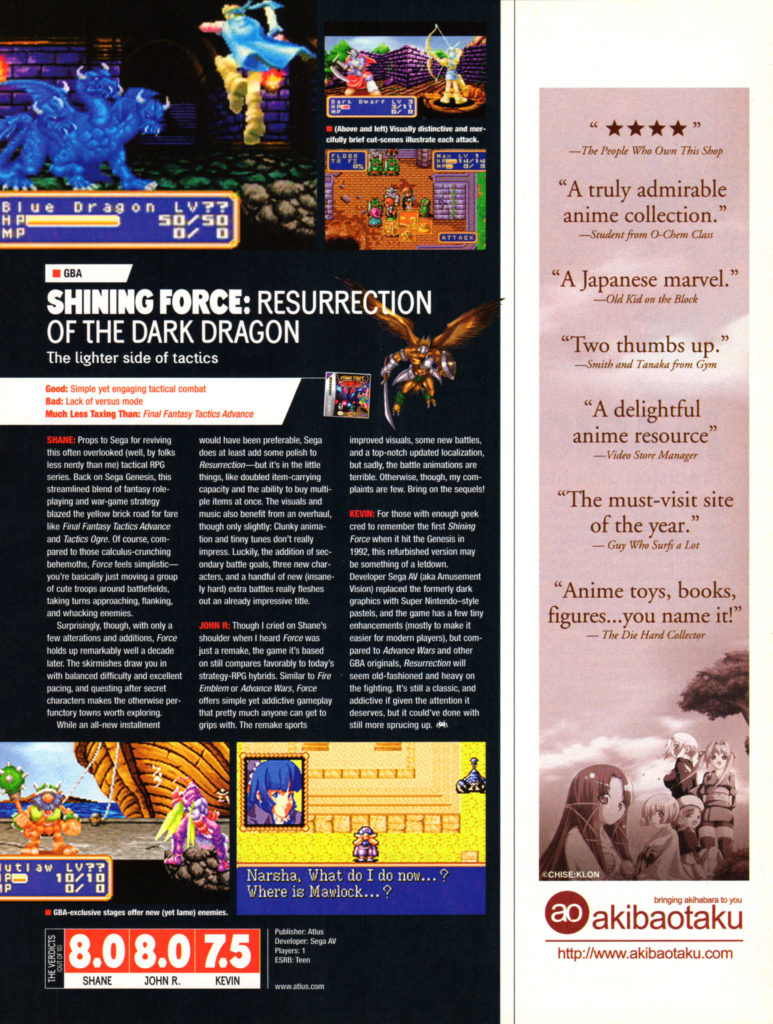
EGM’s review of the remake of Shining Force for GBA:
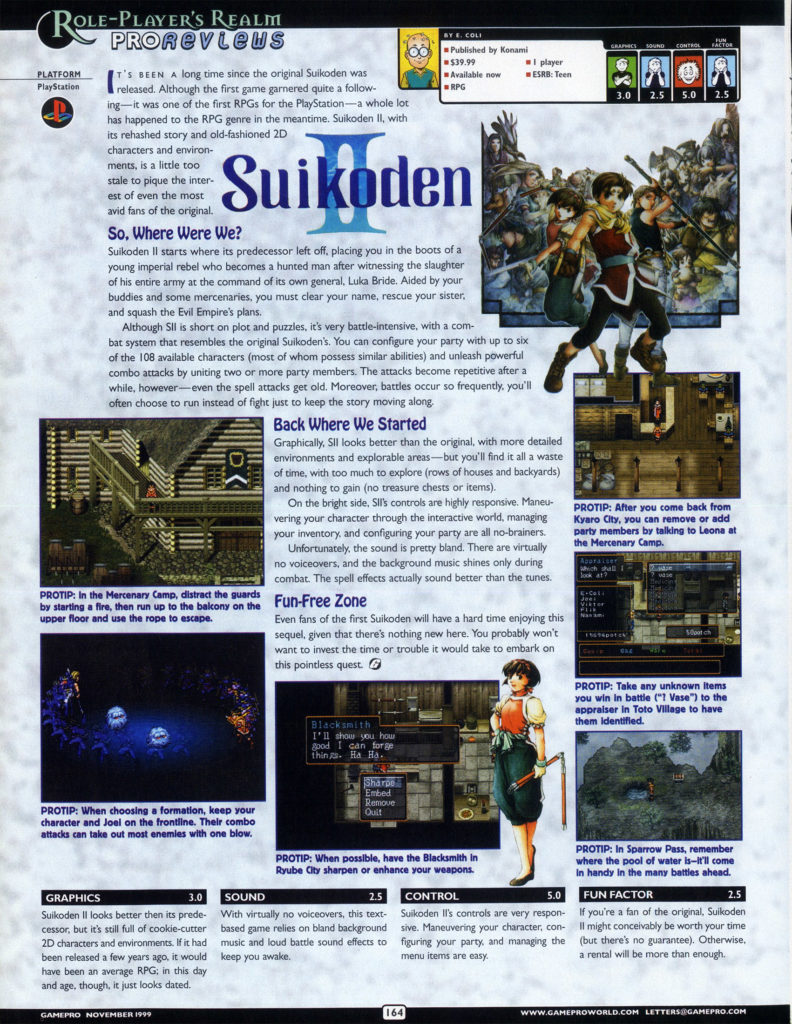
GamePro’s review of Suikoden II didn’t age real well:
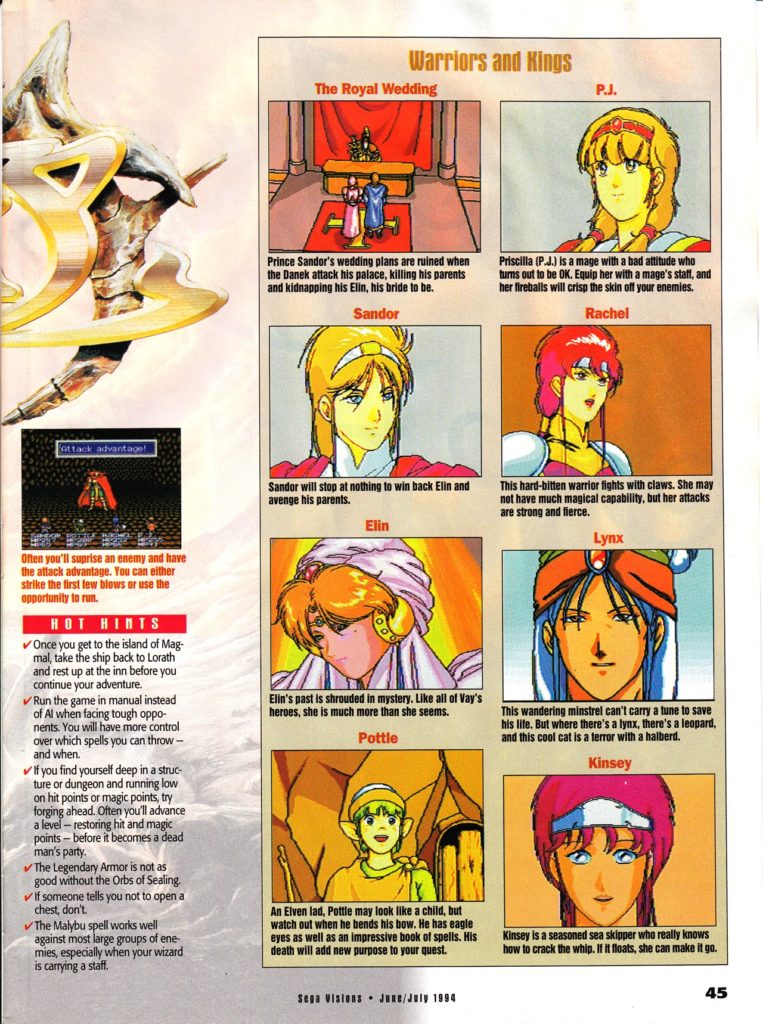
Vay, here mostly to show off the anime character portraits:
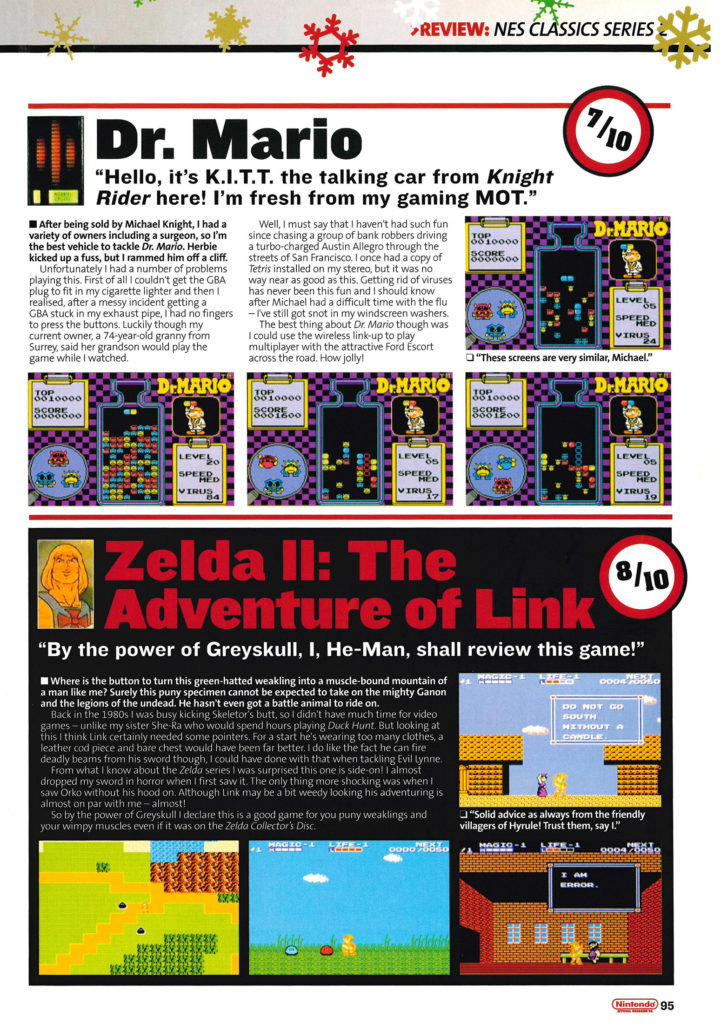
Zelda II in a late review from The Nintendo Official Magazine, with Dr. Mario riding along:
Ah, it crept up on me, so let me remind everyone that Roguelike Celebration begins today, although until tomorrow it just means they’re opening their social space for awhile. Nicole Carpenter at Polygon wrote a short piece about this year’s conference.
There is an admittance fee, but if you can’t afford it you can also get a free pass! Please consider paying them if you are able though, they do a lot of work every year in putting it together.
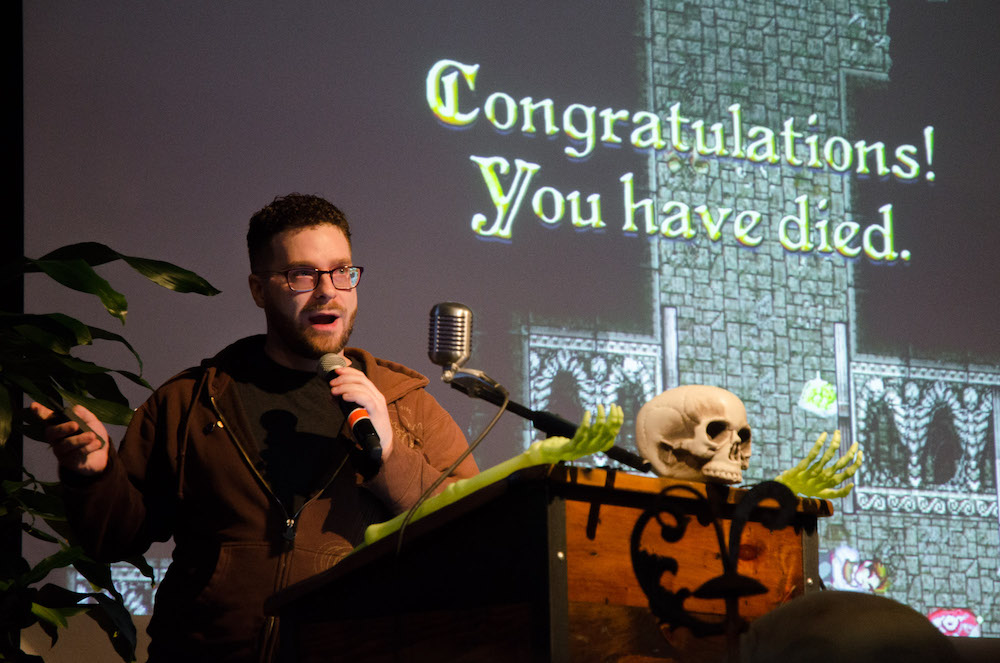
Here is the official schedule (linked), below is it presented just as a list of talks, with ✨sparkle emojis✨ around the things that personally enthuse me. ✨Just because!✨
Times given are US Pacific/Eastern. If you think the short times between starts are indicative of short talks, most of them aren’t that short, they have two tracks going on beside each other:
SATURDAY
9:30 AM/12:30 PM: Arron A. Reed, Klingons, Hobbits, and the Oregon Trail: Procedural Generation in ✨the First Decade of Text Games✨
10:00 AM/ 1 PM: Nic Tringali, ✨Abstract Space Exploration✨ in The Banished Vault
10:30 AM/ 1:30 PM: Linas Gabrielaitis, Fictions of Infinity in ✨Geological Finitudes✨
11:30 AM/2:30 PM: Florence Smith Nicholls, Another Stupid Date: ✨Love Island as a Roguelike✨
11:45 AM/2:45 PM Kes, Hunting the Asphynx: Roguelikes, ✨Provenance✨, and You
Noon/3 PM: Mike Cook, Generating Procedures: ✨Rule and System Generation✨ for Roguelikes
1:30 PM/4:30 PM: Scott Burger, The ✨Data Science✨ of Roguelikes
2 PM/5 PM: Nat Alison, In Defense of ✨Hand-Crafted Sudoku✨
3 PM/6 PM: Eric Billingsley, Scoped-down design: ✨Making a Tiny Roguelike✨
3:30 PM/6:30 PM: Elliot Trinidad, Touching Grass & Taking Names: Tuning the ✨Blaseball✨ Name Generator
4:30 PM/7:30 PM: Paul Hembree, Audible Geometry: Coordinate Systems as a Resource for ✨Music Generation✨
5 PM/8 PM: Jurie Horneman, Why ✨Dynamic Content Selection✨ Is Hard
SUNDAY
9:30 AM/12:30 PM: Mark Johnson, ✨Generating Riddles✨ for a Generated World
10 AM/1 PM: Jesse Collet & Keni, Fireside Chat About the Development of ✨NetHack✨
10:30 AM/1:30 PM: ✨Leigh Alexander✨, ✨McMansions of Hell✨: Roguelikes and Reality TV
1 PM/4 PM: Ray, Remixing the Layer Cake: Facilitating ✨Fan Reinterpretation✨ Through ✨Caves of Qud✨’s Modular Data Files
1:15 PM/4:15 PM: Crashtroid, Preventing Ear Fatigue with ✨Roguelike Music✨
1:30 PM/4:30 PM: Everest Pipkin, The Fortunate Isles: Fragment Worlds, Walled Gardens, and ✨the Games That Are Played There✨
2 PM/5 PM: ✨Jeff Olson✨, ✨Alphaman✨: Developing and Releasing a Post-Apocalyptic Roguelike Game in the ✨DOS Days✨ When Computers Were Slow, Memory Was Scarce, and No One Had Ever Heard of Object-Oriented Code
On Romhack Thursdays, we bring you interesting finds from the world of game modifications.
The critical consensus on Ultima Underworld is that it was a high point of the Ultima franchise, a then-unique (and still fairly distinctive) kind of game, a 3D fantasy adventure released nine months before Doom, with a detailed dungeon and a high degree of player agency.
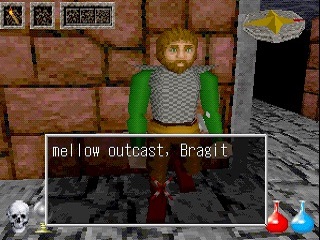
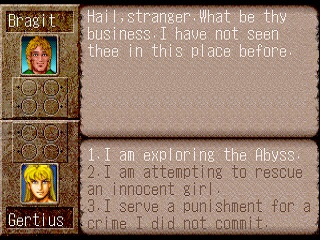
Ultima Underworld got a Playstation release, but only in Japan. It is not a straight upgrade from the DOS version, it’s got different cutscenes and anime character portraits, as well as interface differences. Still, it could well be worth playing for its own sake.
Often for these romhack posts I’ll try to apply the patch myself and take my own screenshots, but in this case the patch is over 120 megabytes, and itself to be applied to a CD game ISO, and a substantial game to learn and navigate in itself, so I’m going to pass this time and just use screenshots from the game’s romhacking.net entry.
Look at that anime-style character art. I guess this counts as the third JRPG post in a row.
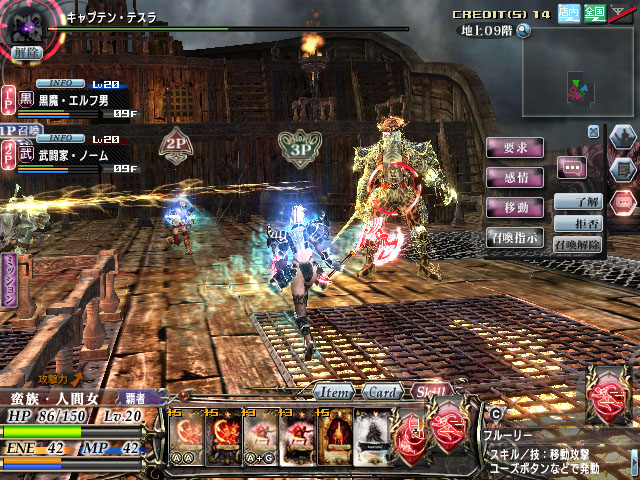
Another JRPG post! That’s two in a row, and it’s about some quite interesting games, including a lost Shining Force game. The website JRPG Junkie tells us about some Sega arcade games that fit the mold that sound like they would have been interesting to have tried.
Quest of D (image from JRPG Junkie)
Quest of D was a dungeon crawler where the player’s inventory was collected as physical trading cards, that were scanned into the game in order to use them. Shining Force Cross was similar in concept but without the cards; it lasted until 2016. And finally there was Soul Reverse, introduced in 2018.
The world of Japanese arcade games from around this time is largely a big dark area to me, and right around the time when the US arcade industry started its death spiral. It was also a time when server connectivity and online updates came into vogue, meaning when the servers went down, many of them ceased to be playable. It’s really sad that this has become essentially a lost age of gaming, at least to people outside of Japan. We probably couldn’t play them then, and we certainly can’t now.
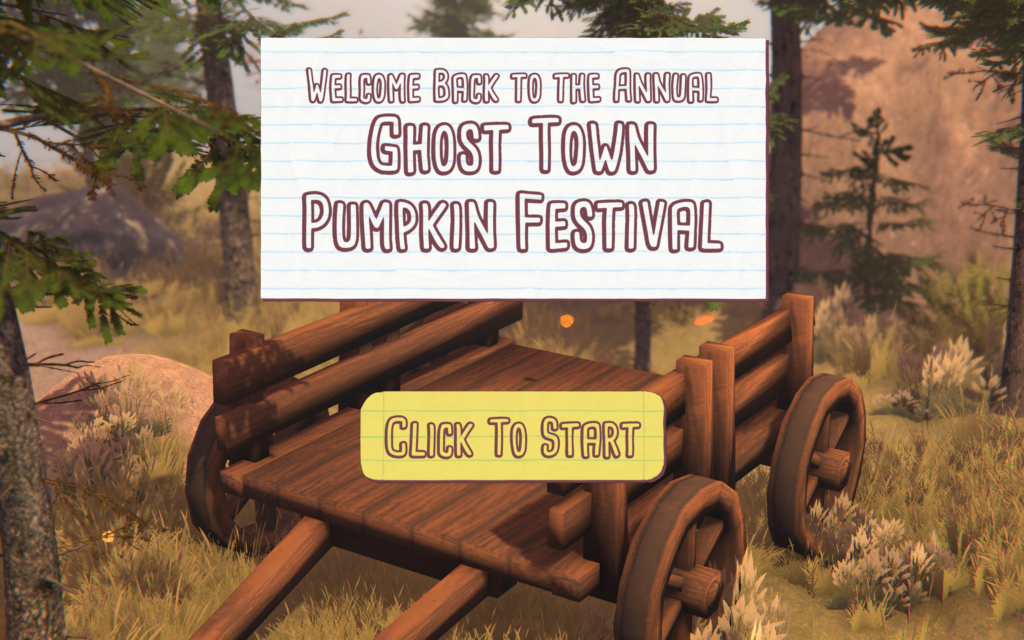
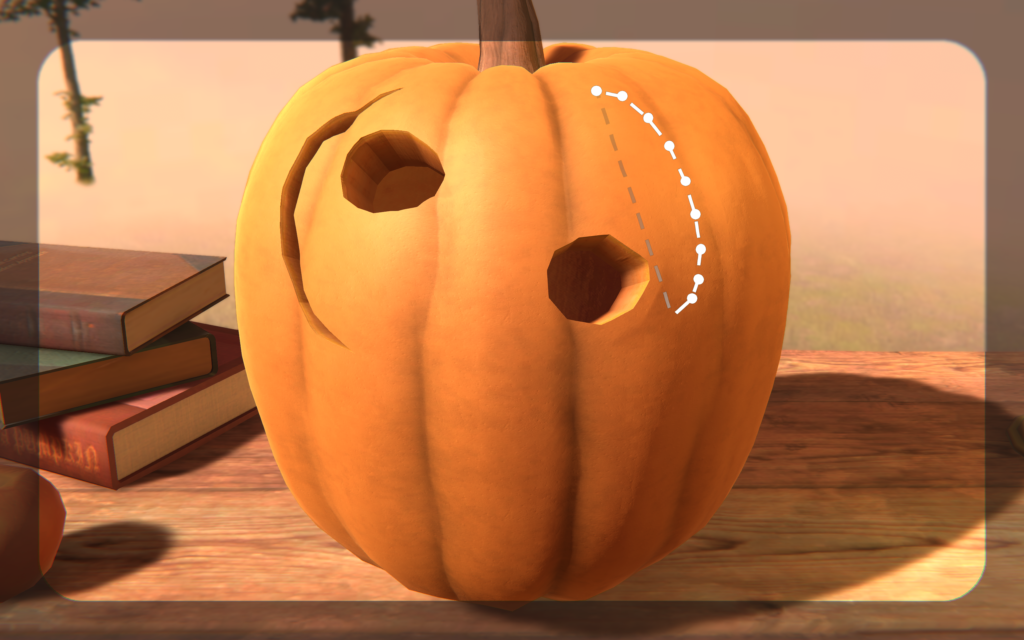
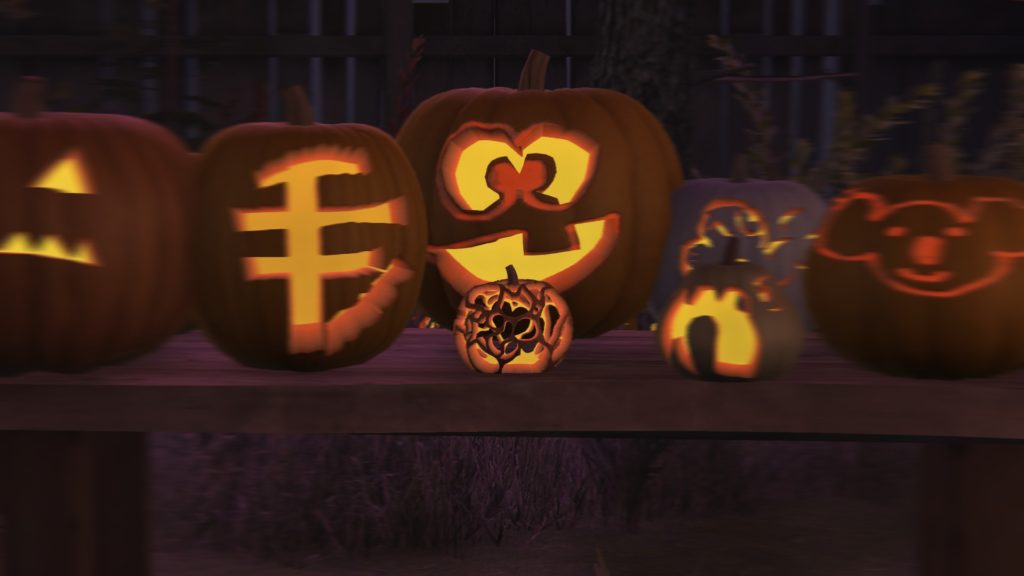
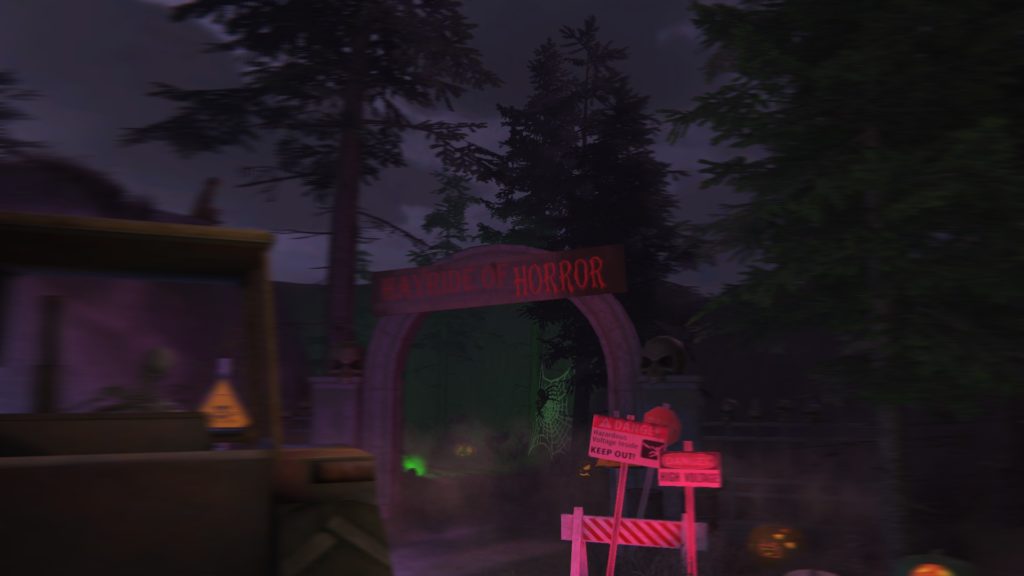
Every year, the creator of A Short Hike turns on the servers for a pumpkin-carving game. This year he plans to keep them up until about a week after Halloween, so enjoy it while/when/if you can!
The carving interface is easy to use, although it does result in a glitch that has to be undone sometimes. Keep trying though!There’s over 2,000 pumpkins to be seen so far, with the ability to favorite ones you like and award the best ones badges!There’s more than just pumpkins to see, you can go on a hayride, explore a maze and find interesting spots too!Nice Elder Sign!
There was apparently a leak of the upcoming Super Mario Bros Wonder game (the first hour of gameplay is here), and it has a terrific little sequence that makes me think it’s going to become highly memeable. The part that really makes it for me is the flowers’ comments. Here it is, edited down to just that sequence. Note that this is a spoiler, but it’s for only the second level of the a whole long game.
Because of the danger it’ll be taken down, I’m not uploading this to Youtube. Please enjoy, it’s about a minute long.
Much much later, in a secret world, there is a reprise of this idea, and it’s much harder. Warning you now, It’s a more significant spoiler, not for story reasons, but just for existing. It’s fun, but looks pretty hard! I got the video out of a much longer video, at 4 1/2 hours and showing off all of that secret world, here. This is just that level, at two minutes long:
Sundry Sunday is our weekly feature of fun gaming culture finds and videos, from across the years and even decades.
I’m going to be honest, I vary in my appreciation for TerminalMontage’s gaming-related Youtube animations. Sometimes I think they’re brilliant, other times I think they really try too hard to be edgy. At their best they use the purposely-janky animation to make a point about the subject. Previously I’ve linked to their Breath of the Wild “speedrun” animation, where some of the things that would ordinarily be kind of lolrandom inclusions were actually, amazingly, references to things players do in actual speedruns.
I think the pinnacle of their output has to be their depiction of the events of The Typing of the Dead, Sega’s side-sequel to The House of the Dead 2, which took that lightgun zombie-shooting arcade game and grafted a typing trainer onto it. It was one of the most memorable game experiences I’ve ever seen, not just for the crazy premise that entirely works, not for the ludicrous power of its word list, but because the boss fights were each reworked to fit into the style, and forced players to answer questions with the keyboard, or type ludicrous sentences to try to mess them up.
There’s Something About The Typing of the Dead takes the game’s premise and reworks it as if villain Goldman was a 4chan-style vomiter of memes, right down to having an Anonymous mask, and as such makes for a more effective villain than the actual game had. The computer-synthesized voices for the characters are on a par with the terrible voice acting in the game. Most of all, I’m pleased for the unexpected use of Whomst’d’ve at the end.
Now that I’ve finally managed to squeeze this video into Sundry Sunday, I look forward to never mentioning memes here ever ever again.