Super Mario Bros. Wonder is 15 months old now, and as is usual for games this far out, the hype around it has died down. But this video, and its information, has been in my to-post file for a long time, so let’s get it checked off of my list.
There is a level with a boss fight against Bowser Jr. where he makes himself really small (accidentally), then really large, and the player’s size changes to the opposite: really big, then really tiny. The player’s physics change to reflect their new volume.
As it turns out, this effect is, in a way, faked. During this whole fight, the player’s size doesn’t change at all! Instead, the room changes size, and the camera is zoomed in or out so it’s not noticeable. Junior’s size actually changes twice as much. The changes to the player’s physics are applied on top of this state.
Rimea on Youtube made a video, like a whole year ago, that applied the Wonder effects from the boss fight in normal levels, and the player’s character doesn’t change size at all there, there’s the physics changes and that’s all. Then they put some other objects in the room, some question mark blocks, and they change size along with the room, making the camera gimmick a bit more obvious.
Here is their video explaining and demonstrating how the effect is done (6m). Why is it implemented like this? My guess is that the player movement routines in Mario games are really complex and detailed, and any time when it comes to a decision whether to change it or something else, the developers do everything they can to not mess with the precise and exacting parts of the engine, for fear of breaking some other obscure part of the game. The player program has to be used throughout the whole game, while the boss and its room are only used in one part, so it risks breaking fewer things to put the changes all on them. That’s how I see it, yeah.
Perhaps it’s a bit self-indulgent, but I’ve found a playthrough by someone other than me of the arcade version of Rampart, and decided to spotlight it. It’s a game that seems fondly remembered by some, and doesn’t seem to have sold badly. It has a baker’s dozen ports for a wide array of consoles. But no one, besides me, seems to talk about it any more, and until this video I was the only person of whom I have knowledge of completing the arcade version.
Even the MAME people needed my help to correct a game-breaking bug in the Rampart driver, because no one on the project could play Rampart well enough to get to that level. I don’t say this out of pride, but rather of sorrow. Other than its creators, I am probably the person in the world who knows the most about it. For more info, I point you to our Rampart tag.
On the video, there are caveats. The first one is I didn’t exactly it, but instead, Youtube’s vaunted algorithm has filed to hide it from me, because it’s six years old yet my searches haven’t turned it up to me until now. Sometimes I wish Google would stop showing me things it thinks I’d like and instead for a change found something I’ve explicitly asked it for.
Second, it’s by a Japanese speaker, of the Japanese version of Rampart. That was a two-player maximum version with joysticks, and from watching it, I can tell you it’s much easier than US Rampart. The player gets more time to rebuild, levels are easier to pass, grunts are less aggressive, and the game doesn’t pour on the Flagships, the red ships, with anywhere near as much energy in the last two levels. They manage to finish the game in one credit, something I’ve never done on the US version, but I strongly suspect I could do it too on that version, and fairly easily.
Still, it’s someone other than me who has a complete game on Youtube, in however many credits. It’s played on arcade hardware too, which I haven’t been able to do since Rampart was at our local arcade, back when that place existed, around 1991 or 1992. Here is that play (57 minutes):
I really don’t want to detract from their game, bit I’m a bit disappointed. I’ve played Rampart, mostly in MAME but sometimes on the Gamecube version of Midway Arcade Treasures, and on one particular DragonCon I played the PS3 version (there’s something of a story there). Every time, I’ve had to fight against bad luck and the most diabolical impulses of designers john Salwitz and Dave Ralston. Sometimes I win and sometimes I lose, but, ever, only I care.
The search for other people who have finished the US version of arcade Rampart continues.
Late addition: I have more discoveries to offer on this matter, but I have to figure some things out first. To be continued….
Sundry Sunday is our weekly feature of fun gaming culture finds and videos, from across the years and even decades.
You know, it’s a effort sometimes to keep up this weekly game culture section. Youtube’s algorithm sucks unless you have an account you use for one purpose and none other, for it’s always trying to send you things related to the very last thing you watched. That means its efficacy as a source of finds varies widely and wildly.
Today’s find, however, is the kind of insanity that makes the effort worth it. It’s no thanks to the Youtube feed either, but from a Bluesky post. As it turns out, they made a music video for Lemmings 2, involving adorable Lemming puppets (4m).
It’s kind of an old subject now. The Legend of Zelda was originally released in 1985, and right with the next game, Nintendo started toying with the formula.
The third game in the series, A Link to the Past, is widely revered among classic game-players, but there’s been this small coterie, growing over the years, that despite greatly improved graphics and controls, a much greater variety in enemies, like 13 dungeons in all and a host of cool secrets, in some ways it’s not up to the original. And the darn thing is, I agree with them.
The Legend of Zelda is kind of the victim of being left behind by design trends, in some ways. Link to the Past is an inflection point; while TLoZ is infuriatingly vague in some ways, and very challenging, some players latched onto those aspects and relished the challenge. Its second-sequel is almost luxurious in how it tells the player how to progress. There are establishments around the fantasy world of Hyrule whose whole purpose is to tell you what to do next. That’s great for making a generally-playable game, but if you want to figure the game out yourself, like solving a great puzzle, it’s lacking.
Its secrets are much less secret. It feels like the world wants you to discover its hidden caves, imagine that. Of the differences between the two, most players preferred the new direction, as did developers, not the least being the makers of the Zelda games themselves.
Of the fans who recognize the first game’s gnomish inscrutability and obscure secrets as a strength, probably the best-known advocate has been Tevis Thompson, who made the case in his 13-year-old essay Saving Zelda. He followed up some of the ideas in the graphic novel Second Quest (which is great), but it more goes in its own directions.
That was where the discussion stood, until the release of The Legend of Zelda: Breath of the Wild. After over a dozen games that leaned in to the Link to the Past template, it seemed to represent a rejection of that whole line, of the very trends they themselves had started and build upon. Instead of the mechanistic puzzlebox world, where exploration is carefully gated and players can’t get themselves into situations they’re not ready for, they threw open the doors. Here, have a world not only much bigger than any previous Zelda, but one of the biggest worlds in gaming period. Go anywhere, right from the start! While the secrets are still not that secret, the vast land obscures their locations pretty well, so it adds up to about the same effect.
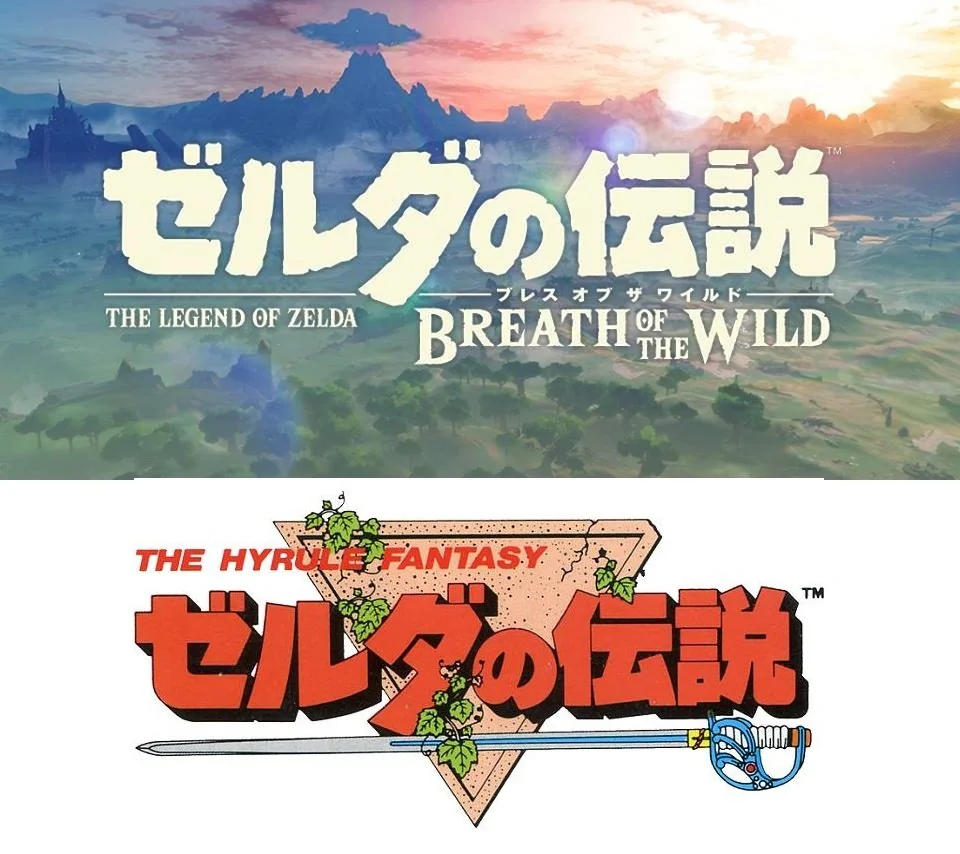
Breath of the Wild was the first Zelda game that largely felt like Game #1, and there are signs this was intentional. The Japanese release made direct references to the 1985 original, using the font from the cover of the original game for its own title screen and to announce locations, have a look:
Comparison image from (ugh) r/zelda
When the game first game out, there was bewilderment, but players were very appreciative, but, did this mean all Zeldas were going to be vast open-world exploration games now? Tears of the Kingdom seems to indicate, maybe! Then Echoes of Wisdom last year showed that, while that game itself had many changes to the formula (such as actually starring the title character), they had not abandoned the classic formula, or look either.
All of this is to introduce the video by ThePlinkster, which like Thompson did in 2012, makes the case that the first game is still, largely, the best, and it even claims it’s better than BotW, which might be a bit of a reach. It’s 18 minutes, and while I don’t really agree with him entirely, he doesn’t make his case badly. Here it is:
We love it when we find weird and unique indie games to tell you all about! Our alien friends to the left herald these occasions.
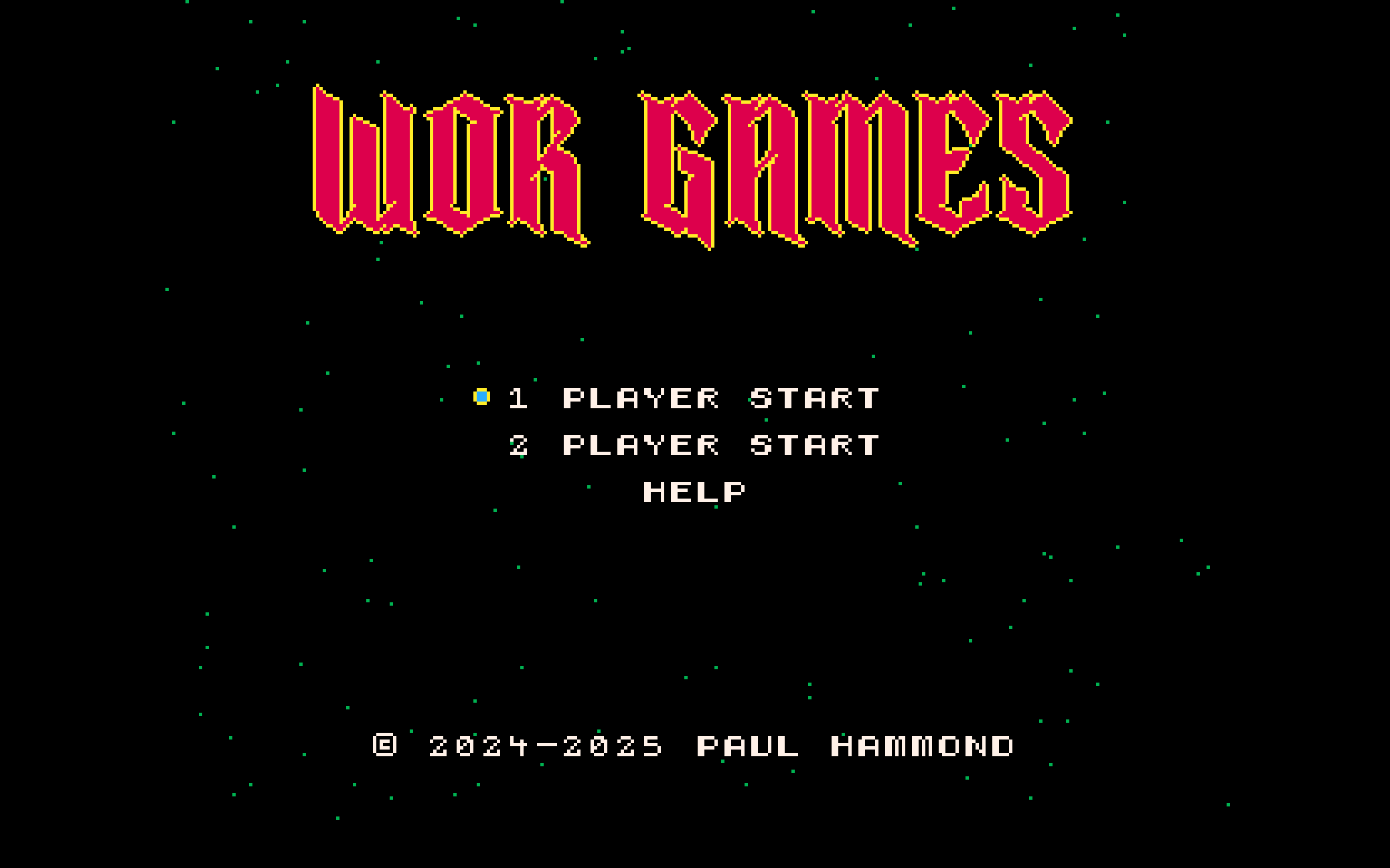
This one’s another of Paul Hammond’s series of classic arcade games recreated in Pico-something. Most of these have been in Pico-8, but today’s find uses its more-powerful successor, Picotron. To us end users though, the result isn’t that different.
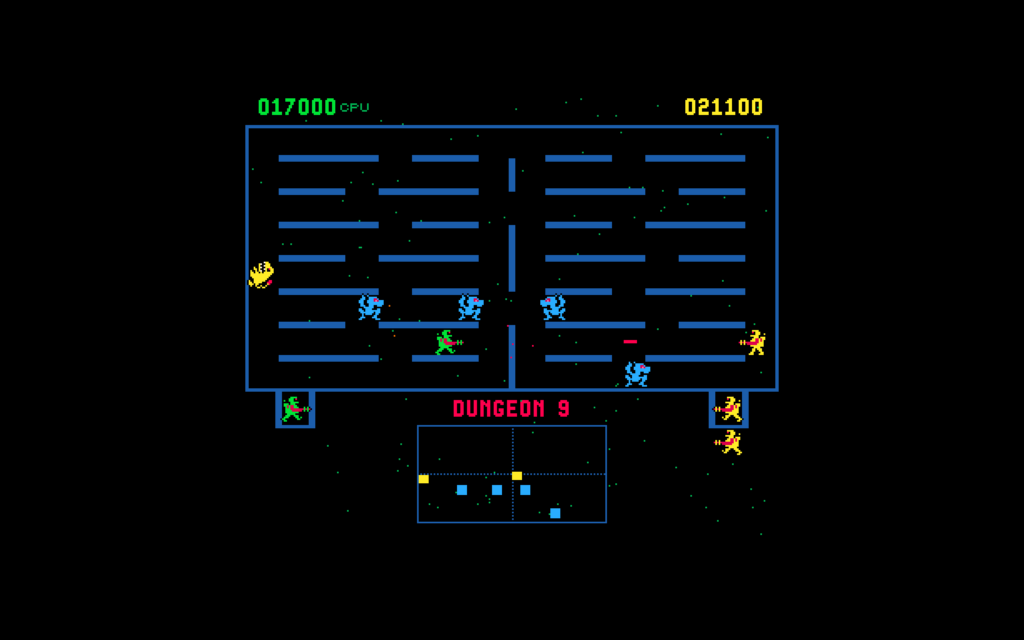
Wor Games is a remake of Bally’s classic arcade game Wizard of Wor, probably the most popular game made for its Astrocade-based hardware, interesting for being an early framebuffer-based game when memory was very expensive, instead of tile-based, and as a consequence only having four colors: black, blue, yellow and red. Wor Games largely holds true to that, but adds a couple of extra colors.
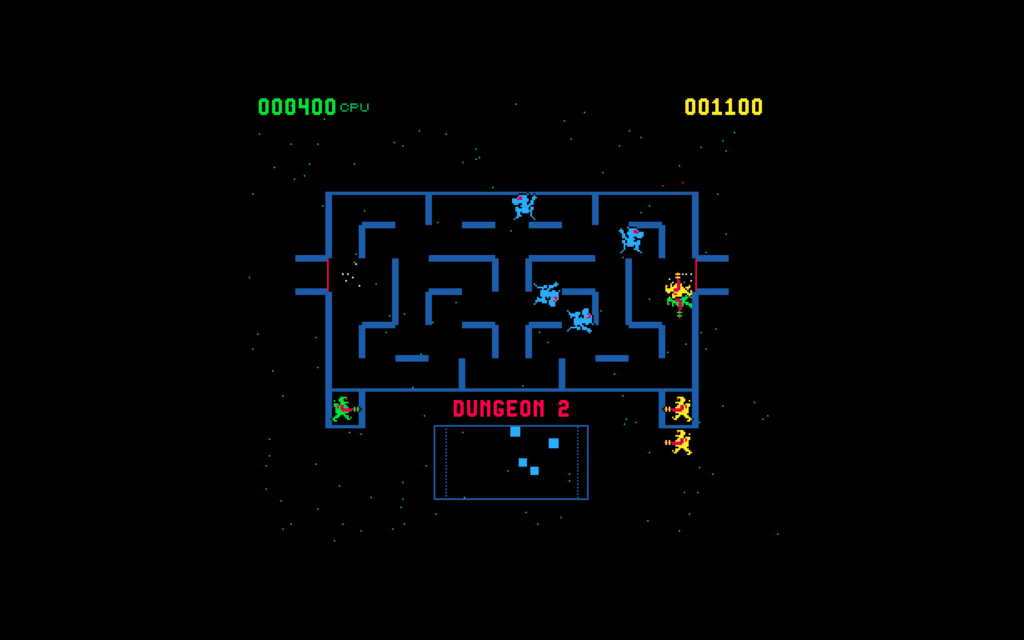
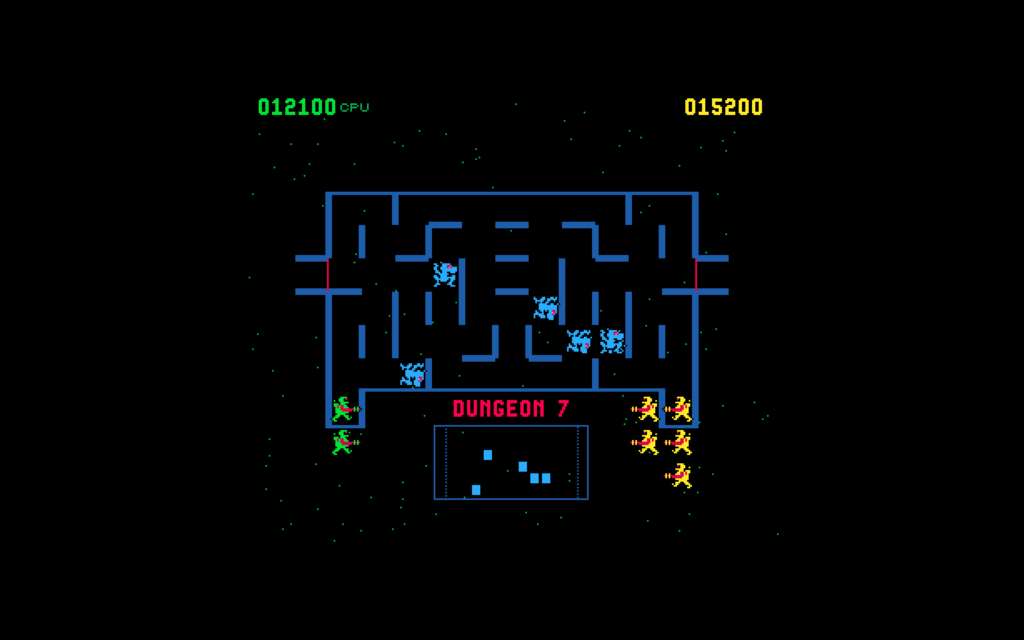
Both Wizard of Wor and Wor Games are shoot-or-be-shot maze games. Wizard of War could be played either by one player or by two co-op (although players could easily blast each other). Wor Games played in one-player mode adds a computer-played helper. The helper does a good job of killing the monsters. It doesn’t try to kill the human player, but neither does it make an effort to avoid shooting them, so be wary of accidental shots.
Each maze has a number of monsters, and more spawn in over time. Blue monsters are relatively slow, yellow ones faster, and red ones faster still. All three kinds can shoot at you, but the higher-difficulty monsters have much faster reactions to your presence. Monsters move randomly in large part, but usually make an effort to stay out of your line of fire. This forces you to move in closer, and they’re never more dangerous than when they’re just around a corner from you, and randomly decide to pounce on you from the side.
The game simulates line-of-sight for yellow and red monsters, who have the extra property of only being visible to you if you’re nearby, or else visible down corridors. Even if they aren’t visible on the main screen, their locations can be deduced by occasional particle effects, or by letting your gaze stray to the radar display at the bottom of the screen. Taking your eyes off the main arena gives them the perfect chance to walk into your corridor and shoot you. Be wary.
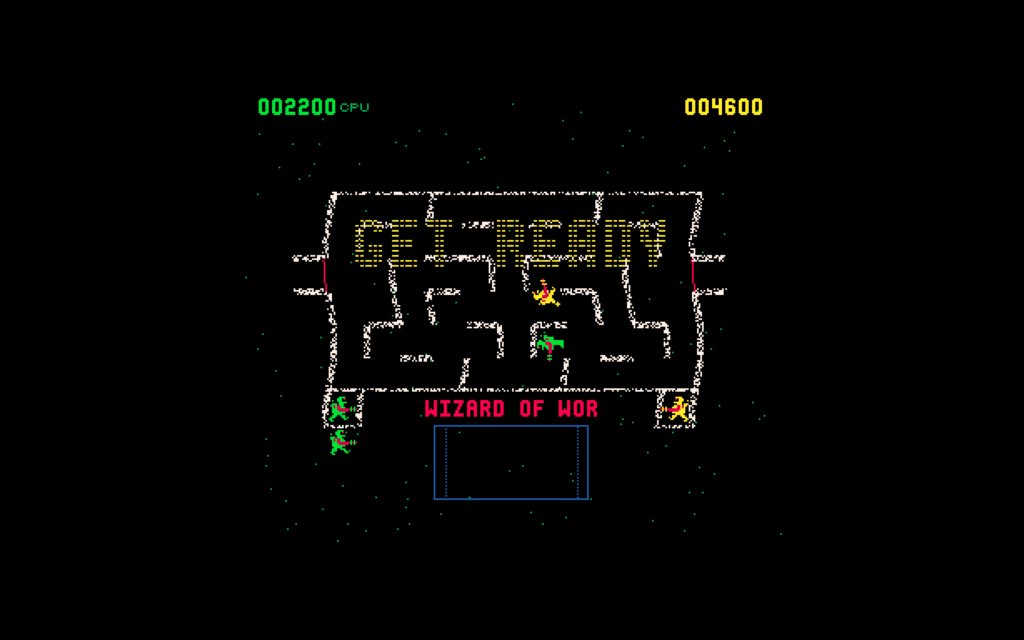
After a number of monsters are blasted that the game decides to be enough, the level may end. Or, alternatively, you may be blessed (cursed) by a visit by the Worluk. The Worluck’s a fast-moving critter that doesn’t shoot at you, but rushes around so quickly that shooting it is a big hassle. It moves randomly too, but is kind of trying to reach one of the exit doors at the sides of the arena. If it makes it to one, it escapes, too bad. But if you can shoot it, you and your partner both earn an extra life, and the next level will be proclaimed, to dramatic music, to be a DOUBLE SCORE DUNGEON! Blam!
What’s more sometimes, if you dispatch the Worluk, you’ll be in for a visit from the Wizard of Wor himself, a purple-robed freak who’s fast, sneaky, and can shoot you too. He’s worth a bucket of points if you can kill him, and even more if the DUNGEON is DOUBLE SCORE. Blam, again!
In addition to the basic “Arcade” mode, Wor Games has two alternate difficulty levels, and a special mode that makes the base game into something resembling Pac-Man. It fills the screen with dots, and until you or your partner have collected every one of them, the monsters will keep respawning. Some of the dots are large, and act like Pac-Man’s Energizers, affording you invulnerability (can’t be harmed) and invincibility. (Kills enemies on contact. Why do I have to explain these things?) If you don’t get to an Energizer-dot fast enough though it hatches, resulting in a tiny new monster that you have to kill. The best plan seems to be to dash and collect all the big dots you can at the start of the board, since if you leave them be they’ll just make more problems for you.
Both games, the original Wizard of Wor and Wor Games, are interesting for feeling easy enough to convince you to play time and time again, and yet each game is over so fast that you wonder why you keep dying. One reason is that the controls are a bit weird. Your Worrior’s movement is locked to a grid, and you can only shoot in four directions. If you’re partway into an intersection and decide to go back, sometimes your clumsy fightyperson will decide to step forward instead and get blasted. It’s sort of how Link in the original Legend of Zelda tended to get a bit slippery if you tried to go diagonally, but here the grid is even coarser, and all shots are fatal.
The original arcade game was a throwback, even at the time. I note that it, a four-color arcade game with coarse pixels, was released the year after Pac-Man’s US release, by the same company no less! Wizard of Wor used its weird CGA-like color scheme and menacing audio to effective advantage ago. Its world felt strange and oppressive because of it, and so it doesn’t seem like it’d be nearly the same game with more powerful graphics and sound hardware, and so it is with Wor Games. While Picotron is a purposely-limited fantasy console/workstation, Wor Games restricts its visuals even further, not to the limits of the arcade game, but not too far from them either. It’s an entertaining play, and while your games will probably end very quickly, you can always try again.
On Romhack Thursdays, we bring you interesting finds from the world of game modifications.
There’s a whole community out there that exists to update old console sports games with current rosters and stats. This isn’t the first time we’ve linked to one of these hacks, but it’s been a while, so why not? This one’s a recently-released hack updating NES Tecmo Super Bowl for the 2024 NFL season.
This faked cover art is from sblueman.com.
The site sblueman.com is the canonical host of many of these hacks, going back to 2017. There’s also hacks that simulate NCAA seasons, for those who prefer a more collegiate experience. The hacks can also be gotten from tecmobowl.org. You can also find there TSBTool, a rom editor that’s used to construct the hacks. More information on that process is at sblueman.com’s site at this page.
These fan-made edits don’t just change the numbers and names, but modify and attempt to improve the gameplay in many ways. Knowing that not everyone might agree with all of their choices, there’s four versions of the hack: a “base” version with the updated rosters and the most agreed-on changes, a “vanilla” version with more changes and is intended for casual players, a “hardtype” hack that increases the difficulty, and an slightly changed edition of hardtype where, during road games, the player actually plays as Player 2, against a Player 1 computer opponent. This is done to put them on the right side of the field, but as a side effect you have to play on the second controller (virtual or otherwise).
The Tecmo Bowl games are revered among retro game fans for their exciting action and design, but due to EA’s stranglehold on official licenses for most of the big league sports, official rereleases and remakes from Koei Tecmo are unlikely any time soon. These fan-made editions are twice-damned: by Tecmo’s ancient copyright, and EA’s slightly younger licensing deal. It’s money left on the table, and if you need any proof of capitalism’s manifest faults, there you go. Instead, according to tecmobowl.org, Tecmo had plans once to make a Pokemon Go clone called Tecmo Bo Go. That effort seems to have almost entirely vanished, except for that post and a couple of others, so it seems to have spun down the great internet commode.
Boudewijn Wayers was the creator of the very first Nethack Home Page. I have no idea where he is now, but he’s listed among the alumni of the Nethack Dev Team.
He wrote a spoiler for Nethack called To Die: 50 Ways to Leave Your Game, which was a cataloging of ways to die in that game. This used to be available in several locations on the World Wide Web, but now I can only find it in one place. To help preserve it for later generations, I paste it below in full.
I feel that first I should say a word about how Nethack pages have become scarce lately. The old Steelypips spoiler site is still active, but many of the other sites it links to have perished. (Some of them have academic URLs, and have probably fallen victim to the declining web investment of universities. To think in my lifetime I’ve seen the rise and subsequent abandonment of the internet as a tool of knowledge. I blame social media!)
I should see about preserving old spoiler documents on the living internet, but until I get something put together, here is Boudewijn Wayers’ list of ways to die in Nethack.
50 ways to leave your game ============================ by Boudewijn Wayers (kroisos@win.tue.nl).
There has been talk on the net lately about various ways to get killed. Well, apart from being killed by a monster hitting you, there are lots of other ways… Some of these other things you can be killed by are mentioned here (I don’t claim to have noticed them all, but I think I did):
a blast of acid a blast of disintegration a blast of fire a blast of frost a blast of lightning a blast of missiles a blast of poison gas a blast of sleep gas a bolt of cold a bolt of fire a bolt of lightning a burst of flame a carnivorous bag a closing drawbridge a cockatrice corpse a collapsing drawbridge a cone of cold a contact-poisoned spellbook a contaminated potion a cursed throne a death ray a falling drawbridge a falling object a falling rock a finger of death a fireball a genocide spell a land mine a magic missile a magical explosion a mildly contaminated potion a potion of holy water a potion of unholy water a psychic blast a residual undead turning effect a scroll of fire a scroll of genocide a sleep ray a system shock a thrown potion a touch of death a tower of flame a wand acid an alchemic blast an electric chair an electric shock an exploding chest an exploding crystal ball an exploding drawbridge an exploding item being destroyed an exploding ring an exploding rune an exploding wand an explosion an iron ball collision an object thrown at you an unrefrigerated sip of juice an unsuccessful polymorph brainlessnes bumping into a boulder bumping into a door colliding with the ceiling contaminated water drowning eating a cadaver eating a cockatrice corpse eating a cockatrice egg eating a poisonous corpse eating a poisonous weapon eating a rotten lump of royal jelly eating an acidic corpse eating the Medusa’s corpse eating too rich a meal exhaustion falling downstairs jumping out of a bear trap kicking a ladder kicking a rock kicking a sink kicking a throne kicking a wall kicking an altar kicking something weird kicking the drawbridge kicking the stairs leg damage from being pulled out of a bear trap looking at the Medusa molten lava overexertion sipping boiling water sitting in lava sitting on an iron spike strangulation swallowing a cockatrice whole the wrath of touching a cockatrice corpse trying to tin a cockatrice without gloves
Other ways to die:
caught himself in his own tower of flame committed suicide crunched in the head by an iron ball dragged downstairs by an iron ball fell from a drawbridge fell into a chasm fell into a pit fell into a pit of iron spikes fell onto a sink killed himself with his pick-axe quit while already on Charon’s boat shot himself with a death ray squished under a boulder starvation teleported out of the dungeon and fell to his death unwisely ate the body of Death/Hunger/Pestilence using a magical horn on himself went to heaven prematurely zapped himself with a spell zapped himself with a wand
That’s all of it. Thanks for reading it, and thanks Boudewijn, wherever you are.
I remember the days when everyone marveled at how many ways to die there were in Nethack. Remember Nethack? Good old Nethack.
Multiple long ages of the internet ago, famed nethacker Boudewijn Wayers wrote a spoiler called To Die: 50 Ways to Leave Your Game. It was published on his long-gone Nethack Home Page, but copies of it remain scattered around the internet, although currently I can only find one copy on Google, from a page on tecfa.unige.ch. I’m quite sad that this venerable piece of hack lore is in danger of extinction, at least to people who don’t know the magic codes to enter on the Wayback Machine.
To Die is a wonderful bit of roguelike lore, so great that I’m posting it in full here soon to help preserve it. But today’s focus is on a more recent variation of it: a Youtube video from TheZZAZZGlitch listing every way to die in Pokemon Mystery Dungeon Blue and Red Rescue Team. (21 minutes)
In the spirit of the communal spoiler files of old, I enter the list of death causes here, in easy-to-search-for text. For the details, I refer you to the video. Note that every source of damage in the game that has the potential to reduce the player’s HP to zero has a corresponding entry in this list, so it serves as a map to every cause of harm in the game’s Pokeverse.
WAYS TO KICK THE POKEBUCKET (33 possible causes)
was defeated by (attacker)’s (move) (this is the most common cause of adventure ending) missed a Jump Kick and wiped out. missed a Hi Jump Kick and wiped out. fainted from the foe’s Destiny Bond. (an instadeath) fainted, covered in sludge. fainted from a move’s recoil damage. fainted from damage it took bouncing. was defeated by a foe’s pent-up energy. fainted from stepping on spikes. fainted from a bad burn. fainted, unable to bear constriction. fainted after the poison spread. fainted while still being wrapped. was felled by a curse. was drained to nothing by Leech Seed. fainted from hearing Perish Song. (another instadeath) fainted while in a nightmare. was felled by a thrown rock. fainted from hunger. disappeared in an explosion. tripped a Chestnut Trap and fainted. fell into a Pitfall Trap and fainted. was defeated by a Blast Seed’s damage. was transformed into an item. (instadeath) fainted from being knocked flying. was felled by a Pokemon sent flying. gave up the exploration. (quitting the game, not explicitly a death, but serves the same purpose) was blown out by an unseen force. (spent too long on a single floor and was expelled by the Winds of Kron) returned with the fallen partner. (your sidekick fainted, so you left too, automatically) fainted due to the weather. failed to protect the client Pokemon. (FISSION MAILED) fainted from a Wonder Orb. fainted from an item.
Unattainable but still used in the code, waiting for a moment that can never come (7 causes):
was transformed into a friend. (what?) left without being befriended. (hwat?) was defeated by debug damage. (nooo not debug damage) was felled by a thrown item. was deleted for the sake of an event. (oh okay then) went away. (so long) was possessed. (spooky)
Three messages exist in the code but with no way to activate them, even theoretically:
fainted from a debug attack. was defeated by a powerful move. fainted due to a trap’s damage.
Displaced Gamers is one of the best NES gaming channels on Youtube. They do sterling work diving into the very code of the games, to figure out what they are like they are. We link to nearly every video they do. Here’s a recap:
Well here’s another, and it actually is a follow-up to a video that I don’t think we linked to before. So here’s that video first, on Micronics’ port of Ghosts n’ Goblins to NES. (32 minutes)
Pretty long already, exquisitely geeky! Well its successor is even more geeky, as they actually reprogrammed the game to have a more optimized sprite engine. Although it’s a shorter video, at 24 minutes!
Ghost n’ Goblins is designed around being a 20fps game, so no amount of optimization will change that, it requires more substantial modification. But the time visualizations they use indicate that it may be possible to change that to 30fps, and with other changes 60fps may be possible. Mind you, the logic for the player, enemies and weapons all assume 20fps, so unless they’re changed to account moving to 60 frames per second will triple the speed of the game, so that obviously would need to be changed as well. I look forward to seeing the next chapter in this retrocoding saga.