
Video: Classic Game Repairs

The YouTube channel Classic Game Repairs fixes and restores old arcade units, especially those from the classic age and before. There’s a number of such things out there, but this is a whole channel of nothing but! Many of the units are really old too, like from the 70s. Those are a whole slew of games that are much in need of current-day love.

The video linked above is of Universal’s Mr. Do!, which is kind of like more-awesome Dig Dug. Most of these videos, I should make it clear, are not of gameplay footage, but of circuit boards and soldering irons, but that kind of thing is like ASMR to me. Maybe it will be to you too?

News 7/12/22: Yu-Gi-Market Contraction, Oh!

“We scour the Earth web for indie, retro, and niche gaming news so you don’t have to, drebnar!” – your faithful reporter

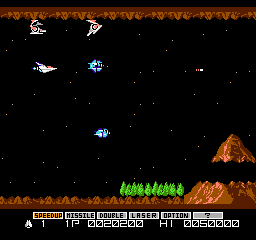
It’s a rare day that we get to link to the Washington Post, in this case a piece by Michael Cavna on the death of Yu-Gu-Oh! creator, mangaka Kazuki Takahashi. Hey there Michael! Bet you never thought your work would be linked by a single-celled pixel-art organism! Can you ask them to do something about their ludicrous paywall drebnar? Yu-Gi-Oh! is only tangentially part of our purview here but there have been enough video games from that series that we can probably make room for it under Retro, plus it’s published by Konami. One of my favorite facts is that the card game includes several cards that officially refer to the Gradius series, including cards of the Vic Viper and Big Core.

Elliot Williams at Hackaday challenges us: You think you know how Mario Kart works? I think so? You supply electric potential through a wire to a console loaded with some game software, which sends signals to a video screen, and you use a wired controller to interact with it. Yes, I win! His article just links to a video (see above) about how the AI drivers work. This subject has been thought of so much that there’s a patent on such drivers granted to Lyle Rains for his work back in the early days of Atari, in 1979! That it took 20 years for that to expire is a blight on the history of game programming, drebnar!

PC Gamer’s Rich Stanton tells us that Yuji Naka is still angry at Square Enix for removing him from the Balan Wonderworld project. He accurately notes that the degree of acrimony from Naka about this is unprecedented-Naka is pissed and doesn’t care who knows it. The article suggests listening to both sides here. Here at Set Side B we admit, we tend to take the word of developers over those of gigantic corporations, especially when the developer is someone of Yuji Freaking Naka’s standing! We may be wrong, and if the word comes out that we are we’ll cheerfully admit to it, but it is easy for me to believe, in Naka’s words, that Square Enix “doesn’t care about games.”

Zack Zaiezen at Kotaku writes that Take Two is going after another Grand Theft Auto modder. Boo! Hiss! News like that fills up my angry sac!

It’s a good day for linking to non-gaming sites! At CNBC, Ryan Brownie warns of a coming contraction of the games industry, partly due to it coming down off the boost caused by the pandemic, and also from bottlenecks produced by Russia’s invasion of Ukraine.

Pixel Art Manipulation Tools

Tiled is a popular open-source tool for tilemap construction

Popular and prolific game asset creator Kenney has a page up at Github that links to some of his favorite tools for manipulating pixel art, such as creating sprite sheets and extracting images out of them. It’s got a lot of useful info! If you have an interest in this style of art, especially making games with it, these programs are worth having in your toolbox.

Kenney: Manipulating pre-made game assets

Arcade Mermaid: Pepper II

This image has an empty alt attribute; its file name is mermaid1.png

Arcade Mermaid is our classic arcade weirdness and obscurity column! Once a month we aim to bring you an interesting and odd arcade game to wonder at.

Released in 1982, a couple of years after a little game called Pac-Man, Pepper II is a maze game set in a four-screen world. You’re a blobby angel thing called Pepper, obeying an edict from the Powers Above: zip up four screens’ worth of boxes. The box borders are made of un-zipped zippers, and by zooming around each one it’s zipped up and captured, filled with a pattern.

Opposing your efforts are a bunch of roving eyes and a weird pink creature callled “the Whippersnapper.” It was the golden age of arcades, and realistic scenarios were on the outs for a time.

Its box-surrounding play looks similar to Amidar at first, but it’s really quite a different game. Amidar‘s enemies move according to a set and inviolate plan, but the eyes of Pepper II rove mostly randomly, with a slight bias towards chasing you. Amidar only lets you attack your enemies once per board, after you’ve surrounded all four corners, but Pepper gets this power after capturing just one of the corners, or the box in the center, up to five times per maze. This means that you’re invincible a lot of the time! Play carefully and you’re almost always invincible, which is important because you’re really vulnerable when you’re not. There are up to three more enemies after you at a time than in Pac-Man, and their unpredictable meandering means you often get caught right as you’re finishing a box.

Pepper’s world isn’t a single screen, but consists of four interconnected mazes. The arcade manual calls them cubes, and when you clear one you get a little cube icon in the bottom-right corner of the screen, but it isn’t a cube really; there’s only four sides. The game world is more like a horizontal strip. When you go off-screen to the left or right, you enter the next screen in the strip, but if you go up or down you skip ahead/behind one screen. From Screen 1, left goes to 4, right goes to 2, but both up and down go to 3. Enemies don’t have an off-screen existence beyond a few seconds after you change mazes, but your progress on other screens is remembered, so you can solve each maze a bit at a time if you choose.

The best thing Pepper II has going for it is its speed. It is incredibly fast! It makes Pac-Man feel creaky by comparison! Surrounding an energizer box gets you only four seconds of invincibility, but it’s long enough to surround multiple other boxes.

Pepper likes to overshoot intersections, and even with attention you’ll still probably miss them sometimes. When you enter a new maze, enemies enter from the four sides randomly after only a second, and at the game’s speeds this makes them very dangerous at that time. You could start capturing a box, and by the time you’re all the way around it a roving pair of eyes have both entered and moved over into your path. The eyes are not focused pursuers, but their large number and randomness make them plenty deadly enough.

The Whippersnapper is a little special. When you activate an energizer you can destroy the eyes for points, but will just pass through the Whippersnapper. The Whippersnapper exists to prevent you from zipping up tracks randomly. It undoes your work as it moves through the maze! Once you’ve completely captured a box it’s safe and cannot be unzipped, but until then it’s easy for it to mess up your work. It also moves much faster than the eyes.

There’s a couple more nuances to play. If you go back over your own trail you’ll unzip it. There are bonus items you can surround for ever-increasing bonuses as the game continues. The energizer in the center of the board flips between a stronger version that also kills all the enemies on the screen. These play quirks don’t really amount to all that much. Pepper II is a game about careening at full tilt around a board, clearing it piece by piece, and frantically racing between energizers to keep your invincibility going, and the other details tend to get lost in the rush.

Extra lives are awarded at 40,000 and 80,000 points. A good early score is around 50,000. I can regularly break 200,000, clearing two cubes, but the difficulty goes up rapidly from there. Both as you continue in each board and as the game goes on the enemies speed up a lot, and starting with the second cube the unzipped trails turn invisible for short periods.

About Exidy

Exidy was founded by in the very early days of arcade gaming. Some of their better known games include Star Fire, Mouse Trap, and Venture. They were never known for their graphics, although some of their products were among the earliest arcade games to use digitized sound. Many of Exidy’s games made up for their lack of visual flair with strong gameplay fundamentals. Venture, particularly, is a minor classic. Exidy was known to court controversy at times, with games like Death Race, in which the player runs down pedestrians, and the excessively-gory Chiller, where the player uses a light gun to dismember helpless victims in a torture room. Chiller received an unlicensed port to the NES by AGC (“American Game Cartridges”).

Coleco ported Mouse Trap, Pepper II, and Venture to the Colecovision console, where they were met by an appreciative audience. Their port of Pepper II is especially good. It’s very much like the arcade game, just a little slower.

Exidy games from the time of Pepper II tend to have a visual look akin to DOS games played through a CGA card. Pepper II is like this, but it certainly can’t be called slow. It takes sharp reflexes just to get around its mazes.

Indie Dev Showcase 7/10/22

The indie showcases highlight the many dev-submitted games and demos we play here. If you would like to submit a game for a future piece please reach out.

Sundry Sunday: Summarizing Kingdom Hearts

You made it through another week! As a reward, we’re going to watch a few people attempt to explain possibly the most confusing game series of all time: KINGDOM HEARTS. Prepare for several embedded videos!

EXPLANATION THE FIRST: LONG MODE

Barry Kramer, A Good Enough Summary of Kingdom Hearts, up to 3 (33 minutes):

Then, his A Good Enough Summary of Kingdom Hearts 3 (12 minutes):


EXPLANATION THE SECOND: SHORT AND SNARKY

JelloApocalypse’s So This Is Basically Kingdom Hearts (5 minutes):


EXPLANATION THE THIRD: VIDEOGAMEDUNKEY

vgd “explained” it in four minutes:

As a followup, his “explanation” of Metal Gear Solid (about 7 minutes):


EXPLANATION THE FOURTH: REALLY REALLY LONG

Dialing down the snark, NovaZone did a more reverent explainer in about three-and-a-half hours:


EXPLANATION THE FIFTH: BRYAN DAVID GILBERT

Part of the Escapist’s Unraveled series, Bryan not only promises to explain Kingdom Hearts, but all narrative, even including those that don’t contain Donald Duck, at least if you consider “all stories” as being the standard hero’s journey thing we’ve seen over and over and over and over and over and over and over and over and over again by now. (15 minutes)

AND, MISCELLANEOUS

Honest Game Trailers (4 minutes):

And Loading Ready Run (7 minutes):

SORA, DONALD, AND GOOFY (2 1/2 minutes):

And that is just about enough of that. So, so long, from me, Mickey Mouse, and They Might Be Giants (1 minute).

News 7/9/22: Shop Channel Live-A-Live Playdate

“We scour the Earth web for indie, retro, and niche gaming news so you don’t have to, drebnar!” – your faithful reporter

Found on Nintendo Everything and reported by Brian, the Wii shop channel is back online after an absence of months. It had been down for “maintenance.” Mind you, it’s still impossible to buy software that hadn’t been purchased before 2019. It’s still just a way to reacquire things you had already bought. Sigh.

Ed Smith at PCGamesN notes a speedrunner at this year’s SGDQ has admitted to faking parts of his run, passing off a played-back video instead of performing it in real time, and has been banned from future events. While SGDQ was held in person this year, a few of their runs were still done remotely, and the faked run was one of those. The player in question is Mekarazium, and the run was for Metal Gear Rising (focusing eyes on paper) “Revengeance.”

At NintendoLife, Alana Hauges reviews Square Enix’s remake of the classic Japan-only JRPG anthology Live-A-Live, which I’m given to understand is pronounced like “Lighve Alive,” with long-I sounds. It’s been given the Octopath Traveler treatment, with pixel art akin to the original game placed in a 3D environment. It’s structured like a collection of short stories, all greatly different from the others. I have experience with the original game, and it contains several extremely interesting sections, including a space mystery, a Wild West puzzle segment, and a hugely complex and interesting ninja infiltration scenario where the player has to make many choices that each affect the outcome. While in the end all of the stories are linked together, on their own each is a small complete game in its own right. It’s long been a shame that the game as been unknown outside of Japan, and I’m excited to see it getting a chance elsewhere.

CBR’s Zachary Pilon rhetorically asks, why are roguelikes so popular? WHY INDEED IT IS AN MYSTERY. (Note: rodneylives spent like four years writing about them back at GameSetWatch.)

At The Verge, Andrew Webster states that the Playdate’s launch was a unique opportunity for small dev. People who bought the device have access to a number of games released periodically in a “season,” but software can also be loaded onto the system separately, and itch.io has an active community of these developers.

Reviving the Ouya

The Oyua was a beautiful dream that was not to be. It was a notable early success on Kickstarter, bringing in much more money than they expected, but the money soon ran out and what they were able to produce turned out to be not as enticing as people expected, with weak Wi-Fi and flimsy controllers.

And yet, the premise was, and still is, pretty sound: an Android device connected to a custom app store, dedicated to games, and taking no money out of software sales.

That last bit might have harmed it, since it reduced the income they could make. But this post isn’t about what-might-have-beens, but about as-they-now-ares, how they are now is not that bad! A community of Ouya buyers have gotten together to support each other. When the Ouya servers went down in 2019, it had the effect of nearly bricking many of the consoles, but there are fan-made replacements where much of its origin al software has been made available again, and even including some new games!

Dan Wood explains the current scene in a YouTube video on the state of the Ouya in 2022, and it’s interesting reading. For those with Ouyas who want to connect with others, he mentions the site Ouya World (check out the Tutorials section!), and a Discord server called Ouya Saviors (which I can’t link to because of Discord’s invitation policy, YAY).

The tutorial that Dan recommends in his video is the stouyapi Ouya API server. It should help get people with inoperable Ouyas up and running again.

Dan Wood: Playing The Ouya in 2022

EDIT 7/10/22: Someone mentioned in comments that they didn’t think Ouya’s cut was nothing, and I think they may be right. Until I can find confirmation, I’m going to acknowledge their concern with this note.

The Dark Heart of Balor Developer Interview

For this perceptive podcast, I sat down with Dima who is working on the upcoming game The Dark Heart of Balor. We spoke about their background and designing an action game along with some of the fundamentals of good action game design.

All footage shown was from our live stream of a pre-release build and may not represent the current version of the game.

The NES Sample Encoding Error

There was an error in the data prep in many NES games that caused them to reverse the bit order of samples. Or more accurately, the games encoded the samples correctly, but the flaw is in the NES sound hardware.

The result is, many games with samples sound notably worse than they should. The most infamous example of this is the sound in Double Dribble, which sounds particularly bad on its title screen. The difference can be heard on the game’s page on The Cutting Room Floor. There’s a hack for Double Dribble on romhacking.net that corrects the samples in-game.

Another game this affects is the unlicensed Tengen NES game KLAX. In the arcade KLAX had very little music, but the NES version has excellent music that relies heavily on sampled instruments. There’s a fixed patch for that game on romhacking.net, too!

Itch.io Bundle For Abortion Funds

itch.io is becoming quite famous for its bundles, where you can contribute money for a great cause and pick up a large number of great indie games at the same time. Past bundles have raised millions of dollars in support of Black Lives Matter, to help Palestinians, to aid LGBQTIA causes, and to help alleviate the plight of the Ukrainian people. If you’re hard up for cash you can donate the minimum, but if you have the means then please consider donating more than that?

A current bundle is especially important, the Bundle for Abortion Funds, to provide funds to women to travel to abortions-friendly states in the wake of the US Supreme Court’s disastrous decision concerning a woman’s right to choose All proceeds are going to The National Network of Abortion FundsCollective Power Fund. As of this writing the bundle still has about seven days left to go, but please don’t put it off for too long!

Of particular note, when you purchase a bundle on itch.io like this, by default the games will not be immediately put into your “library.” Being in your library can result in getting extra email and making it difficult to keep your bought games organized. When you load the page of a game that you’ve bought in a bundle, if it’s not in your library yet, there should be a notice at the top of the page to include it.

I have sometimes noticed, however, the notice not appearing, and generally I prefer to have it all in my big big list. If you’d rather just go ahead and dump them all into your main itch library, for instance to make it easier to use the itch.io app to automatically maintain and run your games, there is a Greasemonkey script you can install to do that. You’ll need Greasemonkey on Firefox, or Tampermonkey on Chrome, to run it. You can also use the website Bundle Browser to explore it, and see which games it has that you might already own.

(via simmering octagon at Metafilter)