Jason Scott Reminds Us Of Software On Cassette Tapes

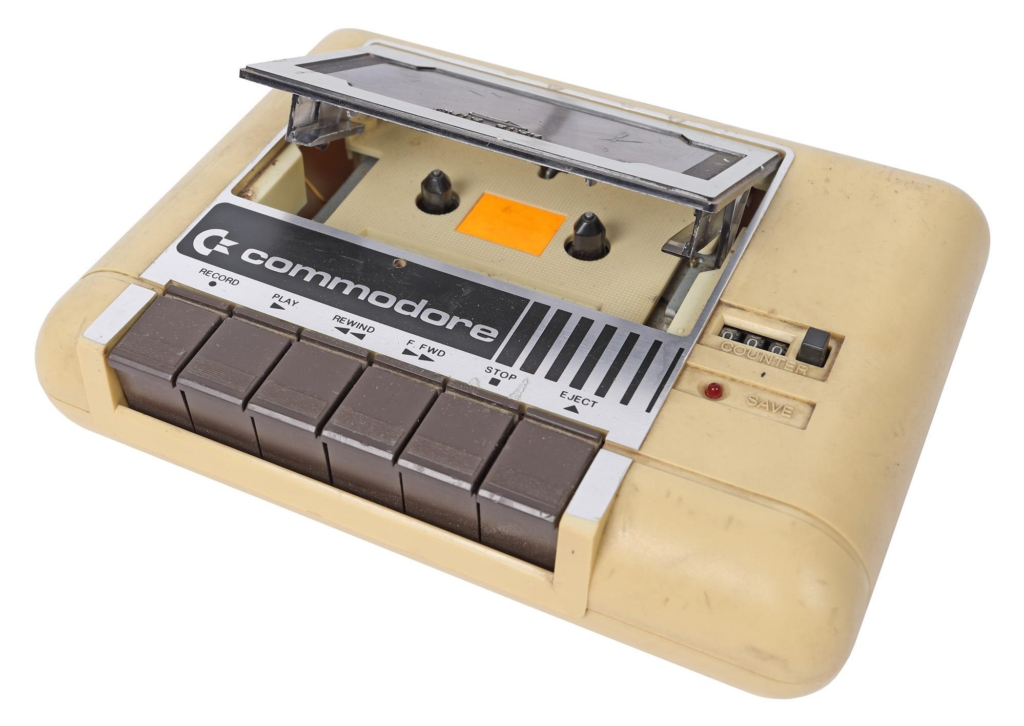
I had one of these, although it got pretty decrepit later on. Images here from the article on the Internet Archive.

Commodore users of a certain intersection of class and age will remember the Datasette, a custom tape player that early Vic-20 and C64 users could use to load and save their programs on standard “Compact Cassettes.” This was a very slow process, that was so timing intensive that the C64 had to blank its screen during it, because its graphics chip demanded exclusive access to memory while it got the needed data each frame to render graphics. Of course things were rather different in Europe, where cassette tapes were a much more viable medium, and tape loading could actually be faster than the 1541 disk drive (a notably flawed and slow design).

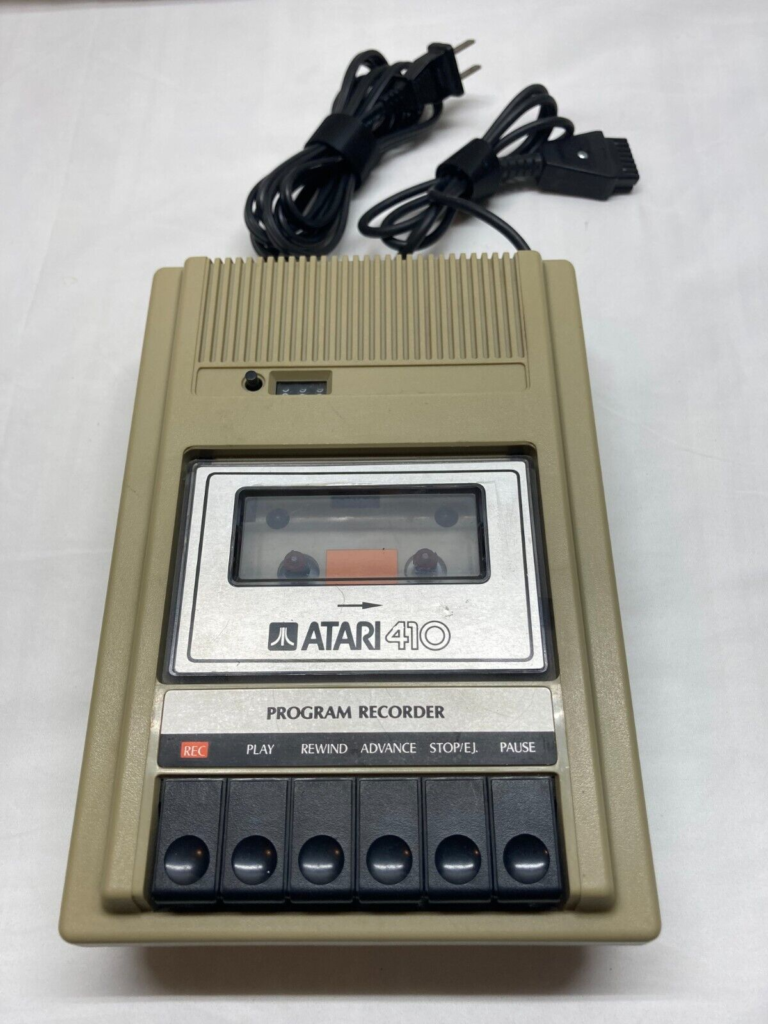
The Atari 8-bit counterpart to the Datasette

Scott walks through this unique period of home computing history. I still have tapes of old Commodore software lying around (because I rarely can bring myself to throw such things out). Maybe some day, if I can get my old Commodores working and displaying again, I’ll try them out and see if they work.

But fortunately, for commercial cassette software archived on the Internet Archive, you don’t have to go through such lengths! Although you can still wait for software to load if you want to! The IA offers emulated software for both the Sinclair ZX-81 and Commodore 64 that are supplied on virtual tapes, so you too can experience the exciting process of waiting for programs to load. In Scott’s words: “Incomprehensible! Mysterious! Uninformative! Welcome to home computing in the 1980s!

I notice that much of the Commodore 64 software mentioned in the article actually had tape loading graphics. I can’t explain this. It kind of makes me feel cheated, from the many times I sat watching a blank light-blue screen. Presumably the UK coders who made much tape-based 64 software had, in their tape-loading bag of tricks, a way to overcome the VIC-II’s timing issues. I wouldn’t doubt it.

The Easy Roll and Slow Burn of Cassette-Based Software (Internet Archive)

On PETSCII

We’ve brought up a couple of examples of Commodore PET software lately, which as I keep saying, is interesting because the PET has no way of doing bitmapped graphics, sprites, or even definable characters. Its characters are locked in ROM and cannot be changed. So, it includes a set of multi-purpose characters that was used throughout all the Commodore 8-bit line, even as late as the C64 and C128, which having definable graphics didn’t need these kinds of generic graphics characters, but they were still useful for people who didn’t want to create their own graphics.

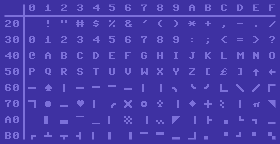
The PETSCII characters, as used on the Commodore 64 (image, with some editing, from Wikipedia). The graphics set also includes reverse-video versions of each character.

Back on my Commodore coding days I became very familiar with these characters. I think they’re much more universally-applicable for graphic use than the IBM equivalent, the famous Code Page 437, although that’s mostly because PETSCII doesn’t bother defining supporting so many languages. Code Page 437 also uses a lot of its space for single and double-line versions of box-drawing characters, although on the other hand it doesn’t waste characters defining reverse-video versions of every glyph.

PETSCII has:

  • A space and reversed space, of course.
  • Line drawing characters for boxes of course: vertical and horizontal lines, corners, and three- and four-way intersections. There are also curved versions of the corners.
  • More line-drawing characters for borders.
  • Still more horizontal and vertical lines, at each pixel position within their box.
  • With the reverse-video versions, enough characters to effectively do a 80×50 pixel display, as if it had a super low-res mode.
  • Different thicknesses of horizontal and vertical lines too.
  • Diagonal lines, and a big ‘X’. Note that on the PET and Vic-20 these lines were all one pixel wide, but on later computers with both better resolution and color graphics they were made thicker, which means diagonal lines have “notches” between character cells.
  • Other miscellaneous symbols: playing card symbols, filled and hollow balls, and some checkerboards for shading. On the PET and Vic, the shading characters were finer, while on the other 8-bit computers they were made of 2×2 boxes.

There are resources that let you use PETSCII to create old-school computer art, like this PETSCII editor, Petmate and Playscii, and for a bunch of examples of what you can do with it you can browse through the Twitter account PETSCIIBots. And this blog post from 2016 both makes the case for PETSCII as a medium for art and provides some great examples of it.

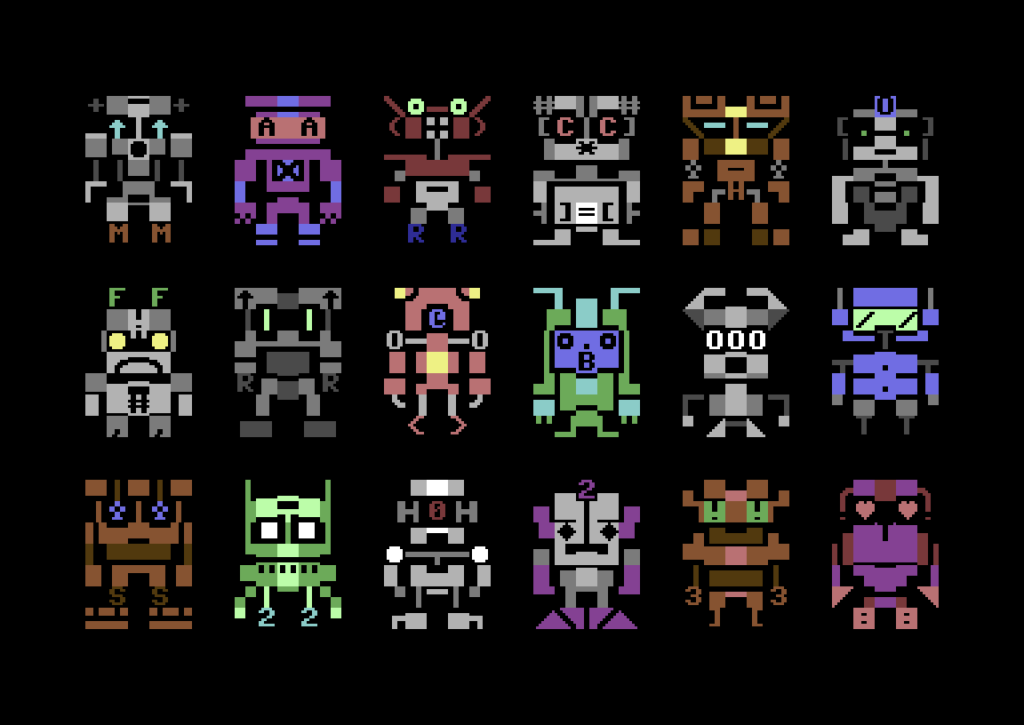
Some robots from PETSCIIBots

SNK vs Capcom… on a Commodore 64?!

The title is no joke, a couple of crazy people RetroGL and JoneGG, are actually doing it, and while they’re close to a final release you can also download a current alpha for free, with manual, from links in the description on their Youtube demonstration video:

It’s a great example of playing to a system’s strengths (surprisingly large sprites and a legendary sound chip) while downplaying its limitations (only eight sprites, low multicolor resolution, 16 colors, a controller with only one button). It’s much better than the arcade porters of the system’s heyday would have accomplished. I mean, just look at it! On the Commodore 128, they even plan to implement stage scrolling!

I’m not sure how it works internally, but given that it’s being distributed as a CRT file and not a disk image, my guess is on physical hardware it’d rely on a physical cartridge for expanded, bank-switched ROM space. It’s a trick that’s being used more often, like how Champ Games uses it for their Atari 2600 ports of classic arcade games.

SNK vs CAPCOM for Commodore 64 Demonstration (Youtube, 4 minutes)

Loadstar!

Now is the beginning of a fantastic journey!

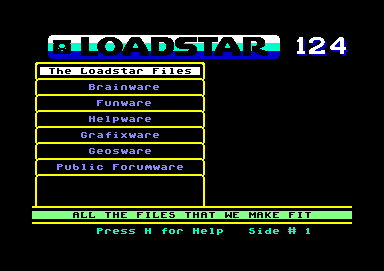
Aah that’s a screen I haven’t seen in a long long time.

1982 saw the founding of the Apple II computer magazine-on-disk Softdisk. Soon after Softdisk Publishing produced disks for other home computers too. One of them, Big Blue Disk, has gone down in history as previous employer of some of the original principals of id Software, especially John Carmack and John Romero. But another of Softdisk’s legacies was their Commodore 64 product, Loadstar, probably the longest-lived Commodore 64 software publisher. They published C64 software from 1984 to 2007. And most, if not all, of it is available online!

Loadstar is yet another of those computer gaming stories that must be told, and I’m in a pretty good place to tell some of it, because I beta tested for them for many of those years, and sold programs to them as well. Yes, several of their releases bear the programmer name John “The Mad Gamer” Harris. You have to understand, this was long before the word gamer reached common usage. In fact, as someone who may have primacy over the use of the term, I hereby forbid its use by anyone with misogynistic, anti-trans or racist intent. It is so decreed, hey-nonny-nonny!

Loadstar was lots of fun. Every month they’d send you two disks in the mail with several new pieces of Commodore 64 software on it. Under the watchful eyes of Fender Tucker and Jeff Jones, and later on Dave Moorman, it’s not that they grew an empire of Commodore programs, but they did manage to sustain that platform for a small but avid userbase for far longer than you’d have thought possible.

I plan to start doing Loadstar reviews eventually, but in the meantime, you can try out some of the later issues of this important piece of computing history at the site linked below. Note that you’ll have to have a means of running C64 software to use them, of course. The emulator VICE is known to work well. And if you want to hear the words of Fender, Jeff or Dave yourself, all three are on Facebook.

The LOADSTAR Library

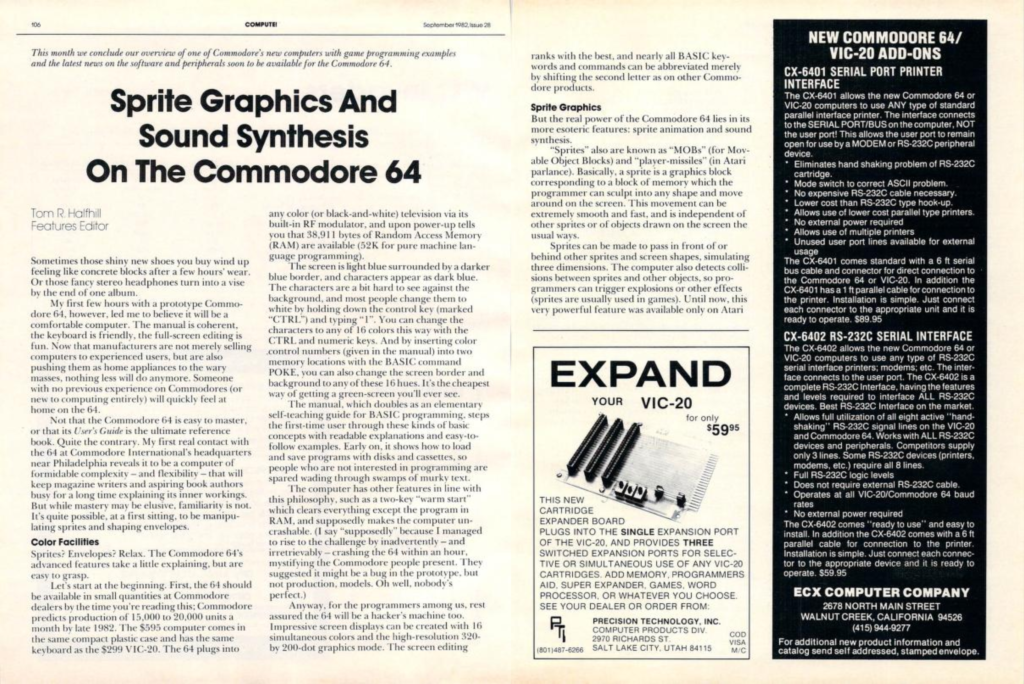
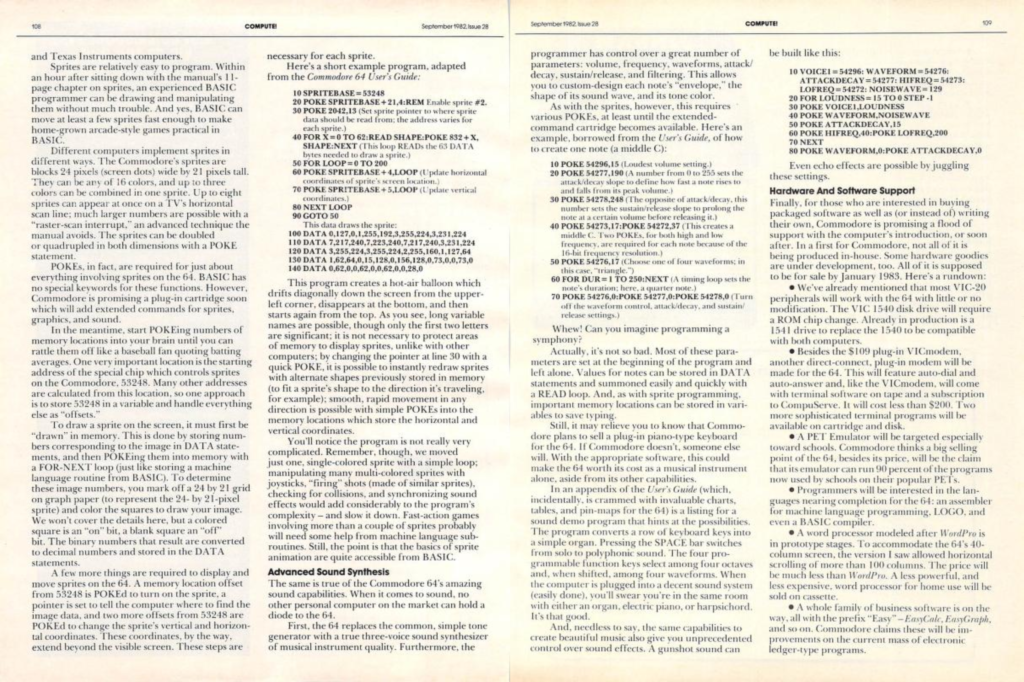
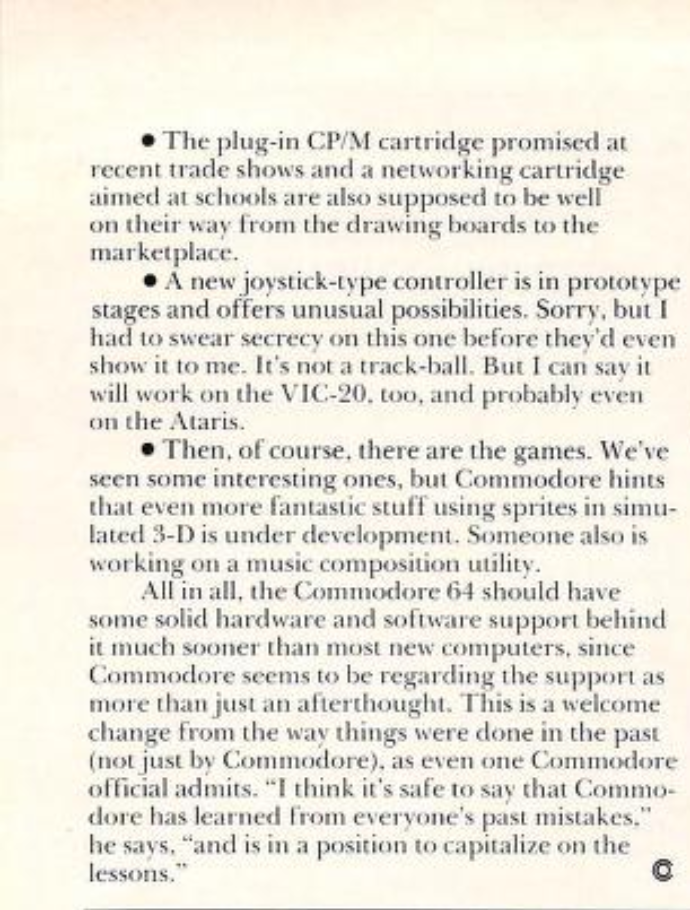
A 1982 Issue of Compute Introduces the Commodore 64

Overseeing the early days of computing was Compute! Magazine, properly stylized with an exclamation point. They got their start as The PET Gazette, changing over to Compute as their focus spread into more types of home microcomputers. Compute stuck around as a multi-platform for some time, but ultimately spun off a couple of manufacturer-dedicated magazines. One of these was Compute’s Gazette, whose name harkened back to those PET-exclusive days. It focused on Commodore machines, and would then outlive Compute itself by some years.

The early years of Compute magazine are joyous. They’re filled with esoteric data, geeking out over low-level coding matters, and lots and lots of type-in programs. But it is depressing to me, reading over the early issues, knowing how numbered are its days. This whole genre of computer magazine, that encouraged users to type in programs, that offered coding tips, sometimes even offered add-on disks of software, is now only a memory. We are all poorer for it.

The writing on the wall for this style of magazine could perhaps be seen as early as September 1982, when Compute published an article about a great new upcoming product from Commodore, the Commodore 64. Not because of the style of the article or anything specific about the computer. Just that, by being so greatly popular, the C64 greatly expanded the magazine’s audience, which would inevitably steer it towards becoming more “mainstream,” which ultimately would be the death knell for a publication like this.

Still, it’s fun to look back on. Here is that article in image form, or you could find it on the Internet Archive, where the archives of Compute live on, for a time.

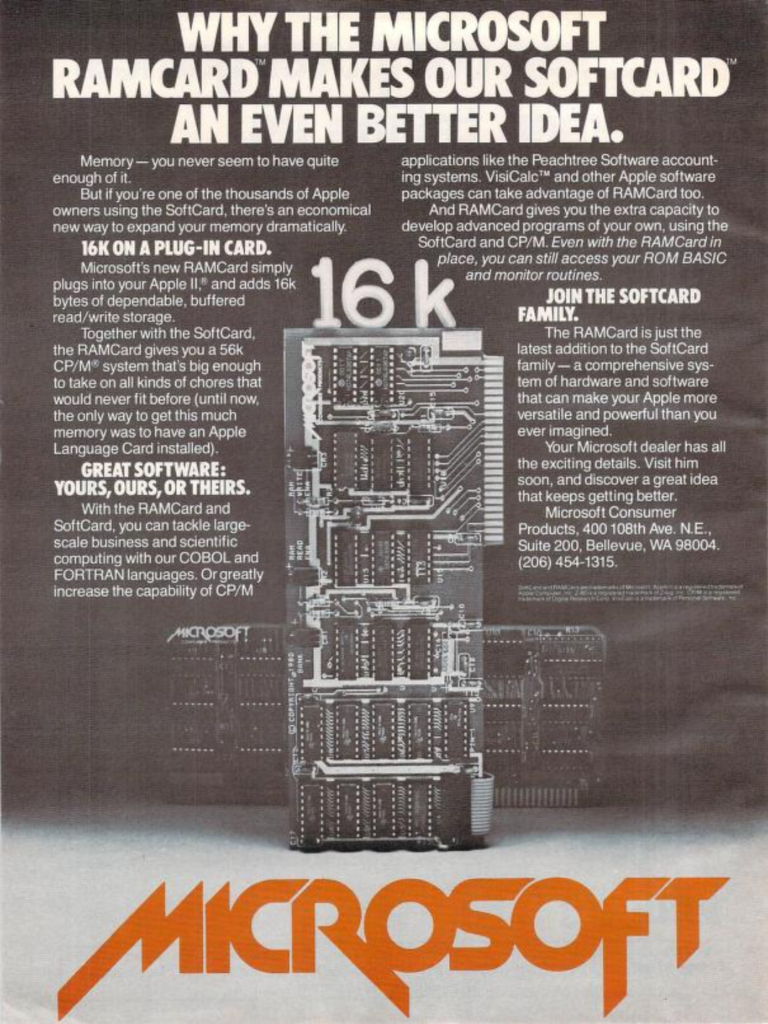
An extra, from that issue, is an ad for one of Microsoft’s first peripherals, a memory card for the Apple II:

News 1/24/22: Pokemon Collecting, Universal Mario World, Commodore 64 of Theseus

“We scour the Earth web for indie, retro, and niche gaming news so you don’t have to, drebnar!” – your faithful reporter

Let’s make it quick this week-

Oli Welsh at Polygon tells us what we already knew, that No Zelda Game is Closer to Breath of the Wild Than The 1986 Original. We can’t recommend it whole-heartedly though because it gets in some digs on the older game, saying it’s nowhere near as much fun as Link to the Past, a statement I disagree with.

Hope Bellingham at GamesRadar tells us that U.S. Customs wrecked a sealed-in-box copy of Pokemon Yellow valued at over $10,000. I rather disagree with that valuation too. I thought all the misguided young people were losing their money in crypto these days? (Note: GamesRadar is one of those sites that waits until you start reading an article then puts up a blocking box begging you to subscribe. Hint to GamesRadar: NO, and if I were interested in subscribing my generous impulse would have been destroyed by your prompt!)

Image from The Guardian, probably ultimately from a promotional photograph

At the Guardian, the very British-named Oliver Wainwright reviews Super Mario World, not the game but the theme park in California, a part of Universal Studios Hollywood. The verdict: 8/10, good graphics, some replay value. I’ve been in a melancholy frame of mind as of late, so seeing those brightly-painted dioramas makes me wonder what they’ll look like in twenty years, when Universal Studios’ attentions have drifted to another big thing. Nothing ages quite as badly as a happy prop painted in primary colors.

I said I was going to make this quick, let’s keep moving. Maya Posch at hackaday talks about a project to build a Commodore 64 using new parts.

Ollie Reynolds found some Donkey Kong design documents on Twitter, from the days when it was planned to be a Popeye game. He found them retweeted by blogfriend Mike Mika of Digital Eclipse, who in turn found them looking through Mario history site Forest of Illusion.