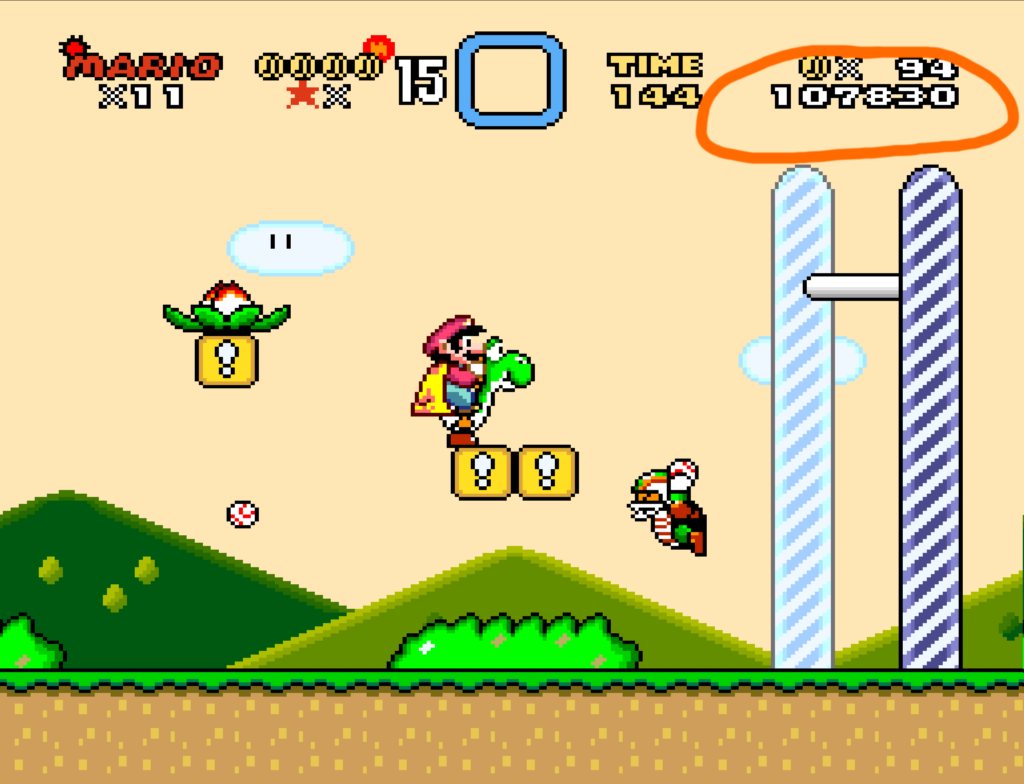
Awesome Mario trivia blog Supper Mario Broth noted on Mastodon that Super Mario World is extremely inefficient in displaying Mario’s score.
There is more information on SWMspeedruns.com, but in brief, SMW stores the player’s score as a 24-bit value as hexadecimal digits, and converts that value to decimal when it’s time to display it. There is no good way to do that that doesn’t involve figuring out the entire arithmetic, but Super Mario World does it particularly slowly: it starts with a copy of the score, then sees if it’s over 1,000,000. If it is, it increases the millions digit of the displayed score by 1, subtracts a million from the work value, then repeats. When it runs out of millions it repeats with the hundred-thousands, and repeats until it finishes with the tens. At least it doesn’t try it with the 1s, seeing as how nothing in the game awards single points!
In a worse-case scenario, with a score of 9,999,990, the code goes through this whole process every frame, consuming up to 8% of the time available for game logic.
What could the game have done to accomplish this better? It could have found out how many of each digit there was once instead of looping and incrementing. It could only figure out the score when the value changes. Or it could save the value as the digits themselves in decimal, just increment them by the right values when its needed, and then copy that figure to the screen. That’s largely what 8-bit games would do.
Even worse, if Luigi is the active character, the game does this twice: it figures out and prints Mario’s score, then it does it again for Luigi’s score, placing it onscreen in the same place.
While printing the score is just one thing the game does each frame, the effect is great enough that complex scores can lag the game, enough that speedrunners take the score into account to avoid it.
This adds to the evidence that Super Mario World development was rushed. It’s already known that a lot of the code in SMW is buggy, allowing for some truly heroic exploits like programming a text editor in SRAM purely by manipulating objects in an early level.
Arcade Galaga has an interesting bug that’s been known of for a long time, that can be taken advantage of to cause the enemies to stop firing. The inner workings of the bug are explained on its page on the website Computer Archeology, but here it is in brief: on the first level, if you leave the bugs at the far left or right sides of the formation alive and wait long enough, 10 to 15 minutes, just surviving their attacks, then eventually the enemies will stop firing all together, and will never fire again for the rest of the game.
Why does this happen? Galaga reserves eight hardware sprites for the shots of the enemy bugs. Galaga’s graphics hardware has no way to disable the displaying of a sprite, so if something isn’t supposed to be visible it’s kept off screen, at horizontal coordinate zero. A shot sprite at that coordinate is never updated, and never moves. This is in addition to the game’s internal records of which shots are in use. When a bug wants to fire a shot, the game looks at which shots are available, and if one isn’t in use, it puts it at the proper place, and sets its velocity (X and Y deltas). From then until it leaves the screen, it’ll be updated every frame. When it is detected as having gone off-screen, it’ll be marked as out of play, and its X coordinate will be set to 0. Shots at X=0 are never updated.
The problem is, it’s possible for bugs to fire shots while they are at X position 0. This happens most commonly when bugs at the far left and right extremes of the board attack. The shot is marked as in-use, but it’ll never be updated, and so it’ll never be cleaned up and set back to be available for firing. When all eight possible shots are in this limbo, the bugs can’t fire any more. The machine resets the shots at the end of a game, so the problem won’t affect subsequent plays.
Ben Golden Diamond performed the trick in a Youtube video, and he manages to get it to happen in around seven minutes. He doesn’t explain the precise criteria for doing the trick, but his description will still work, it just has unnecessary steps. It will work on any level, but it’s easiest to do on the first. In the video, sometimes the bugs fire wraparound shots from off-screen. That’s a good indication that the bugs are sometimes firing from the 0 coordinate.
Keep in mind, performing the trick on purpose will disqualify a score for world records. The scoreboard on a local Galaga machine probably won’t care, though.
We love it when we find weird and unique indie games to tell you all about! Our alien friends to the left herald these occasions.
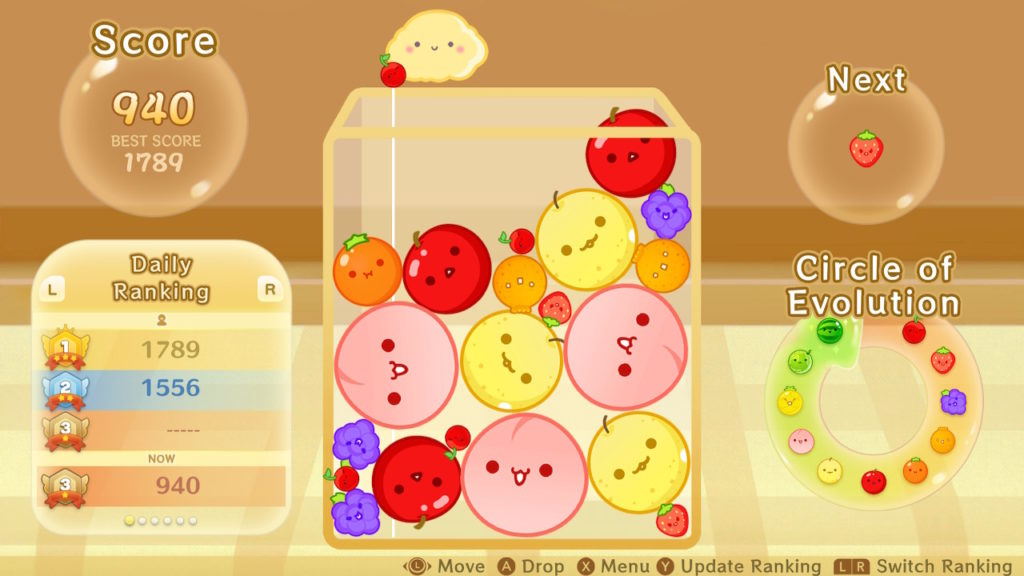
A fair amount has been said about Suika Game, an inexpensive and addictive Switch game that has players dropping fruit into a physics-enabled bin. Two fruit of the same type that touch immediately merge into a larger fruit, and the goal is to join them together like this until you create a mighty Watermelon. You can keep going at that point, although with one of those majestic spheres in the bin it won’t be much longer before one or more fruits extends up out of the bin, which brings the game to an end.
The history of this unexpected Flappy Bird-like phenomenon is laid out in an article in the Japan Times. Until recently the game was exclusive to the Japanese eShop, although that needn’t actually a barrier. People from any territory can create eShop accounts for any other, and play all their purchases on the same Switch, but now I notice that Suika Game is even on the U.S. shop. And of course, as often happens when a simple and elegant game blows up out of nowhere, a horde of imitators has arisen, which a quick Googling will reveal. I count six free web versions just on a quick perusal of the search results.
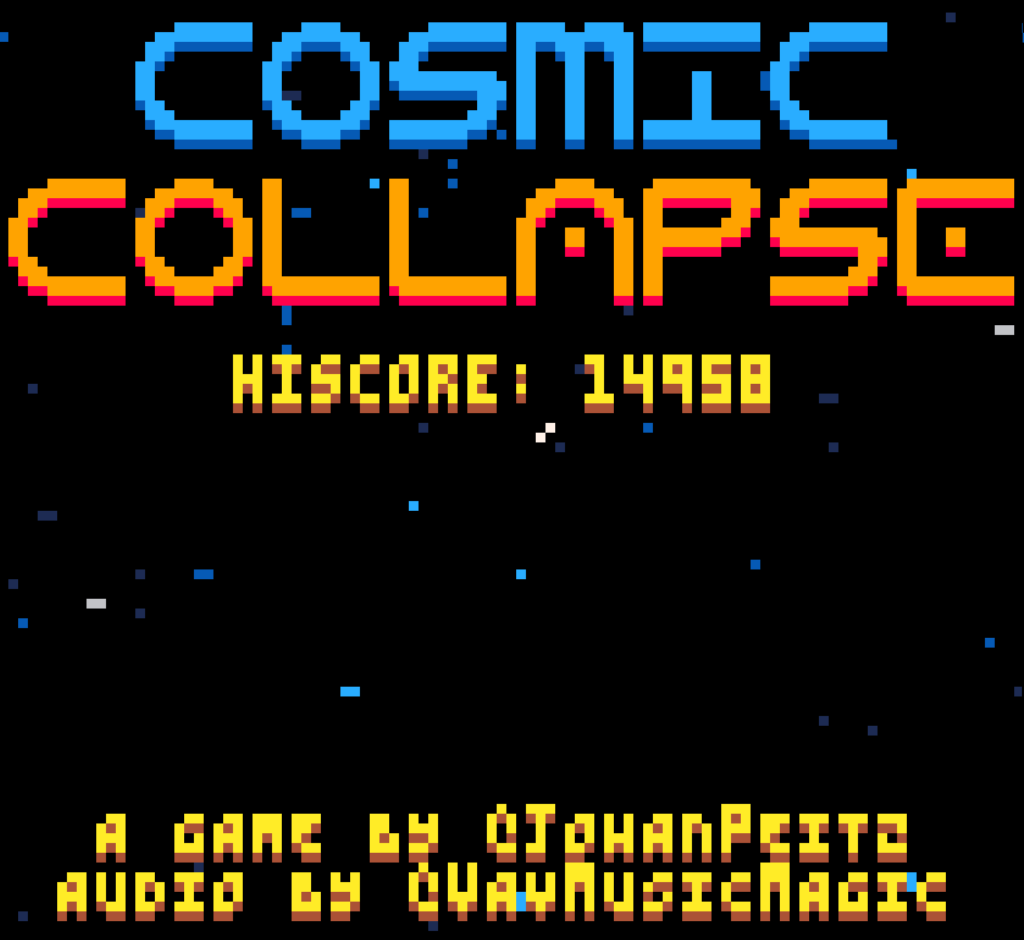
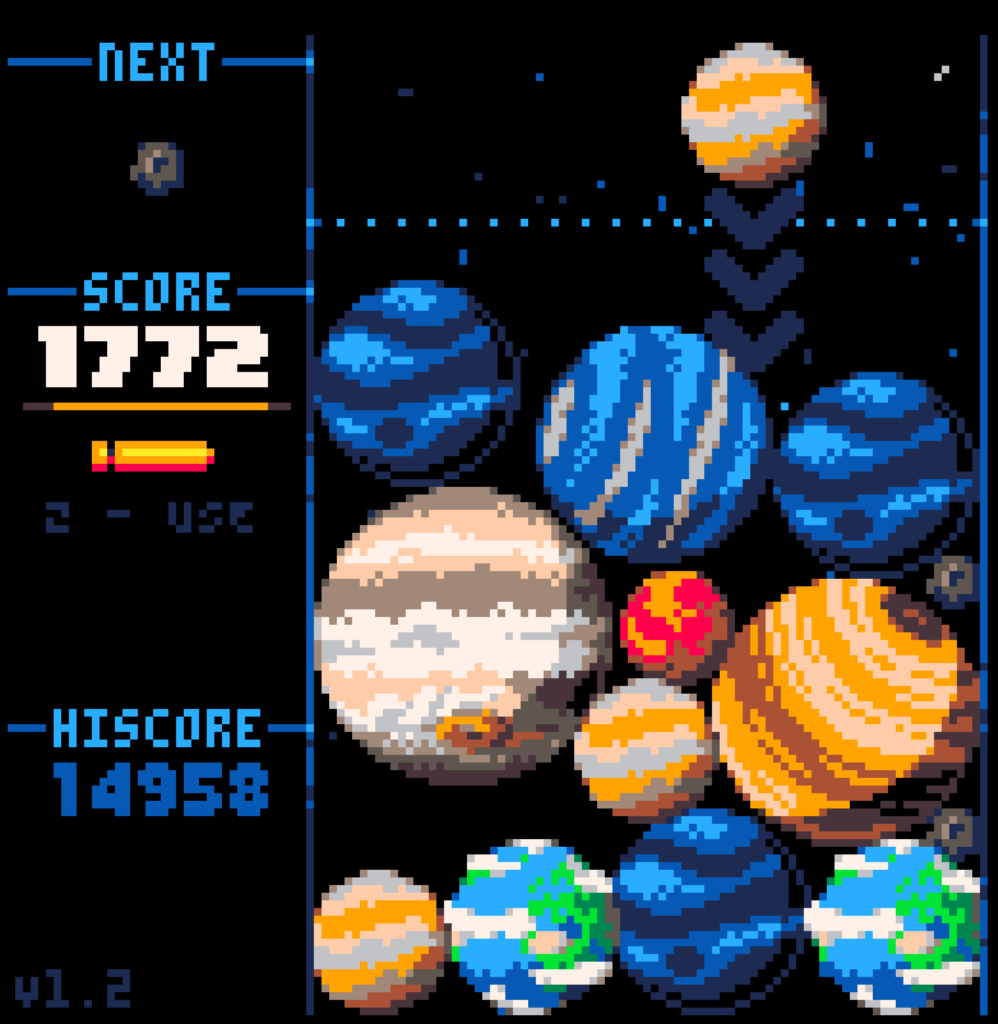
But what might actually be better than Suika Game is the Pico-8 recreation of it, Cosmic Collapse.
Cosmic Collapse is more expensive than Suika Game, but that just means it’s $5 instead of $3. Instead of happy fruit, you merge together planets. They go up in size from Pluto (an honorary planet), through Mercury, Mars, Venus, Earth, Neptune, Uranus, Saturn, Jupiter and then Sol herself. If you’re wondering, all planets are presented without rings. If joining two suns causes anything to happen I don’t know. (In the comments on the itch.io project, the developer says that there are objects beyond the Sun.)
Cosmic Collapse could be played just like the original, but it adds some extra features. Scoring is modified by a simple combo system: successive planets merged due to one drop have their points multiplied, encouraging the planning of sequences. And, at certain score awards, you’re granted a missile that can be used to destroy any one object in the bin. Used judiciously, it can allow your game lengths, and scores, to greatly increase. My highest so far is nearly 15,000.
The biggest advantages it has over Suika Game is in the polish and the physics. The many web clones tend to play like they were hacked together in an afternoon, but even the original is clearly a low-effort production, right down to its generic, non-looping music. The celestial orbs in Cosmic Collapse bounce around in a lively manner after merging in ways that take some practice to master, and even the smaller planets have their uses. The tiniest of space rocks, dropped at the right spot, can be just what you need to knock two other planets apart from each other, or separate one from the wall of the bin. You see? Pluto’s good for something after all!
Both Suika Game and Cosmic Collapse suffer from a certain unfairness. You don’t get to control the order in which fruit or planets get dropped into the bin. It’s been observed that even a lot of skill and practice can only get you so far if the orb-selection dice don’t roll favorably for you. The best advice I can offer, in the early game, is to try to sort the circles in size from one side of the bin to the other, which at least will make it easier to find a good place to drop things. Also in Cosmic Collapse, keeping the surface of the bin as low as you can helps a lot, since the propulsive force of the spheres, especially the smallest ones, is increased the further it falls, and that can be a marvelous prod to shaking up a static bin.
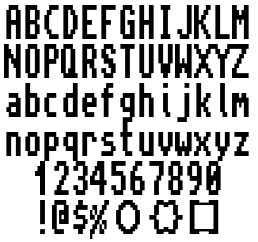
Strictly speaking they’re not from a game, but the Amiga was regarded as a gaming computer, so you may be interested in these modern-OS compatible versions of the Amiga system font Topaz, with extra characters done in the style of the originals! They’re made by “Screwtapello” on Mastodon!
We presented Displaced Gamers’/Behind the Code’s video on the jankiness of kusoge disgrace Dr. Jekyll and Mr. Hyde back on Saturday. They did another video on that game, that delves into why the game’s frame rate is so inconsistent. In summary, its engine throttles its framerate in a terrible way, using long delay loops. It’s a pretty awful idea! It’s 19 1/2 minutes long. The video claims it’s even geekier than their first video on the game, but I think it’s actually slightly less technical, at least it doesn’t fill the screen with as much 6502 assembly code.
Another fact about J&H: the Japanese version had two full levels that were cut from the U.S. version, which replaced them with replays of other levels. It made a bad game even worse!
Now, because of Behind The Code, you know more about the Dr. Jekyll and Mr. Hyde game than many much better NES titles. Congratulations!
Sundry Sunday is our weekly feature of fun gaming culture finds and videos, from across the years and even decades.
The Youtube channel Animist did a stop-motion recreation of the famous Kirby victory dance a couple of years ago. (Well, one version of it, there’s many.) Most of the 9 1/2-minute video depicts the making of, including showing off the toys that were used, so if you just want to get to the finished version use this link. Here it is in full:
It’s 19 minutes long, and is even geekier than is usual for us, going into a disassembly of the game’s machine code in its quest to make the game marginally less awful.
While we’re on the subject, did you know that Jekyll & Hyde has a secret ending? Both endings are shown here (4 minutes):
The “bad” ending is the normal one, and shorter, but is arguably a happier conclusion to the story. To get it, all you have to do is get to the end of Stage 6 with Jekyll. That’s all.
To get the other ending, get to Stage 6 with Jekyll, then turn into Hyde and get to the end of his version of the stage. Usually, if Hyde gets as far into his level as Jekyll has gotten into his, he’s struck by lightning and dies. But in this level he’ll be allowed to reach the end of his version of the level for some reason, where there’s a boss! Beat it, and when you return to Jekyll’s world the enemies will be gone, and he’ll be free to finish the level without harassment. However, ending events will be different….
Looks like we’re on another Youtube binge, ayup ayup. This time it’s another hopeful video constructor asking us to consider the oddity of the score system in the original Mega Man (a.k.a. Rockman).
When you post as many Youtube videos as I do, it’s easy to form opinions about their style. That of “TheRetroDude,” as he styles himself, is interesting, it’s still hyper-edited in the way that so many Youtubers loathsomely adopt, but it’s not nearly as distracting as those. He keeps the volume down, as well as the number of swoopy objects tearing around the screen like a toddler newly introduced to Toblerone.
He has good points about how extraneous the game’s scoring system is too, although his misgivings could be laid against many other games. In Super Mario Bros, score is mostly a spacer before toppled turtles start giving extra lives. I think that score isn’t a bad addition to a game as long as it’s implemented thoughtfully, yet for too long it hasn’t been. Even in the NES days it was included to give players a short term goal to aim for, when they didn’t really need it.
What would a good scoring system look like, one that rewarded skill? Well–
Losing a life would reset score to that at the last passed checkpoint, eliminating point pressing from lives.
Extra lives at game end would be worth a bonus each.
Game timers are worth a small, yet substantial, award at level end, to prioritize fast play over slow.
Awards should be given for score, most typically extra lives, but others are possible too.
Replaying levels, and other means of “minting points,” earning arbitrary scores, should be ruthlessly eliminated. If the player can replay levels indefinitely then think about if your game really needs a score, and if it does, don’t allow players to earn more points from replaying them without costing them the points from that last pass.
Two games that come to mind that do scores well are:
ZANAC on the NES, being a scrolling shooter without checkpointing score is generally fair, although it is possible to warp backwards does break the no-replay rule, and
Star Fox 64, which only adds a level’s score to the player’s total at its end. SF64 is a game obviously designed around score attacks.
Where was I? Oh! Here is that video about Mega Man’s scoring system.
PacStrats on Youtube has a video that gives three patterns that will take a casual player all the way to the kill screen at level 256.
I say casual because this doesn’t attempt to produce a “perfect” game, of 3,333,360 points. This is because it doesn’t attempt to eat all four ghosts on every Energizer while that is possible. It actually ignores the ghosts when they’re vulnerable. There are patterns for that on PacStrats too, but you’re not going to be able to do it by memorizing just three patterns. You can really push your personal limits, and that of your free time, trying to get better at video games, and most of us have a point where we have to say that’s enough, and then go and read a book/buy groceries/have sex/something else. The three patterns in the video below are a nice middle ground.
It isn’t easy to devise a Pac-Man patterns, and it’s much harder to come up with a small number of patterns that cover all the levels. Patterns work because the movement of the ghosts is completely deterministic, depending on how Pac-Man moves. If you can move Pac-Man with frame-perfect accuracy, then the ghosts will oblige you by always responding in the same ways. The frame-perfect requirement is eased up a lot by the nature of Pac-Man’s motion. So long as you don’t reverse directions or delay, Pac-Man can only change direction at intersections. So long as you have the joystick, or whatever ludicrous controller setup you’re using, pressed in the direction you want to go next three frames ahead of the turn, your gluttinous circle’s progress will be on track for that pattern.
So, if you try to perform a pattern and it doesn’t work, what went wrong? Most commonly it’s because you hesitated at some point, failing to make a turn at least three frames in advance. Sometimes that’ll be okay, but two of the ghosts, Pink (Speedy/Pinky) and Blue (Bashful/Inky) use the direction that Pac-Man is facing in their AI calculations, and that can change much more rapidly compared to his location in the maze. Even being a single frame off in your timing can produce a situation where Pac-Man will be facing a direction that will cause them to take a different path at a choice. Also, some of the motion of the ghosts is determined by the amount of time that’s elapsed in the current level, and if Pac-Man’s in a subtly wrong position then it can be disastrous later on.
The periods over which the patterns are good are the first four levels (Cherry to second Orange), levels 5 through 20 (first Apple through to 8th Key) and from 21 onward (9th Key to the kill screen). The actions of the ghosts are not the same throughout the run of each pattern. The second pattern, in particular, works over so many levels mostly because its creator, through trial and error, happened upon a pattern that’s good for so much of the game. Because the travels of the ghosts will be different on different levels, it’s important not to get spooked because they are moving differently than they did on previous levels. So long as you move Pac-Man through the patterns assuredly, without delay, and at least three frames in advance, then he’ll clear the boards in succession for as long as you care to keep going, until level 256, where Pac-Man’s All-You-Can-Eat buffet closes its doors.
Unfortunately, PacStrats has made their pattern video non-embedable, so if you want to see these patterns in action you’ll have to click through to the video’s Youtube page.
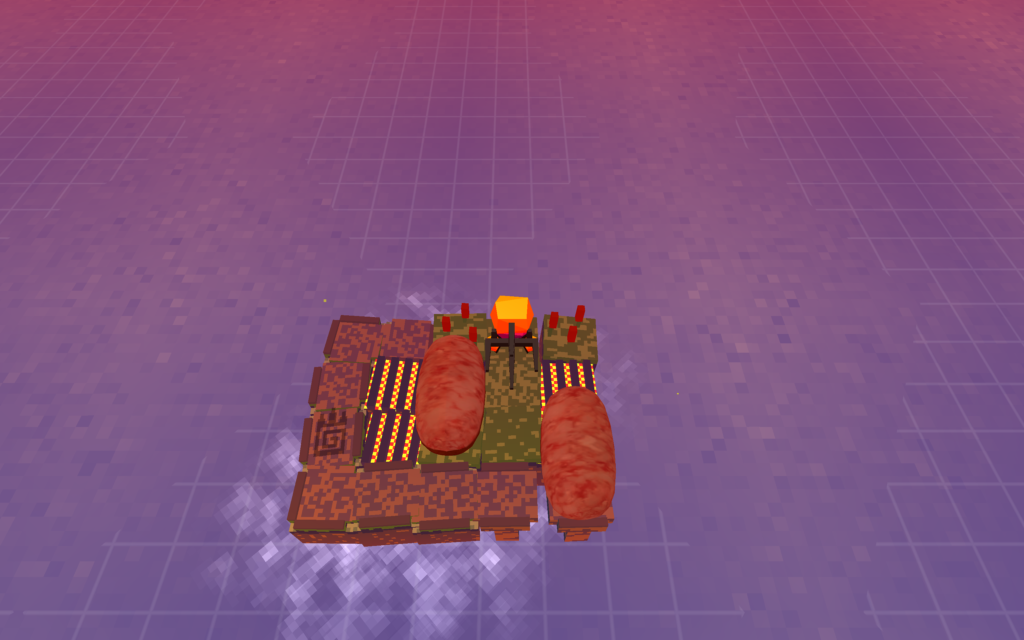
Stephen’s Sausage Roll (homepage, Steam $30, Humble $30 – Increpare gets the most money if you buy it here, plus you get a Steam key)
This is the beginning of a series of reviews of sublime games. The sublime is, as described on Wikipedia, the quality of greatness, whether physical, moral, intellectual, metaphysical, aesthetic, spiritual, or artistic. The term especially refers to a greatness beyond all possibility of calculation, measurement, or imitation. That’s a lot to live up to for a videogaem!
I’m using that term to describe games that feel like they stretch out your brain just by playing them. Usually this doesn’t mean by difficulty, although Stephen’s Sausage Roll has plenty of that, but by there being some special aspect of it. I think what I mean by that will become more evident as this series continues, but Stephen’s Sausage Roll is rather foundational. Both Jonathan Blow (Braid, The Witness) and Arvi Teikari (Baba Is You) have claimed it as inspirational. Sublime things tend to inspire people a lot.
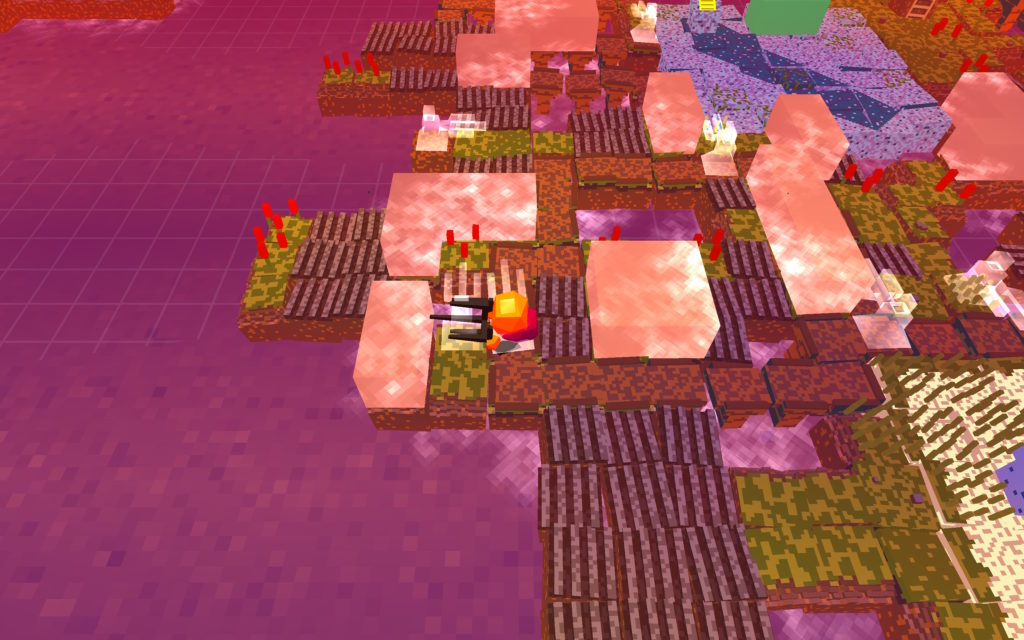
It’s easy to miss the quality of Stephen’s Sausage Roll if you play it casually, because it’s not a game that really lends itself to casual play. SSR doesn’t ease you into its puzzles, right from the very start the game demands thorough knowledge of the consequences of its movement scheme, knowledge that can only come from failing at its puzzles many times. Stephen’s movement is reminiscent of the porter from Sokoban, but he’s got this dang fork sticking out of him, and every movement must take it into account. Steven can only move forward and backward without turning to the side, which rotates the fork around him.
Understanding how to move that fork around is essential to shoving around the sausages in each level. To solve a level, all of its two-tile-long sausages must be moved over grills exactly once in four locations: once on each tile of one side, and once on each tile of the other. Leaving a sausage on a space doesn’t overcook it, but you can’t move it so a cooked spot touches a grill again. One move for each sausage on each tile of each side! Burning a sausage, or dumping one in the water, immediately fails the level.
This playthrough of one early level demonstrates how it works:
This description is not all of Stephen’s Sausage Roll’s tricks, not by a metric mile, but it’ll stump most players for a good while. It starts out hard and gets harder.
There are no tutorials, not even instructions other than an early sign that tells to use the arrow keys to move, Z to Undo, and R to Restart a puzzle. (These hotkeys have become a bit traditional, and work in other games.) You can’t even read the sign until you realize you have to swing your fork around and walk alongside it. Stephen does have other moves, I have come to learn from reading pages about the game, but it’s impossible to activate them in early levels.
When I read writing about puzzle games, the writer often talks about how smart the game made them feel, sometimes in a paragraph that also mentions dopamine hits, like they were Skinner boxes that give players treats. I dislike game criticism that tries to reduce them to pop neurochemistry. Besides, these days dopamine is not in short supply. It’s available on every Steam corner, plus you could get it just as well from food, an interesting novel, a movie, or pornography for that matter. Difficult puzzle games make you work for it, and where is the fun in that?
The fact is, puzzle games are not interesting for being a dopamine administration mechanism. They are about improvement, about learning to overcome challenges on your own. Once you learn how to do Sokoban puzzles they lose their appeal, because solving puzzles isn’t as much fun as learning to solve them.
Stephen’s Sausage Roll does not make the player feel smart. It makes them feel perfectly stupid at first, but by the end of it they may feel smart. They may, because by completing it they may have become a little smarter. The improving aspects of playing video games is not often mentioned these days, but it is one of the main reasons that I enjoy them. Thinking through a difficult puzzle can help one learn to think a little better, and because of that these sausages are no mere empty calories.
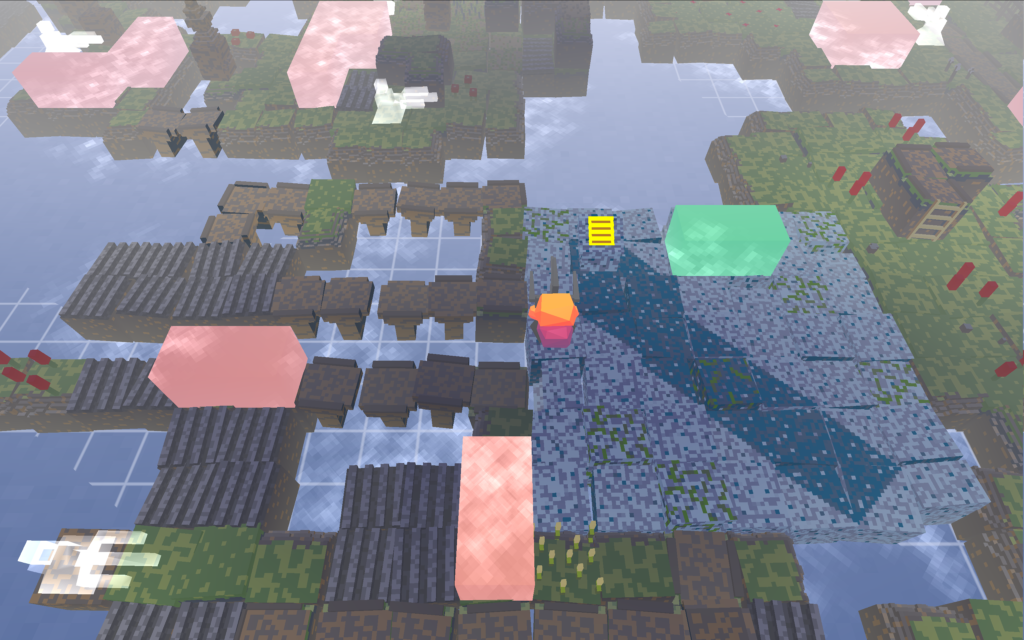
But the difficulty, and the novel take on Sokoban rules, aren’t the only reasons I’m writing about this in a series about sublime games. Each of the game’s little puzzles is a small portion of a larger world. When you enter a level, most of the world sinks beneath the sea, leaving you with a tiny portion of it remaining. When you properly cook all of that level’s sausages, the world returns, but pink walls, where the sausages were, will be gone, allowing you progress. This means the very terrain of the overworld is made of the puzzles you’re solving, which is an unexpected elegance in a game about cooking sausages. And mirroring that fact, there is a deeper meaning to the sausages you’re cooking and eliminating from the world, one that is revealed slowly, as you solve each excruciating puzzle.
SSR is a game that makes a mockery of the very concept of review scores, as most sublime games do. The graphics are purposely done in a PS1 style, intentionally ugly by current standards, and the sounds are simple steps, swishes, and the occasional “ugh” that may have come from the game or the player. And it’s gameplay, while great, shows that play can be about subtracting, taking away all extraneous elements, rather than adding unnecessary new things. In what world does taking away things add points to a review score?
Stephen’s Sausage Roll is not an extremely popular game. While it inspired big hits like The Witness and Baba Is You, and is rated Overwhelmingly Positive on Steam, it hasn’t sold as well. But it hangs on, quietly enlightening new generations of players and designers. It may inspire you too, if you were to let it.
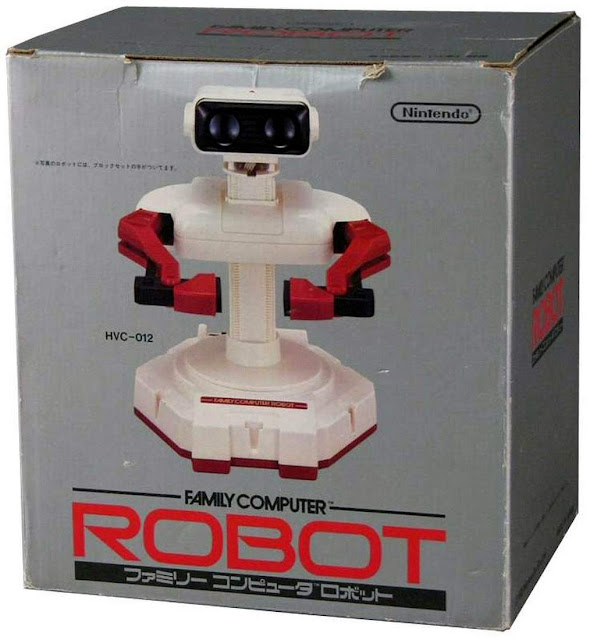
Another image from Nerdly Pleasures, the Japanese box for “Robot,” their name for R.O.B.
We linked the blog Nerdly Pleasures back on Sunday when we used their image of R.O.B.’s gyro setup. The post it came from though is deep enough that I figured it’s worth its own spotlight!
The lengthy and detailed post came from 2015, and in addition to positioning R.O.B. in time and Nintendo’s history, also provides some technical information, such as the sequence of flashes that games use to communicate with the robot toy to make it perform various actions.
Nerdly Pleasures seems like a fine blog, and it’s still going with a post on King’s Quest IV that went up on the 17th, and I look forward to pointing out more of their work in the future.
It has now been over seven months since the end of Blaseball, that shining star of lockdown that burned brightly but ended suddenly. Stories will be told of its brief reign, and memories zealously hoarded. I’m amazed that no one else has definitively moved in to take its place with their own take on splorts, it seems to be an opportunity waiting to be filled, but until such time as it happens, the concept, along with the game itself, continues to Rest in Violence.
The planets orbiting Blaseball’s many suns continue to orbit, their surfaces unwarmed but still hosting faint signs of life. The Blaseball Wiki remains online, explaining the absurdly twisty intricacies of a game that no longer exists, and The Society for Internet Blaseball Research still hosts statistics and information related to that dearly missed pastime.
One of those planets is Blaseball Blexplained, a Youtube series that doggedly and diligently presented season recaps of Blaseball’s many crazy seasons. Since Blaseball’s ending, they’ve slowly continued their recaps, and have now finally finished their last Expansion Era summary, of the Hellmouth Sunbeams. It is around 16 minutes long. It present the final recantation of the nearly un-understandable events that marked the final seasons as did all the others, throwing out references to Black Holes, Feedback and Fax Machines, counting on you to know what the hell all those things mean. You do, don’t you? ‘Course you do.
So, one last broadcast from Blaseball Explained, favorite fake sport summary channel, now broadcasting exclusively to the Hall of Flame.
Farewell, Blaseball. In your memory, I proclaim: hail Namerifeht.
The Monitor, friendly guardian of the Hall of Flame and concessions operations (Image from blaseball.com)
P.S. The Society for Internet Blaseball Research (SIBR) has a page of information on how the fates of Blaseball, early on, intersected with that of the Pacific Salmon Treaty of 1985, and of a mysterious face named by fans Salmon Steve. Here is that page.