On Romhack Thursdays, we bring you interesting finds from the world of game modifications.
It’s another video! And it’s Nintendo related! I bet you’re just thrilled!
This is one, however, is far from something the Big N would approve of. Snooplax goes into great detail in explaining the history of hacking Super Mario 64, the first 3D game to really have a substantial hacking scene–I don’t count things like DOOM, since to a degree it was made to be extensible. Nintendo never dreamed that people would do the things to the Mario 64 engine that they have, which has included optimizing it to the extent that it can run at 60 fps on original hardware!
Seeing all these hacks together in one video is rather inspiring. There’s been not one, but at least three, major Super Mario 64 level editors, with different degrees of flexibility and detail. What enthusiasts have done with the engine over the years is surprising, and there’s no end in sight, so please enjoy this look back at this prolific scene.
Let’s get the video embed out of the way first. Pow!
Super Mario Bros. 3 has two significant minigames (outside of two-player mode), and the inner workings of both are explained in this video.
In most worlds there are “Space Panels,” which provide a slot machine minigame for extra lives. If you’ve ever tried them, you might have noticed that it’s extremely difficult to win anything at it. Well, the video explains why that is: there’s a significant random element to stopping the wheels. In particular, the last wheel has so much randomness in when it actually stops that it’s actually completely random what it’ll stop on! So much for timing!
I have a theory (which I explain in a comment on that video) that the slot machine game was made so random because of the quality of the reward (it’s possible to earn up to five extra lives at it), and because they had played around with life-granting minigames before. Doki Doki Panic, which got reskinned for overseas markets at Super Mario Bros. 2, has a slot machine game, “Bonus Chance,” that appears after every level. With good timing and practice Bonus Chance can be mastered, earning up to five extra lives for every coin plucked in the level. I have managed to abuse that game to earn so many extra lives that the game ran out of numbers for the tens’ digit of the life counter, sending it into letters of the alphabet. There’s certainly no danger of that in Super Mario Bros. 3.
The second minigame has the player match cards from a grid of 24. Each pair of cards found earns a modest prize, from as little as 10 coins up to a single extra life. Most of the awards are powerups for the player’s inventory. The player gets two tries, but if they don’t clear the board it’ll carry over to the next time they play. Attempts at the card matching board appear every 80,000 points the player earns, making it the only Super Mario game to actually reward scoring lots of points.
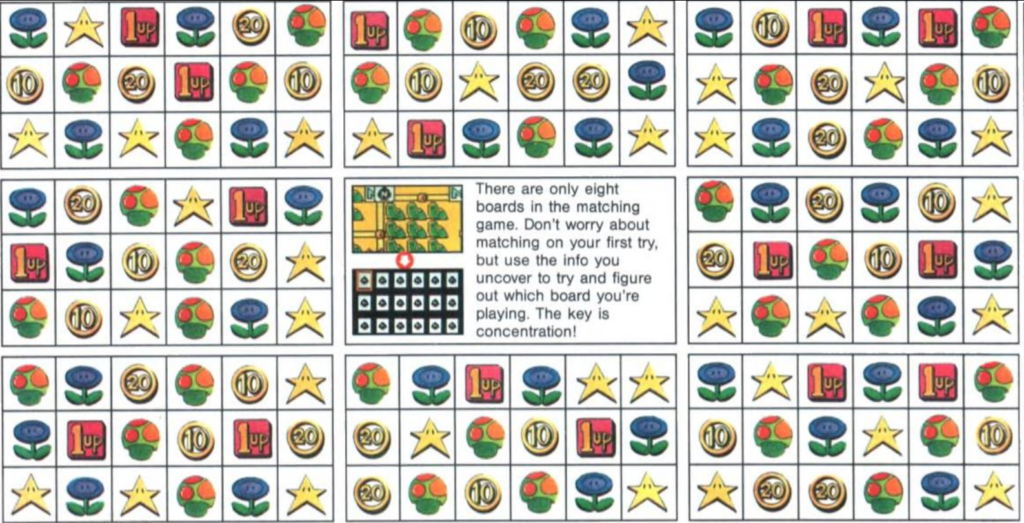
The card matching game is one of the most interesting minigames in all of the Mario series. There’s only eight layouts for the cards, the second and fifth cards of the middle row are frequently both the 1UP card, and the last three cards on the bottom row are always Mushroom, Flower and Star, in that order. This means the minigame can be mastered, and even if you don’t memorize all eight layouts to deduce where the prizes are, knowing the three cards that never change usually means it won’t take more than two or three attempts to clear the board, netting lots of powerups.
Retro Game Mechanics Explained looks into why the card matching game works the way it does, and discovered some interesting things. There’s actually code in the game to do a much more thorough randomization of the cards, but it goes unutilized. The full details are in the video, but in summary:
The board always begins in the same state,
the last three cards on the bottom row are left unchanged, probably on purpose,
the first way the other cards are scrambled shifts them one space in sequence, and is only done one or three times, three times in total,
and the other method of scrambling them, which involves swapping around three specific cards, is done exactly once between each shift.
The only variation in the steps is from the choice of whether to shift once or thrice, each of those three times. Thus, there are only 23 possible layouts, that is, 8. There is a loop in there to potentially vary the number of times the cards are swapped (the second way to scramble the cards), but the way it’s written the loop is never used, and the cards are swapped only once each time.
All of the layouts for Maro 3’s card matching minigame, from the Nintendo Power guide. “The key is concentration” alludes to the traditional card game “Concentration,” which is played in a similar manner.
What I also find interesting is, this isn’t the only Nintendo to use a minigame that involves mixing up hidden prizes. Kid Icarus’ Treasure Rooms also have a limited number of layouts, which vary for each of the game’s three worlds. The player can open pots in the room to collect minor items, but if they open the wrong pot early, before opening all the others, they find the God of Poverty, and lose everything they’ve found. If they can save that pot for last, though, the final pot will instead contain a pretty good prize, which can even be a Credit Card item that cannot be obtained otherwise.
The way they’re designed, both Mario 3’s card-matching game and Kid Icarus’s Treasure Rooms have tells, specific spots that can be revealed to identify which of the limited number of boards that version of the game is using, and that the player can use to get all the prizes. Also, there are Nintendo-published guides that reveal all the layouts, in Nintendo Power for Kid Icarus (recounted on this charmingly old-school webpage), and the Nintendo Power guide for Super Mario Bros. 3 (on page 10), so Nintendo had to have been aware of the limited nature of the board layouts, and may have actually intended them to be defeated with a good strategy.
It’s been making the rounds, but I feel it’s worth echoing. When the DS and Wii online servers shut down, it was forced because Nintendo’s partner who maintained the Nintendo Wi-Fi Connection Servers decided they didn’t want to do that any more. This is Nintendo’s own decision here.
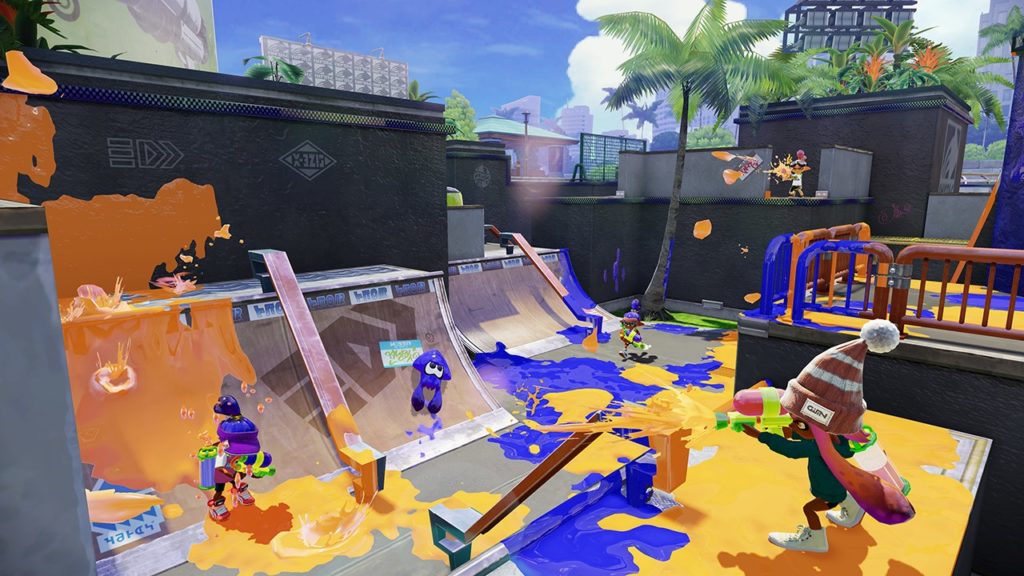
The big game affected here is the first Splatoon, which still has, for now, free online play with the purchase of the game. Also affected will be Mario Kart 7 and Animal Crossing New Leaf for 3DS.
There will be some who will shrug over this, saying Nintendo shouldn’t be expected to run these services indefinitely. Sometimes they will shrug quite loudly. I am not one of them. I think online servers should be kept going for much longer than most companies run them. I think this should be considered part of the contract they entered into when they sold the game. It is true that 3DS and WiiU games had free online server access, that Nintendo’s multiplayer subscription service began with the Switch. But I still think the way I do, and I also think it’s foolish to think that, just because it’s a paid service, that Switch servers will be kept running for any longer than the 3DS and WiiU servers were.
My concern is an issue of software preservation. These kinds of games and services are in danger of being outright lost in their current form, like many MMORPGs, and iOS and Android games for previous versions of those OSes. I feel very strongly that this software should be remembered and made available for future generations. It’s true that there are efforts to reverse engineer these kinds of services, but there is no guarantee that they will be completely accurate, or even successful at all, especially if they rely on secret algorithms and information housed on the official servers.
Ah well. Get in those free splatmatches while you can. Their days are numbered.
Falcom is possibly the greatest Japanese game publisher that’s barely known in the US. Recently Ys sequels have changed this a bit, but their earlier titles are still a hole in the knowledge of even some Western RPG fanatics. At least, I never had much of a chance to learn about them, other than through Hardcore Gaming 101’s as-usual excellent descriptions of the Dragon Slayer series.
Xanadu is a Dragon Slayer game. It’s actually Dragon Slayer II, but it plays nothing like the original. Dragon Slayer IV: Drasle Family, is one of the very few Dragon Slayer titles to get a release over the geographic and cultural divide, as Legacy of the Wizard on NES. It doesn’t play like the other games either. It was a tradition to make every Dragon Slayer game play very unlike the others. The way I see it, the series was as much about coming up with a new system to explore and master as it was about having new scenarios and locations.
Xanadu is also a ridiculously obtuse game, which is in keeping with the original. Lots of the Dragon Slayer line expected you to do obtuse things, things not explained to you, to proceed. I’ve played through Legacy of the Wizard, and can verify that it was hard, but compared to Xanadu it seems like a model of straightforward play. In Xanadu, right near the start, there is a place where you fall down a hole, walk left five steps, then double-back right to scroll a secret shop onto the screen, the only place in the entire game where you can buy and sell magic items. Its inventory system doesn’t use words, it’s just a sequence of numbers, indicating quantities, and you’re just supposed to know the order of the items they represent.
Xanadu, like some other prominent RPGs, is secretly about resource management. Each monster you find on the world map screens (which are side-view!) can only be defeated and looted a limited number of times. If you run them out, and are left without the items needed to finish the game, you’re just stuck. You can also get stuck in some areas if you just move the wrong direction. You can save and load the game, but doing so carries costs in gold pieces! The only way to escape this temporal-economic trap is to make a backup of your game disk, and restore your copy from it. I like this idea, I’ve always found the grind-until-you-win nature of many present-day RPGs a bit unappealing. I kind of wish more games now would take inspiration from some of these early efforts, where each game could have a radically different play style, and require the player apply some real strategy to win, but maybe without being quite so user-hostile.
Youtube channel Basement Brothers made a nice retrospective of Xanadu, and managed to complete the whole game, although by following a video walkthrough. It’s an essential window into a whole universe of RPGs we were denied at the time.
Sundry Sunday is our weekly feature of fun gaming culture finds and videos, from across the years and even decades.
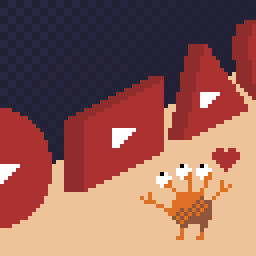
This is a very short animation with a couple of Pizza Tower characters. It’s a mere triffle, and the joke’s pretty silly,but it’s spot on, of the game’s style, and in the appearance of an early 90s cartoon show, of the type that the game’s animation itself seeks to emulate. It’s gotten an absurd number of views, like nearly half a million, in six days. Now, maybe it will get a few more.
Dithering is a method (actually, several methods) of simulating more shades or colors than the hardware is capable of, by producing an array of dots that generally match the colors. One of the qualities of the classic, original Macintosh platform, which used a black-and-white monitor, was the way that it used dithering to give the impression of grayscale shading.
Nowadays most display devices are capable of, in Mac terminology, “millions of colors.” Macs are far from the only devices to have used dithering, but it’s a quality particularly distinctive to them.
There is an excellent article, here, written for developers but clear enough that many non-coders can understand it, that explains how its done, and demonstrates many styles of dithering. Interested readers may also enjoy this article, also on dithering. These pieces, all by themselves, are enough reason to make this post, but they’re not really the things that I want to draw attention to today.
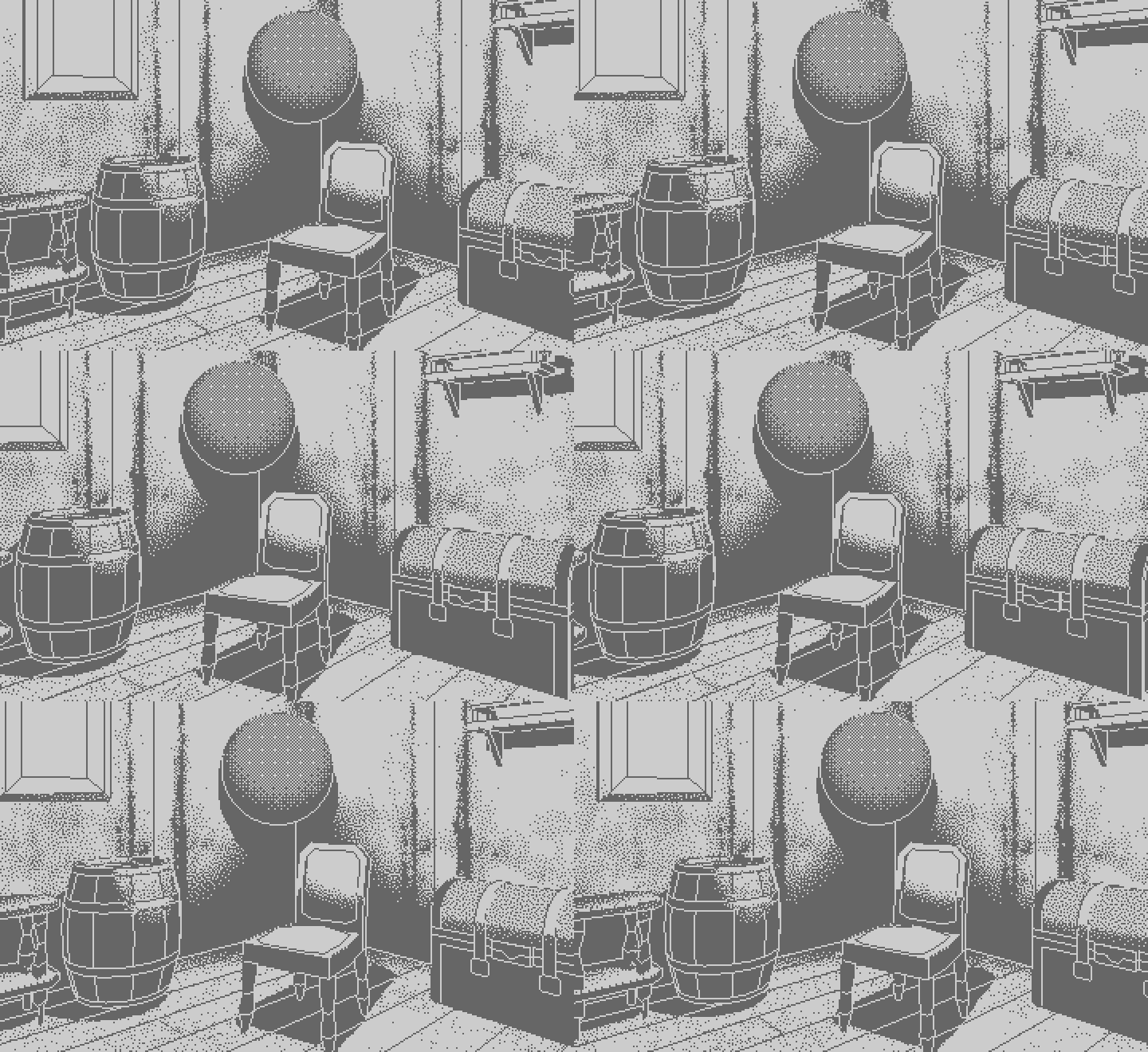
The indie hit Return of the Obra Dinn, from five years ago, is notable because it’s a 3D game, but it uses black-and-white dithering, applied in real time, to do its shading as an aesthetic choice, and the effect is striking. Not just for the dithering, but because the dithering is stable; its dots don’t jump around in a randomish manner, but tends to look like an applied texture, even though it’s generated by an algorithm. You can see for yourself in this trailer:
The cool thing is (and I think it’s linked from one of the articles I presented above), the creator of Return of the Obra Dinn, Lucas Pope, wrote about dithering in a post on TIGsource while the game was in development, and he explains the experiments he ran to get the shading to work and be stable. I recommend graphics programmers to it without hesitation, and others might find it interesting to. I know I do! Have a look!
Chunsoft has announced a new Shiren the Wanderer game, Shiren the Wanderer: The Mystery Dungeon of Serpentcoil Island, for Nintendo Switch, due out on February the 27th! Some of the most popular columns from @Play on GameSetWatch were the screenshotted play I demonstrated of the fan translation of Super Famicom Shiren, and if the comments on the trailer are something to be trusted, there’s still a diehard group of fans out there.
Interestingly, the theme of this one is “back to basics,” suggesting that some of the greater mutations of the more recent games, like the Night rules, equipment experience and such, will be pared back. Some of those rules I like and some I don’t, but I have said that more recent Shiren games, while fun, feel like they’re lacking something. Some of the series enhancements starting from around Shiren 4 (which never got an official English release) I have issues with, particularly, monsters always going straight through blind intersections if they have no knowledge of Shiren’s location, allowing the player to take advantage of the AI to avoid conflict; and that Shiren’s healing rate actually decreases, not just relative to maximum HP but in absolute terms, as he gains experience levels. These are relatively minor qualms though, and most players won’t even notice them.
Here is that trailer:
Some noteworthy elements are the return of Shiren’s lady friend Asuka (who despite appearances is several years older than him), and of giant-sized boss battles, possibly using some of the engine enhancements done to facilitate large Pokemon in Rescue Team DX. I also appreciate that the story appears to be a naked grab for loot! It’s always felt to me that a wanderer’s life is, or should be, a hard-scrabble existence, and while our rogueish characters may affect the fate of the world, they’re still usually in it for themselves. That way, if they fail (and they fail often), you can laugh at them more than feel sorry for them.
I keep trying to do more @Play columns but other work continues to get in the way. I have a fair number of subjects to write about now though, not the least of which being my ill-advised decision to buy the super-skeevy Omega Labyrinth Life on Switch. I feel like paying money for that might have gotten my name on a list somewhere, so I might as well get some column inches out of it!
On Romhack Thursdays, we bring you interesting finds from the world of game modifications.
Look at that title and marvel a bit. Doom on a C64! What an idea. How could it even be possible? What an age we live in. It is a time of wonders. Children are our future.
Of course there’s more to it than that. There is a whole class of “retro” game that amounts to implementing the actual game on separate hardware, and using the supposed host platform as a glorified display and input device. That’s what’s going on in this case. Doom is really being run on a Raspberry Pi in a plug-in cartridge on a processor that’s underpowered by modern standards but far outpaces that of even Doom’s base configuration, and is thousands of times more powerful than the Commodore 64 to which it pipes its output.
But there’s still some technical interest in the means. The device that runs it is a “RAD Expansion Unit,” a DIY device that emulates a C64 RAM expansion, and apparently can even take over from the 6510 CPU and drive the system’s hardware directly. It works by writing to the VIC-II video and SID sound chips itself.
There was still a lot of coding work required to make this possible. A C64 has somewhat decent sound hardware, but the VIC-II chip has severe limitations on what it can display. The Raspberry Pi has to take the game’s display and port it, in real-time, to a graphics chip that can only display up to four colors (out of only 16) in each character cell, and that’s by sacrificing half of its horizontal resolution. Doing that on the fly itself is a noteworthy hack.
Could it be possible to run DOOM on a C64 without such assistance? At native resolution, ha ha ha: no. The memory limitations are too grievous, so at the very least you’ll need a RAM expansion.
I’ve mused at times on whether it might be possible if one uses the character screen as a kind of super-low-resolution graphics mode, each 8×8 character block representing either a 2×2 pixel grid (so, a resolution of 80×50) or a single pixel (40×25). Even at such a resolution 60 fps is probably out of the question, for it takes a lot of cycles to change every tile every frame, but maybe at 30 or 20? 15, 12, 10? (60 is divisible by a lot of numbers.) I will leave that question to people who are more current with C64 assembly coding.
Lists of the best games for various platforms has been a fixture on the internet since it was opened up to the general public. Every big gaming site, those still with us and those gone (R.I.P. Joystiq) feel the urge to make them periodically. After all, they combine several popular article themes: they’re listicles, they’re about video games, and they make definite-seeming yet inherently subjective statements about things that geeks have over-strong opinions about. They’re the ideal hit-getters for pop culture sites really, whether they focus on games or not.
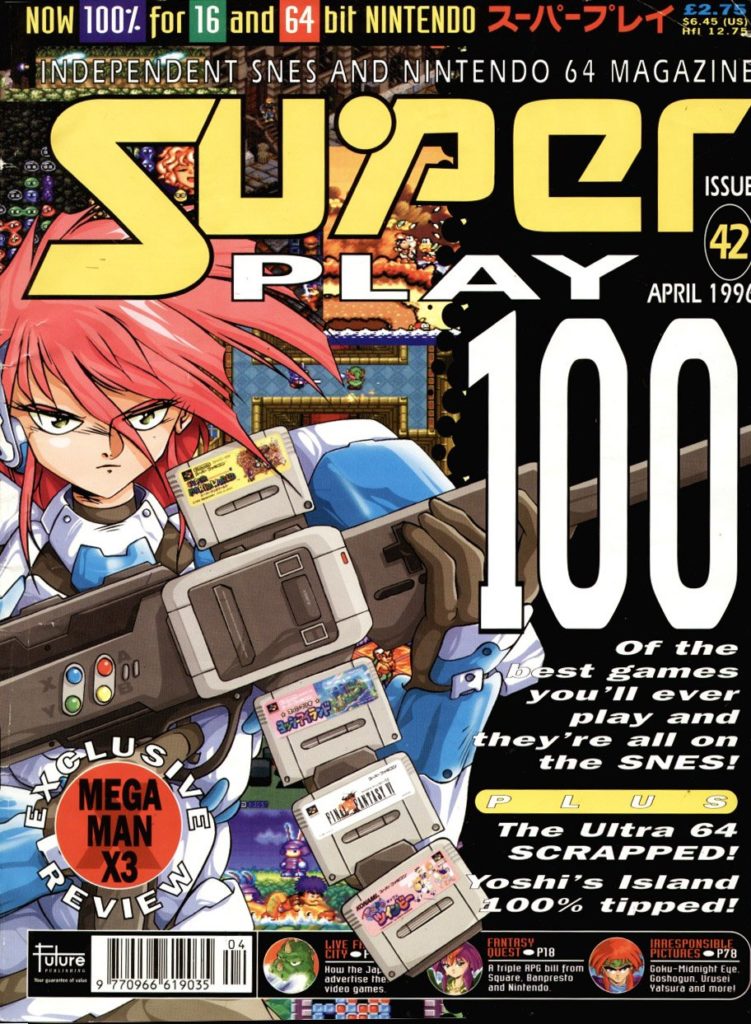
Even in print, these lists weren’t rare things. Super Play Magazine, from the UK, did such a list in April of 1996, which was reproduced in HTML text by the site RVGFanatic in 2010.
Why would such a list interest us now? Well, most of these lists have a strongly US-focused vibe, and the UK had a somewhat different scene than we (me being American) did. So there are a number of very interesting games on the list that generally don’t appear in other places, including a few Japanese ones. And they included SNES Rampart, so I’m automatically kindly disposed to it.
Of particular note, besides Rampart: three Parodius entries, two Micro Machines games, Pop’n Twinbee, Cool Spot, Samurai Spirits, Hebereke’s Popoitto, Spike McFang, SNES Side Pocket, Xandra’s Big Adventure, Pugsley’s Scavanger Hunt, NFL Quarterback, World League Basketball (made by HAL!), The Chaos Engine, Street Racer, Super Smash T.V., Lemmings II: The Tribes (but not Sunsoft’s excellent SNES port of original Lemmings?!), Sensible Soccer, R-Type III, U.N. Squadron, SNES Civilization, Out To Lunch (I hadn’t even heard of this before!), Mickey’s Magical Quest, Cannon Fodder, Plok (the Pickford Bros. rule) and Equinox (also Pickford-made, and also highly underrated).
A little while ago Roguelike Celebration, this year on October 22 and 23 (later this month!), did a short preview as a promotional event. I mentioned this before, it came and went, and now the talks are online.
According to this forum post, classic Commodore 64 database and information archive site Gamebase 64 has been stricken by the death of their webmaster Steven Feurer, and unless they can find someone to replace him soon, and likely provide alternate hosting too, their site will follow him into the Great Beyond.
As time passes, these kinds of events will happen more and more often, so please, if you maintain a website, of any kind sure but our remit is games so let’s say game-related site, please take measures to ensure its continuity in the unfortunate event of your passing. And if you can help Gamebase64 out, please consider it?
Sundry Sunday is our weekly feature of fun gaming culture finds and videos, from across the years and even decades.
Under the category of lushly-produced silly game-related things, from four years ago, there’s Snailchan’s Adventure. It’s not very serious at all, but it’s a fun use of four minutes of your time. The comments mention that there was an actual game based on this animation planned, but I’m not aware of anything having ever come of it. Still, this is nice in and of and by and through itself. I don’t know if it actually was on Newgrounds at some point, but it seems like exactly the kind of thing that would have been featured there at some point, and it was right after a bit of exploration there that Youtube’s recommendation algorithm decided to show it to me, so it probably had been there, in the past-past.